The Digital Brochure Fallacy
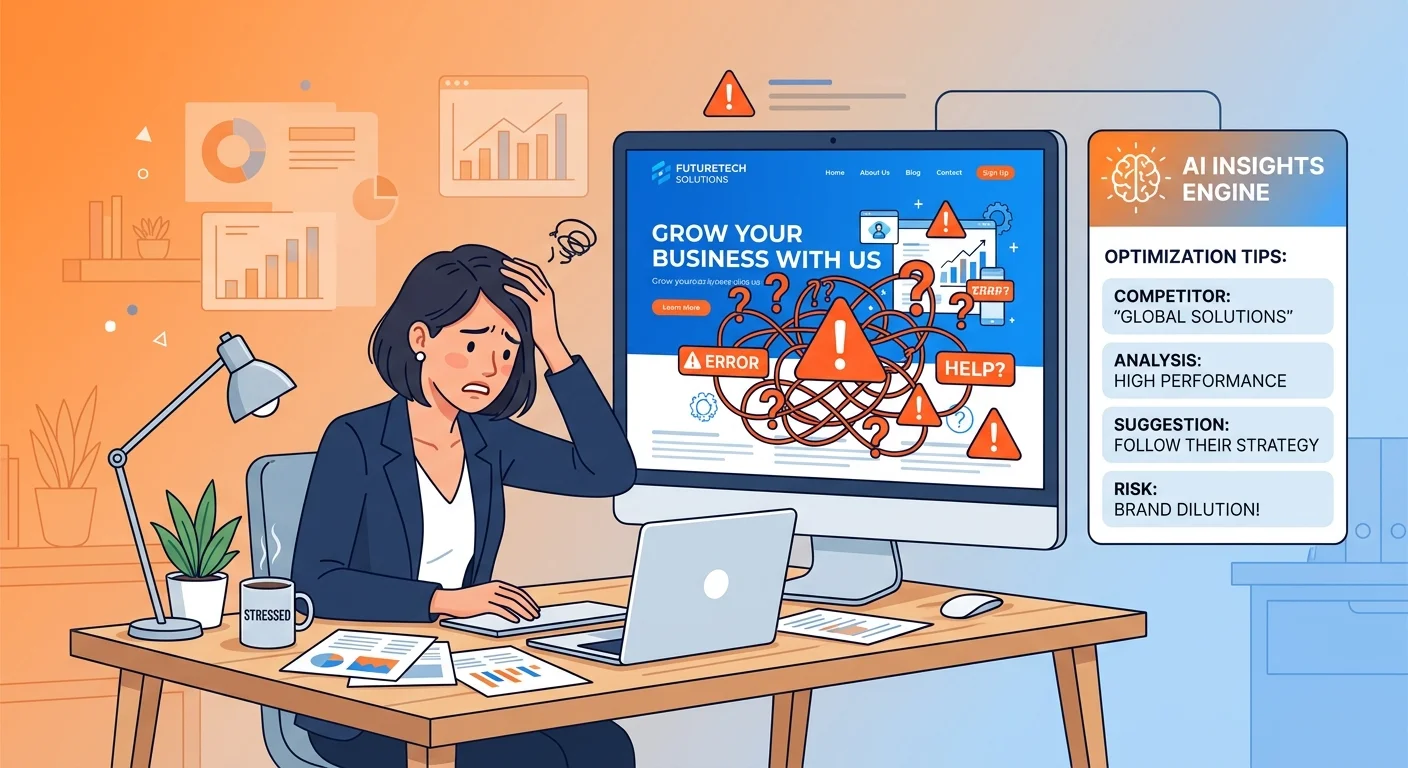
Most marketing agencies won’t tell you this: they’re selling you an expensive placeholder.
The pitch sounds perfect. Mobile responsive. Fast load times. SEO optimized. Beautiful imagery. Clean navigation. Every checkbox marked.
You pay $5,000. Maybe $10,000. Maybe more.
The site launches. It looks phenomenal.
And then… nothing happens.
The Marketing Agency Promise
Here’s the standard pitch.
Your website will be mobile responsive-looks great on phones and tablets. Fast loading-optimized images, clean code. SEO optimized-meta tags filled in, alt text on images, maybe a blog section. Visually stunning-custom design, professional photography, your brand colors everywhere. Conversion focused-clear CTAs, appointment booking integrated.
Sounds perfect, right?
It is perfect. For 2015.
The problem is we’re not in 2015 anymore. The game changed. Patients don’t Google “chiropractor near me” and scroll through ten blue links. They ask ChatGPT. They ask Gemini. They ask Grok.
And those engines don’t rank websites. They issue verdicts.
Your beautiful site never enters the conversation because AI can’t read it. The schema’s missing. The entity signals are weak. The content is shallow. AI has no way to confirm you’re an authority, so it doesn’t say your name.
What You Actually Get
A digital brochure.
That’s not an insult. It’s a classification.
Your website is a static document that exists to display information to people who already know you exist. It serves the same function as a tri-fold pamphlet in your waiting room. Looks good. Says the right things. Does absolutely nothing to get new people through the door.
Here’s the difference:
| Feature | Digital Brochure | Authority Infrastructure |
|---|---|---|
| Primary Function | Display information to people who already found you | Get you recommended by AI engines so people find you in the first place |
| Schema Markup | Basic or absent-maybe an address, maybe business hours | Comprehensive-business type, services, credentials, relationships, authorship |
| Entity Signals | Weak or inconsistent-NAP data varies across directories, no knowledge graph anchors | Strong and verified-consistent entity data, authoritative directory presence, Google Knowledge Panel |
| Content Depth | Thin service pages and generic blog posts that AI can’t verify | Semantically dense authority articles with institutional citations that AI uses to validate expertise |
| AI Visibility | Invisible-not cited, not recommended | Recommended-cited as source, named in AI answers |
The brochure costs $5,000-$15,000 to build. Authority infrastructure costs more.
But one of those assets compounds. The other depreciates the moment it goes live.
The Patient Leak
Here’s where the leak happens.
A potential patient wakes up with lower back pain. Again. They’re tired of it. They want help. So they pull out their phone and ask ChatGPT: “Who’s the best chiropractor near me?”
ChatGPT doesn’t pull up a list of websites. It gives an answer.
One name. Maybe two. It explains why those practitioners are trustworthy. It might link to a few sources. It gives the patient everything they need to make a decision without ever visiting your site.
Your practice doesn’t get mentioned.
Not because your care isn’t excellent. Not because your website isn’t beautiful. Because AI doesn’t recognize you as an entity worth recommending. The authority signals aren’t there. The schema isn’t there. The content depth isn’t there.
To AI, you don’t exist as a verified expert. You’re just another listing in a directory it doesn’t fully trust.
The patient books an appointment with the competitor ChatGPT named. They never see your site. They never knew you were an option.
That’s the leak. And it’s happening every single day.
The beautiful website you paid for isn’t the problem. It’s just not the solution to the problem you actually have.
What 100+ Websites Taught Me About Design vs. Performance
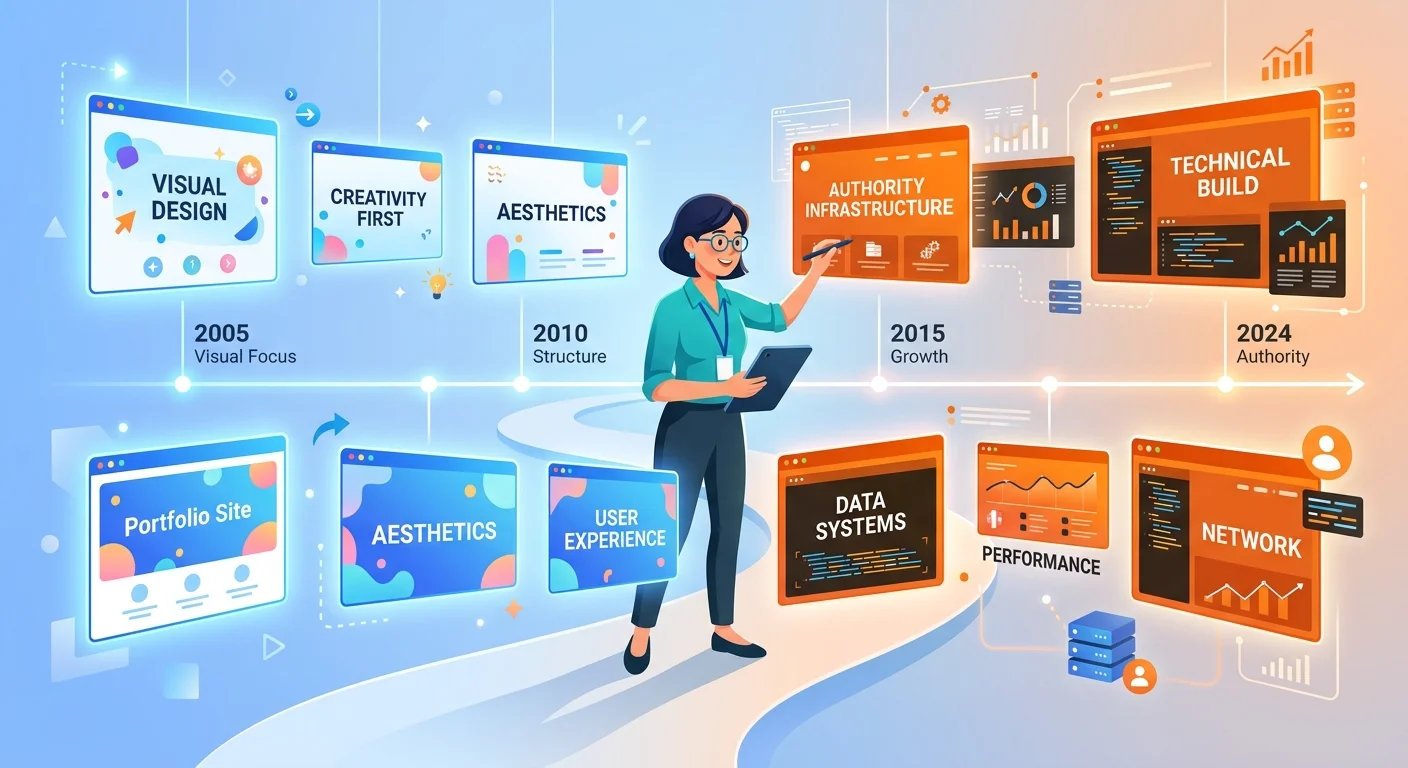
I’ve built 100+ websites across my career.
That’s not a guess. I’ve actually counted.
E-commerce stores. Service business sites. Brand sites. Portfolio sites. Landing pages. I’ve built them for clients, for my own businesses, for side projects that went nowhere. I’ve worked in every CMS you can name and a few you probably can’t.
And for most of those years, I believed in the same thing every other designer and agency believes: make it look good, make it fast, make it mobile responsive, and the business will grow.
That worked. For a while.
Then it stopped working. And I couldn’t figure out why.
The Pattern I Kept Seeing
It didn’t matter what industry.
Chiropractors. Lawyers. Contractors. E-commerce brands. Service businesses. B2B. B2C. Didn’t matter.
The pattern was the same.
Beautiful site. Technically sound. Zero AI visibility.
Clean, modern design that looked great on every device. Fast load times under 2 seconds. Clear service descriptions and compelling copy. Strong calls-to-action and easy contact forms. Blog section with regular posts. Social media integration.
Every best practice checked off.
And yet, when I’d run a quick search for “[industry] + [city]” and look at what AI engines were recommending, these businesses weren’t showing up. Not in ChatGPT. Not in Gemini. Not in Perplexity.
Nowhere.
I started asking a different question: what if the design isn’t the variable that matters anymore?
The Invisible Variable
The shift happened quietly.
According to HubSpot’s research on zero-click searches, nearly 65% of Google searches now end without a click to any website. People get their answer directly on the search page-or from an AI engine-and never visit a site at all.
That changes everything.
If users aren’t clicking through to compare options, your beautiful website doesn’t get a chance to convert them. They’re making decisions based on what AI tells them.
And AI isn’t looking at your hero image or your color palette. It’s reading your schema. It’s checking your entity signals. It’s scanning your content for semantic density and institutional citations.
The businesses that were winning weren’t the ones with the best design. They were the ones AI could read and verify.
I kept seeing this: sites that looked terrible but had strong schema markup, comprehensive directory listings, and deep content would get recommended. Sites that looked incredible but lacked that infrastructure would get ignored.
The invisible variable was authority infrastructure. And almost no one I talked to-clients, other designers, marketing agencies-even knew what that meant.
That’s when I realized why traditional SEO fails. It’s not that the tactics stopped working. It’s that the game changed from “get ranked” to “get recommended.”
And most of the industry is still playing the old game.
When I Stopped Calling Myself a Web Designer
There was a specific moment.
I was on a call with a chiropractor who’d just paid another agency $12,000 for a site rebuild. Gorgeous site. I mean, legitimately one of the best-looking chiropractic sites I’d seen.
And he was furious because after three months live, he’d gotten two new patient calls. Two.
I pulled up ChatGPT and asked it who the best chiropractor in his city was. It named three practices. His wasn’t one of them. I asked Gemini the same question. Different answer, but still not him. I ran the same test in Perplexity.
Same result.
He asked me why.
I told him the truth: “Your site is beautiful. But AI can’t see it. The structure isn’t there. The entity signals aren’t there. The content depth isn’t there. To an answer engine, you basically don’t exist.”
He asked if I could fix it.
That’s when I stopped calling myself a web designer. Because the job isn’t to make things pretty anymore. The job is to make things readable-by machines, not just humans.
| What I Used to Build For | What I Build For Now |
|---|---|
| Visual appeal that impresses human visitors | Schema architecture that AI engines can parse and verify |
| Responsive layouts that work on all devices | Entity validation that confirms the business is real and authoritative |
| SEO-friendly content optimized for keywords | Semantically dense authority content that demonstrates expertise |
| Fast load times and smooth UX | Content hierarchy that AI can navigate to extract answers |
| Conversion-focused design that moves visitors to action | Authority infrastructure that gets the business recommended before visitors even arrive |
The shift isn’t subtle. It’s foundational.
And most agencies haven’t made it yet.
Why AI Doesn’t Care About Your Color Palette
Let’s be clear about something.
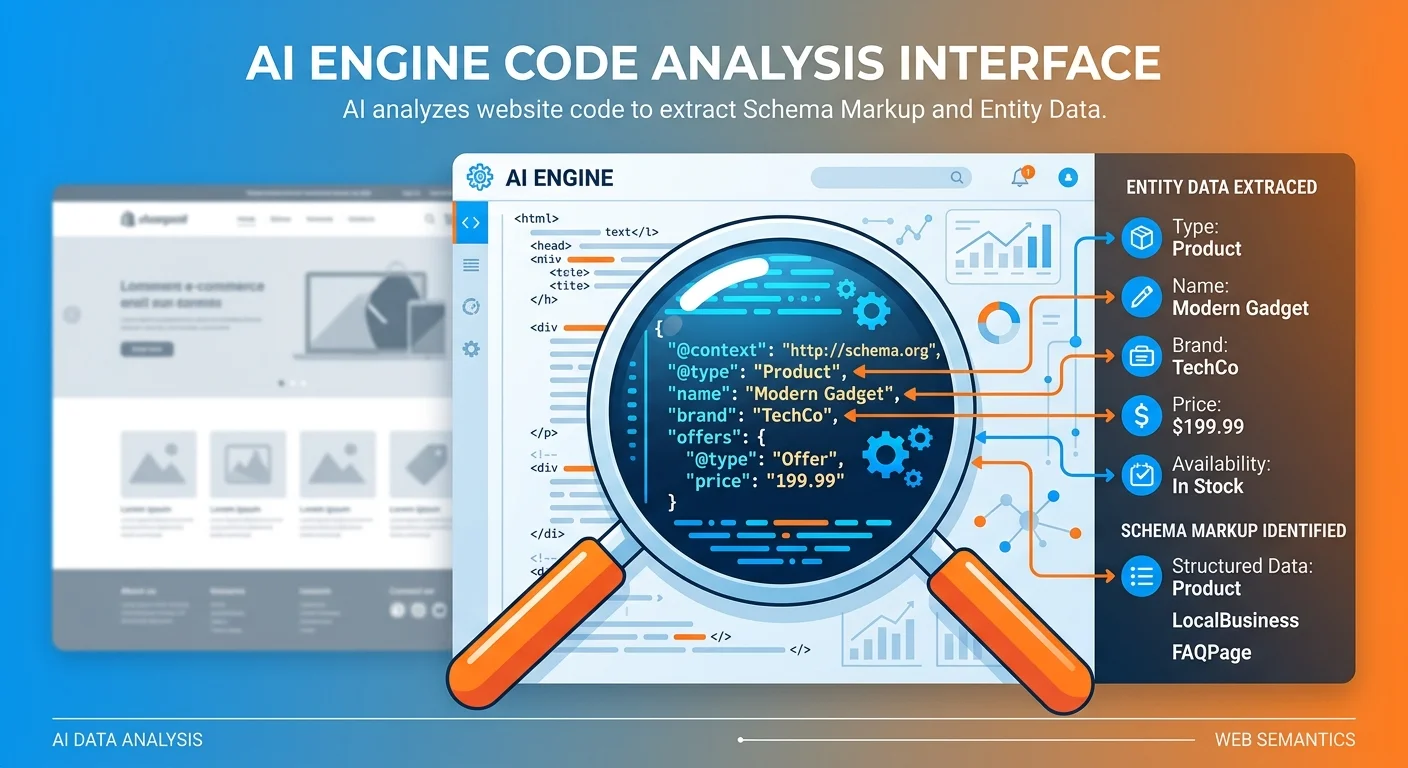
AI doesn’t browse your website the way a human does. It doesn’t scroll. It doesn’t admire your parallax animations. It doesn’t notice your custom font pairings or your carefully chosen brand colors.
It reads code.
And if that code doesn’t contain the specific structural signals AI is trained to recognize and trust, your site might as well not exist.
Template Websites Are Structurally Invisible
Here’s the hard truth about template-based website platforms.
Squarespace. Wix. WordPress themes from ThemeForest. Even the “industry-specific” solutions like chiropractic or legal website builders.
They all produce the same structural weaknesses.
It’s not that templates are inherently bad. They’re fast. They’re affordable. They look decent. But they’re built for human eyes, not machine validation.
The problems: Generic schema implementation-if schema exists at all, it’s minimal and often incorrect. Weak entity signals-no consistent NAP data across directories, no knowledge graph integration. Shallow content architecture-blog templates designed for 500-word posts, not 2,000+ word authority articles. No semantic hierarchy-flat page structure that AI can’t navigate to extract topic relationships. Template duplication-thousands of sites using identical code structures, which AI engines discount as low-trust patterns.
I’ve seen practices spend $3,000 on a Squarespace site with a premium template and wonder why they’re invisible. The site looks great. It’s mobile responsive. It loads fast.
And AI has no idea what entity trust signals to look for because the platform doesn’t build them in by default.
The cheaper the solution, the more likely it’s optimized for aesthetics over authority. And aesthetics don’t get you recommended.
How AI Reads a Website
When an AI engine evaluates your website, it’s not “visiting” your site the way a patient would.
It’s parsing structured data.
Here’s what it’s looking for: Schema markup-explicit declarations of what your business is, what services you provide, who your team is, where you’re located, what credentials you hold. Entity validation-consistent name, address, and phone data across the web that confirms you’re a real business with a verified presence. Content hierarchy-clear topical relationships that show depth of expertise on specific subjects. Semantic density-use of industry-specific terminology, concepts, and relationships that demonstrate authority. Citation sources-links to institutional sources (government sites, medical journals, accrediting bodies) that verify your claims.
According to Search Engine Journal’s analysis of schema markup for SEO, structured data helps search engines understand content context, which directly impacts whether you get featured in AI-generated answers.
Your color palette doesn’t appear in any of those signals. Neither does your hero image. Neither does your custom CSS animation.
AI reads the underlying data structure-and if that structure is weak or absent, you’re invisible.
What Gets Ignored
Let me save you some money.
These elements cost a lot. They impress human visitors. And they mean absolutely nothing to AI: Hero images and video backgrounds-beautiful, but invisible to machine readers. Custom fonts and brand colors-aesthetic choices AI can’t process. Parallax scrolling and animations-UX elements that don’t translate to structured data. Stock photography and lifestyle imagery-no semantic value for AI validation. Custom iconography and graphic elements-nice to look at, irrelevant to authority signals.
Research from Taylor & Francis shows that first impressions of website design happen in 50 milliseconds, which proves design matters for human trust.
But that trust only matters if a human lands on your site. And AI determines whether humans find you in the first place.
The disconnect is this: agencies sell you what looks good. AI recommends based on what’s structured well.
Those aren’t the same thing.
If you’re spending $10,000 on a website and $8,000 of that budget goes toward design elements AI ignores, you’re investing in the wrong layer.
The Authority Infrastructure Framework
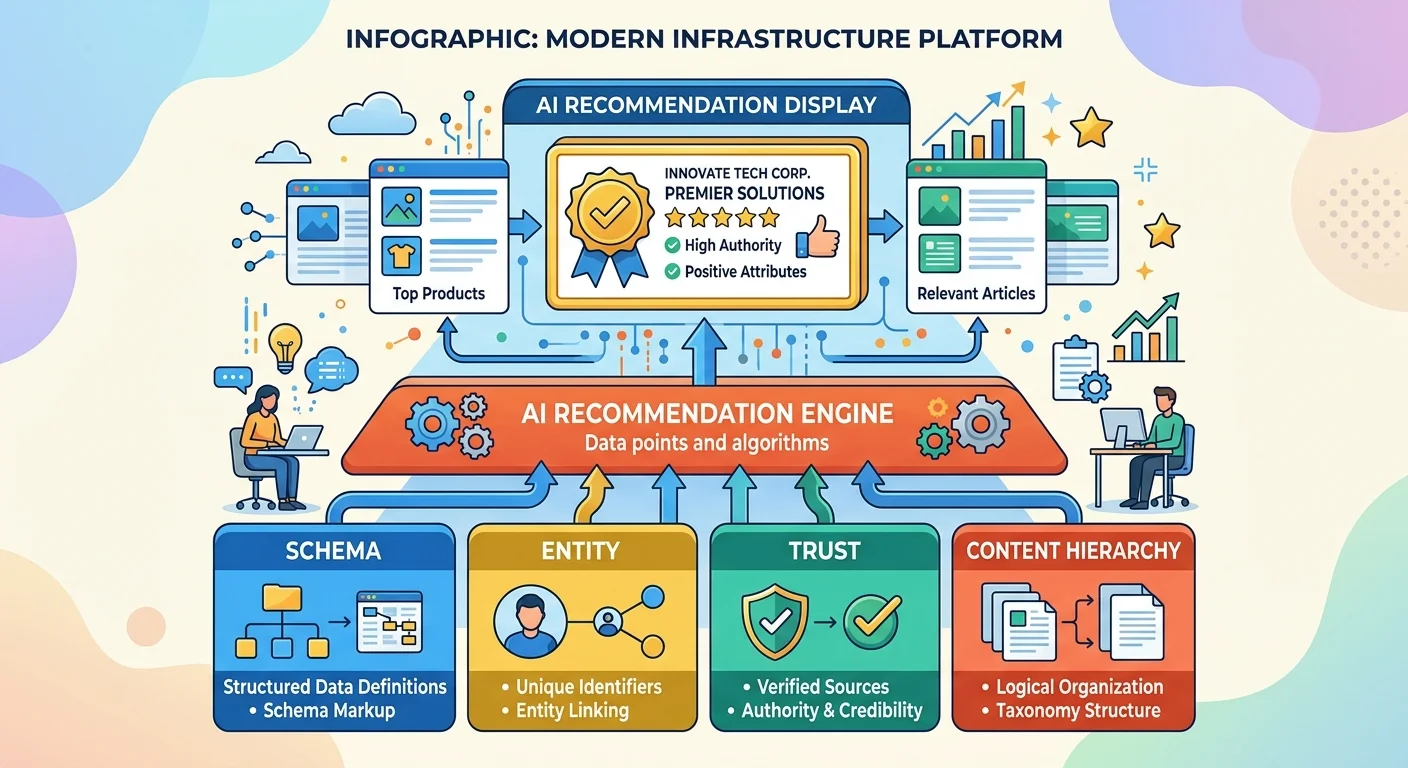
Authority infrastructure isn’t a feature you add to a website.
It’s the foundation the site is built on.
Most agencies start with design and try to bolt on technical elements later. Schema gets added as an afterthought. Content gets written to fill space. Entity signals get ignored entirely.
That approach produces a beautiful site with a weak foundation-and AI sees through it immediately.
Schema Architecture
Schema markup is the explicit language you use to tell AI engines what your business is.
Without it, AI has to guess. And if AI has to guess, it doesn’t recommend you.
Comprehensive schema includes: LocalBusiness schema-business type, name, address, phone, hours, service area. MedicalBusiness schema (for healthcare practices)-specialties, accepted insurance, credentials, affiliations. Person schema-founder/practitioner bios with credentials, education, professional experience. Service schema-explicit definitions of what services you provide, who they’re for, what problems they solve. Review schema-structured review data that AI can verify and cite.
That’s the foundation. But it goes deeper.
Every page needs schema. Every blog post. Every service description. Every team member bio. The schema architecture has to be consistent across the entire site so AI can map the relationships between entities, services, and expertise areas.
Most template platforms include basic LocalBusiness schema at best. Comprehensive schema requires custom implementation-and most agencies don’t build it because most clients don’t know to ask for it.
Entity Validation
Entity validation is how AI confirms you’re real.
It’s not enough to declare yourself an expert on your own website. AI cross-references your claims against external sources. If your business name, address, and phone number vary across directories, AI sees conflicting data and discounts your authority.
Strong entity signals require: Consistent NAP data-exact same business name, address, phone number on Google Business Profile, Yelp, Healthgrades, Zocdoc, industry directories. Knowledge graph presence-verified Google Knowledge Panel with accurate, structured data. Directory authority-active, claimed profiles on Tier 1 platforms (not just listed, but managed and updated). Relationship mapping-clear connections between your business entity, your founder, your services, and your location.
This is where founder-led AI trust becomes critical. AI engines don’t just validate businesses. They validate people.
If your founder has a strong, verified presence across LinkedIn, industry publications, and authoritative directories, that signal strengthens your business entity.
Most practices have weak entity signals because they’ve never thought about entity validation as a deliberate strategy. They have a Google Business Profile. Maybe a Yelp listing. That’s it.
And AI needs more than that to issue a confident recommendation.
Content Depth
Content depth is not the same as content volume.
You don’t need 100 blog posts. You need 12-20 authority articles that demonstrate topic mastery in your specific area of expertise.
The difference: Blog posts are 500-800 words, surface-level advice, keyword-focused, written for humans. Authority articles are 2,000-3,000 words, semantically dense, institutionally cited, written for AI validation.
AI engines scan content for semantic relationships. They’re looking for: Use of industry-specific terminology with correct context. Coverage of subtopics and related concepts that prove depth of knowledge. Citations to institutional sources (NIH, Mayo Clinic, CDC, peer-reviewed journals) that verify claims. Clear answers to specific questions patients ask.
According to Nielsen Norman Group’s research on how people read online, users scan content in an F-shaped pattern, which means structure and headings matter more than dense paragraphs.
But AI reads differently. It’s looking for semantic density-the depth of relationships between concepts.
A single well-structured authority article with comprehensive schema, clear entity signals, and institutional citations carries more weight with AI than ten generic blog posts optimized for keywords.
The Compounding Effect
Here’s what makes authority infrastructure different from traditional marketing.
It compounds.
Every authority article you publish adds semantic density to your site. Every schema update strengthens entity trust. Every directory profile you claim and optimize reinforces your knowledge graph presence.
The infrastructure builds on itself.
Traditional marketing expenses disappear the moment you stop paying. You run ads, you get clicks, you stop paying, the clicks stop. You pay for SEO, you get traffic, you cancel the retainer, the traffic drops.
Authority infrastructure is an asset. It doesn’t depreciate. It appreciates.
| Authority Infrastructure Components | What It Does | Why AI Cares |
|---|---|---|
| Comprehensive Schema Markup | Explicitly declares business type, services, credentials, relationships in machine-readable format | AI uses schema to extract structured answers and validate expertise without guessing |
| Entity Validation | Ensures consistent NAP data across directories and knowledge graph presence | AI cross-references external sources to confirm you’re a real, authoritative business |
| Semantic Content Depth | Publishes 2,000+ word authority articles with institutional citations | AI scans for topic mastery and uses citations to verify claims before recommending |
| Internal Linking Architecture | Creates clear relationships between service pages, authority content, and expertise areas | AI follows links to map topic relationships and determine breadth of knowledge |
| Ongoing Content Execution | Adds 12 new authority articles per year to deepen semantic coverage | AI rewards sites that demonstrate current, expanding expertise over static content |
The practices that build this infrastructure early compound faster. The ones that wait give that ground to competitors who moved first.
What Changed Between 2020 and 2025
The shift didn’t happen overnight.
But it happened fast enough that most agencies missed it entirely.
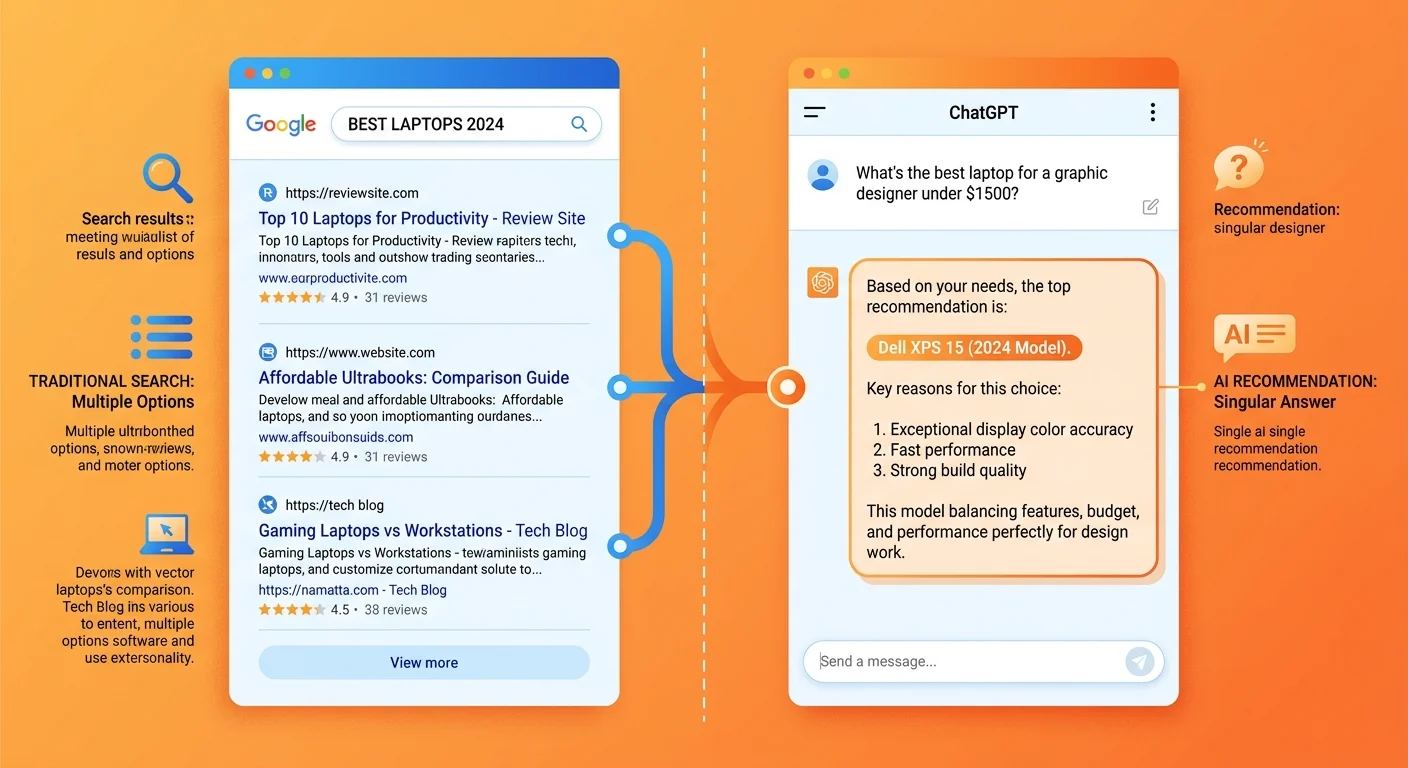
In 2020, Google was still the primary discovery mechanism. Patients would search “chiropractor near me,” scroll through the map results, click a few websites, compare options, and book. Traffic and rankings were predictive metrics. If your site ranked on page one, you got clicks. If you got clicks, you got patients.
By 2025, that model is broken.
The Zero-Click Inflection Point
Zero-click search is exactly what it sounds like.
The user gets their answer without clicking through to any website.
HubSpot’s data on zero-click searches shows that nearly 65% of searches now end on the search results page. Featured snippets. Knowledge panels. AI-generated overviews. People are getting what they need without visiting your site.
That means traffic is no longer a reliable performance metric.
You can rank #1 for “chiropractor in [city]” and still get zero new patients because no one’s clicking through. They’re reading the AI-generated answer, seeing a competitor’s name, and booking directly from there.
The inflection point was when AI engines started issuing recommendations instead of rankings. ChatGPT doesn’t show you five options and let you decide. It tells you who to trust. Gemini doesn’t present a list. It gives you an answer.
That’s the shift. From lists to verdicts. From options to authority.
And if you’re not the answer AI gives, you’re not in the conversation at all.
The Template Website Collapse
Here’s what happened to cookie-cutter websites between 2020 and 2025.
In 2020, a decent template site could rank fine. Throw in some keywords, build a few backlinks, maybe publish a blog post every month, and Google would surface you in local search results. Patients would click through. Some would book.
The system worked.
By 2024, those same sites became ghosts.
Not because they got worse. Because the evaluation criteria changed.
AI engines don’t rank based on keywords and backlinks. They recommend based on entity trust and semantic authority. And template sites-by design-have weak entity signals and shallow content.
The structural weaknesses AI exposed: Duplicate schema patterns-thousands of sites using identical schema templates that AI recognizes as low-trust. Thin content-500-word service pages that don’t demonstrate expertise. Weak entity validation-no verified knowledge graph presence, inconsistent NAP data. No institutional citations-generic advice with no links to authoritative sources AI can verify.
The sites that survived the shift were custom-built with authority infrastructure. The ones that collapsed were templates optimized for 2015-era SEO.
And most business owners still don’t understand why their “SEO-optimized” site stopped working. The answer: it was never optimized for AI. It was optimized for an algorithm that doesn’t control discovery anymore.
Why Redesigns Don’t Fix It
I’ve had this conversation a dozen times in the past year.
A chiropractor calls. Their site isn’t performing. They want a redesign. They’re convinced a fresh look will fix the problem.
It won’t.
Because the problem isn’t the paint. It’s the foundation.
Redesigning a website without rebuilding the authority infrastructure is like repainting a house with a cracked foundation. It looks better for a minute. Then the same structural problems resurface because nothing fundamental changed.
Here’s what a redesign typically includes: New color scheme and brand refresh. Updated imagery and layout. Faster load times and improved mobile UX. Refreshed copy and clearer CTAs.
Here’s what it almost never includes: Comprehensive schema architecture. Entity validation and knowledge graph integration. Deep, semantically dense authority content. Institutional citations and external source verification.
The redesign makes the site prettier. It doesn’t make it more visible to AI.
And if AI can’t see it, patients won’t either.
You Can’t Set It and Forget It
Quick pause before we go further.
If you’re looking for a one-time website build that solves this problem forever, this isn’t it.
Authority infrastructure isn’t a project. It’s a system.
The foundation-schema, entity validation, site architecture-gets built once. But the content execution is ongoing. AI engines reward sites that demonstrate current, expanding expertise. Static content loses authority over time.
That means publishing new authority articles every month. Updating existing content as industry standards evolve. Maintaining entity consistency across directories. Refreshing schema as services or credentials change.
If that sounds like more work than you want to manage-no hard feelings. But if you’re tired of paying for marketing that disappears the moment you stop funding it, you’re in the right place.
The practices that compound are the ones that execute month after month. The ones that quit give that authority to whoever kept going.
FAQ
Is web design completely irrelevant now?
No.
Professional design still matters for credibility and trust once someone lands on your site. Research from the U.S. National Library of Medicine on trust in online health sites shows that users evaluate website trustworthiness based on visual professionalism, clear expertise signals, and cited sources.
But-and this is critical-design no longer drives discovery.
A beautiful site that lacks authority infrastructure won’t get recommended by AI engines. And if AI doesn’t recommend you, no one lands on your site to see the design in the first place.
Design is necessary. It’s just not sufficient.
You need both: the authority infrastructure that gets you recommended and the professional design that converts visitors once they arrive.
What’s the difference between “authority infrastructure” and a regular website?
A regular website is a digital brochure.
It’s built to display information to people who already know you exist. It focuses on aesthetics, user experience, and clear calls-to-action. It’s optimized for human visitors.
Authority infrastructure is built for machine-readability first, human experience second.
It includes: Comprehensive schema markup that explicitly tells AI what your business is. Strong entity signals that confirm you’re a real, authoritative business. Semantically dense content that demonstrates topic mastery. Institutional citations that AI can verify. Internal linking architecture that maps topic relationships.
A digital brochure gets you noticed by people who find you through referrals or paid ads. Authority infrastructure gets you recommended by AI when potential patients ask who to trust.
Most businesses have a brochure. Very few have infrastructure.
Can my current web designer just add this “AI stuff”?
Depends on their expertise.
If they specialize in Answer Engine Optimization (AEO) and understand entity-based SEO, possibly. But most traditional web designers focus on visuals and user experience, not the deep technical structure AI requires.
Adding comprehensive schema isn’t a plugin install. Building entity validation isn’t a checklist item. Publishing semantically dense authority content isn’t outsourcing to a freelance writer.
It’s a system. And it requires expertise most designers don’t have because it wasn’t part of their training. They learned to build sites that look good and convert visitors. They didn’t learn to build sites that AI engines trust enough to recommend.
If your designer can’t explain what LocalBusiness schema is, how entity validation works, or why semantic density matters-they’re not equipped to build authority infrastructure.
That’s not a criticism. It’s a specialization issue.
You wouldn’t ask a general contractor to design your HVAC system. Same principle.
What is entity trust?
Entity trust is AI’s confidence that your business is real, authoritative, and reliable.
It’s built through consistent, verifiable data across the web. AI engines cross-reference your business name, address, and phone number across directories, citations, and platforms. If that data matches, entity trust increases. If it conflicts, trust decreases.
Strong entity trust requires: Verified Google Knowledge Panel. Consistent NAP data across Tier 1 directories (Google Business Profile, Yelp, Healthgrades). Active, claimed profiles on authoritative platforms specific to your industry. Clear relationships between your business entity and your founder’s personal authority.
AI doesn’t just validate that you exist. It validates that you’re credible enough to recommend.
And credibility is built on verifiable consistency, not claims you make on your own site.
For a deeper breakdown of how entity trust works and why it matters more than backlinks, see what is entity trust.
How can I check if my website is AI-readable?
Start with Google’s Rich Results Test.
Paste your homepage URL into the tool. It’ll show you what schema markup Google can read. If the results are minimal or show errors, that’s your first clue that AI engines can’t parse your site’s structure.
But a comprehensive check requires more: Run your business name through ChatGPT, Gemini, and Perplexity with a question like “Who’s the best [your specialty] in [your city]?” and see if you’re mentioned. Check if you have a verified Google Knowledge Panel (search your exact business name-if a knowledge panel appears on the right side, you have one). Audit your directory presence for NAP consistency across Google Business Profile, Yelp, and industry-specific platforms. Review your content depth-do you have 12+ authority articles with institutional citations, or just a few generic blog posts?
If you’re not being recommended by AI, your NAP data is inconsistent, you don’t have a knowledge panel, and your content is thin-your site isn’t AI-readable.
The fastest way to get a real answer: run the AI Visibility Check. It takes 15 minutes and shows you exactly what AI engines see when someone asks who to trust in your market.
If I rebuild my site with authority infrastructure, how long before I see results?
I won’t promise you a timeline.
Not because this doesn’t work-because authority doesn’t run on a microwave schedule.
Infrastructure changes (schema implementation, entity validation, site architecture) can show impact within weeks. AI engines re-crawl sites frequently. Once the structure is in place, they start recognizing it.
But full authority density-the kind that gets you consistently recommended over established competitors-takes months. Every article compounds. Every citation strengthens trust. Every entity signal reinforces your knowledge graph presence.
What I will say: every month of execution builds on the last. The practices that stick with it compound. The ones that quit after 90 days because they didn’t see a miracle give that ground to whoever kept going.
If you need guaranteed results in a specific timeframe-this isn’t your fit. If you’re building an asset that grows in value every month you own it-you’re in the right place.
But doesn’t design still matter for conversions?
Yes. Absolutely.
Once someone lands on your site, design determines whether they trust you enough to book.
Professional design signals credibility. Clean navigation makes it easy to find information. Clear CTAs guide visitors toward action. Fast load times prevent bounce.
All of that matters.
But here’s the disconnect most practices miss: conversion rate is irrelevant if traffic is zero.
You can have a 10% conversion rate on your site. If AI isn’t sending anyone there, 10% of zero is still zero.
The correct sequence is: Build authority infrastructure so AI recommends you. Layer professional design on top so visitors convert once they arrive.
Most agencies reverse that order. They build a beautiful site and wonder why it doesn’t perform.
The answer: they optimized for step 2 before solving step 1.
Design matters. It’s just not the first problem to solve anymore.
What happens to my current site during a rebuild?
White-glove execution. Staging environment. Zero downtime.
The rebuild happens on a staging server that mirrors your live site. You review every page before it goes live. When it’s ready, we migrate in a single deployment. Visitors see no interruption. No “under construction” pages. No broken links.
You don’t manage the process. You don’t write content. You don’t build schema. You don’t configure plugins.
The steak gets on the plate. How it got there is our concern.
If you’re expecting to be hands-on or learn the system-this isn’t structured for that. If you want it done correctly without managing the execution-that’s exactly what this is.
Conclusion
Here’s the reality.
AI is already making recommendations in your market. When someone asks ChatGPT or Gemini who the best chiropractor near them is, an answer gets given.
Either your name is in that answer or a competitor’s is.
That gap widens every month it goes unaddressed.
Because authority compounds. The practices building infrastructure now are strengthening their entity signals, deepening their content libraries, and reinforcing their knowledge graph presence. Every month they execute, they get harder to compete with.
The practices waiting-hoping the shift reverses, hoping traditional SEO comes back, hoping a redesign will be enough-are falling further behind.
And the gap isn’t linear. It’s exponential.
There’s no version of this where doing nothing is a safe play.
You can rebuild your site with authority infrastructure and execute monthly content that compounds. Or you can watch competitors take the recommendations that should have been yours.
If you’re ready to stop being one of many options and start being the answer AI gives-start here: Local AI Authority Engine.
If you’re not sure where you stand right now, run the diagnostic first. The AI Visibility Check takes 15 minutes. It shows you exactly what ChatGPT, Gemini, and Grok say when someone asks who to trust in your market. If the results don’t make the problem self-evident-walk away. No pressure.
But if they do, you’ll know exactly what to do next.
Want to know if AI is recommending your practice-or your competitor’s?
Run the AI Visibility Check. It takes 15 minutes and shows you exactly what ChatGPT, Gemini, and Grok say when someone asks who to trust in your market. If you’re not in the answer, you’ll see why. If you are, you’ll see what’s working.
Either way, you’ll have real data instead of assumptions.