
Your Post-Check Roadmap: How to Close the AI Visibility Gap
Closing an AI visibility gap after a diagnostic check involves a three-phase process that addresses the root causes of invisibility rather than applying surface-level fixes. The first phase rebuilds the digital foundation into AI-readable authority infrastructure with proper schema markup and entity signals that answer engines can parse and trust. This is not a website redesign in the traditional sense—it is a structural rebuild that transforms a digital brochure into a machine-readable knowledge base that AI engines recognize as an authoritative source.
The second phase establishes entity trust through consistent, high-authority citations across relevant platforms and directories that AI engines use for validation. These citations function as verification anchors, confirming to ChatGPT, Gemini, and Grok that the practice entity exists, operates in a specific geographic area, and maintains consistent information across the web. Without these signals, even the most sophisticated content strategy will fail because the underlying entity remains unverifiable to AI systems.
The final phase executes a high-velocity Answer Engine Optimization content strategy designed to demonstrate deep topical authority within a defined specialty area. This is where the compounding effect begins—each piece of AEO content builds on the infrastructure and entity trust established in phases one and two, progressively deepening the practice's authority signals until it becomes the default answer AI engines cite when patients ask who to trust in that market. The timeline is not fixed—authority compounds over time through consistent execution, not by hitting arbitrary 90-day milestones that ignore how trust-building actually works.
Last Updated: May 11, 2026
- • You've Seen the X-Ray. Here's the Treatment Plan.
- • Phase 1: The Foundational Rebuild (Authority Infrastructure)
- • Phase 2: The Trust Layer (Entity Signals & Citations)
- • Phase 3: The Compounding Engine (AEO Content Execution)
- • This Roadmap Requires Focus
- • Why This Isn't a DIY Project
-
• Frequently Asked Questions
- • How long does it take to close an AI visibility gap?
- • Is closing the AI gap the same as doing traditional SEO?
- • What's the difference between 'authority infrastructure' and a regular website?
- • Why can't I just fix my existing website with these principles?
- • Do I have to manage this roadmap and create the content myself?
- • What is the first step in the Local AI Authority Engine process after the check?
- • What happens if I don't take action on this roadmap?
- • The Roadmap is the Asset
You've Seen the X-Ray. Here's the Treatment Plan.
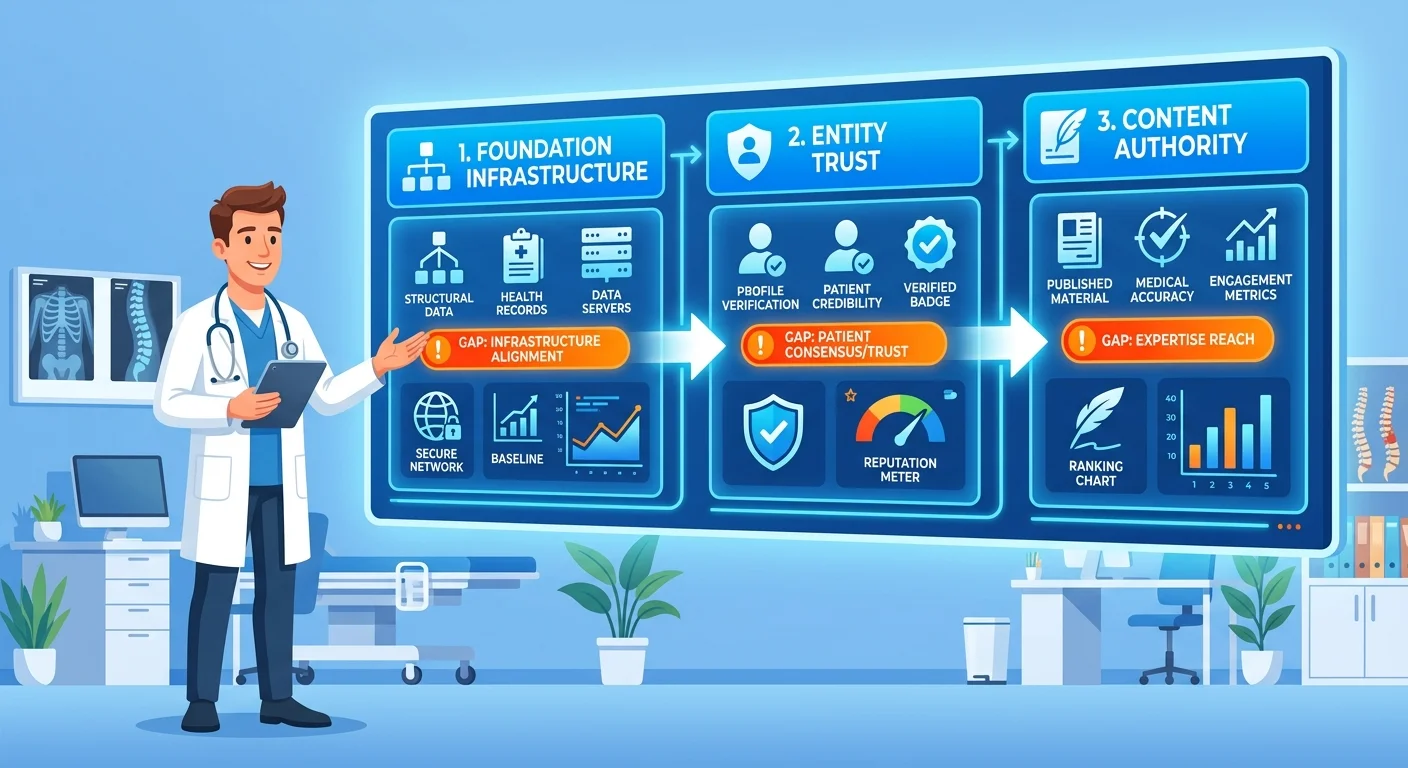
The AI Visibility Check just showed you the problem.
ChatGPT named a competitor. Gemini didn't know you exist. Grok recommended someone else.
That's the diagnosis. Now here's what comes next.
This Isn't a Content Problem
Most chiropractors think they need more blog posts.
Wrong.
You need infrastructure AI can actually read. Schema that tells machines what you do. Entity signals that prove you're real. Content structured in a way that builds topical authority instead of scattering it across random topics some SEO tool said had decent search volume.
The marketing industry sold you a pretty website. Clean layout. Nice photos. Contact form. Maybe a blog nobody reads.
But AI can't read it. Not in a way that matters.
Schema's missing. Entity signals are weak or nonexistent. The content is so generic that ChatGPT and Gemini have no way to confirm who you are, what you do, or whether you're worth recommending over the practice down the street that actually built the foundation AI needs.
The AI Visibility Check didn't reveal a content gap. It revealed an infrastructure failure.
Why Quick Fixes Fail
I've watched practices try to patch this with surface-level fixes.
Add some blog posts. Update the meta tags. Hire a cheap agency to "optimize" the site.
It doesn't work.
Because the foundation itself is broken. Template websites—the ones most chiropractors are running—weren't built for machine readability. They were built to look good in a browser.
AI engines don't care how your site looks. They care whether they can parse it, trust it, and cite it.
If the technical foundation isn't there, everything you build on top of it fails.
The machine-readable technical foundation isn't optional. It's the starting point.
Phase 1: The Foundational Rebuild (Authority Infrastructure)
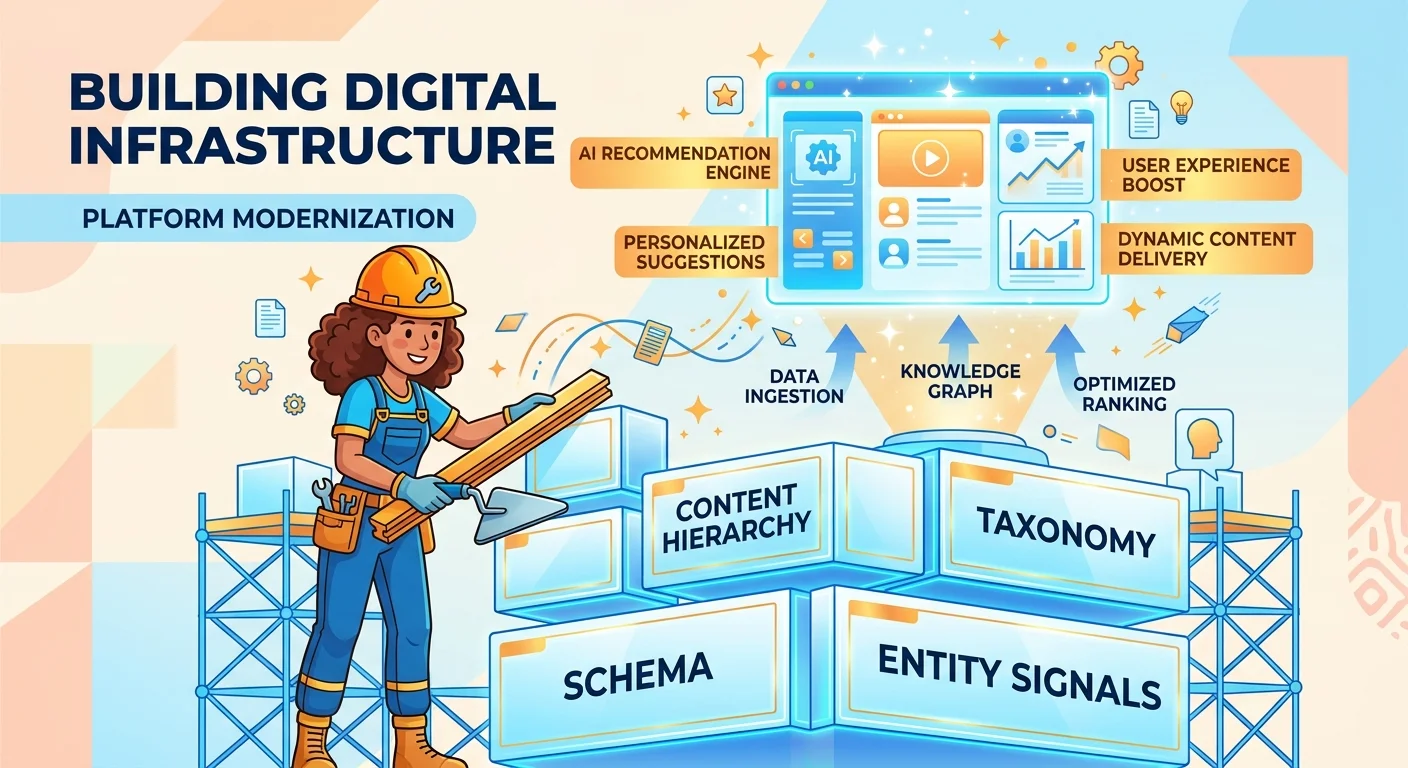
This is the most technical phase. It's also the most critical.
Without authority infrastructure, nothing else matters. You can write perfect content. You can build entity trust across every directory on the web. But if AI can't read the foundation, you're invisible.
What Authority Infrastructure Actually Is
Authority infrastructure is the machine-readable foundation AI engines use to understand what you do, who you are, and why you should be trusted.
It's not a "website" in the traditional sense. It's a structured knowledge base built with specific code that answer engines can parse and verify.
Most websites are designed for humans. Authority infrastructure is designed for machines.
According to Google's structured data documentation, search engines and AI systems rely on schema markup to understand the meaning of content on a page—not just the words on the screen. Without that markup, the content might as well not exist.
A regular website shows a human visitor your services, your location, and your contact info.
Authority infrastructure tells AI engines the same information in a language they can process, verify, and trust.
That difference is everything.
The Schema Layer
Schema markup is the language AI engines use to understand what a business does, who runs it, where it operates, and what services it offers.
It's not visible to website visitors. It sits in the code, telling machines what they're looking at.
Most template websites either lack schema entirely or implement it wrong. A generic "LocalBusiness" tag might be present, but the depth required for AI trust isn't there.
Service-specific schema? Missing. Author schema? Missing. FAQ schema? Missing.
When schema is missing, the entity is invisible at the foundational level.
AI engines can't verify what you do if you don't tell them in a format they understand.
The Content Hierarchy
Content must be structured in semantic clusters that demonstrate topical depth—not scattered across random blog topics chosen because they had decent search volume five years ago.
AI engines don't just look at individual pages. They look at relationships between pages. They assess whether the content demonstrates deep authority in a specific area or surface-level knowledge across too many areas.
Internal linking architecture must mirror this hierarchy. When AI crawls a site, it follows links. The structure of those links tells the engine what's foundational, what's supporting, and what's proof of depth.
If the hierarchy is flat or random, the authority signal is weak.
If it's structured, the signal compounds.
| Component | Typical Website | Authority Infrastructure |
|---|---|---|
| Schema Markup | Generic LocalBusiness tag only | Service-specific, FAQ, Author, Organization schema fully implemented |
| Entity Signals | Business name and address listed on contact page | NAP consistency, verified citations, platform integrations across directories |
| Content Structure | Random blog posts on generic topics | Semantic clusters with pillar content and supporting articles in clear hierarchy |
| Internal Linking | Arbitrary links to related posts | Strategic linking that mirrors topical authority and reinforces semantic relationships |
| Machine Readability | Designed for human visitors only | Structured data that AI engines can parse, verify, and cite |
Phase 2: The Trust Layer (Entity Signals & Citations)
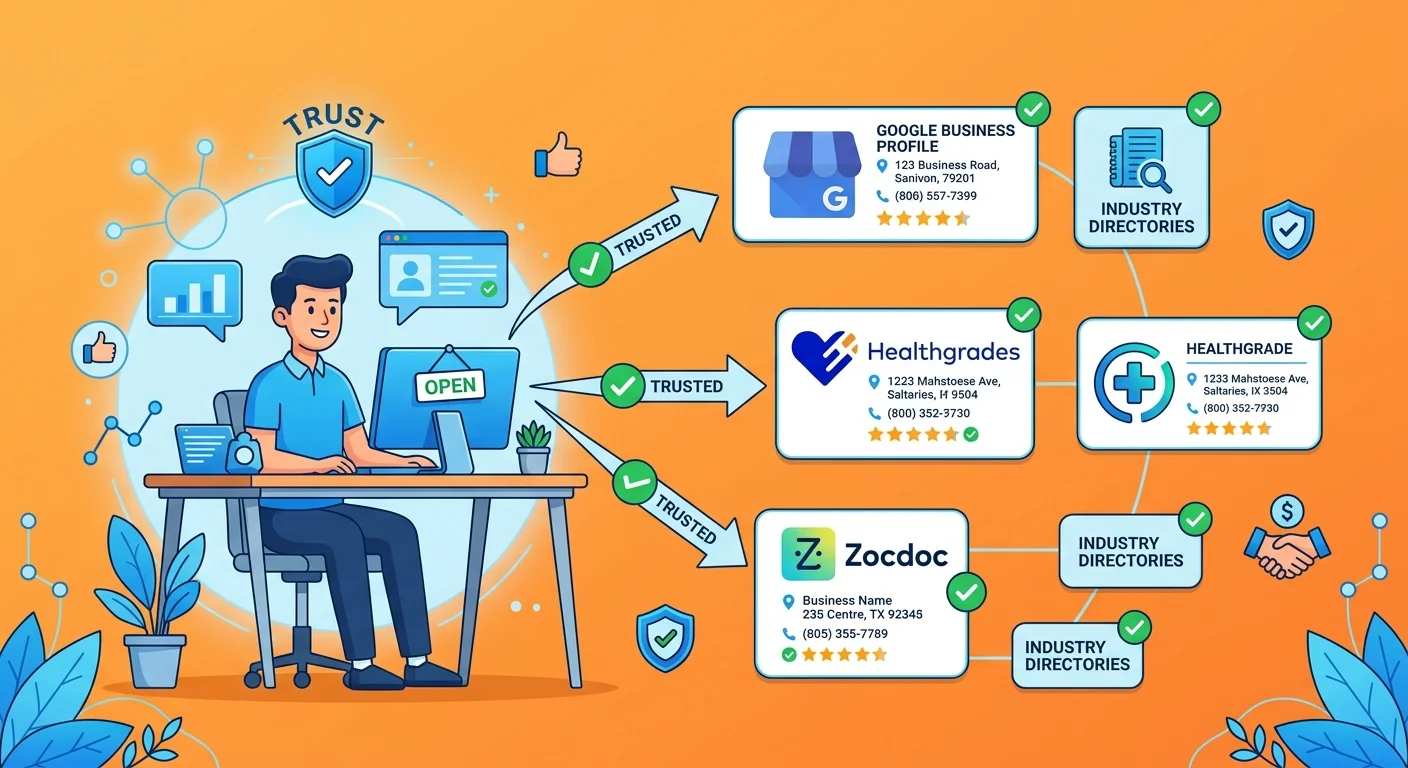
Infrastructure alone isn't enough.
AI engines need external validation that you're real. They need proof you're not just a website—you're a practice operating in a real market with real verification from high-authority sources.
What Entity Trust Means
Entity trust is the degree to which AI engines believe you're a real, authoritative source in your market.
It's not built through link-building schemes or directory spam. It's built through consistent, accurate citations across high-authority platforms that AI engines already trust.
Zocdoc. Healthgrades. Google Business Profile. Industry-specific directories.
These platforms function as verification anchors. When AI sees consistent information about your practice across these sources, it increases the confidence score assigned to your entity.
When the information conflicts—or when you're not listed at all—the confidence score drops. AI engines either ignore you or rank you lower in trust compared to competitors who did the work.
Building real entity trust isn't a one-time setup. It's an ongoing validation layer that reinforces the infrastructure built in phase one.
Why Platform Citations Matter
AI engines don't trust websites on their own. They trust platforms that have already established authority.
When Gartner's research on the shift to AI-synthesized answers describes the new reality of marketing, they're talking about this exact dynamic: AI engines prioritize trusted platforms over individual websites.
The platforms that aggregate and verify information—like Zocdoc and Healthgrades—become the sources AI cites.
If you're not listed accurately on those platforms, you don't exist in the AI's verification network.
It's that direct.
Being listed isn't enough. The information must be consistent. Name, address, phone number, services, hours—every field must match across every platform.
Any conflict weakens the trust signal.
The NAP Consistency Problem
NAP stands for Name, Address, Phone.
Inconsistencies across the web dilute entity trust faster than almost anything else.
AI engines see conflicting data and either ignore you or rank you lower in confidence. If Google Business Profile says one address, Healthgrades says another, and your website says a third—which one is correct?
AI doesn't know. So it doesn't cite you.
This phase audits every citation across the web and fixes every inconsistency. The goal is perfect alignment—so when AI engines verify your entity, they find the same data everywhere.
| Platform Type | Examples | Trust Signal Contribution |
|---|---|---|
| Healthcare Directories | Zocdoc, Healthgrades, Vitals, WebMD | Primary verification anchors for healthcare entity trust |
| Google Properties | Google Business Profile, Google Maps | Core entity validation and local market verification |
| Industry Associations | State chiropractic boards, professional organizations | Professional credential validation and specialty verification |
| Social Platforms | LinkedIn, Facebook, Instagram | Entity consistency and ongoing presence signals |
| Review Platforms | Yelp, Trustpilot, Clutch | Patient experience validation and trust reinforcement |
Phase 3: The Compounding Engine (AEO Content Execution)
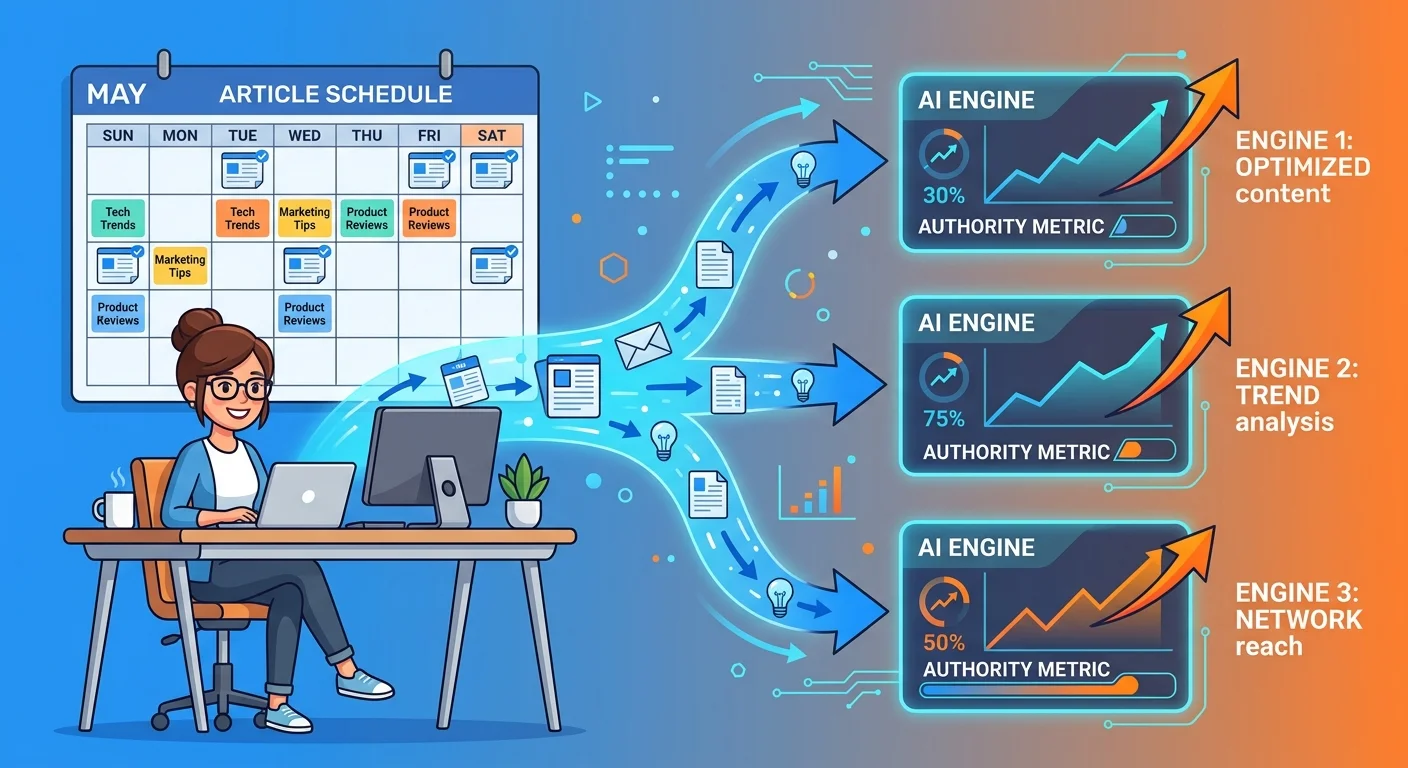
Infrastructure and entity trust create the foundation.
AEO content is the engine that compounds authority month after month.
This is where the practices that move early build an insurmountable advantage. Because every article published deepens the authority signals AI engines use to determine who to cite.
Why AEO Content is Different
AEO content is not blog posts for SEO.
It's structured, evidence-based answers to the exact questions patients are asking AI engines. Each article is validated by AI itself before publication, ensuring it passes the extraction test and can be cited as a trusted source.
Traditional blog posts optimize for keywords and backlinks. AEO content optimizes for being the answer AI extracts and presents.
The difference: traditional blog posts hope to rank in a list of ten results. AEO content is engineered to be the single answer AI gives when someone asks.
AEO Content Writing Services don't produce commodity articles. They produce authority-building content that AI engines recognize as citation-worthy.
The 12-Article-Per-Month Model
This isn't a content mill approach.
It's a high-velocity execution model where 12 articles per month, each targeting a specific patient question, build on the infrastructure and entity trust established in phases one and two.
Every article is researched by Gemini. Written by Claude. Validated by Gemini again. And published only after passing strict accuracy and trust standards.
According to HubSpot's research on content marketing, high-quality, in-depth content is the primary driver of authority and trust online. Volume matters—but only if the volume doesn't sacrifice depth.
The 12-article-per-month model hits both targets. High velocity without commodity execution. Depth without sacrificing consistency.
Why Velocity Matters
Authority doesn't build from a single article or a one-time website update.
It compounds.
Each article adds another layer of topical authority. Each month, the practice demonstrates deeper expertise in its specialty area. Each citation AI engines find reinforces the trust signals built in phases one and two.
The practices that own AI recommendations six months from now are executing this roadmap today.
The ones that wait are giving that ground to competitors. And every month the gap widens, it becomes harder to close.
The risk of waiting on patient search isn't theoretical. It's happening right now. Every month a competitor publishes 12 authority-building articles while you publish zero, they compound the advantage.
| Dimension | Traditional Blog Posts | AEO Content Execution |
|---|---|---|
| Intent | Rank for keywords, drive traffic | Be the answer AI extracts and cites |
| Structure | Optimized for human readers and Google's algorithm | Optimized for AI extraction with direct answers, semantic clarity, and verified claims |
| Validation | Self-published, no external verification | Two-AI validation system ensures accuracy before publication |
| Outcome | Hope to appear in search results list | Become the singular answer AI engines recommend |
| Timeline | One-time publish, outdated within months | Evergreen authority that compounds over time with monthly execution |
This Roadmap Requires Focus
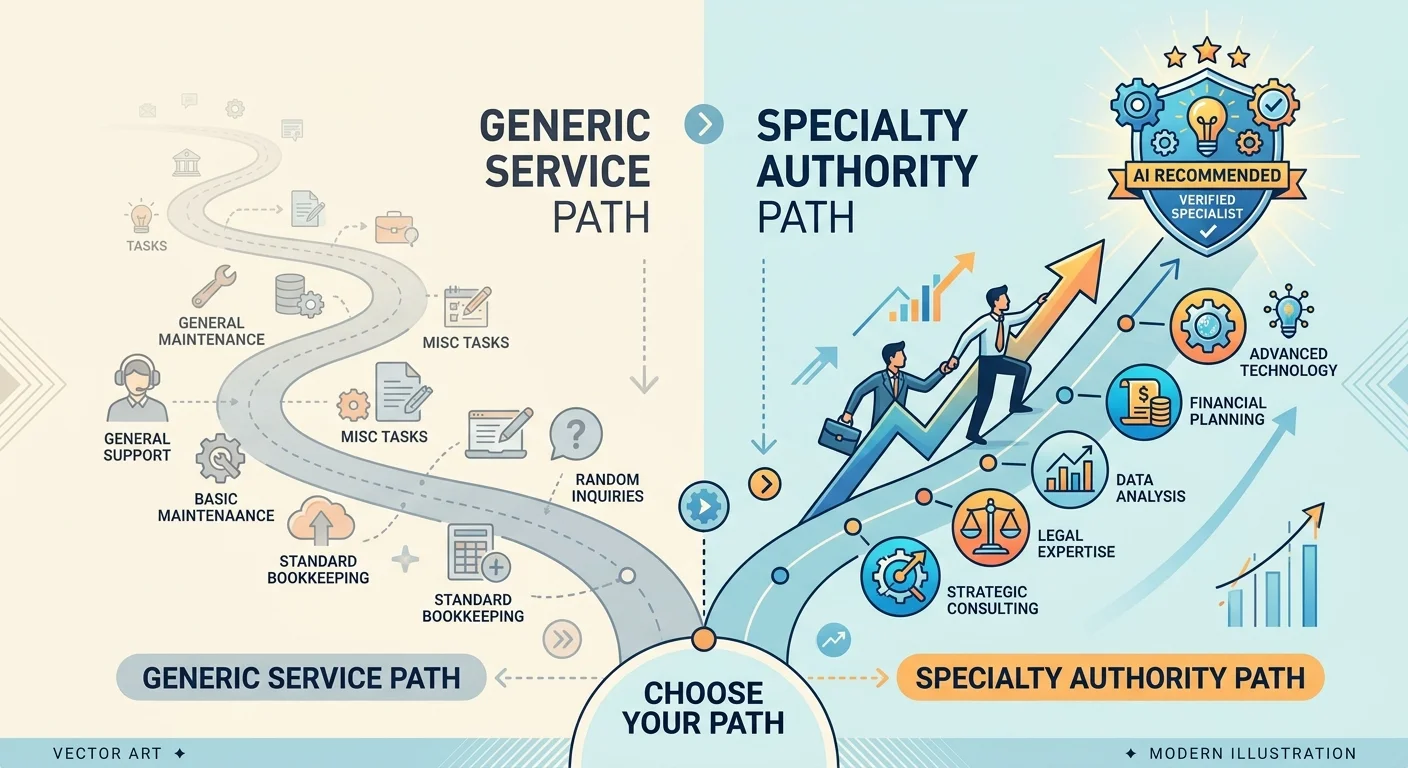
AI engines don't cite generalists. They cite specialists.
If you're trying to be the answer for everything—sports injuries, prenatal care, pediatrics, geriatrics, auto accidents, corporate wellness, and nutritional counseling—you're not going to be the answer for anything.
The "Everything to Everyone" Practitioner refuses to specialize. They want to capture every possible patient who walks through the door.
The problem: that approach dilutes authority and makes AI citation impossible.
AI engines rank confidence. And confidence requires depth in a specific area—not surface-level competence across twelve areas.
If you're not willing to define a clear area of authority and build the roadmap around that focus, this isn't the right fit.
Not because the execution is weak. Because the strategic foundation is diluted.
Why This Isn't a DIY Project
The roadmap requires deep technical infrastructure work, systematic entity trust building, and high-velocity content execution that most practices don't have the bandwidth or expertise to manage.
This is a white-glove execution service. The steak gets on the plate. How it got there is our concern, not yours.
Could you learn schema implementation? Sure. Could you audit every citation across the web and fix every inconsistency? Probably. Could you write 12 AI-validated articles per month while running a practice?
Not likely.
And even if you could—the time cost alone would destroy the ROI.
The Infrastructure Phase Requires Specialized Execution
Schema implementation, entity signal mapping, and content hierarchy design aren't tasks a general web designer or marketing agency can execute correctly.
Most agencies still operate on the old SEO playbook. They'll deliver a prettier website with better meta descriptions and a few blog posts targeting local keywords.
But the structural invisibility to AI will remain.
Because they're optimizing for an algorithm that's being replaced. They're building for Google's 2019 search experience—not for the AI-synthesized answers patients are getting in 2025.
Why traditional SEO fails isn't a mystery. It's a methodology mismatch. SEO optimizes for a list of results. AI search produces a verdict.
Those aren't the same thing.
The Content Phase Requires a Two-AI Validation System
The AEO content execution phase uses a proprietary process: Gemini researches and validates, Claude writes, Gemini validates the output before publication.
Every claim is sourced. Every statistic is verified. Every article passes the extraction test—meaning it can stand alone as a complete, accurate answer with zero surrounding context.
That's not commodity content creation. It's engineered for AI trust.
Most agencies outsource blog writing to freelancers who research by skimming the first page of Google results. The output is plausible but unverified.
And AI engines don't cite plausible—they cite verifiable.
| Component | Typical Approach | Authority Engine |
|---|---|---|
| Infrastructure | Template website with generic schema | Custom-built authority infrastructure with full entity signal implementation |
| Entity Trust | Basic directory listings, inconsistent NAP | Systematic citation audit and platform optimization for perfect NAP consistency |
| Content | Freelance blog posts targeting keywords | Two-AI validation system producing 12 verified articles/month |
| Execution Model | DIY or low-cost retainer with minimal oversight | White-glove execution service with zero client management required |
| Outcome | Traffic that doesn't convert, rankings that decay | Authority asset that compounds and becomes more valuable over time |
Frequently Asked Questions
How long does it take to close an AI visibility gap?
Authority compounds over time, not on a fixed schedule.
Foundational infrastructure can be rebuilt in weeks. That's the technical layer—schema, entity signals, content hierarchy. It's fast because it's deterministic work.
Entity trust and content authority deepen with consistent monthly execution. You'll see early signals within 3-4 months—practices showing up in AI recommendations for niche questions, citation frequency increasing, entity confidence scores rising.
But the compounding effect accelerates after 6-12 months of execution. That's when the authority asset becomes self-reinforcing. That's when competitors realize they can't catch up without doing the same work—and by then, you're 12 months ahead.
Is closing the AI gap the same as doing traditional SEO?
No.
Traditional SEO optimizes for ranking in a list of search results. You target keywords, build backlinks, hope to land on page one of Google.
This roadmap builds the entity trust and authority infrastructure that makes AI engines name your practice as the singular answer.
According to Google's E-E-A-T guidelines, Experience, Expertise, Authoritativeness, and Trustworthiness are the core factors that determine content quality. Those aren't keyword-based signals. They're entity-based trust signals.
SEO targets an algorithm. This roadmap builds trust with the engines that are replacing that algorithm.
What's the difference between 'authority infrastructure' and a regular website?
A regular website is a digital brochure designed for human visitors. Clean layout, nice photos, contact form, maybe a blog.
Authority infrastructure is a machine-readable knowledge base built with schema markup, entity signals, and semantic content hierarchies that AI engines can parse and trust.
Humans don't see the difference. AI engines do.
The website might look identical. But one is structured in a way that AI can verify, cite, and trust. The other is invisible.
Why can't I just fix my existing website with these principles?
Most template-based sites lack the structural flexibility to implement proper schema and entity hierarchies.
The foundation itself is the problem. Patching it with a few blog posts or updated meta tags won't close the gap.
A rebuild isn't about aesthetics. It's about making the site legible to machines.
If the platform you're running can't support custom schema, semantic linking, and structured content hierarchies—and most templates can't—then fixing it means starting over with a foundation built for machine readability, not just human readability.
Do I have to manage this roadmap and create the content myself?
No.
This is a white-glove execution service. The entire roadmap—from infrastructure rebuild to monthly AEO content—is handled by iTech Valet.
The practice does nothing except show up as the authority AI recommends.
You don't manage the infrastructure work. You don't create the content. You don't audit citations. You don't track entity signals.
We do.
What is the first step in the Local AI Authority Engine process after the check?
The first step is the foundational rebuild.
The digital presence is restructured into AI-readable authority infrastructure. Schema is implemented. Entity signals are mapped. Content hierarchy is established.
This is the platform all future entity trust and content execution is built upon. Without it, the rest of the roadmap fails.
iTech Valet's AI Authority System handles this as phase one of the full execution service. You don't touch the code. You don't manage the process. The infrastructure gets rebuilt, tested, and validated before we move to phase two.
What happens if I don't take action on this roadmap?
The gap widens.
Every month a competitor builds authority infrastructure and executes AEO content, they compound the advantage.
AI engines don't wait for practices to catch up. They cite whoever has already built the trust signals.
According to Search Engine Journal's research on zero-click search, being the answer matters more than getting traffic. Because in zero-click search environments—which AI answer engines accelerate—the answer is presented without the user ever clicking through to a website.
If AI names a competitor, the patient never sees your site. The traffic never comes. The opportunity is gone.
The Roadmap is the Asset
Authority is built, not claimed.
This entire roadmap is the process of building the asset that was missing. It's not a quick fix. It's not a cheap retainer that delivers a few blog posts and calls it a strategy.
It's infrastructure, entity trust, and compounding content execution that becomes more valuable every month it runs.
The practices that wait are betting their competitors won't move. That's a losing bet.
Because the gap revealed by the AI Visibility Check isn't a problem that gets solved once. It's a foundational rebuild that compounds over time.
And the question isn't whether to do this. The question is whether to do it now—or watch competitors take the spot while you're still deciding.
The AI Visibility Check showed you the gap. This roadmap is how you close it.
But knowing the roadmap and executing it are two different things. The infrastructure rebuild alone requires deep technical work most agencies don't understand. The entity trust layer demands systematic citation audits and platform optimization. The AEO content phase runs at a velocity most practices can't sustain internally.
The Local AI Authority Engine handles all three phases as a white-glove execution service. You don't manage the process. You don't create the content. You show up as the answer.
If you're ready to stop being invisible and start being the authority AI recommends—run your AI Visibility Check and let's talk about what closing the gap actually looks like for your practice.
The practices that move now will own the recommendations six months from now. The ones that wait will be explaining to patients why AI told them to call someone else.
621 Enterprises, Inc. | Copyright 2026 | All rights reserved