
How to Audit Your Competitor's AI Citation Profile
Auditing a competitor's AI citation profile means analyzing the trust signals and entity infrastructure AI engines use to select them as the authoritative answer. Not counting backlinks. Not tallying referring domains. Not measuring domain authority scores designed for a search model that's already dead.
Traditional backlink audits measure volume. AI answer engines measure trust. The difference: list-based search lets you rank fifth and still get traffic. AI picks one answer. If your competitor gets cited and you don't, they own the answer. You don't exist.
The audit has three layers. Entity Footprint Mapping identifies where the competitor is mentioned across the web — linked or not — and whether AI engines associate their name with your shared keywords. Semantic Coverage Analysis measures how completely they answer the questions your market asks. Citation Source Quality Scoring evaluates which institutional sources cite them. A small number of high-authority links build more trust than thousands of low-quality mentions.
This matters because nearly two-thirds of Google searches now end without a click. Patients ask AI who to trust. Clients ask AI who to hire. Customers ask AI who's the best. The answer they get is built on the authority infrastructure you're about to dissect. The competitor who owns that infrastructure owns the market. The one who doesn't becomes invisible.
You're not reverse-engineering their SEO strategy. You're reconstructing the belief system that made their name sacred to the algorithm.
Last Updated: May 18, 2026
- • Why Traditional Backlink Audits Miss the AI Citation Layer
- • What AI Engines Actually Evaluate
- • The Three-Layer AI Citation Audit Framework
- • How to Execute a Competitor AI Citation Audit
- • What to Do When Your Competitor Dominates AI Citations
-
• Frequently Asked Questions
- • What is the difference between an AI citation audit and a traditional backlink audit?
- • Which signals matter most when evaluating a competitor's AI citation profile?
- • How can I identify the sources AI engines trust most in my industry?
- • What are the biggest red flags to look for in a competitor's citation profile?
- • If my competitor has more citations, how can I build the trust signals to displace them?
- • Where This Leaves You
Why Traditional Backlink Audits Miss the AI Citation Layer
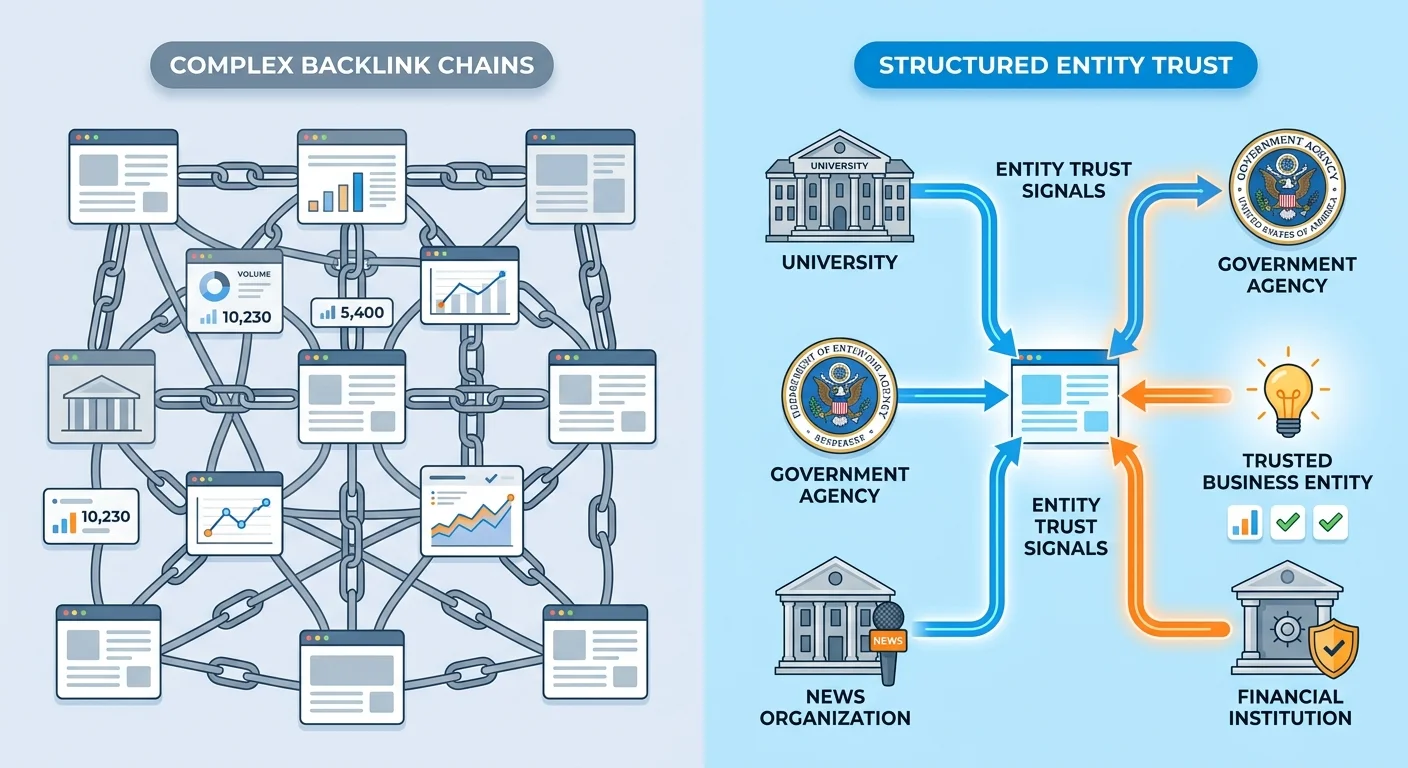
Traditional backlink audits are counting artifacts from a dead civilization. You're tallying how many sites link to your competitor. You're measuring domain authority scores. You're tracking referring domains like they're votes in an election where page one was the prize.
That game's over.
That model worked when Google returned ten blue links and users clicked through to compare options. It doesn't work when nearly two-thirds of searches end without a click. AI engines don't rank your competitor fifth and send them traffic anyway. They say one name. Either it's yours or it isn't.
The backlink audit measures inputs for a game that's over. Google uses over two hundred signals to rank pages, and AI answer engines synthesize those signals differently. They're not asking how many sites link to this business. They're asking which entity do trusted sources associate with this query. That's not a volume question. It's a trust question.
The Rejected Method That Still Dominates
Most agencies still sell backlink audits as competitive intelligence. They pull your competitor's link profile from Ahrefs or SEMrush, export a spreadsheet with five thousand rows, and hand it over like they've delivered the blueprint. Here's their domain authority. Here's their anchor text distribution. Here's how many .edu links they have.
It looks impressive. It answers the wrong question.
That data answers the question how did this competitor rank on page one in 2019. It doesn't answer why does ChatGPT say their name when a patient asks who to trust. The rejected method treats links as votes. AI engines treat links as one signal in a much larger entity trust calculation that includes unlinked mentions, schema accuracy, semantic density, and institutional validation.
You can't see entity drift in a backlink report. You can't see whether your competitor's NAP data conflicts across directories. You can't see whether AI engines associate their brand with the wrong service category. You can't see whether the sources citing them are the ones AI engines actually trust. Analyzing a competitor's backlink profile tells you what worked for list-based search. It doesn't tell you what's working for zero-click answers.
What Volume Metrics Actually Miss
A competitor with ten thousand backlinks and weak entity signals loses to a competitor with three hundred backlinks and airtight entity trust.
The volume-first model assumes more is better. It isn't. AI engines prioritize source quality over source quantity, and they weight institutional sources higher than blog comments and forum mentions.
The metrics you're tracking — referring domains, total backlinks, domain rating — measure breadth. AI citation audits measure depth. How many times is the competitor's name mentioned on trusted healthcare directories. How many .gov and .edu sources reference their methodology. How completely do they answer the questions your shared audience is asking. Volume metrics miss all of it.
Here's what they really miss: the concept of zero-click searches means the backlink isn't delivering traffic anymore. It's delivering trust signals to an AI model that's deciding whose name to say. If your audit strategy is still built around driving click-through, you're measuring the wrong outcome.
| Metric | Traditional Backlink Audit | AI Citation Audit |
|---|---|---|
| Primary Question | How many sites link to this page? | Which entities do trusted sources associate with this query? |
| Success Metric | Referring domain count and domain authority score | Entity trust signals and citation source quality |
| Data Source | Backlink crawlers tracking hyperlinks across the web | Entity footprint mapping including linked and unlinked mentions |
| Optimization Goal | Rank higher on a list of ten results | Become the single answer AI engines cite |
| Link Quality Definition | Domain authority and page authority scores | Institutional validation from sources AI engines trust |
| Volume vs. Depth | More backlinks from more domains is better | Fewer high-trust citations outweigh thousands of low-quality mentions |
| Visibility Assumption | Traffic comes from click-through after ranking | Authority comes from being named in zero-click answers |
| Competitive Insight | Which sites link to the competitor | Why AI engines trust the competitor's entity over yours |
| Actionable Output | List of link targets for outreach campaigns | Authority infrastructure gaps to close through entity trust work |
What AI Engines Actually Evaluate
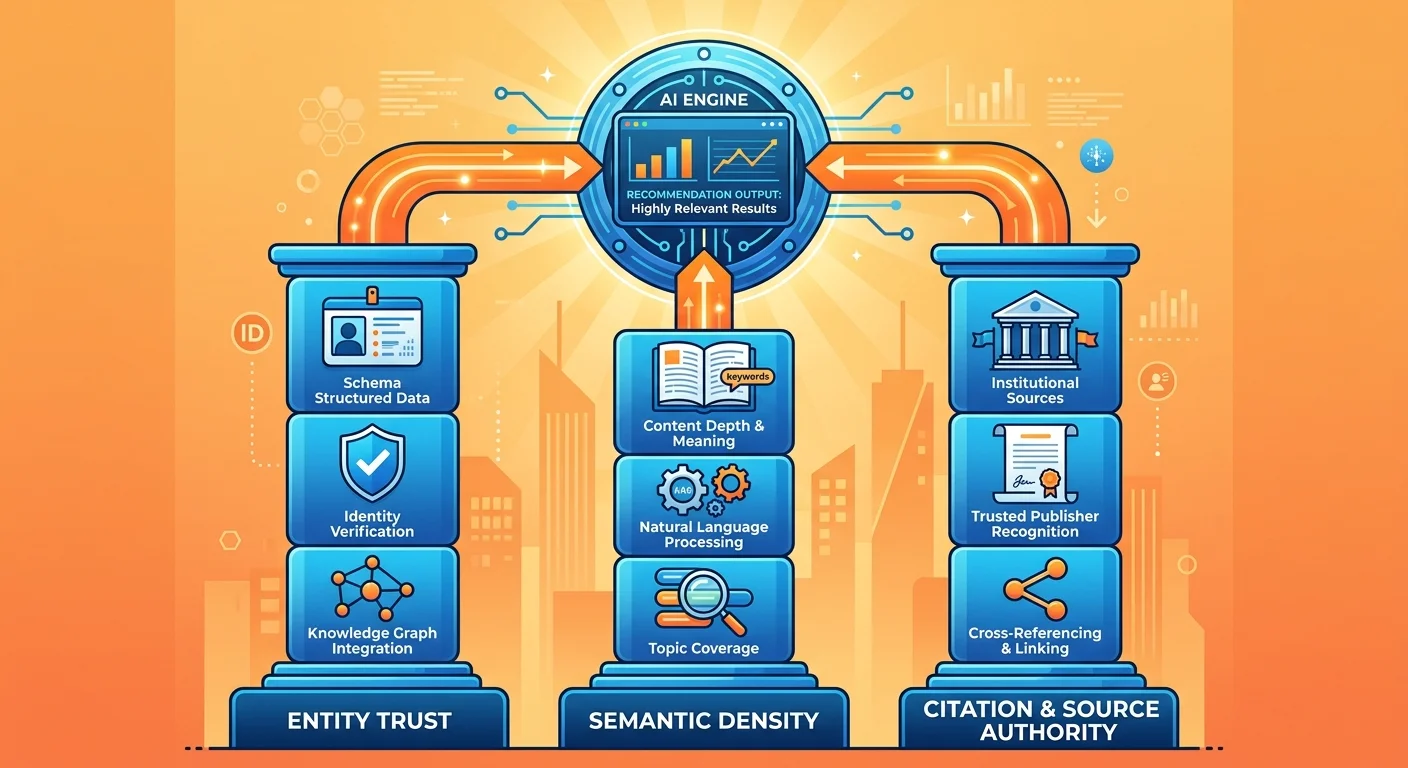
AI engines evaluate three layers when they decide whose name to say. Entity Footprint Mapping. Semantic Coverage Analysis. Citation Source Quality Scoring. These aren't backlink metrics. They're trust infrastructure signals that determine whether your competitor gets cited as the answer — or ignored entirely.
Traditional audits stop at the hyperlink. AI audits start there. AI models don't ask who links to this business. They ask which entity do trusted sources associate with this query, and how completely does that entity answer it. That's why they synthesize from multiple high-quality sources instead of ranking a list.
You're not counting artifacts anymore. You're reconstructing the belief system that made someone else's name sacred to the algorithm. The competitor who owns that system owns the market. The one who doesn't becomes the also-ran in a race where second place doesn't exist.
Entity Trust Signals
Entity trust is the foundation. It's not domain authority. It's whether AI engines can confirm that your competitor is who they claim to be, where they claim to be, and what they claim to do. Schema markup matters here because structured data and schema markup lets search engines understand the content and context of a page — which improves its chances of being cited in AI summaries.
Check whether your competitor's business name, address, and phone number are consistent across every directory, citation source, and social profile. Entity drift — conflicting NAP data, mismatched business categories, or outdated location information — signals to AI engines that the entity isn't trustworthy. A competitor with perfect entity alignment beats one with better content but conflicting signals.
Look for unlinked mentions. AI engines don't need a hyperlink to associate a brand with a topic. If your competitor's name appears alongside your shared keywords on trusted healthcare directories, industry publications, or institutional sites, that's an entity trust signal whether the mention links back or not. Building entity trust means making your name inseparable from the query.
The competitor with airtight schema, zero NAP conflicts, and consistent unlinked mentions across high-authority sources owns the entity layer. The one with messy infrastructure and conflicting signals doesn't — no matter how many backlinks they have.
Semantic Density and Topic Coverage
AI engines prioritize complete answers because they're trained to synthesize from in-depth content. If your competitor publishes fifty thin blog posts that each answer one narrow question, they lose to the competitor who publishes ten articles that fully cover the topic from every angle. Semantic density isn't word count. It's how completely you address the question and its related subtopics.
Audit how thoroughly your competitor answers the core questions your market asks. Do they cover the objections. Do they address the post-intent — what happens after the decision. Do they explain the mechanism, the cost, the timeline, the alternatives. Google's Search Quality Rater Guidelines emphasize Expertise, Authoritativeness, and Trustworthiness. Completeness is the signal AI engines use to score all three.
A competitor with high semantic density answers the question so thoroughly that AI engines don't need to pull from a second source. That's the advantage. When one entity covers the topic completely, AI cites that entity. When no single entity does, AI synthesizes across multiple sources — and no one owns the answer.
Citation Source Authority
Not all citations are equal. A mention on a .gov site or a peer-reviewed study carries more weight than a mention on a blog comment or forum thread. AI engines are trained on institutional sources first. The sources citing your competitor determine how much trust the AI assigns to them.
Check which types of sources cite your competitor. Are they getting mentioned on healthcare directories like Healthgrades or Zocdoc. Are industry publications referencing their methodology. Are .edu institutions linking to their research or case studies. Source authority isn't about volume. It's about whether the sources AI engines trust most are validating your competitor's name.
A competitor cited by three institutional sources beats a competitor cited by three hundred low-quality blogs. The old audit counted every link equally. The new one weights them by how much trust AI engines assign to the source. If your competitor owns the institutional layer, they own the citation.
| Signal Type | What AI Engines Evaluate | Why It Matters for Citations |
|---|---|---|
| Entity Footprint Mapping | Consistency of business name, address, phone number, and schema markup across all directories, citations, and social profiles | Conflicting entity data signals untrustworthiness to AI engines — even strong content loses to clean entity infrastructure |
| Entity Footprint Mapping | Unlinked brand mentions on trusted directories and institutional sites | AI engines associate brands with topics without hyperlinks — repeated mentions build entity-query relationships |
| Entity Footprint Mapping | Business category accuracy and alignment across platforms | Misclassified entities get filtered out of relevant queries — category drift means invisibility in your actual market |
| Semantic Coverage Analysis | Depth and completeness of content answering core market questions from every angle | AI engines prioritize sources that deliver complete answers — partial coverage forces multi-source synthesis where no one owns the citation |
| Semantic Coverage Analysis | Coverage of indirect intent, counter-intent, and post-intent within topic content | Comprehensive content addresses what users ask next — AI engines cite sources that eliminate the need for follow-up queries |
| Semantic Coverage Analysis | Structured content hierarchy with clear H2/H3 sections and scannable breakdowns | AI models extract from well-organized content more reliably — unstructured walls of text get skipped even if accurate |
| Citation Source Quality Scoring | Mentions and links from .gov, .edu, and peer-reviewed institutional sources | AI models are trained on institutional content first — validation from these sources carries exponentially more trust weight |
| Citation Source Quality Scoring | Citations from industry-specific trusted directories and professional associations | Niche authority sources signal domain expertise — a healthcare directory mention outweighs dozens of generic blog comments |
| Citation Source Quality Scoring | Ratio of high-authority citations to total citation volume | Quality concentration beats volume dilution — three institutional sources outperform three hundred low-trust mentions |
The Three-Layer AI Citation Audit Framework
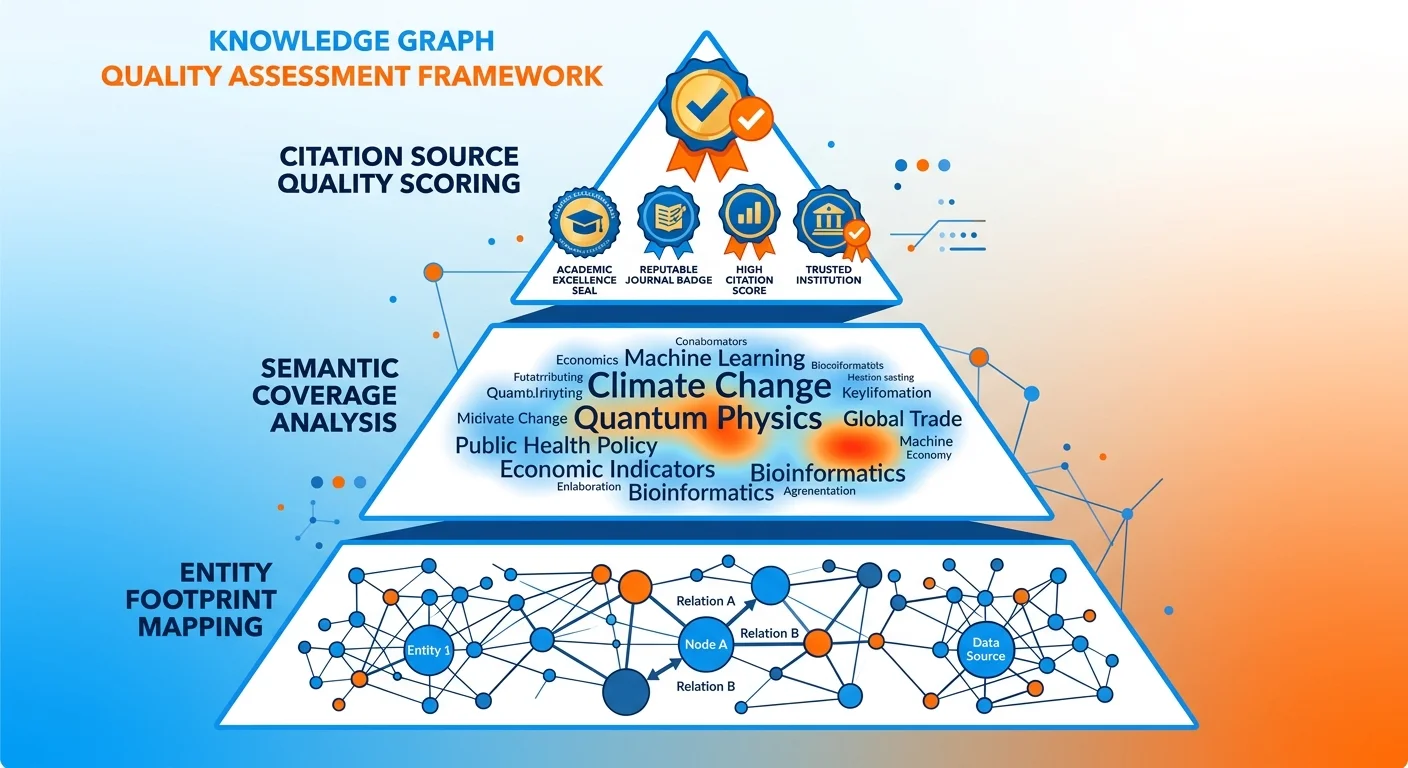
The three-layer framework isn't a one-time checklist. It's the diagnostic you run every time you need to understand why AI engines say a competitor's name instead of yours.
Entity Footprint Mapping tells you whether AI engines can confirm who your competitor is. Semantic Coverage Analysis tells you whether they've answered the questions completely enough to own the topic. Citation Source Quality Scoring tells you whether the sources validating them are the ones AI engines trust most.
Run all three layers and you'll see the exact infrastructure that's making your competitor the answer. Skip one and you're guessing. The competitor who controls all three layers controls the market. The one who's strong in two but weak in the third gets cited sometimes — but not consistently enough to own it.
Layer 1: Entity Footprint Mapping
Start by searching your competitor's business name across every major directory, citation source, and social profile. You're not looking for backlinks. You're looking for consistency. Does their name, address, and phone number match everywhere? Does their business category stay the same across platforms? Does their schema markup accurately reflect what they actually do?
Entity drift kills trust faster than anything else. One directory lists them as a "family chiropractor." Another says "sports injury clinic." A third has an old address. AI engines see those conflicts and downgrade the entity's reliability. It doesn't matter how good their content is if the foundational identity signals contradict each other.
Next, search for unlinked brand mentions. Type their business name into Google along with your shared keywords. See where their name appears without a hyperlink. Industry blogs. Healthcare directories. Local news coverage. AI engines treat those mentions as entity validation whether they link back or not.
If your competitor's name shows up alongside "best chiropractor near me" on ten trusted directories and yours doesn't, that's not a backlink gap. That's an entity trust gap. The competitor with perfect entity alignment and consistent unlinked mentions wins this layer. The one with conflicting signals and sparse mentions loses it — no matter how many backlinks they've built.
Layer 2: Semantic Coverage Analysis
Pull every piece of content your competitor has published in the last twelve months. Read it like you're the AI engine deciding whether this entity fully answers the question. Do they cover objections? Do they address what happens after the decision? Do they explain cost, timeline, and alternatives — or do they skim the surface and move on?
Semantic density isn't how many words they wrote. It's whether they answered the question so completely that AI engines don't need to pull from a second source. A competitor with ten articles that cover every angle of the core questions beats a competitor with fifty thin posts that each answer one narrow subtopic. Why consensus trumps traffic in AI recommendations explains why completeness matters more than volume.
If your competitor owns the semantic layer, AI engines cite them first because they don't need to synthesize across multiple sources. If no one owns it — if every entity in your market publishes shallow content — AI pulls from five different sources and no one gets the credit. That's the opportunity. The competitor who goes deeper wins by default.
Layer 3: Citation Source Quality Scoring
Now audit the sources citing your competitor. Open their backlink profile. Ignore the volume. Look at the source types. Are they getting mentioned on .gov sites, .edu institutions, or peer-reviewed studies. Are healthcare directories like Healthgrades and Zocdoc listing them. Are industry publications referencing their methodology.
Three citations from institutional sources carry more weight than three hundred citations from blog comments and forum threads. AI models are trained on institutional sources first. The authority of the sources citing your competitor determines how much trust AI assigns to their entity.
If your competitor owns the institutional layer — if the sources AI engines trust most are validating their name — they own the citation. If they're getting volume from low-authority sources but nothing from .gov, .edu, or trusted directories, they're vulnerable. That's where you displace them. Build the institutional validation they're missing and you take the answer away from them.
| Audit Layer | Core Question | Primary Data Source | Output Deliverable |
|---|---|---|---|
| Entity Footprint Mapping | Can AI engines confirm who this business is and where it operates? | Directory listings, schema markup, NAP consistency checks, unlinked brand mentions | Entity trust score — validated, conflicted, or absent |
| Semantic Coverage Analysis | Does this entity answer the core questions completely enough to own the topic? | Published content library, topic depth assessment, intent layer coverage mapping | Semantic density score — comprehensive, partial, or superficial |
| Citation Source Quality Scoring | Are the sources validating this entity the ones AI engines trust most? | Backlink profile filtered by source type, institutional citation inventory, domain authority by tier | Citation authority score — institutional, mixed, or low-trust |
How to Execute a Competitor AI Citation Audit
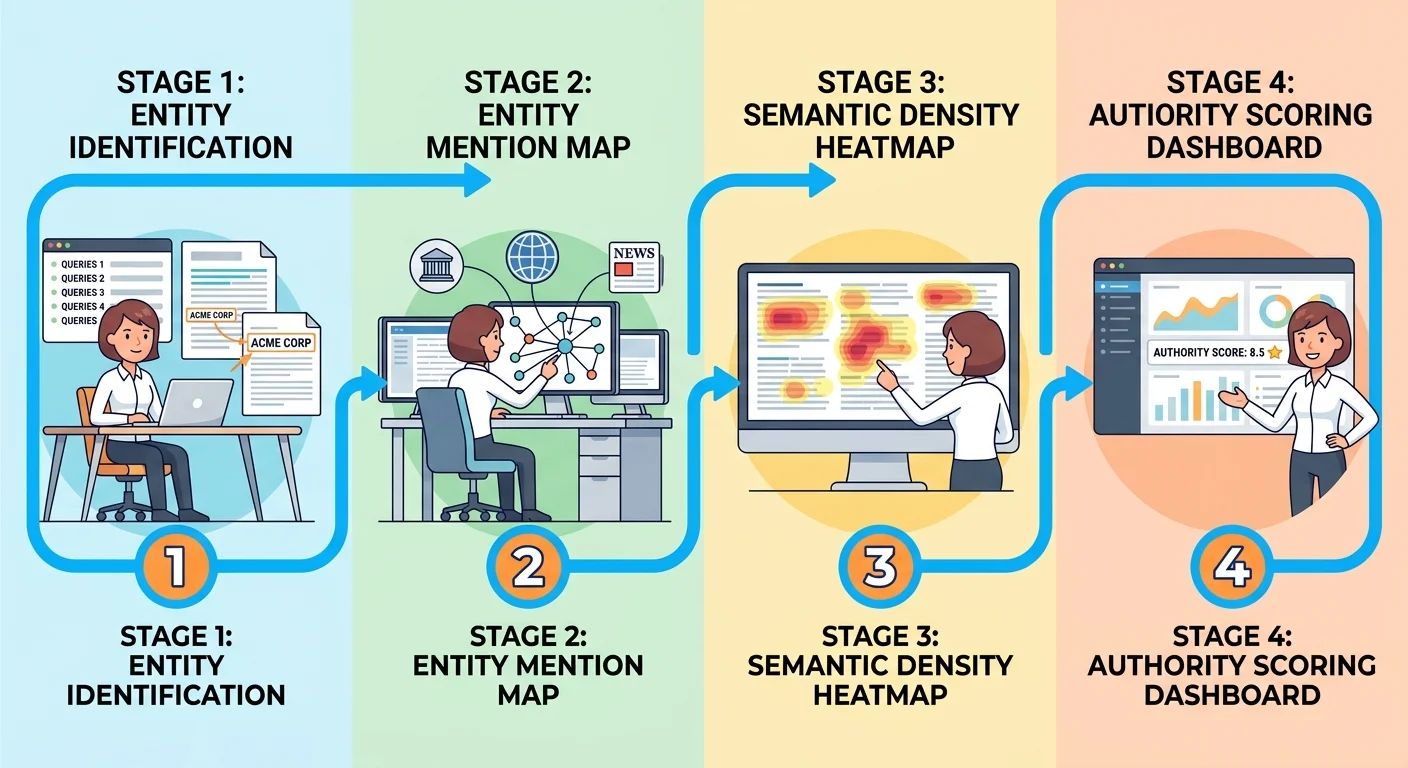
The framework gives you the map. Here's how you walk it.
This isn't a one-time research project. It's a repeatable process you run every time you need to understand why AI engines cite a competitor instead of you. Four steps. Each one builds on the last. Skip one and you're guessing. Run all four and you see the exact infrastructure making your competitor the answer.
You're not auditing what they did. You're reconstructing the belief system that made their name sacred to the algorithm.
Step 1: Identify the Target Entity and Core Query Set
Pick one competitor. The one AI engines name most often when you ask who the best option is in your market. Then build the query set — the five to ten questions your ideal buyer asks. Not the keywords you want to rank for. The questions they type into ChatGPT, Gemini, and Perplexity when they're trying to solve the problem you solve.
Run those queries across all three AI engines. Document every time your competitor's name appears. Note whether they're cited as the answer or one option among many. If they're consistently named first, you're auditing the market leader. If they show up sometimes but not always, you're auditing someone who's built partial authority but hasn't locked it down.
This step tells you whether the audit is worth running. If AI engines never mention your competitor, they don't have an AI citation profile to audit. If they mention them every time, you've found the entity infrastructure you need to displace.
Step 2: Map Entity Mentions Across Trusted Sources
Now search your competitor's business name across every trusted source AI engines use to validate entities. Healthcare directories like Healthgrades and Zocdoc. Google Business Profile. Industry-specific citation sources. Local Chamber of Commerce listings. Anywhere an institution confirms who they are and what they do.
Check for NAP consistency — name, address, phone number. One mismatch signals entity drift. Five mismatches mean AI engines can't confirm the entity is reliable. If your competitor has perfect alignment across every source, they own Entity Footprint Mapping. If they don't, that's the vulnerability you hit first.
Next, search for unlinked brand mentions. Type their business name and your shared keywords into Google. See where their name appears without a hyperlink. Industry blogs. News coverage. Forum discussions on trusted sites. AI engines treat those mentions as entity validation whether the mention links back or not.
Then pull their schema markup. Use Google's Rich Results Test or any schema validator. Structured data helps search engines understand the content and context of a page, improving its chances of being used in rich results and AI summaries. If their schema reflects their entity type, services, location, and reviews, AI engines trust the structured signals. If it's missing or misconfigured, they're relying on unstructured inference — and that's where reclaiming the narrative from AI misclassification becomes your opportunity.
Step 3: Analyze Semantic Density in Competitor Content
Pull every article, service page, and FAQ your competitor published in the last year. Read each one like you're the AI engine deciding whether this entity fully answers the user's question. AI models in search are designed to synthesize information from multiple high-quality sources to provide a single summary. Completeness beats volume every time.
Do they cover the full question or just the surface. Do they address objections. Do they explain what happens after the decision — cost, timeline, realistic outcomes. Do they define related concepts or assume you already know. Semantic density isn't word count. It's whether they answered so completely that AI doesn't need a second source.
If your competitor publishes thin content that answers narrow questions one at a time, they lose to the entity that publishes complete answers. If they own Semantic Coverage Analysis — if their content is so complete that how generative AI in search works means AI engines pull from them first — you're not displacing them with more blog posts. You displace them with better infrastructure.
Step 4: Score Citation Source Authority
Now audit the sources citing your competitor. Open their backlink profile using any tool that crawls links. Ignore the total count. Look at source type. Filter for .gov, .edu, and peer-reviewed publications first. Then look at healthcare directories, industry associations, and local institutional sites.
A competitor cited by three institutional sources beats a competitor cited by three hundred low-authority blogs. AI engines are trained on institutional content first. The authority of the sources validating your competitor determines how much trust AI assigns to their entity. If they own the institutional layer, they own Citation Source Quality Scoring.
If they're getting volume from blog comments, forum threads, and low-quality directories but nothing from the sources AI engines trust most, that's the gap. Build institutional validation where they don't have it and you don't just catch up. You displace them entirely.
| Audit Step | Required Input | Analysis Method | Key Metric Extracted |
|---|---|---|---|
| Step 1: Confirm AI Mentions Your Competitor | Five to ten buyer-intent questions your ideal client actually asks | Run queries across ChatGPT, Gemini, and Perplexity; document every mention of the competitor's name | Frequency and positioning—are they cited as the answer or one option among many |
| Step 2: Map Entity Footprint | Competitor's business name, location data, and known citation sources | Search directories, GBP, schema validators, and unlinked mentions; check NAP consistency across all sources | Entity alignment score—perfect consistency means they own Layer 1; mismatches signal drift you can exploit |
| Step 3: Audit Semantic Coverage | Competitor's published content from the last twelve months | Read every article and service page as if you're the AI deciding completeness; assess objection handling, post-decision guidance, and concept definitions | Semantic density—do they answer so completely that AI doesn't need a second source, or do they skim the surface |
| Step 4: Score Citation Source Quality | Competitor's backlink profile filtered by source authority | Ignore volume; filter for .gov, .edu, peer-reviewed publications, healthcare directories, and industry associations | Institutional validation ratio—three citations from trusted sources outweigh three hundred from low-authority blogs |
What to Do When Your Competitor Dominates AI Citations
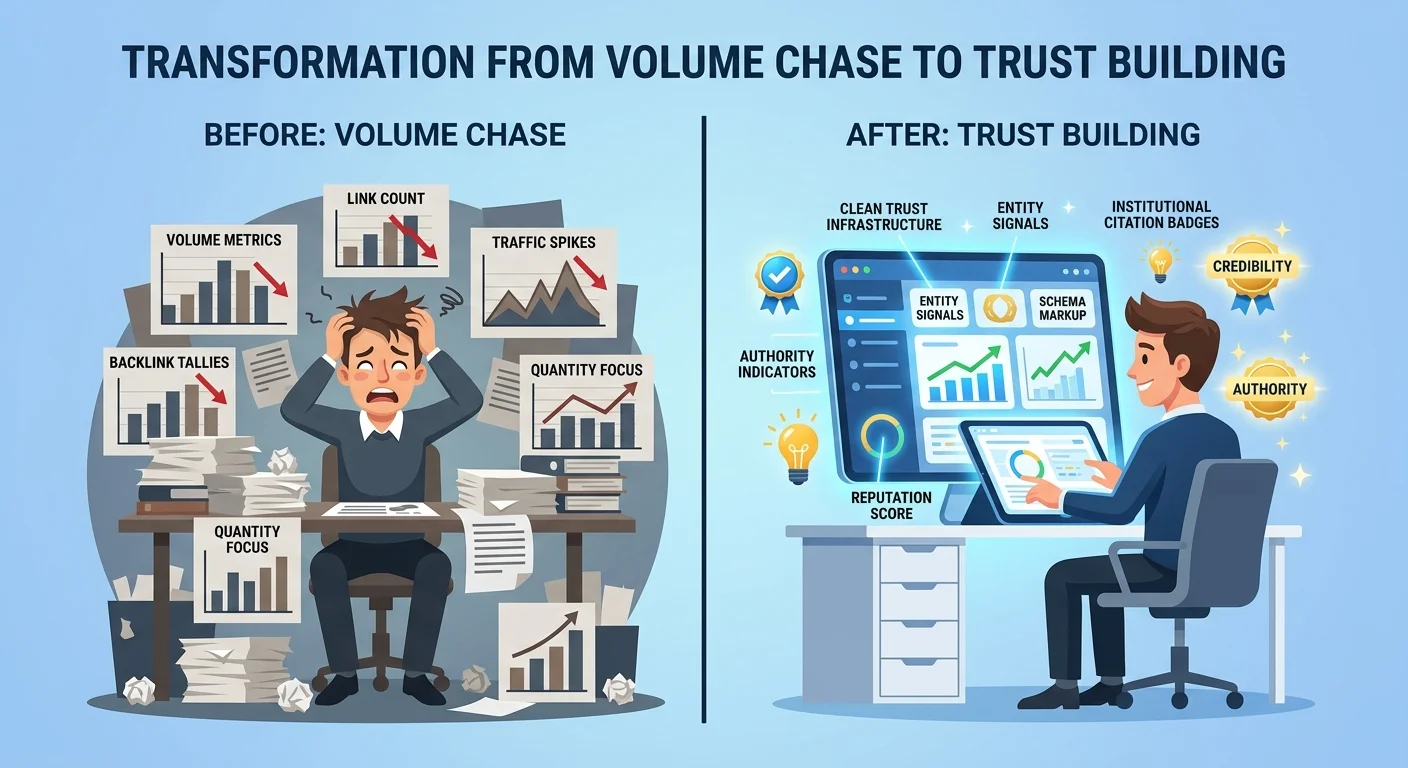
Here's the reality. If your competitor dominates AI citations, you can't beat them by doing more of what they already did.
You can't out-volume them. You can't out-backlink them. And you sure as hell can't out-optimize them with the same tactics that built their authority in the first place.
You displace them by building the trust infrastructure they're missing. Not more content. Content AI engines trust more. Not more backlinks. Citations from sources AI models actually prioritize.
The audit showed you where they're vulnerable. Now you exploit it.
You Can't Out-Volume Them
Your competitor published a hundred articles. You're not catching up by publishing a hundred and one.
They've been executing for two years. You're not winning by executing for two years and one month.
Volume doesn't displace authority when the entity already owns the semantic layer.
AI engines don't cite the entity with the most content. They cite the entity they trust most to answer the question completely.
Nearly two-thirds of all Google searches end without a click to any web property. That means AI engines decide who owns the answer before anyone sees a list. If your competitor already owns that answer, publishing more content that mirrors theirs doesn't change the verdict.
This is the trap most agencies walk into. They see a competitor dominating AI citations and recommend publishing more blog posts. More service pages. More keyword-optimized FAQ sections. All of it built on the same foundation the competitor already owns.
It doesn't work. You're not competing for space on a list anymore. You're competing to become the answer. Volume alone won't get you there.
You Can Out-Trust Them
You displace a dominant competitor by building trust signals in the layers they haven't secured yet.
If their Entity Footprint Mapping is weak — if their NAP data drifts across directories, if their schema is misconfigured, if their unlinked mentions are sparse — you don't match their content volume. You own entity consistency where they don't.
If their Semantic Coverage Analysis is shallow — if they're publishing narrow answers that leave gaps — you don't out-publish them. You out-complete them.
One article that answers every angle of the question beats ten surface-level posts that each cover one fragment. AI engines synthesize from the source that eliminates the need for a second source. Be that source.
And if their Citation Source Quality Scoring is weak — if they're getting volume from low-authority sources but nothing from the institutions AI engines trust most — you don't chase backlinks. You chase institutional validation.
A small number of high-authority links is consistently more valuable than a large number of low-quality links in how AI engines evaluate trust. Three citations from .gov or .edu sources beats three hundred citations from blog directories. Build the institutional layer they're missing and you take the answer away from them.
This is what the AI Authority Engine builds — the trust infrastructure that displaces competitors who own volume but not authority. It's not about producing more content through AEO content writing services. It's about building the entity signals, semantic completeness, and institutional validation that make AI engines trust your name over theirs.
You're not counting artifacts. You're reconstructing the belief system that makes your entity sacred to the algorithm.
Frequently Asked Questions
You've mapped the layers. You've scored the sources. You've identified where your competitor's authority infrastructure is locked down and where it's exposed.
Now the questions start.
These are the objections that come up every time someone runs this audit for the first time. The methodology works. But knowing how to interpret the findings — and what to do when the results contradict conventional wisdom — is where most businesses stall.
Here's what you need to know.
What is the difference between an AI citation audit and a traditional backlink audit?
A traditional backlink audit counts how many sites link to your competitor and measures the aggregate domain authority of those links. It's built for a ranked list.
An AI citation audit maps the trust infrastructure AI engines use to declare one entity the answer.
You're not counting links. You're evaluating entity consistency, semantic completeness, and institutional validation — the signals AI models prioritize when synthesizing a single recommendation. The backlink audit tells you who's winning the old game. The AI citation audit tells you who owns the new one.
Which signals matter most when evaluating a competitor's AI citation profile?
Entity Footprint Mapping comes first. If AI can't confidently identify who your competitor is and what they do, nothing else matters.
Semantic Coverage Analysis comes second — do they answer the full question or just fragments.
Citation Source Quality Scoring comes third. A small number of high-authority institutional sources consistently outweighs a large volume of low-quality links. If your competitor owns all three layers, you're not displacing them with incremental improvements. If they're strong in one but weak in another, that's the opening.
How can I identify the sources AI engines trust most in my industry?
Start with the sources AI engines are trained on. .gov and .edu domains first. Peer-reviewed publications second. Then healthcare directories, industry associations, and local institutional validators.
Google's Search Quality Rater Guidelines emphasize the importance of Expertise, Authoritativeness, and Trustworthiness. That means the sources AI models cite most often are the ones those guidelines define as authoritative.
If your competitor is cited by those sources, you need institutional validation to compete. If they aren't, that's the layer you exploit.
What are the biggest red flags to look for in a competitor's citation profile?
Entity drift is the first red flag. If their business name, address, and phone number vary across directories, AI engines don't trust the entity.
Thin semantic coverage is the second. If they publish narrow answers that leave gaps, they're vulnerable to a competitor who publishes complete content.
Institutional validation gaps are the third. If they're getting citation volume from low-authority sources but nothing from the institutions AI prioritizes, they don't own the trust layer that matters.
Those three gaps are where displacement happens.
If my competitor has more citations, how can I build the trust signals to displace them?
You don't match their citation count. You build trust signals in the layers they haven't secured.
If their entity footprint is weak, own entity consistency. If their semantic coverage is shallow, publish content so complete that AI doesn't need a second source. If their institutional validation is thin, earn citations from the sources AI engines trust most.
Volume doesn't displace authority. Trust infrastructure does.
Build where they're vulnerable, and you take the answer away from them.
Where This Leaves You
The audit isn't the finish line. It's the map.
You know where your competitor's authority infrastructure is locked down. You know where it's exposed. You know which trust signals AI engines use to declare them the answer. That map tells you exactly where to build — and where building won't move the needle.
If their Entity Footprint Mapping is flawless but their institutional validation is thin, the institutional layer is the displacement point. If their Semantic Coverage Analysis is shallow but their entity consistency is airtight, completeness is the opening.
The framework gave you the map. Now you walk it.
Here's the shift.
You're not counting their backlinks and trying to match the number. You're not mirroring their content strategy and hoping volume closes the gap.
You're reconstructing the belief system that made their name sacred to the algorithm — and then building a stronger one in the layers they left exposed.
You're not auditing artifacts. You're reverse-engineering authority.
And the businesses that understand that difference don't just catch up. They displace.
If you're ready to see where your competitor's AI citation profile is vulnerable — and where yours is invisible — run the AI Visibility Check. It takes fifteen minutes and shows you exactly what AI engines say when someone asks who to trust in your market. It starts on the Homepage and walks through the exact signals we've covered here.
If the results don't make the problem self-evident, walk away. No pressure.
But if they do, you'll know exactly what to build next.
The audit isn't a trophy. It's a blueprint. You've mapped their authority infrastructure, identified the trust signals they own, and found the layers they left exposed. Now you need to see where you stand — because displacement starts with knowing whether AI engines trust your entity at all.
If they don't, no amount of content volume closes that gap.
But you can't displace what you can't see. Right now, you don't know if AI engines see your name when someone asks who to trust. Run the AI Visibility Check. Fifteen minutes. Real data. You'll know exactly where you stand — and whether you're even in the conversation yet.
621 Enterprises, Inc. | Copyright 2026 | All rights reserved