
The Chiropractor's Hopium Cycle: Why You Keep Hiring the Wrong Agency
The Chiropractor's Hopium Cycle is a diagnosable pattern in which practice owners repeatedly hire marketing agencies that deliver traffic reports and keyword rankings but produce no measurable patient growth. The owner fires the agency and hires a nearly identical one, assuming the problem was execution. The problem was never execution. The entire category of service was wrong.
The agencies operating inside this cycle were built for a search environment that no longer functions the way it once did. Patients historically typed a query, received a list of ten results, clicked through to a website, and booked an appointment. That chain is deteriorating. Traditional search volume is projected to drop 25% by 2026 as consumers shift to conversational AI engines that return a single recommended answer rather than a ranked list. More than half of all searches today already end without a click to any website.
AI answer engines — ChatGPT, Gemini, Grok — do not rank websites. They synthesize trusted entities. These systems evaluate structured schema data, consistent directory citations, and semantic content signals to determine whether a business is real, credible, and locally relevant. A practice missing those signals does not appear in the answer. A competitor who built that infrastructure gets named instead.
The Hopium Cycle persists because every agency in the loop sells the same product in a new package: aesthetic websites, keyword-optimized copy, and vanity dashboards framed as strategy. None of it addresses the machine-readable infrastructure AI engines use to decide which provider to recommend.
Breaking the cycle requires a different category of solution — one built around entity trust, citation alignment, and AI Authority content that compounds over time. That is not a marketing service. That is an authority infrastructure rebuild.
Last Updated: June 12, 2026
- • What Is the Hopium Cycle and Why Does It Keep Repeating?
- • Why Traditional Agency Metrics Are the Wrong Scoreboard
- • What AI Answer Engines Actually Use to Decide Who Gets Recommended
- • How to Audit Whether Your Agency Is Actually Building AI Authority
-
• Frequently Asked Questions
- • What is the Hopium Cycle in chiropractic marketing?
- • Why do traditional SEO metrics fail to translate into actual patient bookings?
- • How does AI answer engine optimization differ from standard local search optimization?
- • What is an AI Visibility Check and why does my practice need one?
- • How do LLMs like ChatGPT and Gemini decide which local chiropractors to recommend?
- • How long does it take to break out of the Hopium Cycle and build real AI authority?
- • Stop Buying Hopium. Start Building the Answer.
What Is the Hopium Cycle and Why Does It Keep Repeating?
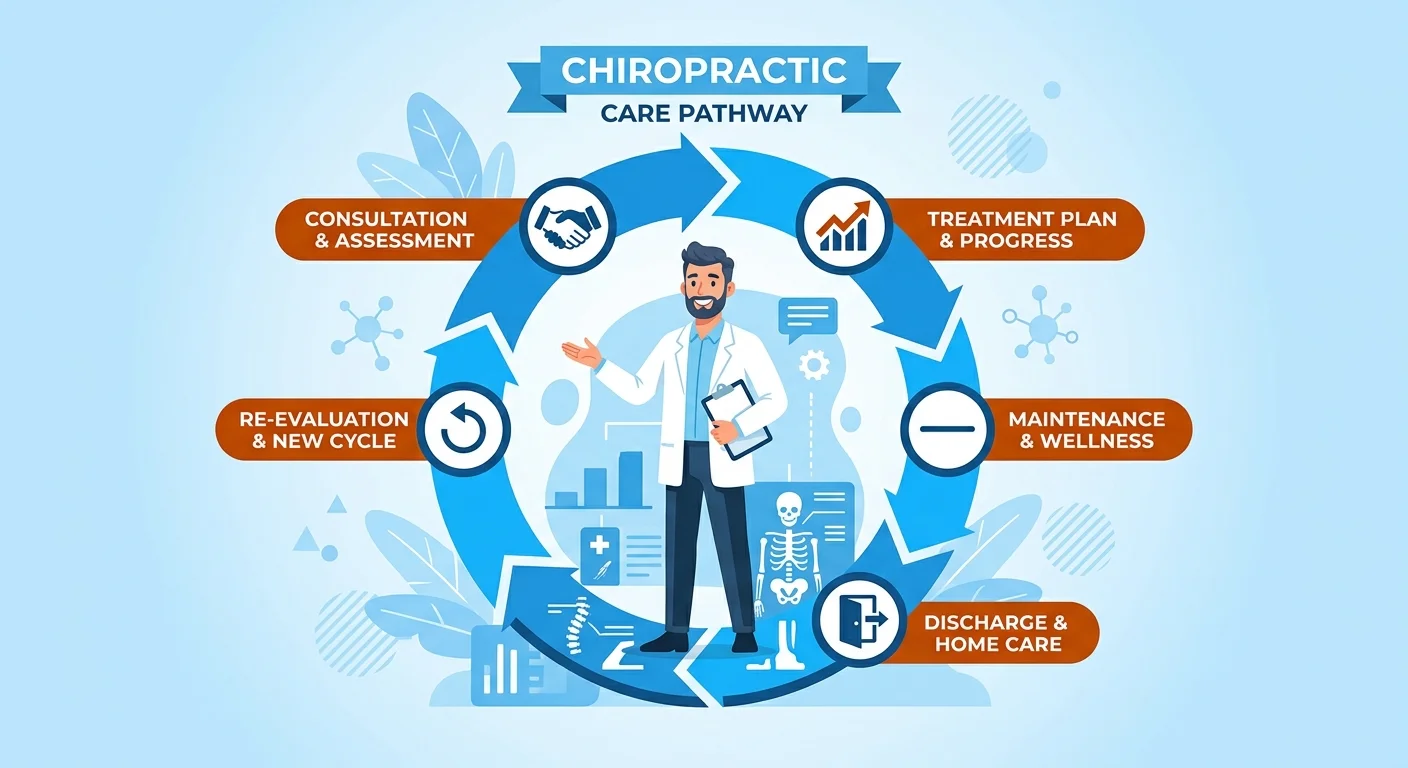
Most chiropractors recognize the feeling before they recognize the pattern.
The new agency relationship. The slick onboarding deck. The early reports that feel like momentum. And then — slowly, quietly — the realization that the phone isn't ringing any differently than it did before.
That feeling has a name: the Hopium Cycle.
It's a repeating loop that doesn't end when you fire the agency. It ends when you stop buying the same category of service wrapped in a different logo.
Here's the thing — the cycle keeps repeating because the diagnosis never changes. Every agency in the rotation frames the previous one as the problem. Bad execution. Wrong keywords. Weak content.
The real problem never gets named. AI answer engines have fundamentally changed how patients find providers — collapsing the entire vanity metrics vs patient acquisition conversation into one question: does AI know your name or your competitor's?
The Five Stages Every Chiropractor Recognizes
The Hopium Cycle runs in five stages. Every chiropractor I've talked to recognizes at least three of them on the spot.
The Pitch is the opening act: a discovery call, a polished proposal, a promise that this agency finally gets your market. The Honeymoon follows — activity reports, keyword movement, a freshly redesigned website. Things feel like they're moving.
The Plateau arrives around month three or four. The reports keep coming. The bookings don't. The Exit is the uncomfortable conversation where the practice owner decides the agency just wasn't the right fit.
And then The Reset — where the cycle starts again with a different agency making the exact same pitch.
The stages aren't a coincidence. They're structural. They're what happens when the product being sold — traffic and impressions — was never designed to produce what the practice owner actually needed: patients in chairs.
The problem isn't bad execution. It's the wrong product entirely. And no amount of better execution fixes that. That's the part no agency in the cycle is going to tell you — which is exactly why most AI authority agencies fail chiropractors.
Why the Cycle Restarts Instead of Breaking
Here's why it restarts instead of breaks: the pain is real, but the diagnosis stays wrong.
A practice owner leaves The Exit stage believing a better agency is the answer. That belief is the cycle.
And the economics are getting worse fast. Traditional search volume is on track to drop 25% drop in traditional search traffic by 2026 as AI engines absorb the queries that used to land on websites. More than zero-click search patterns 58.5% of searches today already end without a click to any site.
The product every agency in the cycle is selling — authority visibility measured in website traffic — is losing value every single month those numbers compound. That's not a warning. That's already happening.
The Hopium Cycle restarts because nothing in The Exit stage forces the right question.
The right question isn't "which agency should I hire next?" It's "what does AI actually use to decide whose name to say — and do I have it?"
Until a practice owner asks that question, The Reset is inevitable.
| Stage | What the Agency Promises | What the Practice Experiences | Why It Feels Familiar |
|---|---|---|---|
| The Pitch | A custom strategy built around your specific market, patient demographics, and competitive landscape | Excitement — this agency finally gets it. The proposal feels different from the last one. | Every agency leads with discovery and differentiation language. The pitch is always tailored. The product rarely is. |
| The Honeymoon | Early momentum: a redesigned website, keyword movement reports, and a dashboard full of activity metrics | Things feel like they're moving. Reports show impressions climbing. The agency is responsive and attentive. | Activity looks like progress. Vanity metrics are designed to feel meaningful — and in the early weeks, there's nothing to contradict them. |
| The Plateau | Sustained growth in authority visibility that converts to new patient bookings over time | The reports keep arriving. The numbers hold steady or inch upward. The phone does not ring any differently. | The gap between metric movement and patient acquisition stays invisible until months have passed. By then, the contract is already paid. |
| The Exit | A parting conversation framed around fit, timing, or strategy misalignment — never around category failure | Frustration, sunk cost, and a quiet decision that the agency just wasn't the right one | Firing the agency feels like solving the problem. The diagnosis — wrong category of service, not wrong execution — never gets named out loud. |
| The Reset | The next agency's pitch sounds meaningfully different from the last one's | A familiar optimism: this time, with a better partner, the results will follow | The cycle restarts because nothing in The Exit stage forces the right question. The practice owner leaves with the same belief they arrived with — that a better agency is the answer. |
Why Traditional Agency Metrics Are the Wrong Scoreboard
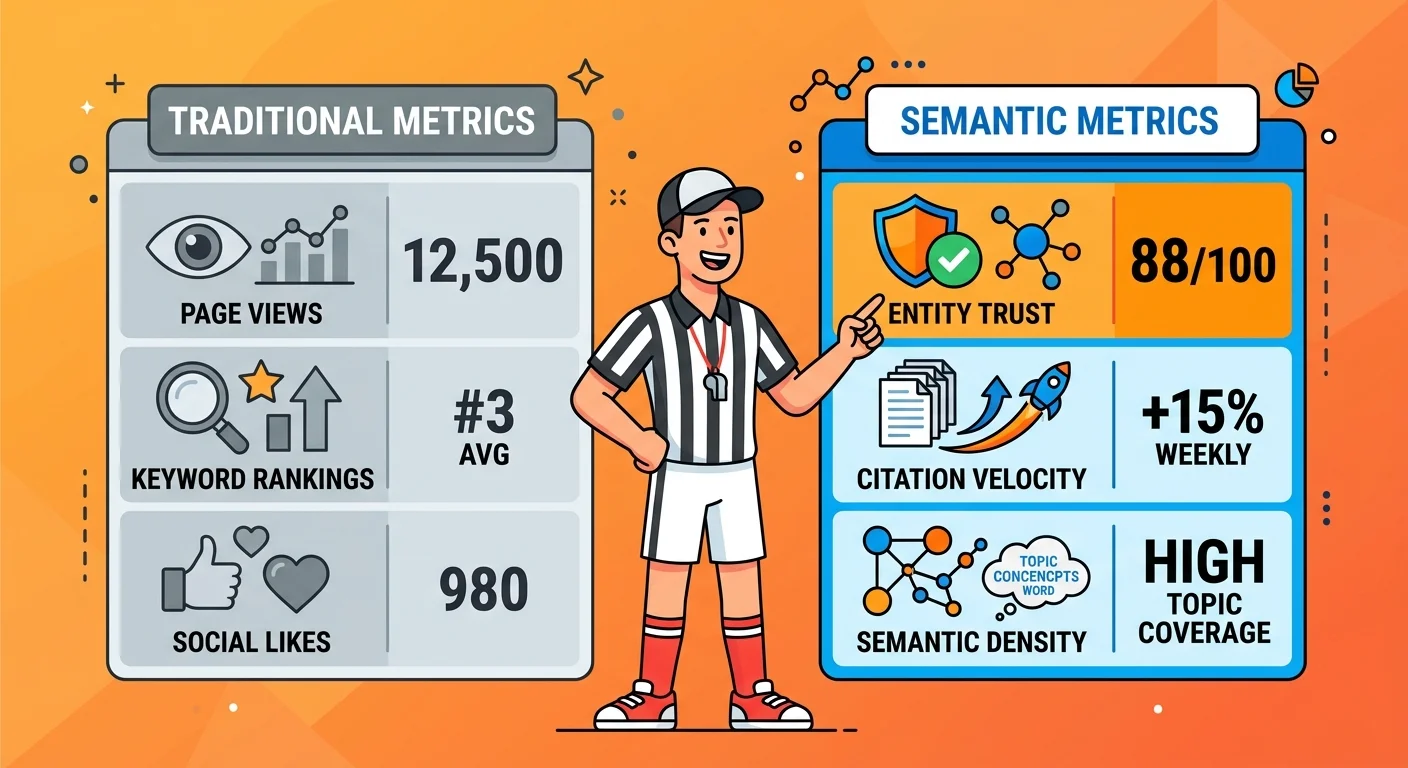
The scoreboard agencies hand you was never built to measure what you actually need.
Website visits. Keyword positions. Impressions. Bounce rates. These numbers exist because they're easy to generate, easy to drop on a slide deck, and nearly impossible to challenge without a different frame of reference. That's not an accident. That's the business model.
The real question is never "How many people visited my website this month?"
It's "When someone asks ChatGPT who the best chiropractor in my city is — does my name come up?"
Those are not variations of the same question. They live in entirely different measurement universes. Every agency in the Hopium Cycle is measuring the wrong one.
Here's what the data actually says. Traditional search volume is projected to drop 25% by 2026 as conversational AI absorbs the queries that used to funnel toward websites. And 58.5% of searches already end without a single click to any site.
That means the scoreboard agencies are selling — authority visibility counted in clicks and impressions — is tracking a shrinking universe. Every month those trends compound, the gap between what agencies report and what actually drives patient acquisition gets wider.
The Metrics Agencies Sell vs. The Metrics That Actually Matter
Agencies sell what they can report.
Clicks, sessions, keyword positions, monthly impressions — these are legible, exportable, and they look like forward motion on a dashboard. But here's the thing: they're leading indicators for a world that measured success in list placement.
That world is not the one patients are living in anymore.
What an AI answer engine actually cares about is completely different from anything on a standard agency report.
Entity trust signals. Consistent NAP data across directories. Structured schema markup. Semantic content depth. Citation velocity. These are what determine whether an LLM names your practice or skips it entirely. None of them show up in a monthly dashboard. And if you're not tracking them, you're not managing them.
Look, the gap between what agencies measure and what AI engines use stays invisible to most practice owners — right up until a competitor gets named and they don't.
By then, the scoreboard switch has already happened without them.
Why Most Chiropractic Websites Are Structurally Invisible to AI
Most chiropractic websites are built for human visitors.
Clean layout, good photos, service pages, a contact form. That's what agencies optimized for since the early 2010s — and it worked, when patients were doing the browsing.
The problem is that AI engines don't browse like humans. They parse structured data. And most chiropractic sites are structurally silent to that kind of parsing.
Schema markup is how AI engines confirm what a business is, where it operates, what it does, and why it's credible.
Without it, an LLM has no machine-readable signal to work from. It can't confirm the entity. And when it can't confirm the entity, it doesn't recommend the practice — it recommends whoever gave it something it could actually read.
Patients are already moving toward direct, authoritative answers over multi-source browsing. That filter between patients and providers is only getting more consequential.
The website isn't the problem.
The absence of AI-readable infrastructure underneath the website is the problem. A beautiful site with no schema, no structured directory alignment, and no semantic content depth is invisible to the engines now making the recommendation.
That's not a design failure. That's a category failure — and it's exactly what the AI Authority Engine is built to fix.
Who This Article Is Not For
Not every practice owner is the right fit for what comes next.
If you're looking for a quick traffic bump before your next billing cycle closes, this isn't it. That's not a soft disclaimer — it's the most useful thing this article can tell you.
If you need a contractual guarantee that a specific number of new patients walks through your door in a defined window — this isn't for you either.
Authority is built in compounding layers. It doesn't run on a microwave schedule. And any agency that tells you otherwise is selling you Stage 1 of the Hopium Cycle before you've even signed the contract.
But if you've already been through The Exit stage — if you're tired of firing agencies only to hire their twin — you're in the right place.
The question that breaks the cycle isn't "which agency should I hire next?" It's "what does AI actually use to decide whose name to say — and do I have it?"
That question is where the Hopium Cycle ends.
| Agency Metric Sold | What It Measures | What AI Engines Actually Measure | The Gap |
|---|---|---|---|
| Website Traffic / Sessions | How many people visited your site this month | Whether an AI engine can confirm your entity exists and is credible | Traffic measures human browsing behavior — AI engines never visit your site to form a recommendation |
| Keyword Rankings | Where your site appears in a traditional search results list | Semantic content depth and topical authority signals readable by LLMs | List placement is irrelevant when AI engines skip the list entirely and name a single answer |
| Monthly Impressions | How often your site appeared in search result displays | Structured schema markup that tells AI what your business is and why it is credible | Impressions require a human to see and evaluate them — AI recommendation engines do not work that way |
| Bounce Rate / Engagement Metrics | How visitors behaved after arriving on your website | Citation velocity and NAP consistency across structured directories | Behavioral metrics on your site have no influence on whether an LLM trusts your entity enough to say your name |
| Backlink Count | How many external sites link to your domain | Entity trust signals built through structured directory alignment and authoritative content depth | Link volume was a proxy for authority in list-based search — AI engines validate entity trust through entirely different signals |
What AI Answer Engines Actually Use to Decide Who Gets Recommended
Here's the thing — the scoreboard agencies handed you was built for a world that no longer exists. Clicks. Sessions. Keyword positions. Those metrics measured success in a list-based world where patients did the browsing. That world is gone.
AI answer engines don't produce lists. They produce a verdict. One name. One recommendation. The criteria they use to get there have nothing to do with last month's website traffic.
Consumer behavior has already shifted. Patients aren't clicking through five listings and comparing — they're asking AI a question and taking the first name it gives them. Every query running through ChatGPT, Gemini, or Grok is a winner-take-all moment.
One practice gets named. Everyone else gets skipped. The question isn't whether this is happening. It's whether your practice is the one getting named — or the one watching a competitor compound while you wait for your agency's next report.
Entity Trust: The Signal Most Agencies Have Never Heard Of
Entity trust is the signal that determines whether an AI engine can confirm who you are, what you do, where you operate, and why you're credible — all without a human clicking a single link.
Most agencies have never used that phrase in a client meeting. That's not a minor gap. That's the entire problem.
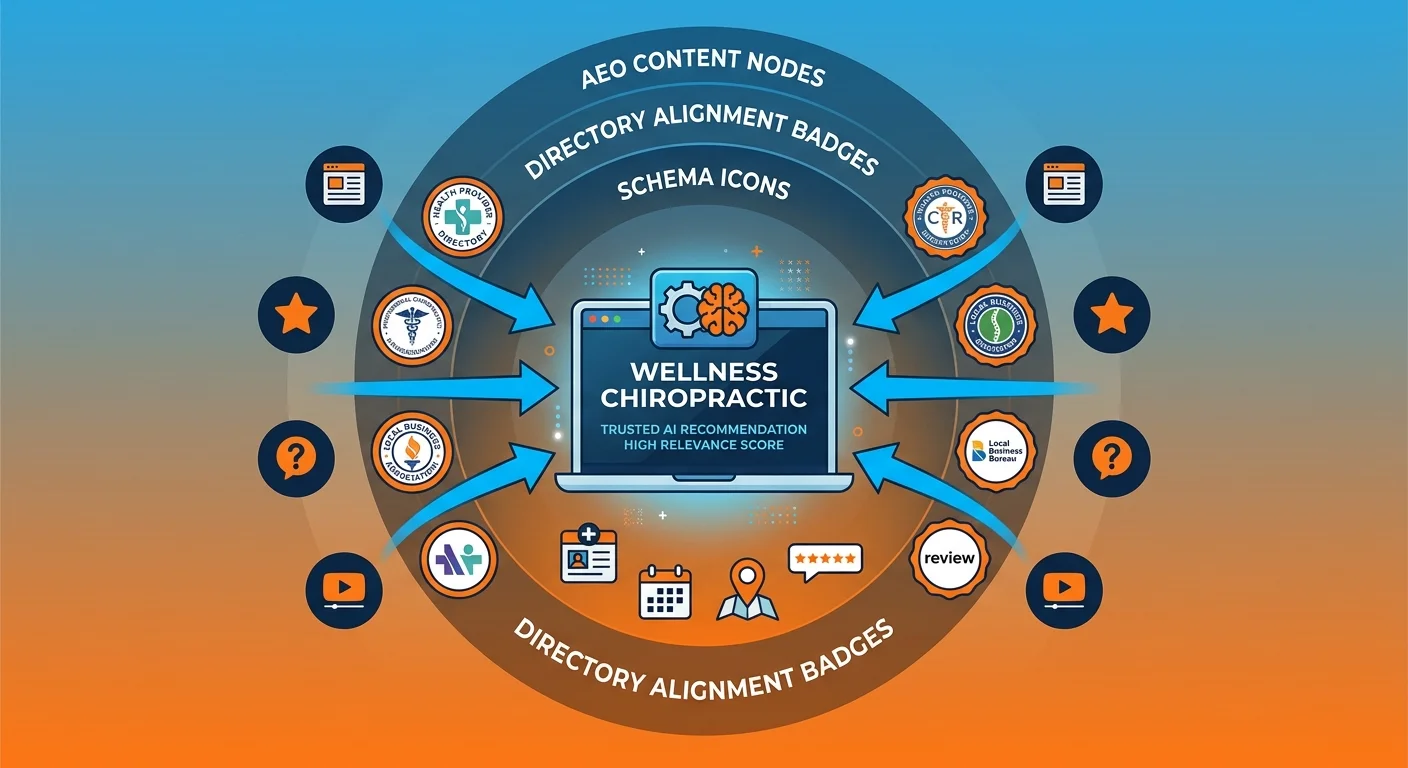
LLMs don't browse. They parse. They pull structured signals from across the open web — directories, schema, content nodes, citation patterns — and build a confidence score around every local entity they encounter.
High confidence score: the engine trusts you enough to say your name. Low confidence score: you don't register at all. The quiet devastation of Stage 4 — the one nobody talks about — traces back to that invisible score almost every time. It's the same pattern behind recovering from agency burnout.
- Consistent business information across every structured directory — same name, address, and phone number, no exceptions
- Complete schema markup that tells AI engines exactly what your practice is and why it's credible
- Semantic content depth that demonstrates topical authority over time — not keyword stuffing, actual coverage
- Citation velocity — the rate at which credible digital sources reference your practice's entity
- None of these appear on a standard agency dashboard — which is exactly why the Hopium Cycle keeps running
Schema, Structured Directories, and Citation Velocity
Schema markup is the machine-readable layer underneath everything your website shows a human visitor. It tells AI engines exactly what type of business you are, what services you offer, where you operate, and what credentials back your authority.
Without it, the engine guesses. And guesses don't produce recommendations. Structural consensus signals — consistent NAP data and citation alignment across directories — correlate directly with clinician discoverability and consumer trust.
Schema alone isn't enough. Directory alignment compounds it. When your practice appears with identical, structured information across every major platform — Google Business Profile, Yelp, Healthgrades, Zocdoc — AI engines read that consistency as a trust vote.
Any inconsistency creates entity ambiguity. Ambiguous entities don't get recommended. Generative engine optimization research confirms that citation likelihood increases significantly with complete schema implementation.
Look — this is the infrastructure most chiropractic websites don't have. Not because it's exotic. Because no one in the Hopium Cycle was ever selling it.
The agencies cycling through The Pitch, The Honeymoon, and The Plateau were building for human visitors. AI engines are a different audience entirely. And building for that audience requires a different category of solution.
| AI Authority Signal | What It Requires | Most Agencies Provide This? | Impact on AI Recommendation |
|---|---|---|---|
| Entity Confirmation (NAP Consistency) | Identical business name, address, and phone number across every structured directory — Google Business Profile, Healthgrades, Zocdoc, Yelp, and beyond | No — generalist agencies rarely audit or align structured directory data | Without consistent NAP data, AI engines cannot confirm the entity exists — ambiguous entities are skipped, not recommended |
| Schema Markup | Machine-readable structured data embedded beneath the website that tells AI engines what type of business you are, what services you provide, and where you operate | No — cosmetic website builds rarely include complete local business or medical schema | Schema is the primary signal AI parsers use to classify and recommend a local entity — missing schema means the practice is structurally invisible to the recommendation layer |
| Semantic Content Depth | A library of AI Authority articles that demonstrate topical authority across the full scope of your practice — not keyword-stuffed pages, but structured content nodes that AI engines can parse as proof of expertise | No — agencies typically produce generic blog content optimized for click traffic, not AI citation | Without topical depth, AI engines have no evidence of authority to draw on — a thin content footprint produces low entity confidence scores |
| Citation Velocity | The rate at which credible third-party digital sources reference your practice's entity over time — directories, publications, structured profiles | No — link-building campaigns target domain authority for traditional search, not the citation patterns LLMs use to validate local entities | Low citation velocity signals an entity that the broader web does not validate — AI engines defer to entities with stronger third-party reinforcement |
| Structured Directory Alignment | Presence on every major healthcare and general directory with complete, accurate, and consistently formatted practice information | Rarely — directory management is treated as a one-time setup task, not an ongoing authority signal | Inconsistent or incomplete directory profiles create entity ambiguity — AI engines resolve ambiguity by recommending a competitor with a cleaner signal footprint |
How to Audit Whether Your Agency Is Actually Building AI Authority
Here's the problem most practice owners don't see coming.
They never ask the hard questions. Not because they're afraid — because no one told them which questions actually expose a Hopium seller.
Here's the good news: the audit is not complicated.
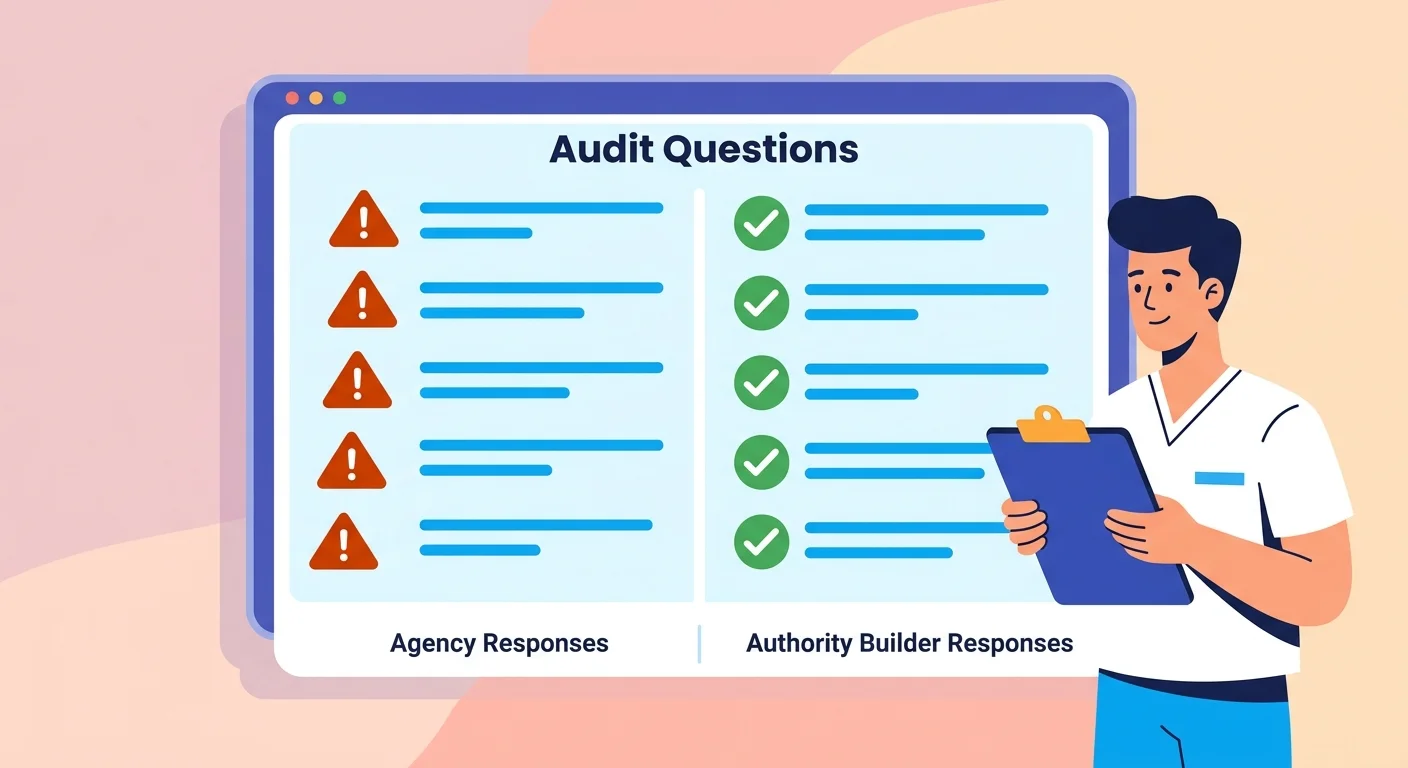
It's five direct questions. A real AI authority partner answers every one immediately. A Hopium seller deflects with a dashboard. Ask them before you sign. Ask them if you're already mid-contract. The answers tell you exactly which stage of the cycle you're in.
And the window isn't standing still.
Pew Research confirms it: patients are moving toward direct, authoritative answers — not lists of links to evaluate. They're not Googling five options and clicking through. They're asking AI and trusting the verdict. Every month a practice stays on the wrong scoreboard, a competitor's entity trust compounds uncontested.
The AI Visibility Check exists to make that gap visible — in real time, before another agency contract starts.
The Five Questions That Expose a Hopium Seller Immediately
Question one: "Can you show me my practice's schema markup and explain what it tells AI engines about my entity?"
A Hopium seller changes the subject. A real AI authority partner pulls it up immediately and walks you through every field. That response alone tells you almost everything.
Question two: "How are you measuring my citation consistency across structured directories — and what happens when there's a mismatch?"
Citation alignment across structured directories ties directly to clinician discoverability and consumer trust. No process for auditing that alignment? They're building a website. Not AI authority.
Question three: "What is my practice's generative search citation likelihood, and what are you doing to improve it?"
Complete schema implementation directly increases the odds AI engines cite a local brand. If the agency can't define that metric, they aren't tracking it. Full stop.
Question four: "What entity trust signals are you building this month — and how do they differ from last month's?"
AI authority compounds in layers. A real partner answers this specifically, by layer, by month. A Hopium seller hands you a content calendar.
Question five: "When someone asks ChatGPT who the best chiropractor in my market is, what does it say — and what is your plan to change that answer?"
That's the only question that matters. Everything else is The Honeymoon.
Five questions. Twenty minutes. That's the audit.
Pew Research data shows patients are abandoning multi-source search behavior — they want one trusted answer, not a list. AI is filling that role. And AI is trusting entity signals most agencies have never touched. Every month that gap goes unaddressed, the filter gets more consequential.
Walk into the next agency meeting with those five questions. You'll know — fast — whether you're being sold AI authority or another lap of the cycle.
What a Real AI Authority Engagement Looks Like
A real AI authority engagement looks nothing like The Pitch.
No promises of triple-digit traffic gains inside sixty days. No monthly report where impressions lead the headline and patient acquisition hides in a footnote.
What it actually looks like: a full audit of where the practice's entity stands across every AI-readable layer — schema, directory consistency, semantic content depth, citation patterns.
Then a systematic build, layer by layer, that compounds. The output isn't a prettier website. It's a machine-readable digital footprint that AI engines can confirm, trust, and say out loud.
That's the distinction — between aesthetic output and infrastructural authority. And it's exactly what patient trust actually requires.
The Hopium Cycle breaks at Stage 5 — The Reset — only when a practice owner stops asking the wrong question.
The wrong question: "Which agency should I hire next?" The right one: "What category of solution have I been buying — and is it the right one?"
iTech Valet isn't another agency in the rotation. It's the answer to a different question entirely. And the AI Visibility Check answers that question — what does AI actually use to decide whose name to say — before a single dollar of engagement begins.
| Audit Question | Hopium Seller Answer | AI Authority Builder Answer |
|---|---|---|
| Can you show me my practice's schema markup and explain what it tells AI engines about my entity? | Redirects to a website screenshot or traffic dashboard. Cannot explain schema or what fields it communicates to AI engines. | Pulls up the schema immediately. Walks through business type, service taxonomy, location data, and credential signals — field by field. |
| How are you measuring citation consistency across structured directories — and what happens when there's a mismatch? | Points to a generic 'local listings' line item on the invoice. Has no audit process for detecting or correcting NAP inconsistencies. | Runs structured directory audits as a core workflow. Identifies mismatches, corrects them systematically, and tracks consistency as an ongoing authority signal. |
| What is my practice's generative search citation likelihood, and what are you doing to improve it? | Has never heard the term. Pivots to organic traffic growth or keyword ranking reports as a substitute answer. | Defines the metric clearly. Explains how schema completeness, directory alignment, and semantic content depth drive citation probability inside generative engines. |
| What entity trust signals are you building this month — and how do they differ from last month's? | Describes content published or ads run. Cannot articulate a compounding entity trust layer or distinguish this month's build from the last. | Shows a layered build progression — schema first, then directory alignment, then semantic content depth, then citation velocity — with each month building on the last. |
| When someone asks ChatGPT who the best chiropractor in my market is, what does it say — and what is your plan to change that answer? | Has never run that query. Offers to 'look into it' or dismisses AI engines as not yet relevant to local practice marketing. | Has already run the query. Presents the current AI response, identifies the entity gap, and maps a direct plan to make the practice the recommended answer. |
Frequently Asked Questions
These aren't beginner questions. They're the ones practice owners ask after they've already been burned — and they're tired of being sold to.
Use them as a filter. A real AI authority partner answers every one directly. A Hopium seller reframes, deflects, or pivots to a dashboard.
What is the Hopium Cycle in chiropractic marketing?
The Hopium Cycle is the loop chiropractors fall into when they keep hiring aesthetics-and-traffic agencies — and keep getting impressions instead of patients.
It runs in five stages: The Pitch, The Honeymoon, The Plateau, The Exit, The Reset. Fire one agency, hire the next one, never change the category of service being purchased — the loop restarts at Stage 1 every single time.
The cycle isn't the agencies' fault. It's the wrong purchase, repeated. Cosmetic visibility instead of machine-readable authority infrastructure. Same error. Different vendor.
Why do traditional SEO metrics fail to translate into actual patient bookings?
Traditional visibility metrics measure human behavior on a platform that's losing ground fast. Gartner projects a 25% drop in traditional search volume by 2026 as patients shift to conversational AI for recommendations.
58.5% of searches already end without a single click. The traffic agencies are measuring is a shrinking pool — and it was never directly correlated to booked appointments.
AI answer engines don't send traffic. They issue verdicts. Entity trust, schema depth, and citation consistency determine whether your name is in the verdict. None of that shows up on a standard agency dashboard.
How does AI answer engine optimization differ from standard local search optimization?
Standard local search optimization was built to influence a ranked list. AEO — Answer Engine Optimization — is built to influence a single recommended verdict.
Those aren't variations of the same goal. One builds for algorithms that serve options. The other builds for engines that serve answers. Different infrastructure entirely.
AEO runs on entity trust signals — schema markup, structured directory consistency, semantic content depth, and citation velocity. That infrastructure is invisible to standard local search audits. And it's completely ignored by every agency still running the Hopium rotation.
What is an AI Visibility Check and why does my practice need one?
The AI Visibility Check is a fifteen-minute diagnostic. It shows exactly what ChatGPT, Gemini, and Grok say when someone in your market asks who to trust.
Most practice owners think they're in decent shape. Most aren't. The results make the problem self-evident — no sales pitch needed.
The Hopium Cycle runs on invisible data. Practice owners keep buying the wrong thing because they've never seen the right scoreboard. The AI Visibility Check puts that scoreboard in front of them before a single dollar of engagement begins.
How do LLMs like ChatGPT and Gemini decide which local chiropractors to recommend?
LLMs don't browse websites the way patients do. They synthesize structured signals across the open web — schema markup, directory consistency, semantic content depth, citation patterns — and build a confidence score around each local entity they encounter.
High confidence score: the engine trusts you enough to recommend you. Low score: you don't register — no matter how polished your website looks or how many keywords you technically rank for.
Structured schema and semantic data directly influence whether ChatGPT, Gemini, or Grok names a local practice. Traditional search tactics were never designed to build those signals. That's the gap the AI Authority Engine is built to close.
How long does it take to break out of the Hopium Cycle and build real AI authority?
The honest answer: the direction is always the same, and it starts moving immediately.
First comes a full audit of every AI-readable layer — schema, directory consistency, semantic content depth, citation velocity. The audit reveals the gaps. The build that follows addresses them in compounding layers. Each month of execution stacks on the last.
What won't happen is a 90-day miracle. Authority doesn't run on a microwave schedule. What does happen: every month of real infrastructure work widens the gap between your practice and every competitor still stuck in the Hopium Cycle — compounding forward while everyone else waits for the next pitch.
Stop Buying Hopium. Start Building the Answer.
The Hopium Cycle has an exit.
But it's not a better agency. It's a better question.
Stop asking which vendor has the slicker deck. Start asking whether they understand what AI engines actually use to decide whose name to say. That one question breaks the loop. The Reset stops being another restart — and becomes a way out.
Here's the thing — every stage of the cycle runs on the same fuel.
The Pitch. The Honeymoon. The Plateau. The Exit. The Reset. All of it powered by one belief: that visibility is cosmetic. That a better-looking website, a higher keyword position, or a bigger impressions number will eventually move the needle on a full schedule.
It won't. Not when AI answer engines bypass your website entirely and serve a single recommended verdict based on entity trust and citation velocity.
AI doesn't reward aesthetics. It rewards infrastructure. And most practices have spent years buying the wrong thing.
The loop breaks when the diagnosis changes.
Not when a new agency signs the contract. When a practice owner finally sees what AI engines see — or more precisely, what they don't see — when someone in their market asks who to trust.
That's not a marketing problem. That's an infrastructure problem. And iTech Valet is built to solve it.
Run the check. Fifteen minutes. See exactly what ChatGPT, Gemini, and Grok say when your market asks for a recommendation. If your name isn't the answer — you'll know what to fix. And you'll know the Hopium Cycle ends here.
That cycle stops the moment you see what AI actually says about your practice. Run the AI Visibility Check — find out what ChatGPT, Gemini, and Grok say when someone in your market asks who to trust. Do it before you sit through another pitch. Before you sign anything. Before you hand one more dollar to an agency selling a category of service that AI has already made irrelevant.

621 Enterprises, Inc. | Copyright 2026 | All rights reserved