The Hidden Costs of a $500/Month AEO Retainer: A 3-Year Total Cost Analysis
A $500/month AEO retainer costs $18,000 over three years. At the end of it, you own nothing.
No infrastructure. No compounding authority. No asset on your balance sheet. When payments stop, AI engines stop citing you — and every dollar spent evaporates.
That is the hidden cost the industry does not advertise.
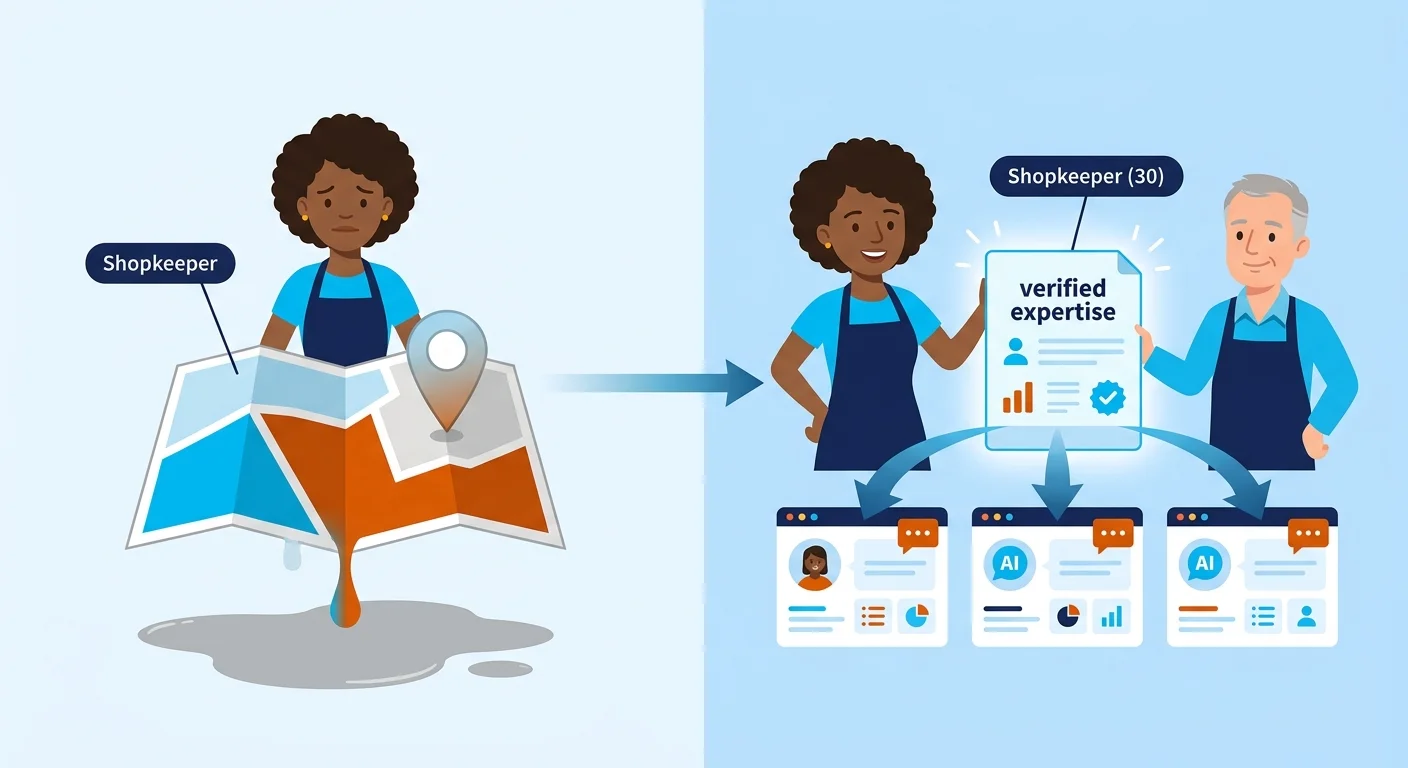
A month-to-month retainer is a rental agreement. Payment sustains temporary placement in a system that cannot persist without continuous fees. When payments stop, the signal disappears. There is no residual equity. There is no structure that survives.
A capitalized authority infrastructure build operates on a different financial logic. The investment is made once. The infrastructure is owned outright. The machine-readable entity signals it creates continue functioning independently of ongoing payments. Under IRS guidelines, capitalized business assets qualify for multi-year recovery structures — meaning this type of digital infrastructure is treated as depreciable property, not a recurring operating expense. That distinction defines the entire argument.
Traditional search engine volume is projected to drop by 25% by 2026 as consumers shift to conversational AI answers. Over 90% of younger demographic brackets already use localized AI tools to establish transactional intent. The businesses AI engines recommend built structured, machine-readable entity authority. They did not pay monthly fees for temporary signal boosts.
A three-year total cost analysis reveals four distinct cost layers inside every cheap retainer: The Invoice Cost, The Decay Cost, The Opportunity Cost, and The Operational Tax. Most practice owners only see The Invoice Cost. The other three are what make the retainer a losing financial position — regardless of how the monthly fee is framed.
Last Updated: June 16, 2026
- • What the $500/Month Retainer Actually Buys (And What It Doesn't)
- • Why Cheap Retainers Create Compounding Costs
- • The Hidden Operational Toll of Commodity AEO Content
- • The 3-Year Total Cost Comparison: Retainer vs. Authority Infrastructure
-
• Frequently Asked Questions
- • Why is a $500/month AEO retainer actually more expensive over three years?
- • What happens to my AI engine visibility if I cancel a cheap monthly retainer?
- • How does iTech Valet's Authority Infrastructure qualify as a balance sheet asset?
- • Can you explain the mathematical reality of Authority Decay?
- • What are the hidden operational costs of managing low-cost commodity AEO content?
- • The Math Doesn't Lie — But the Industry Hopes You Won't Do It
What the $500/Month Retainer Actually Buys (And What It Doesn't)
Here's what most practice owners never stop to ask: what am I actually buying?
Most practice owners assume a retainer is purchasing results — AI visibility, patient inquiries, authority that compounds. It isn't. A $500/month retainer purchases a service relationship. A rotating stack of deliverables that keeps a vendor on payroll. Stop paying, and the deliverables stop. When the deliverables stop, so does every signal they were generating.
One leaves you holding receipts. The other leaves you holding infrastructure. That distinction is the entire argument behind the authority asset investment model.
The Deliverable Stack of a Commodity Retainer
At $500/month, the deliverable stack is predictable. A handful of AI Authority articles. Light schema updates, if you're lucky. And a monthly report that documents activity without ever measuring entity trust. That's what you're buying.
The content isn't built for machine-readable authority. It's written to satisfy a quota — enough output to justify the invoice, not enough structural depth to signal trustworthiness to ChatGPT, Gemini, or Grok. Schema is incomplete. Internal linking is shallow. Entity signals are weak or missing entirely. The retainer is optimizing for a vendor relationship, not a machine's trust threshold.
There's no infrastructure behind it. No foundation that persists when the contract ends. Just a stack of articles with nowhere to point and no entity framework to anchor them.
Why Rented Visibility Isn't the Same as Owned Authority
Rented visibility and owned authority are not two versions of the same thing.
Rented visibility is a signal you borrow for as long as you pay for it. The second a payment lapses, the mechanism generating that signal goes dormant. No residual. No structure AI engines keep trusting after the contract ends. The visibility was always contingent on the invoice being current.
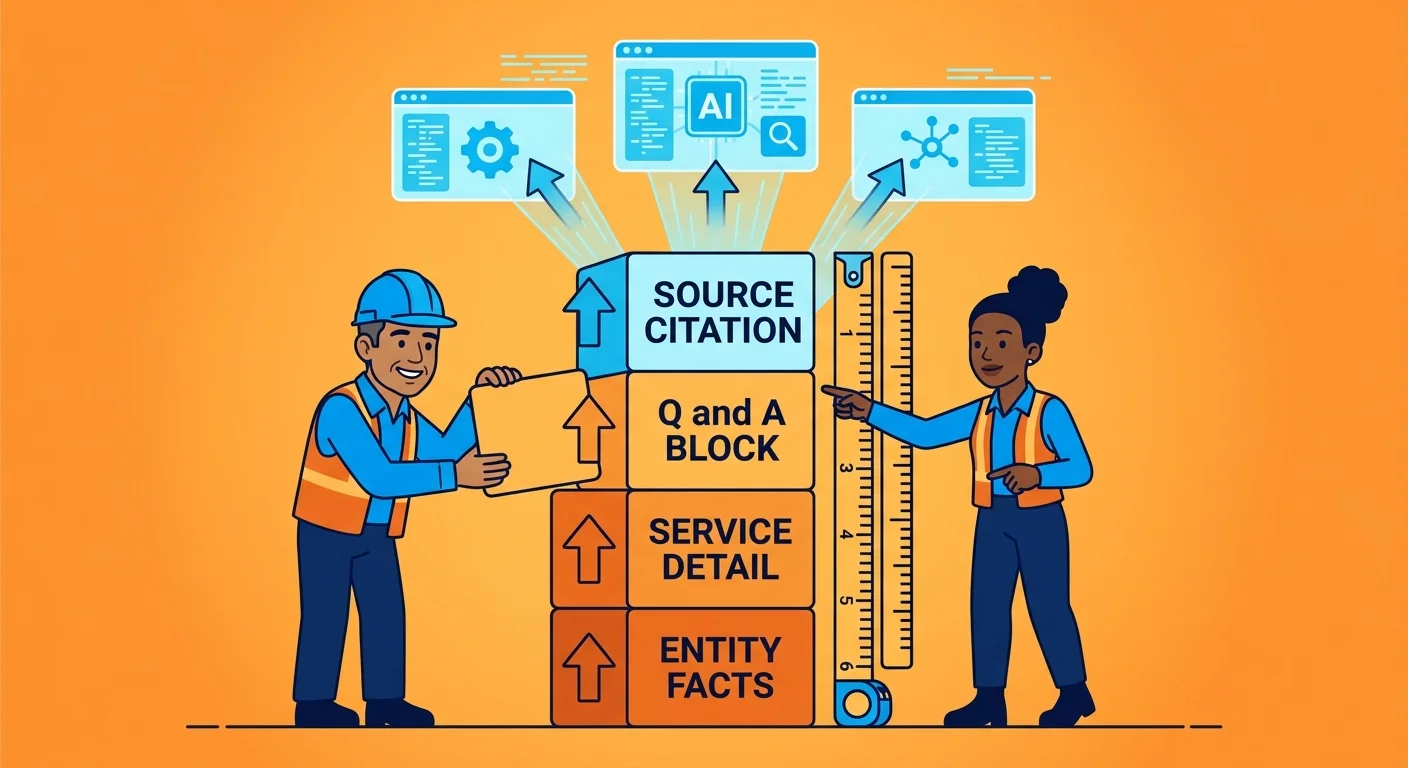
Owned authority is structural. It lives in machine-readable schema, in validated entity data, in a content architecture that AI engines can crawl and cite — and none of that requires a monthly payment to keep functioning. The Local AI Authority Engine is built on exactly this logic: engineer the infrastructure once, own the signal permanently.
Why Traditional Retainer Models Fail AI Answer Engines
Traditional retainer models were built for a world of ten blue links. Optimize the content, climb the list, get clicked. That was the game. But Gartner projects traditional search engine volume will drop by 25% by 2026 as users shift to conversational AI answers. The list isn't the game anymore. And every retainer built on list logic is losing ground in real time.
Traditional search engine volume is projected to drop by 25% by 2026 as users shift to conversational AI answers. Over 90% of younger demographic brackets already depend on localized AI tools to establish transactional intent. A retainer built to optimize for a ranked list is solving for an experience fewer and fewer patients are actually having.
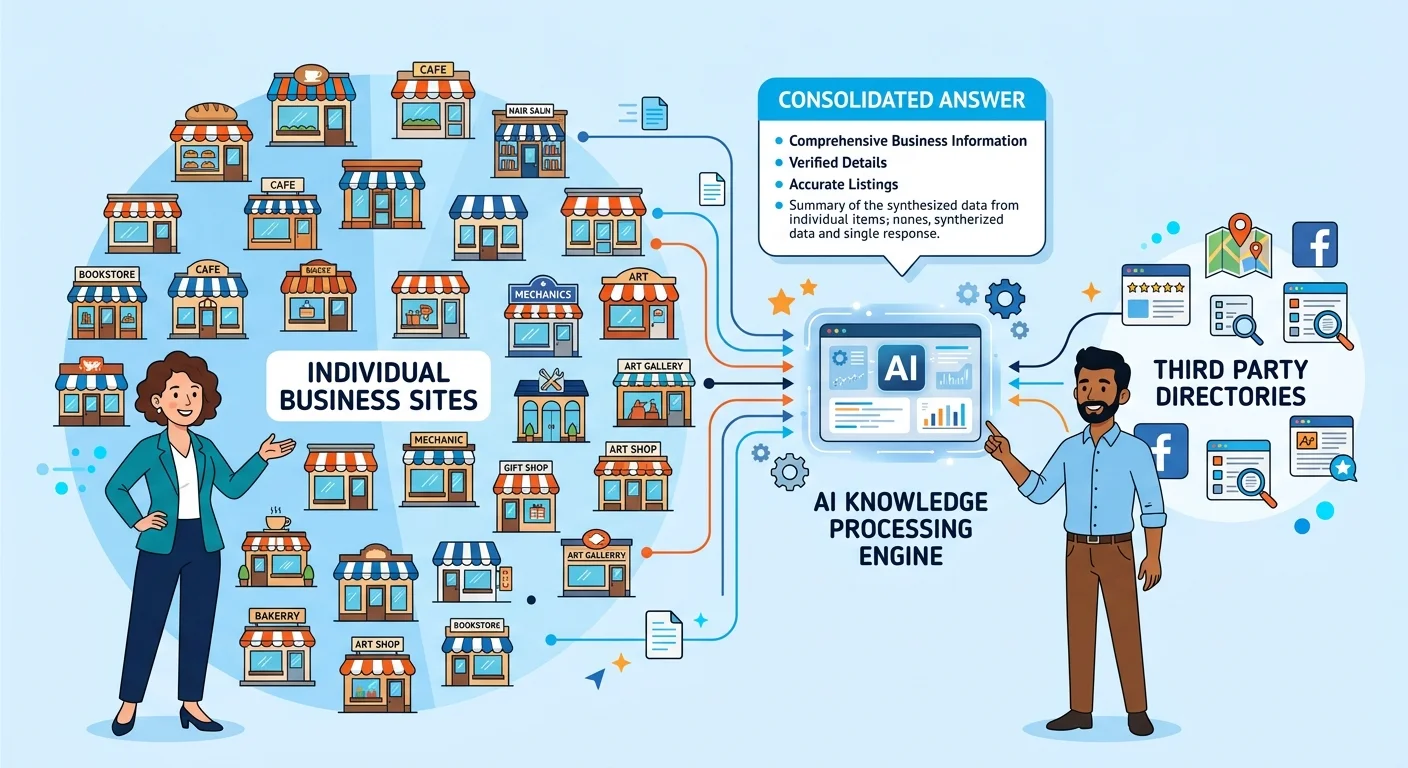
AI answer engines don't return lists. They return a single name. They name the entity they trust — and trust is built through structured, machine-readable signals that accumulate over time. U.S. Census Bureau data shows AI usage among businesses has grown from 3.7% to over 18% since 2023 — the businesses gaining that ground are the ones building entity trust, not content volume.
That gap is the hidden cost. Not the invoice — the structural mismatch between what the retainer produces and what AI engines actually require. Every month spent optimizing for a dying model is a month of compounding distance between your practice and the name AI says when a patient asks who to see. You own nothing. The distance keeps growing. And the next section breaks down exactly what that costs — layer by layer.
| Deliverable | What a $500/Mo Retainer Provides | What AI Authority Infrastructure Provides | Terminal Value at 36 Months |
|---|---|---|---|
| AEO Content Output | A rotating set of AI Authority articles written to satisfy a deliverable quota — volume without structural depth | A compounding library of machine-readable authority articles built on a validated entity framework with full internal linking architecture | Retainer: content orphaned with no infrastructure to anchor it. Infrastructure: a permanent, crawlable content asset that continues signaling entity trust independently of ongoing payments. |
| Schema & Entity Signals | Light schema updates applied inconsistently — incomplete markup, weak entity validation, no structured data audit | Full schema architecture deployed at build: FAQPage, LocalBusiness, BreadcrumbList, and article-level markup — all validated and machine-readable | Retainer: fragmented schema that degrades without active maintenance. Infrastructure: a complete, durable schema layer that AI engines can read and cite regardless of ongoing activity. |
| Internal Linking Structure | Shallow cross-linking between articles, if present at all — no deliberate authority hierarchy or semantic cluster architecture | A deliberate internal linking blueprint that establishes Trunk, Branch, and Leaf authority flows — every article reinforcing every other | Retainer: a flat pile of unconnected content with no compounding signal. Infrastructure: a self-reinforcing authority network that deepens entity trust over time. |
| The Invoice Cost | Monthly fee paid for vendor activity — an operational expense with no depreciation schedule and no terminal equity | A one-time capitalized investment classified as a depreciable business asset — paid once, owned outright | Retainer: $18,000 in rental spend over 36 months with zero balance sheet entry. Infrastructure: a capital asset with multi-year recovery value that does not require continuous payment to function. |
| The Decay Cost | Authority signals generated month-to-month with no persistence — the moment the retainer lapses, all accumulated signal disappears | Structural entity signals built into the foundation of the site — machine-readable data that AI engines continue trusting after the build is complete | Retainer: full signal decay at contract end, requiring restart from zero. Infrastructure: zero decay risk — owned signals persist and compound without ongoing payment. |
| The Opportunity Cost | 36 months spent optimizing for a ranked-list model as AI answer engines increasingly bypass traditional search results entirely | An authority infrastructure purpose-built for AI answer engines — engineered to be the entity those engines cite when a patient asks who to trust | Retainer: three years of compounding distance between the practice and the answer AI gives. Infrastructure: three years of compounding proximity to that answer. |
| The Operational Tax | Ongoing vendor coordination, deliverable review, and monthly reporting — hidden time costs absorbed by the practice owner or staff | White-glove execution with zero client management burden — the infrastructure is built and the content is executed without requiring the practice owner's operational involvement | Retainer: a recurring time drain with no terminal output to show for it. Infrastructure: a done-for-you build that returns operational time to the practice. |
Why Cheap Retainers Create Compounding Costs
Here's the thing about a $500/month retainer: the invoice is the smallest part of what it costs you.
There are four cost layers buried inside every $500/month retainer: The Invoice Cost, The Decay Cost, The Opportunity Cost, and The Operational Tax. Only one shows up on a statement. The other three stay invisible — right up until you've written 36 checks across 36 months and realized the signal you were renting has been quietly fading the entire time. That's $18,000 out the door with nothing to show for it.
Once these layers stack, the math gets ugly fast. That's exactly what this analysis is designed to show.
Cost Layer 1 — The Invoice Cost
The Invoice Cost is the number every vendor leads with: $500 per month. Across 36 months, that's $18,000 out the door.
That $18,000 purchases a vendor relationship. Not an asset. When the contract ends, the total doesn't convert into anything — no infrastructure, no entity signals, no machine-readable framework that keeps working after the last payment clears. What remains is a folder of articles with no structural home and a schema configuration nobody is maintaining. You own nothing.
Cost Layer 2 — The Decay Cost
Now here's the cost no vendor will put on your proposal. The Decay Cost is where the real damage runs.
Authority signals don't hold still. The moment a retainer lapses, the entity trust it was sustaining starts to degrade — schema goes stale, citation patterns weaken, AI engines recalibrate their confidence in your entity. The full mechanics of what happens after cancellation are worth understanding before you sign anything.
Superficial optimization builds technical debt. And that debt doesn't stay cheap — it diverts 30% to 40% of baseline system value toward corrective maintenance instead of structural growth. A commodity retainer that never builds foundational infrastructure doesn't just fail to compound. It generates cleanup costs you'll pay later to fix what it never actually built.
Cost Layer 3 — The Opportunity Cost
The Opportunity Cost is the hardest layer to put a number on. It's also the most significant one financially.
Traditional search volume is projected to drop 25% by 2026 as patients move from list-based search to conversational AI answers. Over 90% of younger demographics already use localized AI tools to establish who they'll book with. Every month spent optimizing for a collapsing model is a month your competitor — the one building structured entity authority — extends their lead.
That gap compounds. A practice that builds owned authority infrastructure in month one is 36 months ahead of a practice that cancels a retainer in month 36 and starts over. The Opportunity Cost isn't just lost visibility. It's the distance between where you are and where you'd already be if the investment had built something permanent from day one.
The Tech Debt Trap: How Cheap Fixes Become Expensive Corrections
The Operational Tax is the fourth layer. And it's the one that quietly turns a $500/month line item into a significantly higher real number.
Cheap retainers don't run themselves. Someone on your team reviews deliverables, fields vendor questions, approves content, and spends real hours troubleshooting the gap between what was promised and what showed up. That overhead doesn't appear on any invoice. But it's real time and real attention pulled from a practice already running at capacity.
Stack The Invoice Cost, The Decay Cost, The Opportunity Cost, and The Operational Tax. The $500/month figure stops looking like a budget-friendly option and starts looking like the most expensive way to end up exactly where you started. You own nothing — and you paid $18,000 to confirm it.
| Cost Layer | Label | Monthly Impact | 36-Month Cumulative Damage | Visibility After Cancellation |
|---|---|---|---|---|
| Cost Layer 1 | The Invoice Cost | $500/month in cash outlay with zero equity accumulation | $18,000 spent with no terminal asset, no infrastructure, no residual entity signals | Zero — no structure persists after cancellation |
| Cost Layer 2 | The Decay Cost | Authority signals degrade immediately upon lapse; schema goes stale, citation patterns weaken | Corrective rebuild costs compound on top of the original $18,000 already spent | Actively negative — AI engines recalibrate entity trust downward after signal interruption |
| Cost Layer 3 | The Opportunity Cost | Each month optimizing for a collapsing ranked-list model widens the gap vs. competitors building owned entity authority | 36 months of compounding distance from practices that built structured, machine-readable authority from month one | Zero — rented visibility never converts to owned infrastructure regardless of duration |
| Cost Layer 4 | The Operational Tax | Hidden staff time reviewing deliverables, fielding vendor questions, and troubleshooting gaps adds real operational drag | Cumulative overhead across 36 months represents significant untracked cost on top of the invoice total | Zero — operational overhead spent on a rented model produces no lasting authority asset |
The Hidden Operational Toll of Commodity AEO Content
The invoice is visible. The operational cost isn't. That's the one that breaks practices.
Every cheap retainer creates a second budget line. It doesn't show up on the statement — but it shows up in your week.
Someone on your team has to manage the vendor. Someone has to review deliverables that arrive underdeveloped, push back on content that misses the brief, and close the gap between what was promised and what was delivered.
That's not a minor inconvenience. That's a recurring operational tax on a practice already running at capacity.
The dollar cost is only part of it. The time cost compounds every month the relationship continues.
Cost Layer 4 — The Operational Tax
The Operational Tax doesn't appear on any invoice. It shows up in your calendar.
A commodity retainer at the $500/month level requires active management just to function at all.
Content arrives needing directional correction. Schema updates get skipped — or done wrong — and someone has to catch it. Monthly reports need interpretation because they measure activity: impressions, output volume, deliverable count. Not entity trust. Not AI citation signals. Not anything that determines whether ChatGPT, Gemini, or Grok names your practice.
Every one of those review cycles is an hour you're not spending on patients.
Add it up across 36 months.
Zero terminal equity. Continuous operational overhead. That's not a budget-friendly choice. That's the most expensive way to arrive at nothing.
The math gets worse when you frame it correctly — which is exactly what balance sheet framing does.
Citation Inaccuracy: The Invisible Authority Killer
Here's the second cost. This one doesn't show up in your calendar. It shows up in what AI engines decide to trust.
Local directories and unstructured search listings show a 40% correctness gap in citations compared to structured, machine-readable authority networks — per a systematic review on digital health data.
That's not a formatting problem. That's an authority problem.
When a retainer produces unstructured, unverified content, the citation patterns AI engines encounter are inaccurate. AI engines don't ignore that. They respond by reducing confidence in the entity. Your practice gets cited less. Or not at all.
Superficial optimization builds technical debt. That debt diverts budget toward corrective maintenance — and technical debt consumes between 30% and 40% of baseline system value.
Inaccurate citations are exactly that kind of debt. They create a cleanup cost you'll pay later to fix what the cheap retainer never built correctly in the first place.
And while you're cleaning up, a competitor with structured entity authority is compounding.
Who This Section Is Not For
Quick stop before we go further. This analysis isn't built for everyone — and that's not a disclaimer, that's a filter.
If you're looking for a vendor who guarantees results in 90 days, this analysis won't change your mind.
If you're comparing the $15,000 Authority Infrastructure investment against a $500/month retainer on sticker price alone, you've already decided. No cost analysis moves that needle.
If you want to build a content system once and never touch it again, the compounding authority model isn't built for that expectation.
The AEO Content Writing Services and the full $15,000 Authority Infrastructure build are for practice owners who've already been burned by short-term tactics.
Owners who are done renting visibility. Done paying $18,000 over three years to confirm they own nothing.
If that's not where you are, that's a real position. But the math in this analysis won't land — because you own nothing is only a problem if owning something was the goal.
| Operational Task | Commodity Retainer Burden | Authority Infrastructure Model | Time Cost Per Month |
|---|---|---|---|
| Content review and approval | Practice owner or office manager reviews each deliverable for accuracy, tone, and strategic alignment before publication | Done-for-you execution — client reviews nothing; content ships verified and structurally sound | Eliminated entirely |
| Vendor communication and direction | Regular back-and-forth to correct missed briefs, realign scope, and address deliverables that arrived off-mark | Single onboarding handoff; no ongoing directional management required | Eliminated entirely |
| Schema and entity signal monitoring | Schema updates skipped or executed incorrectly; someone on the practice team must catch errors and request corrections | Schema maintained as part of the infrastructure build; no reactive correction cycles | Eliminated entirely |
| Citation accuracy auditing | Unstructured content creates citation gaps in local directories and AI indexes; periodic manual audits required to identify and patch inaccuracies | Machine-readable, structured authority network produces accurate citations from the outset | Eliminated entirely |
| Performance reporting interpretation | Monthly reports measure activity volume — output count, impressions — rather than entity trust signals; someone must translate vanity metrics into strategic decisions | Reporting anchored to authority signal indicators that map directly to AI recommendation behavior | Significantly reduced |
| Gap-filling and remediation | Content that misses structural requirements forces supplemental work — additional internal effort or additional vendor spend — to fill the authority gaps the retainer left behind | No remediation layer; infrastructure is built correctly at the foundation, not patched after the fact | Eliminated entirely |
The 3-Year Total Cost Comparison: Retainer vs. Authority Infrastructure
Skip the philosophy. Put both models side by side over 36 months. The math makes the argument.
Thirty-six months at $500/month is $18,000. At the end of month 36, you own nothing. No infrastructure. No entity signals. No machine-readable framework that keeps working after the last invoice clears. The $18,000 bought a vendor relationship. Vendor relationships end.
The $15,000 Authority Infrastructure build is a one-time capitalized investment. Traditional search engine volume is projected to drop by 25% by 2026 as the search model shifts toward conversational AI answers. The practice that owns structured entity authority before that transition completes is positioned permanently. The practice that was renting is starting over — from zero, with $18,000 already spent.
Running the Numbers: $500/Month Over 36 Months
$500 times 36 months is $18,000. That's the invoice cost. It's also the only number the retainer model ever shows you clearly.
But the invoice isn't the whole cost. Every month the retainer lapses, the authority signal it was sustaining degrades — that's the Decay Cost. Every month spent on a collapsing model is a month a competitor with owned infrastructure pulls further ahead — that's the Opportunity Cost. And then there's the Operational Tax: the management overhead, the review cycles, the correction hours nobody invoices but everyone absorbs. The $18,000 figure is the floor. Not the ceiling.
The $15,000 Authority Infrastructure build doesn't stack those hidden layers. It eliminates them. One model produces compounding equity. The other produces a monthly payment receipt. That's the structural difference between renting attention vs. owning entity trust.
The Balance Sheet Case for Authority Infrastructure
Here's the thing: capitalized business assets qualify for multi-year recovery structures under IRS guidelines — which draws a hard legal line between structural digital investments and short-term rental costs. That's not an accounting technicality. That's the difference between an expense and an asset.
And the category matters. Intangible assets now constitute upwards of 80% of corporate enterprise value in developed economic markets. Authority Infrastructure — schema, entity trust signals, machine-readable content architecture — sits squarely in that category. The retainer sits in the operating expense column. The Authority Infrastructure build sits on the balance sheet. Those aren't two rows in the same column. They're two different financial instruments.
A retainer that generates zero terminal equity isn't a conservative financial choice. It's a commitment to keep paying for something you'll never own — in a market that is actively rewarding ownership.
What Intangible Asset Ownership Actually Means for a Practice
Owning an intangible asset means it keeps working after the last payment clears. The Authority Infrastructure keeps signaling entity trust to AI engines whether or not a vendor invoice went out this month. That's what ownership actually means in practice.
The infrastructure built in month one is still generating AI citations in month 36. It compounds. The retainer paid in month one is gone in month one — and every signal it was briefly sustaining disappears the moment maintenance stops. One side of this comparison builds. The other drains. And the gap between them widens every single month.
Thirty-six months from now, one practice owns a capitalized, machine-readable authority asset that's been compounding since month one — still generating entity signals in month 36 and every month after. The other holds an $18,000 expense line and a folder of articles with no structural home. That's the honest version of this comparison — and is your authority infrastructure a balance sheet asset is where that question gets answered in full.
| Metric | $500/Month Retainer (36 Months) | $15,000 Authority Infrastructure Build | Advantage |
|---|---|---|---|
| Total Invoice Cost (36 Months) | $18,000 — 36 monthly payments of $500 | $15,000 — one-time capitalized investment | Authority Infrastructure saves $3,000 at the invoice level alone |
| Terminal Equity at Month 36 | $0 — zero owned infrastructure, zero entity signals remaining | Full authority asset retained — schema, entity trust signals, machine-readable content architecture | Authority Infrastructure — ownership vs. zero equity |
| Balance Sheet Classification | Operating expense — no capitalization possible, no multi-year recovery | Capitalized intangible asset — qualifies for multi-year recovery structures under IRS guidelines | Authority Infrastructure — sits on the balance sheet, not the expense column |
| AI Visibility After Final Payment | Signal collapses — authority decay begins immediately upon cancellation | Entity trust signals continue compounding — no payment required to sustain | Authority Infrastructure — permanent signal vs. immediate decay |
| Asset Class | Rental expense — vendor relationship, not owned property | Intangible digital asset — structured entity authority with compounding value | Authority Infrastructure — intangible assets constitute upwards of 80% of enterprise value |
| Positioning as AI Search Shifts | Exposed — 25% drop in traditional search volume by 2026 leaves retainer-dependent practices unprotected | Protected — owned entity trust signals are built for the conversational AI answer model | Authority Infrastructure — structured for the model replacing traditional search |
Frequently Asked Questions
The numbers are done. Now come the objections.
Every practice owner who runs this math for the first time lands on the same questions. Here are the straight answers.
No spin. No reframing. Just the math.
Why is a $500/month AEO retainer actually more expensive over three years?
The invoice says $500/month. The real bill is built from four layers — and only one of them shows up on a proposal.
The Invoice Cost is $18,000 across 36 months. That's the number everyone sees. But the retainer doesn't stop there.
The Decay Cost kicks in the moment payments stop — every month the rented signal degrades, and nothing structural replaces it. The Opportunity Cost is every month a competitor with owned infrastructure pulls further ahead while your retainer holds the status quo. The Operational Tax is review cycles, schema corrections, and oversight hours — real time, never invoiced, never building equity.
Four cost layers. One visible. Three guaranteed.
What happens to my AI engine visibility if I cancel a cheap monthly retainer?
It collapses. Not gradually — immediately.
The retainer never built owned infrastructure. It rented a signal. Stop paying, the signal stops. No residual. No structure AI engines keep trusting.
Traditional search engine volume is projected to drop by 25% by 2026 as patients shift to conversational AI answers. A practice with no owned entity signals has nothing to fall back on.
You own nothing. So you start over — from zero, with $18,000 already spent.
How does iTech Valet's Authority Infrastructure qualify as a balance sheet asset?
Capitalized business assets qualify for multi-year recovery structures under IRS guidelines. That's not a technicality — that's the entire distinction.
A structural digital investment — schema architecture, entity trust signals, machine-readable content — keeps working after the last payment clears. It is a depreciable asset, not a recurring expense.
Intangible assets now constitute upwards of 80% of corporate enterprise value. Authority Infrastructure sits in that category.
The retainer sits in the operating expense column. The Authority Infrastructure build sits on the balance sheet. Those are not two rows in the same column.
Can you explain the mathematical reality of Authority Decay?
Here's the thing: the retainer was never building anything you own. It was sustaining a rented signal. Stop paying, and that signal stops too — immediately, not gradually.
Schema goes stale. Citation patterns weaken. AI engines start reducing their confidence in the entity. That's not a theory — that's the decay sequence.
Local directories and unstructured listings already show a 40% correctness gap in citations compared to structured, machine-readable authority networks. A retainer producing unstructured content widens that gap every single month it runs.
Owned infrastructure closes it. The retainer guarantees it stays open.
What are the hidden operational costs of managing low-cost commodity AEO content?
The Operational Tax is the cost nobody quotes. It's real every week.
Every deliverable needs review. Schema updates get skipped — or done wrong — and someone has to catch it. Monthly reports measure activity: impressions, output volume, deliverable count. Not entity trust. Not AI citation signals.
Each review cycle is time a practice owner isn't spending on patients. Multiply that across 36 months.
The management overhead sits on top of the $18,000 invoice — invisible on every proposal, very real in practice. None of it builds equity. All of it disappears the moment the retainer ends.
The Math Doesn't Lie — But the Industry Hopes You Won't Do It
The industry sells the retainer because it's the easiest yes in the room.
Five hundred dollars a month sounds measured. Sounds responsible. Sounds like what a careful practice owner does while they wait to see if any of this AI stuff actually matters.
But the math already ran. And it ran against you.
Thirty-six months. $18,000 out the door. Zero owned infrastructure. And a competitor who started building in month one now holds an authority asset that keeps signaling entity trust to AI engines — whether or not anyone is writing a check this month.
Here's the line the entire analysis was building toward: you own nothing.
The Invoice Cost is $18,000. The Decay Cost, The Opportunity Cost, and The Operational Tax sit on top of that — invisible on every proposal, very real in practice.
The Authority Infrastructure build doesn't generate those hidden layers. It eliminates them.
One model puts a receipt in your folder every month. The other puts an asset on your balance sheet that compounds from day one. Those are not two versions of the same decision.
iTech Valet built the Local AI Authority Engine to solve this problem with structure — not another retainer dressed up as a strategy.
The math doesn't lie. The industry just counts on you not doing it.
You've done it now. The only variable left is how long you wait — while the competitor who already ran these numbers builds further ahead every month you don't.
The math isn't complicated. Thirty-six months of rental spend. Zero equity. Zero AI authority when the payments stop. So here's the only question that matters: what does AI say about your practice right now? Run the AI Visibility Check and find out. Fifteen minutes. Real data. No guesswork — and no obligation to do anything with what you learn. But if the results show what we almost always see? You'll know exactly what you've been paying for.