
Getting Started with AI Authority Content: A 3-Step Framework for Busy Practitioners
AI Authority Content is a structured framework for publishing practice information so conversational AI engines — ChatGPT, Gemini, Grok, and others — can identify, trust, and recommend a specific practitioner when a patient asks who to see.
It isn't traditional search optimization. Traditional optimization puts a practice inside a ranked list that a patient browses and clicks through. AI search doesn't produce a list. It produces one answer. The practitioner who gets that answer built their digital infrastructure to be machine-readable, entity-verified, and citation-worthy.
Getting started requires three sequential steps. First: Establish Your Entity Signal Before You Write a Word — the foundational data layer AI engines use to identify a practice must be complete, consistent, and structured before any content goes live. Second: Structure Content AI Engines Can Actually Use — articles and practice pages must be built in formats that foundation models can extract, parse, and cite. Third: Maintain Citation Velocity So Authority Compounds — publishing consistently enough that AI engines recognize the practice as an active, evolving source of expertise, not a static directory listing.
The urgency is real. Gartner predicts traditional search engine volume will drop 25% by 2026 as AI chatbots and virtual agents absorb queries that once went to search engines. Over 70% of consumers already seek health information online first — and that behavior is migrating from search results pages to direct AI responses.
A practice without machine-readable authority signals isn't competing for a lower position. It's absent from the conversation entirely.
The three-step framework addresses each component in sequence. Skipping steps or reversing the order produces incomplete entity signals AI engines can't verify. The sequence is fixed because each step builds directly on the one before it.
Last Updated: July 10, 2026
- • Why the Old Content Playbook No Longer Gets You Found
- • What AI Authority Content Actually Is (And Isn't)
- • Step 1 — Establish Your Entity Signal Before You Write a Word
- • Step 2 — Structure Content AI Engines Can Actually Use
- • Step 3 — Maintain Citation Velocity So Authority Compounds
- • Who This Framework Is (And Isn't) Built For
-
• Frequently Asked Questions About AI Authority Content
- • What is the difference between traditional SEO and AEO for local practitioners?
- • How much time does a busy practitioner actually need to invest in building AI authority?
- • Why can't I just use cheap AI writing tools to generate my practice's AI Authority articles?
- • How do foundation models like ChatGPT and Gemini know to recommend my practice?
- • What are the first structural changes my practice needs to become AI-readable?
- • How long before AI engines start citing my practice consistently?
- • The Verdict on AI Authority Content for Busy Practitioners
Why the Old Content Playbook No Longer Gets You Found
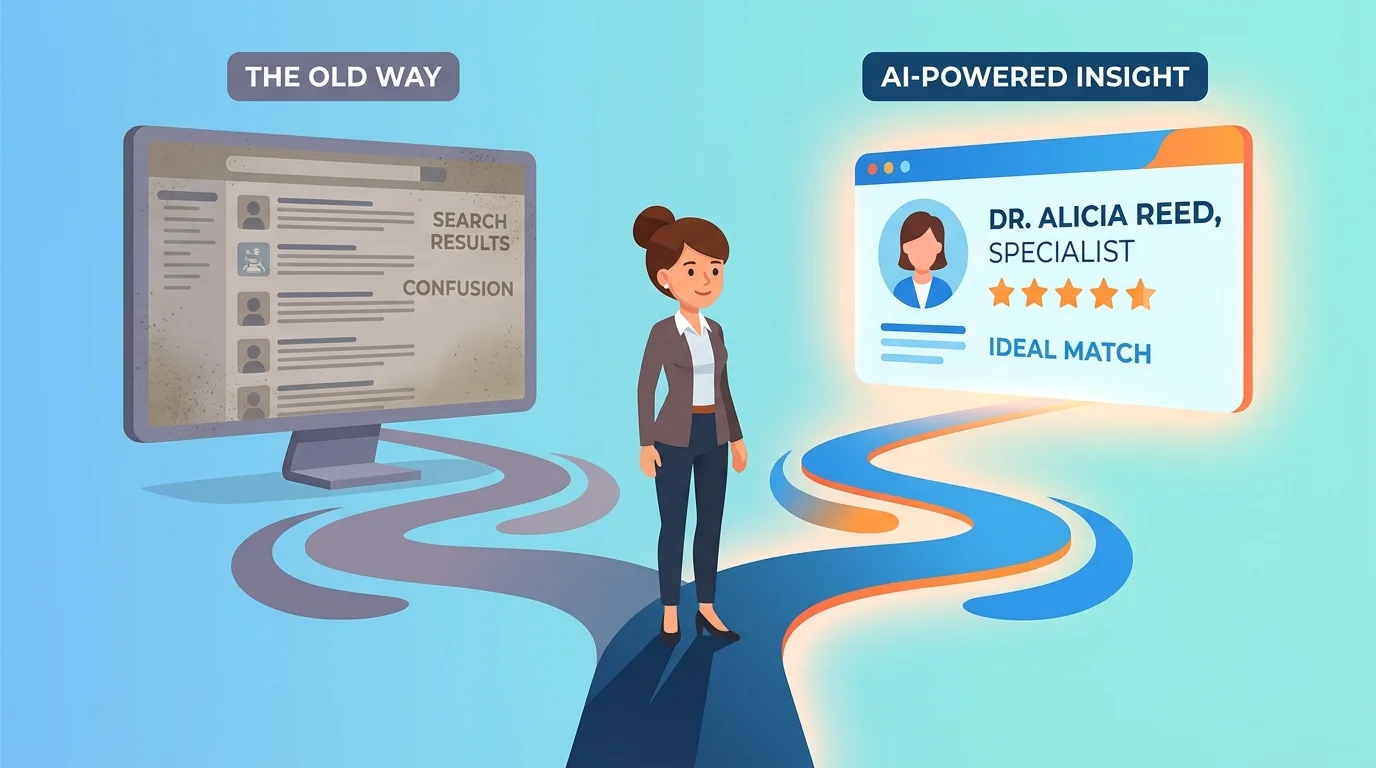
The old playbook isn't fading. It's finished.
And the practices still running it aren't falling behind gradually. They're disappearing.
Think about the vending machine. Traditional SEO put your practice in that machine — listed among a dozen others, waiting for the patient to browse, hoping they'd pick you. AI search skips the machine entirely.
It hands the patient one answer. This is who you want.
If your authority infrastructure wasn't built to be machine-readable and entity-verified, you don't get handed. You're not even a choice. You're absent from the conversation before it starts.
Here's what makes this impossible to ignore. Published analysis found that 90% of US adults are already aware of AI in daily life — but only 30% can accurately identify it when they encounter it. Patients are using these tools right now without knowing they're AI. The shift isn't coming.
It's already embedded in how your future patients are finding care.
Gartner predicts traditional search volume will fall 25% by 2026. The window to build authority before your market fully migrates is not wide. Practices building now are the ones who'll own the answer when it closes.
Why Traditional SEO Fails the Modern Practitioner
Traditional SEO was built for one specific behavior: open a search engine, type a query, scan a list, click a result.
That chain is broken. Patients don't browse a list anymore. They ask a question — and they get a verdict.
The whole premise of keyword content is a response to a system that's being replaced. Stuff the article with the right phrases, earn a ranking, collect clicks. It was built entirely around browsing behavior — and patients have stopped browsing.
That's not a gap to close with a few tweaks. It's a structural mismatch. Understanding why AI Authority articles have displaced traditional content strategies for healthcare practices makes the new requirement clear — and why incremental adjustments to the old playbook don't fix it.
Foundation models don't rank. They identify the most trusted, most entity-verified, most citation-worthy source — and they name it.
A practice with a decade of keyword-optimized content and zero machine-readable entity signals loses to a practice with six months of structured AI Authority content and a clean entity layer. Every time.
The work that built authority in 2019 doesn't transfer. This is a different game with different rules. Practitioners who recognize that first compound the fastest — because every month of structured execution builds on the last.
| Search Behavior | Traditional SEO Result | AI Search Result | What Practitioners Experience |
|---|---|---|---|
| Patient types a symptom or condition into a search engine | Practice appears in a ranked list alongside competitors — patient browses and chooses | AI engine identifies the most entity-verified practitioner and names them directly — no list produced | Practices optimized for rankings are present in a format patients are no longer using |
| Patient asks a conversational AI who to see for back pain near them | Keyword-optimized content earns a position on a results page the patient never opens | AI delivers a single practitioner recommendation based on entity trust and citation signals | Practices without machine-readable authority signals are absent from the response entirely |
| Patient reads AI-generated health guidance and asks for a local referral | High-ranking practice pages go unread — AI did not pull from a results list | AI cites the practitioner whose content it has already validated as authoritative and structured | Practices that publish generic, unstructured content are invisible to the citation layer |
| New patient in a market with multiple practitioners asks AI for a recommendation | Backlink volume and domain authority determine search position among many options | AI selects the single most entity-verified, consistently cited practitioner in the market | Years of traditional SEO investment produce no authority signal that AI engines can read or trust |
| Returning patient asks AI to confirm a practitioner's expertise before a follow-up visit | Practice earns a click if the patient performs a separate search and finds the right result | AI either confirms the practitioner as a recognized authority or returns a competing name | Practices with incomplete entity signals lose authority confirmation moments to competitors |
What AI Authority Content Actually Is (And Isn't)
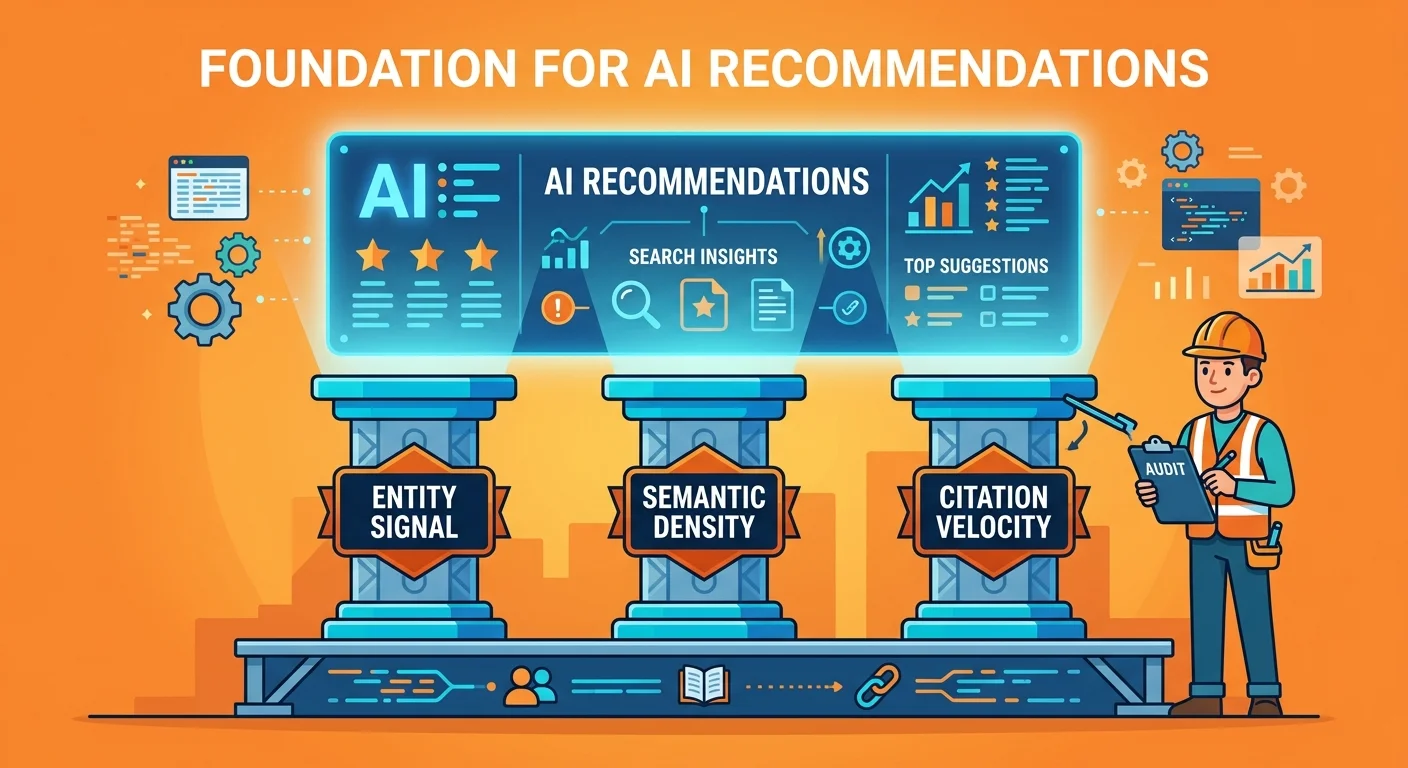
AI Authority Content isn't a rebranded version of what you've been doing. It's a different discipline built around a different requirement: giving foundation models enough verified, machine-readable data about your practice that they can confidently name you as the answer.
Not include you in a list. Name you.
Here's the line that matters. Traditional content optimization earns a position inside a ranked set of results. AI Authority Content is built to become the single output of a recommendation. Those aren't two points on the same spectrum. They're different games with different rules, different inputs, and a completely different definition of winning.
Think about how a vending machine works. Traditional content stocked the shelves — your practice sitting next to a dozen others while a patient browses, compares, and eventually picks one. AI search doesn't run that machine.
It hands the patient one item and says this is the one you want. AI Authority Content is the work that makes you that item.
The Three Signals Foundation Models Use to Form a Recommendation
Foundation models form recommendations using three signals. None of them are keywords.
The first is Entity Trust — whether the AI can confirm who you are, what you do, and where you operate through consistent, structured data across authoritative sources. The second is Semantic Density — whether your content is deep enough on a specific topic that the model can extract a confident, citable answer. The third is Citation Velocity — whether you're publishing with enough frequency that the model treats your practice as an active, evolving source rather than a stale directory entry.
These three signals don't operate independently. A practice with strong Entity Trust but thin Semantic Density gets identified but not cited. A practice with dense content but inconsistent entity data gets cited inconsistently — or not at all.
That interaction is why how foundation models are reshaping patient education matters so much right now. The content format patients encounter through AI is shaped entirely by these three signals — not by what shows up on page one of a search result.
The Stanford 2024 AI Index confirms foundation models have dramatically advanced in multimodal capability, outperforming human baselines on several standardized benchmarks. These aren't simple text-matching systems.
They read structure, context, entity relationships, and topical authority simultaneously. Keyword frequency isn't a signal they optimize for. Entity completeness is.
The Misconception That Cheap AI Writing Tools Can Replace This
Cheap AI writing tools produce text that looks like content but functions like noise. They generate paragraphs. They don't build Entity Trust. They don't verify structured data. They don't establish the machine-readable signals that make a foundation model say I trust this source enough to name it.
Volume isn't the bottleneck. Signal quality is. No content mill solves that.
The regulatory record confirms what the performance data already shows. The SEC warned in April 2024 that false or exaggerated AI capability claims are prosecutable violations. The FTC has made clear that advertising technological capabilities without scientific substantiation violates consumer protection laws.
The agencies selling cheap AI content tools know this. Which is exactly why their claims about what those tools can do for your practice authority don't hold up to scrutiny.
Scroll through the AI Authority articles library and the structural difference is immediate. These aren't keyword-filled posts. They're engineered to satisfy the three signals foundation models actually use.
| Industry Default Approach | The Flaw or Symptom | The AI Authority Content Approach |
|---|---|---|
| Publish keyword-stuffed articles optimized for search engine list rankings | AI engines ignore keyword density — they extract entity signals and topical authority, which keyword-based content doesn't build | Publish structured AI Authority Content engineered to satisfy Entity Trust, Semantic Density, and Citation Velocity simultaneously |
| Treat content as a traffic driver — more posts means more clicks and visibility | AI search doesn't produce clicks from lists — it names one answer, so volume without signal quality produces noise, not recommendations | Treat content as an authority asset — each piece deepens machine-readable expertise signals that compound over time |
| Use generic AI writing tools to generate high volumes of content cheaply | Mass-produced content can't verify structured data or build the entity relationships foundation models require to cite a source confidently | Use a dual-AI validation process that verifies every claim, structures entity data, and produces content models can extract and trust |
| Rely on a single well-optimized page or directory listing to establish online presence | Foundation models cross-reference multiple authoritative sources — a single listing creates an incomplete entity signal that AI can't verify | Build consistent, structured entity signals across multiple authoritative sources so AI engines can confirm who you are and what you do |
| Publish in bursts when time allows, then go dark for weeks or months | Inconsistent publishing signals a stale, low-priority source — foundation models de-prioritize practices that aren't actively producing content | Maintain Citation Velocity So Authority Compounds through a fixed publishing cadence that signals active, evolving expertise to AI engines |
| Measure success by impressions, click-through rates, and page-one rankings | These metrics belong to a list-based search model — AI search produces a single named recommendation, making ranking metrics irrelevant to AI visibility | Measure success by whether foundation models name your practice as the authoritative answer when patients ask relevant questions |
Step 1 — Establish Your Entity Signal Before You Write a Word

Before you write a single word, a foundation model needs to know who you are.
Not who you claim to be. Who you verifiably are — confirmed through consistent, structured data across multiple authoritative sources. That's the Entity Signal.
Without it, everything you publish after this point gets attributed to no one.
Here's what most practitioners miss: entity establishment isn't a content task. It's an infrastructure task. It happens before the keyboard.
Over 70% of consumers already seek health information online first. The AI engines absorbing those queries aren't just returning results — they're cross-referencing every practice they consider recommending against a web of structured data signals.
If your data is inconsistent, incomplete, or contradictory across sources, the model can't verify you. And an unverifiable entity doesn't get named. It gets skipped.
The Local AI Authority Engine exists specifically to build this layer before content ever begins — because content published on top of a broken entity signal compounds nothing.
Get the signal right first. Then write.
What an Entity Signal Actually Covers
An Entity Signal is the full set of structured data a foundation model uses to verify that your practice is a real, specific, trustworthy organization operating in a real, specific location.
It's not your logo. It's not your tagline.
It's machine-readable confirmation that you exist — and that every source a model consults agrees on exactly who you are.
Back to the vending machine. Traditional search optimization put your name on a shelf label inside a crowded machine. The patient browsed, compared, decided.
AI search doesn't run that machine. It hands the patient one answer directly.
But before it hands anything to anyone, it runs a verification check. The Entity Signal is what that check reads. If the data doesn't pass, you don't get handed. You stay on the shelf — or you aren't in the machine at all.
The SEC's April 2024 warning against 'AI Washing' — overstating what AI tools actually do — is worth understanding here.
Practitioners are being sold entity solutions that don't produce entity signals. A tool that auto-generates your practice description across directories isn't building Entity Trust if the data it generates is inconsistent or unverified.
Know what you're actually buying.
The Structural Elements AI Engines Require to Trust a Practice
Four structural elements. That's what a foundation model cross-references when it decides whether to trust a practice entity.
First: NAP data — name, address, phone number — must be identical across every directory, listing, and authoritative source where your practice appears. One digit off in a phone number. An abbreviated street name in one listing. A missing suite number in another. These aren't cosmetic errors. They're contradictions the model uses to lower its confidence score on you.
Second: schema markup on your digital presence tells the model what type of entity you are, what services you provide, and how to categorize your expertise. Without it, the model guesses. It won't guess in your favor.
Third: authoritative third-party citation. Your practice needs to be mentioned, listed, or referenced by sources the model already trusts. Not just your own website saying you're credible. External sources confirming it.
Fourth: topical association. The model needs to see your practice consistently connected to a specific area of expertise. Not spread thin across a dozen unrelated health topics. Specialists get named. Generalists get skipped.
Get all four elements in place, and the content you create in Step 2 has a verified identity to attach to. Skip this step, and you're publishing into a void.
| Entity Signal Element | What It Tells AI Engines | Priority Level | Common Gap Found in Practice |
|---|---|---|---|
| NAP Consistency | Confirms your practice is a single, specific, verifiable organization — not a duplicate or data conflict | Critical — fix before anything else | Name, address, or phone number varies across directories; abbreviated street names or missing suite numbers create contradictions the model uses to lower confidence |
| Schema Markup | Tells the model what type of entity you are, what services you provide, and how to categorize your expertise — without it, the model guesses | Critical — required for entity classification | Schema absent entirely, or present but generic; practice type, service area, and specialty fields left unpopulated |
| Authoritative Third-Party Citations | Signals that trusted external sources independently confirm your practice exists and operates where you say it does | High — validates entity through external confirmation | Practice listed only on low-authority directories; no presence on sources foundation models already treat as trusted validators |
| Topical Association | Shows the model your practice is consistently connected to a specific area of expertise — specialists get named, generalists get skipped | High — determines whether the model confidently cites you for a specific query | Content and listings spread across unrelated health topics; no consistent topical signal for the model to anchor a confident recommendation on |
Step 2 — Structure Content AI Engines Can Actually Use
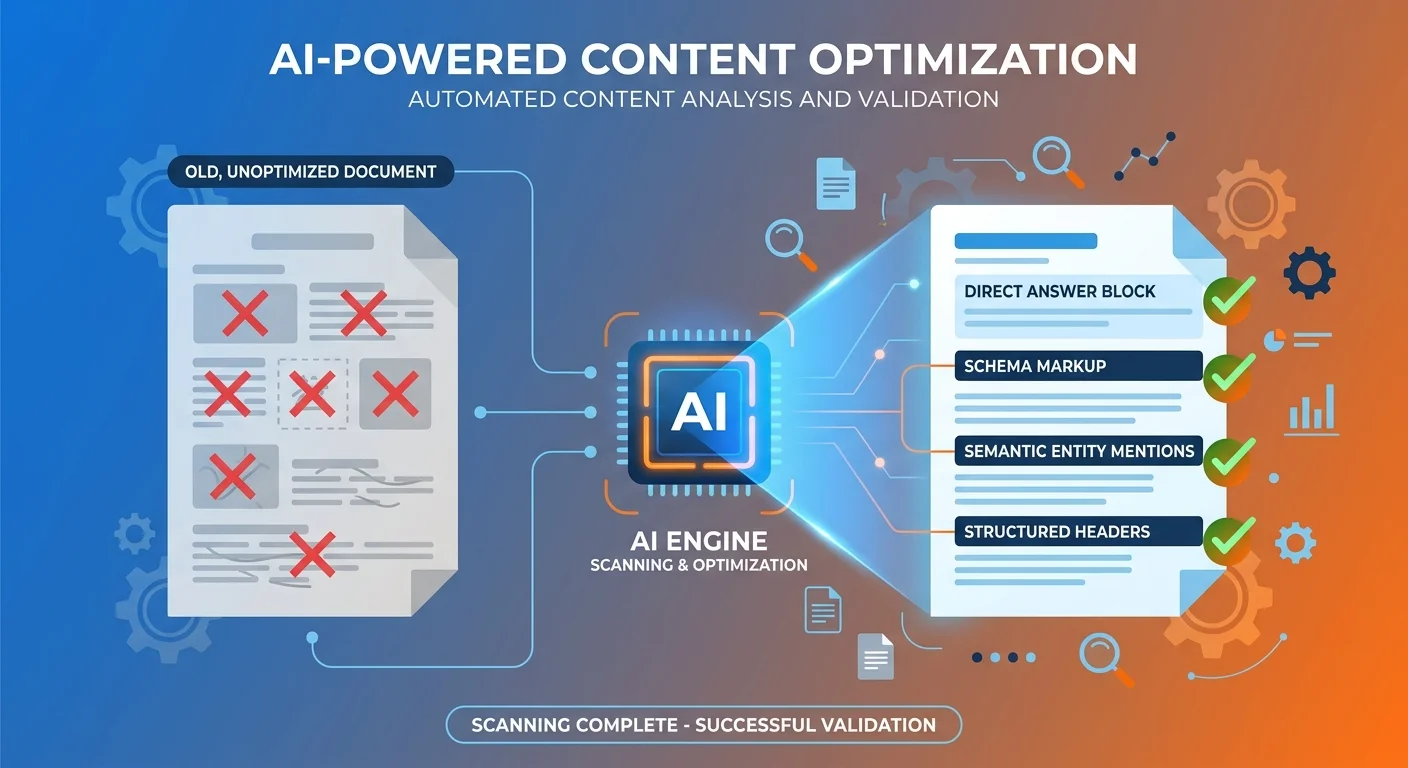
The entity signal gets you verified. It doesn't get you cited.
Step 2 is where you give foundation models something to actually pull from. Structured content. Specific answers. Deep enough that the model can extract a confident response and hand it directly to the patient asking.
Here's the distinction that changes everything. Content written for traditional search is designed to rank. Content written for AI citation is designed to be extracted.
Those aren't the same task. A ranked page competes for attention. A cited answer competes for trust — and the model decides what earns it.
The Stanford 2024 AI Index makes this concrete: foundation models have surged past human baselines on multimodal benchmarks. These aren't keyword-matching systems running a relevance score.
They're reading for structure, context, entity relationships, and topical authority — simultaneously. Write for a keyword scanner and you've already lost the game before you started.
How to Format AI Authority Articles So Foundation Models Cite Them
Foundation models don't cite pages. They cite answers.
So the format of your AI Authority articles has to make the answer extractable — no hunting, no guesswork, no interpretation left to the model. The answer surfaces clearly, in structured prose, at the top of a section dedicated to exactly one topic.
Every AI Authority article is built around a direct answer block. The first 200–300 words answer the article's central question completely — encyclopedic, neutral, no setup, no preamble.
That block is what the model extracts. Everything after it — the H2 sections, the H3 subsections, the supporting evidence — builds the Semantic Density that signals topical authority.
Structure isn't decoration. It's the delivery mechanism.
Healthcare practitioners have one more thing to get right. The FTC has been direct: advertising technological capabilities without scientific substantiation violates consumer protection laws.
That standard applies to your content. The format, the claims, the structure — all of it has to hold up under scrutiny. Understanding compliance and risk in AI content isn't an afterthought. It's part of building authority that doesn't blow up on you later.
AI Authority articles built on the iTech Valet framework are engineered to meet that standard from the first word.
Why Semantic Density Matters More Than Keyword Volume
Keyword volume measures how many people search a phrase. Semantic Density measures how completely you've answered a topic.
Foundation models don't reward the first one. They require the second. A page stuffed with the right phrases but thin on substance gets passed over. A page that answers one question completely — with supporting context, related concepts, and authoritative framing — gets cited.
Back to the vending machine. Traditional content stocked your shelf with keyword-optimized labels that patients browsed past. AI search skips the machine entirely — it hands the patient one answer directly.
To be that answer, your content has to be the most complete, most structurally clear response to whatever question the model is processing. Depth on a narrow topic beats breadth across a dozen every time.
That's the Semantic Density principle. It's why Gerek Allen built the AI Authority Content framework around vertical depth, not horizontal volume.
| Content Attribute | Keyword-Optimized Article | AI Authority Article | Why It Matters to Foundation Models |
|---|---|---|---|
| Primary Goal | Rank on a results page so patients browse and click | Be extracted as a direct answer so the model hands it to the patient | Foundation models don't serve lists — they serve verdicts; extraction-ready content wins |
| Opening Structure | Keyword-rich introduction that builds context before answering | Direct answer block in the first 200–300 words — complete, encyclopedic, no preamble | The model pulls from the top of the section; anything buried after setup gets skipped |
| Topic Scope | Broad coverage across multiple related keywords to capture search volume | One question answered exhaustively — vertical depth on a single topic | Semantic Density signals topical authority; breadth signals generalism, which gets passed over |
| Content Format | Flowing prose optimized for human readability and keyword placement | Structured H2/H3 hierarchy with one clear idea per section and explicit topical labels | Models read for structure and entity relationships simultaneously — unstructured content is unextractable |
| Claim Standard | Persuasive assertions designed to convert a browsing reader | Factually grounded statements that hold up to regulatory scrutiny and model verification | Foundation models cross-reference claims against trusted sources; unsupported assertions lower confidence scores |
| Entity Attachment | Byline and brand name present but not structurally reinforced | Every article anchored to a verified entity with consistent NAP data, schema markup, and authoritative citations | A model can only cite an answer if it can verify who authored it — unverifiable entities don't get named |
| Compounding Effect | Rankings fluctuate with algorithm updates and competitor activity | Each published article builds Semantic Density that strengthens the entity's topical authority over time | Citation Velocity compounds — the more verified, structured answers attached to an entity, the more the model trusts it |
Step 3 — Maintain Citation Velocity So Authority Compounds
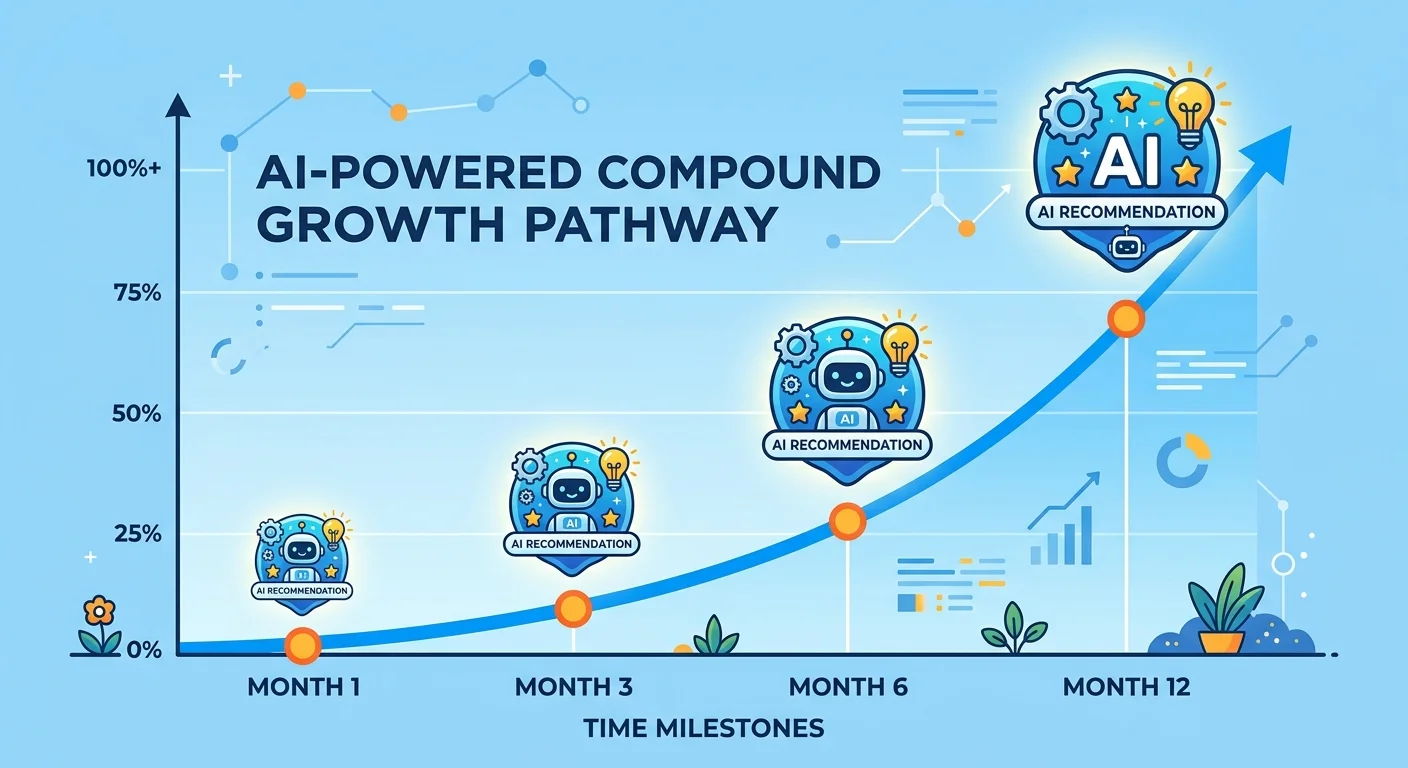
Steps 1 and 2 get practitioners into the game. Step 3 is where they quit — and quitting is the whole problem.
Citation Velocity isn't a tactic. It's the operating principle that determines whether your authority builds or quietly disappears.
Foundation models don't make one decision about your practice and move on. They update. Every time a model reprocesses your entity — cross-referencing published content, structural signals, authoritative citations — it recalibrates its confidence score.
A practice that published twelve AI Authority articles six months ago and stopped is being compared right now to a practice that published twelve last month and twelve the month before. The model notices.
Gartner projects a 25% decline in traditional search volume by 2026. That's not a distant warning. That's a window closing. Practices building Citation Velocity now are building inside that window. Practices that wait are watching it shut.
The Stanford 2024 AI Index makes the stakes concrete: foundation models are advancing in multimodal capability faster than any prior benchmark cycle.
These systems get smarter about who to trust — and that pace accelerates. A practice building consistent Citation Velocity today earns a compounding authority advantage that gets harder to close every quarter.
Waiting isn't a neutral position. It's a directional choice — just not one that moves in your favor.
What Citation Velocity Looks Like in Practice
Citation Velocity means a consistent cadence of new AI Authority articles publishing against the same entity, the same topical cluster, and the same structural standards — month after month.
Not a burst. Not a campaign. A cadence.
Each article that publishes adds a new citable answer to the model's available pool. Each answer reinforces the topical association the model has already started building for your practice. Each reinforcement raises the model's confidence score on your entity.
That's the compounding mechanism. And it only runs if the cadence holds.
Miss three months and the compounding doesn't pause — it resets. The model's confidence degrades. Competitors who kept publishing moved forward. You moved backward. There's no neutral gear here.
This is exactly why the National AI Authority Engine was built as a full-execution model — not a content toolkit, not a strategy session, not a monthly deliverable the practitioner has to review and approve before it ships.
Busy practitioners don't have the bandwidth to manage a citation cadence while running a practice. That's not a criticism. It's just reality.
The engine handles the cadence. The authority compounds. The practitioner sees the outcome.
The Compounding Effect: Why Consistent Execution Separates Durable Authority from One-Hit Visibility
Here's what Step 3 makes explicit: the answer the model hands a patient isn't chosen randomly. It's the answer the model trusts most — and trust is a function of recency, consistency, and depth over time.
A practice that built a strong entity signal, structured its content correctly, and published consistently for twelve months doesn't just get handed to patients. It gets handed first. It gets handed repeatedly. The model has seen enough consistent evidence to treat that practice as the default.
That's not a ranking. Rankings shift when an algorithm shifts. This is something different.
That's durable authority. Not a ranking that disappears when an algorithm shifts. Not a campaign that stops when the budget stops.
A compounding asset — one that grows with every article that holds the cadence.
iTech Valet built the three-step framework around this reality: entity first, structure second, velocity sustained. Practitioners who run all three steps don't become visible. They become the answer — handed directly, every time.
| Execution Cadence | Citation Velocity Outcome | AI Recommendation Stability | Practitioner Result After 12 Months |
|---|---|---|---|
| No cadence — one-time content push | Authority signal degrades as model recalibrates against competitors who kept publishing | Unstable — model confidence drops with each reprocessing cycle that finds no new evidence | Practice is invisible in AI recommendations; competitors who maintained cadence hold the named position |
| Irregular bursts — heavy output followed by multi-month gaps | Inconsistent reinforcement; topical association weakens during gaps and must be re-earned | Volatile — model treats inconsistency as a trust signal gap, not a temporary pause | Partial authority that never compounds; practice competes against itself as well as competitors |
| Consistent monthly cadence — structured AI Authority articles publishing against the same entity and topical cluster | Compounding — each new article adds a citable answer that reinforces prior topical associations | Strengthening — model confidence score rises with each reinforcement cycle | Durable authority that deepens over time; practice is consistently named as the trusted answer in its topical cluster |
| Accelerated cadence — high-volume output sustaining both depth and structural standards | Maximum velocity; model's available citation pool for the entity expands fastest | Dominant — practice becomes the model's default recommendation in its specialty, reducing the window for competitors to close the gap | Compounding authority advantage that becomes progressively harder for a late-starting competitor to overcome |
Who This Framework Is (And Isn't) Built For
This framework isn't for everyone. That's a design feature, not a disclaimer. The wrong practitioners waste time. The right ones hesitate when they shouldn't. Naming the line clearly fixes both problems.
Over 70% of consumers seek health information online first. That number isn't shrinking. The channel is changing — from search results pages to direct AI responses — but the behavior isn't. Patients are still searching. They're just getting handed one answer instead of a list to browse.
The practitioners who build durable authority from this framework share a few specific traits. The ones who don't — waste time, blame the system, and move on. That line is worth drawing right now, before you go any further.
The Practitioner Who Gets Results From This Framework
This framework is built for established practitioners who are done being invisible. They're running a real practice, generating real revenue, and they've noticed — either through an AI Visibility Check or through a patient conversation — that AI isn't naming them. That gap bothers them.
It should.
The right practitioner doesn't want to run this system. They want it done. They already understand that authority builds through consistent execution over months — not through a one-time setup, not through a content burst that stops when the budget tightens. They're not looking for a project. They're looking for a structure that earns their name the recommendation — every time someone asks.
The Buyers This Framework Will Not Serve
Here's where it gets blunt. If you need measurable ROI inside 90 days, this isn't your framework. Citation Velocity compounds — it doesn't microwave. Practitioners who need a quick win are the wrong fit. That's not a judgment. It's just the math.
If you're shopping on price — comparing a full AI Authority infrastructure to a cheap content subscription — stop here. Those aren't two versions of the same product.
One stocks the vending machine with generic labels. The other makes you the item that gets handed directly to the patient. You can't get the second outcome at the first price point.
And if you think you can reverse-engineer this after a walkthrough and run it yourself — that's the DIY trap. Pew Research Center found that 90% of US adults are aware of AI in daily life, but only 30% can accurately identify how it actually works. Knowing AI exists isn't the same as understanding how foundation models validate entity trust, extract citable content, or calibrate confidence scores over time. This framework requires sustained, structured execution. It isn't a checklist you hand to an in-house coordinator. If you're not ready for a done-for-you system built around compounding authority, the framework underperforms. That outcome wouldn't be fair to either of us.
Frequently Asked Questions About AI Authority Content
Same questions come up every time. Before the commitment. Sometimes right after it.
The answers are direct. No hedging. If this isn't your situation, you'll know fast. That's the point.
What is the difference between traditional SEO and AEO for local practitioners?
Traditional SEO earns you a position in a ranked list. AEO gets you named as the one answer. Those aren't variations of the same thing. One optimizes for browsing. The other optimizes for trust. AI search doesn't produce a list for the patient to browse. It hands them one name. Either that name is yours or it isn't.
How much time does a busy practitioner actually need to invest in building AI authority?
Zero — if you're in a done-for-you execution model. That's the only honest answer. Entity signal setup, structured content, Citation Velocity cadence — all of it requires sustained, skilled execution. Busy practitioners don't have that bandwidth. The right system handles it entirely. Your job is to see the outcome.
Why can't I just use cheap AI writing tools to generate my practice's AI Authority articles?
Foundation models know what machine-generated filler looks like. The Stanford 2024 AI Index confirms it: these models have advanced dramatically in multimodal benchmarking. They're not running text matches. They're reading for entity signals, structural integrity, and topical depth. A cheap content generator produces none of that.
The SEC flagged exaggerated AI capability claims in April 2024. Cheap AI writing tools make those claims constantly — about what they'll do for your practice authority. What they actually produce fills a page. It doesn't build Entity Trust. It doesn't send the machine-readable signals that make a foundation model decide I trust this source enough to name it.
Volume isn't the bottleneck. Signal quality is.
How do foundation models like ChatGPT and Gemini know to recommend my practice?
Foundation models validate entity trust through structured signals — schema markup, consistent NAP data, topically dense AI Authority articles, citation patterns across authoritative sources. That's not a theory. That's the architecture.
Over 70% of consumers seek health information online first. The models are trained on that behavior. They learn which entities get cited consistently inside a topical cluster. They track recency, consistency, and depth.
Your practice earns recommendations by building those signals over time. Not by asking for them. Not by gaming a keyword. By becoming the most verified, most entity-complete, most citation-worthy source in your space.
What are the first structural changes my practice needs to become AI-readable?
Start with Step 1: establish your entity signal before you write a single word. That means schema markup deployed correctly on your digital presence. NAP data — name, address, phone number — identical across every directory and authoritative source. Your practice entity clearly defined so a foundation model can confirm who you are and what you do.
Without that foundation, content published on top of it can't be attributed to a verified entity. The structure has to come first.
Writing before the signal is set is the most common mistake practitioners make. It's also the most expensive one — because every article published into a broken entity layer is compounding nothing.
How long before AI engines start citing my practice consistently?
Anyone quoting a fixed timeline is selling something. Here's what's actually verifiable: foundation models update their confidence scores as new, structured, topically consistent content publishes against a verified entity. That process compounds over months of consistent execution. It doesn't microwave.
Gartner projects a 25% decline in traditional search volume by 2026. That window is closing now. Practices building Citation Velocity today are building inside it. Practices waiting are watching it shut.
Start now and you're building a lead. Start later and you're closing a gap. Those aren't the same position — and every month of delay is a month a competitor spent being handed the name instead of you.
The Verdict on AI Authority Content for Busy Practitioners
Here's the verdict.
You're either the answer the model hands the patient — or you're still waiting for someone to browse to you.
The browsing era isn't fading. It's over. The practitioners who built their Entity Signal, structured content for machine extraction, and held a Citation Velocity cadence aren't competing for attention anymore. They're being named.
The three steps aren't complicated. Establish Your Entity Signal Before You Write a Word. Structure Content AI Engines Can Actually Use. Maintain Citation Velocity So Authority Compounds.
Run all three — in sequence, without skipping — and foundation models build confidence in your practice over time. That confidence is what gets you named.
Miss one step and the system underperforms. Drop the cadence and the compounding stops. This framework doesn't reward partial effort. It rewards the practitioners who run the full sequence and don't quit.
Gartner projects a 25% drop in traditional search volume by 2026. That's not a distant warning. That's a window with a closing date.
The practitioners building Citation Velocity now are building inside that window. The ones waiting are watching it close from the wrong side.
This isn't panic. It's a decision point. Practices that move now don't just survive the shift — they own the answer space their competitors are still trying to enter.
ITech Valet built this framework for practitioners who are done being invisible.
Not one of five options on a list. Not a listing the patient scrolls past.
You know what the three steps require. You know why the old model is being bypassed. You know what's on the other side of sustained execution.
The only question left is whether you want to be browsed — or handed the item.
You've seen how this works. You know why most practices are invisible. The only thing left to settle is whether AI is already saying your name — or a competitor's. Run the check and find out.

621 Enterprises, Inc. | Copyright 2026 | All rights reserved