Reputation vs. Content vs. Referrals: Where to Invest First After Your AI Visibility Check
Most practices finish their AI Visibility Check and immediately reach for the wrong lever.
They pile on reviews. They push out more content. They chase referrals. None of it lands — because they skipped the question that actually matters: which of these three moves the needle for AI recommendation engines, and in what order?
Reputation, Content, and Referrals are not equal. They are not interchangeable. The right investment sequence depends entirely on what the AI Visibility Check just exposed.
Here is the foundational truth. If entity signals are weak — if AI engines cannot confidently verify who you are, where you practice, or what you specialize in — no volume of new reviews will fix that. Reviews are a Reputation signal. But AI engines need machine-readable infrastructure to interpret those signals in the first place. Without that foundation, an offline reputation is a locked filing cabinet packed with proof that no AI engine can open.
Generative AI no longer returns a list of options and asks patients to choose. It synthesizes available data and names one answer. The practices being named are not the best-reviewed or the most-referred. They are the most machine-readable — the ones whose entity data is structured, verified, and consistent across every platform AI engines consult.
The decision framework maps to three questions. Is the foundation intact — can AI engines read your data cleanly? Is the Content layer building real topical authority, or generic filler that signals nothing? Are Referral signals — structured citations from credible directories — reinforcing entity presence across the web?
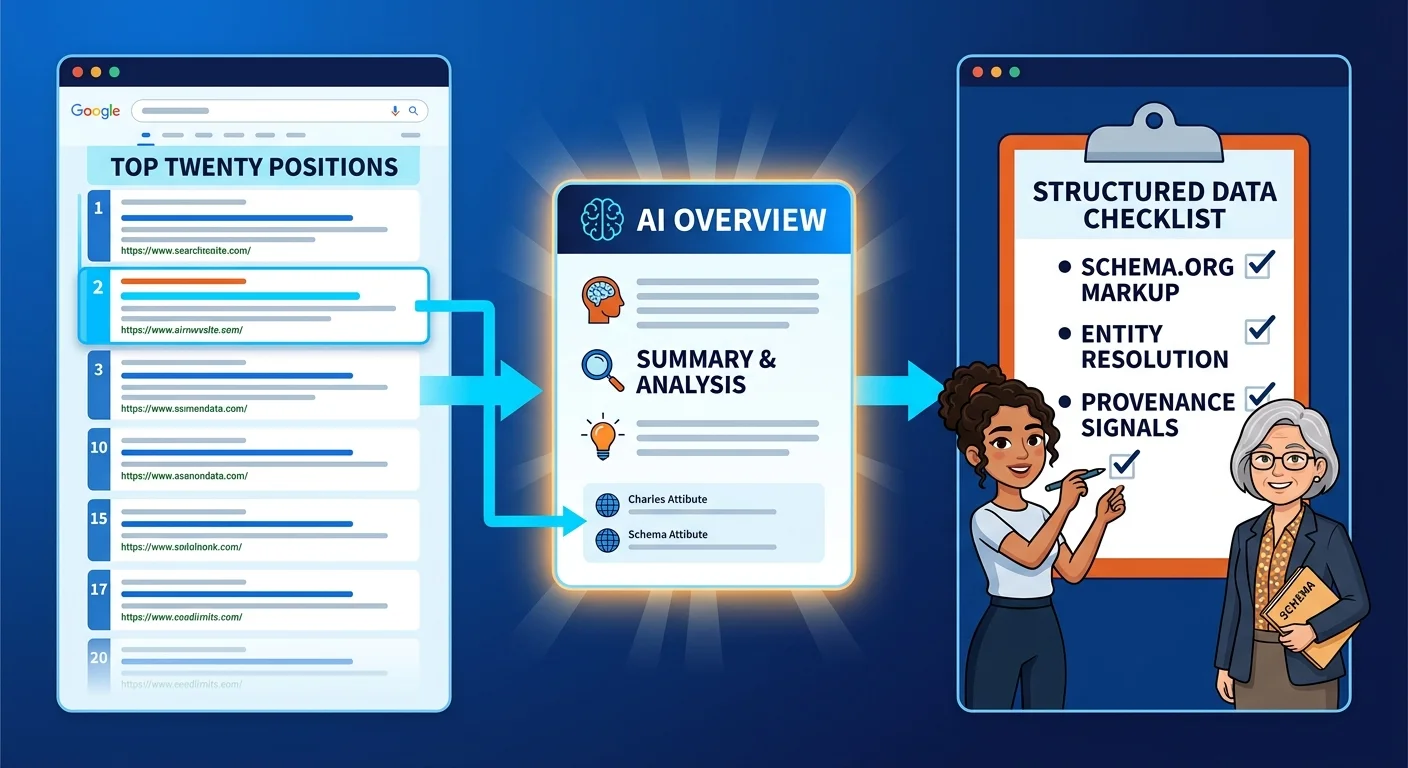
Each question maps to a lever. Foundation Fix first. Authority Build second. Signal Amplification third.
Investing in the wrong lever at the wrong phase is not just inefficient. It actively delays AI visibility while competitors compound.
Last Updated: July 15, 2026
- • What Your AI Visibility Check Is Actually Telling You
- • Why the Traditional Marketing Stack Fails After the Check
- • How to Read the Three Levers: Reputation, Content, and Referrals
- • The Investment Sequence: Which Lever to Pull First
-
• Frequently Asked Questions
- • What is the first step to take after completing an AI Visibility Check?
- • Why is fixing authority infrastructure prioritized over creating new content?
- • How do AI search recommendation criteria differ from traditional search engine algorithms?
- • What are the risks of using automated AI tools to generate reviews for a local clinic?
- • How does a decision framework help chiropractors allocate their digital authority budget?
- • Can a practice with strong word-of-mouth referrals skip the foundation fix phase?
- • Stop Guessing. Start Building.
What Your AI Visibility Check Is Actually Telling You
The AI Visibility Check is not a scorecard.
It's a diagnostic. And that distinction changes everything about what you do next.
A scorecard tells you where you rank. A diagnostic tells you why AI engines are recommending someone else — and exactly which structural gaps are keeping your practice out of the answer.
Those are not the same question. And they don't lead to the same fix.
Before you move any budget, understand what the check revealed about your machine-readability. Not your star rating. Not your click-through rate. Your machine-readability.
Generative AI doesn't hand patients a directory. It synthesizes available data and names one answer.
That shift — from list to verdict — is why your check results look nothing like any marketing report you've seen before.
The Difference Between a Marketing Audit and an AI Diagnostic
Traditional marketing audits measure channel activity. Clicks. Email opens. Review trends from last quarter.
Those are activity metrics. They tell you what happened inside your marketing stack. They say nothing about whether AI can read you at all.
An AI diagnostic measures something structurally different. It measures whether the entities AI engines actually consult — directories, structured data sources, citation networks — can verify your practice as a real, credible, specialized provider.
That verification layer is what most marketing audits never touch. And once you understand it, the next decision you face becomes clear: you're not choosing between marketing channels — you're choosing whether to build machine-readable infrastructure or keep optimizing for a system that no longer controls discovery.
Every investment you make sits on top of that layer. Without it, nothing compounds.
So the question isn't "how are we performing?"
It's: "can AI engines read us at all?"
Why Most Practices Are Shocked by the Results
Here's the thing — most practices assume they're in better shape than they are.
They have reviews. They have a Google Business Profile. They've been around for years. That offline track record feels like proof.
It isn't. Not to an AI engine.
Evidence locked inside a filing cabinet isn't evidence AI engines can act on. Published analysis on how AI search works makes clear that traditional link-based discovery is being systematically replaced by synthesized answers pulled from verified, structured data.
And according to Pew Research Center, 52% of Americans are already more concerned than excited about how AI is reshaping the decisions they make. Patient scrutiny of AI recommendations isn't softening. It's intensifying.
The practices that get named are the ones whose data is structured, verified, and readable. Full stop.
That's the shock. Not that the results are bad — but that years of real patient outcomes, legitimate clinical work, and hard-earned community trust added up to almost zero machine-readable signal.
The AI Visibility Check doesn't penalize your reputation. It reveals something harder to sit with: your reputation was never formatted for the system that now controls discovery.
That's not a criticism of your practice. It's the starting point for fixing the infrastructure around it.
| Signal Type | What Traditional Audits Measure | What the AI Visibility Check Measures | Why It Matters to AI Engines |
|---|---|---|---|
| Entity Verification | Reviews, star ratings, and response rates | Whether AI engines can confirm your practice exists as a verified, consistent entity across structured data sources | AI engines cannot recommend what they cannot verify — a strong review profile on an unverified entity is invisible to the recommendation layer |
| Content Signals | Page views, time on site, bounce rate, and keyword rankings | Whether your published content establishes topical authority around your specialty in a format AI engines can parse and cite | Generative AI pulls from structured, authoritative content — generic filler signals nothing and earns no citation weight |
| Citation Network | Backlink count, domain authority scores, and referral traffic volume | Whether structured citations from credible directories and partners consistently reinforce your entity name, address, and specialty | Inconsistent or sparse citation networks create conflicting entity signals — AI engines default to the practice with the cleanest, most consistent footprint |
| Reputation Signals | Overall star rating trends and review velocity over time | Whether your review profile is tied to a machine-readable entity with verified structured data — or floating in an unlinked profile | Reviews amplify authority only after the foundation is in place — without entity verification, review signals cannot be accurately attributed or weighted |
| Infrastructure Readiness | Website traffic, page speed, and mobile usability scores | Whether your underlying digital infrastructure is structured in a way that AI engines can read, trust, and act on | AI recommendation engines do not reward aesthetics or traffic — they reward machine-readable infrastructure that removes ambiguity about who you are and what you do |
Why the Traditional Marketing Stack Fails After the Check
Here's what happens after most practices run their AI Visibility Check.
They go straight back to the same playbook. More review requests. A content push. A referral campaign. Same levers, same results — and no idea why nothing's moving.
The problem isn't effort. The problem is that the traditional marketing stack was built for a search environment that no longer controls how patients find providers.
Generative AI doesn't crawl your review count and return a ranked list. It synthesizes structured, verified entity data and delivers a single answer.
Tools built to win a list-based game are structurally mismatched to that process. That mismatch doesn't shrink with more budget. It compounds.
The three investments practices default to — reputation management software, generic content creation, and word-of-mouth referral networks — all address real marketing problems.
None of them address the problem the check actually exposed.
Why Reputation Management Tools Don't Build AI Trust
Reputation management tools collect reviews, suppress negatives, and amplify your star rating. After a weak AI Visibility Check result, that sounds like exactly what you need.
It isn't.
Reviews are a reputation signal. But AI engines don't read your star rating in isolation — they verify the entity behind the rating first.
If your structured data is inconsistent, your schema is absent, and your directory listings conflict with each other, a flood of new five-star reviews adds volume to a foundation AI cannot validate.
More papers stuffed into a locked filing cabinet. It stays locked.
And there's a harder problem underneath the ineffectiveness.
Fabricated consumer reviews or online reputation updates generated with AI tools violate Section 5 of the FTC Act. The vendors selling those tools face the same regulatory scrutiny when their AI-capability claims can't be verified.
Practices chasing shortcuts through synthetic review generation aren't just building on sand. They're building on a regulatory fault line.
Why Generic Content Creation Misses the Entity Signal
Generic content fails for a different reason — and it's a structural one.
The volume model — publish constantly, cover broad topics, hope something ranks — was built for keyword algorithms. That model assumed a directory of results where more content meant more surface area to capture clicks.
Generative AI retired that assumption.
Generative AI moved search from a directory to a verdict. Surface area doesn't matter when AI picks one answer.
What matters is whether your content signals topical authority on the specific conditions, treatments, and patient outcomes your practice actually delivers — structured in a way AI engines can parse and trust.
Generic content signals none of that. It's the equivalent of unlabeled filing cabinet paper. The system sees it. It means nothing.
So when practices ask why their content investment isn't producing AI citations, the answer is almost always the same: they built content for a list-based system and never reconfigured it for entity-first discovery.
The first three decisions after the check is where most practices realize content investment without a Foundation Fix isn't a neutral position. It's a compounding liability.
Why Referral Networks Disappear Inside AI Search
Referral networks are the most counterintuitive failure of all.
A physician sending patients your way. A wellness center listing you as a preferred provider. Those feel like exactly the kind of trust signals that should matter to AI engines.
But feeling authoritative and being machine-readable are completely different things. AI engines don't feel trust. They read it.
Referral signals do matter to AI — but only when they exist as structured, machine-readable citations.
An informal professional relationship doesn't produce a structured data signal. A PDF partner directory doesn't produce a structured data signal. A handshake referral agreement produces zero entity reinforcement inside the systems AI engines actually query.
That offline trust — real as it is — sits in the same locked filing cabinet as the rest of your unstructured reputation. AI doesn't know it exists.
That's exactly what the Local AI Authority Engine is built to fix — an infrastructure layer that translates real-world referral relationships into verified, AI-readable citation signals.
Without that translation layer, your referrals lever doesn't connect to the recommendation system at all.
It runs parallel to it. Completely invisible to every AI engine making decisions in your market.
| Marketing Tactic | What It Optimizes For | What AI Engines Actually Look For | The Gap |
|---|---|---|---|
| Reputation Management Software | Review volume and star rating aggregation | Verified entity consistency across structured data sources and citation networks | Adds surface-level social proof to a foundation AI engines cannot validate — volume without verification |
| Synthetic Review Generation | Rapid reputation score inflation | Authentic, verifiable entity signals from credible, independent sources | Violates FTC regulations and produces the exact kind of unstructured, unverifiable signal AI engines discount or ignore |
| Generic Content Creation | Keyword surface area and click-through volume in list-based search results | Topical authority structured for entity-first, single-answer recommendation engines | Built for a directory model — produces no usable signal in a verdict-based AI discovery system |
| Word-of-Mouth Referral Networks | Informal professional relationships and organic patient referrals | Structured, machine-readable citations from credible directories and verified partner entities | Real trust that exists entirely outside the systems AI engines query — offline authority with no digital translation layer |
| Google Business Profile Optimization | Local map pack visibility and click engagement within traditional search interfaces | Schema-backed entity verification with consistent NAP data across all structured data environments | Addresses one node in the citation network while leaving the broader entity trust infrastructure unbuilt |
| Email and Social Media Marketing | Audience engagement, retention, and referral activation within owned channels | Externally verifiable authority signals from institutional sources AI engines treat as trusted validators | Operates entirely inside channels AI engines do not consult when forming recommendations |
How to Read the Three Levers: Reputation, Content, and Referrals
The check told you what's broken. Now the question is which lever actually fixes it.
There are exactly three levers — Reputation, Content, and Referrals.
Each one addresses a different layer of machine-readability. Each one has a specific job. And each one fails completely when you pull it out of sequence.
Think of it as a filing cabinet.
Reputation is the cabinet itself — does it exist, is it labeled correctly, can AI engines find and verify it? Content is what goes inside — structured, condition-specific material AI can read and cite. Referrals are the external systems pointing back to yours, confirming that other trusted entities recognize your cabinet as real.
You can't file content in a cabinet AI can't find. You can't amplify a referral network that points to an unverified entity. Sequence isn't a preference. It's a structural requirement.
Lever 1: Reputation — What AI Can Actually Verify
Reputation is not your star rating.
That's the distinction most practices miss — and it's exactly why a clinic with four hundred five-star reviews can still be completely invisible to AI engines.
What AI engines verify is entity consistency.
Your business name, address, phone number, and category data — do they match across every directory, every citation source, every structured data node AI consults? Inconsistency at this layer tells AI engines the entity is unreliable. An unreliable entity doesn't get recommended. Review volume is irrelevant until that foundation holds.
Here's what raises the bar even higher: Pew Research found that 52% of Americans are already more concerned than excited about AI's growing role in their daily decisions.
That skepticism doesn't let AI engines off the hook — it forces them to verify harder. Engines operating in that environment don't guess. They confirm. If your Reputation layer can't survive that confirmation check — mismatched listings, missing schema, unconfirmed entity data — your practice doesn't make the cut. The FTC has separately made clear that practices trying to shortcut this layer with fabricated AI reputation tools are trading invisibility for legal exposure.
The Foundation Fix phase exists to close exactly that gap before anything else gets layered on top.
Lever 2: Content — What Gives AI Something to Cite
Content is the lever practices reach for first.
It feels actionable. It feels creative. It is — but only after the Foundation Fix is done.
The Content lever isn't about publishing more. It's about giving AI engines something specific enough to cite.
When a patient asks an AI engine about low back pain treatment in their city, the engine isn't scanning for keyword density. It's looking for a verified entity — your practice — with structured, condition-specific material confirming you specialize in exactly what was asked. Broad content signals nothing. Structured, condition-specific AEO Content Writing Services builds the citation surface AI engines need to name you with confidence.
Now picture what happens when you invest in Content while Reputation is still broken.
The content exists. The entity it points to can't be verified. AI engines encounter authoritative-sounding material attached to an inconsistent, unvalidated source — and they discard it. That's not a content quality problem. That's a sequencing problem.
Content belongs in the Authority Build phase. Not before. Running a structured prioritization framework before you allocate budget makes the right sequence self-evident. Skipping it doesn't speed up results. It compounds the delay.
Lever 3: Referrals — What Amplifies Authority That Already Exists
Referrals are the lever practices underestimate most.
And when you activate them at the right phase, they produce more compounding force than the other two combined.
In the AI authority context, Referrals aren't physician relationships or word-of-mouth — though those matter on their own.
Referrals here means structured external citations: verified directory listings, partner mentions in machine-readable formats, cross-entity signals confirming your practice is recognized by other trusted sources. When those signals are consistent and structured, AI engines treat them as corroborating evidence that your entity is real, established, and worth recommending.
But Referrals only amplify authority that already exists.
A citation network pointing to an unverified entity adds noise, not signal. A directory listing that conflicts with your schema data creates contradiction, not confirmation. Signal Amplification is the third phase for a reason.
Once the Foundation Fix and Authority Build phases are complete, the Referrals lever compounds — because it's reinforcing a foundation AI engines have already validated. Not building one from scratch.
Who This Framework Is Not For
This framework isn't for every practice. Worth saying plainly.
If you want results in sixty days or less, this isn't the right system.
Authority infrastructure isn't a campaign. It's a build. Foundation Fix means consistent entity data across dozens of structured sources. Authority Build means condition-specific AEO content executed at depth. Signal Amplification means a citation network reinforcing a verified entity — not one still being assembled.
None of that compresses into a sprint.
And if you're looking for shortcuts — synthetic review generation, AI-fabricated reputation updates, automated citation stuffing — those don't just underperform.
They create legal exposure. The FTC has been direct: fabricated consumer reviews generated with AI tools violate Section 5 of the FTC Act. Practices that skip Foundation Fix and grab those tools aren't accelerating authority. They're building liability.
This framework is for practices willing to build something real. Because real is the only thing AI engines trust.
| Lever | What It Builds | AI Engine Signal Type | Prerequisite | Risk If Deployed Out of Order |
|---|---|---|---|---|
| Reputation | A verified, consistent entity identity across all structured data sources AI engines consult | Entity validation — confirms the practice exists, is correctly categorized, and can be trusted as a real, stable business | None — this is the starting point for all authority infrastructure | Content and Referrals attach to an unverified entity; AI engines encounter authoritative signals with no confirmed anchor and discard them |
| Content | A topically specific, condition-level citation surface AI engines can read, parse, and attribute to the verified entity | Topical authority signal — confirms the practice specializes in the specific conditions, treatments, and outcomes patients are asking about | Foundation Fix complete — entity identity must be verified before content signals can be attributed correctly | Well-structured AEO content exists but points to an inconsistent entity; engines encounter credible material attached to an unreliable source and filter it out |
| Referrals | A network of structured external citations that corroborate the entity's existence and authority with other trusted sources | Corroboration signal — confirms that recognized external entities acknowledge the practice as real, established, and relevant | Foundation Fix and Authority Build complete — external signals must reinforce a validated entity with existing topical authority | Citations amplify an unverified or content-thin entity; the signal network creates noise and contradiction instead of confirmation, reducing overall trust scores |
The Investment Sequence: Which Lever to Pull First
Knowing what each lever does is table stakes. Knowing which one to pull first — that's the variable that separates compounding authority from wasted budget.
Here's the thing — most practices treat Reputation, Content, and Referrals like a menu. Pick what feels right. Run it hard. See what sticks.
That framing is exactly why most practices stay invisible.
These are not alternatives. They are a sequence. And the sequence has a structural logic that does not bend to preference, budget comfort, or what your last agency told you to prioritize.
The filing cabinet does not care how much content you have published if AI engines cannot locate and verify the cabinet itself.
Foundation Fix before Authority Build before Signal Amplification. Not a philosophy. A prerequisite. Every time.
Phase 1 — Foundation Fix: Lock Your Entity Before You Build On It
Foundation Fix is the work no one wants to talk about. No content to show a patient. No campaign to screenshot. Nothing that looks like marketing.
It is entity infrastructure. The plumbing underneath the building.
And it is the single reason everything else either works or does not.
What Foundation Fix actually means: your business name, address, phone number, category, and schema data are consistent, verified, and machine-readable across every structured source AI engines consult.
That is what makes your entity real to the systems that decide who gets recommended.
A practice that reads a low AI visibility score as a threat rather than a map misses this entirely — and skips the one phase that makes every subsequent investment count.
So before any content goes live, before any referral network gets activated — the Reputation lever gets locked.
Not because it is the most exciting work. Because it is the only work that makes the rest of it matter.
Phase 2 — Authority Build: Deploy AEO Content on a Verified Entity
Authority Build is where the Content lever activates. But only after Foundation Fix is complete.
Generative AI has already moved search from a directory of links to direct, synthesized recommendations. That shift means AI engines are not scanning content volume. They are scanning for verified entities with structured, topically specific material that confirms expertise in exactly what was asked.
Volume without verification gets discarded. Every time.
That is the distinction that separates Authority Build from what most practices think of as content creation.
Authority Build is not publishing. It is deploying AEO Content Strategy at depth — condition-specific, entity-anchored, structured for the way AI engines parse and cite.
Each piece adds a layer of topical authority to a verified entity that AI engines can already find. That is a compounding asset. Generic content is not.
But here is what the sequencing rule protects you from: content investment that lands on an unverified entity gets discarded.
AI engines do not reward effort. They reward verifiable structure.
Authority Build only compounds when it is building on a Foundation Fix that is already complete — not racing ahead of it.
Phase 3 — Signal Amplification: Let Referrals Compound What's Already Working
Signal Amplification is where the Referrals lever finally connects to the recommendation system.
When Foundation Fix is locked and Authority Build is producing topically authoritative content, structured external citations stop being noise and start being confirmation. The compounding logic of this entire framework becomes visible right here.
Not before. Here.
That is exactly what the reputation vs content vs referrals decision framework is built to surface — the moment when your referral relationships, partner mentions, and directory presence stop running parallel to AI's recommendation system and start feeding directly into it.
Structured citations pointing to a verified entity with established topical authority produce corroborating evidence. AI engines read that as confirmation.
Confirmation becomes recommendation.
Signal Amplification is not a shortcut to skip to. It is the reward for completing the sequence correctly.
The practices that reach this phase with a verified entity and a built content layer do not just get recommended — they stay recommended.
Authority that compounds is authority that was built in the right order.
| Phase | Label | Primary Action | What It Unlocks | Timing |
|---|---|---|---|---|
| Phase 1 | Foundation Fix | Audit and correct entity data — business name, address, phone, category, and schema — across every structured source AI engines consult | A verified, machine-readable entity that AI engines can locate, trust, and recommend | Before any content is published or any citation network is activated |
| Phase 2 | Authority Build | Deploy condition-specific, entity-anchored AEO content structured for the way AI engines parse and cite topical expertise | A growing citation surface that confirms your practice specializes in exactly what patients are asking about | After Foundation Fix is locked — not before |
| Phase 3 | Signal Amplification | Activate structured external citations — verified directory listings, partner mentions, and cross-entity signals in machine-readable formats | Corroborating evidence that reinforces a verified entity with established topical authority, producing compounding AI recommendations | After Authority Build is producing structured, topically specific content at depth |
Frequently Asked Questions
Good. The sequence is mapped. But before you move budget, you probably have questions. Here are the straight answers.
These come up every time a practice finishes its diagnostic and actually takes the results seriously.
What is the first step to take after completing an AI Visibility Check?
Foundation Fix. Not content. Not referral outreach. Foundation Fix.
The diagnostic told you where your entity stands inside the systems AI engines use to verify local practices. The first move is taking that seriously — locking your business name, address, phone number, category, and schema data across every structured source those engines consult.
Everything else depends on this being done first. A practice that skips ahead to content or referrals before Foundation Fix is complete is building on ground AI engines have not yet verified. That effort does not compound. It evaporates.
Why is fixing authority infrastructure prioritized over creating new content?
Because AI engines do not reward effort. They reward verifiable structure.
Content published to an unverified entity gets ignored — not penalized, just discarded. The engine has no confirmed entity to attach the topical authority to. And you cannot manufacture that confirmation with content volume.
So this is not a preference. It is a prerequisite. Put Foundation Fix first and every content investment after it compounds. Reverse the order and none of it sticks — because there is nothing verified for it to stick to.
How do AI search recommendation criteria differ from traditional search engine algorithms?
Traditional search ranked a list. Generative AI produces a verdict.
The old model weighed keyword density, backlink volume, and page authority — then handed the user a list to pick from. The user made the final call. Generative AI synthesizes structured data, entity signals, and topical authority to name one answer. Often with no list at all.
That is not a subtle difference. Ranking on a list means being competitive. Being named as the answer means being trusted. The criteria are structurally different — and practices still optimizing for the old model are invisible to the new one.
What are the risks of using automated AI tools to generate reviews for a local clinic?
The risks are not just strategic. They are legal.
Fabricated consumer reviews or online reputation updates generated with AI tools violate Section 5 of the FTC Act. The FTC is explicit: synthetic review generation is unfair or deceptive conduct. Not a gray area. Not a technicality.
Beyond the legal exposure, these tactics break Foundation Fix from the inside. Fabricated citations pointing at an unverified or inconsistently structured entity create contradiction signals — not confirmation. AI engines read that as noise. So the shortcut costs you on both ends: legal liability and continued invisibility.
How does a decision framework help chiropractors allocate their digital authority budget?
It kills the guessing.
Most practices treat Reputation, Content, and Referrals as parallel options — pick one, run it, see what sticks. That is how budget disappears into Authority Build before Foundation Fix is done, or into Signal Amplification before there is a verified entity worth amplifying.
A decision framework makes the sequence explicit. Given what the diagnostic revealed, it answers one question cleanly: which lever activates first, and why. That is not a minor convenience. That is the difference between investment that compounds and investment that evaporates.
Can a practice with strong word-of-mouth referrals skip the foundation fix phase?
No. Word-of-mouth referrals are an offline signal. AI engines cannot read them.
A practice with a loyal patient base, a strong referral network, and years of genuine clinical results can still have zero AI authority. Because none of that has been translated into machine-readable structure. The filing cabinet is full. It is still locked.
Referrals in the AI authority context means structured external citations — verified directory listings, partner mentions in machine-readable formats, cross-entity signals that confirm your practice is recognized by trusted sources. Offline word-of-mouth is real. It is just invisible to the engines making recommendations until it has been structured.
Foundation Fix is not optional for practices with strong reputations. It is exactly how that reputation finally gets counted.
Stop Guessing. Start Building.
Your clinical expertise, your patient outcomes, your years of community trust — that proof exists. Every bit of it.
But proof that AI engines cannot read is not authority. It is inventory.
Foundation Fix is the key that unlocks the cabinet. Authority Build is the content that proves what's inside. Signal Amplification is the citation network that tells every trusted external source to confirm it.
That is not a marketing strategy. That is a sequence. And the sequence is the only path from invisible to recommended.
Here's the thing — most practices understand exactly what's wrong within the first fifteen minutes of their diagnostic results.
The gap is not comprehension. The gap is speed.
Every month the Foundation Fix sits incomplete, a competitor's entity gets more verified, more cited, and more trusted by the engines making recommendations in your market.
The practices that move immediately after diagnosis are the ones that own the recommendation eighteen months from now. The ones that wait hand that ground over voluntarily.
There is no neutral position here. Standing still is a choice — it just happens to be the one your competitors are hoping you make.
Stop guessing which lever to pull.
Your diagnostic already told you where you stand. ITech Valet builds the infrastructure that makes AI engines trust what your patients already know.
Foundation Fix first. Authority Build second. Signal Amplification third.
The sequence does not negotiate — and neither does the competition.
Right now, somewhere in your market, a competitor is not sitting on their proof. They are publishing it, structuring it, and getting cited for it. Every week you wait, that gap gets harder to close. Every week you act, you are pulling your practice out of a locked filing cabinet packed with proof that no AI engine can open — and into the answer those engines actually deliver.
The diagnostic already ran. You know what AI says about your practice right now. Every month that gap stays open, a competitor's entity gets more verified, more cited, and more trusted. The engines don't wait. The sequence is clear. Foundation first. Content next. Citations compound on top. The only question is whether you start — or hand that ground to whoever does.