Why 'Pausing Payment' Isn't the Same as 'Pausing Marketing'
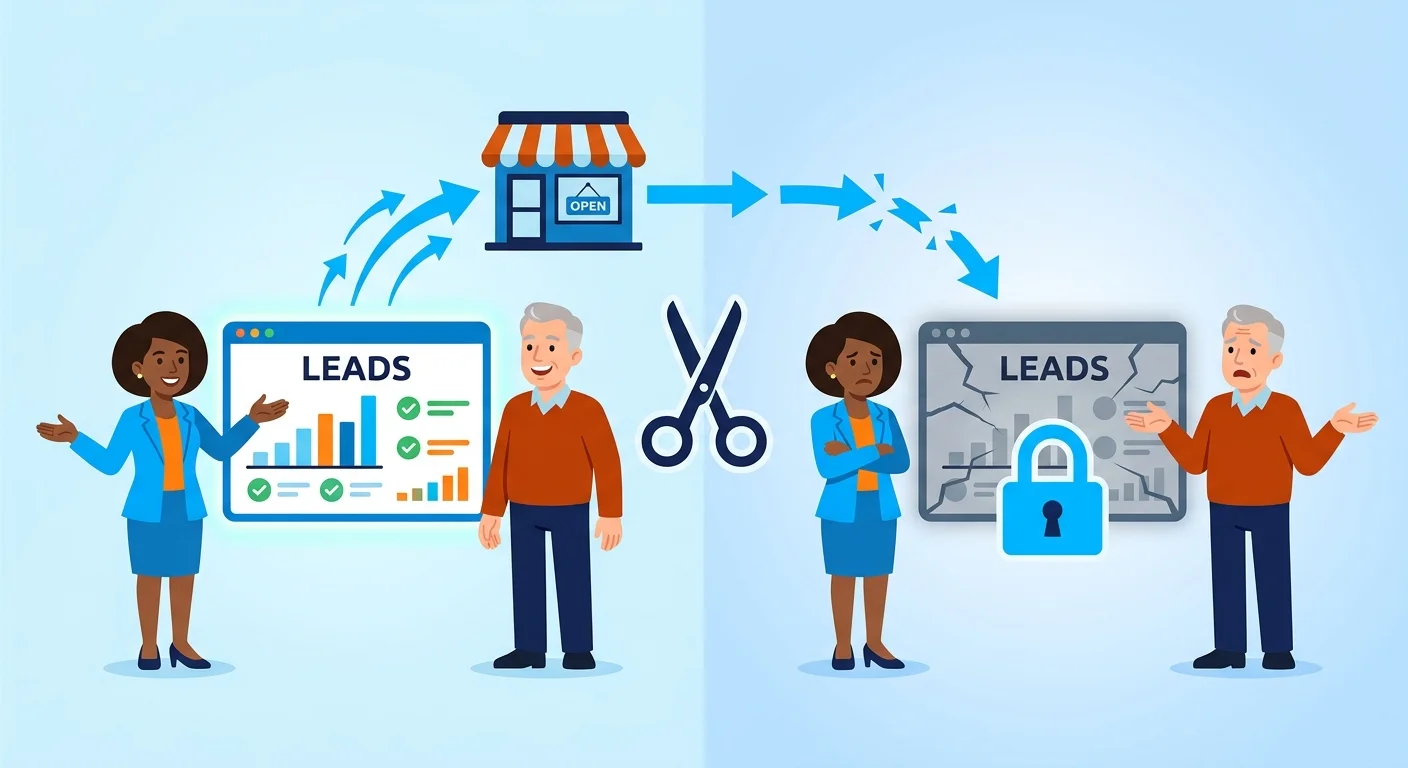
Most owners think stopping payment just pauses the leads. Here's the thing: it actually cuts your control of infrastructure you never owned to begin with.
So the real damage isn't next week's missing leads. It's the fractured entity record that generative engines are left scrambling to reconcile.
That distinction matters. Pausing marketing implies you can restart it later, on your own terms. Pausing payment under a rented authority deal usually means the agency tears down what it built, or lets it rot untouched.
But those two outcomes aren't the same. One's a temporary business call. The other's a structural loss you won't grasp until you try to rebuild it.
The Access Problem
Access goes first. If the agency built and holds admin control of your Google Business Profile, your ad accounts, or your landing pages, that control doesn't magically become yours when the contract ends.
So you're locked out of the exact systems that were driving your results. Getting access back can take real time and negotiation, and some agencies aren't obligated to hand it over fast.
This is exactly the access gap businesses weighing what a properly built AI Authority infrastructure actually costs need to understand before signing a thing. Settle ownership terms before the relationship starts, not after it blows up.
The Data Problem
Beyond access sits a deeper problem: the data itself. Most owners don't realize the leads they're paying for often run through systems and platforms the agency owns and controls.
That means the historical record, the conversion patterns, the audience signals, all live inside someone else's infrastructure. Leave, and that history usually doesn't leave with you.
The bond between a business and its agency runs on trust. But you've got to understand the infrastructure behind that trust, because the moment you stop paying, the leads can stop while the hit to your digital footprint and entity authority proves far more permanent.
Why the 'Managed Leads' Model Is Built to Trap You
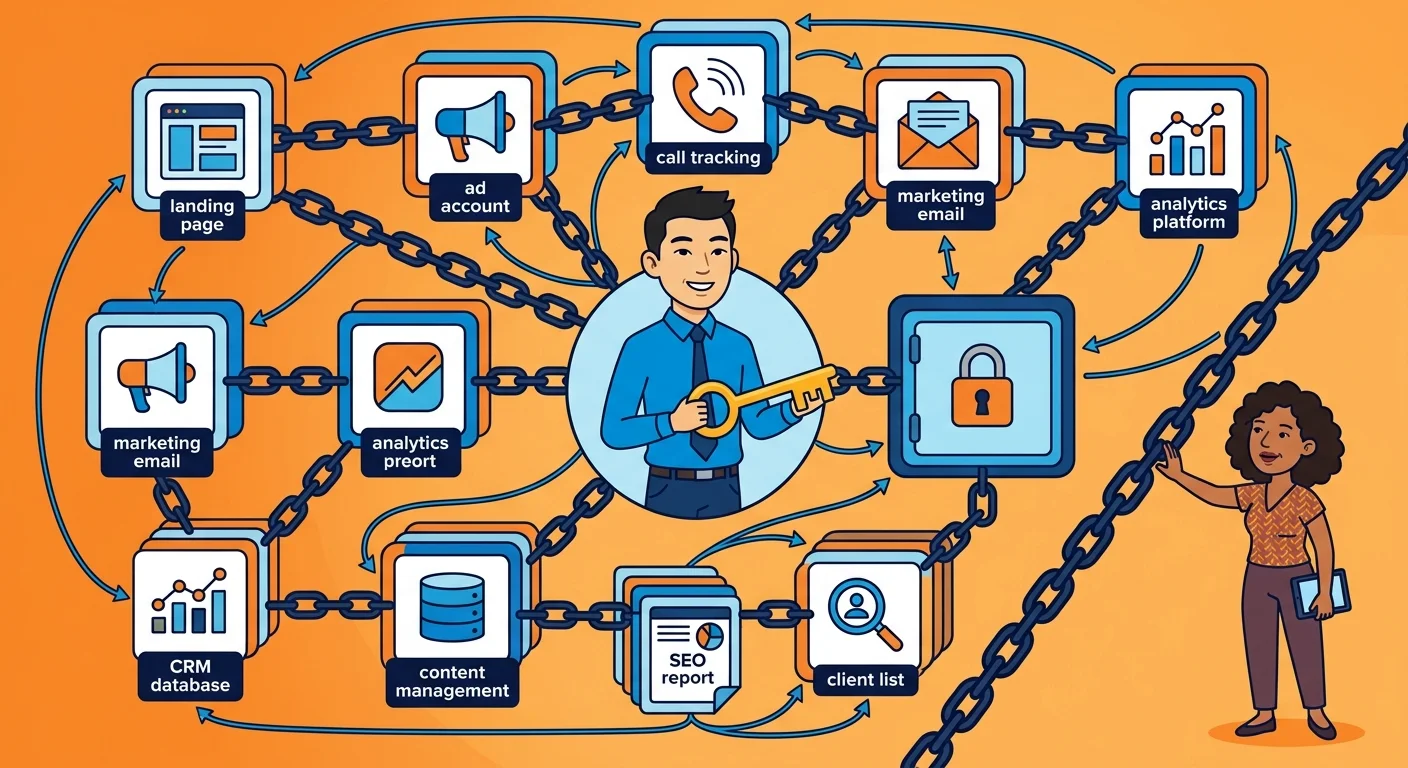
The managed leads model works exactly as designed. And that's the problem.
Agencies that build your visibility on their own platforms aren't being careless. They're building a retention mechanism dressed up as a service.
Every login you don't hold, every account you can't export, every dataset parked on their servers instead of yours? That's not an accident of how the work got done. It's the business model.
| Asset Type | Who Typically Controls It | What Happens at Contract End |
|---|---|---|
| Google Business Profile | The agency, using an administrative account it created and never transfers | Access frequently remains with the agency, leaving the business unable to manage its own listing |
| Ad Accounts and Campaign History | The agency's own manager account, housing the conversion data and audience signals | The historical performance record typically stays behind, forcing the business to rebuild from nothing |
| Landing Pages and Subdomains | The agency's hosting environment, built to route traffic through its own infrastructure | Pages are often taken down or left unmanaged, breaking the links generative engines had indexed |
| Schema Markup and Structured Data | Whoever built the site's technical foundation, which is often the agency itself | Markup can be altered, removed, or left inconsistent, confusing the entity record engines rely on |
| The Domain Itself | The business, when the arrangement is structured correctly from the start | Ownership stays intact, giving the business the one asset an agency's exit cannot touch |
How Agency-Owned Platforms Create Dependency by Design
Here's how the dependency gets built. An agency sets up your ad accounts under their own manager profile, spins up landing pages on their own subdomain, and routes your Google Business Profile through their admin access.
So every one of those assets reports to them first, you second. Looks like convenience. It's structured control.
That structure means walking away costs more than switching vendors ever should. Owners weighing whether to stay put usually underestimate what that entrenchment is costing them, which is exactly why running the numbers on delayed decisions and thin authority infrastructure matters before renewal, not after.
But the deeper cost never shows up on a single invoice. It shows up in how long a fractured entity record keeps confusing generative engines, because rented authority never transfers cleanly, and half-dismantled infrastructure is often worse than none at all.
The Difference Between a Vendor Invoice and an Entity Record
A vendor invoice records a transaction. An entity record establishes a fact about your business that generative engines can verify and repeat.
Here's the thing: agencies bill for the transaction because it's what they control. They rarely build toward the record, because the record is what would set you free of them.
That distinction sounds abstract until a contract ends. The invoice vanishes clean. The entity record, if it was ever built right, doesn't vanish at all.
What Generative Engines Actually Trust
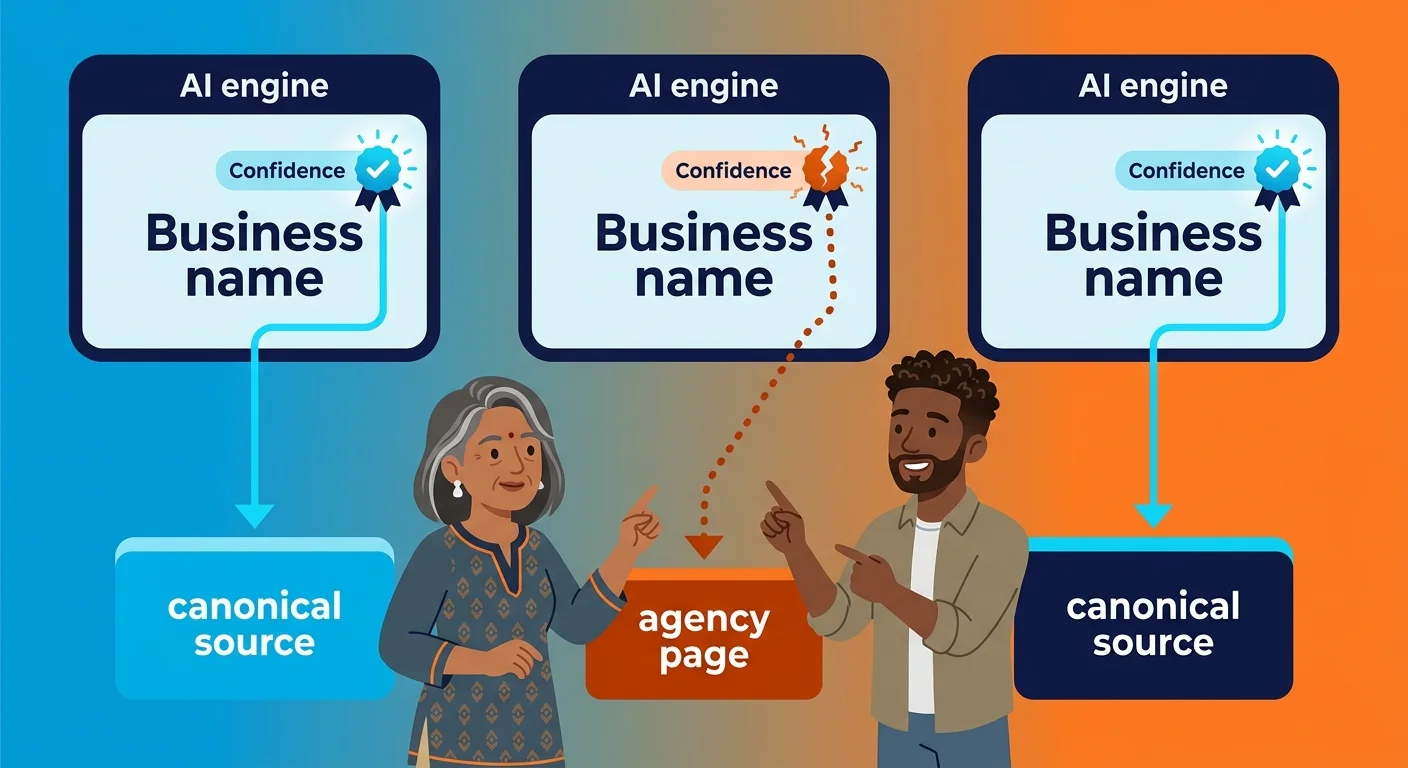
So what do generative engines actually treat as trustworthy? Consistency across one canonical source, not a pile of mentions scattered across directories.
When your domain, your schema markup, and your business profile all say the same thing, an engine has one place to check and one answer to give back.
But when an agency owns those pieces for you, that agreement is rented, not structural. The moment the lease ends, it can fracture, which is exactly why auditing what your current agency actually lets you own matters before you assume any of it is yours.
Why Citation Accuracy Is Not Optional
Citation accuracy isn't a nicety for generative search. It's the mechanism these engines use to decide whether a statement is safe to repeat.
According to research cited by Ohio State University, only 52% of statements from systems like New Bing and PerplexityAI are fully backed by their own cited references, a gap documented in the arXiv preprint server.
That gap gets worse when the sourcing itself is shaky. Across four tested engines, roughly 16% of all cited sources were themselves AI-generated, per findings published on arXiv. So an entity record built on your own verified infrastructure isn't just cleaner. It's one of the few sources an engine can actually check without inheriting someone else's mistake.
Who This Reality Check Is Not For
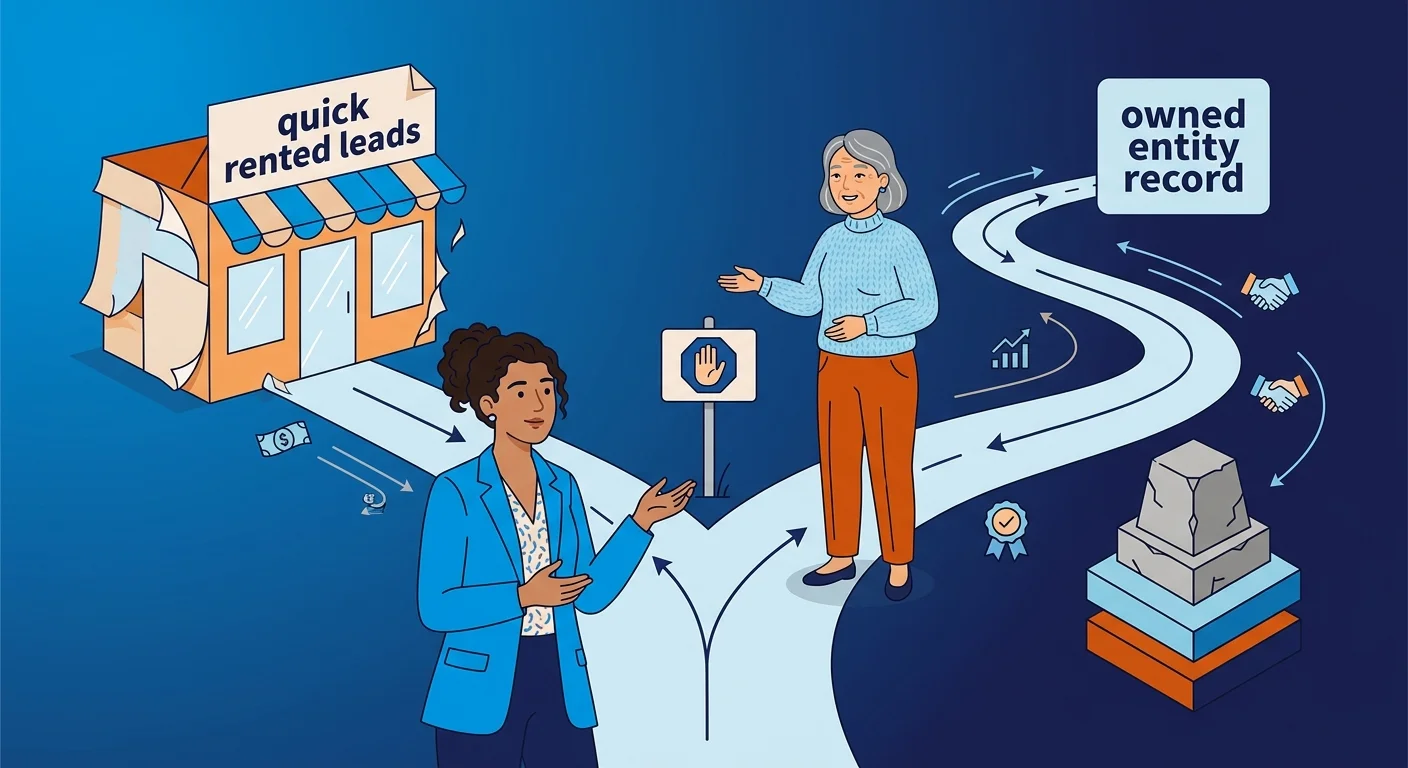
This reality check isn't for everyone. If you want a vendor who handles it all and never asks who owns what, that's a fair choice. But it isn't what this article is arguing for.
So if your top priority is the cheapest monthly bill, with someone else's login credentials making that possible, rented authority might feel efficient. This isn't written for the owner who wants convenience more than control. Here's the thing: renting visibility and owning your infrastructure don't lead to the same place.
And it's not for the owner who won't ask hard questions before signing. If you're not ready to find out whether your agency is really just renting attention through paid placements instead of owning permanent trust, you're not ready for what comes next. Here, qualification beats enthusiasm every time.
Auditing What You Actually Own Right Now
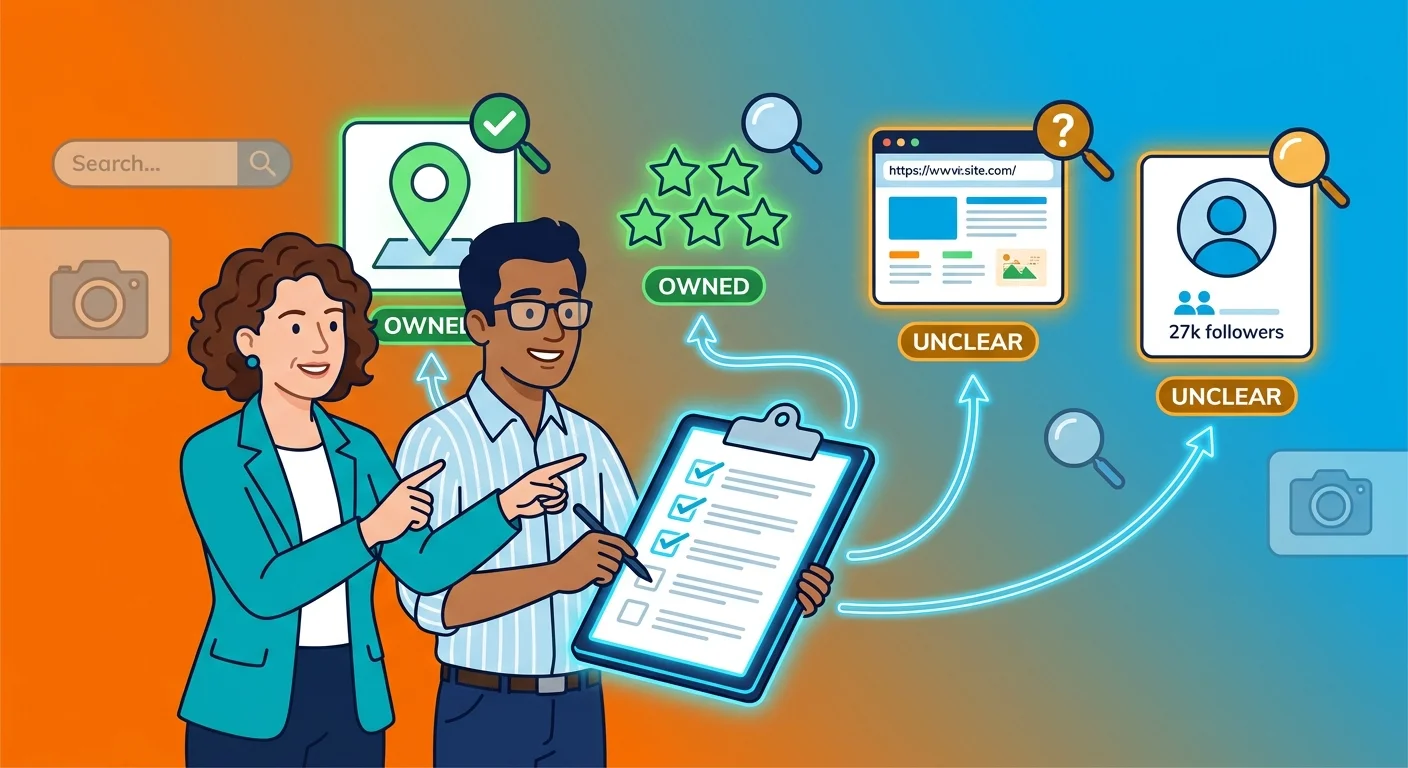
So the qualification's done. Now comes the audit itself.
Before you sign anything new, or renew anything old, you need a clear inventory: what you actually own versus what you merely get to touch.
That line decides whether walking away is a business call or a structural loss. Here's the thing: most owners have never once checked.
| Audit Step | What to Look For | Fact Anchor |
|---|---|---|
| Verify Payment Continuity Assumptions | Whether leads and visibility stop the instant payment stops, or whether the underlying entity record survives independently | factClaim_06 |
| Check for Permanent Structural Damage | Whether the digital footprint and entity authority carry consequences that outlast the contract itself | factClaim_06 |
| Confirm Citation Verification Exists | Whether any automated check catches a numeric figure attached to a source page that never stated it | factClaim_03 |
| Review Refusal Rate on Bad Citations | Whether the drafting process actually refuses a citation before it reaches a draft, across a measured run count | factClaim_03 |
| Contract Clause | Why It Matters | Ownership Outcome |
|---|---|---|
| Data Portability Clause | Determines whether conversion history and audience signals transfer to the business or stay locked inside the agency's systems. | Without this clause, the historical record that generative engines could otherwise verify simply stays behind. |
| Account Ownership Clause | Specifies whether the business or the agency holds administrative control over ad accounts, landing pages, and business profiles. | Clear ownership language prevents the business from being listed as a manager on its own most foundational assets. |
| Schema Markup Termination Clause | Addresses what happens to structured data embedded in the site once the contract ends. | A missing clause here means the canonical description of the business can vanish the moment the agency's platform access is revoked. |
| Post-Termination Access Clause | Sets a defined timeline and process for handing back logins, credentials, and exported data after the relationship ends. | Without it, recovering access becomes a negotiation rather than a guaranteed handoff. |
The Platforms and Profiles Worth Checking First
Start with the domain registration. Whoever holds the registrar login controls the single most foundational asset a generative engine can verify.
Next, check the Google Business Profile. If an agency built it under their own account, you're listed as a manager, not an owner, and that gap gets brutal during a dispute.
Then look at the schema markup buried in your site's code. If it lives on a platform the agency controls, it can vanish the day the contract ends, taking your canonical description with it.
Reading the Fine Print Before You Sign Anything New
Any new agreement deserves the scrutiny you'd give a lease. Ownership terms belong in writing, never in a handshake.
Look for clauses on data portability, account ownership, and what happens to your structured data when it's over. Vague language here isn't an oversight. It's usually the point.
This is exactly where automated verification earns its keep, because a drafting process left unchecked will sometimes pin a number to a source that never said it. In 22 production runs of an AEO/SEO content pipeline, an automated check caught 5 occasions on which the drafting model attached a numeric figure to a source page that did not contain it, and refused the citation before it reached a draft. That's a documented failure mode structured verification exists to catch, as shown in iTech Valet's measured pipeline data.
So the standard for any new vendor should be dead simple. Every account, every dataset, every piece of structured data sits on infrastructure the business controls. Anything less is just a better-dressed version of the same rented authority deal already causing the problem.
Frequently Asked Questions
So the audit's done. But a few edge cases still trip owners up right when a contract's actually ending. Here are the six questions that come up most, answered straight.
What happens to my Google Business Profile if my agency set it up and I leave?
If the agency built that profile under their own account, you were probably listed as a manager, not the owner. That means they keep control even after you leave. Unless ownership got transferred to you at setup.
Do I lose my website and all its content if I stop paying my agency?
That comes down to who holds the hosting account and the domain registration. If those sit under the agency's name, losing access can mean losing the site itself. Not just the relationship.
Who legally owns the marketing campaigns and ad accounts after the contract ends?
Ownership follows whoever's name is on the ad account, not who paid the bills. Plenty of agencies build campaigns under their own manager profile on purpose. That way the account, and its history, stays with them.
Can an agency legally withhold access to my leads and analytics data?
The contract decides this, and vague wording usually favors the agency. Without an explicit data portability clause, an agency can legally stall or restrict access to your own analytics history.
What are the first steps to take to ensure a clean separation from a marketing agency?
Start by inventorying every login: domain registrar, Google Business Profile, ad accounts, schema markup. Then request written transfer of ownership for each one before the contract ends. Not after.
Does switching agencies reset the trust generative engines have built in my business?
No, and that's exactly the risk with rented authority. Trust built on infrastructure you never owned doesn't come with you. That's why the canonical record has to live on assets you control from day one.
Where This Leaves You
So here's the plain version. Renting visibility and owning your authority infrastructure aren't two flavors of the same strategy.
One parks your entity record on someone else's servers, hostage to someone else's contract terms. The other puts it on infrastructure you hold the deed to, verifiable by any generative engine that checks. That difference is the single biggest factor in long-term business resilience online, and it's not a call you get to revisit cheaply once an agency has built your presence on their own platforms.
An AI Authority System doesn't erase risk. It hands control back to you, where it belongs. To see where your business sits between those two positions right now, start with an AI visibility check.