
Why AI Engines Can't Tell Your Clinic From Your Chiropractor
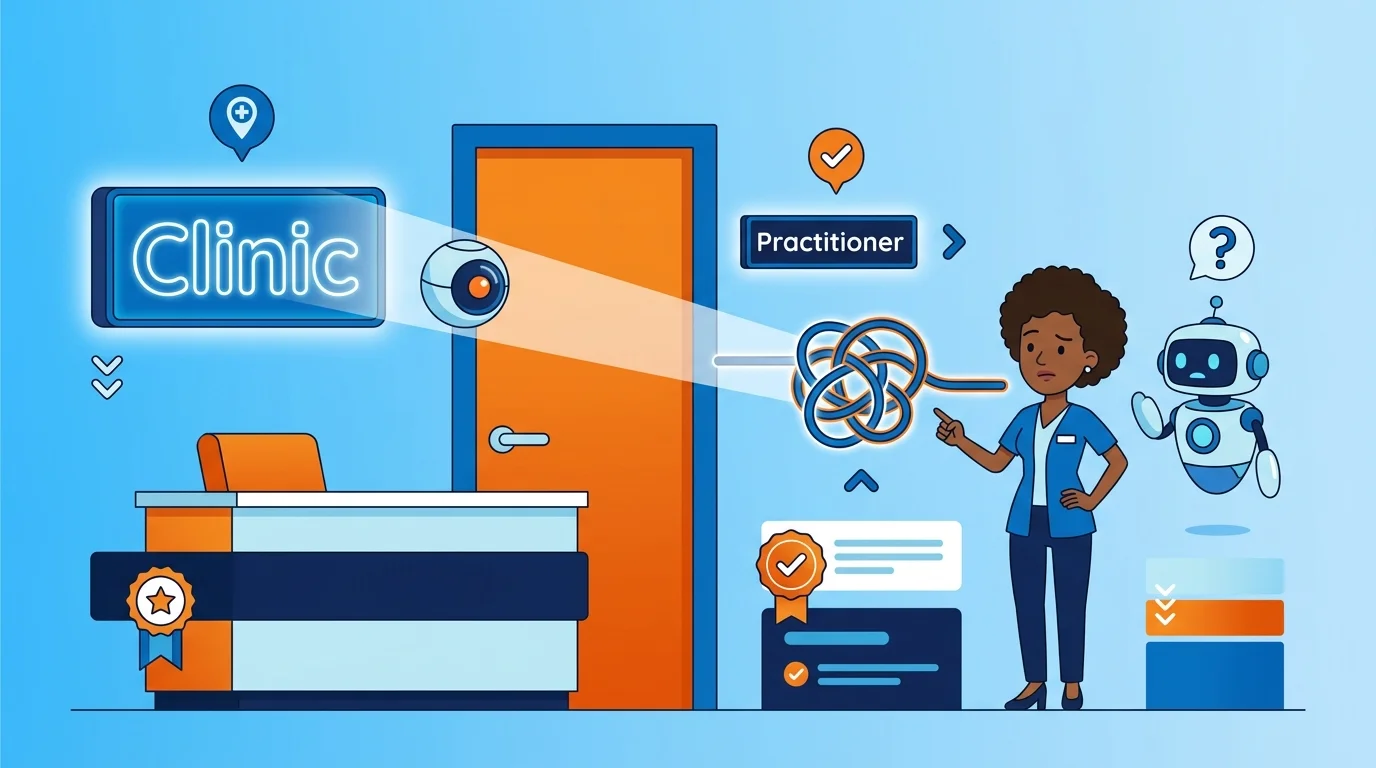
Here's the thing: for most chiropractic practices, the code behind the website is an invisible layer nobody thinks about. And that invisibility turns into a liability the second an AI model tries to tell the clinic apart from the doc who practices in it, because nothing in the markup draws that line. There is no schema.org type called 'practitioner'; here it means Person markup for the clinician, linked to the practice's Physician or MedicalClinic markup.
Search engines went from handing out a list of links to writing the answer themselves, and that flipped what it means for a practitioner to be visible online. So a clinic that only confirms it exists has made itself a listed address, not a cited source. Fixing that starts with what it takes to repair inconsistent clinic data (same filing-system problem, same folders with no signature on them).
Why 'Just Add LocalBusiness Schema' Falls Short
LocalBusiness schema tells AI that a clinic exists, where it sits, and when the doors open. That's it. It says nothing about who's actually doing the clinical work inside.
Schema markup is the language that turns a website's content into facts AI models can understand, cite, and attribute. Here's the kicker: a lone LocalBusiness block hands those models an address to verify. It doesn't give them a credentialed person to cite as the source.
The Single-Entity Trap
Treating the business listing as the whole job? That's the single-entity trap. It folds the doc into the business, like a filing cabinet with one unlabeled folder (nobody can tell whose signature belongs on the paperwork inside).
That shortcut sticks around because clinics still grade visibility the old results-page way: prove the clinic exists, and skip proving who the recognized expert is. AI visibility is not old-school search work with new vocabulary. Being findable still counts, and using markup to clarify who practices at a clinic can help a system see who the credentialed source is.
What Practitioner Schema Actually Declares
Practitioner schema declares a person, not a place. Its properties name the individual, attach their credentials, and tie them to a professional affiliation that an AI model can check against other structured facts.
That declaration is the line between a credentialed source and an unsigned folder. A clinic weighing piecemeal fixes against a complete data rebuild is really asking one thing: does its markup name anyone at all? That's exactly the question Practitioner schema was built to answer.
The Person Type and Why It Matters
Schema.org defines Person as its own type, separate from Organization or LocalBusiness. And that split is structural, not cosmetic. When an AI system reads Person-typed data, it can tell it found an individual, not a storefront.
Google's documentation says Google's Knowledge Graph Search API lets developers filter results by schema.org type, such as Person.
What Service Schema Actually Declares
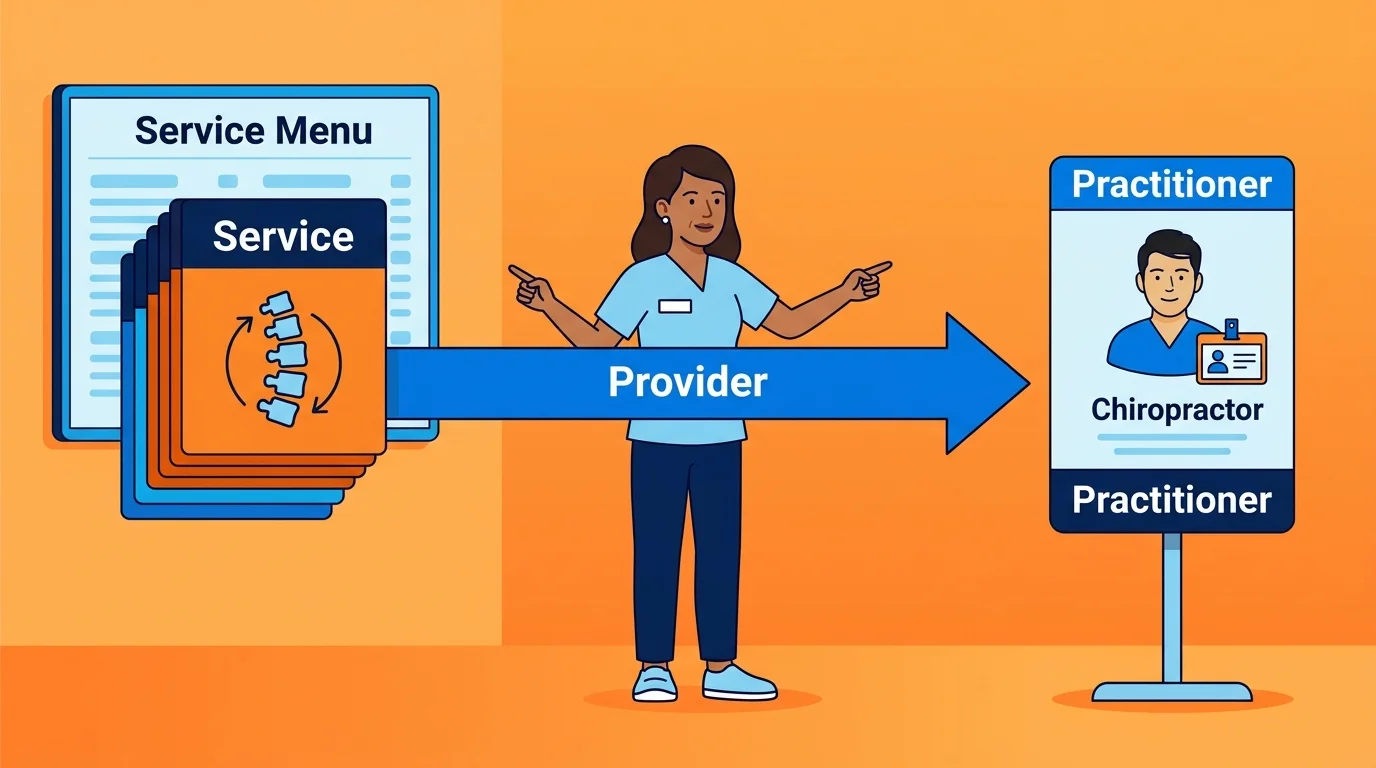
Service schema declares the offering itself. Spinal adjustment, decompression therapy, a wellness consult: each one gets marked up as a defined action the clinic provides, with properties spelling out what it is and where it fits inside the business.
The Provider Property: Where the Two Connect
Now… this part matters. The provider property is where a service names its practitioner, pointing from the offering back to the credentialed doc who performs it. Skip that link and the service just floats there, available at a clinic but tied to nobody in particular.
Google's documentation says a website owner can enhance how their official website appears in Search results by first establishing it with Google, including by verifying ownership in Search Console. Clinics chasing that kind of structural clarity often lean on authority infrastructure services to wire provider properties correctly across every service page.
How a Flawed Entity Structure Fails in Practice
When a clinic's markup never draws a clear line between the service and the doc performing it, AI can get confused, and nobody notices it happening. More markup doesn't fix that. AI may reward markup that clears up who's who, so piling on entries without a named practitioner may change nothing an AI model actually trusts.
| Signal Pattern | What AI Systems Do With It | Resulting Citation Behavior |
|---|---|---|
| LocalBusiness schema only, no Practitioner markup | Reads an address confirming the clinic exists, with no individual attached to any service | May treat the clinic as a verified listing, not a candidate for citation as an expert source |
| Service schema with no provider property linked | Reads a defined offering with no named practitioner behind it | May cite the service generically at best, attributing it to no credentialed individual |
| Practitioner schema present but disconnected from any service entity | Reads a named person with credentials, but no clear tie to what that person performs | May recognize an individual exists without treating them as the authority behind a specific offering |
| Identity-linking properties used in place of a direct practitioner declaration | Reads a connection that may not be verified | Can misdirect attribution rather than resolve it |
| Service and Practitioner schema both present and correctly linked through the provider property | Reads a defined offering tied to a named, credentialed individual | May treat the pairing as a complete, citable fact set worth attributing in a generated answer |
Where Conflicting Signals Cost the Most
Some clinics try to patch the gap with identity-linking properties instead of just naming the practitioner. For owl:sameAs links in Linked Open Data, a survey by Raad et al. (VU Amsterdam), citing older studies, notes that earlier studies may have estimated that between 2.8% and 20% of owl:sameAs statements in the Web of Data are erroneous.
More pages, more service entries, more generic business confirmations? None of it fixes a structure with no named signature inside. The folder just gets thicker, still with no name on it, and an AI model looking for a source still has nobody credentialed to point to.
Building the Entity Graph: Practitioner, Service, and the Links Between
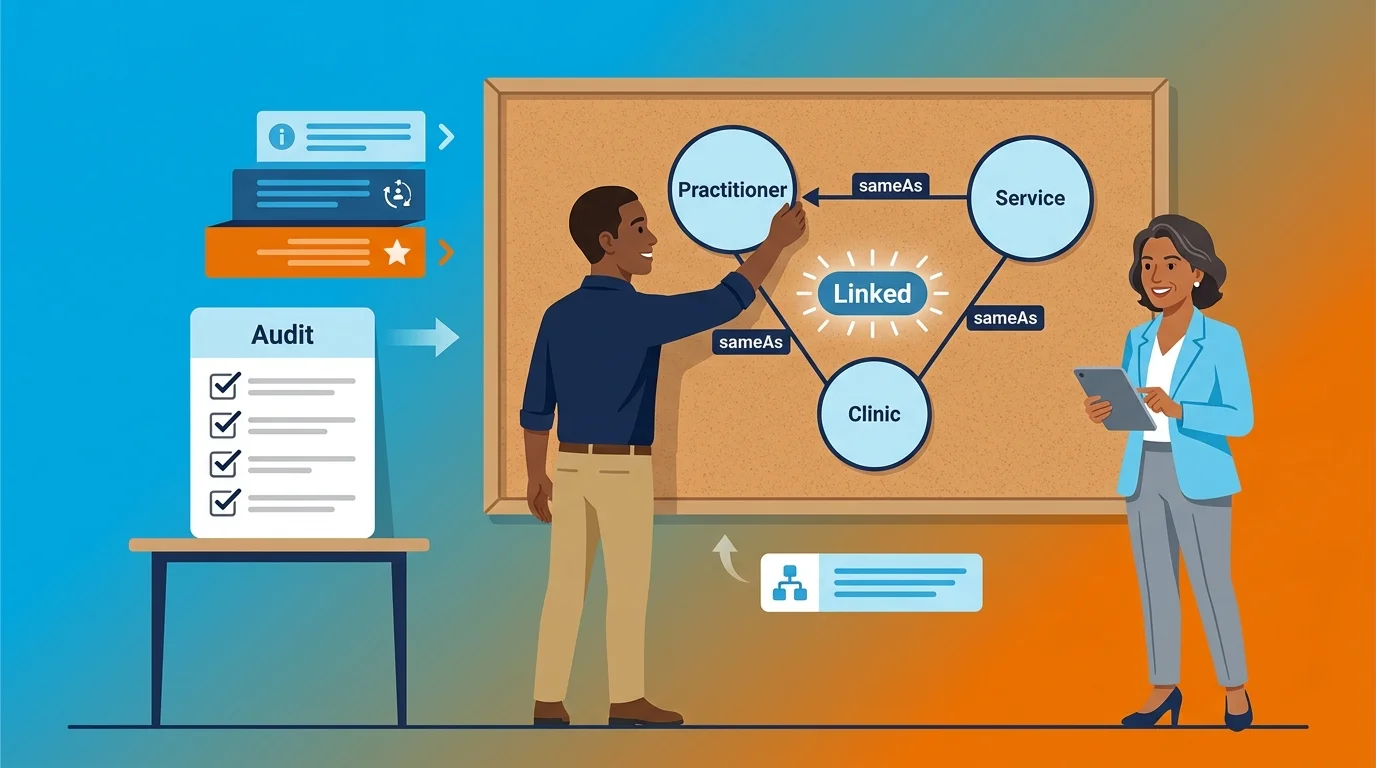
Here's where it all comes together. An entity graph is what you get when Practitioner and Service markup actually connect, instead of sitting side by side like strangers at a bus stop. The named provider links to the offering, the offering links back to the provider, and an AI model can trace a clean path from treatment to credentialed doc.
| Implementation Step | What It Resolves | Where It Lives in the Code |
|---|---|---|
| Name the practitioner as a distinct Person entity | Separates the credentialed individual from the clinic as a generic business listing | Person-typed structured data, independent of the LocalBusiness block |
| Attach credentials and professional affiliation to that named person | Gives an AI model verifiable standing to cite, rather than an unverified name | Properties nested inside the Practitioner entity itself |
| Mark up each service as its own defined offering | Clarifies exactly what is being provided, separate from who provides it | Service-typed entries listed under the clinic's structured data |
| Link each service back to the named practitioner through the provider property | Resolves the ambiguity between an offering and the expert performing it | The provider field inside each Service entity, pointing at the Practitioner entity |
| Consolidate verified profiles using the sameAs property | Reinforces one coherent identity instead of leaving scattered, unlinked mentions of the same person | The sameAs array inside the Practitioner entity |
| Markup Element | Practitioner Schema Role | Service Schema Role |
|---|---|---|
| Named Provider | Identifies the credentialed individual performing clinical work | Not applicable — Service schema names the offering, not the person |
| Provider Property | Receives the link from a service entity back to the named practitioner | Points outward from the offering to the practitioner performing it |
| Professional Affiliation | States the credential or association an AI model can verify against other structured facts | Not applicable — affiliation belongs to the person, not the offering |
| Offering Description | Not applicable — Practitioner schema names a person, not a treatment | Defines the specific service as a distinct, structured action the clinic provides |
| sameAs Links | Consolidates one practitioner's identity across verified profiles, reinforcing a single recognized source | Not applicable — consolidation applies to the person, not the service entry |
| Resulting Entity Graph Function | Supplies the signature an AI model needs before it will cite a source | Supplies the folder an AI model reads, but only becomes citable once signed by a linked provider |
The sameAs Property and Entity Consolidation
Now, sameAs isn't the villain here; used right, it does real work by pointing an entity toward other verified profiles of the same person and pulling one doc's identity together across a clinic's web presence. The goal is reinforcing one practitioner (not accidentally inventing a second, unverified twin of them).
Auditing Existing Markup Before Adding New Types
So before adding a single new type, audit what's already there. That audit really asks one question: do the folders already have names on them? Usually it turns up LocalBusiness confirming the clinic exists, with no Person-typed data naming who works inside, which is the exact gap identity-linking shortcuts try to paper over instead of close.
Sequencing Practitioner and Service Markup Together
Order matters, because a service with no provider and a provider with no linked service leave the exact same ambiguity sitting there. Name the practitioner first, then attach each service to that named doc, and the graph gets built in an order an AI model can follow. That's how a citable source gets built, and a listed address never does.
Frequently Asked Questions
That covers the structural logic. Now let's get into the nuts-and-bolts questions that pop up the second a clinic actually starts implementing.
Can I use both Service and Practitioner schema on the same clinic website page?
Yes, and they're teammates, not rivals. Service schema describes the offering, and Practitioner schema names the doc delivering it. The provider property ties the two together on the same page.
Will adding Practitioner schema help my clinic get cited more often in AI-generated answers?
Let's keep it real: nobody can guarantee citation frequency, and any promise like that deserves a raised eyebrow. What Practitioner schema actually does is give an AI model a credentialed person to cite. Without it, there's only a business listing to confirm.
How do I add schema markup to my website if I'm not a developer?
You don't have to hand-write a single line of code. Platforms and plugins can generate the JSON-LD for you. But someone still has to decide which properties name the practitioner and which ones describe the service correctly.
Is it better to list each chiropractor individually with Practitioner schema, or just the main clinic?
List each chiropractor individually, period. One practitioner block covering several docs collapses the exact distinction the markup exists to create. Then an AI model can't tell which credentialed person performed which service.
My clinic website already has LocalBusiness schema. Why is that not enough for AI search?
LocalBusiness schema confirms the clinic exists, where it sits, and when it's open. That's it. It carries no Person-typed data, so it never tells an AI system who the credentialed doc behind the service actually is.
What's the biggest mistake practices make when trying to differentiate services from practitioners in their website code?
The big one is treating more markup as the fix, when clearer markup is what actually moves things. Stacking structured data without naming a practitioner inside it won't clear the ambiguity that keeps a clinic uncited.
The Bottom Line
Here's the verdict: a clinic's structured data is a filing system. A service is a folder, and the practitioner is the named doc whose signature makes it credible. Leave the names off, and that filing system may never get cited as the expert source.
Practitioner schema is that signature. It can be a foundational step toward becoming a cited authority in AI-generated answers (not a technical afterthought bolted onto a business listing). And an address gets confirmed, but a named, credentialed provider gets cited, which is why being the cited source beats being a listed address every time.
So no, this one doesn't come with an "it depends." Clinics that name the practitioner behind every service build a citable entity graph, while clinics that only confirm the business build an unsigned folder. Your first move is checking what this clinic's own structured data actually names.