
What Actually Makes a Directory 'Institutional'?
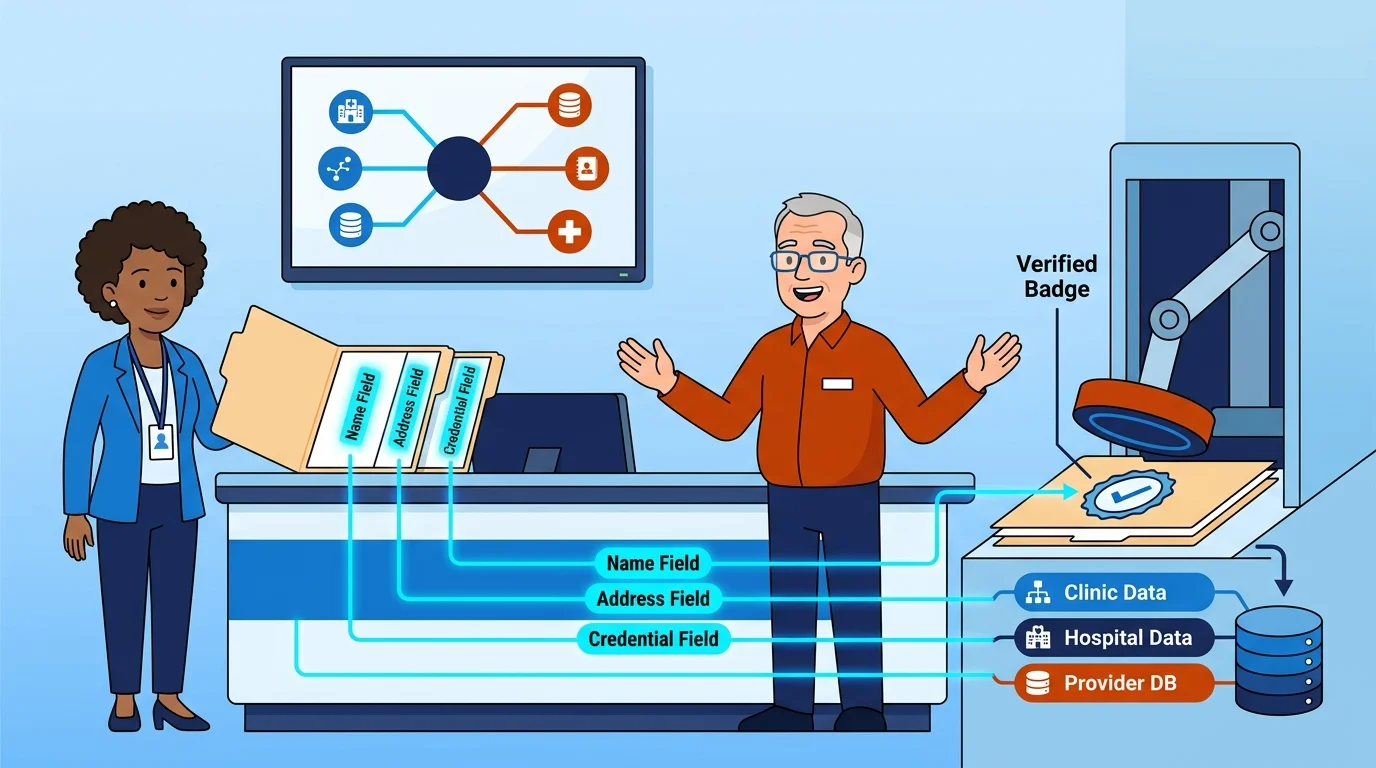
Here's the thing: no directory gets to call itself institutional. Here, 'institutional' is this article's own label, and it depends on how the data behaves.
Picture a practice's data footprint as a witness under cross-examination. Every directory entry is a deposition. An AI engine is more likely to trust the witness whose story never changes from one source to the next.
The Dataset Behind the Website
An institutional directory, as this article uses the term, is less about a specific website and more about a trusted, verifiable dataset. The website is just the interface sitting on top of it.
An engine can read the structured, machine-parsable data behind that screen. That's why a clean dataset on a plain site beats a slick site built on scattered data, and why the full process for clinic listing correction starts with the data layer instead of the design layer.
Required Properties an AI Engine Looks For
Want to know what Google's structured data standards ask a local medical entity to carry? Google's LocalBusiness markup docs list name and address as required properties, and each location should use the most specific business sub-type available, never a generic catch-all.
Here's the kicker: the same format lets a practice hand Google its hours and its departments directly. Google's documentation says structured data for local businesses can convey business hours, departments, and reviews, and each location may be defined as a LocalBusiness type using the most specific sub-type available, with address and name as required properties.
Why Chasing Directory Volume Stopped Working
More listings don't mean more visibility. That belief ran practice promotion for years. And it may not match how AI engines decide who gets cited.
The Old Playbook: List Everywhere, Verify Nowhere
For decades, the standard advice was dead simple: get the practice listed in as many online directories as possible. Quantity was the goal. Verification was an afterthought (if anybody thought about it at all).
Nobody checked whether a new listing matched the old record. A submission counted as done the moment it went live, not the moment someone confirmed it was accurate. That's why checking that AI engines registered listing fixes matters more than adding one more profile to the pile.
Why More Listings Can Mean Less Trust
The new game is not about the quantity of listings, but the consistency and authority of the data those listings contain. A hundred directory entries carrying the same old suite number do not outweigh ten that match the practice's current record. Every mismatched entry is another deposition where the witness changes the story, and an AI engine can read that as reason to doubt the whole file.
The Mechanism Behind Structured Data
An AI engine may not read a webpage the way a person does.
LocalBusiness Markup and Its Required Fields
Google's own standard for local business records sets the baseline fields a practice has to get right. Name and address are mandatory, and the entity belongs under the most specific practice sub-type available (never a generic catch-all label). The field-level mechanism gets fully mapped out in structured data for clinic practitioner identification.
How This Feeds a Knowledge Graph Entity
Each verified field can become a node in a bigger knowledge graph, so the engine may tie the practice's name, address, and specialty into one entity record. Once that record matches across sources, the practice can stop being a guess.
Where Directory Data Quietly Breaks Down
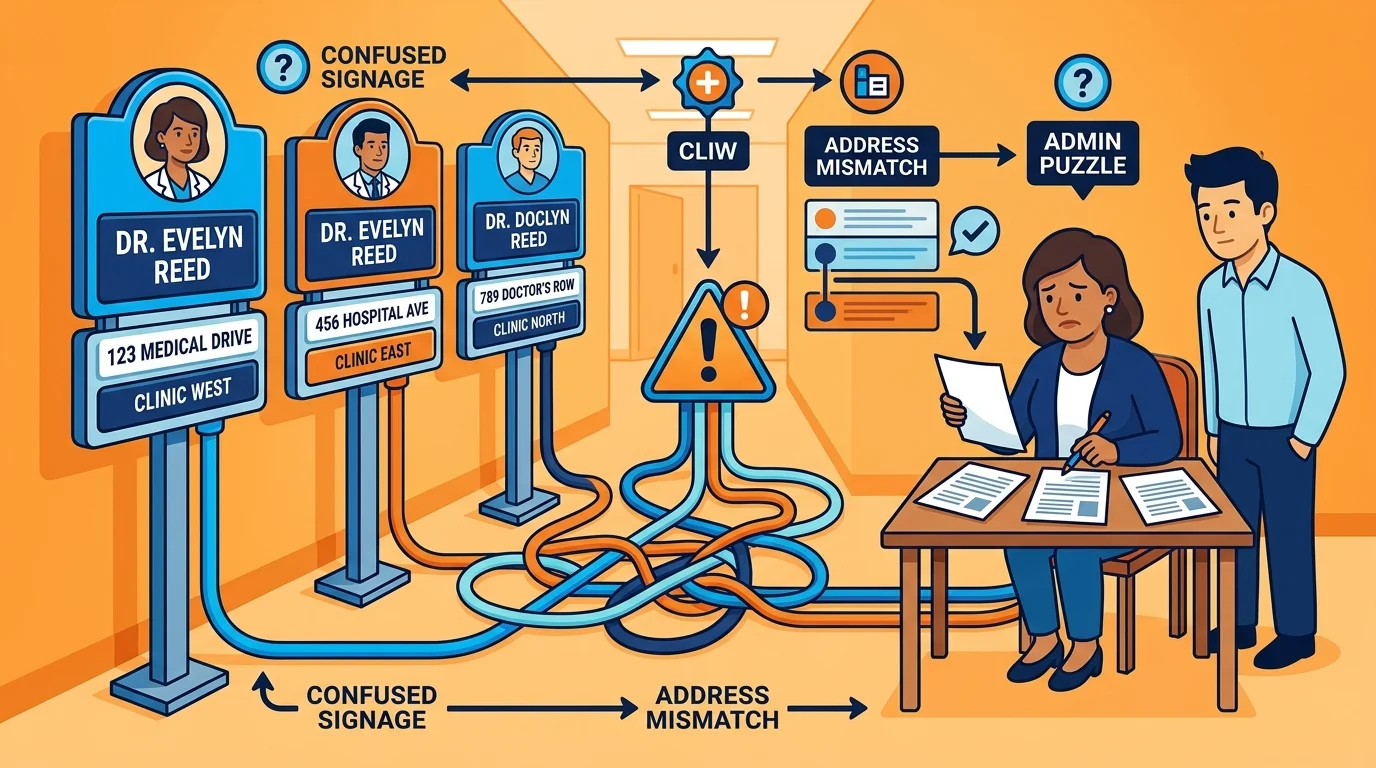
Directory data doesn't break all at once. It erodes field by field, when one profile gets the new address and five others don't.
So before the mechanism ever reaches an AI engine, here's where it quietly gets corrupted.
| Directory Type | Common Data Gap | Effect on AI Verification |
|---|---|---|
| Government identifier systems | A deactivated or outdated provider number still circulating in downstream feeds | Engine may treat the mismatch as an unresolved record and lower confidence in the entire entity |
| Commercial practice directories | Suite number, phone line, or affiliation updated in one profile but not the rest | Conflicting addresses can read as competing depositions, weakening citation trust |
| Hospital and credentialing listings | Affiliation carried forward after a practitioner has already left the system | Stale affiliation data can break the link between practitioner and verified institution |
| Patient review platforms | Practice name or specialty phrased differently from the licensed record | Engine may not be able to confirm the review entity matches the credentialed provider, so the signal may be discounted |
How Inconsistent Entries Compound Across Sources
A cheap retainer model treats a directory submission as finished the moment it posts. It never checks whether the new entry matches the old one, and the gap between listings can become the engine's reason to doubt the whole file.
Butala et al. (JAMA, 2023) found that in insurer provider directories, among physicians listed in more than one of five large national insurers' directories, 19.4% had consistent address and specialty information across all directories.
That is not a rounding error.
The Cost of an Unreconciled Record
A professional AEO implementation treats reconciliation as the deliverable, not a footnote to a cheap retainer's listing quota.
How AI Engines Reconcile a Practitioner's Identity Across Sources
Reconciliation decides which witness statements get believed. An AI engine can pull identity signals from government registries, hospital systems, and licensing boards, then check whether they all describe the same practitioner. Clean, matching, verifiable data was always the discipline traditional search optimization preached.
| Reconciliation Signal | What It Confirms | Where It Originates |
|---|---|---|
| National Provider Identifier record | That the practitioner listed is a real, licensed individual tied to one fixed identity | Government registration systems that cannot be suppressed by the practice |
| Hospital and academic affiliation data | That the practitioner's credentials and practice location match institutional records | Hospital systems and academic or credentialing bodies, not commercial directories |
| Cross-directory address and specialty match | Whether the practice's public listings describe one consistent entity or several conflicting ones | Commercial directories and insurer networks, compared against each other for agreement |
| Structured local business data | Whether a location, its name, and its specialty are machine-readable as a single verified entity | Code embedded on the practice's own site, which an engine can read directly rather than infer |
The Role of the NPI as an Anchor Record
The National Provider Identifier can be a fixed point other records tie back to. Once an NPI is active, a provider can't opt out of or suppress the NPPES record. As CMS reports, the NPI Registry is a query-only database updated daily that lets users search the NPPES and retrieve FOIA-disclosable provider data, and providers with active NPIs cannot opt out of or suppress that record data from public disclosure.
What Google Says About AI Overview Quality
Google's Own AI Overviews Report
In a May 2024 blog post, Google's Elizabeth Reid reported that Google found a content policy violation on less than one in every 7 million unique queries on which AI Overviews appeared.
Why Static Training Data Can't Carry This Alone
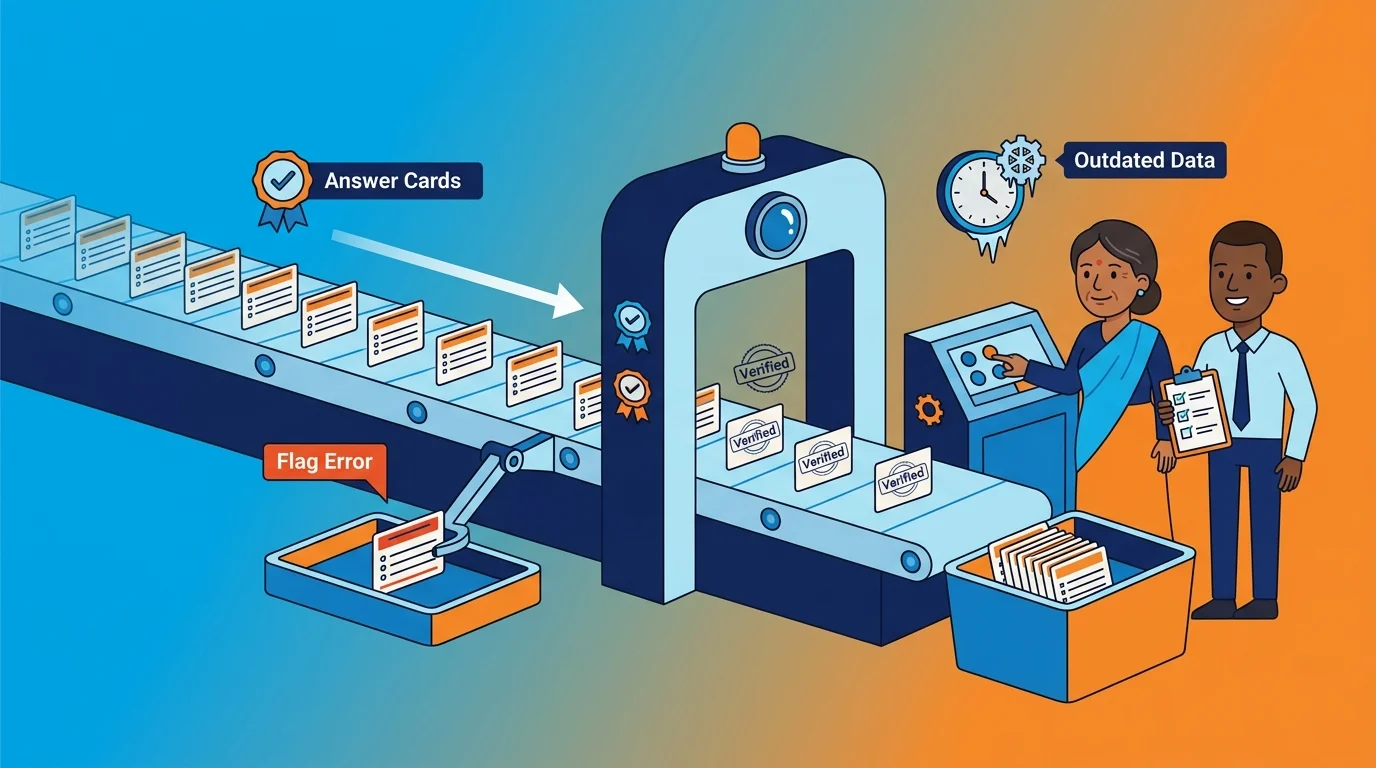
Vu et al. (FreshLLMs, Findings of ACL 2024) report most large language models may struggle to adapt to a changing world because they are trained once and never updated. So a static model may not keep up by itself. It needs current, reconciled data to check against, and that's precisely what a cheap retainer's unverified listing quota never delivers.
Frequently Asked Questions
The architecture is clear. What a practice owner wants to know next is more specific.
Here are the mechanical questions that come up once the data layer is understood.
How does Google's AI decide which doctor to show in an AI Overview?
It may cross-check structured data, registry records, and directory listings for one consistent entity. The goal moved from getting listed to getting understood and cited. A doctor with a reconciled record is easier to cite than one with conflicting entries.
Is a profile on a site like Healthgrades or Vitals considered an institutional directory?
Not automatically. A profile only counts as institutional once its data matches the practice's verified record elsewhere, including the registry baseline every provider already carries. Consistency, not the platform's name, is what earns trust.
What is the difference between a simple directory listing and an AI-citable source?
A simple listing is a claim nobody checked. An AI-citable source agrees with every other record on the same practitioner. Both are testimony, but only one survives cross-examination.
If an AI has the wrong address or phone number for a practice, how does that get fixed?
Correct it at the source record, then check every directory carrying the old data. Fix one listing and leave five wrong? The contradiction the engine is weighing hasn't gone anywhere.
Do patient reviews on third-party sites influence how an AI engine views a practice's authority?
They count, but they sit beside the structural fields, not above them. Great reviews plus a mismatched address? The engine may still see a contradicted file.
What role does structured data markup play in getting cited by an AI engine?
Keeping the site's markup accurate and matching the visible page is good practice, and it's the part the practice controls. Name and address as required properties, the most specific sub-type, hours and departments spelled out in code.
The Bottom Line
Here's the verdict. AI engines may not reward the practice with the most listings. They are more likely to trust the one whose record agrees with itself everywhere it shows up.
Every mismatched suite number, every stale specialty tag, every stray directory entry is testimony that contradicts the rest of the file. And a witness who changes the story under cross-examination can get dismissed instead of cited. Keep your practice's story straight, and you're the one the AI calls to the stand.
Consistency like that doesn't come from luck or a bigger budget. It comes from treating data reconciliation as the actual deliverable. So start there, because an AI Visibility Check will show you exactly where your practice's story still contradicts itself.