
When Your Practice Data Breaks: Mapping the Local Listing Ecosystem
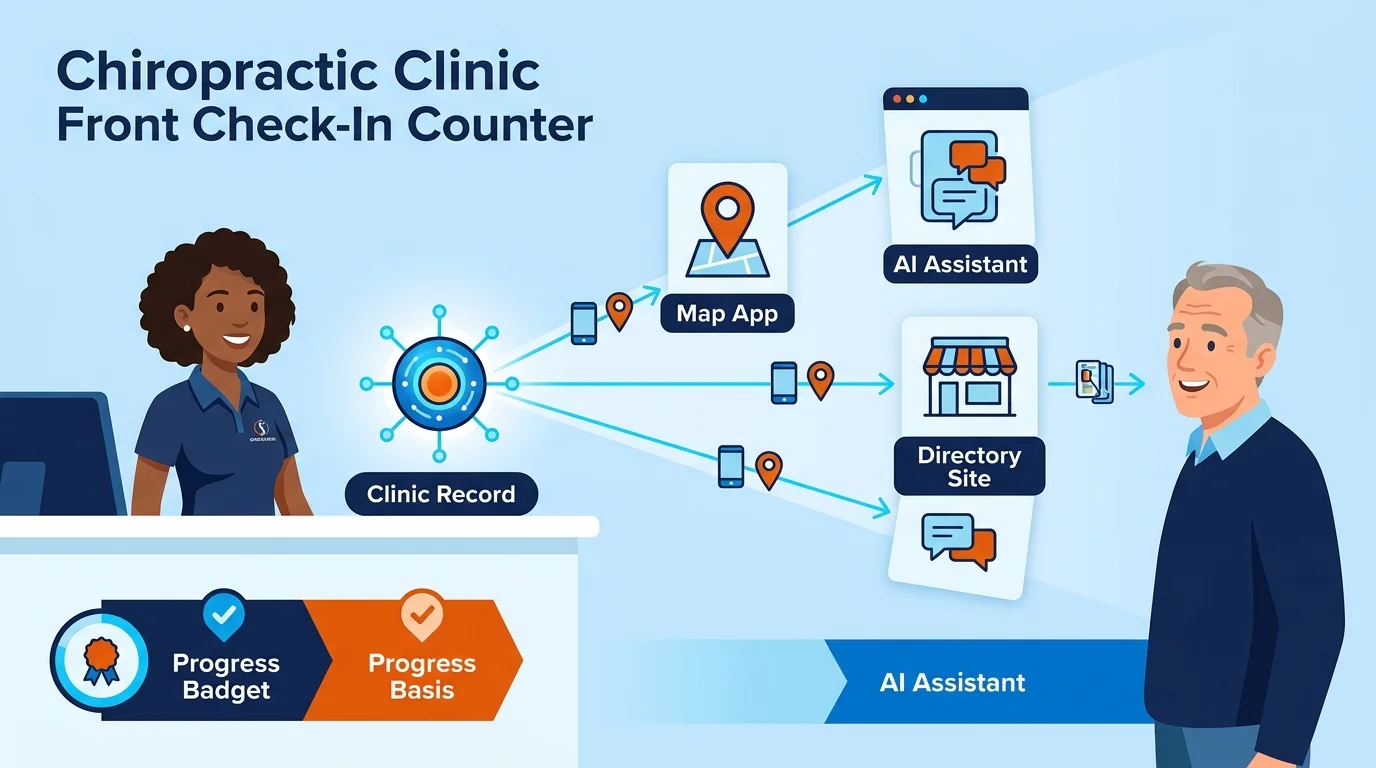
Here's the terrain: a practice's data lives in three layers, which are directories, aggregators, and AI engines. Directories are the individual platforms a patient searches directly. Aggregators sit above them, pooling records and pushing them out to dozens of directories at once.
Then AI engines sit on top of both, and they may look across layers for agreement before deciding whether to cite a practice at all. Fix something at the directory layer only? The aggregator feeding it never hears about it, so the error comes right back (because its source was never touched).
What Counts as a Practice Listing
Let's keep it real: a practice listing is a bundle of separate records. It's name, address, phone number, hours, services, and reviews, each stored on its own across dozens of platforms. Get one field right everywhere and another wrong anywhere, and you've still got a fragmented data foundation.
Here's the kicker: that fragmentation is the actual problem, and a wrong address is just the spot where it shows. It sends conflicting signals to search engines and AI models at the same time, and conflicting signals are harder to trust than one isolated error. Before any repair work starts, the hub guide for repairing clinic listings maps out the full scope of what's involved.
How Data Moves Through Directories and Aggregators
Picture the whole ecosystem as a water system with one broken pipe upstream. The aggregator holds the source record. Every directory downstream draws from it the way a faucet draws from a shared line.
Patch a leak at one faucet and the break in the pipe stays broken, so the same contaminated flow keeps reaching every other faucet in the building. Now… this part matters. Engines may do more than rank links; they can verify entities, which is why calling AI visibility old-school search work with a new name misses the point (an unsealed source record beats every downstream patch, no matter how many faucets get wiped).
Why Manual Listing Fixes Never Hold
The dominant method practices use to manage their listings is the spot fix. Someone notices a wrong phone number or office hour, logs into that one directory, and corrects it.
The Spot-Fix Trap
Here's the thing: cheap retainers built around this work stay cheap because the work itself is shallow. Logging into directories one by one and fixing errors as they pop up is a reactive habit. It's not a system.
Retainer pricing built on hourly spot fixes cannot scale with the number of directories a single error actually touches. The market for that service stays cheap because it never has to solve the source problem, only the visible symptom. the time commitment behind clinic data reconciliation grows every time a new directory enters the ecosystem.
Why the Error Keeps Coming Back
But a spot fix never reaches the fragmented records feeding that directory from above. So the same wrong field keeps surfacing, because only its symptom got corrected and its source never did.
What the Data Actually Shows About Listing Accuracy
Bad data in commercial listing sources gets measured, not guessed at: after cleaning and deduplicating purchased business lists, the count of valid food stores bought from InfoUSA dropped by 17.5%. Per Jones et al. (BMC Research Notes, 2017), a 17.5% reduction was observed in the count of valid food stores purchased from InfoUSA after cleaning and deduplicating the list. So close to one record in five got tossed, which is why post-update verification of clinic listings matters at the level of a single practice.
| Data Source | What It Measures | Key Finding |
|---|---|---|
| InfoUSA commercial business list | Validity of food store records purchased as raw commercial data | 17.5% reduction in valid food store counts after cleaning and deduplication |
| InfoUSA commercial business list | Scale of invalid or duplicate records before reconciliation work begins | Nearly one in five food store records purchased from InfoUSA did not hold up as valid |
How an Infrastructure Rebuild Is Actually Built
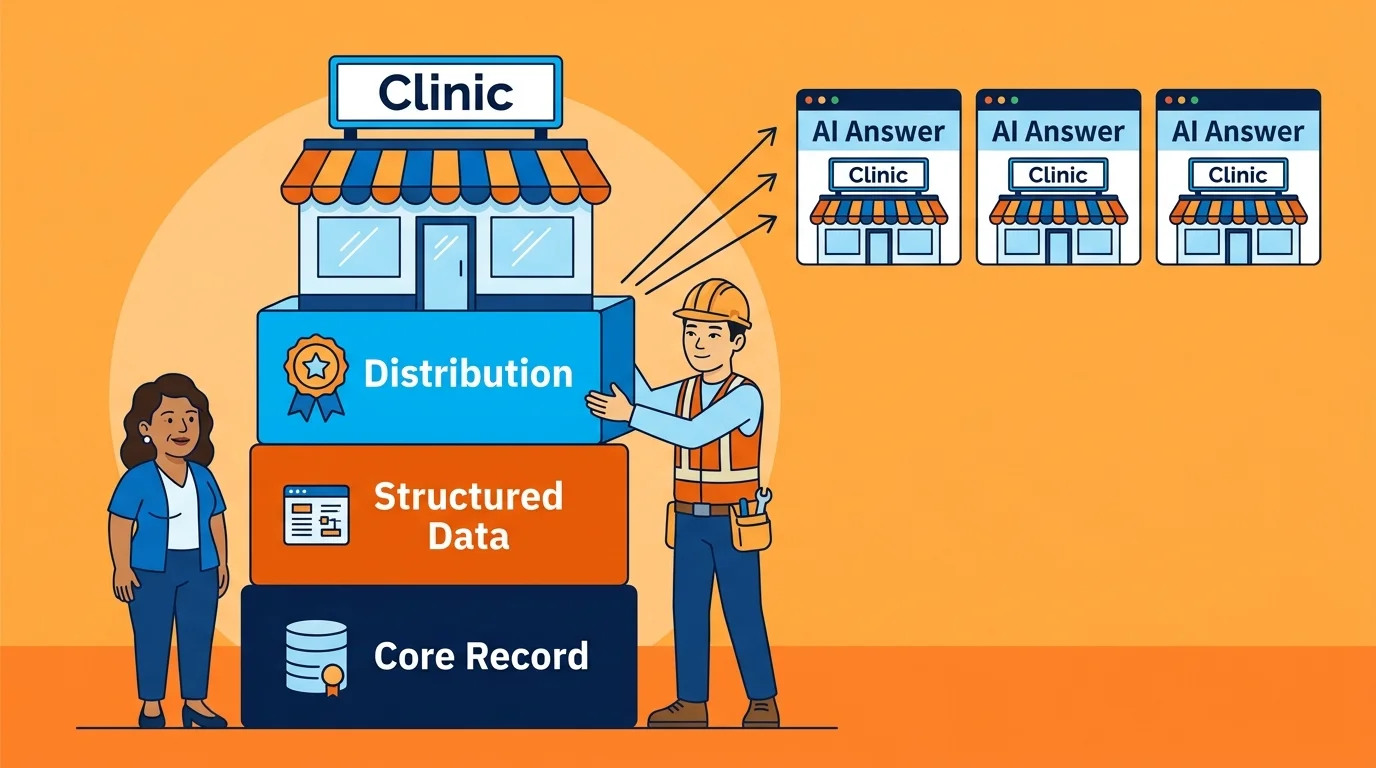
Having shown how deep the fragmentation runs, the next question is what a structurally sound alternative is actually built from. A full infrastructure rebuild is a proactive, foundational strategy. It treats a practice's core data as a centralized asset, ensuring consistency before that data is ever distributed.
| Approach | Core Method | Outcome Over Time |
|---|---|---|
| Manual Listing Update | Correct one field inside one directory after an error surfaces | Same error resurfaces once the uncorrected source record resyndicates |
| Spot-Fix Retainer | Log into each platform on a recurring schedule to patch visible errors | Cost grows with every new directory while the source feeding them stays broken |
| Full Infrastructure Rebuild | Centralize core data at its source and structure it before distribution | Every downstream directory and AI engine can draw from one consistent, verifiable record |
| Structured Data Layer | Encode hours and departments so engines read facts instead of guessing | Search results can reflect the same record an AI engine cites elsewhere |
Structured Data as the Foundation Layer
Structured data is the mechanism that lets an engine read a practice's facts instead of guessing at them. Google's documentation says Local Business structured data can be used to tell Google about a business's hours and departments, which may then appear in Search results. That specification only works when the underlying record feeding it is already consistent. authority infrastructure services exist to build that consistent source layer first, so structured data has one accurate record to describe.
Where Manual Fixes and Rebuilt Infrastructure Diverge for AI Visibility
Cheap retainers built on hourly spot fixes stay cheap because the work never touches the source record. That pricing model cannot scale against the number of directories a single error actually reaches. A rebuilt foundation diverges here. It feeds every layer from one verified record, which can help an engine cite a practice with confidence instead of guessing between conflicting entries.
Why Entity Consistency Matters for Citability
Here's the verdict: entity consistency is a key factor in whether an engine cites a practice or skips right past it. Volume answers a question AI engines may not even be asking.
Aggarwal et al. (Princeton / IIT Delhi) found that content changes like adding statistics and citations raised visibility by up to 40% in test conditions.
So a practice chasing citability through sheer output is tuning the wrong variable. That's where the earlier shift toward being a verifiable, canonical entity was pointing all along: engines may check for agreement, not word count.
Keeping an Infrastructure Rebuild From Drifting Back Into Chaos
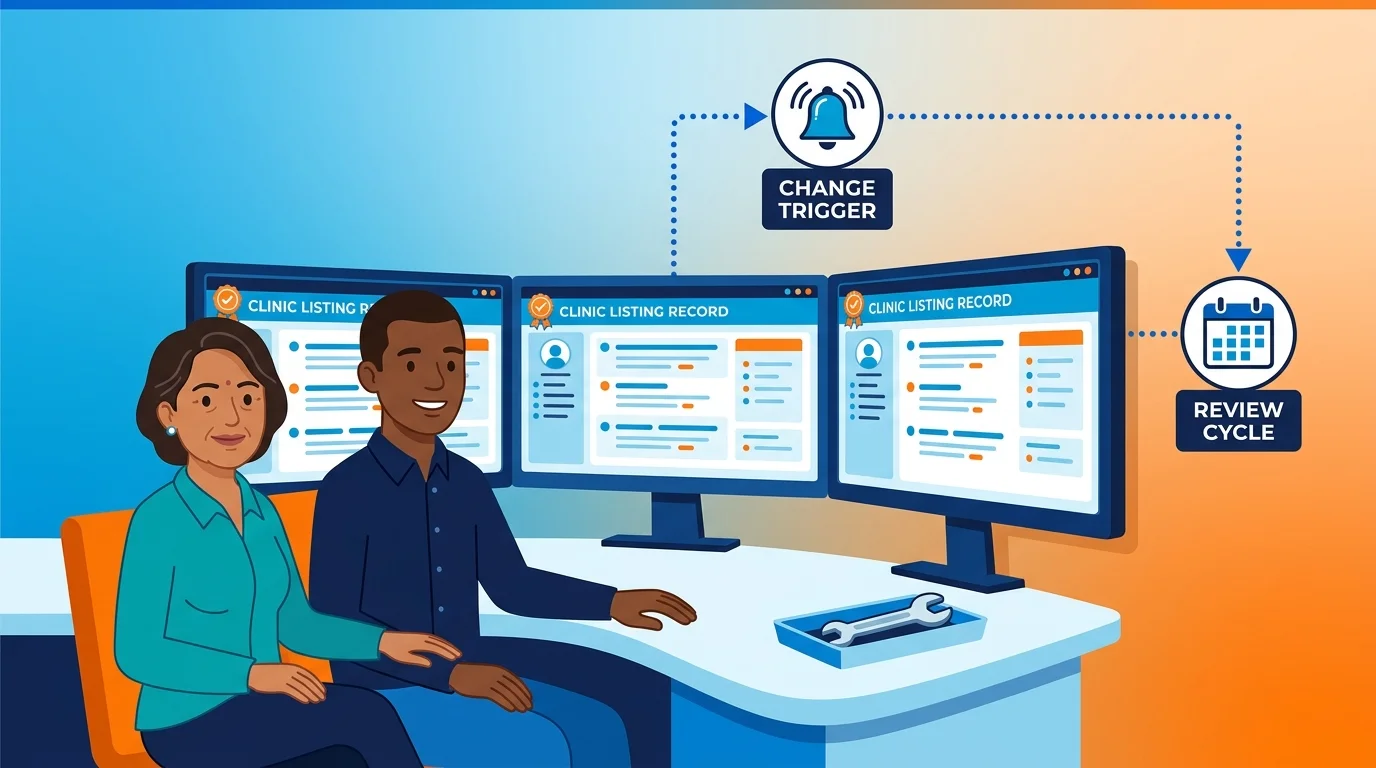
A rebuilt foundation is not a one-time event. It is a structure that still needs a monitoring cadence behind it, or drift creeps back in.
| Change Trigger | Why It Matters | What Must Be Updated |
|---|---|---|
| Office address or phone line change | A moved pipe upstream means every downstream faucet is now drawing from a stale record | The centralized source record first, then a verification pass across every platform it feeds |
| New provider joins or leaves the roster | Provider-level data fragments independently of the core practice record if left unmanaged | Provider profiles across directories plus any structured data referencing staff |
| A platform retires or changes an API it depended on | An integration that depended on it may need updating | The affected sync path, confirmed against the single authoritative record rather than reset piecemeal |
| New hours, services, or insurance accepted | Partial updates reintroduce the same fragmentation a rebuild was meant to eliminate | The centralized record first, with downstream platforms re-pulling from it rather than being edited directly |
Monitoring Cadence and Change Triggers
I tell docs a quarterly check is the floor, not the ceiling. Moved the office, changed a phone line, or added a provider to the roster? That triggers a re-verification pass across the whole foundation right away, instead of a wait for the next scheduled review.
What Breaks a Rebuilt System and How It Gets Caught
Google publishes deprecation schedules for its Business Profile APIs. Google's documentation says Google's deprecation of the My Business Business Calls API, with its discontinuation date set to May 30, 2023, may require developers to update integrations that depended on it. A one-source system can catch a change like that fast (every downstream point gets checked against the same baseline instead of trusted blindly).
Frequently Asked Questions
The same handful of mechanical questions shows up every time this topic comes up. Here are the straight answers.
Why do my clinic's listings keep changing back after we fix them?
Because the fix hit the directory, not the aggregator feeding it. The source record stayed wrong. So the old data syncs right back in.
Can't my front desk staff just handle updating our business listings?
Front desk staff can log into one directory and fix one field.
How long does it take for a change like a new office address to be correct everywhere online?
That depends entirely on how many layers the change has to pass through before every directory agrees. A spot fix only ever touches one layer at a time, which is why the same change can look finished in one place and wrong everywhere else.
What is a data aggregator and why does it matter for my chiropractic practice?
A data aggregator is a platform that pools business records and redistributes them to dozens of directories at once. If the aggregator's record is wrong, every directory downstream inherits the error, no matter how many individual listings get manually corrected.
Is a full infrastructure rebuild a one-time fix or an ongoing process?
Neither, really. It's a foundation with a monitoring cadence built in, so a moved office, new phone line, or roster change can't sneak drift back in. Each one gets verified against the source record.
How does having correct listings help my practice show up in AI-generated answers?
AI engines may look across a practice's data for agreement before deciding whether to cite it at all. A single verified source can remove the conflicting signals that may make an engine skip a listing instead of citing it.
The Bottom Line
The spot fix and the rebuild aren't two flavors of the same job. One patches a faucet. The other seals the pipe upstream.
Manual updates never touch the source record, so the same error keeps bubbling back up downstream. A full infrastructure rebuild treats that source record as the asset worth fixing, and that's what makes your practice citable instead of merely listed.
Seal the break in the pipe and every faucet in the building runs clean. That's the approach that holds, and it's the one I'd bet your practice on. Start with an AI Visibility Check.