
Invoca’s 2026 benchmarks report found that calls referred by ChatGPT convert into sales leads at a 49 percent rate, which is about half. That is the highest of any marketing channel measured. It is roughly 10 percentage points above the cross-channel average. The report draws on more than 70 million phone conversations. On conversion rate, a different metric, those same ChatGPT-referred calls came in close to average, at 40 percent. That is about 3 percentage points below the top-performing channels on that measure. Invoca states plainly that the number of calls coming from generative AI referrals is still very low across its data. It also says ChatGPT is currently the only large language model producing any measurable call volume at all.
What Invoca Found When ChatGPT Sent the Call
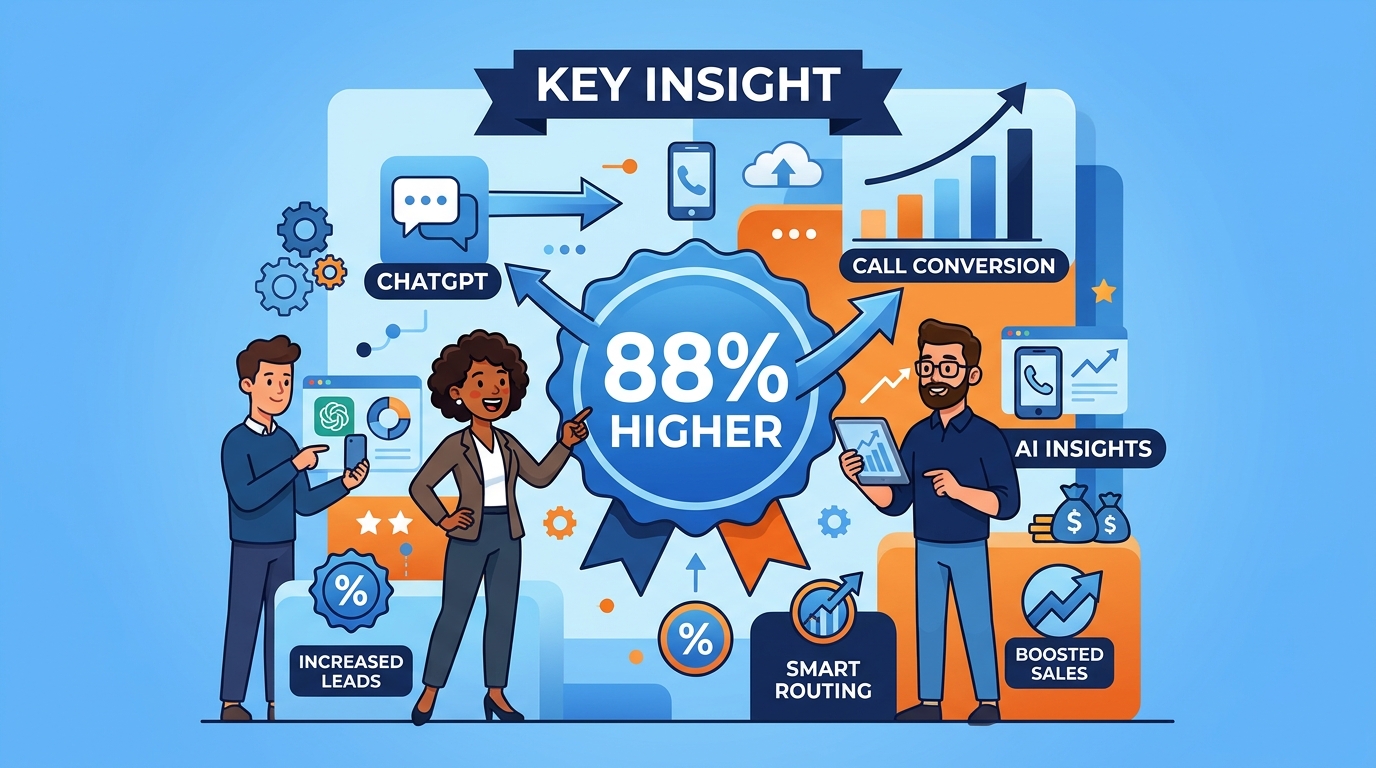
Here’s the headline number.
Invoca’s 2026 benchmarks report found that calls referred by ChatGPT turn into sales leads about half the time (49 percent). That’s the highest of any marketing channel measured. It sits roughly 10 percentage points above the cross-channel average.
Google Business Profiles were the next-closest channel. They posted a 43 percent lead rate in the same comparison. ChatGPT beat them by 6 percentage points.
Don’t mix this up with conversion rate. That’s a different metric.
For those same ChatGPT-referred calls, it was 40 percent. Close to average. About 3 percentage points below the top-performing channels on that measure.
2026 is the first year Invoca had enough measurable call volume from a large language model (an AI system like ChatGPT) to report generative AI as its own referral category. It sits alongside paid search, organic search, Google Business Profiles, paid social, and other established channels.
This isn’t a small sample. Invoca built the report from more than 70 million calls and over 600 million minutes of tracked phone conversation. The data spans 10 industries and seven marketing channels.
Here’s how the ChatGPT numbers line up against Business Profile calls.
| Measure | Channel | Rate |
|---|---|---|
| Lead rate | ChatGPT-referred calls | 49% |
| Lead rate | Google Business Profile calls | 43% |
| Conversion rate | ChatGPT-referred calls | 40%, about 3 percentage points below the top-performing channels on that metric |
Here’s how I build.
I build for being the name an assistant gives and the source it draws on. Not for one more spot in a directory or a long list of businesses.
I count being relied on as worth more than being present. That caller shows up already told who to call. I wrote more about that in When a Named Recommendation Converts Better Than a Listed Option.
Here’s where the numbers come from. The source is PPC Land: ChatGPT calls convert to leads at 49%, beating every channel, Invoca finds.
How Visitors From AI Answers Convert Against Other Channels
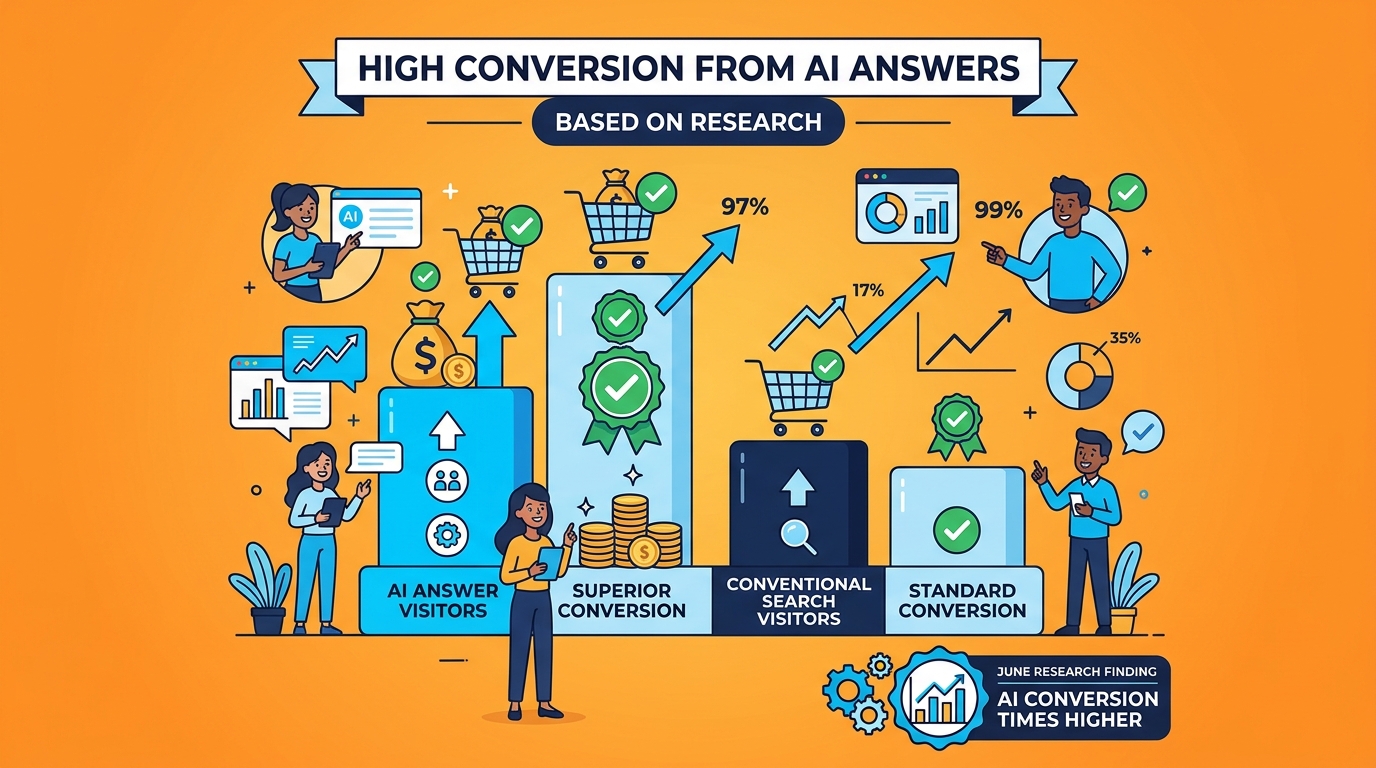
Ahrefs research published in June 2025 found that visitors from AI-powered search platforms convert at rates 23 times higher than conventional search engine visits. AI search visitors accounted for just 0.5 percent of total website visits during the measurement period.
Microsoft Clarity looked at more than 1,200 publisher and news websites. AI referral visits grew 155 percent over an eight-month period.
AI-sourced visitors converted to sign-ups at 1.66 percent. Organic search visitors converted at 0.15 percent. That’s an 11-fold advantage.
Not every study agrees.
An e-commerce study examined 973 websites with 20 billion dollars ($20,000,000,000) in combined revenue. In it, ChatGPT referrals converted worse than every channel except paid social media.
The table puts the three studies side by side.
| Study | Metric | Finding |
|---|---|---|
| Ahrefs, June 2025 | Conversion rate of AI search visitors | 23 times higher than conventional search engine visits |
| Microsoft Clarity, 1,200+ publisher and news sites | Sign-up conversion | 1.66% vs 0.15% from organic search |
| 973 e-commerce sites | ChatGPT referral conversion | Worse than every channel except paid social media |
Here’s where I landed.
I stopped treating position tracking as a measure of success once assistants started giving direct answers instead of lists of links. A spot on a results list tells me very little about whether a business gets found. A rank report can look good and still drive nothing.
When I want to know what’s working, I look at how AI visitors convert. Not where a page sits.
What Decides Whether a Ringing Phone Becomes a Booking
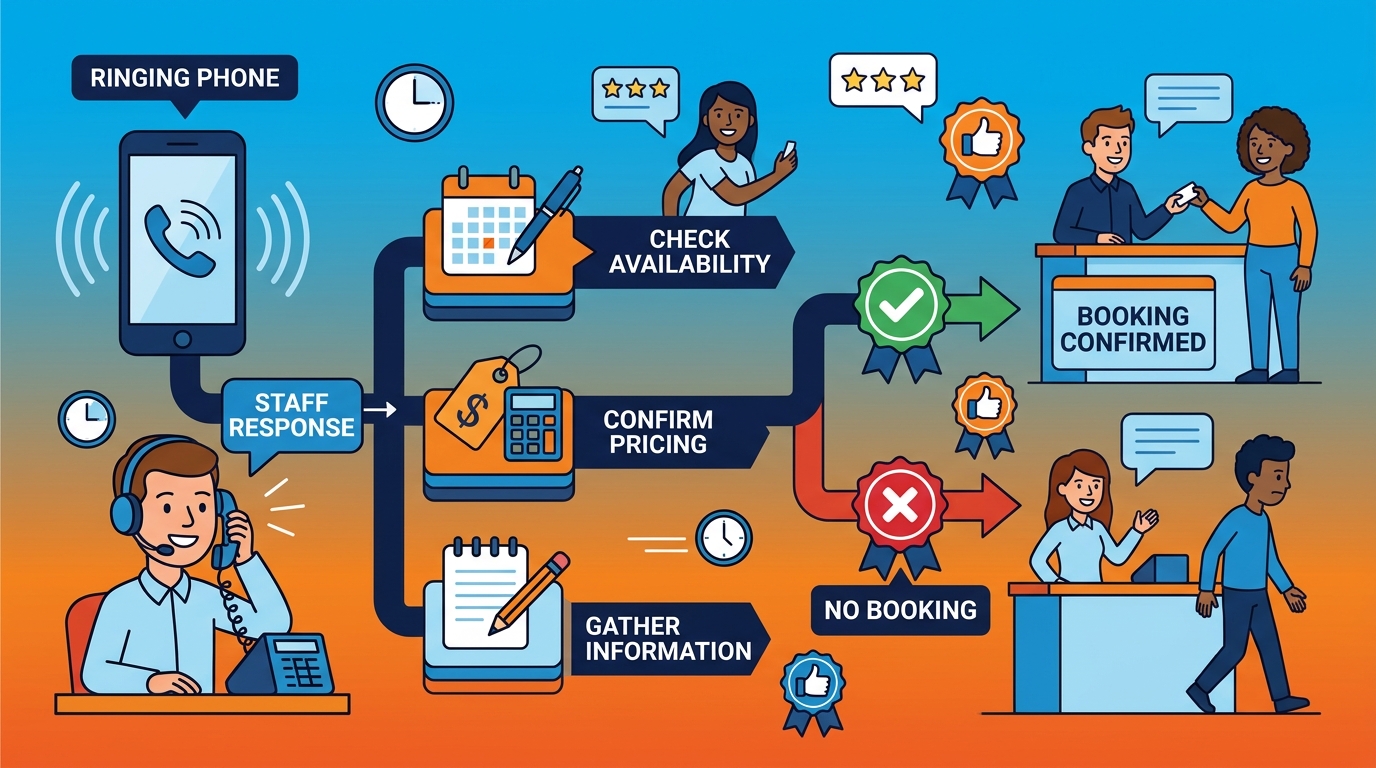
A ringing phone is only the start.
Here’s what Invoca’s data shows across all industries. A person answers just over half (56 percent) of calls to businesses. For calls lasting longer than 15 seconds, that climbs to nearly two-thirds (65 percent). For calls over 30 seconds, it reaches about seven in ten (71 percent). Those longer calls filter out misdials and immediate hangups.
Now look at the answered calls.
About four in ten (38 percent) qualify as leads. Of those leads, a little over four in ten (42 percent) convert on the call itself.
Here’s the part that stings. Invoca reports that nearly two-thirds (64 percent) of businesses fail to ask callers to buy or book an appointment at all.
Whoever responds first wins. Resonate AI, which publishes 25 Patient Response Time in Healthcare Statistics and 19 Call Answering Rates in Dental Clinics Statistics, states that nearly eight in ten (78 percent) of customers buy from the company that responds to their inquiry first.
How Assistant Answers Impact Bookings: A Complete Guide covers what happens between an assistant’s answer and a booking. Answer speed and the booking ask come after the call starts.
Before the call comes a bigger question. Does an assistant name your practice at all? That’s what the AI Visibility Check looks at.
Healthcare Answer-Rate Benchmarks
Resonate AI says healthcare call centers often answer nine in ten or more (90 to 93 percent) of their calls. It also says healthcare service level standards call for nine in ten (90 percent) of calls to be answered within 30 seconds.
Don’t mix them up. The first is the share of calls answered. The second is a speed standard.
How Google’s AI Can Call the Practice for the Patient
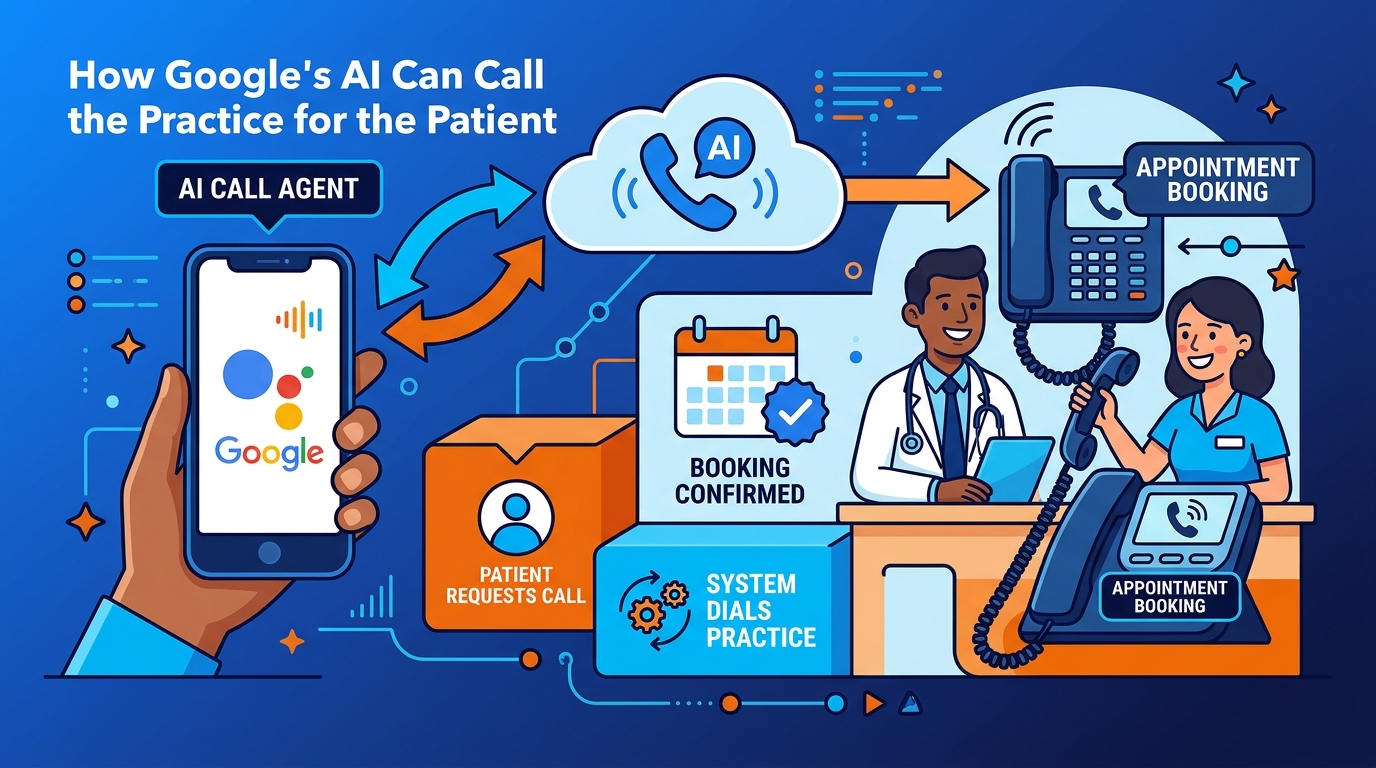
Here’s the shift.
Google’s agentic Search feature lets people ask for price and availability information without calling anyone themselves. Someone who searches for a service like “pet groomers near me” will see a “Have AI check pricing” option in the search results.
Google’s automated calling system needs accurate Business Profile information to work well with customers, so that profile data matters more and more. Companies with incomplete profiles may get verification calls from Google. Those calls ask for current business hours, stock status, or whether a service is available.
Want the full story? PPC Land covered the feature here: Google search calls small businesses for customers automatically.
Why Invoca Calls ChatGPT an Early Signal, Not a Budget Shift
Paid search still carries the volume.
In Invoca’s data, it drives the highest number of calls, leads, and conversions of any paid channel. Among organic sources, Google Business Profiles play the same role for businesses with multiple locations.
Calls from generative AI referrals? Still very low across Invoca’s data.
And ChatGPT is currently the only large language model producing any measurable call volume at all.
Invoca drew its own conclusion in the methods section of its report. It says to treat the ChatGPT figure as an early signal worth tracking. It does not call it a channel that currently justifies shifting budget.
I agree with that. And I go one step further on where the effort goes.
I put effort first into what you control: clear, credible information about your business. That’s visibility that keeps paying off and grows over time. Paid search volume is rented. It lasts only as long as the spend.
So when I advise on where to put your time and money, I pick the first kind of visibility.
Frequently Asked Questions
Why do many AI-influenced visits show up as branded search instead of an AI referral?
A Similarweb study found that 55.9 percent of AI-influenced website visits arrive as branded organic search, meaning people search for the brand in regular, unpaid results. They do not come through a trackable referral link.
How many site visits does ChatGPT send compared with Google?
About 190 times fewer. ChatGPT sends roughly 190 times fewer visits to websites than Google does. And it handles about an eighth (12 percent) of Google’s query volume.
Can a practice opt out of Google’s AI calling?
Yes. A business takes part through its Google Business Profile settings. But the system works automatically unless a company actively opts out.
How fast should a practice respond to a new inquiry?
In under 5 minutes. Resonate AI cites Harvard Business Review research. Practices that respond in under 5 minutes are 21 times more likely to convert leads than those that respond after 30 minutes. Don’t make your leads wait.
Is ChatGPT still the main source of AI-referred visits?
Yes, but its share is shrinking. ChatGPT’s share of global generative AI website visits was about three-quarters (76.4 percent) in June 2025. It fell to about two-thirds (66.8 percent) by December 2025. Then it fell again to just over half (52.7 percent) by June 2026, as Gemini and Claude gained ground.
Track the Assistant Call, Then Check Who Gets Named
A call that starts with an assistant’s recommendation sits at the top of the channel list.
Invoca found that calls referred by ChatGPT convert into sales leads at about half (49 percent). That’s the highest of any marketing channel measured, in a report drawing on more than 70 million phone conversations.
But the volume is still small. Invoca’s own conclusion is to treat that figure as an early signal worth tracking, not a reason to shift budget. So you track it. You don’t bet your budget on it.
iTech Valet Service Plans & Pricing explains how the work is done. To see who assistants name when someone nearby asks, Run My AI Visibility Check.