
The share of consumers who used an artificial intelligence (AI) tool to find a local business in the last 30 days rose from 9% in 2025 to 52% in 2026, close to six times as many in a single year, according to WFTV (SOCi.ai via Stacker). AI-first journeys, which are customer journeys that start with an AI tool, are most common in healthcare (21%) and grocery (19%). Data from rater8 show that at the end of 2025, 31% of patients were using AI to find a new provider, and less than halfway into 2026 that had jumped 16 percentage points to 47%, according to TechTarget.
Why No Single Percentage Exists
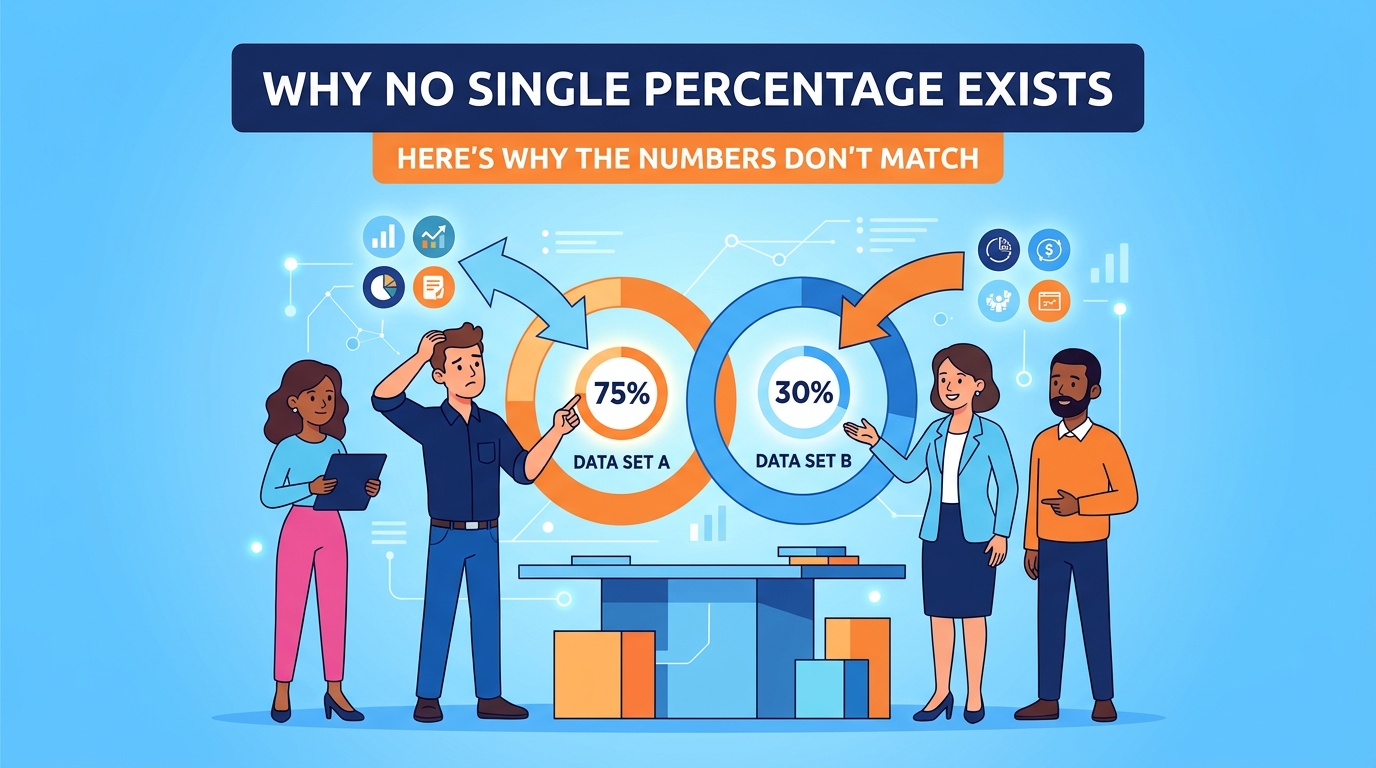
Here’s why the numbers don’t match.
The surveys don’t ask the same thing. One asks which channel people prefer. One asks where they start. One asks if they used AI at all. One asks who they trust.
So the numbers run from 2% to 52%.
- Trust: Research published July 14, 2025 found that 93.2% of consumers continue trusting Google over AI assistants for local business discovery, as PPC Land reported.
- Preferred channel: In the recent Youtech survey, traditional search engines made up 78.7% of local business discovery activity. Only 2.0% preferred AI assistants like ChatGPT, Gemini, and Claude.
- Starting point: GatherUp found that 14% start with a maps app like Google or Apple Maps. Another 11% start with voice search. 8% start with conversational AI like ChatGPT. 7% start by asking friends or family for a personal recommendation. Just 1% start on social media.
- Any use in 30 days: The share of consumers who used an AI tool to find a local business in the last 30 days rose from 9% in 2025 to 52% in 2026. WFTV (SOCi.ai via Stacker) called that close to a sixfold increase in a single year.
- AI-first journeys: These are most common in healthcare (21%) and grocery (19%), per the same report.
The table below puts the reported shares side by side. It also shows what each one measured.
| Source | What it measured | Reported share |
|---|---|---|
| Youtech survey | Prefer AI assistants like ChatGPT, Gemini, and Claude | 2.0% |
| Research published July 14, 2025 | Trust Google over AI assistants for local business discovery | 93.2% |
| GatherUp | Start with conversational AI like ChatGPT | 8% |
| SOCi.ai (WFTV via Stacker) | Used an AI tool to find a local business in the last 30 days | 52% in 2026, up from 9% in 2025 |
| SOCi.ai (WFTV via Stacker) | AI-first journeys in healthcare | 21% |
Here’s where I stand.
I don’t chase one share number as proof your practice is getting found. Once AI tools started giving direct answers instead of lists of links, I stopped reading a site’s place in a results list as a sign a business gets found.
I treat rank-tracking reports as an outdated measure of success. They look good. I don’t rely on them to tell me about outcomes.
How Many Patients Use AI to Find or Choose a Provider
Here’s how fast this is moving.
Data from rater8 show that at the end of 2025, about 3 in 10 patients (31%) were using AI to find a new provider. Less than halfway into 2026, that jumped 16 percentage points to almost half (47%). TechTarget reported it in Almost half of patients use AI for online provider search.
rater8 also reported that reliance on AI to choose a health care provider has more than doubled in the past year, from 17% to 36%. MediaPost covered that report in Patients’ Use Of AI To Find Doctors Doubles In 9 Months: Report.
Look at patients who searched for a new doctor in the past year. About 1 in 3 (36%) named AI tools as a top influence.
That beat Google search results (34%). It beat doctor referrals (32%). Medical Economics reported it in Patients now shop for doctors like consumers, and the bar just got higher.
rater8’s survey of more than 1,000 U.S. adults found that 70% are open to using AI tools to research doctors, or are already using them.
In 2025, about 1 in 4 patients (26%) said AI recommendations directly influenced their decision. That’s nearly equal to primary care referrals (28%) and health care review sites (29%).
Then there’s trust. A little over 1 in 4 patients (27%) now trust AI more than Google search to serve them a qualified provider.
Here’s the line from the rater8 report that sticks.
“Patients aren’t necessarily choosing to use AI; rather it’s being placed in front of them.”
The table lines up each figure with its source.
| Source | Metric | Figure |
|---|---|---|
| rater8 via TechTarget | Patients using AI to find a new provider | 47% less than halfway into 2026, up from 31% at the end of 2025 |
| Medical Economics | AI tools as a top influence among patients who searched for a new doctor in the past year, vs Google search results and doctor referrals | 36% vs 34% vs 32% |
| rater8 via MediaPost | Reliance on AI to choose a health care provider | 36%, up from 17% in the past year |
| rater8 via Medical Economics | U.S. adults open to or already using AI tools to research physicians | 70% |
| Medical Economics | Patients who said AI recommendations directly influenced their decision | 26% |
Want to know how these answers connect to appointments? It’s covered in How Assistant Answers Impact Bookings: A Complete Guide.
How Many Americans Use AI for Health Information in General
Quick note before the numbers. These figures cover health information and advice. They don’t cover how patients choose a provider.
What Gallup found
About 70% of U.S. adults say they have used an AI tool or chatbot for any purpose. One in four (25%) say they have used one to gather health care information or advice. Gallup shared this in Americans Turning to AI to Supplement Healthcare Visits.
Now look at the people who recently used AI for health:
- About 6 in 10 (59%) use AI tools to research on their own before seeing a doctor.
- A little over half (56%) use AI to research after seeing a doctor.
- A little over half (59%) have used an AI tool or chatbot for nutrition or exercise questions.
- A similar share (58%) have used it for questions about physical symptoms.
Which tool wins? General chat-style AI like ChatGPT or Copilot. About 6 in 10 (61%) used it for health. Next came AI built into web searches, like Google AI summaries. A bit over half (55%) used that.
West Health covers this too in Millions of Americans Now Consult AI Before, After, and Sometimes Instead of, Seeing a Doctor.
What Rock Health found
Rock Health asked the same kind of question in its 2025 Consumer Adoption of Digital Health Survey.
About 1 in 3 respondents (32%) said they use AI chatbots to find health information. That’s up from 1 in 6 (16%) in 2024. Fierce Healthcare reported these numbers.
And these people aren’t dabbling. About 6 in 10 AI users (64%) use it for health questions weekly or more often.
Age matters here. Among Gen Z adults, 45% said they use AI chatbots to find health information. Among Millennials, it was 48%. Use is lower among older generations.
How Many Patients Use Voice Search to Find a Physician
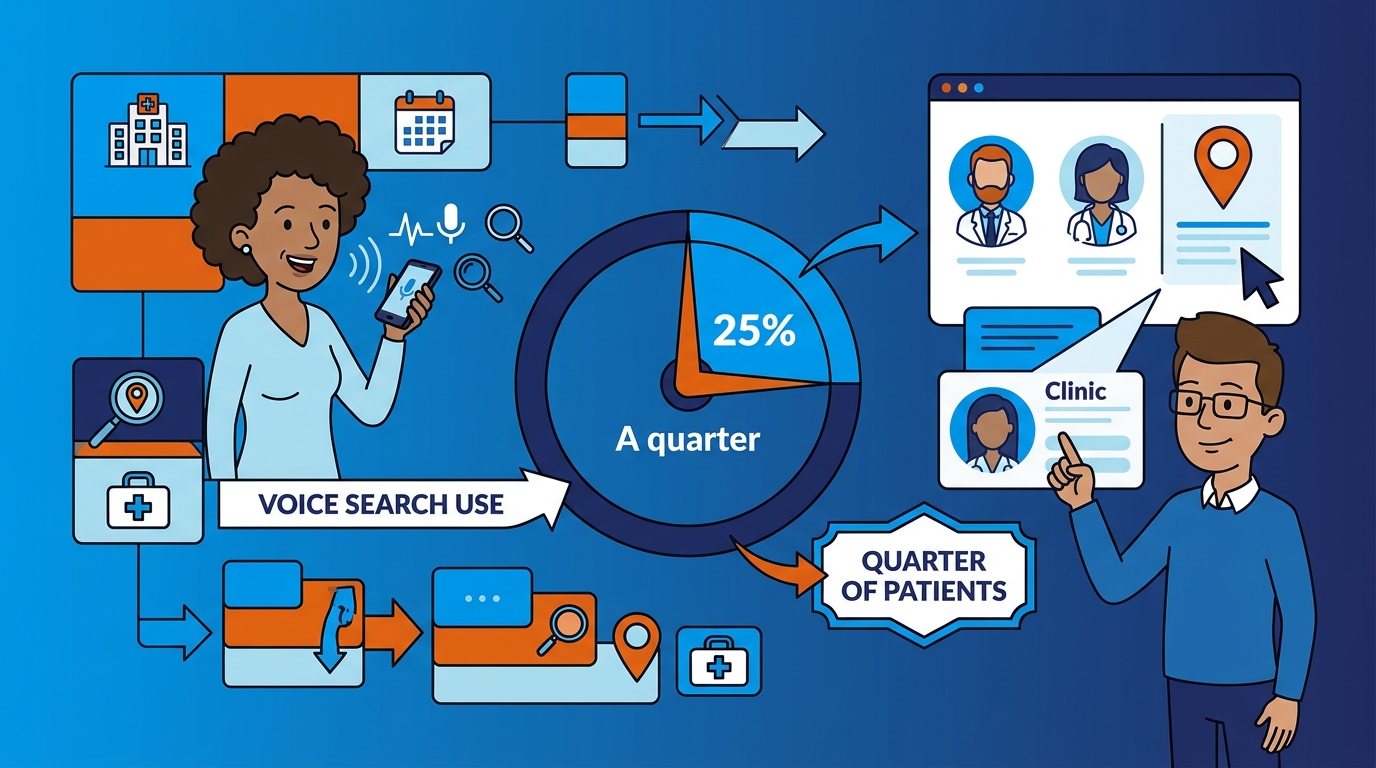
A quarter of patients said they used voice search in 2025 to find physicians. Mostly for practical stuff. Directions. Office hours. Medical Economics reported this in Patients turn to AI, social media when choosing doctors, survey finds.
Which Sources ChatGPT Cites When Patients Ask for a Provider
Here’s the number that should get your attention.
Researchers picked 200 independent practices at random from the national provider registry. They ran about 4,950 patient-style questions through ChatGPT. The chatbot cited none of the 200 practices.
Not one.
So who did it cite?
The largest source, at just over a quarter (27.5%), was hospital staff rosters. Practice-owned websites made up another almost a quarter (23%). But that share sat almost entirely with large, content-rich groups. Medical Economics reported the study.
Fierce Healthcare tracks chatbot use for health information in AI chatbot use for health information up 16% from 2024: Rock Health survey.
Here’s where I land.
I’d rather your practice be a source ChatGPT names and draws on than a name sitting somewhere in a list. I count being relied on for more than being present.
Getting cited by AI answer tools is its own discipline. I don’t treat it as old-school search work with a new name.
I don’t chase keywords, inbound links, or ranking position. I put the effort into making it easy for these systems to work out who your practice is and whether it’s credible.
What AI Reads About a Practice: Reviews and Listings
Listings
Health care organizations must make sure their online directories and profiles are accurate and complete. TechTarget names Zocdoc, Healthgrades, and even Google.
And the data out there is already a mess.
A 2024 study in BMC Health Services Research looked at more than 449,000 physicians across five major insurer directories. Address information was consistent only 17% to 28% of the time.
Reviews and replies
Here’s what patients want from AI summaries.
When they were asked what information they value, 4 in 10 (40%) named verified patient reviews. That ranked well ahead of doctor credentials or convenience factors.
Patients read reviews. Most of them (84%) check online reviews before booking care. More than half read at least six reviews before making an appointment. Medical Economics reported both numbers.
Your replies count too. rater8’s report says “a thoughtful response to a negative review…also improves the information AI has available when it summarizes your practice for the next person who asks.”
The AI Visibility Check is how I see what AI engines say about your practice.
Where I’d put effort
I put time and money into what you control. Accurate listings. Thoughtful responses.
That kind of visibility is an asset that keeps paying off. Paid placement is rented visibility. When the spending ends, so does the visibility.
I don’t publish more to get your practice recommended.
I’d take clear, consistent practice data, set out in a sensible order, over a pile of content any day. I build for AI that has to grasp your practice’s information easily.
Frequently Asked Questions
Does using AI for health research mean patients skip seeing a provider?
Mostly no. Among recent AI health users, more than 8 in 10 (84%) still saw a health care provider, according to West Health. But about 1 in 7 (14%) say they skipped a provider they would otherwise have seen, because of information or advice from AI.
Which AI tools do patients use most for health questions?
ChatGPT and Gemini were the most-used AI chatbots for health information. In the Fierce Healthcare report, 23% of respondents used ChatGPT and 15% used Gemini.
How many people ask ChatGPT health questions each week?
Over 230 million people globally, according to OpenAI. That number comes from OpenAI’s own de-identified analysis of conversations. Personal details were removed.
How much do recent AI health users trust what they read?
Not much. Only 4% of recent AI health users say they strongly trust that health information made by AI is accurate, per Gallup.
What do people do after asking a chatbot a health question?
Fierce Healthcare reports that users took a range of actions, including searching for more information (42%), consulting a provider (40%), and discussing it with family or friends (35%).
Do patients rate AI search results as good as Google’s?
Many do. A little over half (55%) of rater8 survey respondents now rate AI search results as equal to or better than standard Google results, per Medical Economics.
The Useful Question Is Whether AI Names Your Practice
The figure depends on what was asked. Any AI use in 30 days to find a local business went from 9% in 2025 to 52% in 2026. Patients using AI to find a new provider went from 31% at the end of 2025 to 47% less than halfway into 2026. Each provider-search figure measured over time has risen. So the useful question is not which percentage is right. It is whether AI names this practice when someone nearby asks who to see. How I do that work is laid out on iTech Valet Service Plans & Pricing. If you want to see what AI says about your practice today, Run My AI Visibility Check.