
The Invisibility Cloak: Why AI Ignores 90% of Your Chiropractic Reviews
AI engines like ChatGPT and Gemini ignore unstructured chiropractic reviews because they lack verifiable, machine-readable data. Unlike structured reviews on trusted third-party platforms, simple text testimonials on a website cannot be easily parsed for entity trust, sentiment, or authenticity. AI prioritizes structured data with schema markup from authoritative sources to validate a practice, making unstructured text effectively invisible when generating recommendations.
You've spent years collecting patient testimonials. You've got a testimonials page with dozens of glowing reviews. You've asked happy patients to write about their experience. You've pasted them all on your website with photos, names, dates — the whole thing.
And when someone asks ChatGPT who the best chiropractor is in your area? Your name doesn't come up. Not once.
Here's what's actually happening: AI can't read your reviews. Not "won't." Can't. The format you're using — plain text on a webpage — is invisible to the machine systems making recommendations right now.
Last Updated: April 24, 2026
- The Format That Worked for Humans Doesn't Work for Machines
- What Makes a Review "Structured"
- The Platforms AI Actually Trusts
- Why Your Beautiful Testimonials Page Is Hurting You
- The Anti-Persona Reality Check
- How to Make Your Reviews Visible to AI
- What This Means for Your Practice Right Now
- Frequently Asked Questions
- Conclusion
The Format That Worked for Humans Doesn't Work for Machines
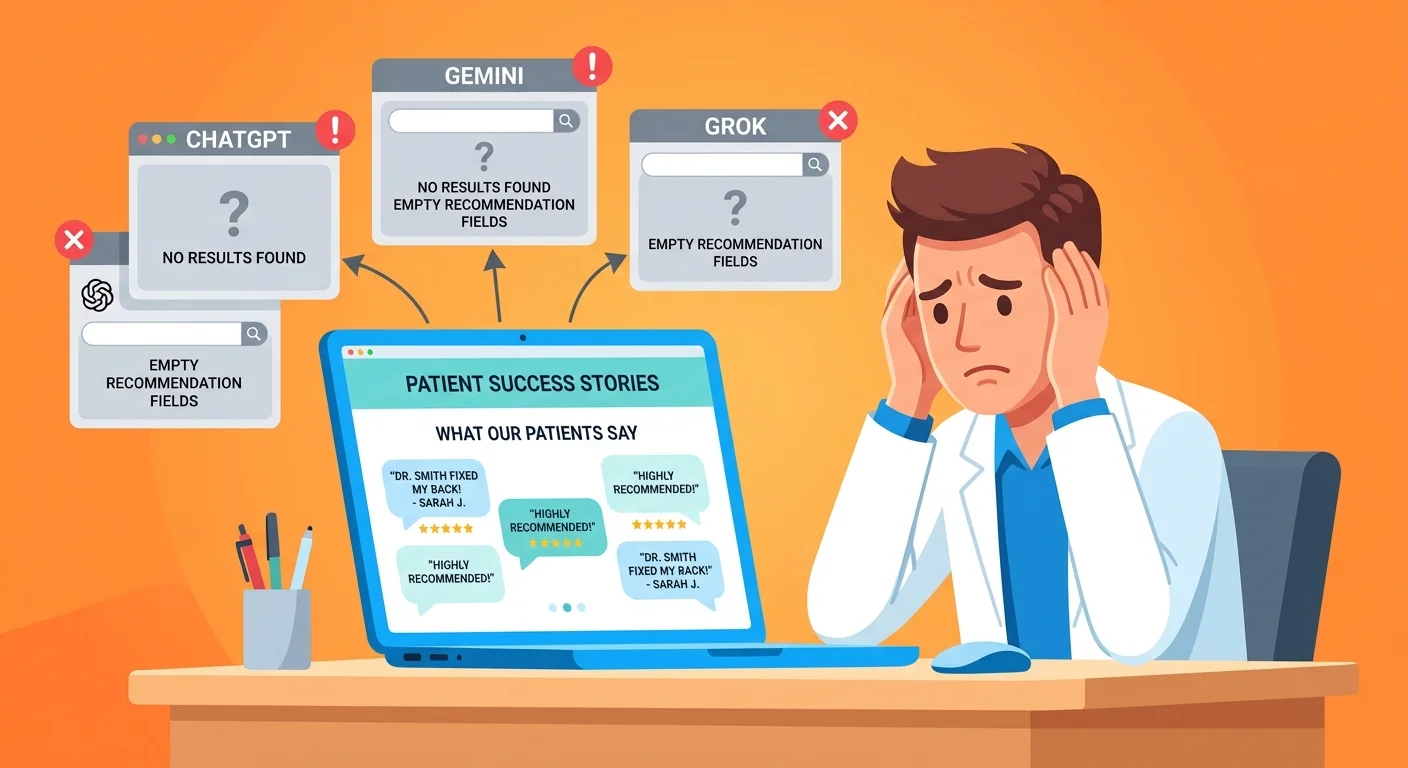
You built that testimonials page for people.
And it works — for people. Someone lands on that page, reads those stories, connects with them. They trust. They book.
But AI doesn't "land" on pages. It doesn't scroll through your site reading narratives like a patient would. It scans for specific, structured signals: this is a review, this is the rating, this is who wrote it, this is when it happened.
No signals? The text doesn't exist.
Why "Wall of Love" Pages Are Invisible to AI
Most practices have some version of the same setup.
Clean grid. Patient names. A few sentences about the experience. Maybe a photo. Looks professional. Feels trustworthy.
AI sees exactly none of it.
Google's own documentation on structured data makes this explicit: search engines and AI systems rely on markup to understand what content means. Without that markup, everything reads as generic text — no matter how compelling it is to a human.
The "Wall of Love" was built for an era when Google crawled pages and humans clicked links.
That era's ending.
AI doesn't click. It extracts. And if your reviews aren't structured for extraction, they don't get extracted.
Here's the thing: your testimonials aren't the problem.
The delivery mechanism is.
Machine-Readable vs. Human-Readable: The Critical Gap
Human-readable content is what you see when you visit a page. Paragraphs. Stories. Visual formatting.
Machine-readable content is what AI sees. Data fields. Schema tags. Explicit labels that say "this is a rating," "this is a date," "this is an author."
Your testimonials page is human-readable.
AI needs machine-readable.
Google Cloud's documentation on Natural Language Processing explains how AI systems extract entities, sentiment, and meaning from text — but extraction works best when content follows structured, predictable patterns. Ambiguity and missing data fields make it exponentially harder for machines to parse intent and verify trust.
Cornell research on natural language understanding backs this up: while AI has made serious progress processing text, ambiguity and lack of structure remain major barriers. When content doesn't follow a clear format, machine systems struggle to extract meaningful signals — especially when they need to verify trust.
That's the gap.
You're speaking English. AI is listening for data.
The Trust Validation Problem
Even if AI could parse every word on your testimonials page perfectly, there's a bigger issue.
It can't validate the source.
You control your website. You could write anything. AI knows that.
Third-party platforms — Google Business Profile, Healthgrades, Clutch — act as validators. They verify identity. They timestamp reviews. They make manipulation harder.
AI trusts those platforms because the review isn't controlled by the business being reviewed.
Your on-site testimonials? No validator. No verification. No timestamp AI can trust.
So even if you mark them up correctly, they carry less weight than a single verified review on a trusted platform.
The validation layer is missing.
What Makes a Review "Structured"
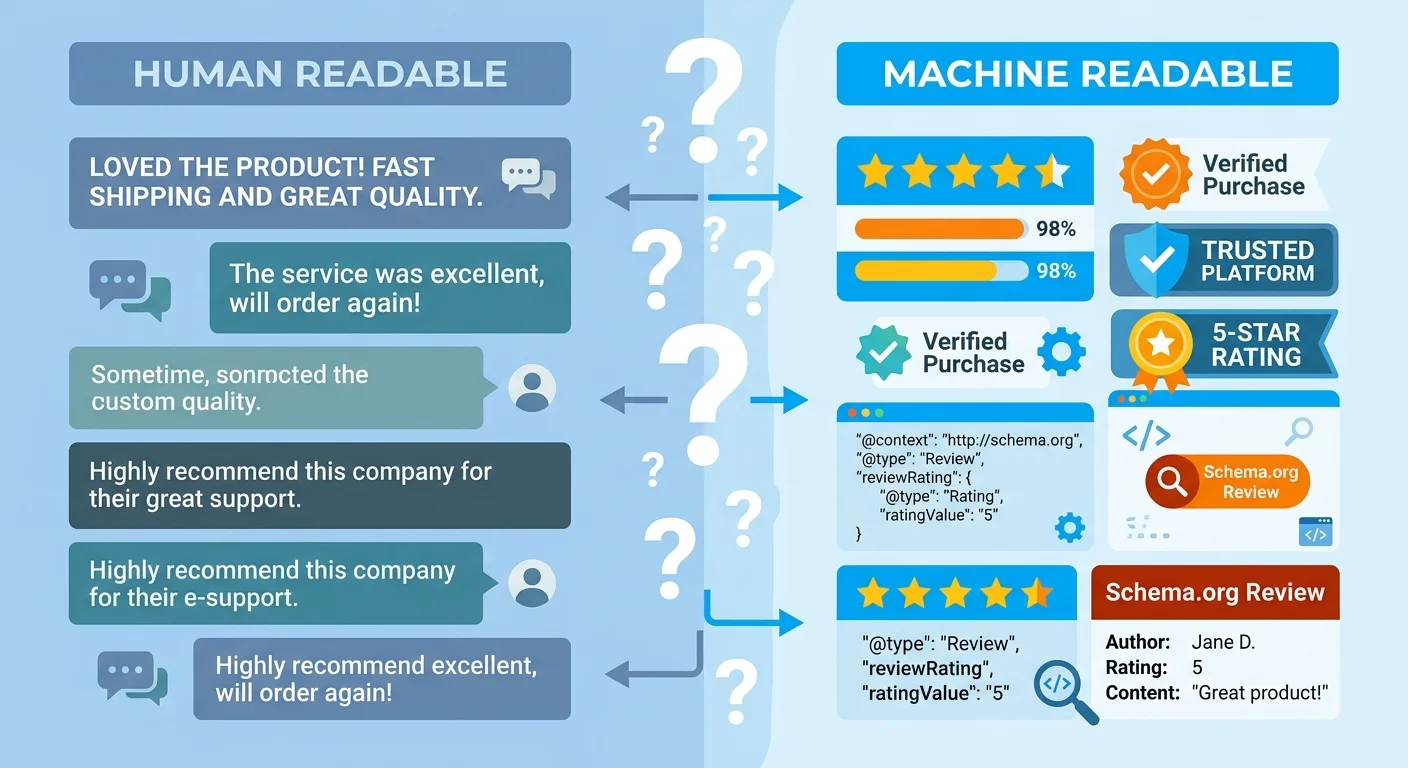
Structured reviews contain explicit data fields that machines can read without interpretation.
- Rating — A numerical value (1-5 stars, 1-10 scale) that AI can extract and aggregate
- Author — A named person with an identity that can be verified or cross-referenced
- Date — A timestamp showing when the review was written, critical for Answer Engine Optimization (AEO) recency scoring
- Item Reviewed — The specific service, business, or product being reviewed, tied to a verifiable entity
- Platform Source — The third-party site hosting the review (Google, Yelp, Healthgrades), which acts as the trust anchor
Those five elements together create a machine-readable review.
Miss any of them, and AI's ability to trust and use that review drops significantly.
The technical standard for this is Review Schema markup. It explicitly tells AI engines "this block of content is a review, and here are the structured fields that define it."
Why Third-Party Platforms Win
AI engines prioritize reviews from verified third-party platforms for one reason: they can't be easily manipulated.
When a review appears on Google Business Profile, AI knows:
- The reviewer had to create a Google account (identity barrier)
- Google verified the review wasn't spam (platform validation)
- The review is timestamped and publicly visible (transparency)
- The business can't edit or delete it (independence)
None of those safeguards exist for reviews you paste on your own website.
BrightLocal's 2024 Local Consumer Review Survey found that 98% of consumers read online reviews for local businesses, and 76% trust reviews on Google as much as personal recommendations.
That trust extends to AI engines. They use the same platforms consumers trust to validate what AI trusts.
Your website testimonials? AI has no mechanism to trust them.
So it doesn't.
The Schema Solution (And Why Most Chiropractors Don't Use It)
Review schema is code you add to your website that explicitly labels review content for machines.
It looks like this in concept:
- This is a review
- Rating: 5 stars
- Author: John Smith
- Date: March 15, 2024
- Item Reviewed: [Your Practice Name]
When that markup is present, AI can extract the review as a structured data point instead of ignoring it as generic text.
But here's the catch: most chiropractors don't have schema markup on their testimonials pages.
Not because they don't want it. Because they don't know it exists.
Or their web designer built a beautiful page and never added the technical layer AI needs.
Even when schema is present, on-site reviews still carry less weight than third-party platform reviews. But at least they're visible.
Without schema? They're not even in the conversation.
| Review Format | Machine-Readable | Third-Party Verified | AI Trust Level |
|---|---|---|---|
| Unstructured text on your website | No — plain text with no schema markup | No — self-published content | Zero. AI cannot verify authenticity or parse for trust signals. |
| Structured review on Google Business Profile | Yes — star rating, author, date in standardized format | Yes — verified by Google | High. AI treats this as a validated authority signal. |
| Schema-marked review on your website | Yes — Review schema tells AI "this is a review" | No — still self-published | Low to Moderate. Structured, but lacks third-party validation. |
| Review on trusted healthcare directory (Healthgrades, Zocdoc) | Yes — platform enforces structured data | Yes — verified by platform | High. AI treats directory platforms as trusted validators. |
The Platforms AI Actually Trusts

Not all review platforms carry the same weight with AI engines.
Some are explicitly designed to validate identity, prevent manipulation, and provide structured data.
Others are just text hosting sites with minimal verification.
AI knows the difference.
Google Business Profile: The Anchor Platform
Google Business Profile (formerly Google My Business) is the single most important review platform for local service businesses.
Why AI trusts it:
- Verified business identity tied to a physical location
- Reviewer identity validation through Google accounts
- Public visibility — reviews are displayed on Google Maps and Search
- Review moderation and spam detection
- API access for structured data extraction
When someone asks ChatGPT or Gemini who the best chiropractor is in a specific area, these engines often pull from Google Business Profile data because it's the most trusted, verified source available.
If your Google Business Profile has 10 reviews, and your website has 100 testimonials, AI will prioritize the 10 Google reviews.
Every time.
Healthgrades, Vitals, Zocdoc: Healthcare-Specific Validators
Healthcare-specific review platforms carry additional weight because they're built around verified patient-provider relationships.
- Healthgrades — Verifies provider credentials and ties reviews to specific medical professionals
- Vitals — Integrates with insurance networks and practice management systems
- Zocdoc — Validates that the reviewer actually booked an appointment through the platform
These platforms act as triple validators: they verify the provider, the reviewer's identity, and (in some cases) that the relationship actually existed.
AI engines building entity trust use these platforms as secondary signals when primary Google Business Profile data is thin or missing.
Clutch and Industry-Specific Directories
For service-based businesses (including chiropractic practices offering specialized services), industry directories like Clutch provide an additional layer of verification.
Clutch conducts phone interviews with clients before publishing reviews. That verification step makes the review significantly more trustworthy to AI than a simple text submission.
The pattern here: the more verification steps between the reviewer and the published review, the more AI trusts it.
| Platform | Verification Level | AI Trust Score | Primary Use Case |
|---|---|---|---|
| Google Business Profile | High — Google verifies business ownership and reviews | Very High. The single most important platform for local AI visibility. | Local service recommendations. First platform AI checks for entity validation. |
| Healthgrades / Vitals / Zocdoc | High — healthcare-specific directories with verification processes | High. Treated as authoritative sources for healthcare provider quality. | Healthcare provider recommendations. Specialization signals matter here. |
| Clutch (for agencies/services) | Medium-High — verified client reviews with project details | High for B2B services. Less relevant for direct consumer services. | Business service recommendations. Strong for service providers targeting other businesses. |
| Yelp | Medium — some verification, but self-service model | Moderate. AI uses it, but weights it lower than Google or specialized directories. | Consumer service recommendations. Better than nothing, but not primary. |
| Your website (even with schema) | Low — self-published, no third-party validation | Low. AI treats with skepticism regardless of formatting. | Supporting proof only. Cannot be your primary review strategy. |
Why Your Beautiful Testimonials Page Is Hurting You
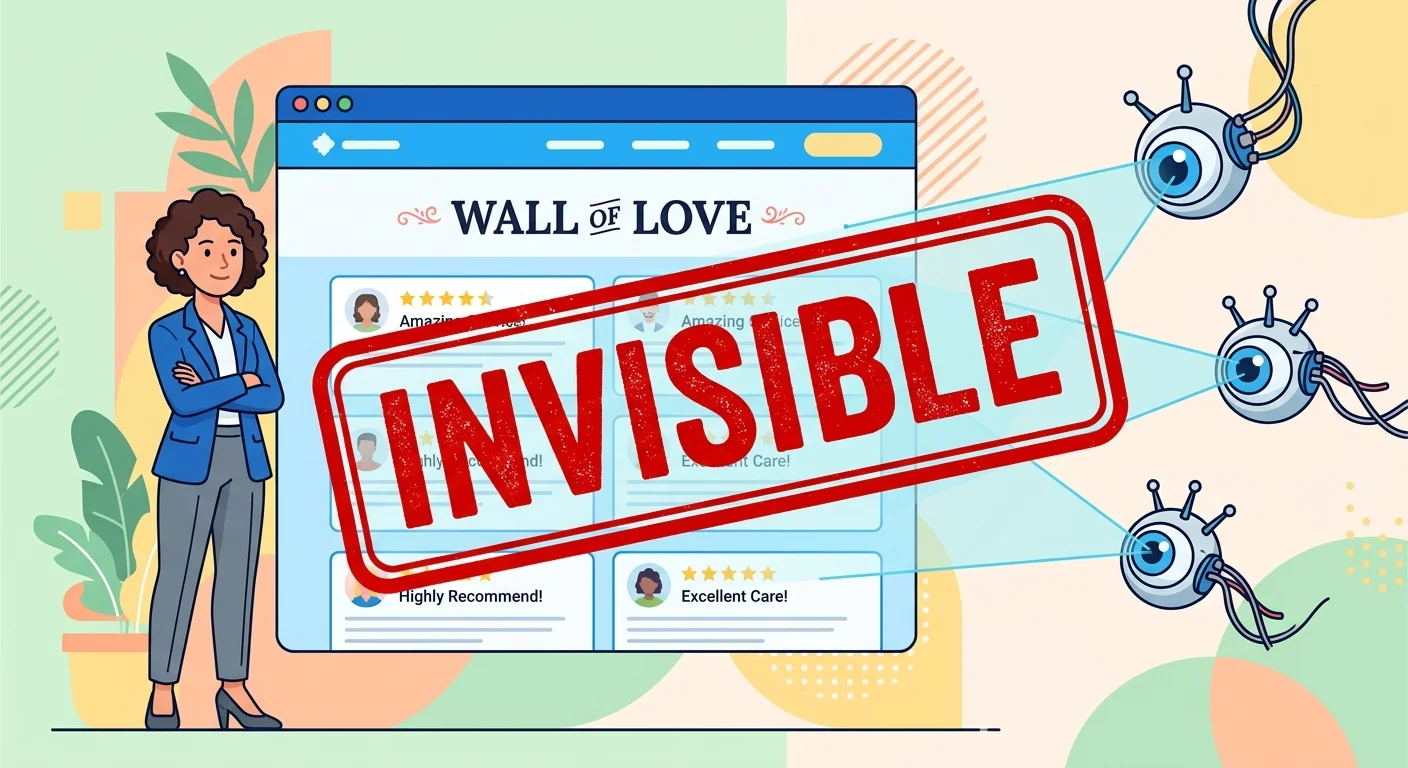
Here's the uncomfortable truth.
That testimonials page you paid a designer to build? It's not just invisible to AI.
It's actively working against you.
Because you're investing time and effort into a format that doesn't build authority.
The Opportunity Cost of Unstructured Reviews
Every hour spent collecting testimonials for your website is an hour not spent building verified reviews on platforms AI actually trusts.
When a patient offers a testimonial, you have two options:
- Ask them to write something you can paste on your website (unstructured, unverified, invisible to AI)
- Ask them to leave a review on your Google Business Profile (structured, verified, AI-visible)
Most practices do option 1.
Then they wonder why AI doesn't recommend them.
The opportunity cost is massive. You're building proof that decays over time instead of authority that compounds.
The "Wall of Love" Illusion
The testimonials page creates an illusion of authority.
It looks impressive. It feels like social proof.
But if AI can't see it, it's not doing the job you think it's doing.
Search Engine Journal's guide to entity-based SEO explains how search and AI engines build entity profiles by connecting verifiable data points across trusted sources.
A testimonials page on your own website isn't a trusted source. It's a marketing page.
The illusion is this: you think you're building authority.
You're actually building a museum of invisible text.
Why "More Reviews" Isn't the Answer
The default response when a practice realizes they're invisible to AI is: "I need more reviews."
That's half right.
You need more structured, verified reviews on trusted platforms.
Collecting 50 more testimonials for your website doesn't move the needle. Collecting 10 more Google Business Profile reviews does.
The volume game only works when you're playing on the right field.
The Anti-Persona Reality Check
Let's pause here.
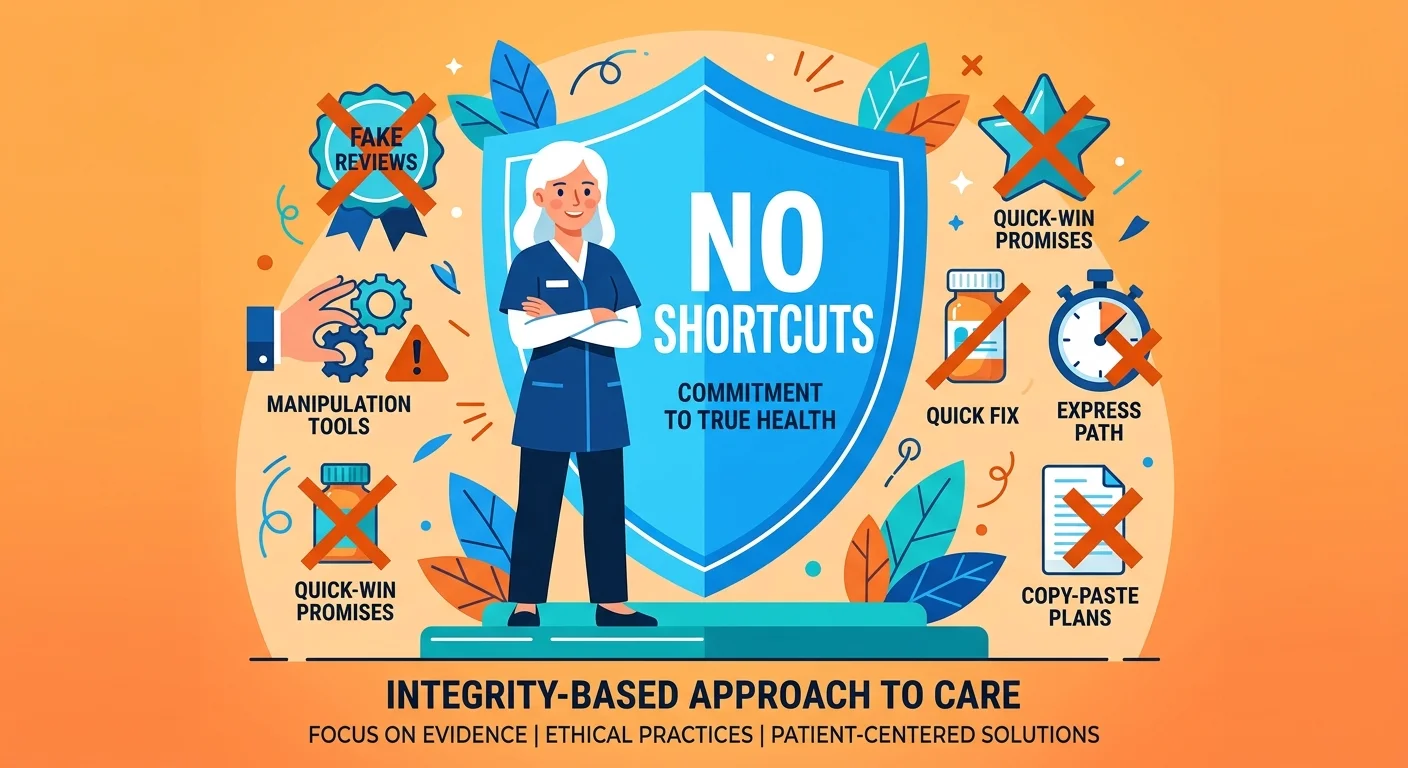
If you're reading this and thinking, "This sounds like a lot of work. Can't I just hire someone to post fake reviews on Google?" — you're not our fit.
If you're looking for a shortcut that bypasses the entire verification layer AI engines use to filter out manipulation, this system isn't for you.
The practices that win with AI authority are the ones willing to do the unglamorous work of restructuring digital infrastructure and systematically building verifiable proof over time.
No hacks. No tricks. No fake reviews.
If that doesn't align with your approach, this article won't help you.
How to Make Your Reviews Visible to AI
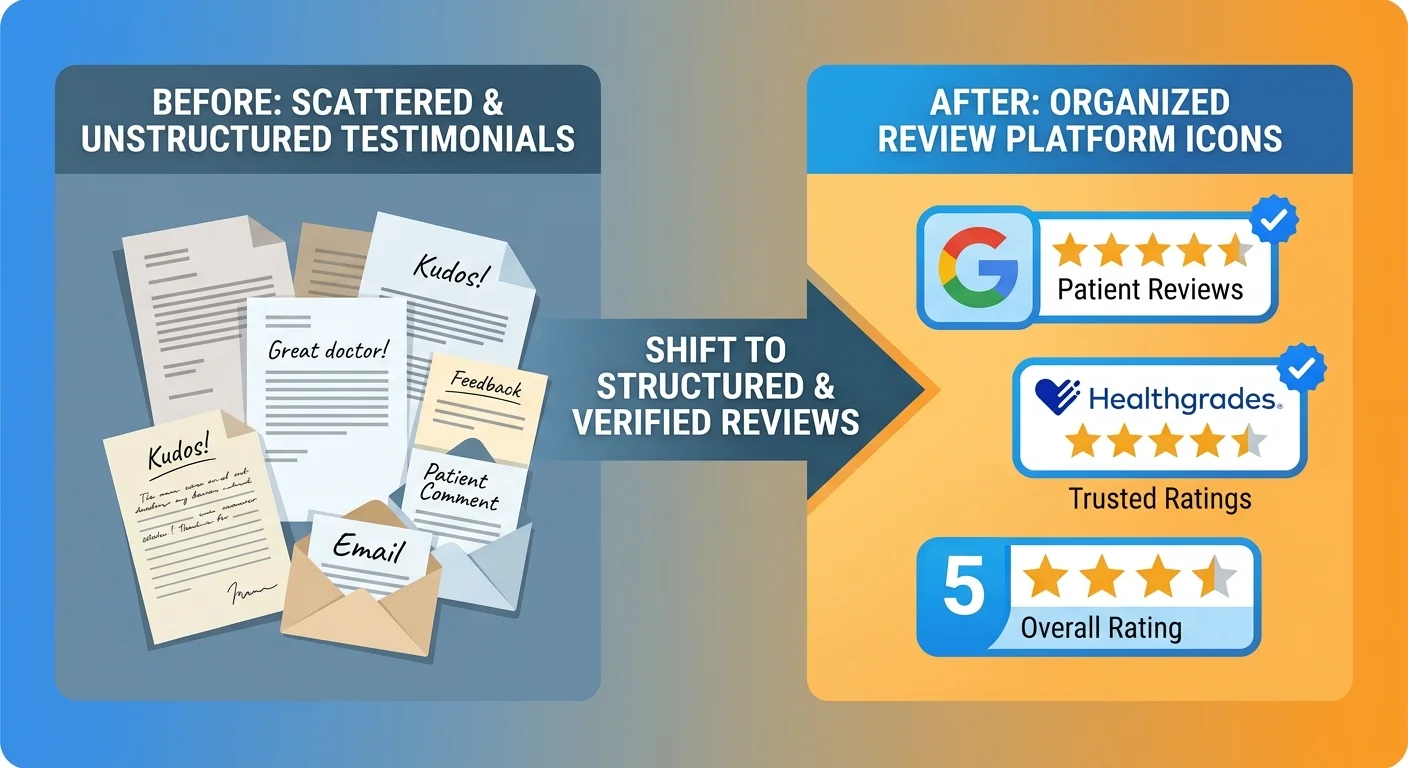
The fix isn't complicated.
It's just a complete reversal of how most practices think about reviews.
Stop optimizing for your website. Start optimizing for AI visibility.
Step 1: Shift Your Collection Strategy
From now on, every time you ask a patient for a testimonial, direct them to your Google Business Profile first.
Not your website. Not an email. Not a form on your contact page.
Google Business Profile is the anchor. Everything else is secondary.
- Send a direct link to your Google Business Profile review page
- Make the ask immediately after a successful outcome (same day or next day)
- Frame it as "helping other patients find us" — which is exactly what it does
Once you have a solid base of Google reviews (aim for 20+ recent reviews), you can layer in other platforms like Healthgrades or Vitals.
But Google comes first. Always.
Step 2: Add Review Schema to Your Website
If you already have testimonials on your website and you want to keep them, at least make them machine-readable.
Add Review Schema markup to every testimonial block. This requires:
- A developer or someone comfortable editing your website's code
- The Schema.org Review specification
- Explicit data fields for rating, author, date, and item reviewed
This won't make your on-site reviews as powerful as third-party platform reviews. But it makes them visible instead of invisible.
If you don't have the technical capability to add schema yourself, this is where verifiable proof of authority through proper AI-readable infrastructure becomes critical.
Step 3: Stop Building the "Wall of Love"
Redirect that energy.
Instead of collecting testimonials for your website, focus on:
- Building a consistent stream of Google Business Profile reviews
- Claiming and optimizing your Healthgrades profile
- Getting listed (with reviews) on relevant healthcare directories
The "Wall of Love" served its purpose in 2015.
It's 2026. The game changed.
Your website can still have a testimonials section — but make it a feed pulling from your Google Business Profile or other verified platforms. Let the structured data live where AI can see it, and display it on your site if you want humans to see it there too.
But never prioritize your on-site testimonials over your Google Business Profile reviews.
That priority is backwards.
| Old Approach | New Approach | AI Visibility Impact |
|---|---|---|
| Collect testimonials via email or forms and paste them on a "Testimonials" page | Direct patients to verified third-party platforms (Google Business Profile, Healthgrades) | Old approach creates zero AI visibility. New approach builds entity trust AI can verify and cite. |
| Focus on quantity — gather as many testimonials as possible | Focus on platform distribution and recency — maintain active reviews on trusted platforms | Quantity of unstructured text is invisible. Distribution across verified platforms creates citation velocity. |
| Display reviews as plain text paragraphs or image quotes | Implement Review schema on website AND maintain third-party profiles | Plain text is invisible. Schema + third-party validation = machine-readable authority. |
| One-time collection — gather reviews when launching website, rarely update | Ongoing execution — treat review collection as continuous authority-building | Stale reviews decay in value. Fresh, consistent reviews signal active, trusted entity. |
| Assume reviews on your website are enough | Understand your website is supporting infrastructure — third-party platforms are primary | Website-only strategy = invisibility. Third-party platforms + structured website data = AI recommendation. |
What This Means for Your Practice Right Now
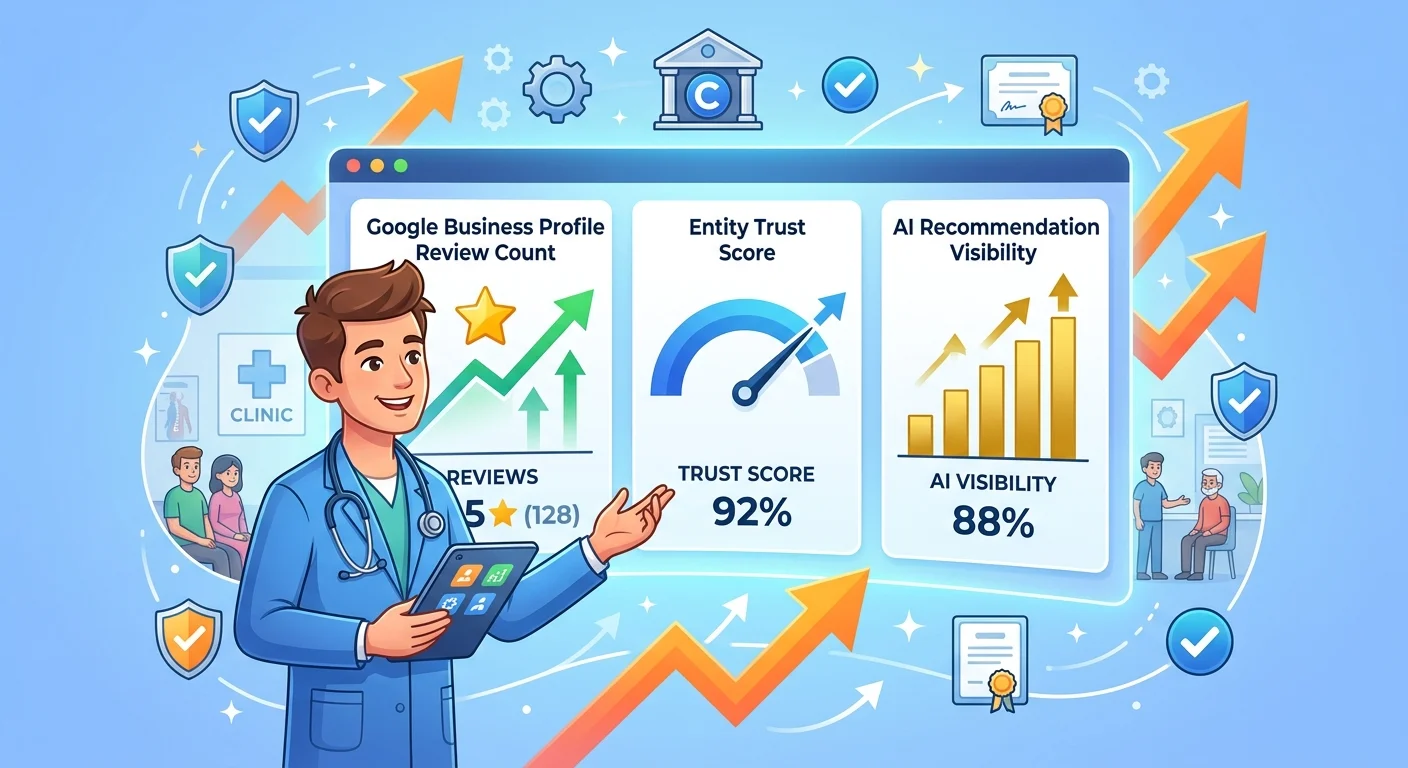
If you've been collecting testimonials the old way, you're not behind.
You're just collecting the wrong format.
The good news: you can fix this starting today.
The Immediate Action: Audit Your Current Review Distribution
Open a spreadsheet. List every platform where your practice has reviews:
- Google Business Profile
- Healthgrades
- Vitals
- Zocdoc
- Your website testimonials page
- Anywhere else
Count the reviews. Note the recency. Look at the ratings.
Then ask: where is the majority of my social proof?
If the answer is "on my website," you've identified the problem. AI can't see it.
If the answer is "on Google," but you only have 3 reviews from 2019, you've identified a different problem: proof that decays over time.
Either way, you now know what needs to change.
The 90-Day Shift
You don't need to delete your testimonials page tomorrow.
But over the next 90 days, shift your collection strategy entirely to verified platforms.
- Every patient who would have written a website testimonial goes to Google instead
- Every follow-up email directs to your Google Business Profile review link
- Every "thank you for the kind words" moment becomes a review request
In 90 days, you'll have 10-15 new Google reviews. Maybe more.
That's when AI starts noticing.
Not before.
Why This Compounds
Here's the kicker: structured reviews on verified platforms don't just help you get recommended today.
They compound.
Every new Google review strengthens your entity trust score. Every verified Healthgrades review adds another data point AI can extract. Every platform where you exist with real, structured proof makes you harder to ignore.
Unstructured testimonials? They sit on a page. Static. Invisible. They don't compound.
Authority built on verifiable, machine-readable proof? That's an asset.
And it grows every month you invest in it.
Frequently Asked Questions
What's the difference between a structured and an unstructured review?
A structured review contains machine-readable data fields like a star rating, author, and date, often hosted on a trusted platform like Google Business Profile. An unstructured review is just plain text copied onto a webpage, which AI cannot easily verify or parse for trust signals.
The difference is visibility. Structured reviews are designed for machines to extract and validate. Unstructured reviews are designed for humans to read — and AI systems skip them entirely.
If your reviews don't have explicit data fields (rating, author, date, item reviewed), they're unstructured. That means invisible.
Does schema markup really matter for my testimonials page?
Yes, it's critical. Review schema is a type of code that explicitly tells AI engines "this is a review, this is the rating, and this is who wrote it," transforming invisible text into a verifiable authority signal.
Without schema, AI treats your testimonials as generic marketing copy. With schema, AI at least knows what it's looking at — even if it still trusts third-party reviews more.
Think of schema as the minimum baseline. It won't make your on-site reviews as powerful as Google reviews, but it stops them from being completely invisible.
Is it better to have fewer reviews on Google than hundreds on my own site?
For AI visibility, yes. AI trusts reviews on verified third-party platforms like Google, Clutch, or Healthgrades far more than testimonials you control on your own website, because the third-party platform acts as a validator.
Ten verified Google reviews carry more weight with AI than 100 unstructured website testimonials.
The validation layer is what matters.
Volume matters — but only when it's on the right platform.
Can AI tell if my website reviews are fake?
It's not about fake vs. real. It's about verified vs. unverified. AI doesn't waste time trying to figure out if you're lying — it just assumes anything you publish yourself is marketing. Without a trusted validator like Google, your on-site reviews have zero authority.
Could you fake a review on your website? Absolutely.
Could you fake one on Google? Harder, but possible.
The difference is that Google has verification mechanisms in place. Your website doesn't.
AI's position is simple: if there's no third-party validator, the content doesn't count.
What is the first step to making my reviews visible to AI?
The first step is to shift your collection efforts from your own website to your verified Google Business Profile. This is the most powerful and trusted source for local service reviews that AI engines use to build entity trust.
Don't wait to redesign your website. Don't wait to add schema. Don't wait to hire a developer.
Just start directing patients to leave reviews on Google.
That's the unlock.
Everything else builds on top of that foundation.
Should I delete my existing testimonials page?
No. You don't need to delete it.
But you should stop investing time and energy into maintaining it.
If you want to keep a testimonials section on your website, make it a feed that pulls from your Google Business Profile or other verified platforms. Let the structured data live where AI can see it, and display it on your site if you want humans to see it there too.
But never prioritize your on-site testimonials over your Google Business Profile reviews.
That priority is backwards.
How many Google reviews do I need before AI starts recommending me?
There's no magic number.
But in competitive markets, practices with fewer than 10 recent reviews are rarely mentioned by AI.
Aim for 20+ reviews as your baseline. Then keep building.
The recency matters too. Ten reviews from 2019 won't carry the same weight as ten reviews from the last 90 days.
AI prioritizes fresh proof.
Run your AI Visibility Check to see where you stand right now.
Conclusion
Your reviews aren't invisible because they're bad.
They're invisible because they're in the wrong format.
AI engines don't ignore testimonials out of spite. They ignore them because unstructured text on a self-controlled website provides no verification, no validation, and no machine-readable data.
You built a testimonials page for humans.
AI isn't human.
The practices winning AI recommendations right now aren't the ones with the most reviews. They're the ones with the most structured, verified reviews on trusted platforms.
That's the shift. From volume to verification. From your website to Google's. From human-readable to machine-readable.
It's not complicated.
It's just different from what you've been told to do for the last decade.
The good news? You can start today. Every patient who would have written a website testimonial can write a Google review instead.
Every month you execute that strategy, your entity trust score compounds.
The gap between you and your competitors isn't talent, or service quality, or marketing budget.
It's infrastructure.
And infrastructure can be built.
Want to know if AI is recommending your practice — or your competitor's?
Run the AI Visibility Check. It takes 15 minutes and shows you exactly what ChatGPT, Gemini, and Grok say when someone asks who to trust in your market.
Not sure where you stand? The check makes the problem self-evident. If AI isn't saying your name, you'll see why. If it is, you'll see what's working.
No pressure. Just clarity.
→ Run My AI Visibility Check
621 Enterprises, Inc. | Copyright 2026 | All rights reserved