
The Authority Sibling Rule: Why AI Ignores Standalone Blog Posts
You can write the most well-researched, perfectly optimized blog post in your field — and AI will still skip over it if it's sitting alone on your site. Not because the content is weak. Because AI doesn't trust single data points.
AI trusts patterns. It trusts depth. It trusts businesses that prove they're authorities through interconnected bodies of work — not through one-off articles that could've been written by anyone.
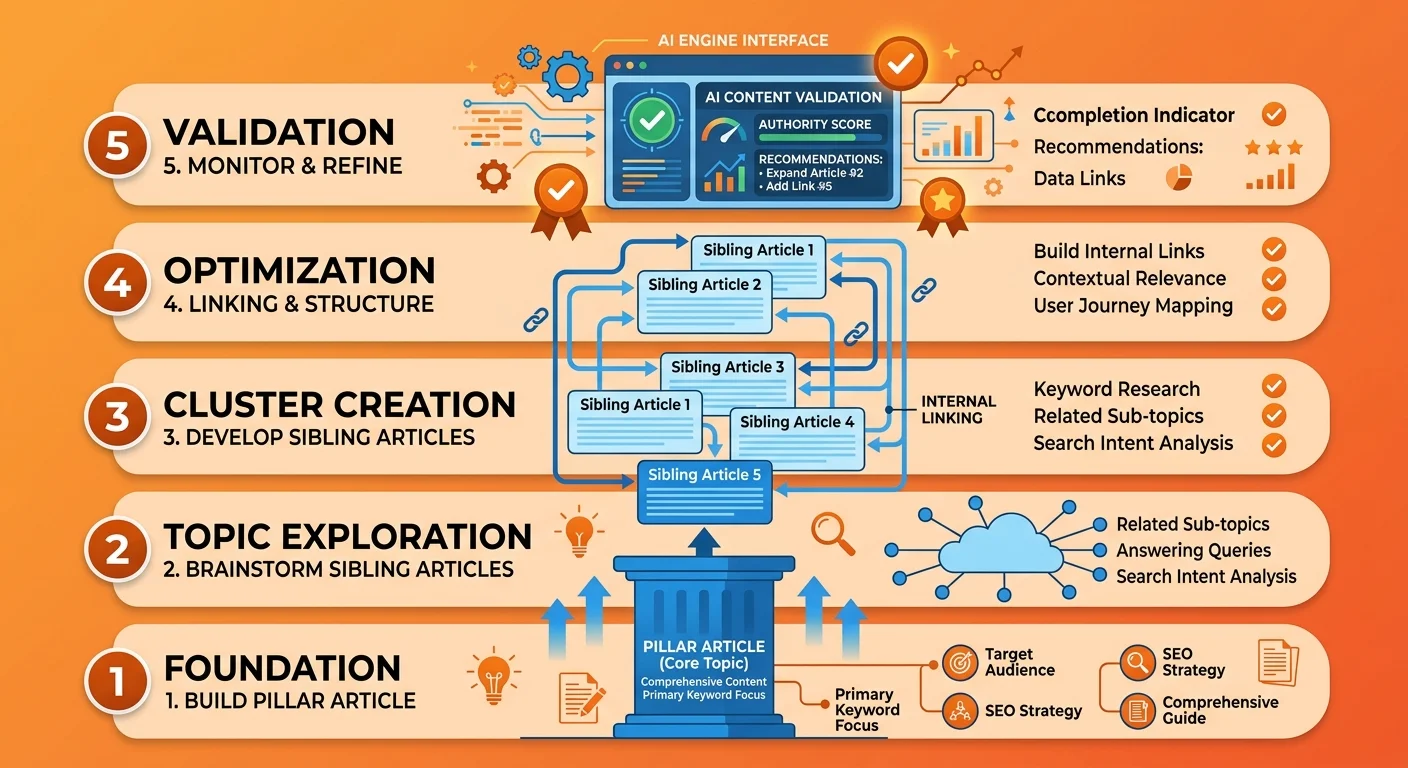
The Authority Sibling Rule is simple: every piece of content you publish needs semantic neighbors. Articles that reinforce each other. Articles that share a thematic parent and work together to prove you didn't just stumble into one topic — you own it.
This is why your competitor gets recommended and you don't. They built a library. You wrote some blog posts.
Last Updated: April 27, 2026
Understanding the Authority Sibling Rule
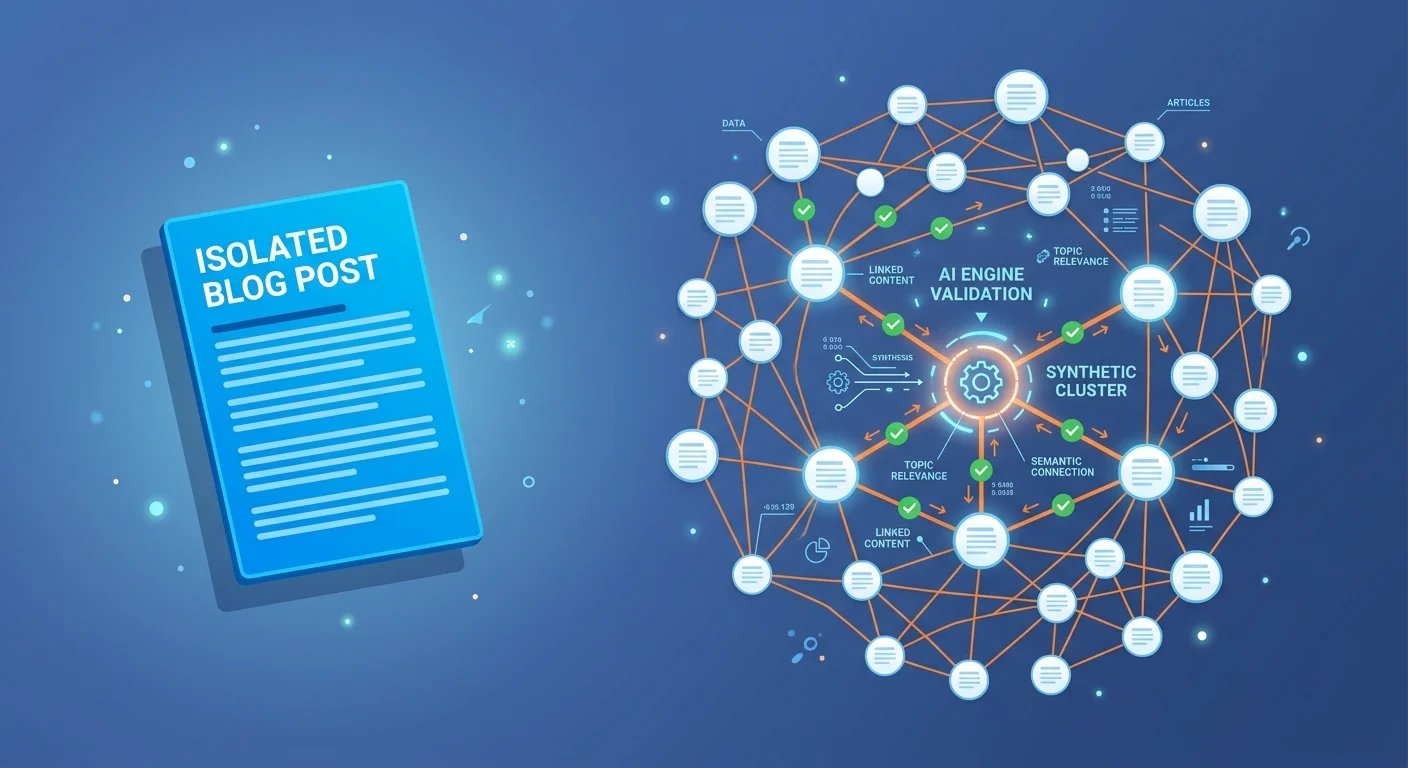
Ten interconnected articles prove you're an authority. One proves you can write.
AI evaluates your content the same way a hiring manager reads a resume — and most chiropractors are submitting one-page applications. Twenty articles organized under a clear thematic structure prove you're the expert in your field.
That's the Authority Sibling Rule.
Every article you publish needs to live within a semantic family — a cluster of related content that signals to AI: "We didn't just write about this once. We own this topic."
What Is the Authority Sibling Rule?
The Authority Sibling Rule is the content architecture principle that AI uses to determine if you're an authority or just another blog with random posts.
Here's how it works:
- Sibling articles share a common thematic parent topic and link to each other horizontally
- Parent topics act as the organizing hub — the higher-level concept your sibling content supports
- Semantic relationships between articles prove depth, not just breadth
AI doesn't care if you wrote 50 blog posts. It cares if those 50 posts prove you systematically understand a subject at every level.
One post about sciatica treatment doesn't make you an authority. But five sibling articles — one on causes, one on diagnostic protocols, one on manual adjustments, one on exercise therapy, one on patient timelines — connected under a parent topic of "sciatica management" — that signals authority.
The sibling structure tells AI: "This practice didn't cover sciatica in passing. They built an entire content library around it."
How AI Evaluates Content Relationships
AI doesn't read your blog the way a patient does.
Patients click an article, read it, and leave. AI scans your entire site structure before it ever recommends you. It's looking for semantic density — proof that your content isn't random.
Here's what AI checks:
- Internal linking patterns — Do your articles reference each other, or are they orphaned?
- Thematic clustering — Are related articles grouped under a clear parent topic, or scattered across your blog feed?
- Semantic overlap — Do your articles reinforce each other's claims, or contradict each other because they were written months apart by different writers?
If AI can't trace a clear line from one article to its siblings — if your content looks like a collection of unrelated posts instead of a structured knowledge base — it assumes you're not an authority. You're just someone who writes sometimes.
Most chiropractors have 30+ blog posts on their site. Almost none of them are organized as sibling clusters. That's why their content gets ignored.
Why Topic Clusters Became a Buzzword (And Why Most Fail)
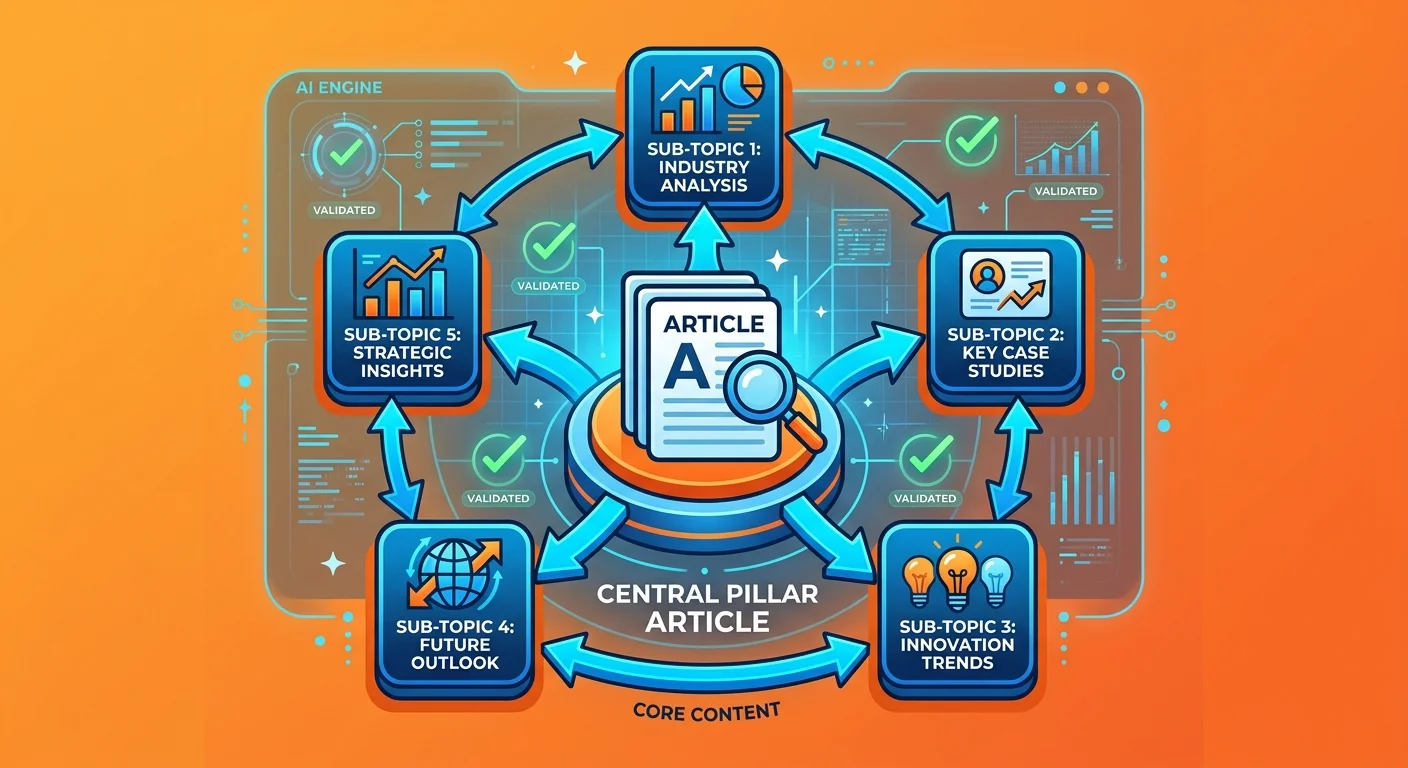
You've probably heard of "topic clusters" before.
It's been an SEO tactic for years. Build a pillar page, create 10–15 supporting articles, link them all together. Google rewards depth. Everyone wins.
That strategy worked when Google was the only search engine that mattered. It doesn't work the same way now — because AI doesn't rank content. AI recommends businesses.
The Difference Between Topic Clusters and Authority Sibling Architecture
Topic clusters were built for SEO. Authority sibling architecture is built for entity trust.
Here's the difference:
| SEO Topic Clusters | Authority Sibling Architecture |
|---|---|
| Organized around keywords | Organized around entity trust signals |
| Pillar page pushes authority to one central hub | Sibling articles distribute authority horizontally |
| Built for Google's ranking algorithm | Built for AI's recommendation engine |
| Focuses on breadth (covering many keywords) | Focuses on depth (proving systematic expertise) |
| Success = ranking on Page 1 | Success = being named as the answer |
SEO clusters were about organizing keywords into buckets. Authority sibling architecture is about proving to AI that you didn't just research a topic — you understand it at every layer.
Most agencies still sell topic clusters. What they're actually delivering is keyword-based internal linking with no entity trust structure. AI sees through it.
Why "Topic Clusters" Became Commodity
Here's what happened.
HubSpot popularized the topic cluster model in 2017. It worked. Agencies adopted it. Then they templated it.
Now every chiropractor has a "back pain" pillar page with 12 supporting articles. The structure looks the same. The keywords overlap. The depth is shallow.
AI doesn't reward templated execution. It rewards businesses that prove they're authorities — not businesses that hired someone to check the "topic cluster" box.
Search Engine Journal's analysis of topical authority explains why a deep, focused library of content is more valuable than scattered, unrelated articles — a principle that matters even more now that AI engines are making recommendations instead of just ranking pages.
The Authority Sibling Rule isn't about mimicking a structure. It's about building a content library that proves you own a subject. That means:
- Articles deep enough to answer indirect and latent intent (not just the surface question)
- Semantic relationships strong enough that AI can trace your expertise across your entire site
- Internal linking that reinforces entity trust instead of pushing authority to one pillar page
If your content strategy looks like everyone else's strategy — AI assumes you're not any better than everyone else.
The "One Post a Month" Trap

Most chiropractors blog once a month. They pick a topic, write 800 words, publish it, and hope it brings in patients.
It doesn't.
That approach is why your blog posts aren't bringing in patients. AI doesn't see authority. It sees randomness.
Why Isolated Blog Posts Don't Build Authority
One article can't establish entity trust.
Entity trust is AI's confidence that you're the expert it should recommend. It's built through patterns — not individual pieces of content.
When you publish one article about shoulder pain in January, another about neck adjustments in March, and another about pediatric chiropractic in June — AI sees three unrelated data points. There's no pattern. No depth. No proof you're an authority in any of those areas.
You're not building a library. You're stocking a junk drawer.
Here's what AI needs to see:
- Multiple articles on the same thematic parent topic
- Internal links connecting those articles to each other
- Semantic overlap proving you understand the topic at every level
Without sibling content, every article you publish is starting from zero. AI has no context. No supporting evidence. No reason to believe you're more qualified than the competitor who actually built a content cluster around that topic.
The Execution Problem (Not the Concept)
Blog posts work. The execution is what fails.
Most chiropractors write blog posts the way someone might write journal entries. One idea at a time. No plan. No structure. No connection to anything else.
That's not content strategy. That's content creation. And AI doesn't reward random creation.
The Authority Sibling Rule fixes this by forcing you to think architecturally:
- Before you write an article, identify its thematic parent
- Before you publish, identify 3–5 sibling articles it needs to support its authority claim
- Before you move to a new topic, finish the cluster
If you publish one article about sciatica and then move on to writing about pediatric chiropractic the next month — you've just told AI you're not an authority on either topic. You're a generalist who writes sometimes.
Depth beats breadth. Every time.
How the Authority Sibling Rule Builds Entity Trust
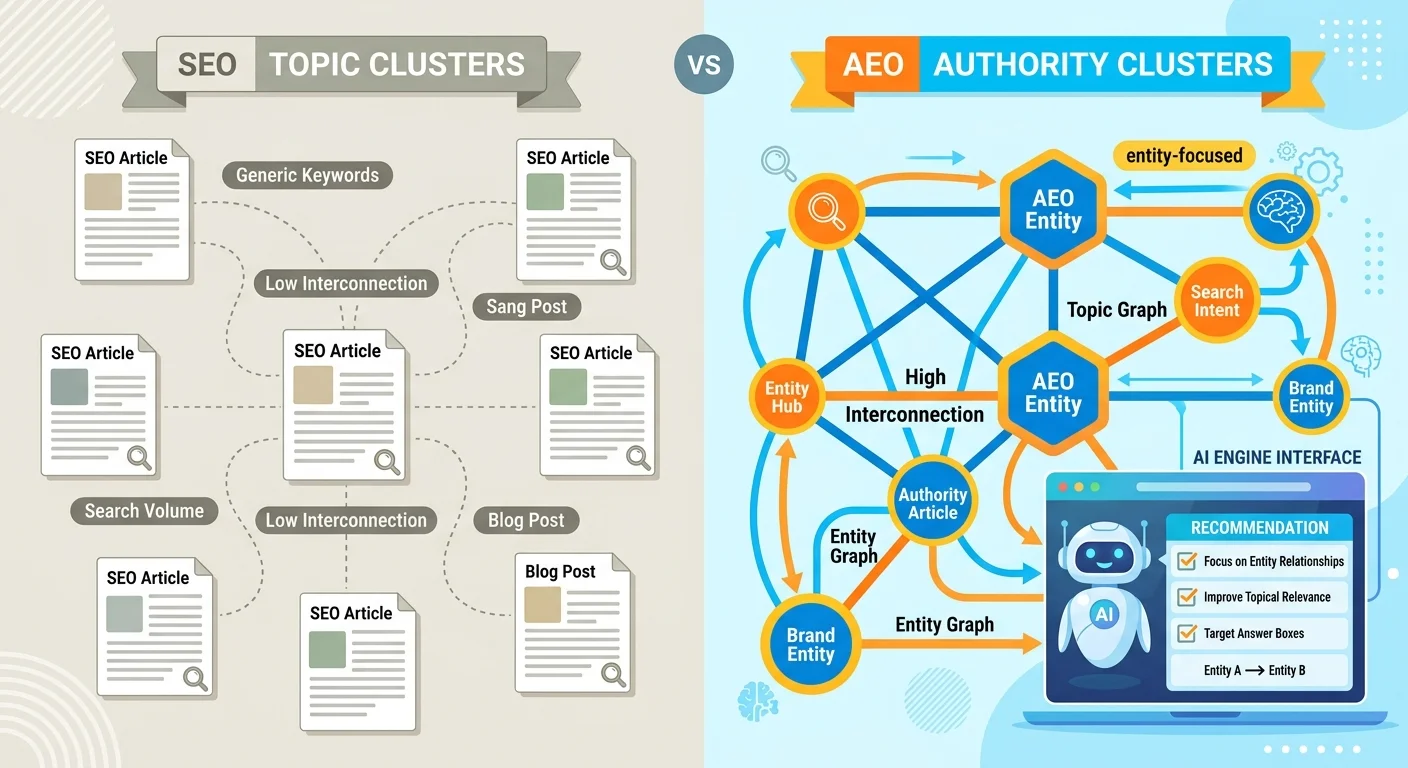
Entity trust is the foundation of AI recommendations.
AI doesn't recommend businesses because they wrote one great article. It recommends businesses because it trusts their entity — the machine-readable identity AI uses to determine who you are, what you do, and whether you're qualified to be named as the answer.
The Authority Sibling Rule builds entity trust by proving you're not guessing. You're systematically documenting your expertise.
Semantic Density and Citation Velocity
AI measures two things when it evaluates your content library:
Semantic density — how thoroughly you've covered a topic across multiple articles
Citation velocity — how often authoritative sources reference or validate your content
Semantic density comes from sibling content. When you publish five interconnected articles about sciatica management, AI sees depth. When you publish one article and move on, AI sees surface-level coverage.
Citation velocity comes from external validation. When institutional sources (medical journals, professional organizations, clinical guidelines) support the claims in your sibling articles — AI gains confidence that your content isn't just well-written. It's accurate.
Google's research on query understanding confirms that modern AI systems go beyond keywords to understand the relationships between entities and concepts in your content. HubSpot's data-backed analysis of topic clusters and SEO performance shows how organizing content into interconnected clusters improves search visibility and establishes authority.
Most chiropractors optimize for neither. They write content hoping patients will find it. AI never does.
Internal Linking as an Authority Signal
Internal linking isn't just navigation. It's proof of relationship.
When your sciatica treatment article links to your sciatica diagnosis article, your exercise therapy article, and your patient timeline article — AI sees a semantic family. It understands that these articles aren't standalone pieces. They're part of a larger knowledge structure.
That's what separates authority content from blog filler.
Search engines use internal links to understand site hierarchy and distribute authority. AI uses internal links to validate entity trust. Moz's internal linking strategy guide explains how internal links distribute authority and establish a site's information hierarchy for search engines — and the same principles apply when AI engines evaluate your content structure.
If your content isn't linked horizontally (sibling to sibling) and vertically (child to parent) — AI assumes it's not authoritative.
Most chiropractors link their blog posts to their homepage or their contact page. That's not an authority signal. That's a dead end.
The Authority Sibling Rule forces every article to link to its siblings. That's how AI learns you didn't just write about a topic once. You built a library around it.
Why Most Chiropractors' Content Strategies Fail
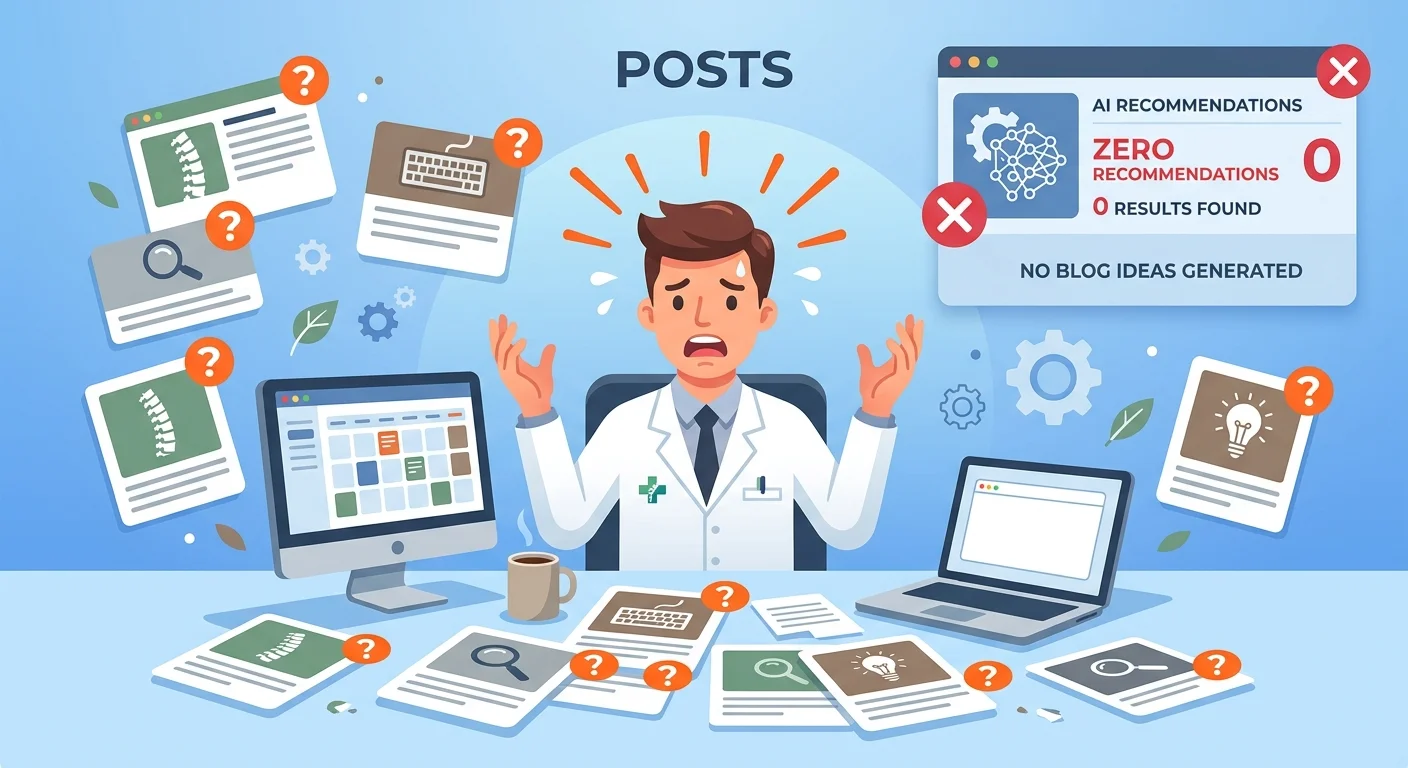
Most chiropractors' blog sections are content graveyards.
Thirty posts. Forty posts. Fifty posts. None of them connected. None of them proving depth. None of them building authority.
AI skips right over them.
The Shotgun Approach
Here's what most chiropractors do:
- Write one article about back pain
- Write one article about sports injuries
- Write one article about prenatal chiropractic
- Write one article about wellness care
- Write one article about nutrition
Five topics. Five articles. Zero depth.
That's not a content strategy. That's a shotgun approach. And AI doesn't recommend businesses that spray topics across their blog without proving they're authorities in any of them.
You're not building entity trust. You're building noise.
The Authority Sibling Rule flips this. Instead of covering 20 topics once, you cover 4 topics five times each. You prove depth. You prove expertise. You prove you're the authority AI should recommend.
Why Content Audits Keep Finding the Same Problem
I've run content audits on chiropractors who were convinced their blog was in good shape. Same pattern every time:
- 40+ published articles
- Zero sibling clusters
- No internal linking strategy
- No thematic parents
- No semantic density
Their blog looked active. AI saw it as random.
If your content library doesn't follow the Authority Sibling Rule — every new article you publish is wasted effort. You're not compounding authority. You're diluting it.
How to Build an Authority Cluster (The Right Way)
Quick pause before we go any further.
If you're thinking you'll just knock this out yourself after skimming this — stop. You won't. Not because it's complicated. Because systematic execution across months doesn't survive contact with your schedule.
Building authority sibling architecture isn't hard because the concept is complicated. It's hard because you have to stay on it. Month after month. Most practices can't. Not because they're lazy — because running a business crowds out everything that doesn't feel urgent today.
That said — here's the framework.
Step 1: Identify Your Thematic Parent Topics
Start with the 3–5 core conditions or services your practice is known for.
Not 15 topics. Not "everything chiropractic." The 3–5 areas where you want to be the answer AI recommends.
Examples:
- Sciatica management
- Sports injury rehabilitation
- Prenatal and postpartum chiropractic care
- Chronic headache and migraine treatment
- Posture correction and ergonomic support
These are your thematic parents. Every sibling article you write will support one of these.
Step 2: Map 5–7 Sibling Articles Per Parent
Each thematic parent needs depth. That means 5–7 sibling articles that cover every angle of the topic.
Don't write one article about sciatica. Write:
| Thematic Parent | Sibling Article Topics |
|---|---|
| Sciatica Management | What causes sciatica (and why most treatments fail) |
| Sciatica Management | How chiropractors diagnose sciatica vs. other nerve conditions |
| Sciatica Management | Manual adjustment techniques for sciatica relief |
| Sciatica Management | Exercise therapy protocols for sciatica patients |
| Sciatica Management | Patient timelines: how long sciatica treatment takes |
| Sciatica Management | When surgery becomes necessary (and when it doesn't) |
| Sciatica Management | Preventing sciatica recurrence after initial treatment |
Seven articles. All siblings. All reinforcing each other. All proving you're not guessing — you're the authority.
Step 3: Link Siblings to Each Other
Every sibling article must link to at least 3–4 other siblings in the same cluster.
This is non-negotiable. Internal linking is how AI understands semantic relationships.
When your sciatica treatment article links to your sciatica diagnosis article, your exercise therapy article, and your patient timeline article — AI sees a knowledge structure. It understands that these aren't random posts. They're part of a larger authority system.
Most chiropractors skip this step. They write the articles and publish them without ever connecting them. AI sees isolation. Not authority.
Step 4: Maintain and Expand Over Time
Authority compounds. The first sibling article you publish adds a small signal to your entity trust. The fifth article strengthens it. The tenth article locks it in.
But authority also decays if you stop.
If you publish five sciatica articles in January and then abandon the cluster for six months — AI assumes the topic wasn't that important to you. It downgrades your authority signals.
Building an authority cluster isn't a one-time project. It's an ongoing execution system. That's why most practices can't do it themselves. They start strong. Then life happens. Then the blog goes silent for three months. Then AI forgets you existed.
The practices that own AI recommendations don't just build clusters. They maintain them. They expand them. They prove — month after month — that they're still the authority.
Frequently Asked Questions
How is the Authority Sibling Rule different from traditional topic clusters?
Topic clusters were built for Google's ranking algorithm. They're about organizing keywords and pushing authority to a pillar page.
The Authority Sibling Rule is built for AI's entity trust model. It's about proving depth through interconnected content that signals systematic expertise — not keyword coverage.
AI doesn't rank content. It recommends businesses. The Authority Sibling Rule builds the semantic relationships AI uses to make those recommendations.
How many sibling articles do I need to publish?
Minimum: 5 articles per thematic parent topic.
Target: 7–10 articles.
More depth beats more topics. It's better to publish seven interconnected articles about sciatica management than to publish one article each about seven different conditions.
AI rewards businesses that prove they own a topic — not businesses that touched on every topic once.
Does internal linking matter more than backlinks for AI?
Internal linking builds entity trust. Backlinks build domain authority.
Both matter. But if you're choosing where to invest time — entity trust wins. AI doesn't recommend your site because it has a high domain authority score. It recommends you because it trusts your entity.
Internal linking is how AI learns the structure of your knowledge. Backlinks are how it validates you're credible. One proves depth. The other proves trust.
Start with sibling architecture. Then build backlinks.
Can I fix my existing standalone blog posts using the Authority Sibling Rule?
Yes — but it requires retrofitting.
Audit your existing blog posts. Identify which ones share a thematic parent. Group them into sibling clusters. Then:
| Retrofit Step | Action Required |
|---|---|
| 1. Audit existing content | Identify articles that share thematic parents |
| 2. Group into clusters | Organize salvageable articles into sibling families |
| 3. Add internal links | Connect siblings horizontally to each other |
| 4. Fill content gaps | Write new articles to deepen incomplete clusters |
| 5. Archive orphans | Remove or hide posts that don't fit any cluster |
Most practices have 10–15 salvageable articles buried in 40+ total posts. The rest are noise. AI doesn't need to see them.
Retrofitting takes longer than building sibling architecture from scratch — but it's worth it if you've already published decent content.
What's the biggest mistake chiropractors make with blog content?
They treat their blog like a publishing calendar instead of an authority system.
Most chiropractors write one post a month because someone told them "you need to blog for SEO." They pick a random topic, write 800 words, hit publish, and move on.
That's not strategy. That's checking a box.
AI doesn't reward consistency. It rewards depth. If you publish one article a month for 12 months — and none of those articles are siblings — you've just told AI you're not an authority on anything. You're a generalist who writes sometimes.
The Authority Sibling Rule forces you to think architecturally. Depth first. Breadth later.
Can't I just write one really, really good article?
One article — no matter how good — cannot establish entity trust.
Entity trust is built through patterns. AI needs to see proof you didn't just research a topic once. It needs to see that you understand the topic at every level — causes, diagnosis, treatment, timelines, outcomes, edge cases.
That requires multiple articles. Not one.
The "one great article" strategy works for virality. It doesn't work for authority. AI doesn't recommend businesses because they went viral once. It recommends businesses because they systematically prove expertise over time.
Is this just a fancy new name for topic clusters?
No.
Topic clusters are about keyword organization. Authority sibling architecture is about entity trust.
Topic clusters optimize for Google's ranking algorithm. Authority sibling architecture optimizes for AI's recommendation engine.
They look similar on the surface. The execution is completely different.
Conclusion
AI doesn't recommend isolated content. It recommends businesses that prove they're authorities.
The Authority Sibling Rule is how you prove it. Not by writing more blog posts. By building a content library where every article reinforces the next. Where semantic relationships are clear. Where entity trust compounds every month instead of resetting with every random post.
Your competitor isn't getting recommended because they're better writers. They're getting recommended because their content is architecturally organized to prove they're authorities. Yours isn't.
That gap widens every month you keep publishing standalone articles. The AI Authority Engine doesn't just write sibling content. It builds the entire authority architecture — thematic parents, sibling clusters, internal linking systems — so AI sees you as the expert, not as another blog that publishes sometimes.
You can keep writing blog posts the way you have been. Or you can start building an authority library. One gets ignored. The other gets recommended.
Sound fair?
If you're not sure whether your current content is architecturally invisible or authority-driven — let's find out. The AI Visibility Check runs your business through ChatGPT, Gemini, and Grok to see what AI actually says when someone asks who the best chiropractor in your area is. Fifteen minutes. Real data. No assumptions.
Want to see if your blog posts are building authority — or just collecting dust? Run your AI Visibility Check.
Or if you're ready to build a real content library — the kind AI actually recommends — AEO Content Writing Services handles the architecture, the execution, and the systematic depth most practices can't maintain on their own. Understanding what AI sees when it evaluates your authority is the first step toward fixing it.
Want to see if your blog posts are building authority — or just collecting dust? Run your AI Visibility Check.

621 Enterprises, Inc. | Copyright 2026 | All rights reserved