


How AI Keyword Research Helps Chiropractors Find Hidden Opportunities
 by Gerek Allen ~ Last Updated: December 9th, 2025 ~ 5 Min Read
by Gerek Allen
~ Last Updated: December 9th, 2025 ~
~ 5 Min Read ~
You're great at what you do. Every day, you help people get out of pain and live healthier lives. But getting those people to walk through your door in the first place? That's a completely different challenge.
You know you need to show up on Google, but SEO feels like a complicated puzzle. Using AI keyword research, chiropractors are discovering a smarter way to connect with the patients who need them most.
This new approach is about finding the real questions people are asking online. It moves beyond simple guesses to uncover what potential patients truly need. This method helps your chiropractic website speak directly to those looking for help.
You've likely spent hours guessing what keywords might work. Phrases like "chiropractor near me" or "back pain doctor" are obvious. The problem is, they are also incredibly competitive, making it hard for your clinic to stand out in a crowded digital space.
The old way of doing chiropractic SEO doesn't work so well anymore. It focuses too much on these broad, expensive SEO keywords. It fails to capture the specific needs of someone in your community who is genuinely looking for a solution to their pain.
.
Why Your Current SEO Isn't Attracting New Patients

Let's be honest. Your website might look great, but if it's not showing up when a potential patient wakes up in pain and searches for help, it's not doing its job. The traditional approach to SEO for chiropractors has become a guessing game. Your online visibility suffers when your seo strategy is not aligned with how real people search.
You might target "sciatica treatment," but what about the person searching "sharp pain down my leg when I stand up?" They don't know it's sciatica yet; they just know they're in pain. Your chiropractic content needs to meet them at this crucial point of discovery.
This older method often overlooks what experts call search intent. A study by Backlinko shows that almost 92% of all keywords are long-tail keywords, which are longer and more specific phrases. People who use these longer phrases are often much closer to making a decision and wanting to book an appointment.
The growth of your chiropractic clinic depends on connecting with these motivated people. Trying to guess all those specific phrases manually is nearly impossible and inefficient. This is where an intelligent SEO tool can dramatically improve search engine rankings.
What is AI Keyword Research for Chiropractors?
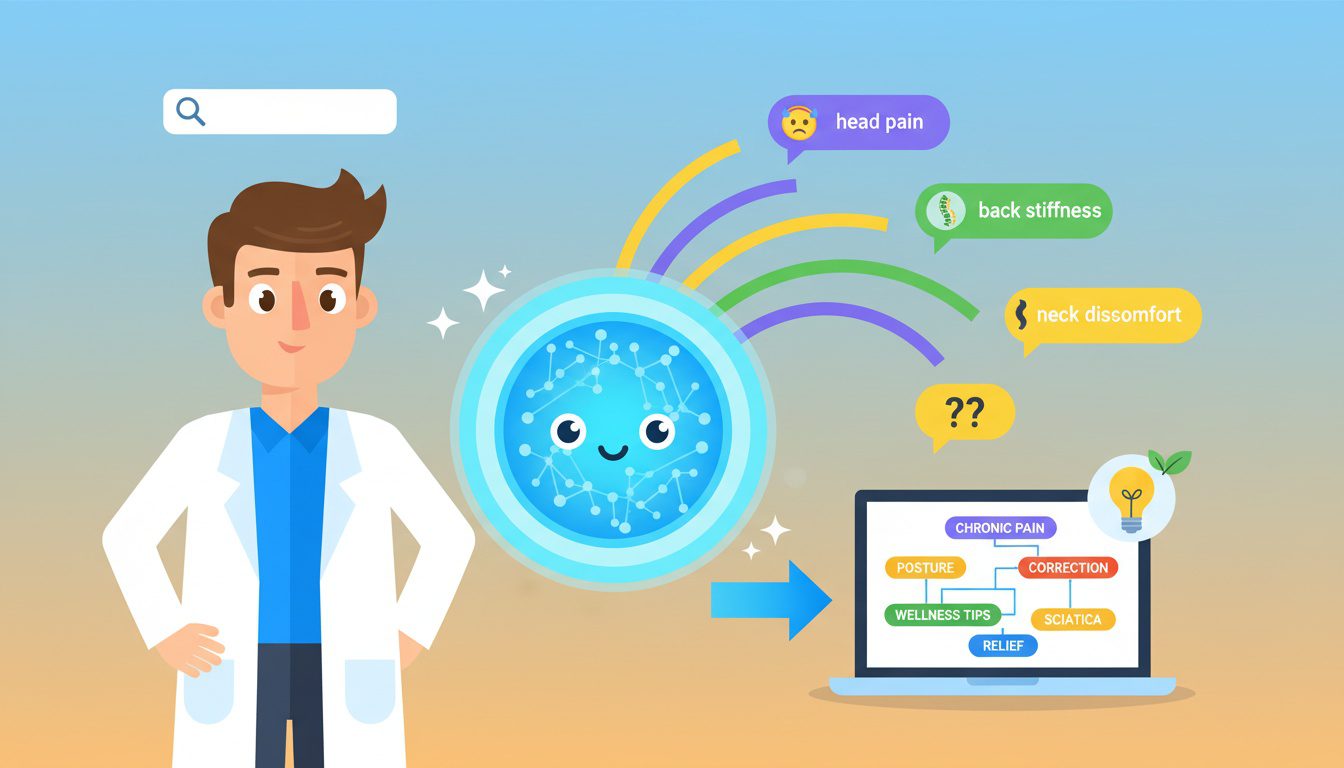
This isn't about a futuristic robot taking over your marketing. Think of it as having a smart assistant who can instantly understand how your potential patients think and talk about their health problems. AI-powered tools can analyze huge amounts of data from Google Search, forums, and social media.
AI spots patterns in the language people use when they describe their pain or look for solutions. An AI agent can process far more information than any human could, providing deep insights into patient behavior. This is a game-changer for any chiropractic practice looking to grow.
Instead of just giving you a list of single keywords, AI helps you discover entire topics and clusters of questions. It goes beyond the obvious and uncovers how people describe their issues in their own words. This process uses Natural Language Processing (NLP), which helps the technology understand human language with all its variations.
This allows you to stop guessing and start making data-driven decisions. You get a clear roadmap of the exact phrases and questions you need to address on your chiropractic website. This is what helps you connect with people on a much more personal and effective level.

NEED MORE CLIENTS?
Free conversion-focused analysis uncovers the 3 biggest problems killing your bookings — we'll walk you through your results personally

Discovering the Hidden Questions Patients Are Asking

What if you could understand the thoughts of people in your area who are considering a chiropractor?
With AI, you practically can. AI keyword tools can surface the exact questions people are typing into the search engine before they even know they need chiropractic services.
For instance, your current SEO may target "headache relief." But AI can find related questions that real people are asking, revealing a much richer set of opportunities.
Here are some examples of what patients are actively searching for:
- "Can a chiropractor help with constant tension headaches?"
- "Is it safe to get my neck adjusted for migraines?"
- "What causes headaches at the base of the skull?"
- "How to treat a herniated disk without surgery?"
- "Best treatment for sports injuries affecting the shoulder."
Each of these questions represents a person actively searching for help and better pain relief. These are high-intent search queries. By creating content that directly answers these questions, you position your practice as the trusted expert they've been looking for.
This simple shift changes everything. Your website content transforms from talking about your chiropractic service to solving their specific problems. You start attracting patients who feel you already understand their situation before they even pick up the phone.
A Simple How-To Guide to Get Started
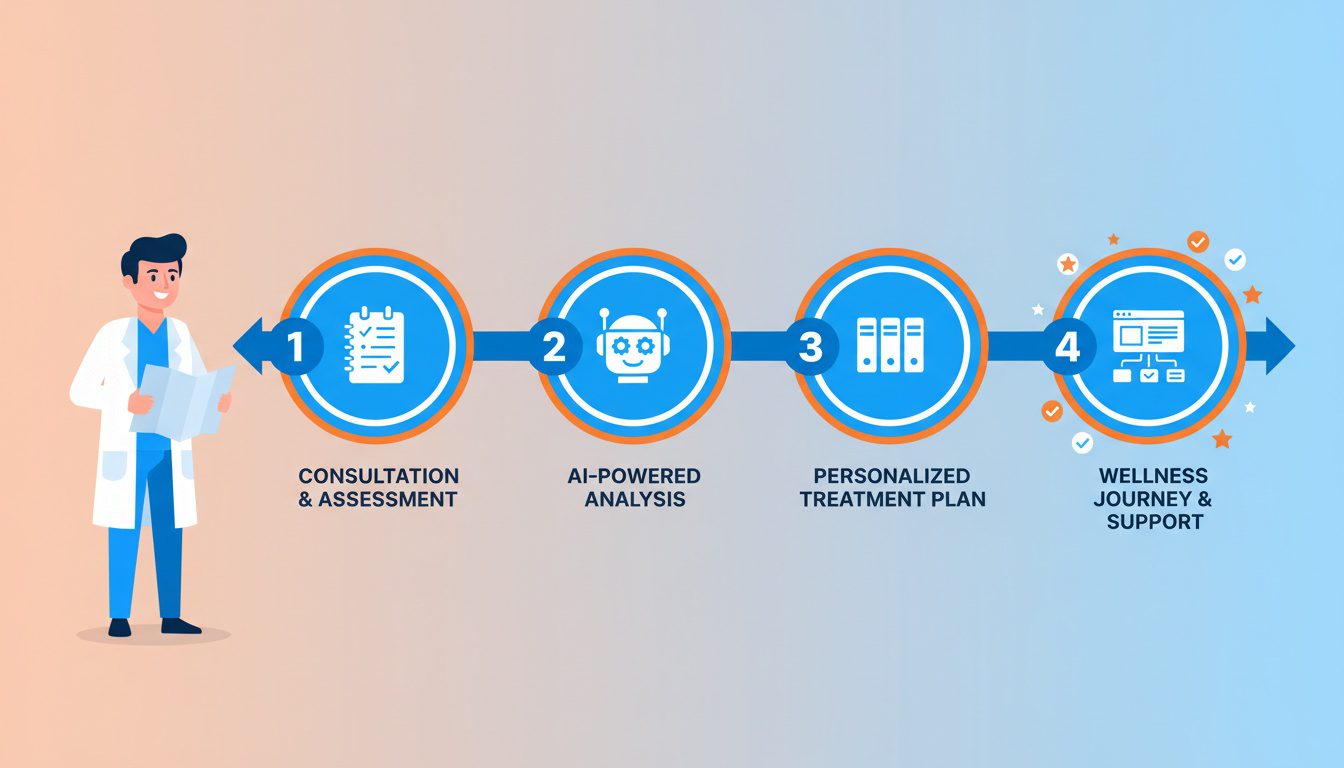
This might sound complex, but getting started is easier than you think. You don't need to be a tech expert to improve your online presence. You just need a new way of thinking about how people find your chiropractic practice.
Step 1: Start With Your Main Topics
Think about the main conditions you treat every day. These are your "seed phrases" or seed topics. Don't overthink it; just list the most common reasons patients come to see you.
Your list of these seed phrases might look something like this:
- Lower back pain
- Neck pain
- Sciatica
- Headaches
- Sports injuries
- Car accident recovery
- Massage therapy
- Chiropractic adjustment
These broad topics are your starting point. They form the foundation for what the AI tools will work with to find more detailed chiropractic keywords. This initial list guides the entire research process.
Step 2: Let an AI Tool Do the Heavy Lifting
Now, you take your seed topics and put them into an AI-powered keyword research tool. Many free SEO tools and paid platforms offer these features. These tools analyze search data from Google to find related keywords and, more importantly, the questions people are asking.
Unlike the traditional Google Keyword Planner, which focuses heavily on what advertisers on Google Ads are bidding on, an AI SEO tool looks at organic search patterns. It provides a more holistic view of the patient journey. The tool will generate hundreds of ideas organized into categories, saving you hours of manual work.
You'll see questions, comparisons like "chiropractor vs. physical therapist for back pain," and other related searches. This gives you a complete picture of the conversations happening around your core chiropractic services. These selected keywords will have varying monthly search volumes, so focus on relevance first.
Step 3: Organize Your Findings with a Human Touch
AI is powerful, but it's not a substitute for your own expertise. The next step is to look through the SEO keyword ideas the AI has generated. Your job is to find the gems and group them into logical themes for your chiropractic content.
For example, under the "lower back pain" topic, you might find these questions:
- "Why does my back hurt when I bend over?"
- "Stretches to relieve lower back stiffness."
- "Is a chiropractor or a massage better for a herniated disk?"
- "Can a chiropractor help with chronic lower back pain?"
You can group all these into a "Lower Back Pain" cluster. This tells you that you should create a detailed page or blog post on your site that addresses all these issues. It becomes the ultimate resource for anyone in your area with lower back pain, which can significantly improve search engine rankings.
Step 4: Connect Keywords to Your Services
The final step is to map these keyword clusters directly to your service pages or to new blog content. If you found a lot of questions about chiropractic care during pregnancy, but you don't have a page on your site about it, you just uncovered a huge opportunity. You can create service descriptions for a new page dedicated to prenatal chiropractic care.
This is a good place to refine your existing pages, too. Check the meta tag for each page and make sure it aligns with the new, more specific keywords you've found. This helps the search engine understand what your page is about.
The goal is to have a piece of content on your website that perfectly matches what a potential patient is searching for. When someone finds an article that answers their specific question in detail, trust is built instantly. That trust is what turns a searcher from a website visitor into a new patient on a treatment plan.
Putting Your New Keywords Into Action on Your Website
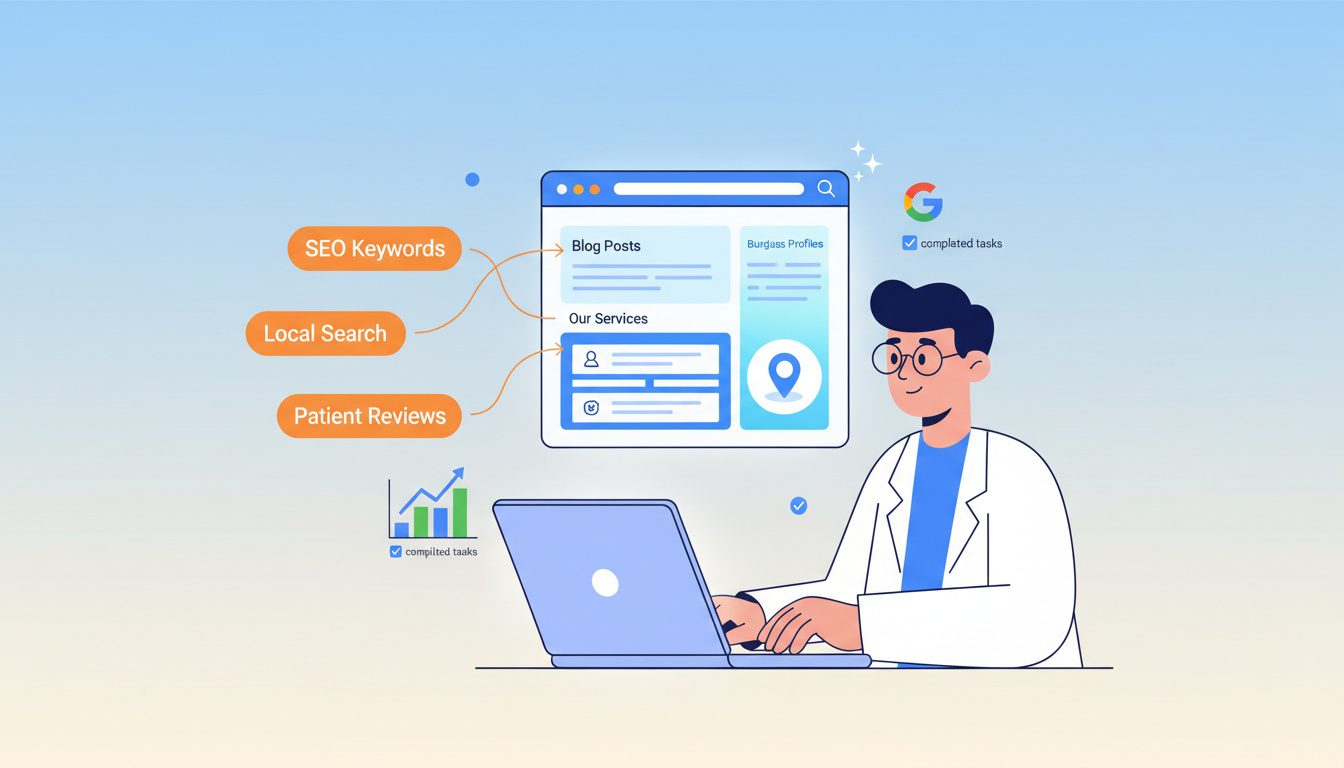
Finding these new keywords is great, but they won't help your business profile if they just sit in a spreadsheet. You need to put them to work on your website. There are a few key places where they can have the biggest impact and lead to higher search engine rankings.
First, create genuinely helpful blog content. Take the questions you discovered and write blog posts that answer them thoroughly. A post titled "Can a Chiropractor Help with Vertigo?" that explains the causes and treatment options is much more effective than a generic post about wellness.
Second, update your existing service pages. Weave these new, more specific phrases and questions into the text naturally. For example, on your neck pain page, add a section that addresses questions about "text neck" or headaches that start in the neck, a common issue for many patients online.
Finally, use these topics on your Google Business Profile. Your GBP is a powerful tool for local SEO and is often the first interaction a person has with your chiropractic clinic online. You can create short posts or use the Q&A feature to answer some of the common questions you found, helping you dominate local search results.
By regularly updating your Google Business account with relevant information and keywords, you send strong signals to Google's search algorithm. This tells the search engines that your practice is an authority on these topics in your local area. This action alone can significantly improve your position in local searches.
Ready to See How We Fix Chiropractic Websites?
We've transformed 150+ service-based websites using our proven 4-step system. See exactly how we combine premium design with conversion science.
Measuring Your Success for Higher Search Engine Rankings

Implementing an AI-driven SEO strategy is the first step; the next is tracking your results. You need to know if your efforts are paying off and leading to more patients. Monitoring your engine rankings for your selected keywords is a good place to start.
You can use various SEO tools to track how your website ranks for the specific questions and phrases you are targeting. Look for upward trends over time, as SEO is a marathon, not a sprint. A steady climb in the search engine results pages is a sign of success.
Beyond rankings, look at your website's traffic and conversions. Are more people visiting your blog posts and service pages? Most importantly, are more people clicking the button to book an appointment or calling your office? This is the ultimate measure of a successful chiropractor seo campaign.
| Keyword Focus | Broad, high search volume keywords (e.g., "chiropractor") | Specific, long-tail questions (e.g., "chiropractic adjustment for shoulder pain") |
| Content Goal | Rank for competitive terms | Answer patient questions and build trust |
| Primary Tool | Google Keyword Planner | AI SEO tools that analyze search intent |
| Effort Level | High effort for slow gains against local competitors | Smarter effort targeting less competitive, high-intent searches |
| Result | Struggles to stand out and attract qualified patients | Attracts patients actively searching for your specific chiropractic service |
By shifting your focus, you can improve search engine visibility and attract more of the right patients. It's about working smarter, not harder, to grow your practice. This is the future of engine optimization for the healthcare industry.
Frequently Asked Questions About AI Keyword Research Chiropractors
How does AI keyword research differ from traditional keyword research tools?
Traditional keyword tools like Google Keyword Planner show search volumes and competition for keywords you already thought of. AI keyword research goes further by: understanding semantic relationships to discover related terms you'd never consider ("desk posture pain" connects to "tech neck," "forward head posture," "text neck syndrome"), analyzing competitor content to identify keywords they rank for that you're missing, predicting emerging trends before they appear in standard tools (spotting rising interest in "remote work ergonomics" early), generating hundreds of long-tail variations based on user intent patterns, clustering keywords by topic to reveal content gaps in your website, and understanding natural language queries people actually use ("why does my lower back hurt when I sit" vs. "lower back pain causes"). AI tools like ChatGPT, Jasper, or Surfer SEO can analyze your practice focus and generate comprehensive keyword lists in minutes that would take hours manually.
What types of keyword opportunities do chiropractors typically miss without AI research?
Commonly overlooked keyword opportunities include: Question-based queries people ask ("can chiropractors help with headaches," "is chiropractic safe during pregnancy," "how often should I see a chiropractor"). Symptom-specific long-tail keywords ("sharp pain between shoulder blades," "numbness in left arm after sleeping," "can't turn neck to right side"). Condition + activity combinations ("sciatica and running," "back pain from gardening," "neck pain after car accident"). Local + specialty hybrids ("sports chiropractor Capitol Hill," "prenatal chiropractic downtown Seattle"). Alternative terminology patients use ("back cracking doctor," "spine doctor," "bone doctor for back") vs. formal "chiropractor." Competitor weaknesses—keywords competitors rank poorly for that you could dominate. Seasonal opportunities ("snow shoveling back pain" spikes in winter, "gardening injuries" in spring). AI identifies these by analyzing massive datasets of actual searches, revealing real patient language and concerns you'd never brainstorm alone.
What are the best AI tools for chiropractic keyword research?
Effective AI keyword research tools include: ChatGPT/Claude (free-$20/month)—prompt it to generate keyword ideas based on your specialty: "Generate 50 long-tail keywords related to sports chiropractic for athletes with shoulder injuries." Surfer SEO ($69-219/month)—analyzes top-ranking content and suggests semantic keywords to include. SEMrush/Ahrefs AI features ($99-$399/month)—premium tools with AI-powered keyword clustering and content gap analysis. AnswerThePublic ($99/month)—visualizes questions people ask about topics, great for FAQ content. AlsoAsked ($15-99/month)—shows "People Also Ask" questions for comprehensive coverage. Google's AI Overviews (free)—analyze which searches trigger AI summaries to understand important topics. MarketMuse ($149-599/month)—AI content intelligence showing keyword opportunities competitors miss. Start free/cheap: use ChatGPT for brainstorming + Google Search Console (free) to see what you already rank for, then invest in paid tools as you prove SEO value.
How do I use AI-generated keywords to actually improve my chiropractic website's rankings?
Strategic implementation matters more than just finding keywords: Step 1—Organize by intent: Group keywords into informational (blog content), navigational (service pages), and transactional (booking pages). Step 2—Assess competition: Use AI to analyze difficulty—target low-competition long-tail keywords first for quick wins. Step 3—Map to content: Assign keyword clusters to specific pages or identify gaps requiring new content. Step 4—Optimize existing pages: Add AI-discovered semantic keywords naturally to current service pages and blog posts without keyword stuffing. Step 5—Create new content: Write blog posts targeting question-based keywords AI identified ("Can Chiropractic Help With Migraines?"). Step 6—Monitor and adjust: Track rankings for target keywords monthly; AI tools can automate this monitoring and suggest adjustments. Pro tip: Focus on 10-20 primary keywords initially rather than trying to rank for 500 at once. Master ranking for a small set, then expand systematically. AI helps identify which 10-20 offer the best opportunity-to-difficulty ratio for your specific practice.
Conclusion
Staying visible online feels like a constant battle for many chiropractors. It doesn't have to be so difficult. By moving away from old SEO tactics, you can start connecting with people in a more meaningful way.
The smart use of AI keyword research chiropractors are using is not just about a Google keyword; it's about understanding people and their needs for pain relief. It is empathy at scale. This lets you meet patients exactly where they are, with the answers they need, right when they are in pain and searching for a solution.
When you do that, you don't just get more clicks. You get more patients walking through your door and a chance to do what you do best: help people feel better.
Free Website Conversion Analysis — Get a personal walkthrough showing the 3 biggest problems costing you clients (plus instant case study).

Gerek Allen
Co-Owner iTech Valet
Entrepreneur, patriot, CrossFit junkie, IPA enthusiast, loves to travel to tropical destinations, and knows way too many movie quotes.


About iTech Valet
iTech Valet specializes in web design and content marketing for online entrepreneurs who want to share their expertise.
Services Include:
- Web Design
- Graphic Design
- Sales Copy
- Funnel Building
- Authority Sites
- Membership Sites
- Course Creation
- Email Systems
- Content Marketing
- Competitive Analysis
- Tech Integrations
- Strategic Planning
NEED MORE CLIENTS?
Free conversion-focused analysis uncovers the 3 biggest problems killing your bookings — we'll walk you through your results personally

621 Enterprises, Inc. | Copyright 2022 | All rights reserved