


What Are the Best Chiropractic Pricing Models for My Practice?
 by Gerek Allen ~ Last Updated: December 10th, 2025 ~ 11 Min Read
by Gerek Allen
~ Last Updated: December 10th, 2025 ~
~ 11 Min Read ~
The best chiropractic pricing model depends on your practice goals, patient demographics, and revenue targets. Per-visit fees work if you want maximum flexibility. Prepaid packages create upfront cash flow and get patients to actually commit. Membership plans? They're the holy grail for predictable recurring revenue and keeping patients around long-term.
Here's the thing most chiropractors don't wanna hear...
Your pricing model impacts everything. Revenue predictability. Patient retention. Practice valuation. Even how much you stress about money on Sunday nights.
And most docs pick their pricing strategy based on fear, gut feelings, or whatever the practice down the street charges.
That's not a strategy. That's gambling with your livelihood.
The chiropractic care market hit $1.73 billion in 2025 and is projected to reach $3.05 billion by 2030. Practices that nail their pricing model will capture that growth. Those that don't? They'll keep wondering why revenue looks like a heart monitor—up, down, up, down, constant mini panic attacks.
Now... this part matters.
This guide breaks down the three primary pricing models—per-visit fees, prepaid packages, and membership plans—with real numbers, actual pros and cons, and a decision framework so you can stop guessing and start knowing.
We'll also cover how to implement your chosen model without running into compliance nightmares or ticking off your existing patients.
Sound fair? Let's get into it.
Understanding the Three Core Chiropractic Pricing Models
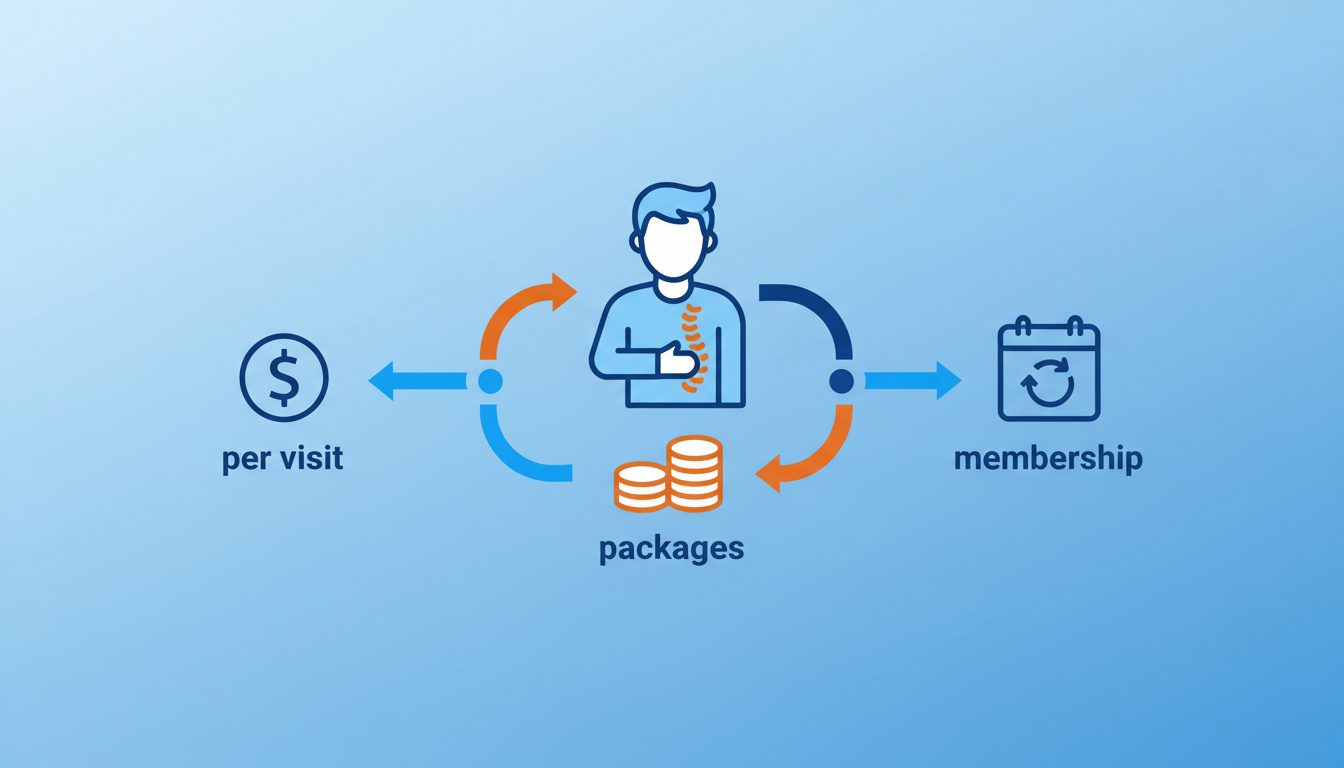
Before you can pick the right pricing model, you gotta understand what each one actually looks like in the real world.
These aren't just different ways to collect money. They fundamentally change how patients see your value, how often they show up, and how stable your bank account becomes.
Per-Visit (Fee-for-Service) Pricing
This is the traditional model most chiropractors default to. It's what you probably started with.
Patients pay a set fee for each visit. Simple. Transparent. No commitment required on either side.
Typical per-visit rates:
- Initial consultation (includes exam, health history, first adjustment) - $100-250
- Follow-up adjustment - $30-100
- Specialized treatments (decompression, cold laser) - $50-300+
The national average for a standard adjustment falls between $65-100 without insurance. Geographic location matters a ton—practices in Los Angeles might charge $213 per session while Austin averages closer to $37. (Kinda wild, right?)
When per-visit makes sense:
- New practices still building a patient base
- Areas with high patient turnover (college towns, tourist spots)
- Practices seeing primarily acute care patients
- Insurance-heavy practices where payers dictate what you get
Here's the kicker though...
Revenue is unpredictable. No-shows hurt. And patients often disappear when symptoms improve—even when you both know they'd benefit from continued care.
Prepaid Package Pricing
Packages bundle multiple visits at a discounted rate, paid upfront.
This creates immediate cash flow and signals patient commitment to their care plan. They've got skin in the game now.
Common package structures:
| 6 visits | $300-450 | $50-75 | 10-15% |
| 12 visits | $500-900 | $42-75 | 15-25% |
| 24 visits | $900-1,400 | $38-58 | 20-33% |
Practices offering structured care plans see better treatment adherence than those relying solely on per-visit pricing. Makes sense—people follow through when they've already invested.
When packages make sense:
- Corrective care phases requiring consistent visits
- Patients with specific treatment goals and timelines
- Practices wanting to reduce accounts receivable headaches
- Cash-based practices avoiding insurance complications
The risk? Some states have strict regulations about prepaid care. And patients who don't use all their visits may feel ripped off—creating negative word-of-mouth you definitely don't want.
Membership (Subscription) Pricing
Alright, quick reality check: this is where the industry is headed.
Patients pay a recurring monthly fee for a set number of visits plus additional benefits. Think gym membership meets healthcare.
Typical membership structures:
| Basic | $50-69 | 2 visits | $25-35 |
| Standard | $79-99 | 4 visits | $20-25 |
| Premium | $129-149 | Unlimited | $15-20* |
*Based on average utilization
The Joint Chiropractic built a $569,571 average revenue per clinic on this model. Their wellness plans bring per-visit costs down to less than $23—making regular care accessible while generating predictable monthly revenue.
When memberships make sense:
- Wellness-focused practices emphasizing maintenance care
- Practices wanting predictable recurring revenue (hello, peace of mind)
- Cash-based or hybrid practices reducing insurance dependence
- Practitioners planning to scale or eventually sell their practice
The challenge? Memberships require systems—automated billing, visit tracking, clear cancellation policies. Without proper infrastructure, they create administrative headaches that'll make you wish you'd stuck with per-visit.
Why Your Pricing Model Matters More Than You Think

Your pricing model isn't just about what you charge. It shapes patient behavior, practice operations, and long-term financial health.
Let me show you what I mean with some numbers that'll probably keep you up tonight. (Kidding... mostly.)
The Patient Retention Connection
Here's a stat that should make you uncomfortable.
Up to 25% of patients drop out before completing their care plan.
One in four. People who started treatment with you won't finish. And you know they need to.
Per-visit pricing makes this worse. Every visit requires a new buying decision. When symptoms improve, patients rationalize skipping appointments. "I feel better, I'll just come back if it flares up." Sound familiar?
Membership plans flip this psychology completely.
When patients prepay, they've already committed. The monthly charge creates a subtle "use it or lose it" motivation. They've invested—now they want the return on that investment.
Practices with membership programs report higher patient retention rates than those using traditional per-visit models. And better patient engagement means better outcomes.
This isn't manipulation. It's helping patients follow through on care they already know they need. You're doing them a favor.
The Revenue Predictability Factor
Running a practice on per-visit revenue is like trying to budget when you don't know your paycheck.
Some months are great. Others are brutal. And you're always one bad week away from cash flow problems that have you doing mental math at 2am.
The math on membership predictability:
Let's say you convert 100 patients to a $79/month membership.
That's $7,900 in guaranteed monthly revenue before anyone walks through the door.
Guaranteed. Every month. Regardless of weather, holidays, or random cancellations.
The traditional chiropractic business model is kinda broken when you think about it. When you know what's coming in, you can actually plan. Hire staff. Invest in equipment. Take a vacation without panicking about what's happening back at the practice.
The Practice Valuation Impact
Planning to sell your practice someday? Your pricing model directly affects what buyers will pay.
Practices with significant recurring revenue command higher valuations because they present lower risk. It's pretty straightforward actually.
Subscription-based businesses are valued higher because:
- Predictable income makes financial forecasting easier
- Recurring payments reduce dependence on constant new patient acquisition
- The model incentivizes retention, creating a loyal patient base
- Investors see recurring revenue as a sign of financial stability
Here's the thing...
A practice collecting $500,000 annually through per-visit fees is worth less than a practice collecting $500,000 with 60% coming from memberships—even though the revenue is identical.
The recurring revenue reduces buyer risk. And reduced risk means higher purchase price when you're ready to exit.
.

NEED MORE CLIENTS?
Free conversion-focused analysis uncovers the 3 biggest problems killing your bookings — we'll walk you through your results personally

How to Choose the Right Pricing Model for Your Practice
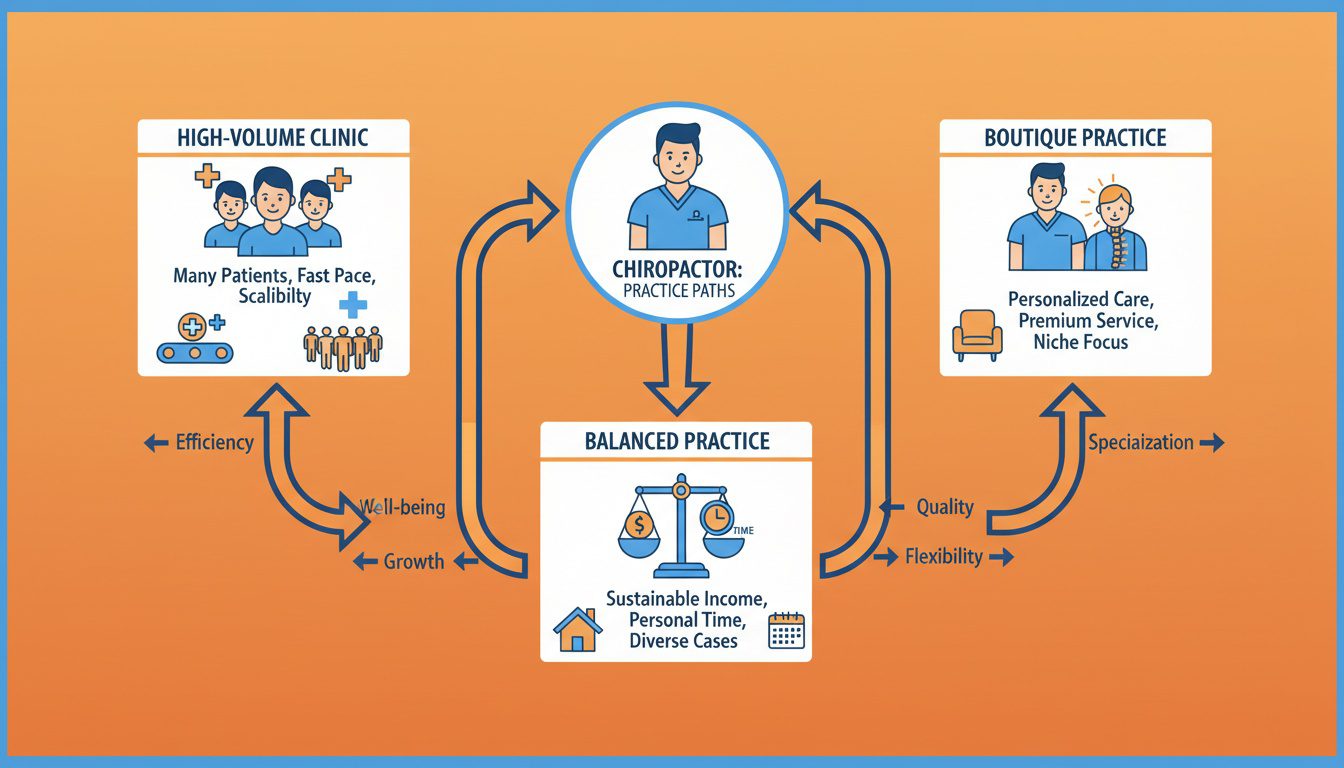
There's no universal "best" pricing model. The right choice depends on your specific situation.
Let me walk you through the decision framework that actually works.
Match Your Business Model
Chiropractic practices generally fall into three business models:
- High volume, low fee - See many patients quickly, charge less per visit
- Medium volume, medium fee - Balanced approach, average pricing
- Low volume, high fee - Fewer patients, more time per visit, premium pricing
Your pricing model must match your business model. Miss this and you're fighting yourself.
| High volume, low fee | Memberships | Volume makes low per-visit rates profitable |
| Medium volume, medium fee | Packages + Per-visit | Flexibility for different patient needs |
| Low volume, high fee | Premium per-visit | High-touch service justifies premium rates |
The Joint Chiropractic succeeds with memberships because they built a high-volume model from day one. Adjustments take 2-3 minutes. No appointments required. Walk in during open hours.
A boutique practice spending 30 minutes per patient can't make memberships work at those price points. Their model requires premium per-visit fees that reflect the personalized attention.
See the difference? You gotta know which game you're playing.
Calculate Your Cost Per Patient
Here's where most chiropractors skip the math—and regret it later.
Cost Per Patient (CPP) = Total Annual Overhead ÷ Total Annual Visits
If your overhead is $200,000 and you see 5,000 visits per year, your CPP is $40.
That means every visit under $40 loses money. Every visit over $40 contributes to profit. Pretty damn simple when you break it down.
IRS data on chiropractic sole proprietorships shows:
- Average annual revenue: $139,872
- Average annual expenses: $93,294
- Average profit margin: 33%
If your pricing model doesn't generate at least 33% margins, you're underperforming the industry average. That's not where you wanna be.
Consider Your Patient Demographics
Your patients' financial situations matter more than you might think.
A practice in an affluent suburb can successfully charge $150 per adjustment. The same fee in a working-class neighborhood creates a barrier to care—and empty appointment slots.
Before choosing your pricing model, dig into your EHR data:
- What percentage of patients have insurance vs. pay cash?
- What's the average household income in your service area?
- How many visits does your typical patient complete?
- What's your no-show and cancellation rate?
Your pricing should make care accessible to your target market while still generating profit. It's a balance, but it's not rocket science once you know your numbers.
Evaluate Your Revenue Goals
What does success actually look like for your practice? Be honest with yourself here.
If you want maximum flexibility: Stick with per-visit pricing. Patients come when they need you, pay what they owe, and leave. Simple. No strings.
If you want upfront cash flow: Emphasize packages. The immediate payment helps with cash flow, and the commitment improves treatment adherence.
If you want predictable recurring revenue: Build a membership-based practice. The monthly income transforms how you run your business and how well you sleep at night.
Most successful practices use a hybrid approach—per-visit rates as the baseline, packages for corrective care, and memberships for wellness patients. Your marketing plan should reflect which model you're emphasizing.
Implementing Per-Visit Pricing Effectively

Even if you're transitioning to packages or memberships, you need solid per-visit pricing as your foundation.
Here's how to set it right so you're not leaving money on the table.
Setting Your Fee Schedule
Your fees should be based on three factors—and only three factors:
- Regional market rates
Use FairHealth.org or ChiroCode.com to find usual, customary, and reasonable charges for your zip code and CPT codes.
Don't set fees by calling neighboring chiropractors. That's not market research—it's potentially price fixing. Plus it's a waste of your time.
- Your cost per patient
If your CPP is $40, you need to charge significantly above that to generate profit. A $50 adjustment leaves only $10 margin—not enough to sustain a business or pay yourself what you're worth.
- Your business model
High-volume practices can profit on lower margins. Low-volume practices need higher per-visit fees to compensate. Know which one you are.
Sample fee schedule structure:
| Initial consultation/exam | $100-200 | Includes health history, exam, first adjustment |
| Standard adjustment | $50-100 | Your core service |
| Specialized adjustment | $75-150 | Specific techniques, additional time |
| Therapeutic exercises | $25-50 | Per session, often bundled |
| Spinal decompression | $50-250 | Premium service |
Avoiding Dual Fee Schedule Problems
This is where chiropractors get into real trouble. Pay attention here.
You cannot legally charge different rates for the same service based on payment type.
Charging insurance patients one rate and cash patients another creates a dual fee schedule—which violates regulations in most states. Not worth the risk.
Compliant ways to offer reduced rates include:
- Time-of-service discounts - Reduced fee for paying at the time of service (check your state's requirements first)
- Financial hardship policies - Documented policy for patients demonstrating financial need
- DMPO membership - Join a Discount Medical Plan Organization like ChiroHealthUSA to legally offer structured discounts
The key is consistency and documentation. Whatever discount structure you use, apply it uniformly and keep records. Your future self will thank you when audit season comes around.
Communicating Value at Per-Visit Rates
Per-visit pricing puts pressure on every transaction to feel worth it.
Your patients need to understand the value they're receiving—not just the adjustment itself, but the expertise, diagnosis, and ongoing relationship.
Strategies that work:
- Itemize what's included - "Your visit includes assessment, adjustment, and home care recommendations"
- Compare to alternatives - The cost of one adjustment vs. ongoing medication or surgery (not even close)
- Show progress - Document and communicate improvement over time
- Offer transparent pricing - Post fees visibly, include in intake paperwork, discuss before treatment
When patients feel informed and respected, per-visit rates become way easier to accept. Nobody likes surprises when it comes to money.
Building a Profitable Package Pricing System
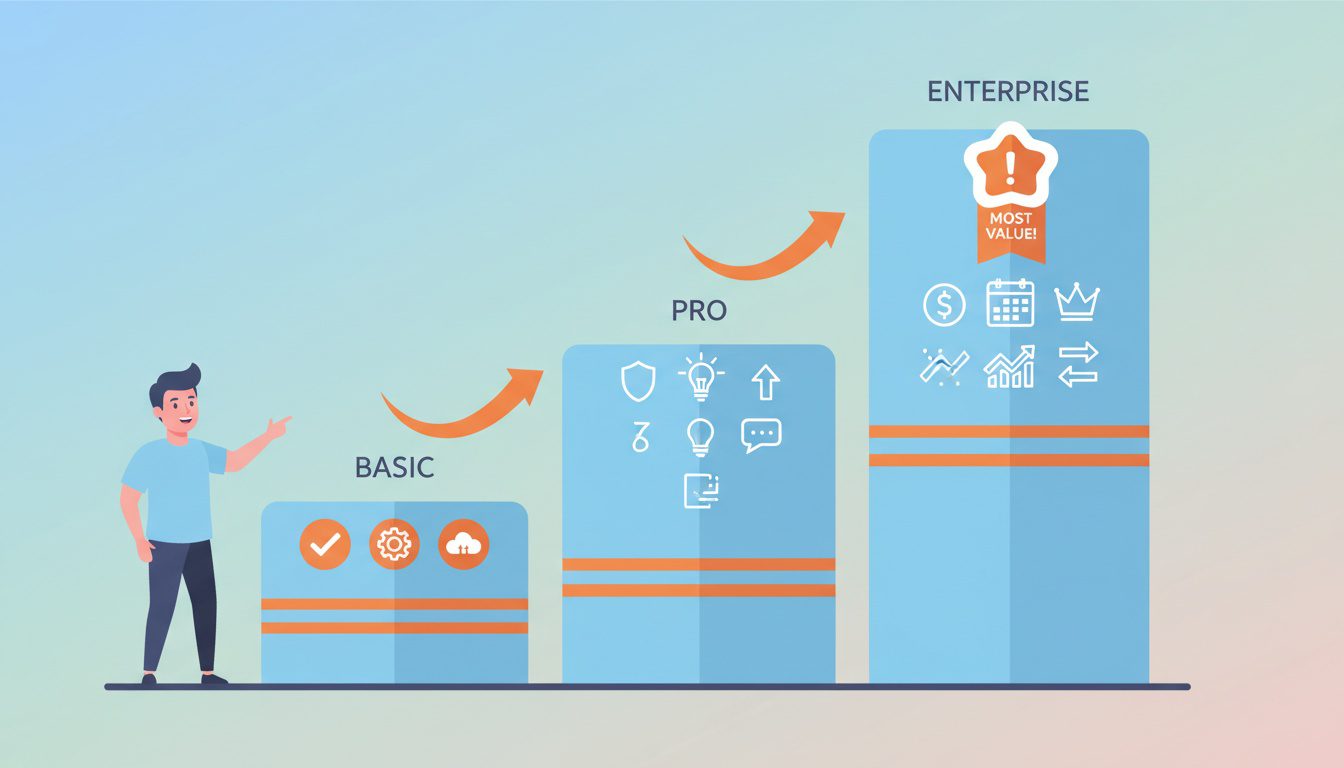
Packages bridge the gap between per-visit flexibility and membership predictability.
Done right, they create upfront cash flow while getting patients to actually complete their care plans. Win-win.
Structuring Your Packages
The goal is creating options that serve different patient needs while encouraging the right level of commitment.
Effective package framework:
| Starter | 6 | $330 | $55 | New patients testing the waters |
| Standard | 12 | $540 | $45 | Typical corrective care phase |
| Value | 24 | $960 | $40 | Extended care, chronic conditions |
Notice the per-visit cost decreases as package size increases. This incentivizes larger commitments while still making smaller packages viable for the hesitant patient.
What to include in packages:
- Core adjustments (the primary value)
- Progress evaluations at set intervals
- Any modalities typically used in treatment
- Potentially: one re-exam included in larger packages
What to keep separate:
- Initial consultation/exam (one-time cost)
- X-rays and diagnostic imaging
- Specialized treatments not part of standard care
- Products (supplements, supports, etc.)
Legal Considerations for Prepaid Care
Prepaid packages come with regulatory requirements that vary by state. Don't skip this part.
Common requirements include:
- Written disclosure - Terms must be clearly explained before purchase
- Refund policies - Some states require pro-rated refunds; others require full refunds on request
- Escrow requirements - Certain states require prepaid funds be held in escrow accounts
- Separation of payment and treatment - Packages are financial arrangements, not treatment guarantees
Critical distinction: Your package is a payment plan, not a promise that X visits will cure their condition. Document this clearly to avoid liability issues down the road.
Some states have disciplined chiropractors for marketing packages that implied guaranteed outcomes or locked patients into excessive visit counts. Keep your packages reasonable and your language compliant. When in doubt, check with your state board.
Presenting Packages to Patients
The way you introduce packages matters as much as the packages themselves. Maybe more.
When to discuss packages:
- After the initial exam, when presenting the care plan
- During the report of findings conversation
- When discussing treatment goals and timelines
Framing that works:
"Based on your exam, I recommend we see you twice a week for six weeks during the corrective phase. That's 12 visits. We offer a package option that brings your per-visit cost from $75 to $45—saving you $360 while committing to the care plan we both agreed is necessary. Sound fair?"
Notice what's happening there:
- The recommendation comes first (clinical justification)
- The package is positioned as a logical extension
- Savings are quantified (specific dollar amount)
- Commitment is framed positively
What to avoid:
- Pressuring patients into larger packages than needed
- Making packages the only option for care
- Promising outcomes tied to package completion
The package should feel like a smart financial choice, not a sales tactic. Your patient acquisition funnel should position packages as helpful, not pushy.
Creating a Membership Model That Actually Works
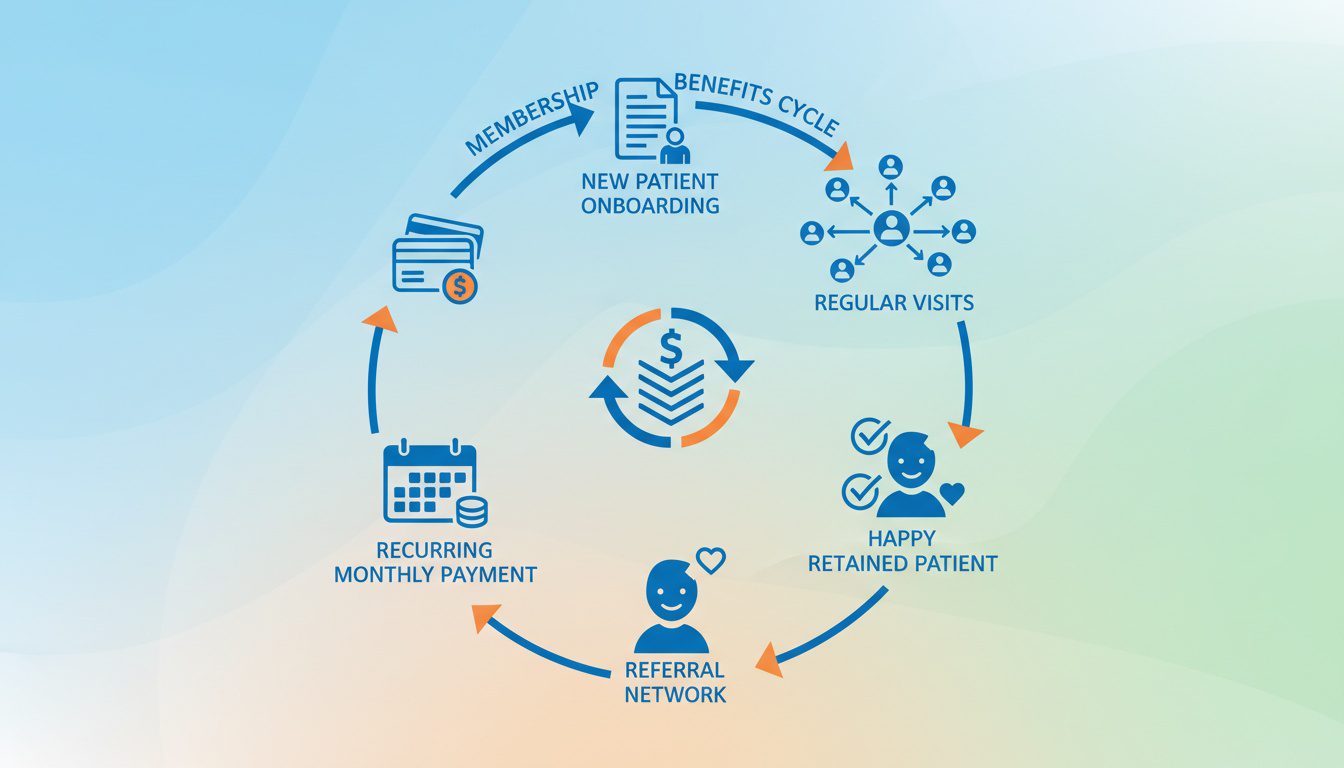
Memberships are the most powerful pricing model for building a sustainable practice—but they require more infrastructure than simply posting prices.
Let's break down what makes memberships actually work in the real world.
Designing Your Membership Tiers
Most successful membership programs offer 2-3 tiers to serve different patient needs. Don't overcomplicate it.
Sample membership structure:
| Essential | $59 | 2 adjustments | 20% off additional visits |
| Wellness | $89 | 4 adjustments | 30% off additional visits, free consultations |
| Unlimited | $139 | Unlimited adjustments | Priority scheduling, family member discounts |
The tier names matter more than you'd think. "Essential" feels like baseline care. "Wellness" positions regular maintenance as the healthy choice. "Unlimited" appeals to patients who want maximum flexibility without thinking about it.
Pricing your tiers:
Work backward from your per-visit rate. If your standard adjustment is $75:
- Essential at $59 for 2 visits = $29.50/visit (61% discount)
- Wellness at $89 for 4 visits = $22.25/visit (70% discount)
- Unlimited at $139 assumes average 6-8 visits = $17-23/visit (70-77% discount)
The discount needs to be meaningful enough to attract sign-ups while ensuring profitability based on expected utilization. Run the numbers before you launch.
The Infrastructure You Need
Here's the thing—memberships fail when practices try to manage them manually. Don't make this mistake.
Required systems:
- Automated billing - Monthly charges happen automatically via practice management software
- Visit tracking - System shows visits used/remaining in current period
- Renewal management - Automatic renewals with easy cancellation process
- Member identification - Staff instantly recognizes members at check-in
Good scheduling software makes membership management almost hands-off. The right software eliminates the administrative burden that makes memberships unsustainable.
Policies to establish upfront:
- Cancellation terms (30-day notice? Immediate? Penalty?)
- Unused visit rollover (do visits expire monthly or accumulate?)
- Family member additions (pricing, shared visits or separate?)
- Freeze options (pausing membership for travel, etc.)
Document everything. Clear policies prevent disputes and protect your practice. Trust me on this one.
Transitioning Existing Patients
Don't try to convert everyone overnight. That's a recipe for chaos.
Start with your wellness patients. These are patients already coming for maintenance care—they're the easiest sell because membership just formalizes what they're already doing.
The conversation:
"You've been coming in twice a month for the past year—that's great for maintaining your progress. I wanna make this easier for you. Our new wellness membership gives you those same 2 monthly visits for $59 instead of $150, plus discounts if you want extra visits. Same care, 60% savings, one simple monthly charge."
For someone already committed to regular care, this is a no-brainer. You're not selling them anything new—you're making what they already do more convenient and affordable.
Avoid these mistakes:
- Forcing existing patients into memberships
- Eliminating per-visit options entirely
- Making membership feel like a downgrade from their current care
Some patients will never want a membership, and that's totally fine. Keep per-visit options available for those who prefer flexibility. Not everyone wants to commit, and pressuring them backfires.
Combining Models for Maximum Results

The smartest practices don't choose one model—they strategically combine all three.
Here's how to make that work without confusing everyone (including yourself).
The Hybrid Approach
Different patients are at different stages. Your pricing should reflect that reality.
Recommended hybrid structure:
| Acute/new patients | Per-visit | Low commitment while establishing trust |
| Corrective phase | Packages | Commitment to complete care plan |
| Wellness/maintenance | Membership | Long-term retention, recurring revenue |
This approach mirrors the natural patient journey. They start without commitment, invest in a corrective package when they understand the value, and graduate to membership when they're ready for ongoing care.
It's like a funnel—guiding patients through stages naturally.
Sample patient pricing journey:
- Initial visit - $150 (per-visit, includes exam)
- Corrective care - 12-visit package at $540
- Transition - Offer membership as corrective phase completes
- Wellness - $89/month membership ongoing
Over 12 months, this patient generates approximately $1,758 compared to sporadic per-visit income that might total half that—or zero if they drop off after acute symptoms resolve.
That's the difference between increasing patient counts and actually increasing revenue.
Revenue Diversification Benefits
A hybrid model protects your practice from volatility. And let's be honest—volatility sucks.
Per-visit revenue fluctuates with seasons, weather, and economic conditions. Great for cash flow spikes; terrible for predictability.
Package revenue comes in chunks. Good for upfront cash; creates "lumpy" income patterns.
Membership revenue flows consistently. Perfect for covering fixed costs and predicting cash flow month over month.
When you combine all three, you get:
- Immediate cash from packages
- Steady baseline from memberships
- Upside from per-visit acute patients
This diversification matters for growing your practice sustainably. You can hire staff, invest in marketing, and weather slow periods because your revenue isn't dependent on any single source.
Tracking What Works
You can't improve what you don't measure. Basic stuff, but most practices don't actually track this.
Key metrics to track:
| Per-visit revenue % | How dependent you are on unpredictable income | 20-40% |
| Package conversion rate | How effectively you're selling packages | 40-60% of corrective patients |
| Membership retention rate | How long members stay | 80%+ annual retention |
| Revenue per patient | Average lifetime value | Track trend over time |
| Cost per patient | Your break-even point | Must be below average per-visit fee |
Review these monthly. Adjust your emphasis based on what's working and what isn't. Your marketing automation should support whichever model is performing best.
Common Pricing Mistakes and How to Avoid Them

Most pricing problems stem from a few predictable errors. Here's how to avoid them so you're not learning the hard way.
Pricing Based on Fear
This is the most common mistake by far.
Chiropractors set fees low because they're afraid patients will leave, insurance companies will audit, or competitors will undercut them.
About half of chiropractors set fees based on fear rather than strategy. Don't be in that half.
The problem: Low fees don't protect you from audits (payers audit based on patterns, not price points). Low fees don't prevent competition (someone will always be cheaper). Low fees just guarantee low profit.
The fix: Price based on your costs, market rates, and value delivered—not what you think patients will accept or what competitors charge. Your fear isn't a pricing strategy.
The Race to the Bottom
Some chiropractors compete on price, pushing fees down to $20-30 per adjustment.
Let's keep it real here...
The math on $20 adjustments:
If your cost per patient is $40 (conservative estimate), you lose $20 on every single visit.
To break even, you'd need to cut your overhead in half while maintaining quality. That's not realistic. That's a fantasy.
The reality: Practices competing on price attract price-sensitive patients who leave when someone's cheaper. You're building a business on the least loyal patient segment possible.
The fix: Compete on value, convenience, experience—anything except being the cheapest. Patients who choose you for reasons other than price are more loyal and way more profitable.
Ignoring Your Business Model
High fees + high volume = burnout trying to deliver premium service at scale. Not sustainable.
Low fees + low volume = financial failure (you can't profit on small margins with few patients). Basic math.
The fix: Align your pricing with how you practice. If you spend significant time per patient, charge accordingly. If you're built for volume, price for volume. Pick a lane.
Not Reviewing Annually
Costs rise every year. Rent increases. Supplies cost more. Staff expect raises. Inflation is real.
But many chiropractors haven't raised fees in years. They just... don't.
Regularly reviewing your fee schedule is essential as the market around your practice changes. If you're charging 2019 prices with 2025 costs, you're slowly going broke.
The fix: Review fees annually. Increase them to match inflation at minimum. Your pricing strategy should evolve as your costs and market evolve. It's not optional.
Frequently Asked Questions About Chiropractic Pricing Models
What is the most profitable pricing model for chiropractors?
Membership models typically generate the most predictable profit because they create recurring revenue and improve patient retention.
Practices with membership plans report higher retention rates and more consistent cash flow compared to per-visit models. The Joint Chiropractic franchises—built entirely on membership pricing—averaged $569,571 in gross sales in 2024.
That said, "most profitable" depends on your specific situation. A boutique practice with premium per-visit fees might generate higher margins per patient than a high-volume membership clinic. The key is matching your pricing model to your business model.
How much should I charge per chiropractic visit?
Standard chiropractic adjustments typically cost between $30-200 per visit, with the national average falling between $65-100.
Initial consultations run higher at $100-250 because they include comprehensive exams, health history review, and your first adjustment.
Your specific fee should be based on:
- Your overhead costs (calculate your cost per patient)
- Regional market rates (use FairHealth.org for your zip code)
- Your business model (high-volume/low-fee vs. low-volume/high-fee)
Geographic location significantly impacts appropriate pricing—practices in major cities charge substantially more than rural practices due to higher overhead.
What should I include in a chiropractic membership plan?
Effective chiropractic membership plans typically include:
- 2-4 adjustments per month at a fixed monthly fee ($50-100)
- Discounted rates on additional visits beyond the included amount
- Priority scheduling for members
- Perks like free consultations or discounts on supplements
Some practices offer tiered memberships with basic, standard, and premium options to serve different patient needs. The premium tier often includes unlimited adjustments and family member discounts.
The key is making membership valuable enough to justify the monthly commitment while remaining profitable based on expected visit utilization.
Are prepaid chiropractic packages legal?
Yes, prepaid packages are legal in most states, but regulations vary significantly.
Common requirements include:
- Written disclosure of prepay and refund terms before purchase
- Pro-rated refund options (required in some states)
- Full refund availability (required in some states)
- Escrow requirements for prepaid funds (in certain states)
The critical distinction: packages should be positioned as payment arrangements, not guarantees of specific treatment outcomes. Separating financial planning from clinical promises protects both you and your patients.
Consult your state chiropractic board for specific requirements in your area.
How do I transition from per-visit to membership pricing?
Start gradually with your most receptive patients.
Step-by-step approach:
- Begin with existing wellness patients who already visit regularly
- Create 2-3 membership tiers with clear benefits
- Invest in practice management software that automates billing and tracking
- Train staff on presenting membership value
- Introduce memberships to new patients as they complete corrective care
- Keep per-visit options available for patients who prefer flexibility
Don't try to convert everyone overnight. Some patients will never want memberships, and forcing the issue damages relationships.
What discount should I offer for prepaid packages?
Most practices offer 10-20% savings on prepaid packages compared to per-visit rates.
For example:
- Standard adjustment: $75 per visit
- 12-visit package: $600 ($50/visit) = 33% savings
The discount should be meaningful enough to incentivize commitment but not so steep that it hurts your profit margins. Calculate your cost per patient first—your package pricing must still generate profit after the discount.
Larger packages typically offer deeper discounts to reward greater commitment.
Can I offer different prices to cash patients vs. insurance patients?
Generally, no. Most states prohibit dual fee schedules where you charge different rates for the same service based on payment type.
Compliant alternatives include:
- Time-of-service discounts (check state-specific requirements)
- Documented financial hardship policies
- DMPO membership (like ChiroHealthUSA) that provides structured discounts
The key is applying any discount consistently across similar patients and documenting your policies. What you cannot do is charge $100 to insurance and $50 to cash patients for the identical service.
How do membership plans affect practice valuation?
Membership plans significantly increase practice valuation.
Practices with subscription-based models are more attractive to investors and buyers because they present lower financial risk. Key metrics that enhance valuation include:
- Annual recurring revenue (ARR)
- Customer lifetime value (CLTV)
- Membership retention rates
A practice generating $500,000 annually with 60% from memberships is worth more than a practice generating $500,000 entirely from per-visit fees. The recurring revenue reduces buyer risk and demonstrates sustainable patient relationships.
If you're planning to eventually sell or scale your practice, building membership revenue now pays dividends later.
Conclusion
Choosing the right chiropractic pricing model isn't about finding the "best" option that works for everyone. It's about matching your pricing strategy to your business model, patient demographics, and revenue goals.
Per-visit pricing offers maximum flexibility but creates unpredictable revenue and lower patient retention. It's where most practices start, but it shouldn't be where you stay forever.
Prepaid packages generate upfront cash flow and commit patients to completing care plans—but require careful compliance attention and clear communication.
Membership models create predictable recurring revenue, improve retention, and increase practice valuation—but need proper infrastructure to manage effectively. This is where the industry is headed.
Here's the thing...
The smartest move? Build a hybrid approach that uses all three strategically. Meet new patients where they are with per-visit options, transition them to packages during corrective care, and graduate loyal patients to memberships for ongoing wellness.
Your pricing model shapes more than your income statement. It influences how patients perceive your value, how often they show up, and whether they stick with your practice long-term or disappear after their symptoms improve.
Take the time to get it right. Your future self—and your bank account—will thank you.
Look, I get it—pricing strategy probably isn't why you became a chiropractor. You got into this to help people, not to obsess over fee schedules and membership tiers.
But here's the reality: it's one of the biggest factors determining whether your practice thrives or struggles. And most docs just wing it.
If you're staring at your current pricing and wondering whether it's actually working for you... you're not alone. Most chiropractors we talk to know something's off but aren't sure what to fix first.
That's why we created our Free Website Conversion Analysis. It's not a sales pitch—it's a genuine walkthrough of the 3 biggest problems killing your patient bookings, delivered personally via Loom video within 24 hours.
We'll show you exactly:
- Why visitors leave without booking
- What's broken on mobile devices (where most searches happen)
- Missing trust signals costing you patients
- Where you rank vs. local competitors
- Simple fixes that drive more calls this month
You'll also get an instant case study while you wait, showing real examples of how other chiropractors fixed these exact problems.
Get your free analysis here — no credit card, no obligation, just actionable insights you can use whether you work with us or not.
Because every day you're unsure whether your pricing and website are actually converting is another day your competitors are booking the patients you should be seeing.

Gerek Allen
Co-Owner iTech Valet
Entrepreneur, patriot, CrossFit junkie, IPA enthusiast, loves to travel to tropical destinations, and knows way too many movie quotes.


About iTech Valet
iTech Valet specializes in web design and content marketing for online entrepreneurs who want to share their expertise.
Services Include:
- Web Design
- Graphic Design
- Sales Copy
- Funnel Building
- Authority Sites
- Membership Sites
- Course Creation
- Email Systems
- Content Marketing
- Competitive Analysis
- Tech Integrations
- Strategic Planning
NEED MORE CLIENTS?
Free conversion-focused analysis uncovers the 3 biggest problems killing your bookings — we'll walk you through your results personally

621 Enterprises, Inc. | Copyright 2022 | All rights reserved