Here’s the thing: reviews tell a human that other patients liked you. An Entity Trust Stack proves to a machine that you’re the authority.
If you have great reviews but AI is still recommending your competitor, it’s because your stack is broken. This article breaks down the five layers you need to build to become the answer.
What the Entity Trust Stack Actually Is
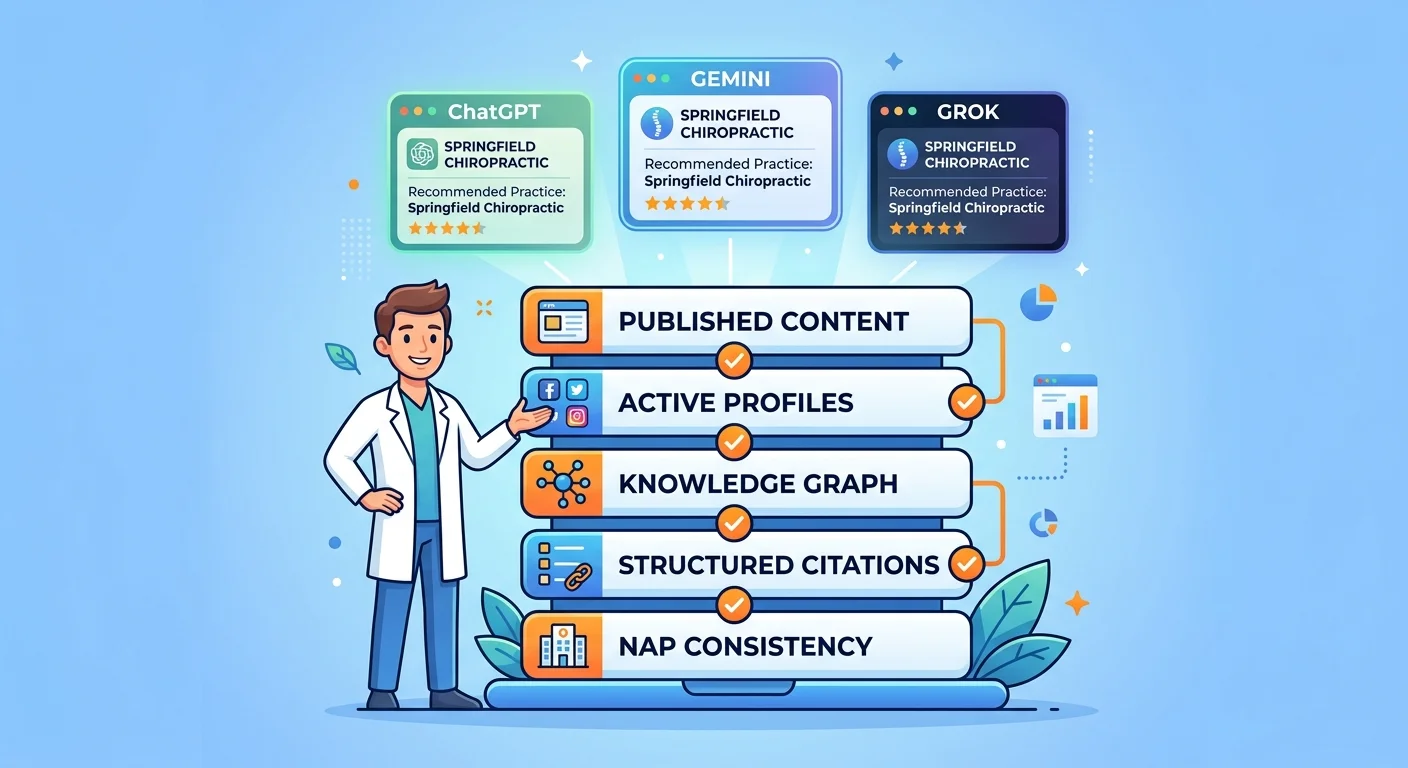
The Entity Trust Stack is the foundation AI engines use to validate your business before they recommend it.
Think of it like building a case. Reviews are witness testimony – helpful, persuasive even. But if that’s all you’ve got, the case is weak. AI needs corroborating evidence. It needs structured data, verified citations, documented expertise, and signals it can cross-reference across multiple trusted sources.
Most practices miss this completely.
They think Google Reviews live everywhere. They don’t. Reviews exist in one place – your Google Business Profile. AI can see them. But if that’s the only proof point? If there’s no broader network backing you up?
You’re not an entity. You’re just one profile with some stars.
The Core Components of an Entity Trust Stack
Five layers. Each one mandatory.
Consistent NAP Data – your business name, address, and phone number must match exactly across every platform. “St” versus “Street” isn’t close enough. A missing suite number breaks the chain. Moz’s research on NAP consistency proves this is baseline.
Small inconsistencies signal to AI that your entity might not be real.
Structured Citations on Healthcare Directories – Healthgrades. Vitals. Zocdoc. WebMD Physician Directory. These aren’t backlinks. They’re validators. When AI sees your name on platforms that vet providers before listing them, you move from “claims to be a chiropractor” to “verified healthcare provider.”
Complete Google Business Profile – not claimed. Complete. Hours filled in. Categories selected. Q&A section populated. Photos current. Posts active. A half-filled profile is a dead giveaway. AI doesn’t reward participation trophies – it rewards entities that are actively managing their presence. Completion is table stakes.
Knowledge Graph Presence – this is schema markup. Structured data. The code on your site that tells AI exactly what you are, where you are, what you do. When AI can pull that directly without guessing, you shift from “business with a website” to “verified entity.”
Topically Relevant Published Content – AI Authority articles. Deep, sourced content proving you understand the problems patients face and the solutions that work. Not “5 Tips for Back Pain.” Real expertise, documented and cited.
Each layer backs up the others. NAP consistency makes citations credible. Citations validate your Knowledge Graph. Content proves the expertise your profile claims.
When all five align – that’s when AI says your name.
That’s what the Local AI Authority Engine builds. Not reputation management. Entity validation.
Why Google Reviews Alone Fail the Entity Test
Here’s where most chiropractors get stuck.
They look at their profile. Five stars. Forty reviews. Looks solid.
Then someone asks ChatGPT who the best chiropractor in town is – and a competitor with twenty-eight reviews gets named instead.
Why?
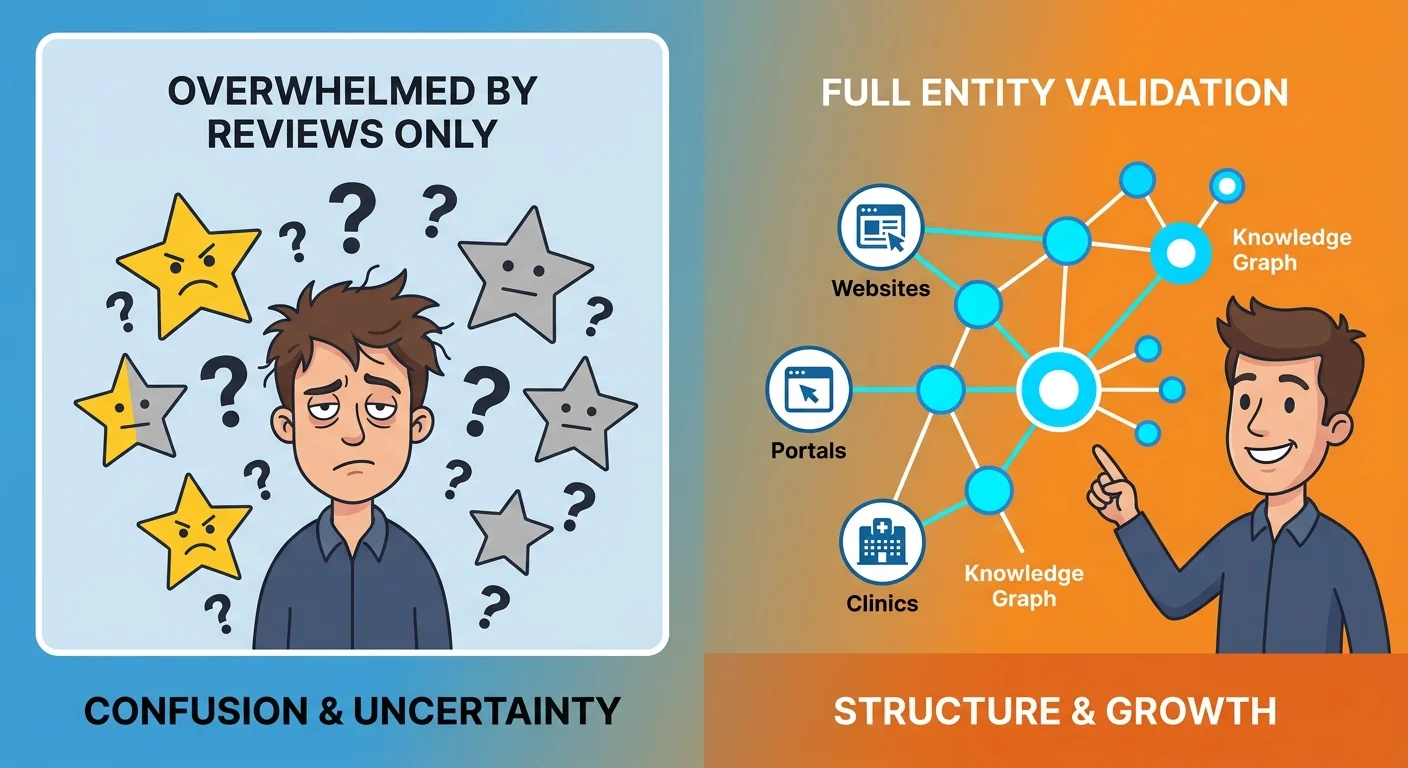
Because reviews are unstructured chiropractic reviews. Narrative social proof. Written by patients in their own words. AI can’t verify them. Can’t cross-reference them. Can’t extract structured claims and validate those claims against institutional sources.
Reviews tell AI people liked you. They don’t prove you’re the authority.
The FTC’s been clear about this for years – testimonials and endorsements must be authentic and verifiable. AI applies that standard with a higher bar. It’s not enough for a review to exist. The entity behind it needs validation.
Weak stack? Only signal is Google reviews?
AI’s not making that recommendation.
Why Traditional “Reputation Management” Fails in the AI Era
The marketing industry spent ten years selling reputation management as the answer to online visibility.
Get more reviews. Respond to reviews. Watch your star rating. Build social proof.
It worked – when the game was ranking on page one.
Patients Googled “chiropractor near me.” Saw a list. Clicked a few. Read reviews. Picked someone.
That model’s dead.
The Old Model: Optimized for a List
Traditional SEO and reputation management were built for one outcome: get on the list.
Optimize keywords. Build backlinks. Collect reviews. Climb the rankings. Page two to page one. Position seven to position three.
Then the patient did the evaluation work. They looked at options. Compared. Decided.
The search engine delivered choices. The reviews were persuasion. But the patient still had to click, read, and pick.
AI doesn’t give patients that job.
AI evaluates. AI decides. AI names one answer. Maybe two if you’re lucky.
The rest of the list? Doesn’t exist.
So if your strategy was “get on the list and look good when patients compare” – you just lost before the game started.
Why Review Volume Doesn’t Translate to AI Recommendations
You chase review volume.
Fifty reviews. Seventy-five. You’re proud. You respond to every one. Star rating stays high.
Someone asks Gemini who to trust. Your competitor – the one with thirty reviews – gets recommended.
Why?
That competitor’s on Healthgrades. On Vitals. NAP data matches across twelve directories. Twenty AI Authority articles published. Fully populated Knowledge Graph. Clean schema markup.
AI doesn’t count reviews and pick the highest number.
It looks at the full entity profile and asks: “Can I verify this business? Do I have multiple independent sources confirming their expertise? Is their authority documented in formats I can read?”
Answer’s yes? That’s who gets named. Even with fewer reviews.
BrightLocal’s Local Consumer Review Survey confirms consumers trust reviews – but they’re skeptical of fake ones. AI takes that skepticism further. It doesn’t just read reviews. It validates the entity behind them.
Can’t validate the entity? Reviews don’t matter.
The Five Layers of the Entity Trust Stack (and How to Build Them)
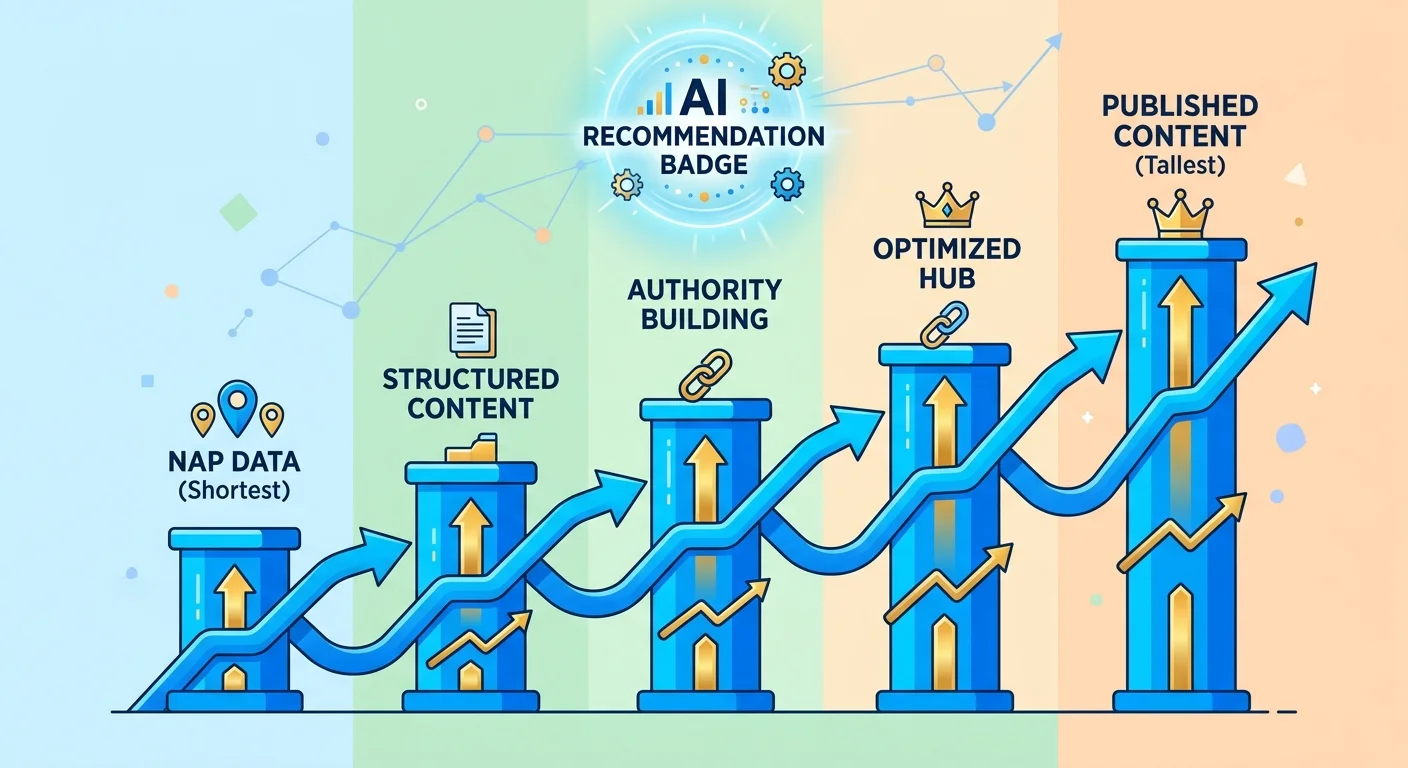
Building the stack isn’t a project. It’s infrastructure.
Each layer supports the next. Each signal reinforces the others.
Here’s how it works – and what breaks when a layer’s missing.
Layer 1: NAP Consistency Across All Platforms
Name, address, phone number. Must match exactly. Everywhere.
Not “close enough.” Exactly.
Google Business Profile says “16835 Algonquin St #155.” Healthgrades says “16835 Algonquin Street Suite 155.”
That’s a mismatch. Small to you. Massive to AI.
AI cross-references. Looks for patterns. Sees conflicting data, doesn’t know which version to trust.
So it trusts neither.
This is the foundation. Get it wrong, every other layer weakens.
| Inconsistency Type | Example | Why AI Flags It |
|---|---|---|
| Name Variations | “Dr. Smith Chiropractic” vs “Smith Family Chiropractic” vs “John Smith, DC” | AI engines cannot confidently merge these into a single entity. Each variation dilutes trust signals instead of compounding them. |
| Address Formatting | “123 Main St” vs “123 Main Street, Suite 4” vs “123 Main St, Ste 4” | Machine parsers treat these as potentially different locations. AI cannot verify consistency, so it downgrades confidence in your physical presence. |
| Phone Number Inconsistencies | “(714) 555-1234” vs “714-555-1234” vs “7145551234” | AI cross-references phone numbers across directories. Format variations trigger mismatch warnings, weakening the entity cluster. |
| Missing Suite Numbers | Address listed with suite number on Google, without suite number on Healthgrades | AI flags this as conflicting data. If your address can’t be verified consistently, your entity trust score drops. |
| Outdated Information | Old phone number still live on three directories, new number on your website | AI sees two competing signals and cannot determine which is authoritative. The result: reduced citation velocity and weakened recommendations. |
Layer 2: Structured Citations on Healthcare Directories
Google Reviews are unstructured. Healthcare directories are structured.
Claim and complete your profiles on Healthgrades, Vitals, Zocdoc, WebMD Physician Directory – you’re not getting another backlink. You’re creating a verified institutional citation.
These platforms have verification processes. They confirm you’re licensed. They list credentials, specialties, education.
AI sees that and thinks: “This entity’s been validated by a trusted third party.”
That’s a trust signal reviews can’t provide.
Key here is completion. A half-filled profile doesn’t help. AI rewards entities that demonstrate they’re actively managing presence across the ecosystem.
Layer 3: Complete and Active Google Business Profile
Your Google Business Profile isn’t a review collector. It’s an entity validator.
AI looks at completion. Hours listed? Categories selected? Services described? Photos uploaded? Q&A section populated?
Incomplete profile signals neglect. Complete profile signals authority.
But completion alone isn’t enough. Activity matters.
AI checks when you last updated. Are you posting? Responding to reviews? Adding photos?
Active profiles get prioritized. Stale ones get deprioritized – no matter how many reviews they have.
Layer 4: Knowledge Graph Presence via Schema Markup
This is where most practices hit the wall. It’s technical.
Schema markup is code on your website telling AI engines exactly what kind of business you are, what services you offer, where you’re located, what credentials you hold.
Difference between AI guessing what you do and AI knowing what you do.
This is what AI-readable infrastructure delivers.
Google’s own E-E-A-T guidelines make it clear: Experience, Expertise, Authoritativeness, Trust matter. Schema markup is how you communicate those signals in a language AI understands.
Without it? Your website’s just text. AI interprets and infers.
With schema? Your website’s structured data. AI reads it like a resume.
That’s the Knowledge Graph. That’s what moves you from “business with a website” to “verified entity AI can cite.”
Layer 5: Topically Relevant Published Content
AI doesn’t just validate you exist. It validates you know what you’re talking about.
That’s where content comes in. Not blog posts. Not tips. AI Authority articles – deep, sourced content demonstrating expertise in the specific problems your patients face.
This is the AEO vs. SEO distinction. Traditional blog posts ranked for keywords. AEO content proves authority to AI engines.
Every article adds depth to your Knowledge Graph. Every citation reinforces entity trust. Every topic expands the range of queries AI recommends you for.
Content isn’t marketing anymore. It’s an authority-building mechanism.
And it compounds. More you publish, more topics you own. More topics you own, more often AI says your name.
| Layer | What It Validates | What Happens If It’s Missing |
|---|---|---|
| Consistent NAP Data | That your business exists at a verifiable physical location with stable contact information | AI cannot confirm your real-world presence. You become a “maybe” instead of a “verified entity.” Recommendations go to competitors with clean data. |
| Structured Healthcare Directory Listings | That you are recognized by authoritative platforms like Healthgrades, Vitals, and Zocdoc as a licensed healthcare provider | AI has no third-party validation of your professional credentials. You’re categorized as generic, not authoritative. |
| Google Business Profile Completion | That you operate a legitimate practice with hours, services, and patient engagement (reviews) | AI treats an incomplete or unverified GBP as a red flag. You lose local intent recommendations entirely. |
| Schema Markup | That your website data is machine-readable and can be parsed for entity attributes, services, and credentials | AI cannot extract structured data from your site. Your content is invisible to knowledge graph construction. You don’t exist in the answer. |
| Topically Relevant AEO Content | That you have demonstrated depth of expertise in your specialty through published, cited work | AI has no proof of subject matter authority. Competitors with content depth get cited. You don’t. |
What Happens When One Layer Is Missing
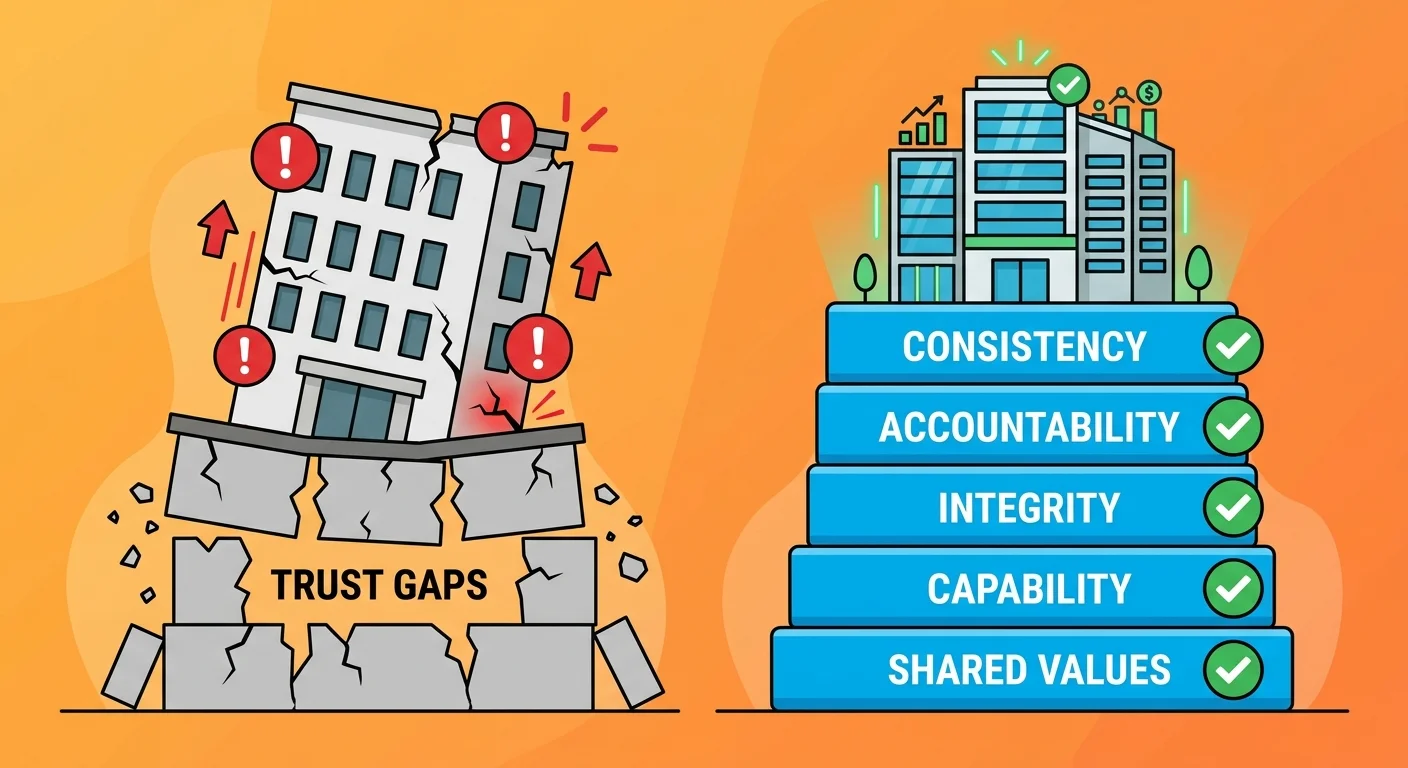
The Entity Trust Stack isn’t optional.
Each layer serves a function. Remove one, the whole structure weakens.
Here’s what breaks – and why most practices don’t realize it until it’s too late.
Missing NAP Consistency: AI Can’t Confirm You Exist
Your business name, address, phone number don’t match across platforms?
AI treats you as multiple entities. Or no entity at all.
Sees “Dr. Smith Chiropractic” on Google. “Smith Chiropractic Clinic” on Healthgrades. Different names. Same address.
AI doesn’t know if these are the same business or two separate practices.
So it recommends neither.
Fix is tedious. Non-negotiable. Audit every directory, every citation, every listing. Make them match. Exactly.
Missing Structured Citations: AI Can’t Verify Your Credentials
Google Reviews say you’re good. Who verified you’re actually a licensed chiropractor?
Without structured citations on healthcare directories, AI has no institutional confirmation.
You could be anyone claiming to be a chiropractor.
AI needs third-party validators. Platforms that vet providers before listing them.
Not on Healthgrades, Vitals, Zocdoc? You’re asking AI to take your word for it.
AI doesn’t do that.
Missing Knowledge Graph: AI Can’t Extract Your Data
Your website says you’re a chiropractor. Lists services. Explains your approach.
No schema markup? AI has to guess.
Reads your text. Infers what you might do. Tries to match your content to its classifications.
That’s not validation. That’s interpretation. Interpretation introduces uncertainty.
AI prefers certainty. When it can pull structured data directly from your site – when it knows exactly what you are, where you are, what you offer – you move from “possible match” to “confirmed entity.”
That’s the difference between getting named and getting ignored.
Missing Active Profile Management: AI Sees Neglect
Google Business Profile hasn’t been updated in six months?
Sends a signal: this business isn’t paying attention.
AI interprets that as a trust risk. Practice isn’t managing their own online presence – how reliable is their information?
Active profiles get prioritized. Stale ones get filtered out. Even with strong reviews.
Not about gaming anything. It’s about demonstrating you’re present, engaged, maintaining accuracy of your own data.
Missing Published Content: AI Can’t Measure Your Expertise
Reviews tell AI patients liked their experience. Content tells AI you know what you’re doing.
Website’s a digital brochure with a services page and contact form? AI has nothing to evaluate. Can’t assess depth of expertise. Can’t compare your knowledge to a competitor’s.
Site has twenty well-researched articles on spinal health, injury recovery, chronic pain management?
AI sees proof. Not claims. Proof.
That’s what separates practices AI recommends from the ones it ignores.
| Missing Layer | Immediate Impact | Long-Term Consequence |
|---|---|---|
| Inconsistent NAP Data | AI engines flag conflicting information and downgrade your entity confidence score. You’re excluded from local recommendations. | Competitors with clean NAP data compound citation velocity while your authority remains stagnant. The gap widens every month. |
| No Healthcare Directory Listings | AI cannot verify your credentials through third-party authoritative sources. You’re invisible in professional validation checks. | Patients asking AI for chiropractor recommendations receive competitor names. You never enter the consideration set. Authority you could have built is handed to practices that claimed those listings. |
| Incomplete Google Business Profile | AI treats your practice as unverified or low-engagement. Local intent queries skip you entirely. | Every month without a complete GBP is a month competitors deepen their local authority. Reviews and engagement compound for them, not you. |
| Missing Schema Markup | AI cannot parse your website for entity data. Your services, credentials, and expertise are invisible to knowledge graph construction. | Your website becomes a liability. Competitors with schema-enabled sites get cited in AI answers. Your site is structurally excluded from the conversation. |
| No AEO Content Execution | AI has no published proof of your expertise. Competitors with content depth are cited. You are not. | Authority is built through demonstrable knowledge. Without ongoing content, you never establish topical depth. Competitors who publish consistently own the answer space. |
This Is Not for Practices Looking for a Quick Fix
Quick reality check.
Reading this hoping there’s a shortcut? A way to stack reviews and trick AI into recommending you without building the infrastructure?
Wrong place.
Entity trust compounds. Built in layers. Foundation first. Content on top. Citations reinforcing. Profiles maintained.
Takes time.
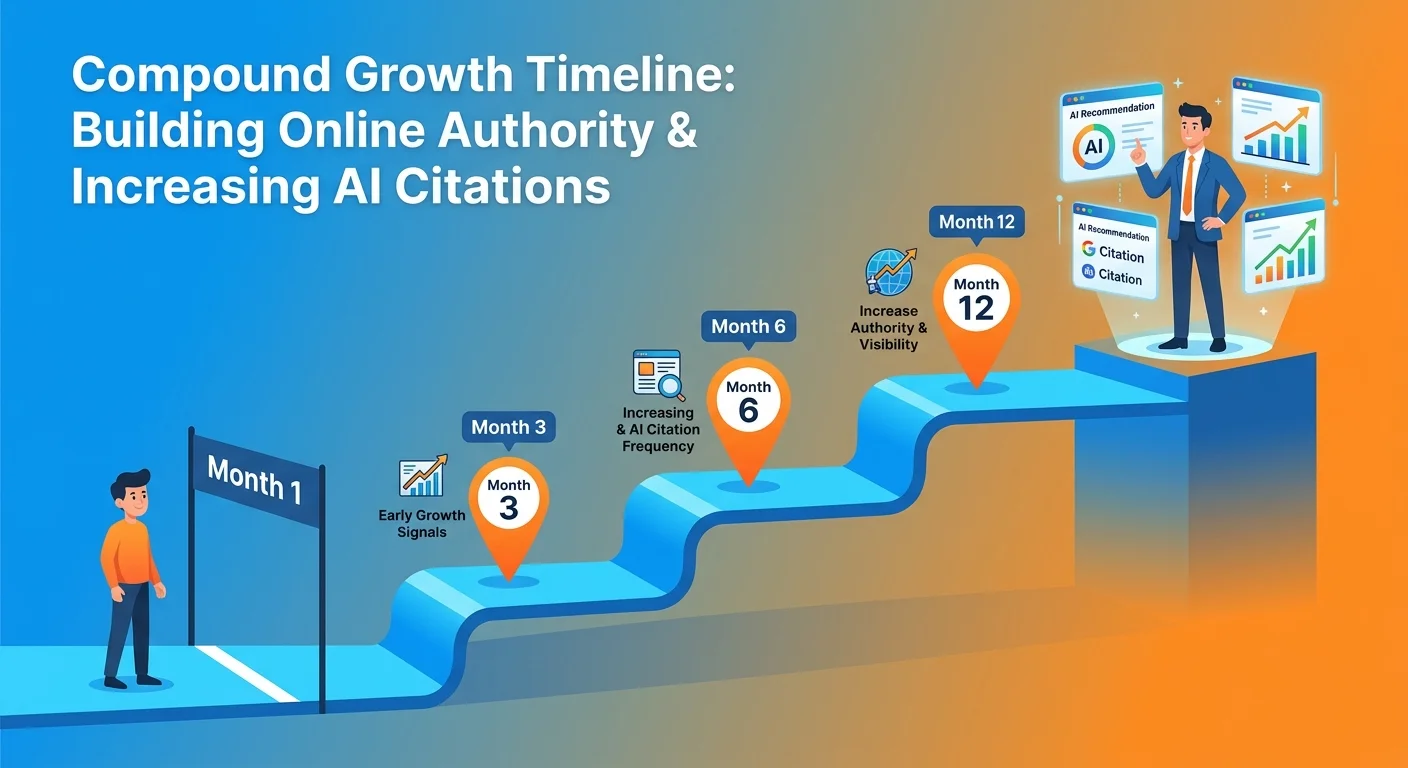
Three months? You’ll see progress. Foundation laid. Profiles cleaned up. First batch of content live.
Six months? Momentum. Citations verified. Knowledge Graph populated. AI starting to notice.
Twelve months? That’s when the compound effect kicks in. More content. More topics owned. More queries where your name is the answer.
Timeline’s “I need results in 90 days or I’m moving on”? This model won’t work for you.
That’s fine. Just don’t expect the practices that commit to the long game to wait for you to catch up.
Authority isn’t a hack. It’s a system. Systems take time to build.
How the Entity Trust Stack Compounds Over Time
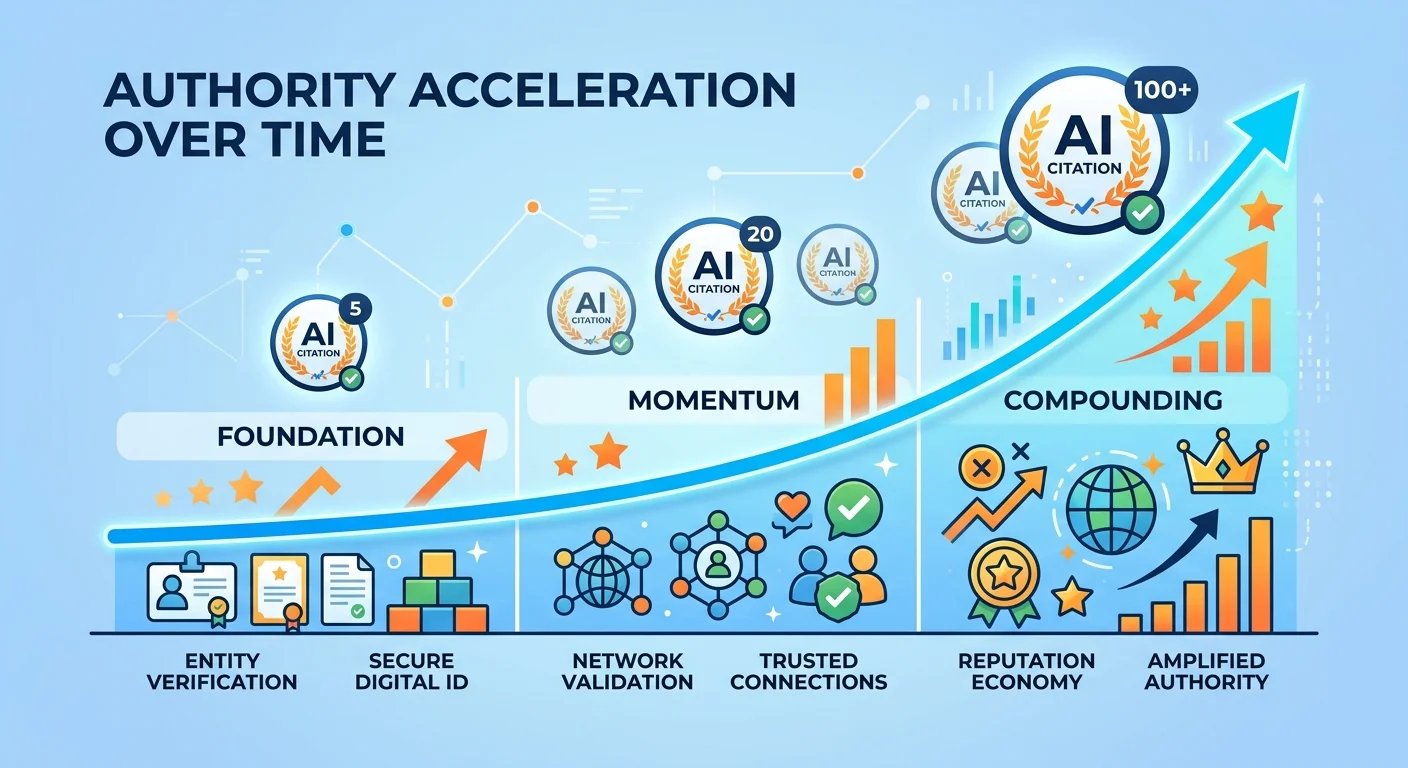
Most practices don’t realize this until they’ve been executing for six months: authority isn’t linear.
It’s exponential.
First few months feel slow. Building foundation. Claiming profiles. Fixing NAP inconsistencies. Publishing content that doesn’t seem to move the needle yet.
Then something shifts.
AI starts citing your articles. Knowledge Graph gets richer. Structured citations cross-reference each other. Entity trust deepens.
Suddenly you’re not just getting recommended for one query. Five. Then ten. Then twenty.
That’s the compound effect of authority. Every piece of content builds on the last. Every citation reinforces the others. Every signal strengthens the stack.
Practices that quit at month three never see this. Build the foundation, don’t see immediate ROI, walk away.
Practices that stick with it for twelve months own their market. Not because they gamed the system. Because they became the most verifiable, most documented, most trustworthy entity in their space.
Month 1-3: Foundation and Cleanup
First quarter is infrastructure work.
Audit and fix NAP inconsistencies across every platform. Claim and complete profiles on healthcare directories. Implement schema markup on your website. Publish the first batch of AI Authority content targeting core service topics.
This phase feels like maintenance. Not glamorous.
But it’s required. Without a clean foundation, everything you build on top will be unstable.
Month 4-6: Content Depth and Citation Velocity
Second quarter is where momentum starts.
Continue publishing AI Authority articles monthly. Expand structured citations to secondary directories. Build internal linking between content and service pages. Monitor AI Visibility Check results to track citation improvements.
This is when you start seeing your name in AI responses. Not consistently yet. Occasionally.
That’s proof the stack’s working.
Month 7-12: Compounding Authority and Market Ownership
Third and fourth quarters are where the exponential curve hits.
Content library reaches critical mass. Twenty-plus articles. Knowledge Graph fully populated and verified. Citations reinforcing each other across multiple platforms.
AI engines begin defaulting to your practice for a range of related queries.
By month twelve, you’re not chasing visibility. You own it.
Gap between you and competitors who didn’t build the stack? Not closable in a few months. Would take them the same twelve months you already invested – while you keep compounding.
That’s the competitive moat.
Frequently Asked Questions
Are Google Reviews still important for AI visibility?
Yes. Google Reviews are an important social proof signal. But AI treats them as just one piece of evidence in a much larger case for your authority.
If reviews are your only signal – no structured citation network, no Knowledge Graph, no published content – AI doesn’t have enough data to confidently recommend you.
Think of reviews as witness testimony. Valuable. Not sufficient on their own. AI needs corroborating evidence.
What are the core components of an Entity Trust Stack for a chiropractor?
The core components are:
Consistent NAP data across all platforms. Structured citations on healthcare directories (Healthgrades, Vitals, Zocdoc). A complete and actively managed Google Business Profile. Knowledge Graph presence via schema markup. Topically relevant AI Authority content published on your website.
Each layer validates a different aspect of your entity. Together, they create the full picture AI needs to confidently name you as the answer.
How does an Entity Trust Stack differ from traditional link building?
Link building focuses on acquiring backlinks to influence search rankings. It’s about quantity and authority of referring domains.
Building an Entity Trust Stack focuses on creating verifiable, structured citations and proof points that build an AI’s confidence in your real-world identity and expertise.
Not about gaming an algorithm. About becoming the most trustworthy, most documented entity in your space – so when AI evaluates who to recommend, you’re the obvious choice.
Can I build an Entity Trust Stack myself?
You can claim individual profiles and start the process. But building a cohesive, AI-readable stack involves technical elements like schema markup, strategic content execution, citation management that typically require specialized expertise.
Challenge isn’t understanding the concept. It’s executing it consistently, at the level of precision AI requires, without dropping any layers.
I’ve watched practices try this themselves. They get halfway through, realize the sheer amount of detail work, and quit. Then they hire someone to do it right the first time.
How long does it take to build enough entity trust to get AI recommendations?
Entity trust compounds over time. Not a one-time task.
Foundational signals can be established in the first 90 days – NAP cleanup, profile completion, schema implementation. But authority deepens with every month of consistent execution.
Practices that see the strongest results are the ones still executing at month twelve. That’s when the compound effect kicks in. When you stop chasing visibility and start owning it.
Looking for a 90-day miracle? This isn’t it. Looking for a system that builds a competitive moat no one can cross in a quarter? Keep reading.
What happens if my competitor has more reviews but I have a stronger Entity Trust Stack?
AI names you.
Reviews are one signal. Entity Trust Stack is the full validation framework.
Competitor has fifty reviews and weak infrastructure. You have thirty reviews and a fully built stack.
AI chooses the entity it can verify.
This isn’t theory. Run the AI Visibility Check. You’ll see it in real time. Practices AI recommends aren’t always the ones with the most reviews. They’re the ones with the deepest, most verifiable authority.
Can I just focus on one or two layers of the stack and skip the rest?
You can. But you won’t get the result you want.
Each layer reinforces the others. NAP consistency makes your citations more credible. Citations validate your Knowledge Graph. Published content proves the expertise your profiles claim.
Skip a layer, the whole structure weakens. AI sees the gap and downgrades your entity trust accordingly.
Practices that win are the ones that build the full stack – not the ones that cherry-pick the easy parts and hope it’s enough.
What’s the difference between building authority and chasing traffic?
Chasing traffic is about volume. Get more clicks. Drive more visitors. Hope some convert.
Building authority is about trust. Become the entity AI engines confidently recommend. Own the answer to the questions your patients are asking.
The traffic lie is that more visitors equals more patients. It doesn’t. What matters is being the answer – not one of ten options.
Authority gets you named. Traffic just gets you noticed.
Conclusion
Google Reviews matter. But they’re not enough.
AI doesn’t choose the practice with the most stars. It chooses the entity with the most verifiable proof – the one it can confidently name without second-guessing.
That’s what the Entity Trust Stack builds. Not just reputation. Validation.
Consistent NAP data. Structured citations. A complete Knowledge Graph. Active profile management. Published content that proves expertise.
Each layer reinforces the others. Each signal compounds.
Practices that understand this are building moats competitors can’t cross in a quarter. The ones still chasing review volume are wondering why AI keeps naming someone else.
No neutral position here. Every month you wait, the gap widens. Every month a competitor executes, they compound.
Want proof this works? See the results from practices that committed to building the full stack.
Run the check. See what AI says about your practice right now. If the results don’t make the problem self-evident – walk away. But if they do, you’ll know exactly what needs to happen next.
Want to know if AI is recommending your practice – or your competitor’s?
The AI Visibility Check takes 15 minutes. It shows you exactly what ChatGPT, Gemini, and Grok say when someone asks who to trust in your market.
No sales pitch. No pressure. Just data.
If your Entity Trust Stack is strong, you’ll see it. If there are gaps, you’ll see those too.
Most chiropractors think their online presence is solid – until they see what AI actually says about them. This is your chance to know before your next patient asks an AI engine for a recommendation and gets someone else’s name.