

AI Ad Copy for Chiropractors in 2026: How to Create Better Ads That Get More New Patients
 by Gerek Allen ~ Last Updated: January 24, 2026 ~ 12 Min Read
by Gerek Allen
~ Last Updated: January 24th, 2026 ~
~ 12 Min Read ~
Here's the deal. AI ad copy isn't about writing faster—it's about writing smarter.
The chiropractors crushing it with Facebook and Google ads right now? They're not just pumping out generic "back pain relief" ads with some AI tool. They're using it to find their "Wedge" (we'll get into that), create multi-variant campaigns that feed the algorithm exactly what it needs, and automate follow-up so leads actually show up.
Let's keep it real for a second.
Meta and Google's AI algorithms have gotten so sophisticated that the old "spray and pray" approach is officially dead. The platforms now reward personalized patient education over high-pressure sales hooks.
Your competitors who figured this out? They're getting new patients at $21-35 per lead.
Everyone else is paying $75+ and wondering why the phone isn't ringing.
This guide breaks down exactly how to use AI tools to write chiropractic ad copy that converts in 2026. We're talking finding your Wedge, staying HIPAA compliant, and stopping no-show revenue leaks after the lead comes in.
I'll give you the specific prompts that work, the frameworks that drive results, and the tools worth your money.
Sound fair?
Why Traditional Chiropractic Ads Are Failing in 2026
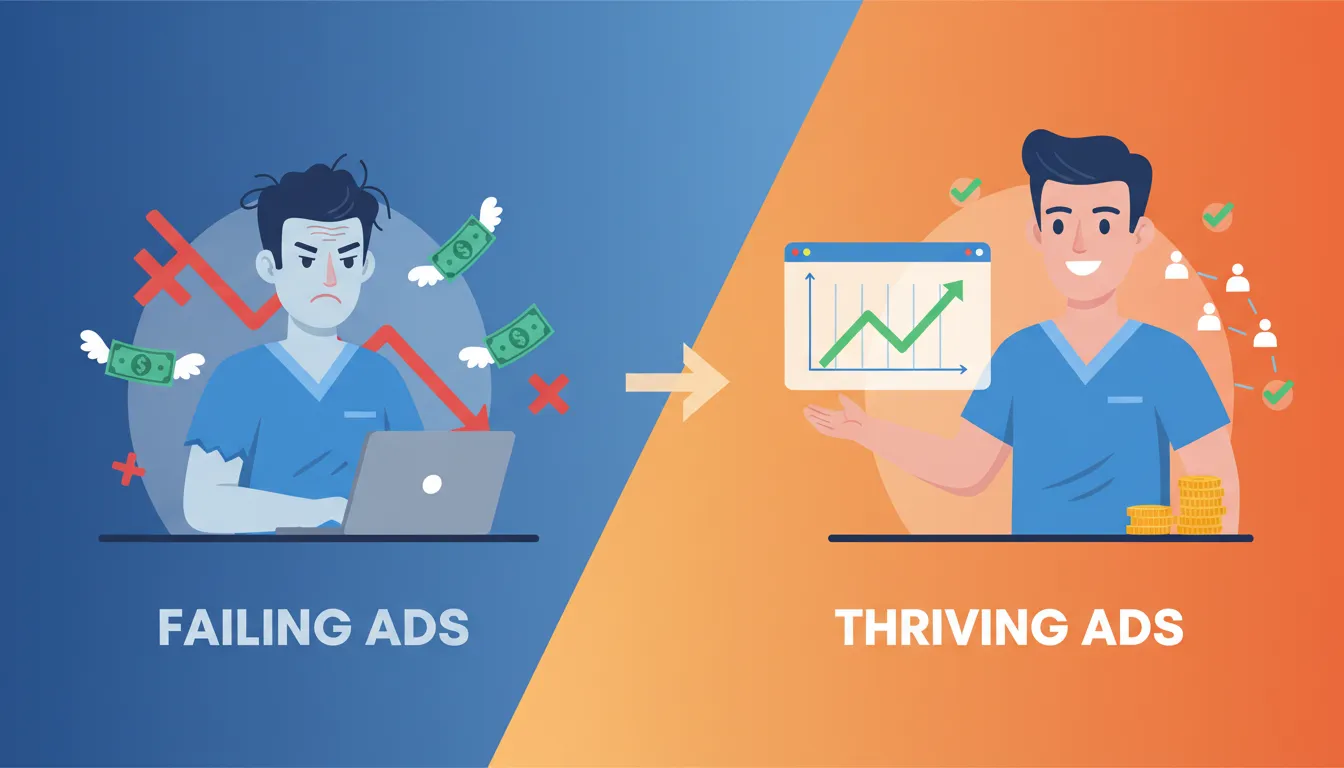
If you've been running the same style of chiropractic ads for the past few years, you've probably noticed something kinda frustrating. What used to work just... doesn't anymore.
The typical Facebook ad follows a predictable pattern. Stock photo of someone holding their back. Text promising pain relief. A "$29 Exam Special" thrown in for good measure.
These ads fail. And they fail for reasons that compound each other.
The "Discount Hunter" Problem
Someone choosing you because you're offering a $29 special will leave you the moment another clinic offers $19.
These patients don't build sustainable practices. They drain them.
The math doesn't lie. If your average patient lifetime value is $1,500-$3,000 (which is conservative for a good practice), attracting someone who only shows up for the discounted visit and never returns costs you money.
You're paying to acquire a patient who generates negative ROI.
Now... this part matters.
The solution isn't to stop running offers. It's to use AI to identify the patients who want transformation, not transactions—and write copy that speaks specifically to them.
Platform Algorithm Changes
Meta's 2025-2026 healthcare advertising restrictions have fundamentally changed the game.
The platform now categorizes health-related businesses under stricter data privacy rules. What does that mean for you?
- Limited conversion event tracking for "Schedule," "Lead," and "CompleteRegistration" actions
- Tighter data-sharing rules between your website and Meta's tracking tools
- Expanded "sensitive data" classifications that include appointment booking pages
Here's the kicker. Many healthcare brands have experienced a 30-40% drop in ad efficiency since Meta's privacy rollout. Rising costs, weaker targeting, limited conversion tracking.
It's squeezing advertisers who haven't adapted.
But the chiropractors who've pivoted to AI-powered, education-first campaigns? They're actually seeing lower costs per lead because they're working with the algorithm instead of against it.
The Compliance Minefield
Facebook increasingly scrutinizes healthcare advertising.
Claims about curing specific conditions? Ads rejected.
Dramatic before-and-after results? Account restricted.
Many chiropractors have had perfectly reasonable ads disapproved because they didn't understand the nuanced rules around medical claims.
And HIPAA compliance adds another layer. Meta doesn't sign Business Associate Agreements (BAAs). Any patient data that flows back to the platform through pixels or conversion tracking creates potential liability for your practice.
The practices winning in 2026 use AI to create compliant ad variations at scale. They test different angles quickly to find what resonates without triggering policy violations.
The "Wedge" Strategy: Finding Your Low-Friction Entry Point
Alright, quick reality check.
Before you write a single word of ad copy, you need to identify your Wedge. This is the specific, low-friction entry point that attracts your ideal patients at the lowest cost.
Most chiropractors target "everyone with back pain." That's not a Wedge—that's a wedge of everyone. Your Wedge is where specificity meets demand meets your expertise.
How to Identify Your Wedge Using AI
Here's a prompt framework you can use with ChatGPT, Claude, or whatever AI tool you've got:
"I'm a chiropractor in [city/region]. My practice specializes in [your specialties]. Analyze common patient pain points for chiropractic care and suggest 5 specific 'Wedge' opportunities—narrow patient segments with high intent and relatively low competition. For each Wedge, describe the target audience, their primary pain point, why they'd choose chiropractic over alternatives, and a potential low-friction offer that would attract them."
The AI will generate options like:
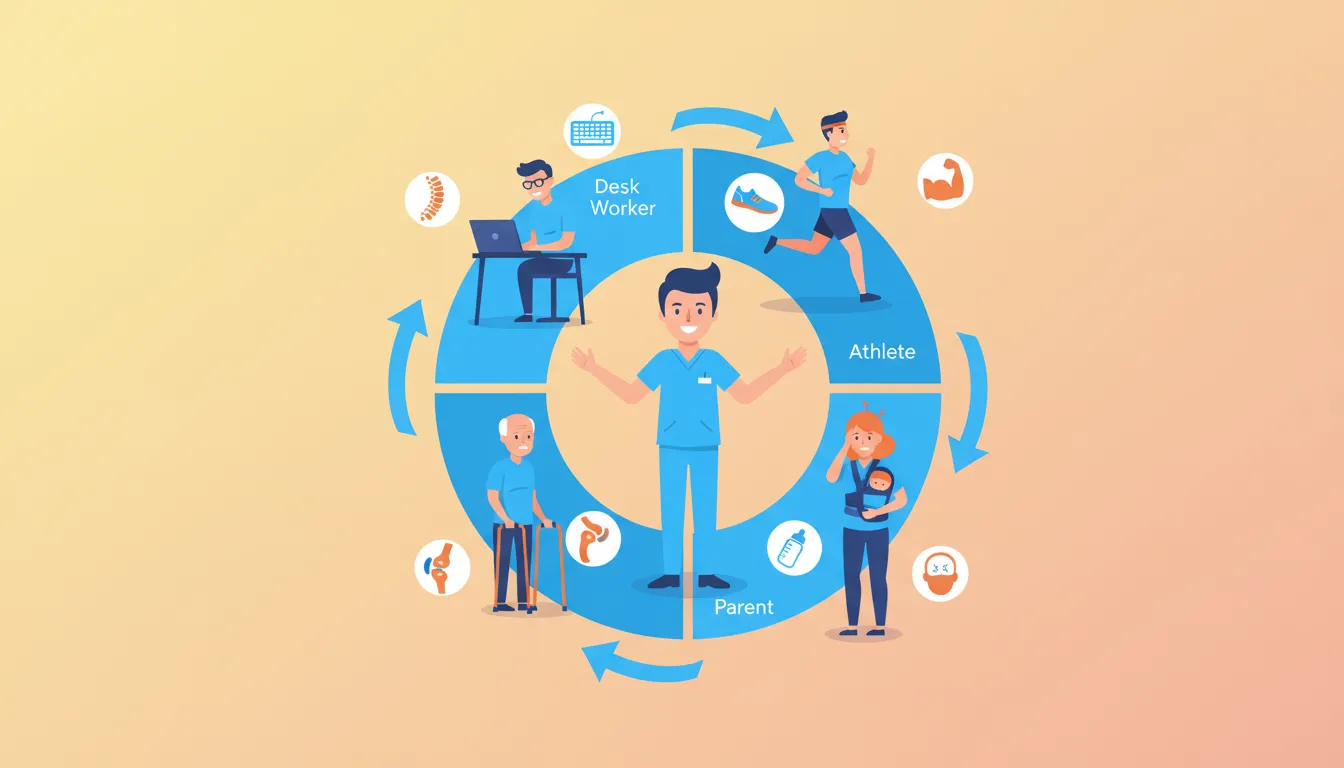
- Desk-posture neck pain for remote workers experiencing "tech neck"
- Post-pregnancy alignment for new mothers dealing with lower back strain
- Sports-specific recovery for local athletes (runners, CrossFitters, golfers)
- Chronic headache sufferers who've tried medications without lasting relief
- Senior mobility optimization for active older adults who want to stay independent
Your job? Test which Wedge delivers the lowest cost-per-lead with the highest patient lifetime value.
AI helps you create campaigns for each segment quickly so you can let the data tell you where to focus.
The Wedge Validation Framework
Not every potential Wedge is worth pursuing.
Use this framework to evaluate your options:
| Market Size | Is there enough search volume and local demand? | 1-5 |
| Competition | How saturated is this space with other providers? | 1-5 |
| Intent Level | Are these people actively seeking solutions? | 1-5 |
| Expertise Match | Does this align with your skills and passion? | 1-5 |
| Lifetime Value | Will these patients stick around for care plans? | 1-5 |
A Wedge scoring 20+ is worth testing. Below 15? Keep looking.
The chiropractors I've seen scale their practices successfully almost always dominate a specific Wedge before expanding.
They become the "tech neck specialist" or the "runner's chiropractor" in their market.
That positioning makes their ad copy infinitely more compelling than generic alternatives.
NEED MORE CLIENTS?
Free conversion-focused analysis uncovers the 3 biggest problems killing your bookings — we'll walk you through your results personally
The PAS Framework: The Backbone of Converting Ad Copy
Once you've identified your Wedge, you need a framework for writing copy that actually converts. Enter PAS.
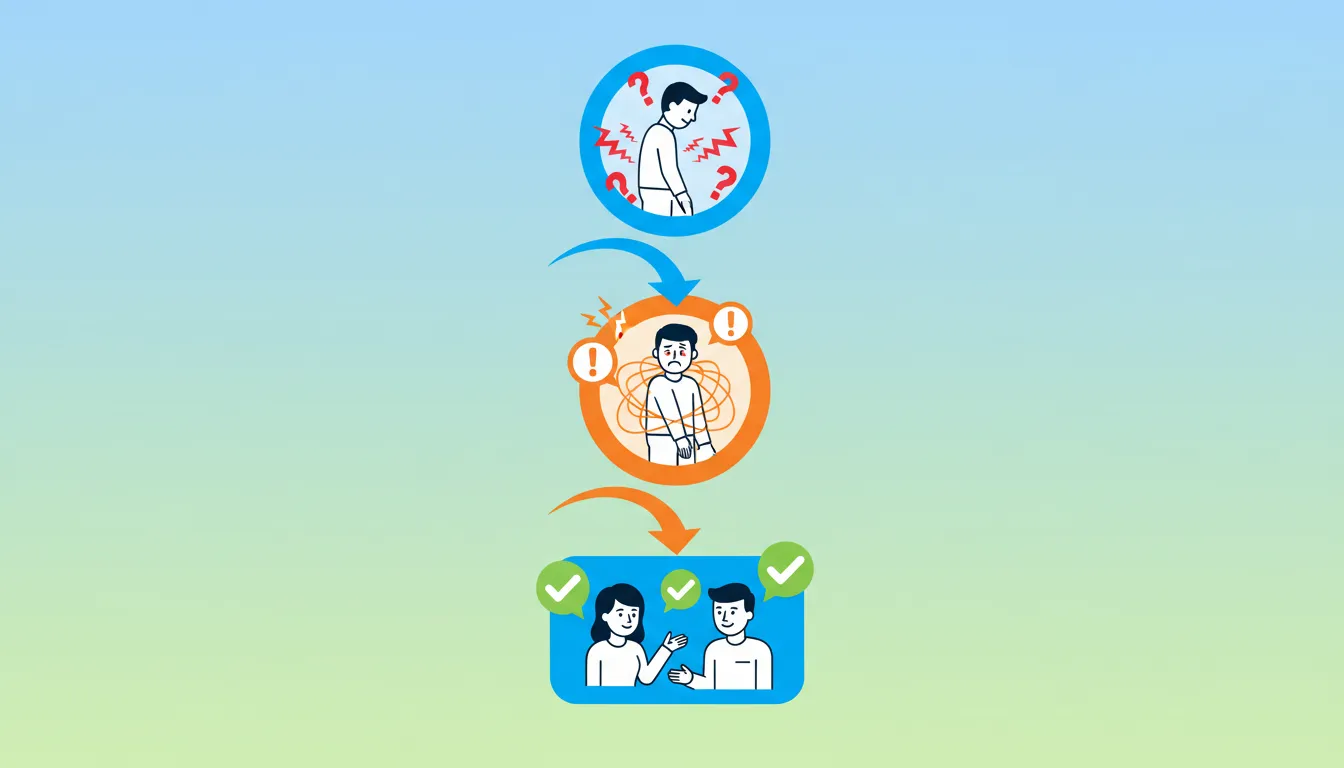
Problem-Agitate-Solution has been the backbone of direct-response copywriting for decades. And it works even better when combined with AI.
Here's the structure: Problem (identify the pain point), Agitate (amplify consequences), Solution (present your service as the path to relief). This framework taps into human psychology—leading your audience from pain to relief is what drives action.
PAS Prompts for Chiropractic AI Ad Copy
Here's a template prompt you can customize for your Wedge:
"Write Facebook ad primary text for a chiropractic practice using the PAS framework. Target: [your Wedge, e.g., 'remote workers with chronic neck pain from desk posture']. Problem length: 1-2 sentences. Agitation: 2-3 sentences highlighting consequences. Solution: 2-3 sentences positioning the practice. Include a specific offer: [your offer, e.g., 'free 15-minute posture assessment']. Tone should be empathetic and conversational, not clinical. Total length: 150-200 words. End with a clear call-to-action."
Example output for a "tech neck" Wedge:
Problem: Your neck shouldn't hurt after every Zoom call. But when you've been working from home for years, that stiffness and tension start feeling "normal."
Agitate: Here's the thing—it's not normal. That persistent ache radiating from your neck into your shoulders? It's your body telling you something's misaligned. Left unchecked, what starts as daily discomfort can become chronic headaches, reduced mobility, and the kind of pain that steals your focus and your sleep.
Solution: At [Practice Name], we specialize in helping remote workers realign their posture and eliminate tech neck for good. No cracking required (unless you want it). Just targeted adjustments and a personalized plan to undo the damage that sitting at a desk does to your spine.
Offer: Book a free 15-minute posture assessment this week. We'll show you exactly what's happening and what it'll take to fix it. No pressure, no obligation—just answers.
Pretty straightforward, right?
Generating Multiple Variants for Testing
One of AI's biggest advantages is speed.
You can generate 10-20 variations of the same ad in minutes. Each with slightly different hooks, agitation angles, and calls-to-action.
Here's how to prompt for variants:
"Generate 5 different opening hooks for the same Facebook ad. Target audience: [Wedge]. Each hook should use a different emotional angle: curiosity, fear of missing out, frustration, hope, and social proof. Keep each hook under 20 words."
Then test them. Let the algorithm and your audience tell you which resonates.
The most successful chiropractic advertisers in 2026 aren't running one ad. They're running multi-variant creative tests that feed Meta's AI exactly what it needs to find high-intent leads.
Best AI Tools for Chiropractic Ad Copy in 2026
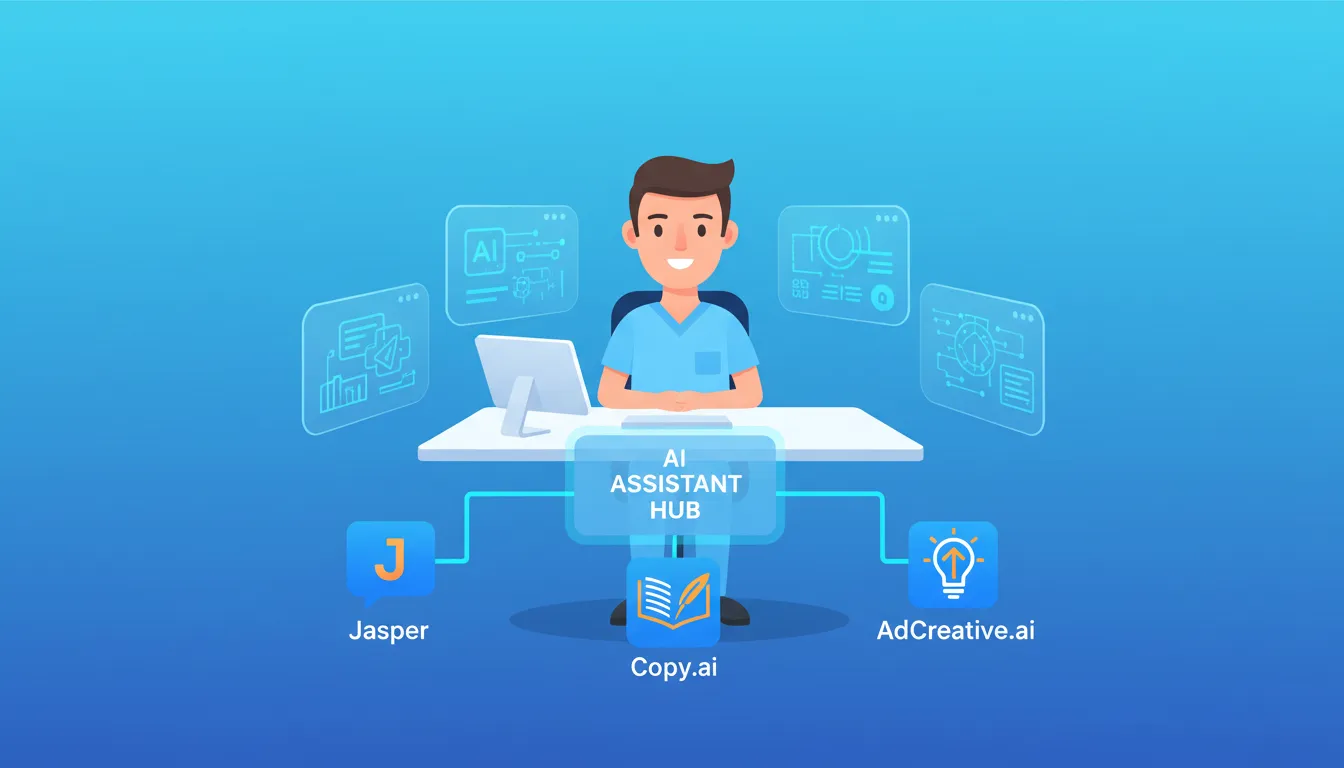
Not all AI tools are created equal. The right choice depends on your budget, technical comfort level, and whether you're running ads yourself or delegating to a team.
Here's the honest breakdown.
Jasper – Best for Brand Consistency
Jasper has evolved from a basic copywriting tool into a full creative partner.
The "Brand Voice" feature lets you upload your style guides and practice information. That ensures outputs stay aligned with how you actually talk to patients.
For chiropractic practices, Jasper's strengths include:
- Ad-specific templates for Google, Meta, and LinkedIn with healthcare considerations built in
- Campaign workflows that generate linked assets (ads, landing pages, email follow-ups) from a single brief
- SEO integration with SurferSEO for practices also focused on chiropractic AI content automation
The downside? Pricing starts around $39-59/month. And the learning curve is steeper than simpler tools.
If you're running your own ads and want maximum control, Jasper delivers.
Copy.ai – Best for Speed and Volume
Copy.ai excels at rapid content generation.
Need 20 ad variations in 10 minutes? This is your tool.
The chat-driven workflow feels intuitive. And the browser extension lets you pull information from web pages directly into your prompts.
For chiropractic practices, Copy.ai's advantages include:
- Unlimited words on most plans (no counting tokens)
- Fast iteration on headlines, CTAs, and messaging angles
- Lower price point that's friendlier for solo practitioners
The tradeoff? Less robust brand governance.
If you're a multi-location practice that needs everyone on the same page, Copy.ai requires more manual oversight.
AdCreative.ai – Best for Visual Ads
AdCreative.ai focuses specifically on generating ad creatives—both copy and visuals—optimized for conversion.
Its standout feature? Predictive analytics that scores each generated creative on its likelihood to perform well.
For chiropractic practices, the platform offers:
- Direct integration with Meta and Google for faster campaign deployment
- Data-driven creative suggestions based on what's working in healthcare verticals
- Batch generation of dozens of ad variations in minutes
The caveat? AI-generated healthcare imagery can feel inauthentic.
Stock-style educational graphics typically outperform AI-generated "patient photos." Use AdCreative.ai for rapid copy iteration, but be selective about visual assets.
Tool Comparison Summary
| Jasper | Brand consistency, teams | $39-59/mo | Moderate | Yes |
| Copy.ai | Speed, solo practitioners | $36-49/mo | Low | Limited |
| AdCreative.ai | Visual ads, testing | $29-149/mo | Low | Yes |
| ChatGPT/Claude | Flexibility, custom prompts | $20/mo | Varies | DIY required |
If you're just starting, ChatGPT or Claude with well-crafted prompts can get you 80% of the way there at $20/month.
As you scale, dedicated tools like Jasper justify their cost through time savings and consistency.
HIPAA Compliance: What You Can and Can't Do With Chiropractic Ads

Let's address the elephant in the room. HIPAA compliance isn't optional. And getting it wrong can cost you more than your ad budget.
As of 2024, the Office for Civil Rights has settled or imposed civil monetary penalties totaling nearly $145 million for HIPAA violations. You don't wanna be a statistic.
What HIPAA Actually Requires for Advertising
HIPAA's core requirement is simple: don't disclose Protected Health Information (PHI) without explicit patient consent.
The complexity comes from understanding what counts as PHI in an advertising context.
PHI includes:
- Patient names, photos, or identifying details
- Medical records, diagnoses, or treatment information
- Any data that could identify a specific individual when combined with health information
Here's where most chiropractors miss it.
Modern ad platforms can inadvertently create PHI violations through tracking technologies. When someone clicks your ad, visits your booking page, and that data flows back to Meta through the pixel, you've potentially shared health-related information about an identifiable individual.
The Meta Pixel Problem
Meta doesn't sign Business Associate Agreements.
This is a critical point that many practice owners overlook.
A BAA is a legally binding contract that ensures proper protection of PHI when you share data with a third party. Without one, any PHI that flows to Meta creates potential liability for your practice.
Recent lawsuits have resulted in multi-million dollar settlements against healthcare organizations that used Meta pixels improperly.
University of Rochester Medical Center agreed to $2.85 million. Froedtert Health settled for $2 million.
The financial and reputational costs far outweigh any marketing benefits.
The safest approach in 2026:
- Disable or heavily restrict Meta Pixel on pages containing health information
- Use server-side conversion tracking that filters PHI before sending data to Meta
- Never create lookalike audiences from patient lists or booking data
- Avoid retargeting ads that rely on visits to health-related pages
Compliant Ad Content Guidelines
What you put IN your ads matters as much as how you track them.
Do This:
- Promote general services without specific patient information
- Use educational content about conditions and treatments
- Feature stock imagery or professionally consented testimonials
- Make offers that don't require disclosing health status to claim
Avoid This:
- Patient testimonials without explicit written consent
- Specific outcome claims ("We'll eliminate your sciatica!")
- Before-and-after imagery that implies guaranteed results
- Retargeting people who visited condition-specific pages
The chiropractors succeeding with compliant advertising focus on education over promises.
They position themselves as the knowledgeable authority patients can trust, rather than making claims they can't substantiate.
Automating Lead Follow-Up: Because Ads Are Only Half the Battle
Alright, here's a hard truth most chiropractors don't wanna hear. Your ads aren't the problem. Your follow-up is.
Industry data shows top-converting practices respond to leads in about two minutes. The average? Over two hours. And roughly 40% of inquiries hit after hours when no one's available.
Every missed or delayed response is a patient who books with your competitor instead.
Why AI-Powered Follow-Up Changes Everything
Tools like Podium's AI Employee are transforming how local healthcare practices handle leads.
These aren't basic chatbots that frustrate patients with canned responses.
They're outcome-driven conversational AI that can:
- Respond to leads in under one minute, 24/7
- Qualify prospects by asking the right questions
- Schedule appointments directly into your practice management system
- Follow up with patients who don't book immediately
- Handle objections and answer common questions
According to OpenAI's case study on Podium, practices using AI-powered lead response have seen 300% year-over-year revenue growth from their AI agent deployments.
The technology influences billions in revenue by delivering instant responses that human staff simply can't match.
The Cost of Slow Follow-Up
Let's do the math.
Your average ad spend generates 50 leads per month at $30 per lead. That's $1,500 total.
You convert 20% to appointments. That's 10 new patients.
At an average lifetime value of $2,000, those ads generate $20,000 in patient value.
Now imagine your conversion rate drops from 20% to 10% because you're slow to respond.
Same ad spend. Same leads. But now you're getting 5 patients instead of 10.
You just left $10,000 on the table. Not because your ads failed, but because your follow-up did.
AI follow-up systems consistently boost conversion rates by 20-45% simply by ensuring every lead gets an immediate, helpful response.
Integrating AI Follow-Up With Your Ad Strategy
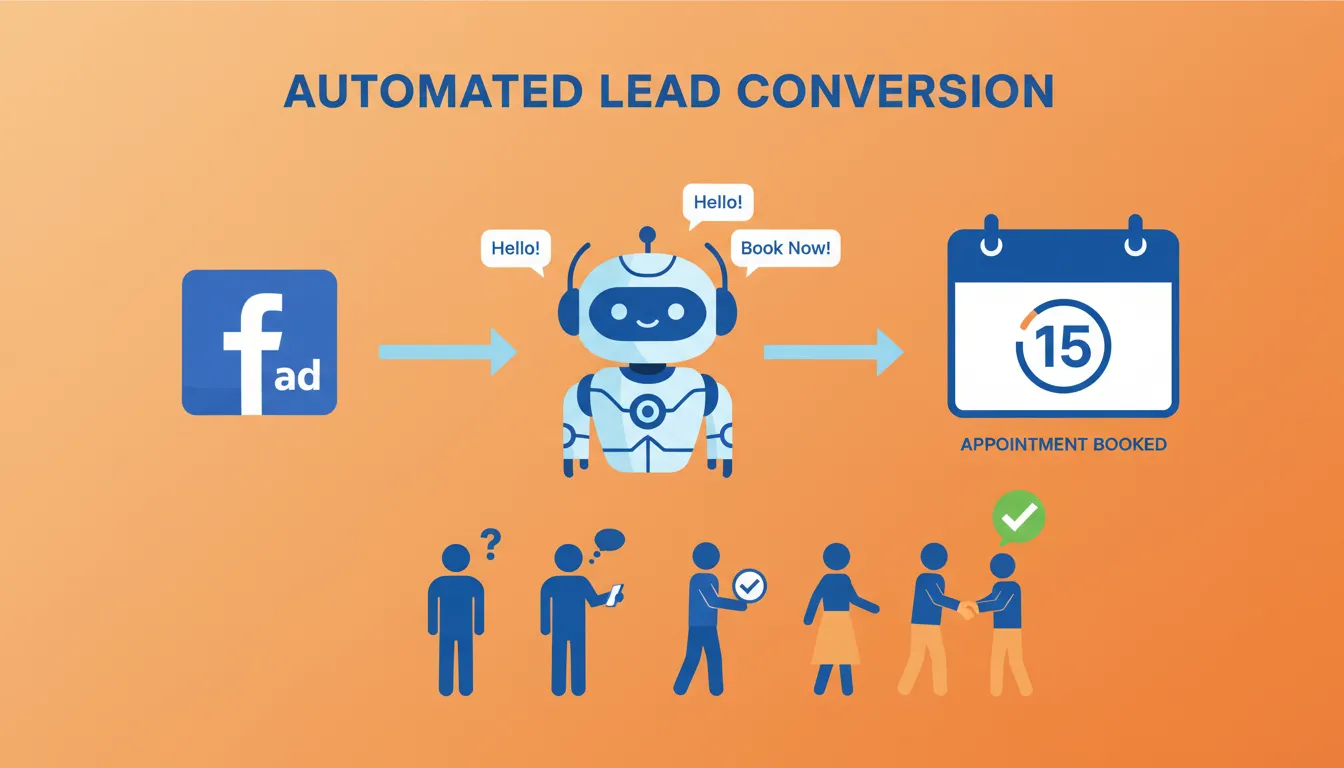
The best chiropractic AI chatbots integrate directly with your ad campaigns to create a seamless patient journey:
- Ad Click → Landing page with instant chat option
- Lead Capture → AI qualifies the lead and books appointment
- Confirmation → Automated text/email with appointment details
- Reminder Sequence → AI sends reminders to reduce no-shows
- Post-Visit → AI requests reviews and handles follow-up care scheduling
This isn't future technology.
It's what your competitors are implementing right now while you're manually calling leads back during lunch breaks.
Real Prompts You Can Use Today
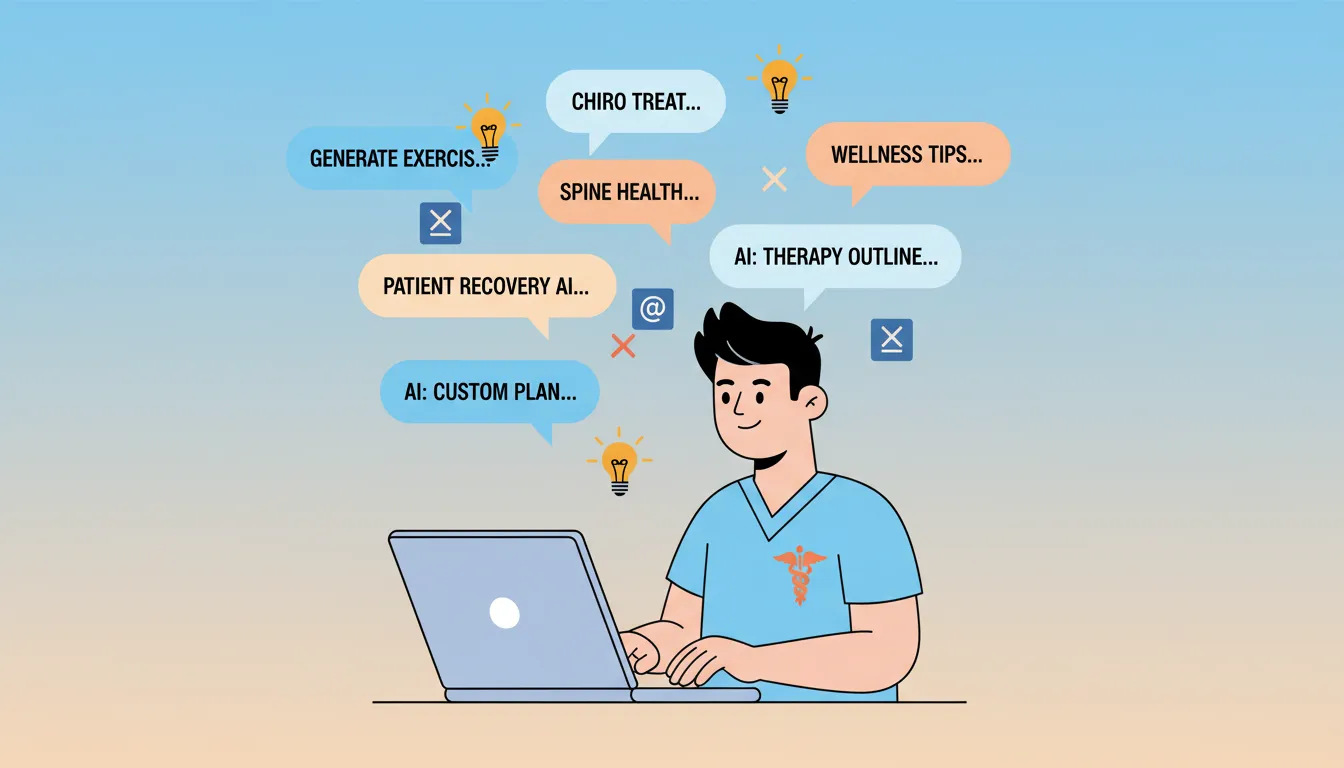
Let's get tactical. Here are copy-paste prompts you can use with any AI tool to generate chiropractic ad copy that converts.
Prompt 1: Facebook Primary Text (PAS Framework)
"Write Facebook ad primary text for a chiropractic practice using the PAS framework. Target: [your Wedge, e.g., 'remote workers with chronic neck pain from desk posture']. Problem length: 1-2 sentences. Agitation: 2-3 sentences highlighting consequences. Solution: 2-3 sentences positioning the practice. Include a specific offer: [your offer, e.g., 'free 15-minute posture assessment']. Tone: conversational, empathetic, not clinical. Total length: 150-200 words. End with a clear call-to-action."
Super easy to customize. Just swap in your Wedge and offer.
Prompt 2: Multiple Hook Variants
"Generate 7 different opening hooks for a chiropractic Facebook ad targeting [your Wedge]. Each hook should be 1-2 sentences maximum and use a different psychological angle: curiosity, fear of consequences, frustration acknowledgment, hope/transformation, social proof, contrarian take, and direct question. Label each hook with its angle."
This one's gold for A/B testing.
Prompt 3: Google Ads Headlines
"Write 10 Google Ads headlines for a chiropractor in [city] targeting the keyword '[your keyword, e.g., chiropractor for headaches]'. Each headline must be 30 characters or less. Include variations with: location, benefit, offer, question, and urgency. Avoid medical claims that could trigger policy violations."
Google's character limits are brutal. AI makes hitting them way easier.
Prompt 4: Compliant Testimonial Framework
"Write a patient testimonial framework for a chiropractic ad that stays HIPAA compliant. Create a template that focuses on the patient's experience with the practice (customer service, atmosphere, approach) rather than specific medical outcomes. Include prompts for: initial hesitation, practice experience, and recommendation. Format as a quote that could be used after obtaining written consent."
This helps you get testimonials that don't get your ads rejected.
Prompt 5: Landing Page Copy
"Write landing page copy for a chiropractic practice's lead capture page. The page should match a Facebook ad offering [your offer]. Include: headline (benefit-focused), subheadline (specificity), 3-5 bullet points (outcomes/features), trust indicators section (credentials, reviews, experience), and form CTA copy. Keep total copy under 400 words. Tone: professional but warm."
Your ads and landing pages need to match. This prompt ensures they do.
Prompt Customization Tips
The magic happens when you customize these prompts with:
- Your specific location and community details
- Your actual techniques and approach (not generic "chiropractic care")
- Real patient pain points you hear during consultations
- Your practice's personality and communication style
Generic prompts generate generic ads.
The practices winning with AI take time to feed the tools their unique positioning and voice.
Measuring What Matters: KPIs for Chiropractic Ad Success

Running ads without tracking your growth with dashboards is like adjusting a spine without X-rays. You might get lucky, but you're probably missing something important.
Primary KPIs
Cost Per Lead (CPL)
This is your north star metric. How much are you spending to acquire a lead?
| Facebook Leads | $15-40 | Under $30 |
| Google Search | $50-100 | Under $75 |
| $20-45 | Under $35 |
According to WordStream's 2025 Facebook ads benchmarks, the average CPL across industries climbed 21% year-over-year to $27.66. Healthcare typically runs higher due to targeting restrictions and competition.
If your CPL is significantly above these ranges, look at your targeting (too broad), your creative (not resonating), or your landing page (poor conversion).
Cost Per Acquisition (CPA)
CPL only tells part of the story.
CPA measures how much you spend to acquire an actual patient who shows up for their first appointment.
The formula: Total Ad Spend ÷ Number of New Patients
If you're spending $1,500/month on ads and getting 10 new patients, your CPA is $150. Compare that to your average patient lifetime value to ensure profitability.
Lead-to-Patient Conversion Rate
What percentage of leads actually become patients?
This metric reveals whether your problem is ad performance or follow-up systems.
| Lead → Appointment Scheduled | 40-60% |
| Appointment Scheduled → Show Rate | 70-85% |
| Show → Become Patient | 80-95% |
| Overall Lead → Patient | 25-45% |
If you're below 25% overall, the bottleneck is likely slow follow-up or a mismatch between your ad promise and appointment experience.
Secondary KPIs Worth Watching
Click-Through Rate (CTR)
This measures engagement with your ad creative.
For Facebook traffic campaigns, the 2025 benchmark is around 1.71%. For leads campaigns, it's approximately 2.59%.
Low CTR means your hook isn't compelling enough. Test new creative angles.
Cost Per Click (CPC)
What you pay each time someone clicks.
Facebook averages around $1.92 for leads campaigns in healthcare. Google can run $8-10+ for competitive chiropractic keywords.
High CPC with good conversion means you're reaching the right audience. High CPC with poor conversion means your targeting is off.
Return on Ad Spend (ROAS)
The ultimate metric. How much revenue do you generate for every dollar spent on ads?
Using conservative numbers:
Patient lifetime value: $2,000. CPA: $150. Monthly spend: $1,500. Patients acquired: 10.
ROAS = ($2,000 × 10) ÷ $1,500 = 13.3x
That's $13.30 in patient value for every $1 in ad spend.
Now you can make data-driven decisions about scaling.
Common Mistakes That Kill Chiropractic Ad Performance
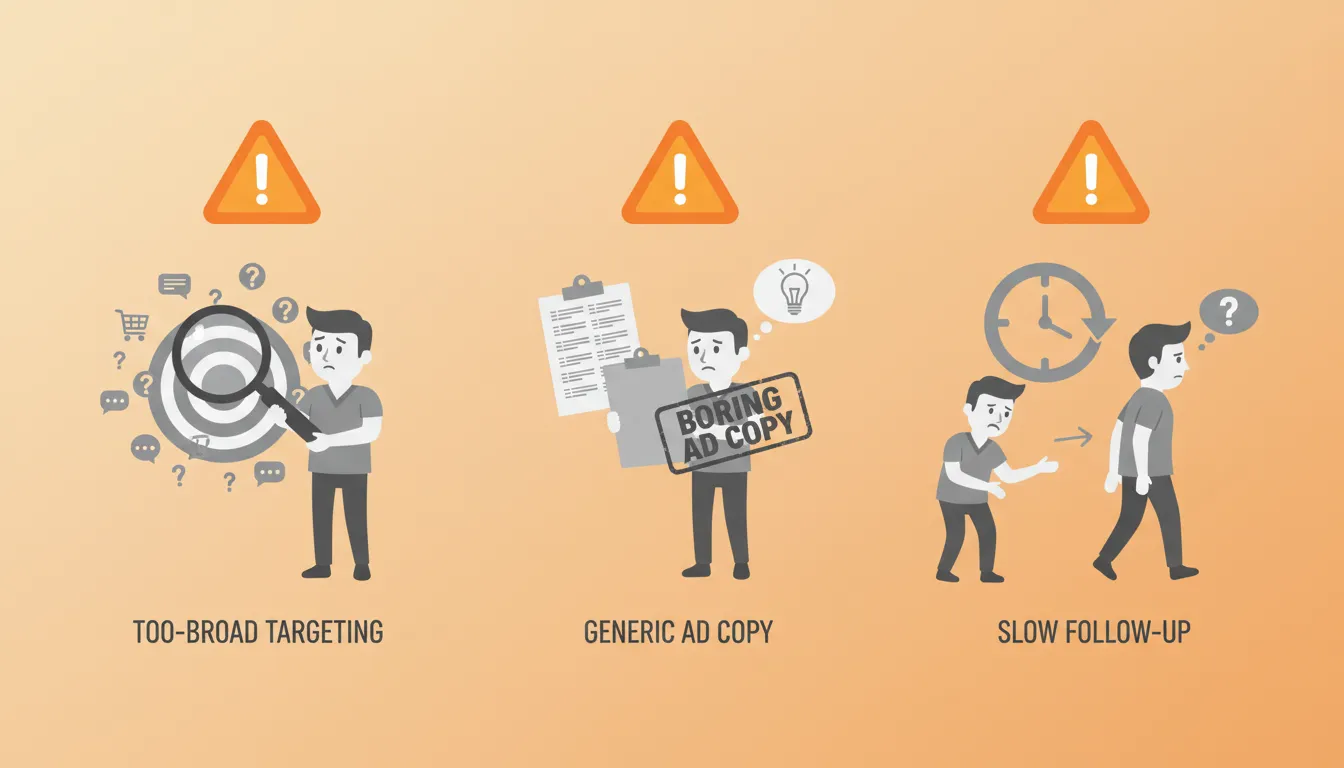
After reviewing hundreds of chiropractic ad campaigns, the same mistakes show up over and over. Here's what to avoid.
Mistake 1: Targeting "Everyone With Back Pain"
This is the single biggest error I see.
Broad targeting means you're competing with every healthcare provider in your area for the same eyeballs. Your ad gets lost in the noise.
The Fix: Use your Wedge strategy to target specific segments. "Tech workers in [city] aged 25-45" beats "adults interested in wellness" every time.
Mistake 2: Leading With Discounts
The "$29 Exam Special" might generate leads. But they're the wrong leads.
You're training your market to see chiropractic as a commodity, not a valuable health service.
The Fix: Lead with education and positioning. Make the offer a consultation or assessment, not a discounted service. Attract patients who want transformation, not transactions.
Mistake 3: Ignoring Mobile Experience
Over 80% of Facebook traffic comes from mobile devices.
If your landing page loads slowly, displays poorly, or has tiny form fields on mobile, you're bleeding conversions.
The Fix: Test your entire funnel on mobile before launching. Use large buttons, minimal form fields, and click-to-call options.
Mistake 4: One Ad, Forever
Ad fatigue is real.
When the same people see the same ad repeatedly, engagement drops and costs rise. Facebook's algorithm stops showing it to new audiences.
The Fix: Refresh creative every 2-4 weeks. Use AI to generate new variants quickly. Rotate hooks, images, and offers to maintain freshness.
Mistake 5: No Post-Click Strategy
Your ad gets the click. Then what?
If leads land on your homepage (or worse, a generic "Contact Us" page), you've wasted the click.
The Fix: Build dedicated landing pages that match your ad's message and offer. Include specific testimonials, a clear form, and an immediate next step.
Mistake 6: Manual Follow-Up Only
Relying on your front desk to follow up with leads during business hours isn't a strategy.
It's a hope. And hope isn't a plan.
The Fix: Implement AI-powered lead response that works 24/7. Even if you want human follow-up for certain conversations, ensure the initial response is instant and automated.
FAQ: AI Ad Copy for Chiropractors
What is the best AI tool for writing chiropractic ad copy?
For chiropractic practices, Jasper and Copy.ai are the top choices in 2026.
Jasper excels at maintaining brand voice consistency across campaigns and offers healthcare-specific templates. Copy.ai is faster for high-volume ad variations and more budget-friendly for solo practitioners.
Both integrate with major ad platforms like Meta and Google.
If you're just starting out, ChatGPT or Claude with well-crafted prompts can get you 80% of the results at a fraction of the cost.
How do I stay HIPAA compliant with chiropractic Facebook ads?
HIPAA compliance requires careful attention to both ad content and tracking.
Never use patient identifiers or testimonials without explicit written consent. Avoid specific outcome claims. Disable or heavily restrict Meta Pixel tracking on health-related pages.
Here's the key issue. Meta doesn't sign Business Associate Agreements.
Any patient data flowing back to the platform through pixels or conversion tracking creates potential liability. Use server-side conversion tracking that filters PHI, don't create lookalike audiences from patient data, and use HIPAA-compliant lead capture forms like Meta's instant forms.
Are AI-generated ads more effective than human-written ads in 2026?
AI-generated ads aren't automatically better. They're faster and more scalable.
The real advantage comes from AI's ability to create multiple variants quickly for A/B testing. You can test 20 different hooks in the time it would take to write two manually.
Top-performing chiropractic ads combine AI-generated copy with human oversight for compliance, brand voice, and emotional resonance.
The practices winning use AI for volume and iteration while humans handle strategy and quality control.
How long should a chiropractic ad be for the best conversion?
Facebook primary text performs best at 125-250 characters for awareness campaigns and 250-500 characters for lead generation.
Headlines should be 5-10 words maximum.
Video ads should hook viewers within the first 3 seconds and deliver the core message in 15-30 seconds.
Longer isn't better. Clarity, a compelling hook, and a strong offer beat length every time. Test different lengths and let your audience's behavior guide you.
What are the best prompts for chiropractic lead-gen ads?
The most effective prompts use the PAS framework. Here's a template:
"Write a Facebook ad for a chiropractic practice targeting [specific audience] experiencing [specific problem]. Agitate the problem by describing [consequence], then position [specific service] as the solution. Include a low-friction offer like [free consultation/assessment]. Tone should be conversational and empathetic, not salesy."
Customize with your location, specialty, and actual patient pain points for best results.
How do I use AI to find my chiropractic practice's Wedge?
Your Wedge is the specific, low-friction entry point that attracts ideal patients.
Start by prompting AI to analyze common chiropractic patient segments and suggest narrow targeting opportunities based on your location and specialties.
Test desk-posture neck pain vs. sports recovery vs. chronic headaches vs. post-pregnancy alignment.
Your Wedge is where you get the lowest cost-per-lead with the highest patient lifetime value. Let data from small-budget tests guide your focus before scaling
Why is my cost-per-lead so high in 2026?
High CPL typically stems from one or more issues.
Targeting too broad. Running generic "back pain" ads instead of condition-specific campaigns. Poor landing page experience. Slow follow-up on leads. Meta's new healthcare advertising restrictions limiting your optimization options.
AI tools help you create more targeted, compliant ad variants to test your way to lower costs.
Focus on narrowing your Wedge, improving your landing page conversion rate, and ensuring instant lead follow-up.
Can I use AI to create ad images for my clinic?
Yes, tools like AdCreative.ai and Jasper Art generate ad visuals optimized for conversion.
But be cautious with AI-generated healthcare imagery. Avoid anything that could be misinterpreted as a specific patient or outcome.
Stock-style educational graphics, infographics, and practice photos typically perform better than AI-generated "patient photos" which can feel inauthentic.
Use AI for rapid iteration on visual concepts, but maintain authenticity with real practice imagery where possible.
Conclusion
AI ad copy for chiropractors in 2026 isn't about replacing human creativity.
It's about scaling what works.
The practices dominating their markets are using AI to find their Wedge, generate compliant ad variants at speed, and ensure every lead gets instant follow-up.
The old playbook of generic "back pain" ads and discount offers is dead.
Meta's algorithm rewards personalized patient education. HIPAA compliance demands careful attention to data flows. And patient expectations require instant response times that manual processes can't deliver.
Here's your action plan:
- Identify your Wedge using the AI prompts in this guide
- Create multi-variant campaigns using the PAS framework
- Implement compliant tracking that protects patient data
- Automate lead follow-up with AI-powered response systems
- Measure what matters and iterate based on data
The chiropractors who implement these strategies consistently see 30-50% lower patient acquisition costs than those still running 2020-style campaigns.
The technology is accessible. The frameworks are proven.
The only question is whether you'll act on it.
Look, I get it—this is a lot to take in when you're already running a practice and treating patients all day.
If you're thinking "this all makes sense, but I don't have time to do it right," you're not alone. Most successful chiropractors we work with felt the same way before they realized their website and online presence were quietly costing them 15-20 qualified patient leads every single month.
That's why we created our Free Website Conversion Analysis. It's not a sales pitch—it's a genuine walkthrough of the 3 biggest problems killing your bookings, delivered personally via Loom video within 24 hours.
We'll show you exactly:
- Why visitors leave without booking
- What's broken on mobile devices (where most searches happen)
- Missing trust signals costing you patients
- Where you rank vs. local competitors
- Simple fixes that drive more calls this month
You'll also get an instant case study while you wait, showing real examples of how other chiropractors fixed these exact problems.
Get your free analysis here — no credit card, no obligation, just actionable insights you can use whether you work with us or not.
Because every day you wait to fix your ad and website strategy is another day your competitors are getting patients who should be walking through your door.

Gerek Allen
Co-Owner iTech Valet
Entrepreneur, patriot, CrossFit junkie, IPA enthusiast, loves to travel to tropical destinations, and knows way too many movie quotes.


About iTech Valet
iTech Valet specializes in web design and content marketing for online entrepreneurs who want to share their expertise.
Services Include:
- Web Design
- Graphic Design
- Sales Copy
- Funnel Building
- Authority Sites
- Membership Sites
- Course Creation
- Email Systems
- Content Marketing
- Competitive Analysis
- Tech Integrations
- Strategic Planning
NEED MORE CLIENTS?
Free conversion-focused analysis uncovers the 3 biggest problems killing your bookings — we'll walk you through your results personally

621 Enterprises, Inc. | Copyright 2022 | All rights reserved