


How Do I Track Phone Calls from My Chiropractic Marketing? (ROI Measurement)
 by Gerek Allen ~ Last Updated: December 2nd, 2025 ~ 10 Min Read
by Gerek Allen
~ Last Updated: December 2nd, 2025 ~
~ 10 Min Read ~
Install HIPAA-compliant call tracking software that assigns unique phone numbers to each marketing campaign. The software records which ads, keywords, or channels generate calls, then shows you cost per call, conversion rates, and actual ROI.
Here's the reality: according to healthcare marketing research, 88% of healthcare consumers go straight from Google search to phone call. Can't track those calls? You're burning money.
For solo chiropractors, start with CallRail at $45/month. You'll get dynamic number insertion, call recording, and Google Ads integration.
Bigger practices with 100+ calls monthly? Consider Invoca or CallTrackingMetrics for AI-powered conversation analysis.
The key is connecting every single call to the exact marketing source. Otherwise you're guessing what works.
Why Call Tracking Matters for Chiropractic Marketing ROI
Let's keep it real.
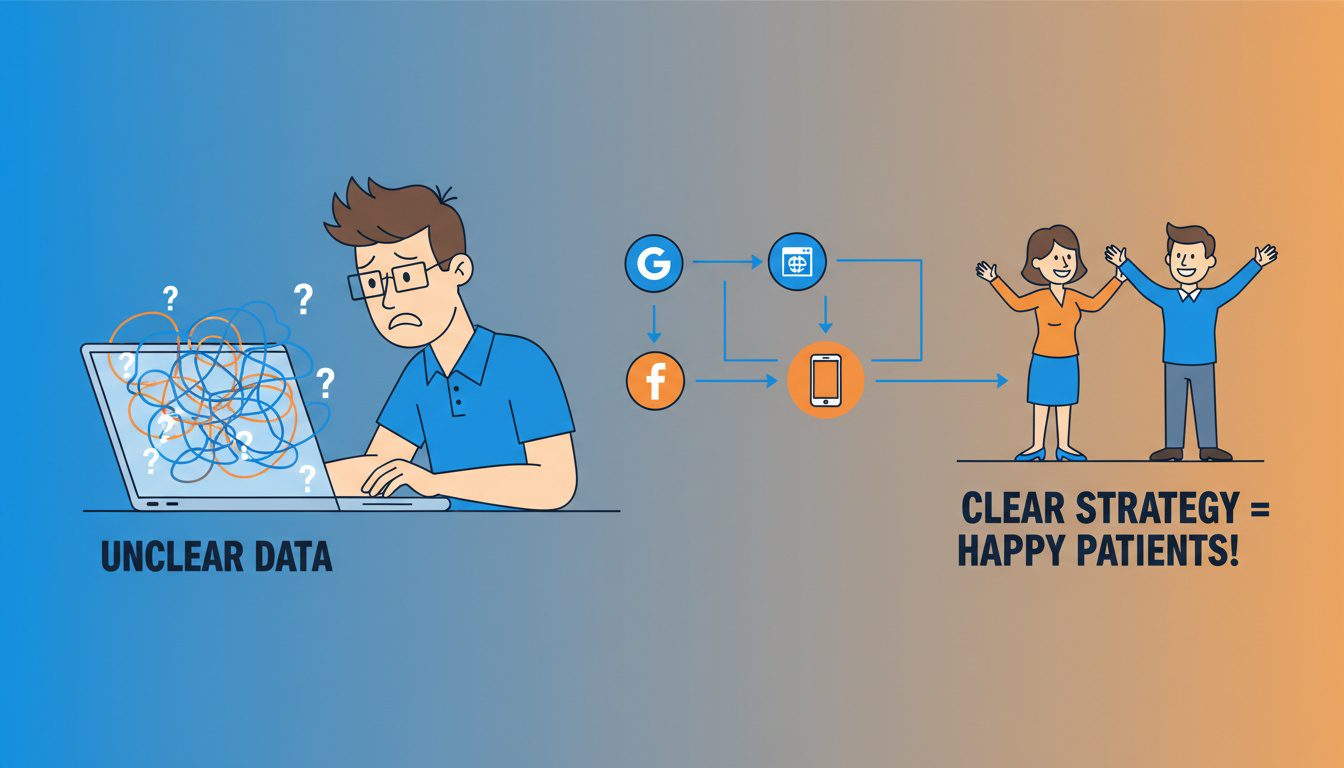
You're spending money on Google Ads, Facebook campaigns, your website, maybe some print stuff. Patients call. Some book. Some don't.
But here's the question: Which marketing actually drove those calls?
Most chiropractors have zero idea. They're flying blind, spending thousands monthly without knowing if Google Ads generated one patient or twenty.
That's not marketing. That's gambling.
The Hidden Cost of Not Tracking Calls
When you can't track calls back to specific campaigns, you waste money three ways:
- You keep paying for marketing that doesn't work - That Facebook ad with 10,000 impressions might generate zero calls. Without tracking, you'd never know. You just keep paying $500/month for likes and shares.
- You underfund campaigns that crush it - Your Google Ads might generate 15 calls at $30 each, converting 40% into patients. That's gold. But you don't realize it's your best performer, so you never increase the budget.
- You can't optimize what you can't measure - Maybe "back pain treatment" converts at 50% while "chiropractor near me" converts at 10%. Without tracking, both look identical in your ad dashboard. Just clicks and impressions.
Here's the kicker: according to conversion research, most practices convert only 5% of website visitors into patients.
You're losing 95% of your traffic because you can't see where it breaks down.
What Makes Healthcare Call Tracking Different
Healthcare isn't like selling widgets. You need specific features:
- HIPAA compliance is non-negotiable - You need software that signs a Business Associate Agreement and encrypts everything. Generic call tracking? Not good enough.
- Call quality beats call quantity - A 30-second "what are your hours?" call isn't worth the same as a 5-minute consultation about chronic pain. Healthcare tracking needs quality scoring.
- The buying journey is longer - People research. They compare. They call multiple practices. Your tracking needs multi-touch attribution to connect all those touchpoints.
- Conversations contain critical intel - What symptoms do callers mention? What objections prevent booking? AI-powered analysis extracts this from recorded calls.
Sound fair?
Real ROI Numbers from Call Tracking
Let me show you what happens when chiropractors actually track their calls.
One practice was spending $3,000 monthly across Google Ads, Facebook, and SEO. Before call tracking? "Everything seems to work pretty well."
After implementing CallRail for 60 days, here's what they discovered:
| Google Ads | $2,000 | 45 | $44 | 35% | 16 |
| $1,000 | 8 | $125 | 12% | 1 | |
| SEO/Organic | $0 | 22 | $0 | 45% | 10 |
Look at that Facebook performance. $125 per call with 12% conversion? That's $1,000 for one patient.
Meanwhile Google Ads delivered 16 patients for the same $2,000.
They immediately cut Facebook by 80%, doubled down on Google Ads, and used the savings for better SEO content.
Within three months? 40% increase in new patients with the same total budget.
That's the power of knowing where your calls actually come from.
Understanding Call Tracking Technology
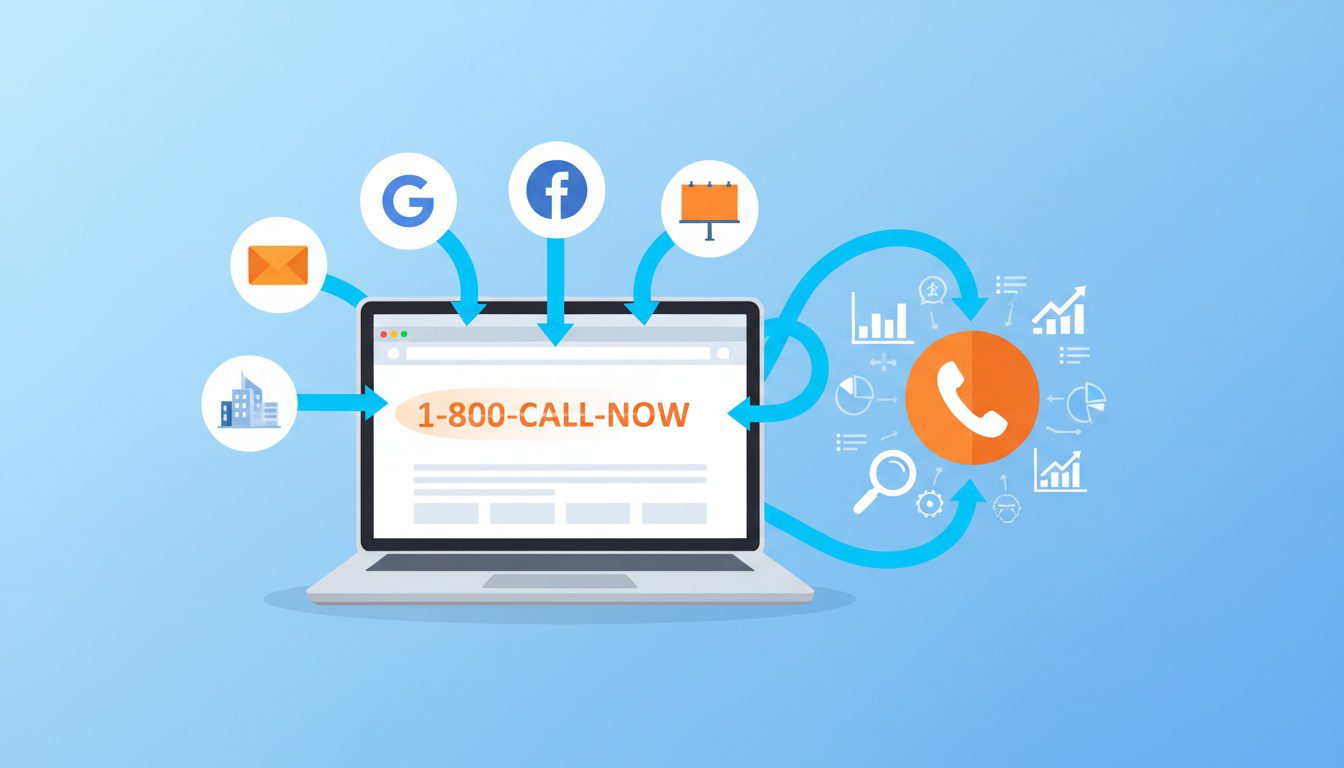
Call tracking isn't magic. It's straightforward tech that connects phone calls to marketing sources.
Here's how it works.
Static vs. Dynamic Number Tracking
Two types. Both matter.
Static tracking assigns one unique number per channel:
- One number for your website
- Different number for print ads
- Another for billboards
- Separate number for radio
When someone calls any number, the software knows which channel it came from.
Perfect for offline marketing where you can't change the displayed number. Your Yellow Pages ad shows (555) 123-4567. Your postcards show (555) 123-4568.
The limitation? Static can't tell you which specific webpage, keyword, or ad within that channel drove the call.
Dynamic tracking changes the displayed number based on how each visitor found you:
- Someone clicks your Google Ad → sees tracking number A
- Someone finds you through Facebook → sees tracking number B
- Someone arrives from organic search → sees tracking number C
This requires JavaScript on your website that swaps numbers dynamically. The visitor never knows. They just see what looks like your normal number.
But behind the scenes? The software tracks exactly which campaign, keyword, and ad brought them there.
Most practices need both. Static for offline marketing. Dynamic for digital campaigns.
| Static | Print, radio, billboards | Which channel drove call | Easy |
| Dynamic | Website, digital ads | Campaign, keyword, and ad | Medium |
How Dynamic Number Insertion Works
Let's walk through what happens when someone visits your site.
They click your Google Ad. Google passes campaign data in the URL. Your tracking script grabs that data and assigns a unique number from your pool. The script replaces your default number with the tracking number.
Visitor sees the tracking number and calls it.
Call routes to your actual business line. But the software records everything—time, duration, caller ID, and the marketing source that brought them.
When the call ends? All this data flows into your dashboard and integrates with Google Ads, Google Analytics, and your CRM.
Now you can see: "Google Ads campaign 'Sports Injury' generated 8 calls this week at $35 per call, with 4 converting to appointments."
The visitor experiences this seamlessly. They never know they saw a tracking number. They just call and reach your front desk immediately.
Call Recording and Conversation Intelligence
Basic call tracking counts calls and shows sources.
Advanced call tracking listens to what actually happens on those calls.
Call recording captures audio of every marketing call. You can review recordings to see why some calls book and others don't.
Maybe your front desk mentions pricing too early. Maybe they don't ask about insurance. Maybe they sound rushed during peak hours.
According to studies, companies integrating call tracking see 25-30% conversion increases just from training improvements based on recorded calls.
That's huge.
AI-powered conversation intelligence takes this further:
- Transcribes every call automatically
- Identifies keywords mentioned (insurance, pricing, specific treatments)
- Scores call quality based on conversation elements
- Flags calls that mentioned buying signals or concerns
Example: The AI notices 60% of callers who mention "car accident" don't book because they're asking about PI billing.
You create targeted follow-up addressing PI billing questions. Convert more of these calls into patients.
Integration with Marketing Platforms
Call tracking becomes exponentially more powerful when connected to your other tools.
Google Ads integration is critical. When calls flow into Google Ads as conversions, the platform's AI optimizes toward calls, not just clicks.
You'll spend more on keywords that generate calls. Less on keywords that generate clicks without phone contact.
You can also set up automated bidding strategies targeting specific cost per call. Tell Google "I want calls at $50 each" and it adjusts bids automatically.
Google Analytics integration shows the complete journey:
Someone found you through organic search → visited three blog posts about sciatica treatment → clicked your Google Ad a week later → called.
That's multi-touch attribution. Understanding the entire path, not just the last click.
CRM integration closes the loop by connecting calls to patient records:
- Someone calls → tracking software passes phone number and source to CRM
- They book appointment → CRM logs it
- They become patient → lifetime value flows back to tracking platform
Now you calculate true ROI: "Google Ads cost $2,000, generated 40 calls, converted 12 into patients with $3,500 average lifetime value. Total revenue: $42,000. ROI: 2,000%."
That's the insight that transforms marketing from expense into investment.

NEED MORE CLIENTS?
Free conversion-focused analysis uncovers the 3 biggest problems killing your bookings — we'll walk you through your results personally

Choosing the Right Call Tracking Software
Not all call tracking platforms work equally well for chiropractic practices.
Some are built for enterprise call centers. Others work great for home services but lack healthcare features.
Here's how to choose.
Essential Features for Chiropractors
Before comparing platforms, understand what your practice actually needs:
- HIPAA compliance is mandatory - The software must sign a Business Associate Agreement, encrypt all data, provide role-based access controls, and maintain audit logs. Don't compromise.
- Dynamic number insertion for website tracking - Essential if you run any digital marketing. Without it, you can't track which online campaigns drive calls.
- Call recording with privacy controls - Helps train staff and improve conversions. But you need controls to stop recording when protected health info gets discussed.
- Marketing platform integrations - At minimum, Google Ads and Google Analytics. Facebook Ads if you use it. CRM integration valuable but not always necessary for smaller practices.
- Call quality scoring and intelligence - Basic scoring uses call duration. Advanced AI scoring analyzes conversation content, sentiment, and outcome.
Mobile-friendly dashboard access - Your office manager should check performance from their phone, not just desktop.
Platform Comparison and Pricing
Let's compare the three most popular options for chiropractic practices.
CallRail is the most popular choice for small to medium practices:
- Plans start at $45 monthly for 10 tracking numbers and basic features
- You get dynamic number insertion, call recording, Google Ads integration, solid reporting
- Interface is intuitive—your front desk learns it in 30 minutes
- Setup takes 1-2 hours if you're comfortable with basic website code
- Customer support is responsive for non-technical users
Limitations? Advanced AI features cost extra. International tracking is limited. Some users report Google Analytics integration issues.
Best for: Solo practitioners and small practices (1-3 locations) running Google Ads or Facebook with budgets under $5,000 monthly.
CallTrackingMetrics offers more features at higher complexity:
- Plans start around $65 monthly, scale based on call volume
- Everything CallRail offers plus outbound tracking, texting, sophisticated routing
- AI-powered conversation analytics are strong
- According to their data, customers see 25-30% conversion increases from better attribution
The learning curve is steeper. Expect a full day of setup and training. But once configured, it's powerful.
Best for: Multi-location practices or those spending $5,000-15,000 monthly who need sophisticated attribution and call center features.
Invoca is the enterprise option with advanced AI:
- Pricing isn't publicly disclosed—expect $300-500+ monthly minimums
- Industry-leading conversation AI that automatically tags calls, scores quality, identifies intent, predicts outcomes
- AI detects when callers mention specific treatments, insurance, or pricing concerns
- Intelligence flows directly to CRM and advertising platforms
The downside? Overkill for most small practices. Designed for healthcare systems managing hundreds of calls daily.
Best for: Large multi-location practices, healthcare groups, or practices spending $20,000+ monthly who need enterprise-grade conversation analytics.
Decision Framework by Practice Size
Match your choice to your practice reality:
Solo practitioner or single location with basic marketing:
- Start with CallRail at $45-65/month
- Focus on tracking Google Ads and website calls
- Use call recordings to train front desk staff
- Upgrade later if you scale marketing
Small practice (2-4 locations) with moderate marketing spend:
- Consider CallTrackingMetrics at $65-150/month
- Implement across all locations with centralized reporting
- Use multi-channel attribution for Google, Facebook, and SEO
- Train staff on call quality scores and conversion optimization
Large practice or healthcare group with serious marketing:
- Evaluate Invoca with custom pricing
- Require AI-powered conversation intelligence
- Integrate deeply with CRM and all advertising platforms
- Justify cost through conversion improvements and waste elimination
The key is starting somewhere. Even basic call tracking with CallRail is infinitely better than no tracking at all.
Step-by-Step Implementation Guide
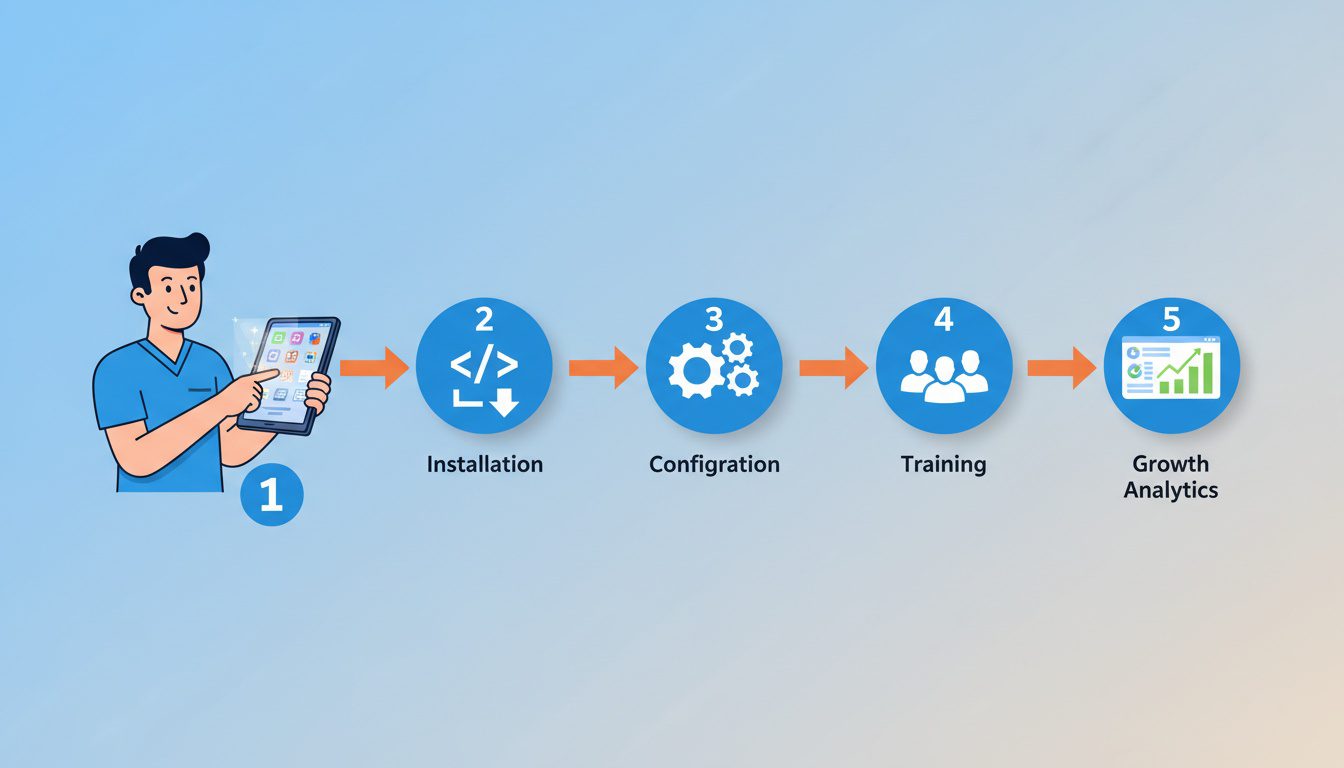
Implementing call tracking takes 2-4 hours spread across a week if you follow this systematic approach.
Don't try doing everything at once. Build momentum with early wins.
Week 1: Platform Setup and Number Assignment
Day 1-2: Choose and sign up
Start your free trial with CallRail or CallTrackingMetrics. During signup:
- Select a plan
- Choose local tracking numbers (match your area code)
- Verify business information
Pick numbers that look local to callers. Most platforms include 10 tracking numbers in basic plans—enough for most small practices.
Sign the Business Associate Agreement immediately. Both CallRail and CallTrackingMetrics offer HIPAA-compliant plans, but you must explicitly request the BAA.
Day 3-4: Install tracking code on your website
Your platform provides a JavaScript tracking snippet. If you're using WordPress, add this code to your site's header section.
The code enables dynamic number insertion—automatically swapping your phone number based on traffic source.
Test it by visiting your site from different sources (Google search, direct URL, Facebook). Verify the phone number changes each time.
Not comfortable with code? Your web developer handles this in 30-60 minutes. Or hire the platform's professional services for $150-300.
Day 5-7: Assign static numbers to offline campaigns
Create a spreadsheet tracking each channel and its assigned number:
- (555) 123-4501 = Google Ads
- (555) 123-4502 = Facebook Ads
- (555) 123-4503 = Yelp listing
- (555) 123-4504 = Print advertising
- (555) 123-4505 = Direct mail
- (555) 123-4506 = Billboard
- (555) 123-4507 = Radio ads
Update these numbers in each channel. Digital channels take minutes. Print materials update on the next print run.
Configure call routing so all tracking numbers forward to your main business line. Test each number to verify calls route correctly.
Week 2: Marketing Integration Setup
Connect Google Ads for conversion tracking
Log into Google Ads → Tools → Conversions. Click "New conversion action" and select "Phone calls."
In your call tracking platform, navigate to integrations and follow the Google Ads connection wizard. Authorize and map your goals to Google Ads conversions.
Within 24 hours, you'll see calls appearing as conversions. The platform can now optimize campaigns toward phone calls, not just clicks.
Integrate Google Analytics for journey tracking
In Google Analytics, set up a new goal for phone calls. Navigate to Admin → Goals → New Goal. Select "Custom" and choose "Event."
Your call tracking software sends events to Google Analytics whenever someone calls. Configure the event category, action, and label to match your software's format.
Test by making a call from your website. Verify it appears as a completed goal in Google Analytics within 24 hours.
Configure CRM integration (optional but valuable)
If you use HubSpot or Salesforce, connect it to your call tracking platform. This creates contact records for each caller, logs call activity, and tags contacts with marketing source.
When that caller becomes a patient, the CRM tracks lifetime value. This data flows back to your tracking platform, enabling true ROI calculation.
HubSpot integration is straightforward (30 minutes). Salesforce takes longer (2-3 hours or hire a consultant).
Week 3: Team Training and Call Quality Optimization
Train your front desk on call handling
Review recordings of recent calls with your team. Listen to both successful bookings and lost opportunities.
Identify patterns—what do successful calls have in common? Where do unsuccessful calls go wrong?
Create a simple phone script covering:
- Warm greeting and practice name
- Open-ended question about their chief complaint
- Empathetic response acknowledging their pain
- Clear explanation of next steps
- Calendar access for immediate scheduling
- Insurance verification process
- Confirmation and reminder about paperwork
Role-play scenarios with your team. Practice handling objections like "How much does it cost?" and "Do you take my insurance?"
According to healthcare call performance research, practices implementing training and scripts achieve 80% booking rates, compared to 30-40% without training.
Implement call scoring and quality metrics
Configure automatic call scoring in your platform. Set up rules:
- Calls under 60 seconds = Low quality
- Calls 60-180 seconds = Medium quality
- Calls 180+ seconds = High quality
- Calls mentioning "book" or "appointment" = Conversion intent
Create a weekly report showing each team member's metrics:
- Total calls handled
- Average call duration
- Conversion rate (scheduled / total calls)
- Call quality score
Review metrics in brief weekly meetings. Celebrate wins. Identify improvement areas.
Week 4: Analysis and Optimization
Review your first month of data
Generate reports showing:
- Total calls by marketing source
- Cost per call by campaign
- Conversion rate by source
- Estimated ROI by channel
Look for obvious winners and losers. Which campaigns generate high-quality calls at low cost? Which generate expensive calls that don't convert?
Cut underperforming campaigns
Be ruthless.
If a campaign generated 20 calls over 30 days with zero conversions, it's not working. Cut the budget by 50-100% and reallocate to better performers.
Example: Your Facebook campaign cost $800 and generated 8 calls ($100 per call) with 12% conversion. That's $800 for one patient.
Meanwhile, your Google Ads cost $1,200 and generated 40 calls ($30 per call) with 35% conversion—14 patients from the same channel.
Obvious move: Cut Facebook to $200 monthly. Increase Google Ads to $1,800.
You'll likely add 10-15 new patients monthly with the same total budget.
Double down on what works
When you find campaigns generating quality calls at reasonable cost with strong conversion, scale them aggressively.
Increase budget by 50-100% and monitor performance weekly.
This is where most chiropractors leave money on the table. They find a winning campaign generating patients at $150 acquisition cost, but they only spend $500 monthly.
Meanwhile, they could triple spending and triple patient volume at the same cost per patient.
Scale winners until performance degrades. Then pull back slightly to optimal spend.
Measuring True Marketing ROI
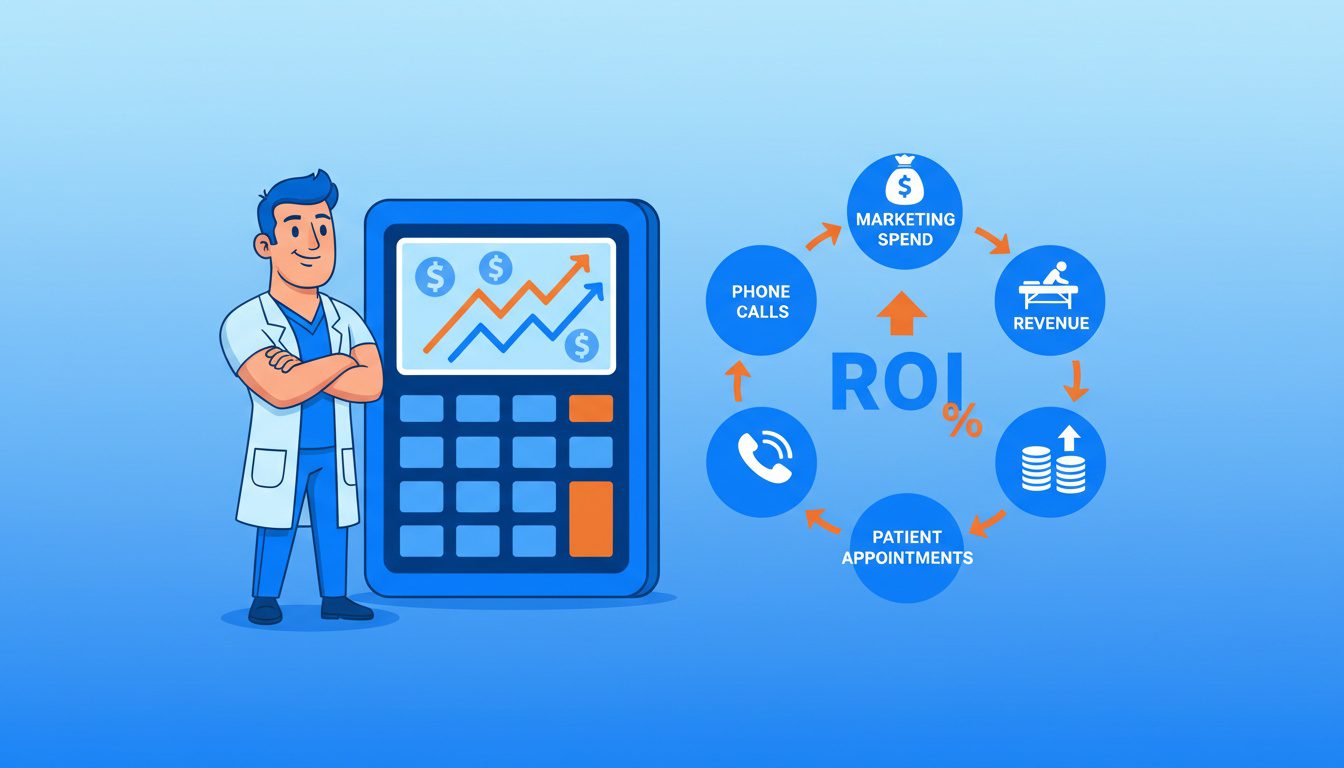
Call tracking gives you data.
ROI measurement turns that data into actionable insights about what marketing actually makes money.
Essential Metrics to Track
Most chiropractors track vanity metrics that don't matter. Here's what actually counts:
Cost per call shows how efficiently campaigns generate interest:
- Divide total marketing spend by total calls for each campaign
- Google Ads costs $1,500, generates 50 calls = $30 per call
- Facebook costs $500, generates 5 calls = $100 per call
Even without conversion data, you see Facebook is less efficient at generating interest.
Target varies by market. Competitive markets like LA might see $50-75 per call. Smaller markets might achieve $20-35.
Conversion rate from call to appointment reveals front desk performance:
- Divide scheduled appointments by total calls
- 40 calls, 16 booked = 40% conversion rate
Industry benchmarks suggest 30-40% is average for healthcare without training. Top practices with trained staff achieve 60-80%.
According to chiropractic conversion research, improving phone conversion from 30% to 50% can triple patient acquisition without spending more on marketing.
This metric is entirely within your control. Better scripts, training, and call handling directly improve conversion without spending another dollar on ads.
Cost per patient acquisition combines cost per call and conversion rate:
- Divide cost per call by conversion rate
- Calls cost $30 each, 40% conversion = $75 cost per acquisition ($30 ÷ 0.40)
That's the number that matters—how much you spend to get one new patient in the door.
Compare this across all campaigns. Some generate cheap calls that don't convert. Others generate expensive calls that convert at high rates.
The campaign with the lowest cost per patient acquisition wins.
Patient lifetime value determines whether acquisition cost makes sense:
- Track average revenue from a new patient over their entire relationship
- Average patient visits 12 times at $75 per visit = $900 lifetime value
- Acquisition cost is $75 = $825 profit
- That's 1,100% ROI—every dollar spent makes $11 profit
But if lifetime value is only $300 and acquisition costs $150, you're barely breaking even.
You need to either increase patient retention (raising lifetime value) or decrease acquisition costs (improving marketing efficiency).
ROI Calculation Framework
Here's the formula that matters:
(Patient Lifetime Value × Conversion Rate × Calls) - Total Marketing Spend = Net Profit
Let's work through a real example:
Campaign: Google Ads targeting "chiropractor for back pain" in Austin, TX
- Monthly spend: $2,000
- Calls generated: 45
- Cost per call: $44
- Conversion rate: 35%
- New patients: 16 (45 × 0.35)
- Patient lifetime value: $1,200
- Total patient revenue: $19,200 (16 × $1,200)
- Net profit: $17,200 ($19,200 - $2,000)
- ROI: 860% ($17,200 ÷ $2,000)
That's a campaign worth scaling aggressively. Every dollar invested returns $8.60 in profit.
Now compare to a different campaign with the same spend but different results:
Campaign: Facebook ads promoting free consultation
- Monthly spend: $2,000
- Calls generated: 18
- Cost per call: $111
- Conversion rate: 15%
- New patients: 3 (18 × 0.15)
- Patient lifetime value: $1,200
- Total patient revenue: $3,600 (3 × $1,200)
- Net profit: $1,600 ($3,600 - $2,000)
- ROI: 80% ($1,600 ÷ $2,000)
Still profitable, but barely. Cost per acquisition is $667—more than half the lifetime value.
You'd immediately cut this campaign to $500 monthly and reallocate $1,500 to the Google Ads campaign generating 860% ROI.
Building Monthly ROI Reports
Create a simple spreadsheet template updated monthly:
| Google Search | $2,000 | 45 | 16 | 860% |
| Google Display | $500 | 8 | 2 | 380% |
| $500 | 5 | 1 | 140% | |
| SEO/Organic | $0 | 22 | 9 | ∞% |
Share this report with your team monthly. Celebrate wins. Discuss changes for the upcoming month.
This keeps everyone aligned on what marketing actually drives patients and profitability.
When everyone understands that your Google Search campaign generates $17,200 profit monthly from a $2,000 investment, they stop questioning the marketing budget.
Common Call Tracking Mistakes to Avoid

Most practices make the same avoidable mistakes.
Learn from others' errors instead of experiencing them yourself.
Tracking Setup Errors
Mistake 1: Not using enough tracking numbers
Some practices try tracking everything with 2-3 numbers. One for "website," one for "advertising."
This provides zero useful data. You can't optimize what you can't measure at granular level.
Get enough numbers to track each significant campaign separately:
- Google Ads (dynamic website tracking)
- Facebook Ads
- SEO/organic traffic
- GMB listing
- Each offline campaign (print, radio, direct mail)
Most platforms include 10 numbers in basic plans. Use all of them.
Mistake 2: Installing tracking code incorrectly
Dynamic number insertion requires JavaScript. If your code loads after the page renders, visitors see your default number flash before the tracking number replaces it.
They might call the wrong number. Breaking attribution.
The code must load in your site's header, before body content. Test thoroughly from different traffic sources and devices.
If you see number flashing or inconsistent display, hire a developer to fix it. Don't accept "mostly working" implementation.
Mistake 3: Forgetting to set up call routing
Tracking numbers are pointless if calls don't reach your front desk.
Configure routing and whisper messages so staff knows which campaign each call came from.
Test every tracking number weekly. Nothing destroys trust faster than a patient calling your advertised number and getting "this number is disconnected."
Data Analysis Mistakes
Mistake 4: Tracking calls but not recording them
You're leaving money on the table if you count calls without listening to conversations.
Recording reveals why calls convert or don't—information you can't get from duration and source data alone.
Maybe your front desk quotes pricing too quickly. Maybe they're not asking about chief complaint. Maybe they sound stressed during peak hours.
You'll never know without listening.
Enable call recording (with proper HIPAA compliance) and review 10-15 recordings weekly.
Mistake 5: Focusing on call volume instead of quality
Chiropractors get excited: "We got 50 calls this month!"
But 40 might be wrong numbers, people asking for directions, insurance companies, spam calls, or existing patients with questions.
Only 10 were actually potential new patients.
You need call quality scoring to filter signal from noise. Set up automated scoring based on:
- Call duration (60+ seconds)
- Source (website visitors are higher intent)
- Conversation content (AI detecting booking language)
Mistake 6: Not connecting calls to patient outcomes
Tracking stops at "appointment scheduled" for most practices.
But did that patient show up? Did they start treatment? What's their lifetime value?
Integrate your call tracking with your CRM or practice management software to follow patients through their entire journey.
This reveals which marketing sources attract high-value patients versus one-time visitors.
You might discover Google Ads generates 3× the call volume but Facebook generates patients with 50% higher lifetime value. That changes your budget allocation completely.
Team and Process Mistakes
Mistake 7: Not training staff on call handling
Your marketing might be perfect. But if your front desk can't convert calls into appointments, you're wasting every advertising dollar.
Industry research shows untrained staff book 30-40% of calls while trained staff book 60-80%.
The difference between 35% and 70% conversion doubles your patient acquisition from the same marketing spend.
Use call recordings for monthly training. Role-play difficult scenarios. Create scripts for common objections.
Make front desk training as important as your marketing strategy.
Mistake 8: Changing too much at once
When practices first see detailed data, they want to fix everything immediately. They change ad copy, adjust landing pages, modify phone scripts, and increase budgets all in the same week.
Now you can't tell which change drove results.
Was it the new ad copy or the improved phone script? You're optimizing blind again.
Change one major element per week. Let it run 7-10 days. Measure impact. Then make the next change.
Mistake 9: Not reviewing data weekly
Call tracking provides real-time insights. Some practices only look at reports monthly or quarterly.
By then, you've wasted weeks of budget on underperforming campaigns.
Block 30 minutes every Friday to review the week's data. Look for dramatic changes in cost per call, conversion rates, or call volume.
Investigate immediately if you see unexpected patterns.
Maybe your Google Ads cost per call doubled because a competitor outbid you. Maybe your Facebook call volume dropped 80% because Facebook disapproved your ad.
Quick responses prevent wasted spend.
Frequently Asked Questions About Call Tracking for Chiropractors
How much does call tracking software cost for chiropractors?
Entry-level call tracking starts at $35-45 per month for basic features with 10 tracking numbers and 500 minutes. CallRail's basic plan runs $45 monthly and includes dynamic number insertion, call recording, and Google Ads integration—enough for most solo practitioners.
Mid-tier solutions run $100-300 monthly with advanced analytics, more tracking numbers, and enhanced integrations. CallTrackingMetrics offers robust features in this range, including AI conversation intelligence and multi-channel attribution.
Enterprise platforms like Invoca cost significantly more but offer AI-powered conversation analysis that automatically tags caller intent, scores lead quality, and optimizes marketing in real-time. Pricing isn't publicly disclosed, but expect minimums of $300-500+ monthly.
Most small chiropractic practices do well with basic plans that include dynamic number insertion, call recording, and Google Analytics integration. You can always upgrade later as your marketing sophistication and call volume grow.
What's the difference between static and dynamic call tracking?
Static tracking uses one unique number per marketing channel. You get one number for your website, a different number for print ads, another for billboards.
When someone calls any number, the software knows which channel generated that call.
This works great for offline marketing where you can't change the displayed number. Your Yellow Pages ad shows (555) 123-4567. Your direct mail postcards show (555) 123-4568. Every call to each number gets attributed to that specific campaign.
Dynamic tracking changes the displayed phone number based on how each visitor found you online. When someone clicks your Google Ad, they see tracking number A. When someone finds you through Facebook, they see tracking number B.
This requires installing tracking code on your website that swaps numbers dynamically. The visitor never knows—they just see what looks like your normal phone number. But the software tracks exactly which campaign, keyword, and even which ad brought them there.
Most practices need both approaches. Use static numbers for offline marketing (print, radio, events) and dynamic numbers for your website and digital campaigns. This provides complete visibility across all marketing channels.
Can I track calls from Google Ads with call tracking software?
Yes, call tracking software integrates directly with Google Ads to show which campaigns, ad groups, and keywords generate phone calls.
The integration is straightforward—authorize the connection in your call tracking dashboard and map call conversions to Google Ads.
Once connected, you'll see calls appearing as conversions in your Google Ads account within 24 hours. This lets Google's AI optimize campaigns toward phone calls, not just website clicks.
The platform automatically adjusts bids to get more calls at your target cost per call.
You can track both calls from call extensions within ads and calls from people who visit your website then dial your number. The software attributes each call to the specific keyword that triggered the ad, showing exact ROI for every search term.
This visibility transforms Google Ads optimization. You'll discover that some keywords cost $75 per call while others cost $15 for the same result. Some ad groups generate 50 calls monthly while others generate 2.
Stop wasting money on underperformers. Scale the winners.
How do I measure ROI from phone calls?
Track three key metrics: cost per call (total ad spend divided by calls), conversion rate (booked appointments divided by total calls), and patient lifetime value (average revenue per patient over their entire relationship with your practice).
Calculate ROI with this formula: (Patient Lifetime Value × Conversion Rate × Total Calls) - Total Marketing Spend = Net Profit. Then divide net profit by marketing spend to get ROI percentage.
Example: You spend $2,000 on Google Ads, generate 50 calls at $40 each, convert 35% into appointments (18 patients), and each patient has $1,500 lifetime value.
- Total revenue: $27,000
- Net profit: $25,000
- ROI: 1,250%
That means every dollar spent on marketing returns $12.50 in profit. Any campaign achieving 200%+ ROI is worth scaling aggressively. Campaigns below 100% ROI need optimization or elimination.
The key is connecting calls all the way through to patient lifetime value. Most practices track calls and conversions but don't connect marketing sources to actual patient outcomes.
Integrate your call tracking with your CRM or practice management software to close this loop and calculate true ROI.
Should I record patient phone calls for HIPAA compliance?
Yes, but choose HIPAA-compliant call tracking software and sign a Business Associate Agreement (BAA). Both CallRail and CallTrackingMetrics offer HIPAA-compliant plans with proper encryption and access controls.
Record only marketing-related calls before patients provide protected health information. Use recordings for training front desk staff on booking techniques and measuring call quality, not for storing medical information or treatment discussions.
Set up recording controls that stop when the conversation shifts to protected health details. Some platforms offer keyword-triggered pause (automatically stopping when someone mentions "symptoms" or "pain level") or manual recording stops your staff can activate.
Never record conversations about treatment plans, patient conditions, or medical history without explicit consent and proper documentation. Focus recordings on the initial contact phase—greeting, scheduling, insurance verification, and booking confirmation.
Store all recordings with encryption at rest and in transit. Limit access to authorized staff only through role-based permissions. Maintain audit logs showing who accessed which recordings and when.
These protections are required for HIPAA compliance and protecting your practice from liability.
What conversion rate should I expect from chiropractic marketing calls?
Healthcare marketing research shows that 88% of online searchers transition directly to phone calls when researching healthcare providers.
This means phone call tracking is essential—most of your patient acquisition happens over the phone, not through form submissions.
For appointment booking, aim for 30-40% conversion from call to scheduled appointment without specific phone training. This is average for healthcare practices.
Top-performing practices with trained front desk staff and proven phone scripts achieve 60-80% booking rates.
The difference between 35% and 70% conversion doubles your patient acquisition from the same marketing spend.
If Google Ads generates 50 calls monthly at $40 each ($2,000 spend), 35% conversion means 18 new patients. Improving to 70% means 35 new patients from the same ad budget.
Industry data from call training systems shows practices implementing receptionist training and call scripts consistently achieve 80% booking rates, compared to 30-40% without training.
Focus on improving this metric before spending more on advertising. Better phone performance is the highest-leverage improvement you can make—it costs almost nothing but doubles your marketing ROI.
Can call tracking help me stop wasting money on bad marketing?
Absolutely.
Call tracking shows exactly which campaigns generate calls and which waste your budget. Without it, you're guessing which marketing works—probably keeping campaigns that look good (high impressions, lots of clicks) but generate zero actual patient calls.
You'll discover:
- Some Google Ads keywords cost $75 per call while others cost $15 for the same result
- Some Facebook ads drive 20 calls monthly while others get zero despite identical spending
- Some marketing channels generate lots of calls that never convert while others generate fewer calls that book at 60%+ rates
According to marketing attribution research, 65% of marketers say comparing effectiveness across channels is "a major challenge" without proper call tracking.
They're spending blindly, hoping something works.
With call tracking, you make data-driven decisions:
- Cut campaigns below 100% ROI
- Maintain campaigns at 100-300% ROI
- Aggressively scale campaigns above 300% ROI
This systematic approach can easily double your patient acquisition with the same total marketing budget—just by reallocating spend from losers to winners.
Most practices waste 30-50% of their marketing budget on channels that don't generate calls or generate calls that don't convert. Call tracking identifies that waste in the first 30 days.
Turning Call Data into Patient Growth
Call tracking isn't just about counting calls and attributing sources.
It's about systematically improving every element of your patient acquisition process until you dominate your local market.
The practices that win implement call tracking, analyze data weekly, train teams monthly, and optimize continuously. They treat marketing as a scientific process with measurable inputs and outputs.
Not a guessing game with unpredictable results.
You now have everything you need to implement call tracking correctly. Choose your platform, install the code, connect your marketing tools, train your team, and start measuring real ROI.
Within 60 days, you'll have clarity most chiropractors never achieve about what marketing actually drives patients to your practice.
Your competition isn't doing this. They're still asking "how did you hear about us?" and trusting patients remember correctly. They're spending money on marketing that doesn't work because they can't measure what generates calls.
That's your advantage.
Use it.
Look, I get it—this is a lot to implement on top of actually running your practice and treating patients.
If you're thinking "this all makes sense, but I don't have time to do it right," you're not alone. Most successful chiropractors we work with felt the same way before they realized their website and online presence were quietly costing them 15-20 qualified patient leads every single month.
That's why we created our Free Website Conversion Analysis. It's not a sales pitch—it's a genuine walkthrough of the 3 biggest problems killing your bookings, delivered personally via Loom video within 24 hours.
We'll show you exactly:
- Why visitors leave without booking
- What's broken on mobile devices (where most searches happen)
- Missing trust signals costing you patients
- Where you rank vs. local competitors
- Simple fixes that drive more calls this month
You'll also get an instant case study while you wait, showing real examples of how other chiropractors fixed these exact problems.
Get your free analysis here — no credit card, no obligation, just actionable insights you can use whether you work with us or not.
Because every day your call tracking sits unimplemented is another day you're spending marketing dollars without knowing what works—and another day patients are choosing your competitors instead.

Gerek Allen
Co-Owner iTech Valet
Entrepreneur, patriot, CrossFit junkie, IPA enthusiast, loves to travel to tropical destinations, and knows way too many movie quotes.


About iTech Valet
iTech Valet specializes in web design and content marketing for online entrepreneurs who want to share their expertise.
Services Include:
- Web Design
- Graphic Design
- Sales Copy
- Funnel Building
- Authority Sites
- Membership Sites
- Course Creation
- Email Systems
- Content Marketing
- Competitive Analysis
- Tech Integrations
- Strategic Planning
NEED MORE CLIENTS?
Free conversion-focused analysis uncovers the 3 biggest problems killing your bookings — we'll walk you through your results personally

621 Enterprises, Inc. | Copyright 2022 | All rights reserved