


Chiropractic E-E-A-T Signals: Build Trust and Rankings
 by Gerek Allen ~ Last Updated: November 27th, 2025 ~ 6 Min Read
by Gerek Allen
~ Last Updated: November 27th, 2025 ~
~ 6 Min Read ~
You're a fantastic chiropractor. You help people find pain relief and live better lives, but getting new patients to find you online feels like a constant battle. You have a great website and offer top-notch chiropractic care, so why aren't you showing up on the first page of Google? The answer often comes down to specific chiropractic E-E-A-T signals.
It's a strange acronym, but it represents everything Google and other search engines want to see from your practice online. Getting this right isn't about a secret trick; it's about showing Google what your future patients need to know. It is about proving you are who you say you are, a true expert providing valuable chiropractic services.
Once you understand the core of these chiropractic E-E-A-T signals, you can start making changes that build real momentum. These efforts improve your search engine rankings and establish your chiropractic clinic as a credible health resource.
What is Google's E-E-A-T?
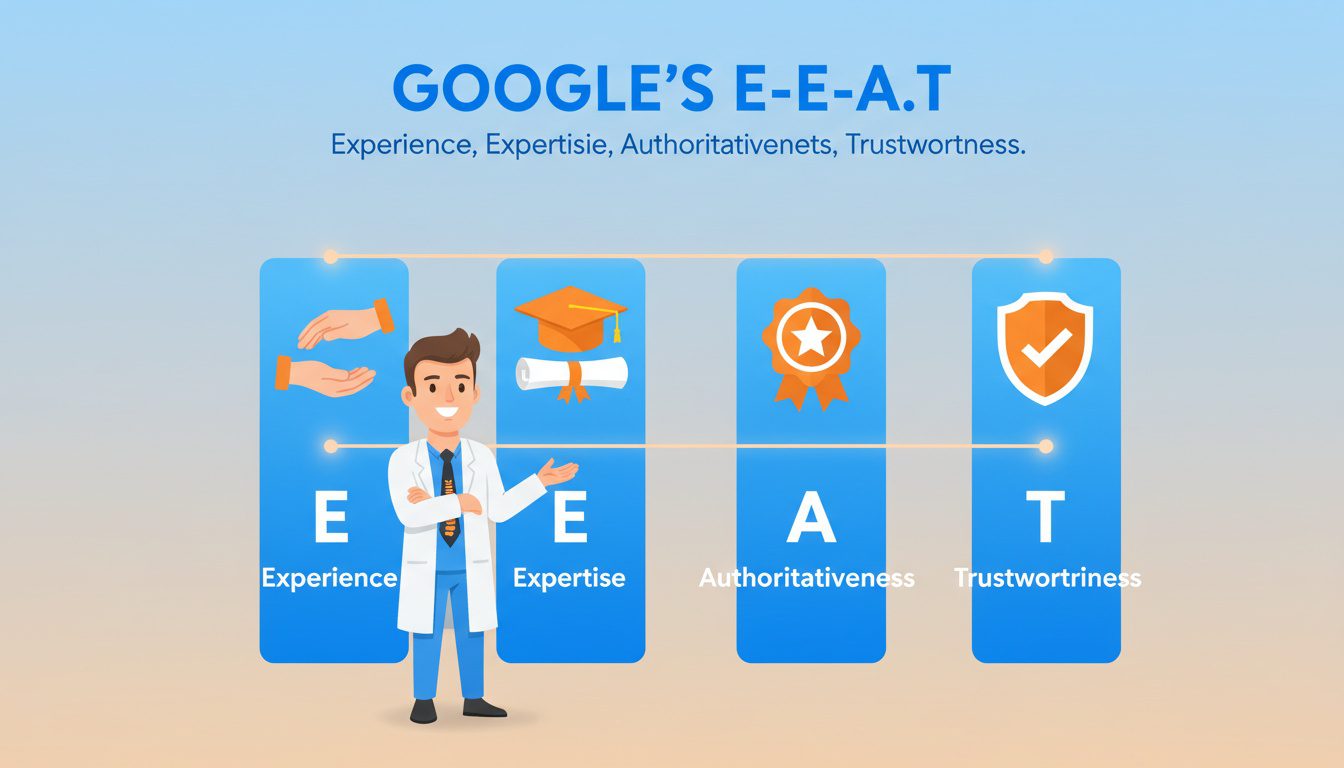
E-E-A-T stands for Experience, Expertise, Authoritativeness, and Trustworthiness. It is a framework Google uses to figure out which websites offer high-quality, helpful information and a positive user experience.
Google's official Search Quality Rater Guidelines provide detailed criteria that human reviewers use to evaluate content quality and E-E-A-T signals.
This is extremely important for chiropractors because you operate in a Your Money or Your Life (YMYL) category.
YMYL topics can impact a person's health, happiness, or financial stability, so Google holds websites like yours to a much higher standard than, say, for example, a hobbyist blog about model trains.
This heightened scrutiny means your website content needs to be impeccable. Google needs to be certain that the advice you provide about back pain or a spinal adjustment is safe and accurate. Here is a simple way to look at each part of this critical framework.
- Experience: Have you actually done the thing you're talking about? This is about showing you have firsthand, real-world experience with the conditions and treatments you discuss, such as chiropractic adjustment for neck pain.
- Expertise: Do you have the necessary knowledge and skills in your field? This relates to your qualifications, education, and credentials, which support your role as a healthcare provider.
- Authoritativeness: Are you a recognized source of information? This is about what other experts and sites say about you and your chiropractic practice.
- Trustworthiness: Can people rely on you to be honest and accurate? This covers everything from website security to the clarity of your contact information.
Why You Can't Afford to Ignore E-E-A-T

You might be thinking this sounds like a lot of work for a chiropractor. But it is about so much more than just pleasing an algorithm. Building E-E-A-T is about building a connection with potential clients before they ever step into your office.
When someone is in pain, they are looking for someone they can trust for pain treatment. If your website signals trust and expertise from the very first click, you are already ahead of the competition.
They will see your professional bio, read patient success stories, and feel confident that you can help them achieve back pain relief. This directly translates into better local SEO performance.
When Google sees that your practice is a trustworthy authority on musculoskeletal health, it's more likely to feature you in the valuable Map Pack. That is the section with three local businesses at the top of the Google search results, and it's where most patients find their next chiropractor.
A strong chiropractic SEO strategy based on E-E-A-T also prepares you for the future. Modern AI engines and generative engine optimization rely on these same signals to provide answers. By building a strong foundation now, you position your practice to be a recommended source in new forms of search.
How to Build Powerful Chiropractic E-E-A-T Signals
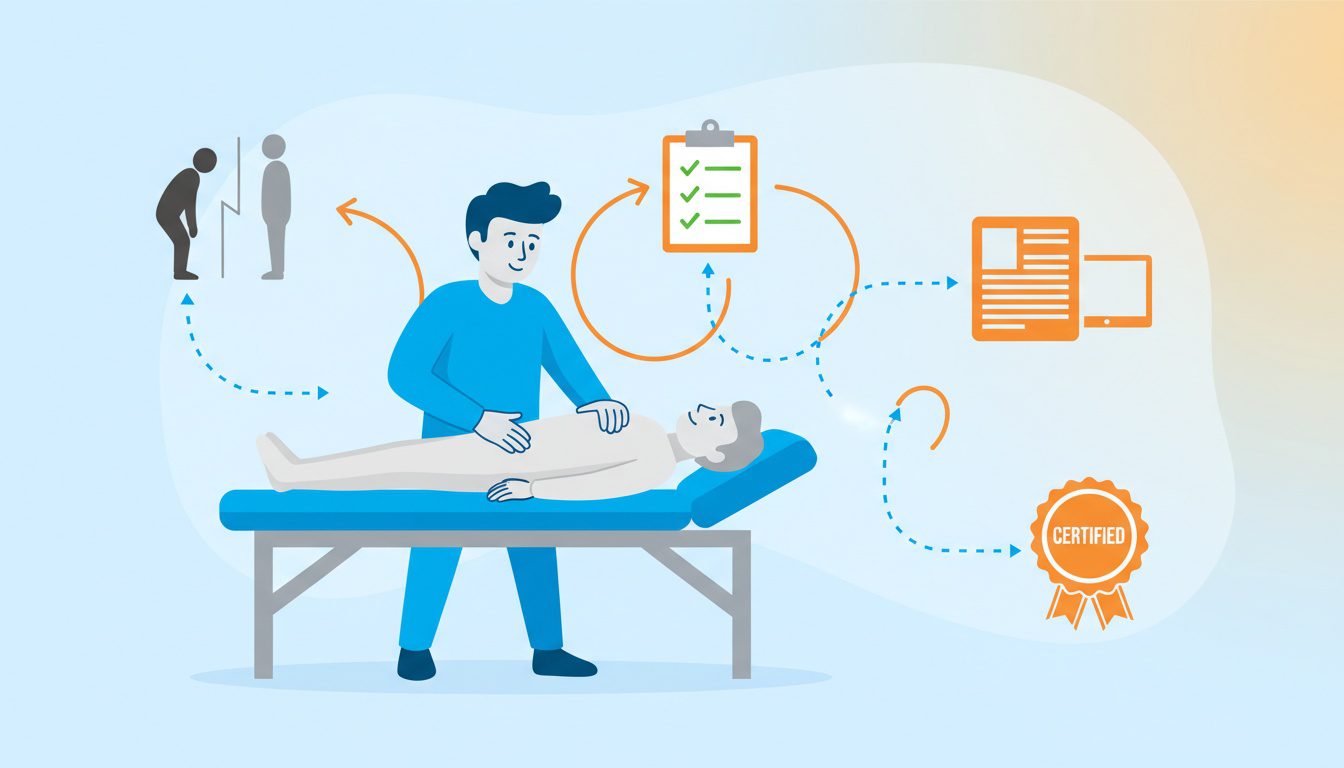
Theory is great, but how do you actually apply this to your chiropractic website? The good news is that many of these signals are things you should already be doing to run a great practice. You just need to make them visible to search engines and potential patients who search online.
Showcasing Real-World Experience (E)
The "E" for Experience was added to show that Google values real-life application, not just book smarts. Patients want to know you have treated people just like them. Your on-page SEO efforts should highlight this direct experience.
Start with your author and practitioner bios. They should not just be a short paragraph. Make them detailed pages that discuss your treatment philosophy, the specific types of conditions you have years of experience treating, and maybe a personal story about why you became a chiropractor.
You can also use anonymized patient case studies to showcase your work.
Instead of a generic page, write a blog post titled "How We Helped a Local Teacher Overcome Sciatica". Walk through the journey from consultation to recovery, detailing the chiropractic treatment applied without sharing personal details. This proves you have hands-on experience getting results.
Demonstrating Your Expertise (E)
This is your chance to show off your credentials and knowledge to improve your online visibility. Make sure your website has a dedicated page listing your degrees, certifications, and any special training you've completed. If you have done continuing education on specific chiropractic services, list that too.
Your blog is your best tool here. Write detailed, helpful articles that answer common patient questions and target specific keywords. Use an SEO tool like the Google Keyword Planner to find what your audience is looking for.
For example, instead of a simple post about posture, write an in-depth guide on "5 Ergonomic Fixes for Desk Workers to Relieve Neck Pain".
When you make medical claims, back them up by linking out to credible sources. Citing studies from places like the National Library of Medicine shows that your information is based on science. It proves your expertise beyond your own opinion and is a strong signal for quality content.
Reference peer-reviewed studies from PubMed to support treatment claims and demonstrate evidence-based chiropractic care.
Establishing Authority in Your Field (A)
Authority is about your reputation outside of your own website. What do others think of you? Google sees this primarily through links and mentions from other websites, which are often called quality backlinks.
Has a local news station ever featured your practice? Did you give a talk at a local business or health fair? Mention these on your website and link to the articles if you can. These act as third-party endorsements that build authority.
Another powerful signal is earning backlinks from other relevant websites. This does not mean you should go buy links. It means creating great content that other sites, like a local health blogger or a wellness publication, want to reference and link to. Learning the basics of building links can help your site be seen as an authority.
Also, think about professional associations. Being listed in directories for organizations like the American Chiropractic Association not only sends referral traffic but also sends an authority signal to Google. It shows you are a recognized professional in your community and can help you rank higher.

NEED MORE CLIENTS?
Free conversion-focused analysis uncovers the 3 biggest problems killing your bookings — we'll walk you through your results personally

Earning and Displaying Trust (T)
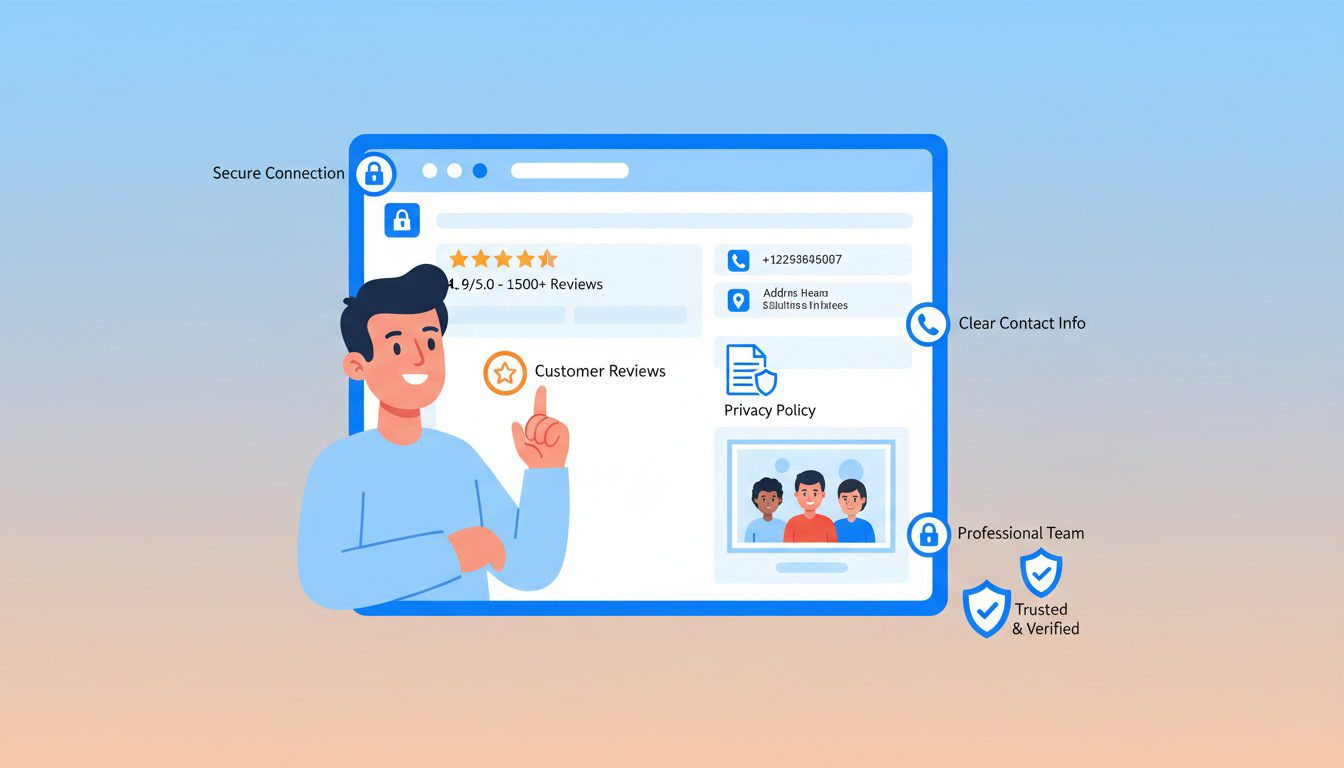
Trust is the foundation of any patient-provider relationship, and it is also the bedrock of E-E-A-T. Your website must feel safe and legitimate to both users and search engines. Your technical SEO and on-page elements play a big part here.
First, your contact information needs to be easy to find. Your Name, Address, and Phone number (NAP) should be on every page, typically in the footer. Make sure this information is exactly the same across all online profiles, especially your Google Business Profile and social media pages.
Second, have clear policies. Your site needs a Privacy Policy page and Terms of Service. These are legal necessities, but they also show users that you are a legitimate business that takes their privacy seriously. This simple
| HTTPS Security | Encrypts data, shows a lock icon in the browser, and builds user confidence. | Install an SSL certificate on your web server. Most web hosts offer this. |
| Positive Reviews | Provides social proof from real patients and is a huge factor in local search. | Actively ask happy patients for a Google review on your Google Business profile. |
| Easy Contact | Makes it simple for patients to reach you, improving conversion rate. | Display your phone number, address, and a contact form prominently. |
| Professional Design | A modern, mobile-friendly site feels more credible and improves user experience. | Invest in a clean web design that works well on all devices, especially mobile. |
| About Us Page | Introduces your team and shares your practice's mission and values. | Create a detailed page with photos and bios of all chiropractors and key staff. |
| Patient Testimonials | Showcases success stories and lets potential patients see themselves in your care. | Add a dedicated testimonials page or sprinkle quotes throughout your site. |
Online reviews are one of the most powerful trust signals you have. Actively encourage happy patients to leave a review on your Google Business Profile. When you get new online reviews, respond to them — both positive and negative. It shows you are engaged and you care about patient feedback.
Finally, make sure your website is secure with HTTPS. A secure website protects your visitors' data and is a basic requirement for any professional site today. Most modern browsers will even warn users if a site is not secure, which could scare away a potential patient.
Putting It All Together: Your E-E-A-T Checklist
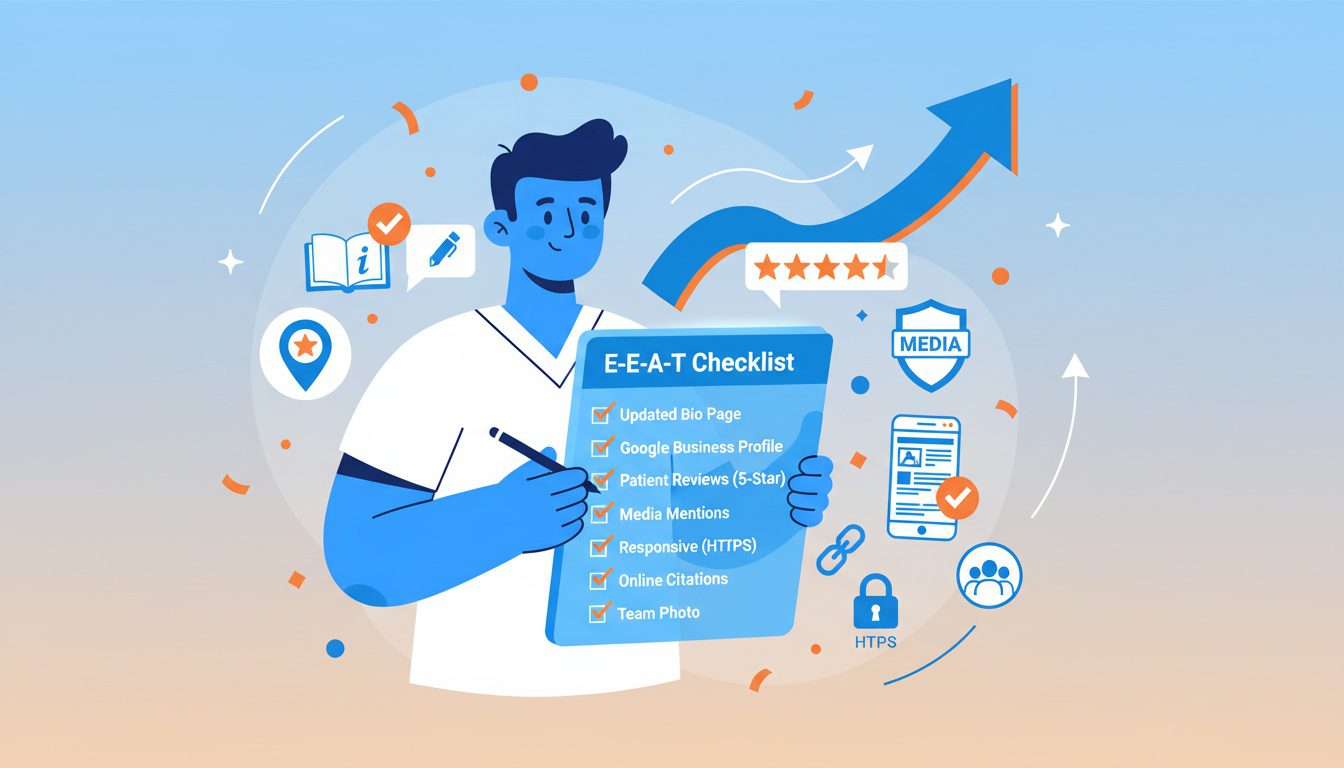
Feeling a bit overwhelmed? Do not be. Here's a simple checklist to get you started on improving your chiropractic E-E-A-T signals.
- Review and expand all practitioner bios on your website. Add details about their experience with specific chiropractic keywords like "spinal adjustment" or "neck pain treatment".
- Identify your top three most treated conditions. Brainstorm and write one in-depth, helpful blog post for each one this quarter.
- Audit your clinic's name, address, and phone number online. Ensure it is correct and consistent everywhere, especially on your Google Business account.
- Develop a simple, friendly process for asking satisfied patients to leave you a review on Google.
- Add an "As Featured In" section to your homepage if you have any local press or media mentions to showcase authority.
- Click through your own website on a phone. Is it easy to use and find information? If not, make a list of improvements.
- Confirm your site has an SSL certificate and loads with HTTPS. Use free SEO tools to check for other technical SEO issues.
- Look for opportunities to link to authoritative health sources in your blog posts to back up your claims.
- Create a detailed "About Us" page that tells the story of your chiropractic practices and introduces your team.
- Regularly update your Google Business Profile with new posts, photos, and updated hours to keep it active.
You do not have to do all of this overnight. Pick one or two items to start with and build from there. Consistency in your search engine optimization efforts is more important than perfection and will generate more organic traffic over time.
Frequently Asked Questions About Chiropractic E-E-A-T Signals
What does E-E-A-T stand for, and why is it crucial for chiropractic websites?
E-E-A-T stands for Experience, Expertise, Authoritativeness, and Trustworthiness—Google's framework for evaluating content quality, especially for health-related websites. Healthcare sites fall under "Your Money or Your Life" (YMYL) categories where Google applies stricter quality standards because poor information can harm people. Experience means demonstrating first-hand knowledge treating patients. Expertise shows your qualifications and specialized training. Authoritativeness proves you're recognized in your field through citations and mentions. Trustworthiness signals your site is secure, transparent, and accurate. Strong E-E-A-T signals help chiropractic websites rank higher, appear in featured snippets, and build patient confidence. Weak E-E-A-T can suppress rankings regardless of other SEO efforts.
How can chiropractors demonstrate Experience and Expertise on their websites?
Demonstrate experience through: detailed case studies showing real patient outcomes (with consent), before/after documentation, specific treatment protocols you've developed, blog posts addressing complex patient scenarios you've encountered, and videos showing your hands-on techniques. Show expertise by: displaying credentials prominently (licenses, certifications, degrees), listing specialized training and continuing education, publishing original research or articles, mentioning years in practice and patient volume, showcasing advanced techniques or equipment expertise, and contributing expert commentary on chiropractic topics. Author bios on every blog post should include credentials and specialties. Create an "About the Doctor" page detailing your education, philosophy, and patient care approach. Google wants to see licensed healthcare professionals creating medical content, not marketing staff.
What are the most effective ways to build Authoritativeness as a chiropractor?
Build authoritativeness through: earning backlinks from reputable healthcare websites and local news sites, getting listed in medical directories like Healthgrades and WebMD, publishing guest articles on established health platforms, being cited or quoted as an expert source, earning professional awards and recognitions, holding leadership positions in chiropractic associations, speaking at professional conferences or community events, getting featured in local media discussing chiropractic topics, and accumulating positive reviews across multiple platforms. Google looks for external validation of your expertise—other reputable sites mentioning, linking to, or citing you signals authority. Focus on quality over quantity; one mention from a major healthcare site outweighs dozens from low-quality directories.
How do I improve Trustworthiness signals for my chiropractic website?
Strengthen trust through technical and content elements: implement SSL encryption (HTTPS) across your entire site, display clear privacy policies explaining data handling, show transparent contact information including physical address and phone, maintain accurate, up-to-date medical information with cited sources, display licenses and certifications prominently, include detailed "About Us" and practitioner bio pages, respond professionally to all reviews (positive and negative), ensure HIPAA compliance for patient portals and forms, remove any spammy or manipulative elements, fix broken links and errors, and maintain consistent NAP (Name, Address, Phone) across the web. Add trust badges for professional associations, BBB accreditation, and security certifications. Regularly update content to keep information current. Google evaluates both technical security signals and content transparency when determining trustworthiness.
Conclusion
Ultimately, focusing on your online presence isn't just about pleasing an algorithm. It is about creating a digital front door that reflects the quality of chiropractic care you give inside your office.
By consistently working on your chiropractic E-E-A-T signals, you are not just improving your SEO. You are showing your community, Google, and emerging AI engines that you are an experienced, expert, and trustworthy healthcare provider they can depend on for pain treatment.
This comprehensive SEO strategy demonstrates your value and dedication. It solidifies your reputation as a leading chiropractic clinic in your area. This work is an investment in the long-term health of your practice.
Free Website Conversion Analysis — Get a personal walkthrough showing the 3 biggest problems costing you clients (plus instant case study).

Gerek Allen
Co-Owner iTech Valet
Entrepreneur, patriot, CrossFit junkie, IPA enthusiast, loves to travel to tropical destinations, and knows way too many movie quotes.


About iTech Valet
iTech Valet specializes in web design and content marketing for online entrepreneurs who want to share their expertise.
Services Include:
- Web Design
- Graphic Design
- Sales Copy
- Funnel Building
- Authority Sites
- Membership Sites
- Course Creation
- Email Systems
- Content Marketing
- Competitive Analysis
- Tech Integrations
- Strategic Planning
NEED MORE CLIENTS?
Free conversion-focused analysis uncovers the 3 biggest problems killing your bookings — we'll walk you through your results personally

621 Enterprises, Inc. | Copyright 2022 | All rights reserved