


Chiropractic No-Show Reduction Strategies: Keep Your Schedule Full
 by Gerek Allen ~ Last Updated: November 28th, 2025 ~ 7 Min Read
by Gerek Allen
~ Last Updated: November 28th, 2025 ~
~ 7 Min Read ~
That empty spot on your schedule is more than just a blank space; it's a source of real frustration. You see the name, you expect the chiropractic patient, and then nothing. This lost revenue and wasted time are a huge problem for any chiropractic practice, which is why having effective chiropractic no-show reduction strategies is so important.
You are not alone in this struggle, but the constant cycle of missed appointments doesn't have to be your norm. No-shows disrupt patient care plans and create inefficiency. We will cover some practical chiropractic no-show reduction strategies you can start using today.
Why Patients Miss Chiropractic Appointments
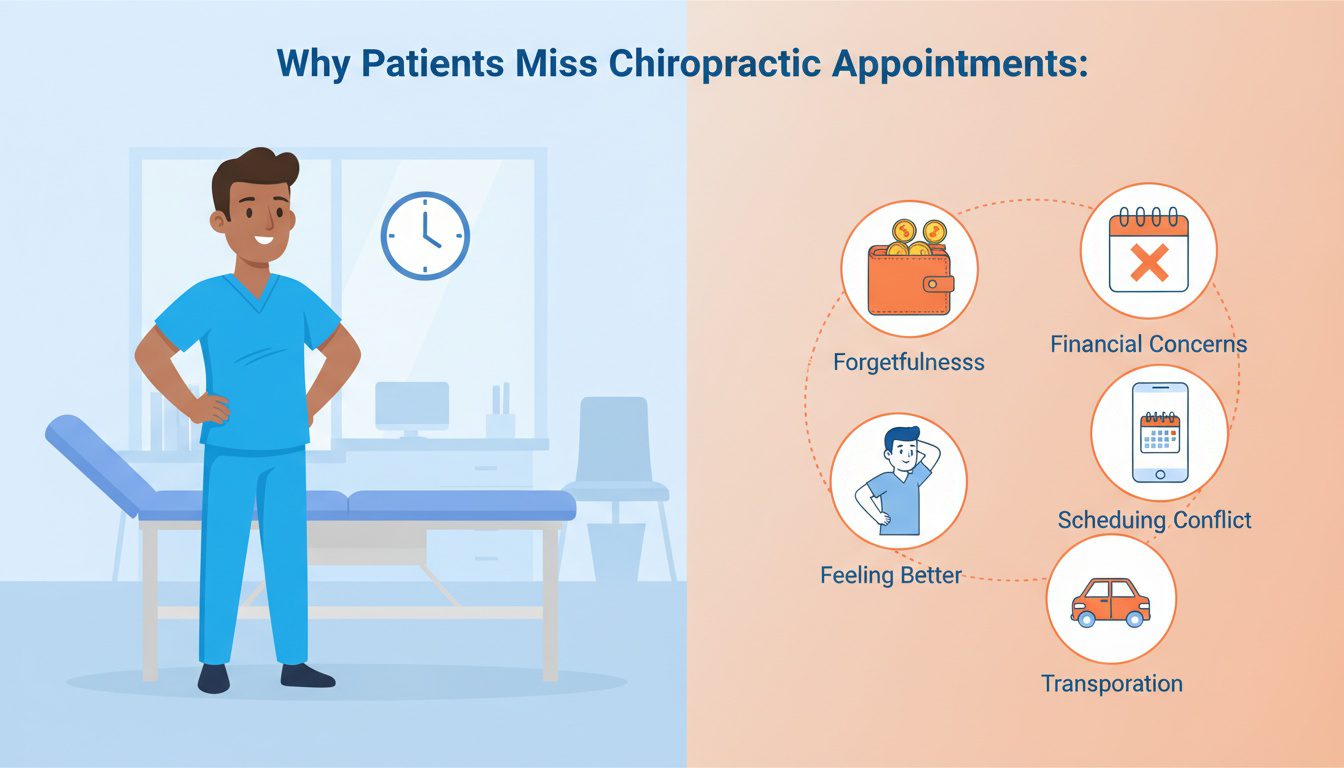
Before you can fix the problem, you need to understand it. There are many reasons patients miss chiropractic appointments, and they rarely do it to be difficult. More often than not, life simply gets in the way, making it difficult to keep every commitment.
For many, the main reason is simple forgetfulness. They get busy with work or family and their 2 PM adjustment completely slips their mind.
Sometimes, financial concerns are the real issue behind patient no-shows. A patient might worry about an upcoming copay or bill, so they avoid the appointment altogether.
Then there are the patients who feel better. They mistakenly think they are cured after a few sessions of chiropractic treatment and don't see the need for follow-up care.
Of course, last-minute scheduling conflicts are also a common cause; a sick child or an unexpected work meeting can easily derail their plans.
Other reasons patients don't show up include transportation problems or anxiety about their appointment.
Recognizing these common reasons helps you approach the situation with more empathy. This understanding is the first step to creating better solutions to reduce patient no-shows.
Start with Your Front Desk: The First Line of Defense
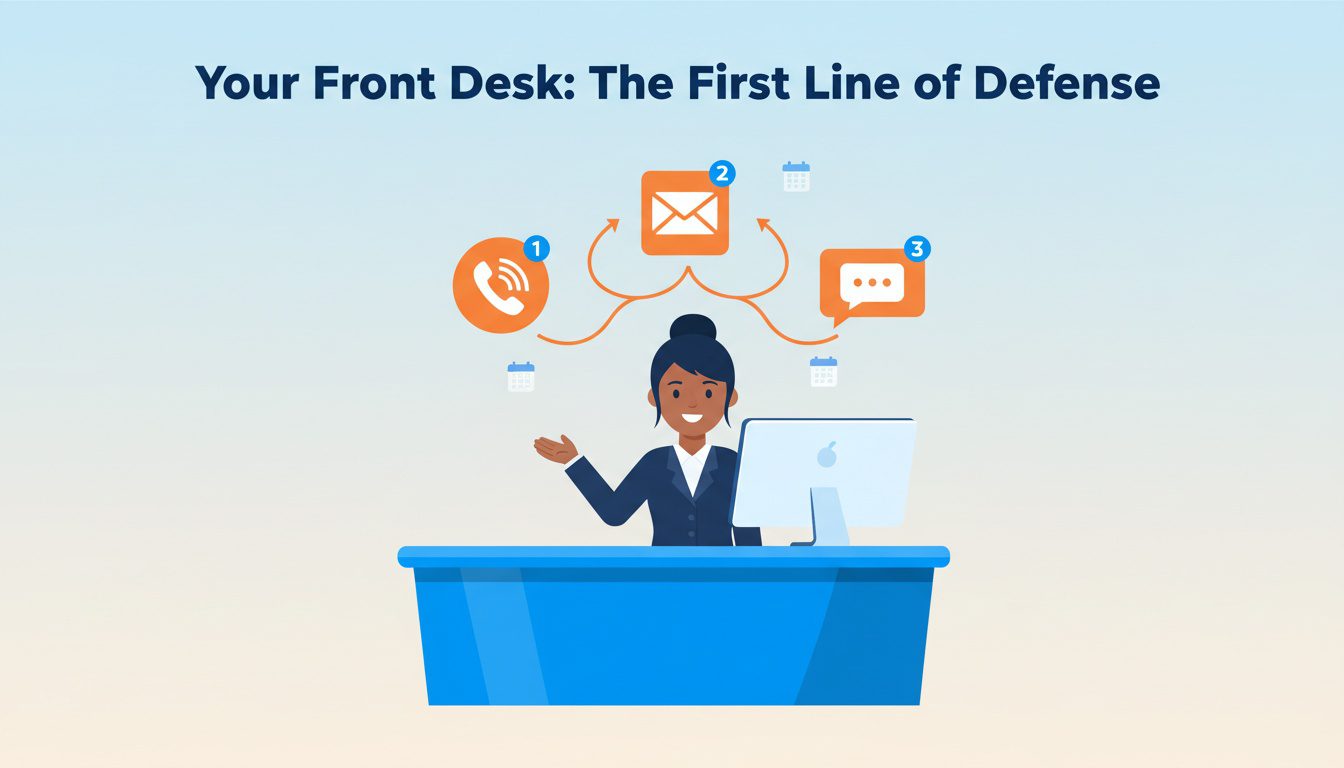
Your front desk team is the command center of your chiropractic clinic. They are not just people who schedule patients; they are your practice's first impression and a critical part of patient retention. How they communicate can make a world of difference in your patient attendance and overall patient experience.
Train your team to be crystal clear when booking appointments. This means confirming the date and time verbally and then sending an immediate confirmation via text or email. They should also briefly mention your cancellation policy during the call, which helps set expectations from the start.
A simple, friendly heads-up establishes a professional tone. For example, they could say, "We have you down for Tuesday at 3 PM. Just a reminder, we do ask for 24 hours' notice if you need to reschedule."
This simple statement plants a seed of accountability and makes patients feel supported by clear communication.

NEED MORE CLIENTS?
Free conversion-focused analysis uncovers the 3 biggest problems killing your bookings — we'll walk you through your results personally

Implement Smart Chiropractic No-show Reduction Strategies
Getting your no-show rates under control calls for a multi-layered approach. You cannot rely on a single fix. Instead, you need a system of small changes that work together to make a big impact on your chiropractic practice management.
Let's walk through some of the most effective methods you can put into place.
Upgrade Your Appointment Reminder System
If you're still relying on a single phone call the day before, you're behind the times. Today's chiropractic patients are busy and constantly interact with technology. You need to meet them where they are with modern communication tools that help them stay connected.
The best systems use a mix of channels. You can send automated email reminders a week out, a text message two days before, and another text on the day of the appointment. This repetition helps cement the automated appointment in the patient's mind and significantly improves patient attendance.
Timing is also important. A message sent too early will be forgotten, while one sent too late gives them no time to rearrange their schedule if needed. Test different frequencies to see what works best for your patient base, as different strategies work for different demographics.
Many chiropractic practice management software options can automate this whole process. These automated appointment reminders let patients confirm with a simple reply. This small action makes them mentally commit to showing up and reduces the staff time spent on manual calls.
Ensure your automated reminder system complies with HIPAA patient communication guidelines to protect patient privacy when sending appointment details via text or email.
Create and Enforce a Clear No-Show Policy
A vague cancellation policy is as good as no policy at all. Patients need to know exactly what you expect and what will happen if they miss an appointment. Your policy should be simple, written in plain language, and easy to understand.
A good rule of thumb is to ask for at least 24 hours' notice for any cancellations or changes. The policy should also clearly state the fee for late cancellations or no-shows. Be direct about the amount so there is no confusion later on.
Then comes the hard part: you have to enforce it. Making exceptions for some patients while charging others creates confusion and resentment. Everyone on your team, from the front desk to the chiropractors, must understand and stand behind the policy.
To make sure patients are aware, have them sign a copy of the policy when they become a new patient. You can also include it in your appointment confirmation emails. A consistently applied policy is fair and helps reduce patient no-shows across your practice.
Ask for a Deposit or Prepayment
This strategy can feel a little uncomfortable at first, but it is one of the most powerful tools you have to minimize missed appointments. When a patient puts down money for an appointment, they create a financial incentive to be there.
This can drastically cut your no-show rate, especially for new patient consultations, which are often the longest and most frequently missed appointments. You don't have to do this for every single patient. You could start by asking new patients to put a card on file or pay a small deposit to hold their first appointment slot.
You could also apply this to patients who have a history of missing appointments. When you introduce this, explain it calmly and professionally. Frame it as a way to reserve their dedicated time with the doctor, as recommended by some chiropractic association guidelines. Most people understand that your time is valuable and will have no problem with it.
Make Rescheduling Unbelievably Easy
Sometimes, a patient knows they can't make an appointment but dreads calling to cancel. They might feel awkward, or patients don't feel like talking on the phone. So, they do nothing, and it becomes a no-show.
You can prevent this by giving them simple, low-friction ways to reschedule. Providing flexible scheduling options like online scheduling through a patient portal can be very effective. This allows them to make changes outside of your regular office hours.
Also, let them reply to their appointment reminder text to ask for a new time. The easier you make it for them to communicate a conflict, the more likely they are to do it, freeing up your phone lines. This proactive and easy rescheduling is a win for everyone; you get advance notice to fill the slot, and the patient feels respected and valued.
Educate Your Patients on the Value of Care
When patients truly understand why they need to come back, they are far more likely to prioritize their chiropractic appointments. This education goes beyond just treating their pain. It is about connecting each visit to their long-term health goals outlined in their care plan.
During each appointment, take a minute to explain the progress they've made and what the next adjustment will accomplish.
Use phrases like, "Next week, we're going to work on improving mobility here, which will help with your long-term goal of getting back to golf."
This connects the dots for them and improves patient engagement.
At checkout, have your staff reinforce this message to help patients stay on track.
They can say, "Dr. Smith wants to see you next Tuesday to continue your progress."
This makes each appointment feel like a crucial step in a bigger plan, not just another date on the calendar, and it helps improve patient care outcomes.
Use a Patient Waitlist
A waiting list does two powerful things for your chiropractic practice.
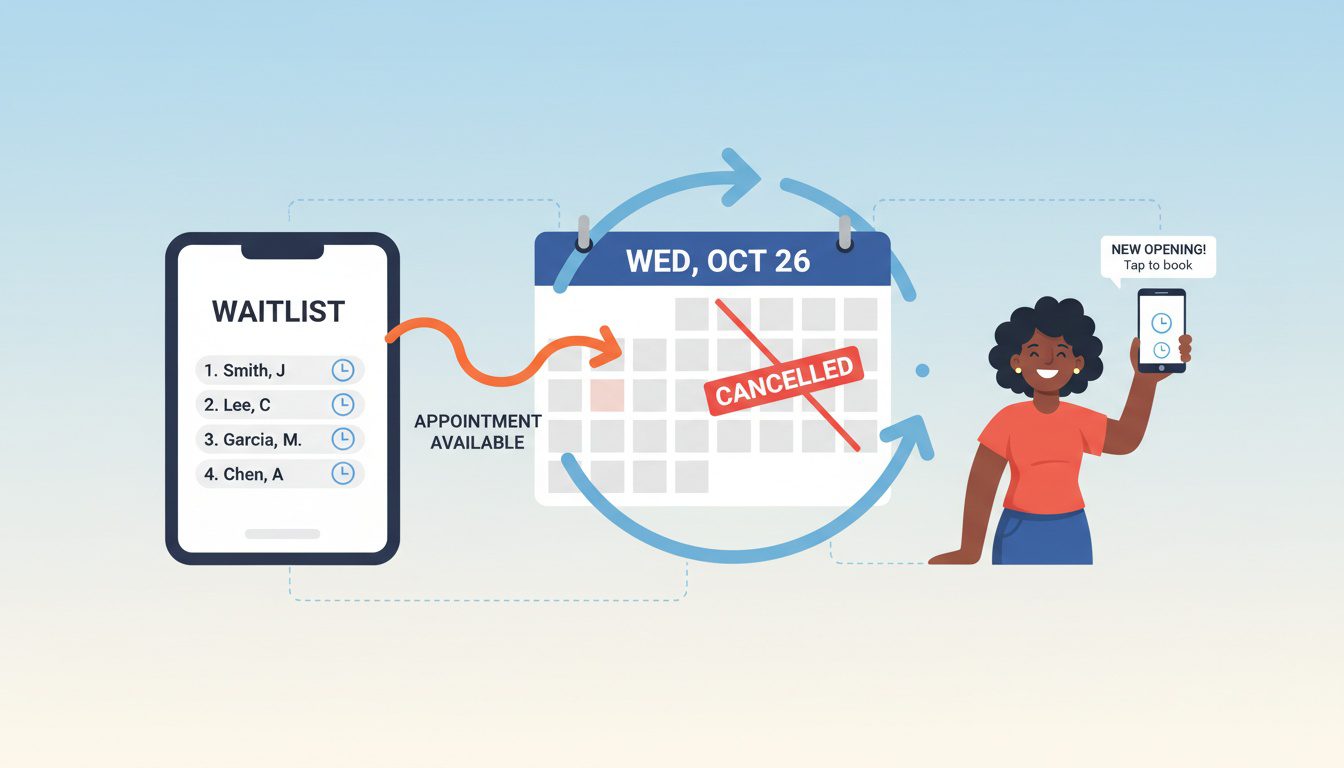
First, it's a practical tool for filling last-minute cancellations, helping you protect your revenue. When a patient cancels with proper notice, your team can immediately call someone from the waitlist who is eager to get in sooner.
Second, it sends a subtle but important psychological message. When patients know there's a waitlist, it communicates that your services are in high demand and your time is valuable. This can make them think twice before skipping an appointment they know someone else would be happy to take.
It frames an appointment slot as a valued commodity, not just a flexible placeholder. It's a simple system to manage within your practice software. This can be a huge help in keeping your schedule optimized and can help minimize missed appointments.
Using Data to Refine Your Approach

You don't have to guess what's working. Your chiropractic practice management software is full of valuable data that can guide your decisions. Start by tracking your no-show rates weekly and monthly. This gives you a baseline so you can see if the changes you are making are having a real effect.
But don't stop there. Look for patterns in the data. Are no-shows more common on a certain day of the week, like Mondays or Fridays? Do they happen more often in the morning or the afternoon? Do certain patient types miss appointments more than others?
Identifying these trends helps you get smarter with your strategy.
For example, if you find that new patients have a high no-show rate, you might decide to implement a deposit policy just for them. Or, if Monday mornings are a problem, you could send automated reminders on Sunday evening.
This data-driven approach lets you target your efforts where they'll have the biggest impact.
What About Charging No-Show Fees? The Pros and Cons
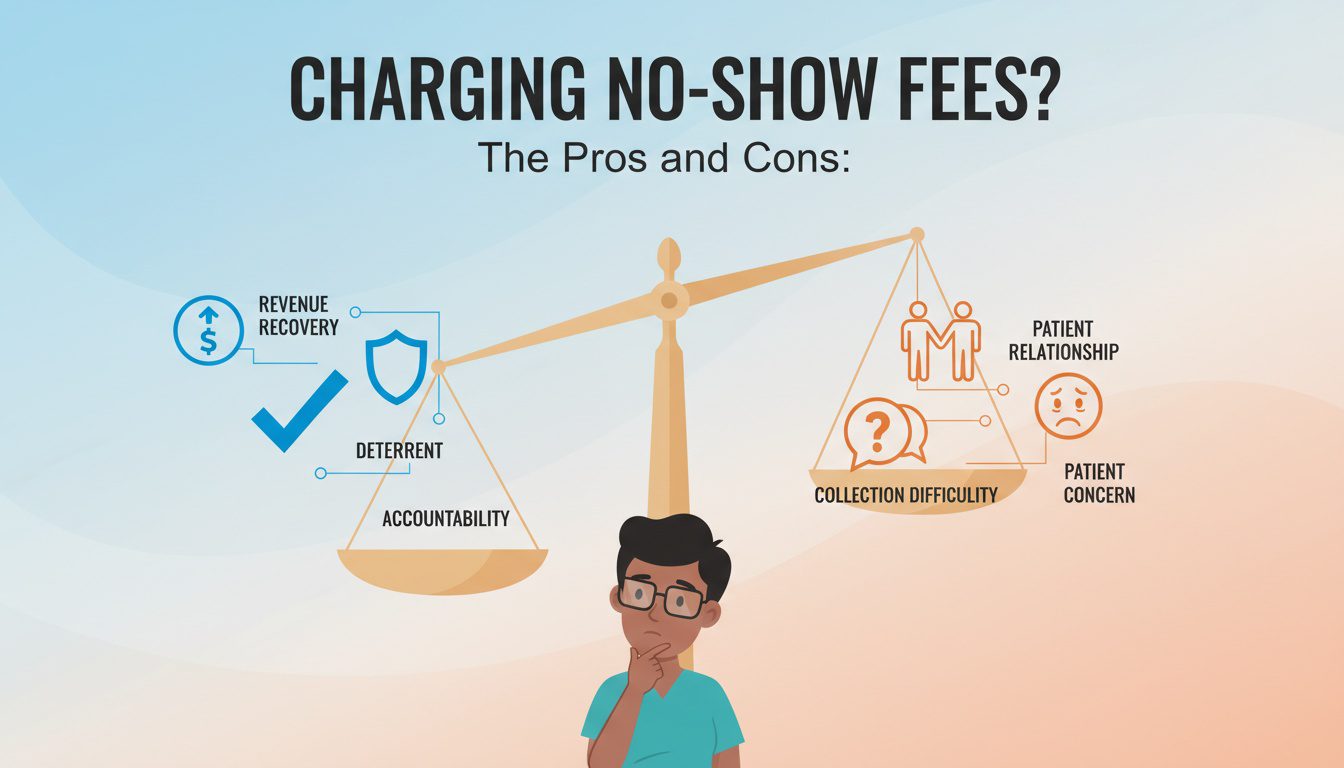
Charging a fee for a missed appointment is a common tactic in health care, but it is not without its drawbacks. You have to weigh the financial benefits against the potential for damaging your relationship with a patient.
On one hand, a fee reinforces that your time is valuable and makes patients take their commitment more seriously. It can also help you recover a small part of the lost income from that empty time slot. The fee itself acts as a strong deterrent.
But, it can also feel punitive to patients, especially if they missed the appointment for a legitimate reason they were unable to communicate. Trying to collect these fees can also create awkward and uncomfortable conversations for your staff to spend time on.
There's no single right answer for every practice; you have to decide what fits your philosophy and your patient base.
| Discourages last-minute cancellations and no-shows. | Can damage the doctor-patient relationship. |
| Recovers a portion of lost revenue. | May feel unfair to patients with genuine emergencies. |
| Reinforces the value of the doctor's time. | Can be difficult and awkward for staff to collect. |
| Creates a clear consequence for missing appointments. | Might drive some price-sensitive patients away. |
Frequently Asked Questions About Chiropractic No-Show Reduction Strategies
What's a normal no-show rate for chiropractic practices, and at what point is it a problem?
Average chiropractic no-show rates range from 5-15% depending on patient type and appointment value. According to the Medical Group Management Association (MGMA), no-show rates across healthcare practices average 5.5-8%, with small practices often experiencing higher rates due to limited appointment management resources. Rates below 5% indicate excellent systems, 5-10% is acceptable, 10-15% needs improvement, and above 15% represents serious revenue loss requiring immediate action. Calculate your rate by dividing total no-shows by total scheduled appointments monthly. A practice with 400 monthly appointments and 40 no-shows has a 10% rate, costing approximately $2,000-4,000 in lost revenue monthly (assuming $50-100 per visit). New patients typically no-show at higher rates (15-25%) than established patients (5-10%). Track rates separately by patient type, appointment time, and day of week to identify patterns—Monday mornings and Friday afternoons often see higher no-shows.
What are the most effective reminder systems to reduce chiropractic no-shows?
Multi-channel reminder sequences work best: 48-hour reminder via text and email confirming appointment details with easy reschedule option, 24-hour reminder via text with "Reply YES to confirm" functionality creating psychological commitment, 2-hour day-of reminder for patients who haven't confirmed, and immediate confirmation when appointments are initially booked. Text messages dramatically outperform email—response rates of 98% versus 20%—because patients see them immediately. Automated reminder systems like Solutionreach, Weave, or built-in practice management tools reduce no-shows by 30-50% compared to manual phone calls. Personalize messages: "Hi Sarah, this is Dr. Smith's office reminding you about your 2 PM appointment tomorrow" performs better than generic "You have an upcoming appointment."
Should I implement a no-show fee or cancellation policy, and how do I enforce it without losing patients?
Yes, but implement thoughtfully. Effective policies include: clearly communicated 24-hour cancellation notice requirement, first no-show gets a friendly reminder about policy, second no-show triggers a fee ($25-50) or requires credit card on file for future bookings, and chronic offenders may be discharged from the practice. Communication is critical: explain the policy during scheduling, include it in appointment confirmations, display it prominently in your office, and have patients acknowledge it in intake paperwork. Frame it positively: "We reserve this time specifically for you. If you can't make it, 24 hours notice allows us to offer your spot to another patient in need." Most patients understand and respect reasonable policies. Waive fees for legitimate emergencies to maintain goodwill. The goal is changing behavior, not generating revenue from fees.
What's the best way to fill last-minute openings from cancellations and no-shows?
Build a "priority list" of patients who want earlier appointments or more frequent care. When cancellations occur: Immediately text 3-5 priority patients: "Hi John, we have an opening today at 2 PM if you'd like to come in earlier than your scheduled Friday appointment." Offer virtual consultations for the time slot if you can't fill in-person. Use the time productively for patient follow-up calls, review management, or practice development if you can't fill it. Overbook strategically by 5-10% during high no-show time slots (understanding some patients prefer this approach over strict enforcement). Create a wait-list system where patients can opt-in to receive last-minute availability alerts. Some practices successfully use apps like Clockwise or Solv to fill same-day openings with new patients seeking immediate care, though this works better for acute care practices than wellness-focused ones.
Conclusion
Reducing no-shows is not about finding one magic bullet. It is about building a strong system made of clear communication, smart policies, and modern technology. When you show patients you value their time and educate them on the importance of their care, they are more likely to respect yours in return.
Implementing these chiropractic no-show reduction strategies requires a consistent team effort. From the front desk to the clinical staff, everyone plays a role in fostering an environment where appointments are valued. A proactive approach helps minimize the frustration and financial impact of patient no-shows.
By putting these strategies into practice, you can protect your revenue, reduce staff frustration, and, most importantly, help more patients achieve their health goals.
Free Website Conversion Analysis — Get a personal walkthrough showing the 3 biggest problems costing you clients (plus instant case study).

Gerek Allen
Co-Owner iTech Valet
Entrepreneur, patriot, CrossFit junkie, IPA enthusiast, loves to travel to tropical destinations, and knows way too many movie quotes.


About iTech Valet
iTech Valet specializes in web design and content marketing for online entrepreneurs who want to share their expertise.
Services Include:
- Web Design
- Graphic Design
- Sales Copy
- Funnel Building
- Authority Sites
- Membership Sites
- Course Creation
- Email Systems
- Content Marketing
- Competitive Analysis
- Tech Integrations
- Strategic Planning
NEED MORE CLIENTS?
Free conversion-focused analysis uncovers the 3 biggest problems killing your bookings — we'll walk you through your results personally

621 Enterprises, Inc. | Copyright 2022 | All rights reserved