


How Do I Manage My Chiropractic Practice's Online Reputation? (Complete Guide)
 by Gerek Allen ~ Last Updated: Dec 1, 2025 ~ 9 Min Read
by Gerek Allen
~ Last Updated: Dec 1, 2025 ~
~ 9 Min Read ~
Start with three non-negotiable daily habits: check your Google Business Profile, monitor major review sites, and respond to every new review within 24 hours.
Here's the reality: 87% of patients read online reviews before choosing a healthcare provider, according to Software Advice's 2024 Patient Experience Report. A single negative review on page one of Google can cost you 10-15 new patients per month. Most chiropractors don't realize they have reputation problems until they've already lost thousands in revenue.
The good news? Reputation management is a system, not a personality trait. You don't need to be a social media expert or marketing guru. You need consistent processes that protect your practice while you're busy treating patients.
This guide covers everything: daily monitoring routines, review generation systems, HIPAA-compliant response strategies, crisis management protocols, and the specific tools that make it all manageable in 15-20 minutes per day.
If you're starting from scratch, focus on claiming your profiles and setting up monitoring first. If you're recovering from reputation damage, skip ahead to the crisis management section. Either way, you'll have a complete system by the end.
Why Online Reputation Management Matters for Chiropractors

Your online reputation isn't just vanity metrics—it's the silent killer or the invisible salesperson working 24/7.
Let's talk numbers. A one-star increase in your average rating can increase revenue by 5-9%, according to Harvard Business School research on online reviews. For a practice generating $30,000 monthly, that's an extra $1,500-$2,700 per month from reputation improvements alone.
But here's what really matters: 92% of patients won't even call if you have fewer than 3 stars. They've already eliminated you before you know they existed. That's the invisible cost most chiropractors never calculate—the patients who never show up in your phone logs or website analytics because they bounced after seeing your reputation.
The Financial Impact of Reputation
The math is brutal but simple.
Let's say you're in a market with 50,000 potential patients. About 2% (1,000 people) will search for a chiropractor this month. If you have a 4.2-star rating instead of 3.8 stars, you'll capture an additional 8-12% of those searchers based on BrightLocal's Local Consumer Review Survey.
That's 80-120 more website visits monthly. At a conservative 5% conversion rate, that's 4-6 additional new patients per month. Average lifetime value of a chiropractic patient? Around $2,500-$4,000 depending on your retention systems.
Do the math: 4 patients × $3,000 = $12,000 in monthly patient lifetime value from reputation improvements alone.
Most practices lose this money quietly, month after month, because they don't have systems in place.
How Patients Evaluate Your Reputation
Patients don't read every review. They scan for patterns.
Here's what they actually look at in the first 30 seconds:
- Overall star rating - Must be 4.0+ to pass the initial filter. Anything below 3.5 eliminates you immediately from consideration.
- Total review count - 50+ reviews signals established practice with real patient volume. Under 10 reviews looks suspicious even if they're all positive.
- Recency of reviews - Reviews from the past 3 months show you're actively treating patients. A year gap makes them wonder if you're still in business.
- Your responses to negative reviews - How you handle criticism matters more than the criticism itself. Professional, solution-focused responses build trust.
- Review consistency across platforms - If you're 4.5 stars on Google but 2.8 on Yelp, something's wrong. Patients check multiple sources.
They also look for specifics in reviews. Generic "great service" reviews don't build trust like detailed stories about pain relief, staff kindness, or treatment explanations.
What Damages Your Online Reputation
Most reputation problems come from three sources: negative patient experiences that go public, unaddressed complaints that escalate, and competitive attacks from other practices or disgruntled former staff.
The first category (negative experiences) is preventable with strong patient care systems. The second (unaddressed complaints) is fixable with monitoring and response protocols. The third (attacks) requires legal intervention in some cases but can often be managed through positive content dilution.
Here's what chiropractors don't realize: the damage isn't the negative review itself—it's your silence afterward. A negative review with no response looks like confirmation. A negative review with a professional, empathetic response often converts skeptical readers into patients who appreciate your transparency.
The biggest reputation killer? Inconsistency. Having some platforms with great reviews and others completely abandoned. Patients see that as lack of attention to detail—and assume it extends to patient care.
Setting Up Your Reputation Monitoring System

Reputation management starts with knowing what's being said about you before patients do.
You need three layers of monitoring: real-time alerts for new reviews, daily check-ins on major platforms, and weekly deep-dives for comprehensive coverage. The real-time layer catches urgent issues. Daily monitoring maintains consistency. Weekly reviews catch patterns and trends.
Most chiropractors try to remember to check reviews "when they have time." That's how negative reviews sit unanswered for weeks, compounding damage.
Platform Priority Checklist
Not all platforms deserve equal attention. Focus your monitoring energy where patients actually look:
Tier 1 (Check Daily):
- Google Business Profile - 70-80% of patients start here. Dominates local search and Map Pack rankings. New reviews impact your visibility within hours.
- Facebook - Second most influential for local businesses. Patients often check here after Google to see your personality and engagement.
Tier 2 (Check 2-3x Weekly):
- Yelp - Still influential in urban markets despite declining usage. Particularly important if you're in a major city.
- Healthgrades - Healthcare-specific platform where patients specifically look for medical providers. Reviews here carry extra weight.
- Vitals - Another healthcare-focused site. Less traffic than Healthgrades but still relevant for reputation completeness.
Tier 3 (Check Weekly):
- RateMDs - Lower traffic but still indexed by Google. Worth monitoring for outliers.
- Industry directories - State chiropractic association listings, local chamber sites, Better Business Bureau if applicable.
- Social mentions - Twitter/X, Instagram, local Facebook groups discussing healthcare providers.
Trying to monitor 15 platforms daily will burn you out. Stick to the tier system and adjust based on where your patients actually engage.
Essential Monitoring Tools
Manual checking is fine for 2-3 platforms. Beyond that, you need automation.
Here's your monitoring tech stack:
- Google Alerts (Free) - Set up alerts for your practice name, your personal name, common misspellings, and "chiropractor [your city]" to catch mentions across the web. You'll get email digests when new content appears.
- Reputation management platforms ($30-300/month) - Tools like Podium, Birdeye, or ReviewTrackers aggregate reviews from multiple platforms into single dashboard. Worth it once you're generating 10+ reviews monthly.
- Social media monitoring (Free to $50/month) - Hootsuite or Buffer let you monitor brand mentions and comments across social platforms without logging into each one separately.
- Google Business Profile app (Free) - Download the official app and enable push notifications. You'll get instant alerts for new reviews, questions, and messages.
Start with the free options (Google Alerts + Google Business Profile app). Invest in paid tools once you're generating enough reviews that manual monitoring takes more than 15 minutes daily.
Creating Your Daily Monitoring Routine
Consistency beats perfection. A 5-minute daily routine beats a 2-hour monthly deep-dive.
Here's the exact system that works:
Morning routine (3-5 minutes):
- Open Google Business Profile app - Check for new reviews, questions, messages
- Quick Facebook check - New reviews or comments on recent posts
- Review email alerts - Any Google Alerts or platform notifications from overnight
End-of-day routine (2-3 minutes):
- Final Google Business Profile check - Respond to anything new from afternoon/evening
- Quick scan of other Tier 1 and Tier 2 platforms if you haven't checked during the day
Weekly deep-dive (15-20 minutes, same day each week):
- Check all Tier 3 platforms
- Review response quality from past week
- Analyze patterns (What are patients praising? What complaints are recurring?)
- Adjust review request messaging based on what's working
Set phone reminders for your monitoring times. After 30 days, it becomes automatic. The key is making it non-negotiable like checking your patient schedule.

NEED MORE CLIENTS?
Free conversion-focused analysis uncovers the 3 biggest problems killing your bookings — we'll walk you through your results personally

Building a Patient Review Generation System
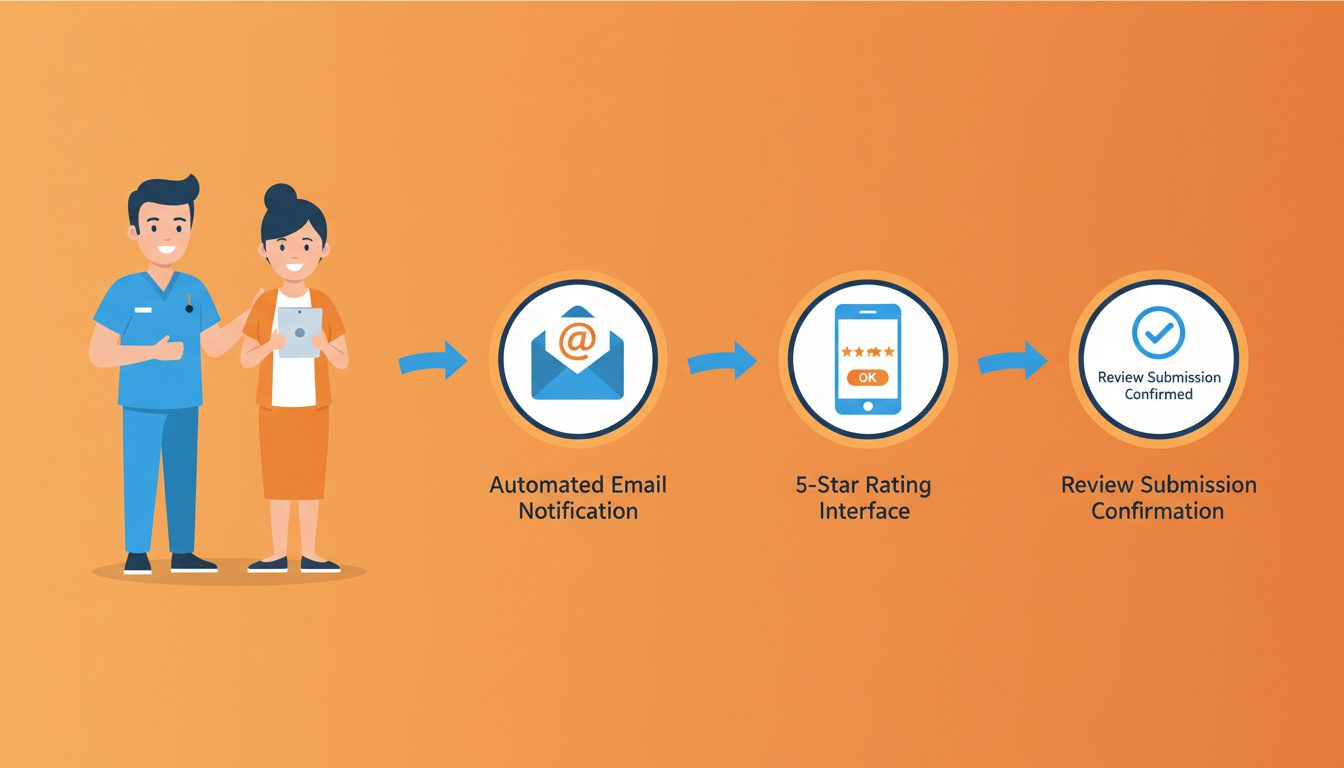
Positive reviews don't happen automatically—you need a systematic approach that makes leaving reviews easier than not leaving them.
Here's the truth most chiropractors miss: patients who would happily leave 5-star reviews often don't, simply because you never asked or made it complicated. They're not withholding praise—they're busy and forgetful like everyone else.
The practices dominating local search with 100+ positive reviews aren't luckier or better. They have better systems for asking at the right time, making it stupidly easy, and following up persistently without being annoying.
When to Ask for Reviews
Timing determines success rates more than anything else you'll optimize.
Ask for reviews at three specific moments:
Moment 1: Immediately after successful outcome (Best conversion: 15-25%)
Right after a patient experiences significant pain relief or mobility improvement, that's peak satisfaction. They're emotional, grateful, and motivated. This is your highest-converting ask moment.
Train your front desk: "I'm so glad we could help with your back pain! Would you mind taking 60 seconds to share your experience online? It really helps other people find us who are struggling like you were."
Moment 2: 24-48 hours post-appointment via automated follow-up (Conversion: 8-12%)
The positive feelings are still fresh, but they've had time to notice lasting improvement. Send automated email or SMS with direct review link and simple ask.
Not everyone responds immediately—that's where reminders come in.
Moment 3: Major treatment milestones (Conversion: 20-30%)
When someone completes a care plan, reaches a functional goal, or gets discharged from active treatment, they're reflecting on their overall experience. This is your second-highest converting moment.
Don't ask for reviews during emergencies, first appointments (they don't know you yet), or when treatment isn't going well. Timing matters.
How to Ask Without Being Pushy
Most chiropractors either don't ask at all or ask so awkwardly it backfires.
Here's the psychology that works:
In-person script (for front desk staff):
"Hey [Name], Dr. [Your Name] mentioned you've been making great progress with your [specific condition]. We're trying to help more people in [City] who are dealing with similar issues find us. Would you be willing to share your experience online? It takes about 60 seconds."
If yes: "Amazing! Here's a direct link [show QR code or send text]. You can do it now or later today—whatever works."
If hesitant: "No pressure at all! If you change your mind, I'll send you a text with the link so you have it."
Email/SMS script (for automated follow-up):
"Hi [Name], it's [Your Name] from [Practice Name]. I wanted to check in—how are you feeling after yesterday's adjustment?
I'm glad we could help! Quick favor: Would you mind taking 60 seconds to share your experience? It helps other people dealing with [condition] find the right care.
[DIRECT REVIEW LINK]
Thanks for trusting us with your health. —Dr. [Name]"
Key principles:
- Make it personal (reference their specific situation)
- Show the benefit to others (not just you)
- Emphasize speed (60 seconds, not "whenever you have time")
- Provide direct links (never "search for us on Google")
- Follow up 2-3x if they don't respond (most people need reminders)
Avoid: Offering incentives (violates most platform policies), asking before they've experienced results, sending generic "leave us a review" mass emails, or making it feel transactional.
Creating Frictionless Review Links
"Search for us and leave a review" converts at 2-3%. Direct links convert at 15-25%. The difference is friction.
Here's how to create review links for major platforms:
Google Business Profile (most important):
- Log into your Google Business Profile
- Click "Get more reviews" or "Share review form"
- Copy the shortened review link (looks like g.page/r/...)
- Save this link—use it everywhere
Facebook:
- Go to your Facebook business page
- Click "Reviews" tab
- Copy the URL—that's your review link
- Format: facebook.com/[yourpage]/reviews
Yelp:
- Find your Yelp business page
- Click "Write a Review" button
- Copy that destination URL
- Note: Yelp discourages review solicitation, so use this carefully
Create QR codes for your direct Google review link using free tools like QR Code Generator. Print them on:
- Checkout counter signs
- Thank you cards
- Treatment room posters
- Business cards
- Email signatures
Make leaving a review require one click, not five minutes of searching.
Automating Review Requests
Manual asking is great. Automated systems ensure nothing falls through the cracks.
Most practice management systems (Jane App, SimplePractice, ChiroTouch) can trigger automated review requests. If yours can't, use email marketing tools like Mailchimp or SMS automation via Podium.
Set up this sequence:
- Day 0 (appointment day): In-person ask at checkout if outcome was positive
- Day 1: Automated email/SMS with review link to everyone who didn't leave review in-office
- Day 3: First reminder to non-responders
- Day 7: Second reminder to non-responders (last one)
Stop after two reminders. More than that crosses into annoying territory.
Key automation principles:
- Personalize with patient name and appointment date
- Reference their specific treatment or condition when possible
- Send during reasonable hours (9am-7pm)
- A/B test subject lines and messaging to improve response rates
- Track which providers get the most reviews (train low performers)
Automation shouldn't feel robotic. Use your conversational voice and make it feel like you personally sent it.
Review Generation Performance Benchmarks
Track these metrics monthly to know if your system is working:
| Reviews per 100 Patients | Less than 3 | 5-8 | 10-15+ |
| Average Star Rating | Below 4.0 | 4.2-4.5 | 4.6-5.0 |
| Response Rate to Review Requests | Under 5% | 8-12% | 15-20% |
| Staff Participation (asking in-person) | Under 30% | 50-70% | 80%+ |
| Time to First Review Response | 3+ days | 24-48 hours | Under 12 hours |
If you're below average on any metric, focus there first. The fastest improvement usually comes from training staff to ask confidently in-person. That single change can double your review volume.
For practices generating under 3 reviews per 100 patients, the problem is almost always: not asking consistently, asking at wrong times, or making the process too complicated.
Responding to Reviews the Right Way

Every review deserves a response within 24-48 hours—positive, negative, or neutral. Your response isn't just for the reviewer. It's for the 50-100 people who'll read it while deciding whether to book with you.
How you respond to criticism builds more trust than a perfect 5-star rating ever could. Patients expect problems occasionally. They're evaluating how you handle them.
HIPAA-Compliant Response Guidelines
The number one mistake chiropractors make: confirming someone was a patient.
Even saying "thank you for being a patient" is technically a HIPAA violation if you didn't have written authorization to acknowledge the relationship publicly. Most chiropractors don't realize this until they're facing complaints.
Here's how to respond without violating HIPAA:
Never do this:
- Confirm or deny someone was a patient
- Reference specific treatments, appointments, or dates
- Mention medical conditions or outcomes
- Defend with specifics about their case
- Say "our records show..."
Always do this:
- Use neutral language that works for anyone
- Focus on your practice's general standards
- Invite private conversation to address concerns
- Thank them for feedback without confirming relationship
- Keep it brief and professional
Safe response template for negative reviews:
"Thank you for sharing your feedback. We take all concerns seriously and strive to provide the highest quality care to everyone who visits our practice. I'd like to discuss your experience directly to understand what happened and make it right. Please contact me at [phone] or [email] so we can address this privately. — Dr. [Name]"
This acknowledges the feedback, shows you care, and offers resolution without confirming HIPAA-protected information.
When in doubt, consult your healthcare attorney before responding. A HIPAA violation lawsuit costs exponentially more than a negative review.
Responding to Positive Reviews
Don't just say "thanks"—personalize every response by referencing something specific they mentioned.
Generic thank-you responses look automated and kill engagement. Personalized responses show you're actually reading and appreciating the feedback.
Template for 5-star reviews:
"[Name], thank you so much for sharing your experience! I'm thrilled we could help with your [specific problem they mentioned]. It's incredibly rewarding to see patients like you [specific outcome they described]. We appreciate you trusting us with your care and look forward to supporting your continued health. — Dr. [Name]"
Why this works:
- Uses their name (personal connection)
- References specific details (proves you read it)
- Reinforces the positive outcome (benefits future readers)
- Expresses genuine appreciation (builds relationship)
- Keeps it conversational (matches your brand voice)
Respond to positive reviews within 24 hours when possible. The reviewer gets a notification and often engages further, creating more visible interaction that boosts your profile.
Bonus: Ask satisfied reviewers if you can share their story (with permission) on social media or your website. Many will say yes, giving you valuable testimonial content.
Handling Negative and Neutral Reviews
Negative reviews are recovery opportunities, not disasters—if you respond correctly.
First, breathe. Don't respond emotionally or defensively, no matter how unfair the review feels. Sleep on it if needed. A bad response makes things worse.
Your response has three goals:
- Show the reviewer you're taking it seriously
- Demonstrate to future readers that you handle problems professionally
- Move the conversation offline where you can actually resolve it
Template for legitimate negative reviews (actual service issues):
"Thank you for this feedback—I appreciate you bringing this to my attention. This doesn't reflect the standard of care we strive to provide. I'd like to understand exactly what happened and make this right. Please contact me directly at [phone] or [email] so we can discuss this personally. — Dr. [Name]"
Template for unfair/unreasonable negative reviews:
"Thank you for sharing your perspective. We take all feedback seriously and continually work to improve our patient experience. I'd welcome the opportunity to discuss your concerns directly at [phone] or [email]. Our goal is always to provide exceptional care, and I'm sorry we fell short of that in your view. — Dr. [Name]"
For neutral 3-star reviews (the forgotten middle child):
"Thanks for taking the time to share your experience, [Name]. I'm glad we could help with [positive thing they mentioned], and I appreciate your feedback about [area for improvement]. We're always working to enhance our patient experience. If there's anything specific we can address, please reach out at [contact]. — Dr. [Name]"
Never:
- Get defensive or argue
- Question their honesty
- Make excuses
- Ask them to remove the review
- Respond with more than 3-4 sentences publicly
Keep public responses brief and professional. Save the detailed conversation for private channels.
When to Request Review Removal
Most negative reviews stay forever. You can only request removal for reviews that violate platform policies, not just because you disagree with them.
Valid removal requests:
- Fake reviews from non-patients
- Reviews containing profanity or hate speech
- Spam or promotional content
- Reviews with personal information (yours or patient's)
- Competitor sabotage (provable)
- Reviews explicitly violating HIPAA (discussing protected health info)
How to request removal:
- Click "Flag as inappropriate" or "Report review" on the platform
- Select specific policy violation (don't just say "it's unfair")
- Provide evidence if applicable (proof of non-patient status, screenshots of threats)
- Follow up every 7-10 days if no response
Google and Yelp rarely remove reviews unless violations are clear. Facebook is more responsive. Expect 2-4 weeks for review and decision.
What doesn't work:
- Asking the reviewer directly to remove it (often backfires)
- Having friends flag the review (doesn't increase removal chances)
- Hiring reputation repair services that promise removal (usually scams)
- Legal threats unless defamation is provable (expensive and rarely worth it)
If you can't get a negative review removed, your best strategy is generating enough positive reviews to push it down the page where fewer people see it.
Crisis Management and Reputation Repair

Most reputation crises are preventable. The ones that aren't are survivable if you respond correctly.
A reputation crisis isn't a single negative review. It's multiple negative reviews in short timeframes, viral social media complaints, or serious allegations that threaten your practice's viability.
You need a crisis plan before crisis hits. Scrambling during an emergency leads to mistakes that compound damage.
Identifying Reputation Emergencies
Not every negative review is a crisis. Here's how to tell the difference:
Routine negative feedback (handle normally):
- 1-2 negative reviews per month while maintaining 4+ star average
- Complaints about wait times, scheduling, or minor service issues
- Neutral/mixed reviews (3 stars with both praise and criticism)
- Patient disagreements that don't involve quality of care allegations
Reputation crisis (activate emergency protocol):
- Sudden pattern of negative reviews (3+ in a week when you normally get 1 per month)
- Viral social media complaints (posts with 50+ shares or comments)
- Serious care quality allegations (injury claims, malpractice suggestions, fraud accusations)
- Staff or former employee attacks (detailed insider information being shared publicly)
- Competitor sabotage (coordinated fake reviews from multiple accounts)
- Media attention (local news coverage of complaint or investigation)
If you're facing a crisis-level situation:
- Stop all normal social media posting immediately
- Contact your malpractice insurance carrier (they often provide crisis PR support)
- Consult healthcare attorney before responding publicly
- Document everything (screenshots, dates, IP addresses if available)
- Activate your crisis response team (attorney, PR advisor if applicable, practice manager)
Don't try to handle serious crises alone. The stakes are too high.
Crisis Response Protocol
When a reputation emergency hits, follow this sequence:
Hour 1-3 (Assessment Phase):
- Document everything - Screenshot all posts, reviews, comments before they're deleted
- Assess severity - Single angry patient vs. coordinated attack vs. legitimate care concern?
- Contact attorney - Especially if allegations involve malpractice, fraud, or legal issues
- Notify insurance - Malpractice insurance often covers reputation crisis management
- Pause all marketing - Stop ads, scheduled posts, review requests until situation is clear
Hour 3-24 (Containment Phase):
- Craft holding statement - Brief, empathetic acknowledgment without admitting fault
- Respond once publicly - Acknowledge concern, commit to investigation, invite private discussion
- Move conversations offline - Provide direct contact info, stop engaging in public threads
- Activate support team - Attorney reviews all communication, staff knows what to say if contacted
Day 2-7 (Resolution Phase):
- Private resolution - Address legitimate concerns directly with affected patients
- Remove false content - Flag fake reviews, report policy violations, pursue legal action if needed
- Generate positive content - Accelerate positive review requests from satisfied patients
- Monitor constantly - Track mentions, new reviews, social discussions hourly
Week 2-8 (Recovery Phase):
- Rebuild positive presence - Return to normal marketing with increased review generation
- Address root causes - If legitimate complaints triggered crisis, fix underlying issues
- Communicate improvements - Share what you learned and how you've improved (appropriately)
- Measure recovery - Track review velocity, rating trends, new patient bookings
Reputation Repair Timeframes
Recovery isn't instant. Set realistic expectations based on damage severity.
Here's what typical repair timelines look like:
| Minor | 3.8-4.2 stars, 20+ reviews | 30-60 days | Generate 10-15 new positive reviews |
| Moderate | 3.2-3.7 stars, 15+ reviews | 3-6 months | Generate 25-40 new reviews, address recurring complaints |
| Severe | Under 3.2 stars, multiple recent negatives | 6-12 months | Generate 50+ reviews, may need rebrand consideration |
| Crisis | Viral attacks, media coverage | 12-18+ months | Professional PR support, possible rebrand, consistent positive generation |
Key principle: You can't fast-track reputation repair. Generating 100 reviews in a month looks suspicious and may trigger platform fraud detection. Steady, consistent improvement wins.
The speed of recovery depends on:
- How quickly you generate legitimate positive reviews
- Whether you've addressed root causes of complaints
- Your response quality to negative feedback
- Overall review volume (easier to move average with more reviews)
- Platform algorithms (Google weighs recent reviews more heavily)
Most practices see meaningful improvement by month 3-4 if they're consistently generating 5-10 new positive reviews monthly.
Working with Reputation Repair Services
Be extremely careful with reputation management companies. The industry is full of scams and services that violate platform policies.
Red flags (avoid these services):
- Promise to remove negative reviews (they can't legally do this)
- Generate fake positive reviews (will get you banned)
- Use automated bots for responses (obvious and damages trust)
- Charge $5,000+ setup fees for simple monitoring
- Won't explain their methods clearly
Legitimate services provide:
- Multi-platform review monitoring and aggregation
- Review response management and templates
- Automated review request systems
- SEO optimization to push down negative content
- Social media monitoring and engagement support
- Crisis communication planning
Pricing reality check:
- Basic monitoring: $30-100/month
- Full-service reputation management: $300-1,500/month depending on practice size
- Crisis PR consultation: $2,000-5,000+ (worth it during serious emergencies)
For most solo or small practices, you can handle reputation management in-house with good systems. Invest in professional help during crises or if you're recovering from severe damage.
Building Long-Term Reputation Strength

Reputation management isn't just damage control—it's building trust equity that protects you when problems inevitably happen.
Practices with 150+ positive reviews and strong community presence can weather a few negative reviews without blinking. Practices with 12 reviews and no social presence get destroyed by a single bad experience gone viral.
The goal isn't perfection. It's building enough goodwill that occasional problems don't sink you.
Creating Valuable Content That Builds Authority
The most underused reputation strategy: becoming the educational authority in your market through consistent content.
Here's what most chiropractors miss: When potential patients see you answering their questions through blog posts, videos, and social posts, you're building trust before they even call. That trust translates to higher-quality reviews because they already know and like you before the first appointment.
Content that builds reputation:
- Educational blog posts - Answer common patient questions in depth. AI-powered content creation makes this scalable even if you're not a natural writer.
- Patient success stories - With permission, share transformation stories on your website and social media. Real results build credibility.
- Behind-the-scenes content - Show your team, your facility, your approach. Humanize your practice so you're not just a name on a sign.
- Myth-busting videos - Address common misconceptions about chiropractic care. Position yourself as the trusted source of accurate information.
- Community engagement posts - Share local health events, wellness tips tied to seasons, participation in community activities.
This content does double duty: attracts new patients through search traffic while simultaneously building reputation with those who find you. A comprehensive content marketing strategy compounds over time.
The practices dominating their markets aren't doing anything magical. They're consistently showing up as helpful, knowledgeable, and trustworthy through multiple channels.
Leveraging Social Media for Reputation Building
Social media isn't just for ads—it's where patients see whether you're a real person or just a business.
Your social media presence should support reputation goals, not replace core review generation systems.
What works for reputation building:
- Responding to all comments and messages within 24 hours - Shows you're engaged and accessible
- Sharing patient wins (with permission) - Real results build trust and inspire others to share
- Team spotlight posts - Humanizes your practice, shows stability and culture
- Educational short-form video - Demonstrates expertise while providing value
- Community involvement - Photos from health fairs, charity events, local partnerships
What hurts reputation:
- Posting only promotional content (looks desperate)
- Ignoring comments or questions (looks abandoned)
- Inconsistent posting (once a month doesn't build presence)
- Controversial political/religious content (alienates potential patients)
- Arguing with critics publicly (always looks bad)
Platform priority for chiropractors:
- Facebook - Still where most local patients are, especially 35+ demographic
- Instagram - Visual storytelling works well for patient transformations and practice personality
- LinkedIn - Professional networking, referral relationships with other providers
- YouTube - Educational videos build authority and improve search presence
- TikTok/X - Optional unless you have specific audience there
Aim for 3-5 posts per week across your primary platforms. Quality and consistency beat high volume. If you're struggling with content ideas, check out proven post ideas specifically for chiropractors.
Building Community Reputation Beyond Online
Your online reputation starts with your offline reputation. Everything digital is just an amplification of real-world service quality.
The strongest reputation insurance is being genuinely excellent at patient care and community involvement:
In-practice reputation builders:
- Over-deliver on patient experience (comfortable waiting room, on-time appointments, thorough explanations)
- Train staff on patient communication (they represent you in every interaction)
- Implement patient feedback systems (exit surveys, follow-up calls, suggestion boxes)
- Address complaints immediately before they go online
- Create "wow" moments (birthday cards, milestone celebrations, extra care touches)
Community reputation builders:
- Partner with complementary providers (GPs, physical therapists, massage therapists) for cross-referrals
- Sponsor local sports teams, health fairs, charity events
- Offer free community workshops on posture, ergonomics, injury prevention
- Speak at schools, businesses, community centers
- Participate in chamber of commerce and professional associations
When you're known and respected offline, online reputation management becomes easier because you're just reflecting reality digitally.
The goal isn't to be famous. It's to be the first chiropractor people think of when they need help or someone asks for a recommendation.
Frequently Asked Questions About Chiropractic Reputation Management
How often should I monitor my online reputation?
Check your Google Business Profile and major review sites daily—it takes 2-3 minutes. Set up Google Alerts for your practice name to catch mentions across the web. Schedule a weekly 15-minute audit of all platforms (Facebook, Yelp, Healthgrades) to catch anything you missed. Monthly deep-dives should include analyzing review trends, competitor comparisons, and adjusting your strategy based on what's working.
The daily check prevents negative reviews from sitting unanswered for days, which compounds damage. The weekly audit catches patterns you'd miss in daily spot-checks. Monthly analysis helps you improve systems over time.
Can I remove negative reviews about my chiropractic practice?
You can only remove reviews that violate platform policies—fake reviews, spam, profanity, or reviews from non-patients. Request removal through the platform's reporting process with evidence. Most legitimate negative reviews can't be removed, but you can respond professionally and work to generate positive reviews that push them down.
Focus on resolution rather than removal—a thoughtful response to criticism often builds more trust than a perfect 5-star rating. If someone had a genuinely bad experience, acknowledge it and demonstrate how you've improved. Future readers care more about how you handle problems than whether problems exist.
What should I do if I receive a false or malicious review?
Document everything immediately—screenshots, dates, any context you have. Report the review to the platform with specific policy violations cited. Respond publicly with facts (never emotional) stating the review doesn't reflect an actual patient experience. Consult with a healthcare attorney if the review contains defamatory statements or HIPAA violations.
Continue generating legitimate positive reviews to dilute the impact while you work on removal. In most cases, the review will stay up even if it's false, but your professional response and volume of positive reviews will minimize damage. Don't let one fake review paralyze your practice—focus on building overwhelming positive evidence.
How do I respond to negative reviews without violating HIPAA?
Never confirm or deny someone was a patient—that alone is a HIPAA violation. Use neutral language like "we take all feedback seriously" without referencing specific treatments or visits. Offer to discuss concerns privately via phone or email. Focus your response on your practice's general standards and commitment to patient care.
When in doubt, have your attorney review response templates before using them. A template like "Thank you for sharing your feedback. I'd like to discuss this directly at [phone] to understand what happened" works without confirming any protected information.
The key is acknowledging the concern and offering resolution without revealing any details that would confirm a patient relationship or disclose protected health information.
What's the best way to ask patients for reviews?
Ask immediately after successful treatment outcomes when satisfaction is highest. Use multiple channels—in-person at checkout, automated email/SMS 24 hours post-visit, and follow-up calls for major milestones. Make it stupidly easy with direct review links (not "search for us on Google"). Personalize requests by referencing their specific improvement.
Send 2-3 reminders over 2 weeks if they don't respond—most people need multiple nudges. Your in-person script should be: "We're trying to help more people with [condition] find us. Would you mind sharing your experience? Here's a direct link."
Train your entire team to ask confidently. The practices getting 10-15 reviews per 100 patients have consistent systems where asking is non-negotiable, not optional.
Should I respond to every review, even positive ones?
Yes—respond to every review within 24-48 hours. Positive reviews deserve personalized thank-yous that reference specific details they mentioned. This shows you're engaged and reading feedback. Negative reviews need professional, solution-focused responses. Even neutral 3-star reviews benefit from acknowledgment and an invitation to discuss how you can improve.
Consistent engagement signals to both patients and search engines that you're an active, responsive practice. Google's algorithm favors businesses that engage with reviews when determining Map Pack rankings.
Generic "thanks!" responses are better than nothing, but personalized responses that reference what the reviewer said build much stronger connections and encourage others to leave detailed reviews.
How long does it take to repair a damaged online reputation?
Expect 3-6 months of consistent effort to see meaningful improvement if you're starting from a damaged position. The first 30-60 days focus on generating new positive reviews and addressing outstanding complaints. Months 3-4 show visible rating improvements as new reviews dilute old negative ones.
By month 6, if you've generated 20-30 new positive reviews and maintained consistent engagement, your reputation should reflect your actual service quality. Severe damage may take 12+ months depending on starting point and how quickly you can generate legitimate positive reviews.
The key is consistency. Trying to rush repair with fake reviews or aggressive tactics will get you banned from platforms. Steady, authentic improvement wins.
Conclusion
Managing your chiropractic practice's online reputation isn't optional anymore—it's as essential as having a phone number.
The practices thriving in 2025 aren't necessarily providing better care than you. They're just better at making their quality visible online through consistent monitoring, strategic review generation, professional responses, and long-term reputation building.
Start with the basics: claim your profiles, set up monitoring, create your review request system, and commit to responding within 24 hours. Perfect it over time. The most important thing is starting now, not waiting until you're facing a reputation crisis.
Your reputation is the invisible asset that either attracts or repels every potential patient before they even call. Protect it, build it, and maintain it with the same attention you give to clinical excellence.
Look, I get it—this is a lot to implement on top of actually running your practice and treating patients.
If you're thinking "this all makes sense, but I don't have time to do it right," you're not alone. Most successful chiropractors we work with felt the same way before they realized their website and online presence were quietly costing them 15-20 qualified patient leads every single month.
That's why we created our Free Website Conversion Analysis. It's not a sales pitch—it's a genuine walkthrough of the 3 biggest problems killing your bookings, delivered personally via Loom video within 24 hours.
We'll show you exactly:
- Why visitors leave without booking
- What's broken on mobile devices (where most searches happen)
- Missing trust signals costing you patients
- Where you rank vs. local competitors
- Simple fixes that drive more calls this month
You'll also get an instant case study while you wait, showing real examples of how other chiropractors fixed these exact problems.
Get your free analysis here — no credit card, no obligation, just actionable insights you can use whether you work with us or not.
Because every day your online reputation sits unmanaged is another day patients are choosing your competitors instead.

Gerek Allen
Co-Owner iTech Valet
Entrepreneur, patriot, CrossFit junkie, IPA enthusiast, loves to travel to tropical destinations, and knows way too many movie quotes.


About iTech Valet
iTech Valet specializes in web design and content marketing for online entrepreneurs who want to share their expertise.
Services Include:
- Web Design
- Graphic Design
- Sales Copy
- Funnel Building
- Authority Sites
- Membership Sites
- Course Creation
- Email Systems
- Content Marketing
- Competitive Analysis
- Tech Integrations
- Strategic Planning
NEED MORE CLIENTS?
Free conversion-focused analysis uncovers the 3 biggest problems killing your bookings — we'll walk you through your results personally

621 Enterprises, Inc. | Copyright 2022 | All rights reserved