


Should Chiropractors Blog? (ROI Analysis + Content Strategy)
 by Gerek Allen ~ Last Updated: December 3, 2025 ~ 11 Min Read
by Gerek Allen
~ Last Updated: December 3, 2025 ~
~ 11 Min Read ~
Yes—if you want consistent patient acquisition without paying for ads forever.
Healthcare practices that blog generate 3 times more leads than paid advertising, and businesses prioritizing blogging are 13 times more likely to see positive ROI.
Here's the thing: blogging isn't quick.
Most blogs take 6-12 months before you see real patient leads. But once it works? You're getting qualified patients who found you through education—not interruption.
The real question isn't "should I blog?" It's "can I commit 5-8 hours weekly for the next year?"
Because that's what it takes to build a blog that actually drives patients instead of just sitting there looking pretty.
Sound fair? Let's dig in.
The Real ROI Numbers for Chiropractic Blogs

Look, I'm gonna be straight with you—skip the motivational garbage and look at actual numbers.
Companies with blogs get 67% more leads monthly than companies without. For chiropractic practices, this translates to 8-15 additional patient inquiries per month once your blog gains traction.
Practices that blog see 55% more website traffic than those that don't. More importantly, 61% of people read blogs specifically to learn something new—meaning your traffic is pre-qualified and actively seeking solutions.
Lead Generation Performance
Healthcare content marketing produces 3 times more leads than paid search according to industry research.
Here's what this actually means for your practice:
- Paid ads - You pay $50-150 per patient lead, costs never stop, leads dry up when budget runs out
- Blog content - Initial investment of 6-12 months building content, then generates consistent leads at near-zero ongoing cost
- Compounding returns - Each blog post continues attracting patients for years, creating exponential growth as your content library expands
The difference?
Paid ads are renting traffic. Blogging is buying real estate that appreciates over time.
Traffic Growth Timeline
Don't expect miracles in month one.
Google takes 6-12 months to establish content authority, especially for healthcare topics where expertise matters.
Here's the typical growth curve for chiropractic blogs:
- Months 1-3 - Minimal traffic (50-200 monthly visitors), Google is indexing and evaluating
- Months 4-6 - Initial rankings appear (300-800 visitors), some patient inquiries start
- Months 7-9 - Momentum builds (800-2,000 visitors), consistent weekly inquiries
- Months 10-12 - Compounding effects kick in (2,000-5,000+ visitors), predictable patient flow
After 12 months, practices publishing 2-4 posts monthly typically see 3,000-8,000 monthly visitors driving 15-30 patient inquiries.
That's the reality—not the "blog once and get rich" BS you see on social media.
Cost Comparison Analysis
Let's compare actual costs for acquiring 20 new patients monthly:
| Google Ads | $3,000-6,000 | $150-300 | Stops when budget ends |
| Facebook Ads | $2,000-4,000 | $100-200 | Decreasing effectiveness |
| Blog Content | $500-2,000 | $25-100 (ongoing) | Compounds over time |
| Combined Strategy | $3,500-6,000 | $175-300 (year 1) then drops | Best long-term results |
The blog numbers assume either your time investment (5-8 hours weekly) or outsourcing to a content agency.
Either way, the per-patient cost drops dramatically after year one while ad costs stay constant or increase.
Here's the kicker: Ad platforms get more expensive every year as competition increases. Your blog content? Gets cheaper per patient as your library grows.
Time Investment Reality Check

Most chiropractors quit blogging because they underestimate the time commitment.
Let's get brutally honest about what this actually takes.
The average blog post takes 4 hours to write, according to industry data. For chiropractors without writing experience, add another hour.
That's 5 hours per post minimum.
But writing isn't everything. You've got research, image creation, SEO optimization, and promotion.
Total realistic time? 5-8 hours weekly for one quality post.
Breaking Down the Hours
Here's where your time actually goes each week:
- Research and planning (1 hour) - Finding topics patients search for, competitor analysis, gathering data and sources
- Writing first draft (2-3 hours) - Creating 1,500-2,500 word comprehensive post with your expertise
- Editing and optimization (1 hour) - Improving clarity, adding internal links, optimizing for search engines
- Images and formatting (30-60 minutes) - Creating or sourcing images, proper formatting for readability
- Promotion and engagement (1 hour) - Sharing on social media, responding to comments, email distribution
The math is simple: That's a half-day commitment every single week.
Not impossible. But definitely something to plan around.
Outsourcing vs DIY
You've got three realistic approaches:
Do it yourself - Zero financial cost, 5-8 hours weekly time investment, complete control over voice and expertise, steep learning curve for SEO and optimization.
Hire a content agency - $500-2,000 monthly depending on frequency, saves all your time, requires oversight to maintain accuracy, varies wildly in quality across agencies.
Hybrid approach - You outline and fact-check, writer handles drafting, you review final copy. Costs $300-800 monthly, takes 2-3 hours of your time weekly, maintains your expertise while leveraging writing skills.
Most successful practices either commit fully to DIY or fully outsource.
The hybrid approach sounds efficient but often creates bottlenecks where articles sit waiting for your review for weeks.
Realistic Posting Schedules
Here's what different frequencies actually require:
- 1 post weekly - 5-8 hours of your time, sustainable long-term, results in 12-18 months
- 2 posts weekly - 10-16 hours or $1,000-2,000 monthly outsourcing, faster growth, results in 8-12 months
- 3-4 posts weekly - 20-32 hours or $2,000-4,000 monthly outsourcing, aggressive growth, results in 6-9 months
Most chiropractors burn out attempting 3-4 weekly posts while running a practice. Start with 1-2 weekly and increase only after establishing a sustainable rhythm.
The practices that fail? They launch with aggressive schedules, burn out in 6-8 weeks, and abandon blogging entirely.

NEED MORE CLIENTS?
Free conversion-focused analysis uncovers the 3 biggest problems killing your bookings — we'll walk you through your results personally

Content Strategy That Actually Drives Patients

Not all blog content is created equal.
You can write 100 posts about "wellness tips" and get zero patient calls. Or you can write 20 strategic posts and book your schedule solid for months.
The difference? Understanding search intent and answering actual patient questions.
High-Converting Topic Categories
These topic types consistently drive patient inquiries:
- Condition explanations - "What causes sciatica?" "Why does my neck hurt when I wake up?" These rank easily and attract people actively seeking treatment
- Treatment approaches - "How does chiropractic adjustment work?" "What to expect at your first visit" Pre-sells your services before they call
- Insurance and billing - "Does insurance cover chiropractic?" "How much does treatment cost?" Addresses the #1 objection before it becomes one
- Scheduling and logistics - "How often should I see a chiropractor?" "Can I go to chiropractor while pregnant?" Practical questions people ask Google daily
- Preventive care - "Exercises to prevent back pain" "Ergonomic setup for desk workers" Positions you as expert before they have acute issues
Notice what's missing? Generic wellness content that could apply to any health professional.
Your blog should answer questions only a chiropractor can answer authoritatively.
Local SEO Integration
Every blog post is an opportunity to capture local search traffic.
Here's how to integrate location naturally:
- City/region mentions - "For Denver-area patients dealing with altitude-related tension headaches..."
- Local landmarks - "Whether you work downtown near Union Station or commute from the suburbs..."
- Regional issues - "Colorado's dry climate contributes to joint stiffness" "Humidity in Florida affects inflammation differently"
- Community connection - "Local running groups training for the marathon often experience IT band syndrome"
The goal isn't keyword stuffing. It's creating context that signals to Google you're relevant for local searches.
When someone searches "chiropractor near me neck pain," your blog post comparing treatment approaches shows up because you've established topical authority + location signals.
Content Depth Strategy
AI search engines (ChatGPT, Claude, Perplexity) are changing the game.
They cite comprehensive, authoritative content—not keyword-optimized fluff.
This means your blog posts need to be thorough enough to be THE definitive answer on that topic.
Here's what "comprehensive" actually looks like:
- 2,000-4,000 words - Long enough to cover topic completely, not so long readers quit
- Multiple subheadings - Breaking complex topics into scannable sections
- Visual elements - Images, charts, or diagrams explaining concepts
- FAQ sections - Answering common follow-up questions in one place
- External citations - Linking to research and authoritative sources builds credibility
You're not writing for SEO anymore.
You're writing to be cited by AI models when they answer health questions.
(That's the future of organic traffic, by the way.)
What Kills Most Chiropractic Blogs
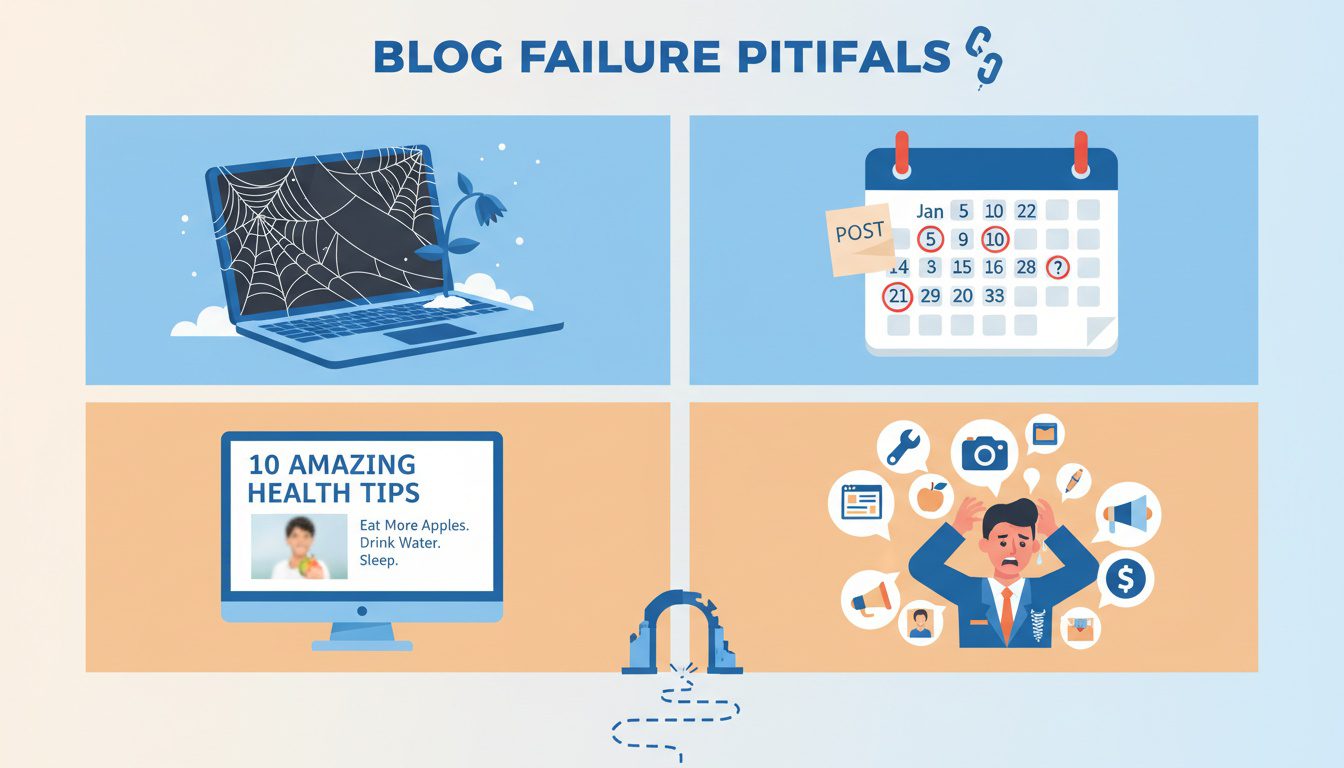
Let's talk about why most practices quit blogging in the first 90 days.
It's not because blogging doesn't work.
It's because they make these completely avoidable mistakes.
Inconsistent Publishing
The #1 blog killer: erratic posting schedules.
You publish 3 posts in week one, nothing for 3 weeks, then 2 posts in one day, then radio silence for a month.
Google interprets this as an abandoned site.
Here's the reality: Publishing one post monthly consistently beats publishing 4 posts one month then disappearing.
Set a schedule you can actually maintain: every Tuesday morning, or the 1st and 15th of each month, or every Sunday evening.
Then stick to it like you stick to your adjustment schedule.
Writing for Yourself Instead of Patients
Too many chiropractors write blog posts showcasing their expertise instead of answering patient questions.
Example of writing for yourself: "The biomechanical advantages of diversified technique in managing subluxation complexes"
Example of writing for patients: "Why does my lower back hurt after sitting all day?"
See the difference?
Patients don't care about your technique knowledge until they trust you can solve their problem.
Start with their pain point. Then explain your expertise in solving it.
Ignoring Search Intent
You write a beautiful post about "The Benefits of Chiropractic Care."
It gets 12 visitors total.
Why? Because nobody searches for that generic phrase.
They search for:
- "Can chiropractor help with migraines"
- "Is chiropractic safe during pregnancy"
- "How much does chiropractic adjustment cost"
- "Chiropractor vs physical therapy for back pain"
Use tools like Answer The Public or Google's "People Also Ask" section to find actual questions people type into search engines.
Then answer those exact questions.
Giving Up Too Early
This is where 90% of practices fail.
They write 10-12 blog posts over 3 months, see minimal traffic, and conclude blogging doesn't work for chiropractors.
Here's what they don't realize: They quit right before the compounding effects start.
Months 1-3 are foundation building. Google is evaluating your content, establishing your authority, and indexing your pages.
The traffic explosion happens in months 7-12—right after most practices give up.
Alright, quick reality check: If you're not willing to commit 12 months minimum, don't start blogging. Use that time and money on paid ads instead.
But if you can commit? The payoff compounds for years.
No Clear Conversion Path
You're getting traffic but zero patient calls.
The problem? You didn't give visitors a clear next step.
Every blog post needs:
- Obvious contact information - Phone number and appointment link in multiple places
- Relevant calls-to-action - "Schedule a free consultation" or "Check insurance coverage"
- Easy appointment booking - Online scheduling that actually works on mobile
- Trust builders - Reviews, credentials, years in practice, patient testimonials
Don't assume people will figure out how to contact you.
Make it stupidly obvious.
Ready to See How We Fix Chiropractic Websites?
We've transformed 150+ service-based websites using our proven 4-step system. See exactly how we combine premium design with conversion science.
Your First 90 Days: A Practical Roadmap
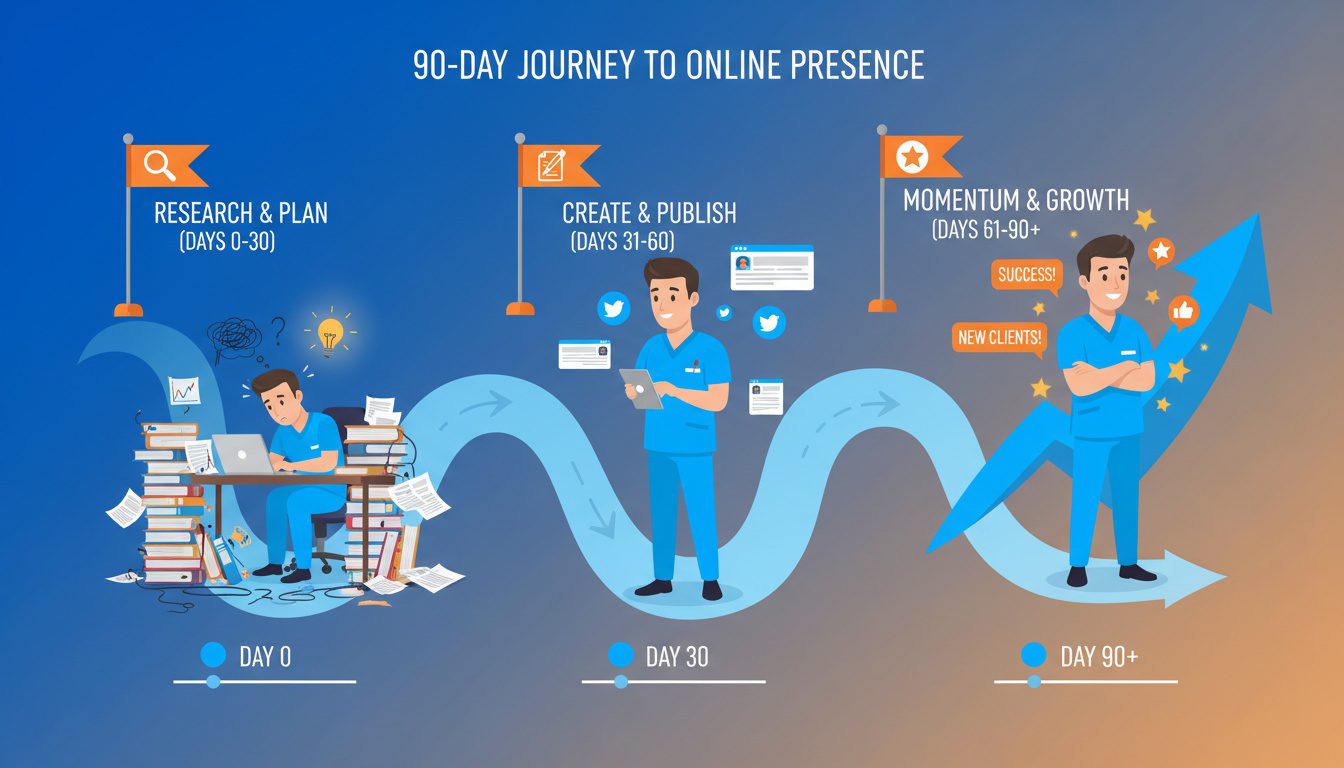
Okay, you're convinced blogging is worth it.
Now what?
Here's exactly how to start without getting overwhelmed.
Month 1: Foundation and Research
Week 1-2: Topic research and planning
Don't write anything yet.
Spend these two weeks identifying 20-30 topics patients actually search for. Use Answer The Public, check your Google Business Profile questions, review patient intake forms for common complaints.
Create a simple spreadsheet: Topic | Search Intent | Difficulty | Priority
Week 3-4: Write your first 4 posts
Focus on easy wins:
- One "what to expect" post (first visit, treatment process)
- One condition explanation (pick your #1 patient complaint)
- One insurance/billing post (addresses the money objection)
- One local relevance post (ties to your community or region)
These four posts establish your foundation and cover different search intents.
Month 2: Consistency and Optimization
Continue publishing 1-2 posts weekly
You're building momentum and signaling to Google this site is active.
Focus on:
- Internal linking - Connect related posts together naturally
- Image optimization - Add alt text and compress file sizes
- Mobile formatting - Most patients browse on phones
- Social promotion - Share each post on your platforms
Also start tracking: Which posts are you writing fastest? Which topics feel easiest to cover? Double down on those rather than forcing yourself to write about topics you hate.
Month 3: Momentum and Refinement
By now you've published 8-12 posts total
Look at your analytics:
- Which posts are getting the most traffic?
- Which have the longest time on page?
- Where are people leaving your site?
- Any patient inquiries mentioning blog posts?
Use this data to refine your topic selection.
Write more content similar to your top performers. Update or remove content that's clearly not resonating.
This is also when imposter syndrome hits hardest. You'll see minimal traffic and question everything.
Push through. You're 90 days in—the compounding effects are still 3-6 months away.
Advanced Strategies for Year Two and Beyond

Once you've built consistent publishing habits, here's how to multiply your results.
Content Repurposing System
Every blog post can become 10+ content assets:
- Email newsletter - Summarize key points and link to full post
- Social media - Pull 5-7 quote graphics from each article
- Video content - Record yourself explaining the same topic (even phone video works)
- Patient handouts - Print key sections as educational materials
- Email sequences - String related posts into nurture campaigns
This is how you get 5-10x more value from each hour of content creation.
Write once, distribute everywhere.
Pillar Content Strategy
Create 5-10 comprehensive "ultimate guides" (3,000-5,000 words each) on major topics:
- Complete guide to neck pain treatment
- Everything about insurance coverage and billing
- Prenatal chiropractic care guide
- Sports injury prevention and treatment
- Headache and migraine management
These pillar posts become your authority builders.
Then create 10-15 shorter posts (1,200-1,800 words) supporting each pillar:
- "Best sleeping positions for neck pain"
- "How to prevent text neck"
- "When to see a chiropractor for neck pain vs doctor"
Link the supporting posts to the pillar. Link the pillar to supporting posts.
This internal linking structure tells Google you're the definitive resource on that topic.
Answer Engine Optimization (AEO)
Remember how I mentioned AI search engines earlier?
This is where blogging strategy is heading.
AEO focuses on being cited by AI models when they answer health questions—not just ranking in Google.
What this means practically:
- Comprehensive answers - Cover topics thoroughly, not superficially
- Clear structure - Use headings, bullets, and tables AI can parse easily
- FAQ sections - AI models love Q&A format content
- Current information - Update posts with "as of 2026" data signals
- Authoritative citations - Link to research and credible sources
When someone asks ChatGPT "Can a chiropractor help with migraines?", you want your blog post to be the source it cites.
That's the new SEO.
Conversion Rate Optimization
You're getting traffic. Now maximize the patient conversion rate.
Test these elements systematically:
- CTA placement - Try contact forms mid-article vs only at end
- Appointment types - Offer free consultations vs paid initial visits
- Social proof - Add patient testimonials and review counts
- Urgency elements - Limited appointment slots, special offers with deadlines
- Trust signals - Credentials, years in practice, associations
Even small improvements matter.
Going from 2% conversion rate to 3% means 50% more patient inquiries from the same traffic.
Measuring Success: What Actually Matters

Stop obsessing over vanity metrics.
Here's what actually predicts practice growth from blogging.
Key Performance Indicators
Track these numbers monthly:
| Monthly visitors | 100-300 | 300-800 | 2,000-5,000 | Leading indicator of reach |
| Time on page | 2+ minutes | 2.5+ minutes | 3+ minutes | Shows content quality |
| Conversion rate | 1-2% | 2-3% | 3-5% | Traffic to patient ratio |
| Patient inquiries | 0-2 | 3-8 | 15-30 | Ultimate success metric |
| Cost per patient | N/A (building) | $200-400 | $50-150 | ROI measurement |
Don't panic if month 3 doesn't hit targets.
Look at trends, not snapshots.
Is traffic increasing month-over-month? Are people staying on pages longer? That's progress.
Traffic vs Conversion Balance
Here's the trap: focusing on traffic alone.
You could get 10,000 monthly visitors but zero patient calls if you're attracting the wrong audience or missing conversion elements.
Better to have 1,000 targeted visitors with a 4% conversion rate (40 inquiries) than 10,000 random visitors with 0.5% conversion (50 inquiries).
Focus on:
- Traffic quality - Are visitors from your local area? Are they searching relevant terms?
- Engagement signals - Time on page, pages per session, bounce rate
- Conversion pathways - Where do patient inquiries come from? Which posts convert best?
Optimize both simultaneously.
What "Success" Looks Like at 12 Months
Realistic expectations for a practice publishing 1-2 quality posts weekly:
- 3,000-8,000 monthly visitors - Depending on competition and topic selection
- 3-5% conversion rate - From visitor to patient inquiry
- 15-30 monthly patient inquiries - Mix of phone calls, forms, and online booking
- 10-20 new patients monthly - Not all inquiries convert to actual patients
- $25,000-80,000 annual patient value - Based on $2,500-4,000 lifetime value per patient
That's significant practice growth from an asset you own rather than renting ad space.
And year two? Those numbers typically double as your content library compounds.
How long before I see results from blogging?
Most chiropractors see their first patient leads from blogging in months 4-6.
Not month 1. Not even month 2.
Consistent traffic and conversions typically appear around months 7-12. The key is committing to 12 months minimum before judging results—most practices quit at month 3 right before momentum builds.
Think of blogging like adjusting subluxations: you're not fixing 20 years of damage in one session. You're creating compounding improvements over time.
How much time does blogging actually take?
Plan for 5-8 hours weekly minimum if you're doing it yourself.
This breaks down to:
- Research and topic selection: 1 hour
- Writing first draft: 2-3 hours
- Editing and optimization: 1 hour
- Images and formatting: 30-60 minutes
- Promotion and engagement: 1 hour
Outsourcing to a content agency costs $500-2,000 monthly depending on post frequency and quality.
Most successful practices either commit fully to DIY or fully outsource—hybrid approaches create bottlenecks.
What's the ROI of blogging vs paid ads?
Blogs generate 67% more leads monthly than practices without blogs.
Here's the financial reality:
Patient acquisition cost through blogging drops to $25-100 per patient after year one, compared to $150-300 per patient with ongoing paid ads.
The difference? Paid ads stop when budget ends—blog content compounds over time.
Year one, blogs and ads cost roughly the same per patient. Year two and beyond, blog costs drop dramatically while ad costs stay constant or increase.
How often should chiropractors publish blog posts?
Start with 1-2 posts weekly.
Practices publishing 2-4 monthly posts see the best balance of results without burnout.
Publishing 3-4 weekly posts is ideal for faster growth but requires significant time investment or outsourcing budget ($2,000-4,000 monthly).
The most important factor isn't frequency—it's consistency. Publishing one post monthly for 24 months beats publishing 4 posts monthly for 6 months then quitting.
What topics should chiropractors write about?
Focus on patient questions you answer daily:
- Condition explanations - Sciatica causes, neck pain, headaches, sports injuries
- Treatment approaches - What to expect, how adjustments work, treatment frequency
- Insurance and billing - Coverage questions, costs, payment options
- Scheduling and logistics - How often to come, can I bring kids, pregnancy safety
- Preventive care - Exercises, ergonomics, lifestyle advice, injury prevention
- Local health topics - Regional issues, community wellness, area-specific concerns
Use tools like Answer The Public to find actual search queries in your area.
Don't write generic wellness content—write answers to questions only a chiropractor can answer authoritatively.
Why is blogging more critical now than before?
AI search engines are changing everything.
ChatGPT, Claude, and Perplexity cite comprehensive, authoritative content when answering health questions.
This means Answer Engine Optimization (AEO) is replacing traditional SEO as the primary driver of organic traffic.
Practices creating thorough educational content get cited by AI models when users ask questions like "can chiropractor help with migraines" or "how much does chiropractic cost."
Your blog posts become the sources AI references—driving qualified patient leads who've already been educated on your expertise.
The practices ignoring this shift? They'll keep paying for ads while their competitors get free patient acquisition from content created years ago.
Final Reality Check: Is Blogging Right for You?
Let's wrap this up with brutal honesty.
Blogging works—the data proves it. But it's not for every practice.
You should start blogging if:
- You can commit 5-8 hours weekly for 12+ months minimum
- You want to build an asset that compounds over time
- You're comfortable with delayed gratification (results in months 7-12, not week 1)
- You have budget to outsource OR time to do it yourself consistently
- You're willing to answer the same patient questions in writing that you answer verbally daily
You should skip blogging if:
- You need patient leads this month, not next year (stick with paid ads)
- You can't commit to consistent publishing schedules
- Writing feels like torture and outsourcing isn't in budget
- You're already maxed on patient capacity (focus on retention instead)
- You have zero interest in creating educational content
There's no shame in the second list.
Some practices are better off investing $3,000 monthly in ads than forcing blogging they'll abandon in 60 days.
The key is choosing strategically based on your actual situation—not what you think you "should" be doing.
Look, I get it—this is a lot to implement on top of actually running your practice and treating patients.
If you're thinking "this all makes sense, but I don't have time to do it right," you're not alone. Most successful chiropractors we work with felt the same way before they realized their website and online presence were quietly costing them 15-20 qualified patient leads every single month.
That's why we created our Free Website Conversion Analysis. It's not a sales pitch—it's a genuine walkthrough of the 3 biggest problems killing your bookings, delivered personally via Loom video within 24 hours.
We'll show you exactly:
- Why visitors leave without booking
- What's broken on mobile devices (where most searches happen)
- Missing trust signals costing you patients
- Where you rank vs. local competitors
- Simple fixes that drive more calls this month
You'll also get an instant case study while you wait, showing real examples of how other chiropractors fixed these exact problems.
Get your free analysis here — no credit card, no obligation, just actionable insights you can use whether you work with us or not.
Because every day your blog strategy sits unoptimized is another day patients are choosing your competitors instead.

Gerek Allen
Co-Owner iTech Valet
Entrepreneur, patriot, CrossFit junkie, IPA enthusiast, loves to travel to tropical destinations, and knows way too many movie quotes.


About iTech Valet
iTech Valet specializes in web design and content marketing for online entrepreneurs who want to share their expertise.
Services Include:
- Web Design
- Graphic Design
- Sales Copy
- Funnel Building
- Authority Sites
- Membership Sites
- Course Creation
- Email Systems
- Content Marketing
- Competitive Analysis
- Tech Integrations
- Strategic Planning
NEED MORE CLIENTS?
Free conversion-focused analysis uncovers the 3 biggest problems killing your bookings — we'll walk you through your results personally

621 Enterprises, Inc. | Copyright 2022 | All rights reserved
Frequently Asked Questions About Chiropractic Blogging