The Identity Crisis AI Is Exposing
Here’s what most local business owners don’t realize: your website isn’t the problem.
Not exactly.
The problem is AI can’t verify who you are.
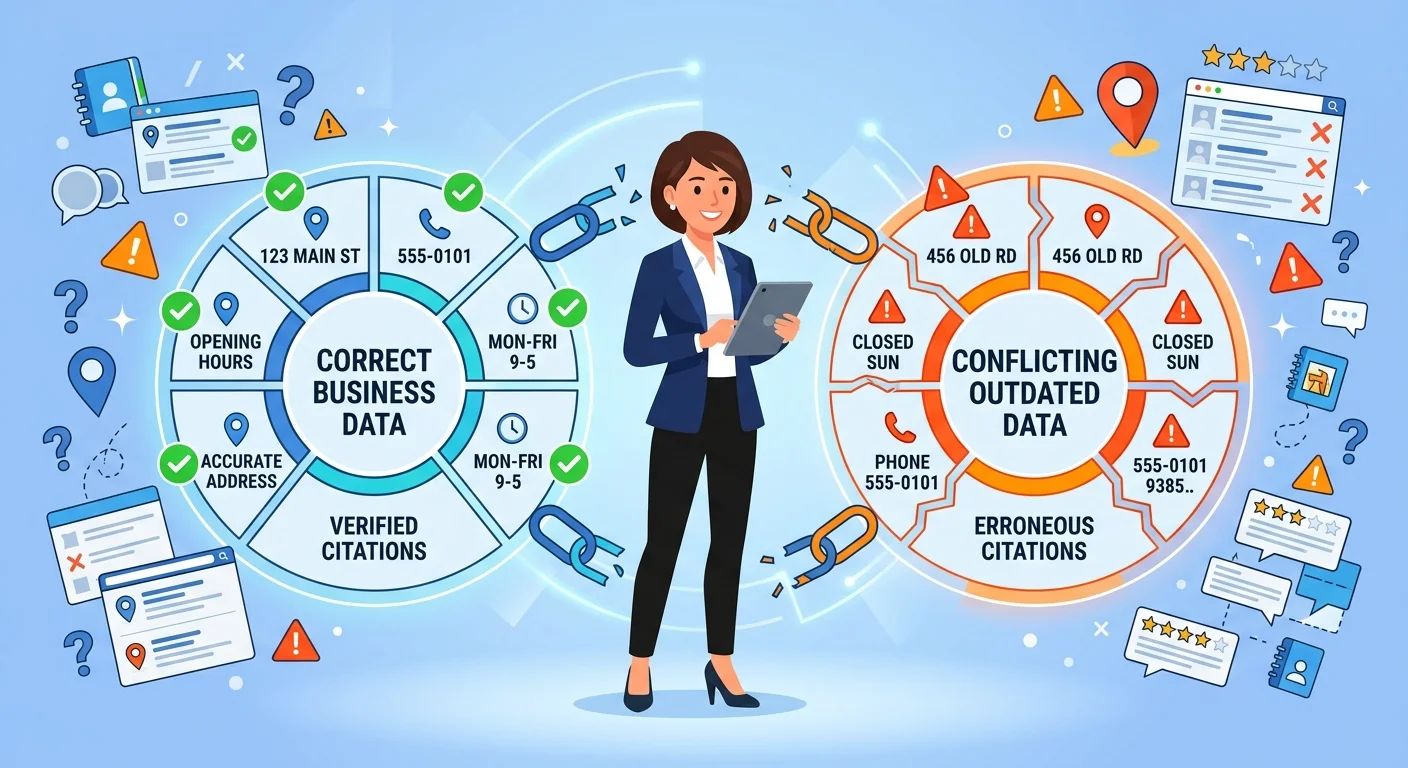
You’ve got a beautiful site. Professional branding. Years of experience. But when ChatGPT tries to answer “Who’s the best chiropractor in [your city]?” it can’t confidently say your name – because your digital identity is scattered across fifty directories, half of which still list the address from three years ago.
The marketing industry sold you a digital business card and called it a strategy.
It’s not.
A pretty website that AI doesn’t recognize is an expensive decoration.
Entity drift is the identity crisis AI is exposing. And if you think this is just “bad SEO” your current agency can clean up later – you’re already behind.
Entity Drift Is Not a Technical Glitch
Entity drift isn’t a one-time error you patch with a quick citation update.
It’s the systemic result of years of inconsistent data piling up. Every time you moved offices and didn’t update all your listings. Every time you changed phone numbers and forgot about that Yelp profile from 2019. Every time you rebranded your services but left your Google Business Profile description alone.
All of that creates conflicting signals.
And AI engines don’t ignore conflicts – they treat them as disqualifying.
When Gemini sees three different addresses for your business, it doesn’t pick the most recent one. It flags your entire entity as unverifiable. ChatGPT doesn’t guess which phone number is correct. It omits you from the recommendation entirely.
This isn’t a glitch.
It’s how verification systems are designed to work.
Why AI Merges Your Business with Competitors
AI has to figure out which John Smith Consulting is actually you. That process – called entity disambiguation – breaks when your data conflicts.
When your business name is common, your services overlap with competitors, and your identifying data is inconsistent – AI can’t resolve which entity is you.
So it does one of two things.
It picks the entity with the cleanest signals. Or it merges conflicting data into a single confused entity.
Both outcomes are invisible to you until someone asks AI for a recommendation and your name doesn’t come up.
I’ve watched this happen in real time. A practice owner ran the AI Visibility Check and ChatGPT recommended their competitor – using their old business description and the competitor’s phone number.
The AI had merged two entities because neither one had clean, verifiable data.
The competitor didn’t win because they were better.
They won because their NAP was consistent and their schema was implemented correctly.
The Old Address That’s Destroying Your Authority
Let’s get specific.
You moved offices in 2021. Updated your website, your Google Business Profile, your LinkedIn. Done, right?
Wrong.
That old address is still live on InfoUSA. It’s still on three Yelp clones you’ve never heard of. It’s still in the footer of a guest post you wrote in 2019.
And because those sources feed into the same data aggregators AI engines use to verify entities – your business now has two addresses.
AI doesn’t know which one is correct.
So it flags your entity as ambiguous and moves on to someone whose data is clean.
| Common Entity Drift Trigger | Source of Conflict | Impact on AI Trust |
|---|---|---|
| Old physical address still listed on directories | InfoUSA, Neustar, or other aggregators never updated | AI sees two locations, cannot verify current address |
| Phone number changed but not updated across all profiles | Review sites, social profiles, old citations | AI cannot confirm contact method, flags entity as unstable |
| Service descriptions vary between website and directory listings | Google Business Profile says “web design,” website says “AI consulting” | AI cannot determine core service offering, omits from service-specific queries |
One conflict doesn’t kill you.
Three conflicts make you invisible.
How Entity Drift Happens (And Why It’s Worse Than You Think)
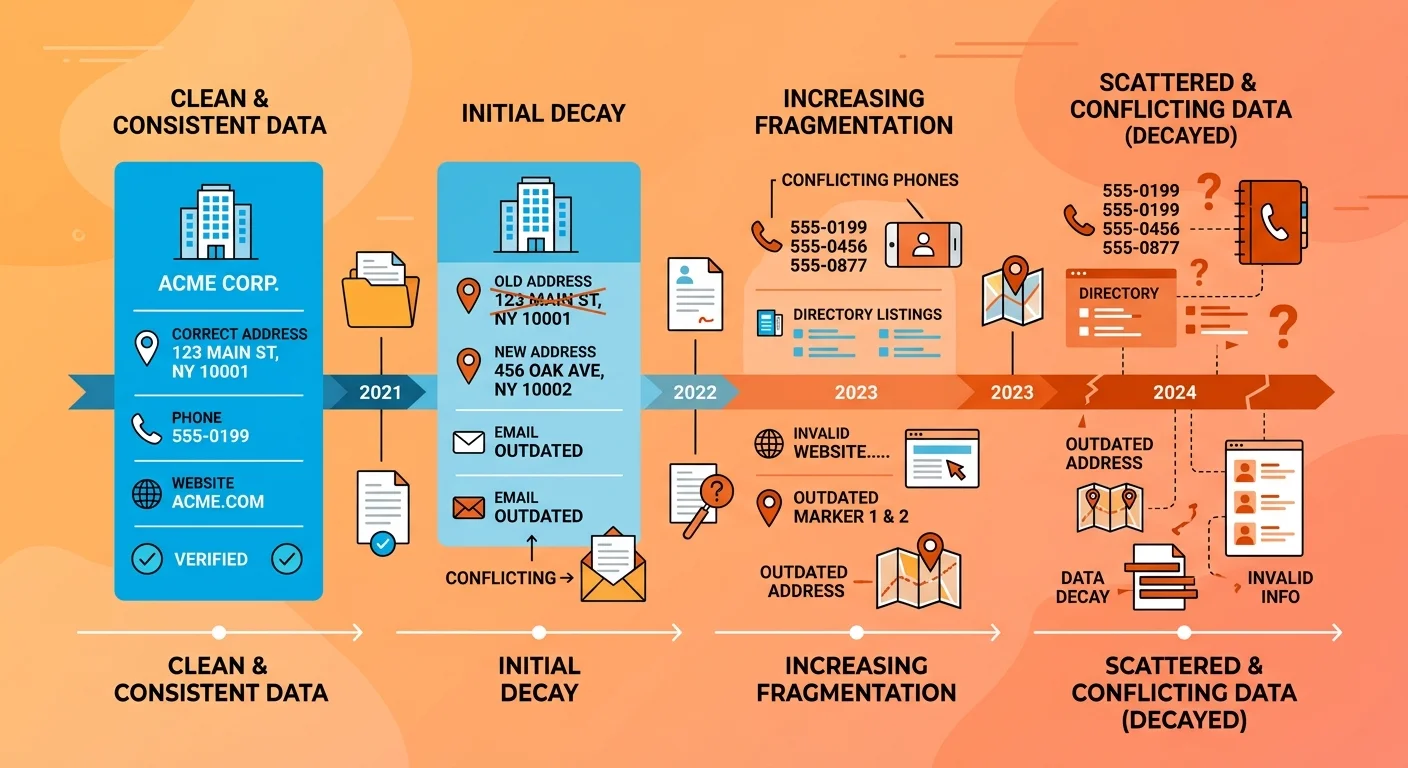
Entity drift doesn’t happen overnight.
It accumulates.
One old listing. One forgotten profile. One directory you didn’t know existed. Each one adds a small fracture to your entity. Over months and years, those fractures compound into a fragmented identity AI can’t trust.
And here’s the kicker – you don’t see it happening.
Your website looks fine. Your Google Business Profile is updated. Your reviews are strong.
But behind the scenes, AI is cross-referencing fifty data sources, finding ten conflicts, and deciding you’re too risky to recommend.
The NAP Consistency Trap
Name, Address, Phone Number – NAP consistency – is the foundation of entity verification.
It sounds boring. It sounds like generic SEO advice from 2015.
But according to BrightLocal’s data on NAP consistency and local search visibility, inconsistent NAP information is the single biggest factor preventing businesses from appearing in local AI recommendations.
This isn’t about ranking.
It’s about trust.
When AI sees your business name spelled three different ways (“Smith Consulting,” “Smith Consulting LLC,” “Smith Consulting Group”), it doesn’t assume they’re the same business. It treats them as three separate entities competing for verification.
Same with addresses.
“123 Main St” vs. “123 Main Street” vs. “123 Main St, Suite 200” – those look identical to a human. To an AI parsing structured data, they’re three different locations.
The trap is assuming “close enough” is good enough.
It’s not.
When Your Website Says One Thing and Your Directory Says Another
Your website proudly declares you specialize in sports injury recovery and corrective care.
Your Google Business Profile – last updated in 2020 – still says you’re a general wellness practice.
AI reads both.
AI can’t reconcile the conflict.
So it doesn’t recommend you for either category.
This is one of the most common causes of entity drift I see. Businesses evolve. Service offerings change. Positioning shifts. But the old data stays live on directories, review sites, and aggregator databases nobody remembers creating.
And every time AI tries to verify what your business actually does, it finds contradictory answers.
That’s not a trust signal.
That’s a bad citation breaking the entire chain.
The Aggregator Problem
Data aggregators are the hidden accelerant of entity drift.
InfoUSA, Neustar, Localeze, Factual – these platforms collect business data and distribute it to hundreds of downstream directories. They’re supposed to make citation management easier.
In practice, they make entity drift nearly impossible to fix without a systematic approach.
Because once bad data gets into an aggregator’s database, it propagates everywhere. You can manually update fifty directories, but if the aggregator still has your old address – it’ll push that outdated information back out in the next refresh cycle.
Fixing entity drift requires controlling the source.
Not chasing individual listings.
The Knowledge Graph Reality: Your Business Is Not One Thing
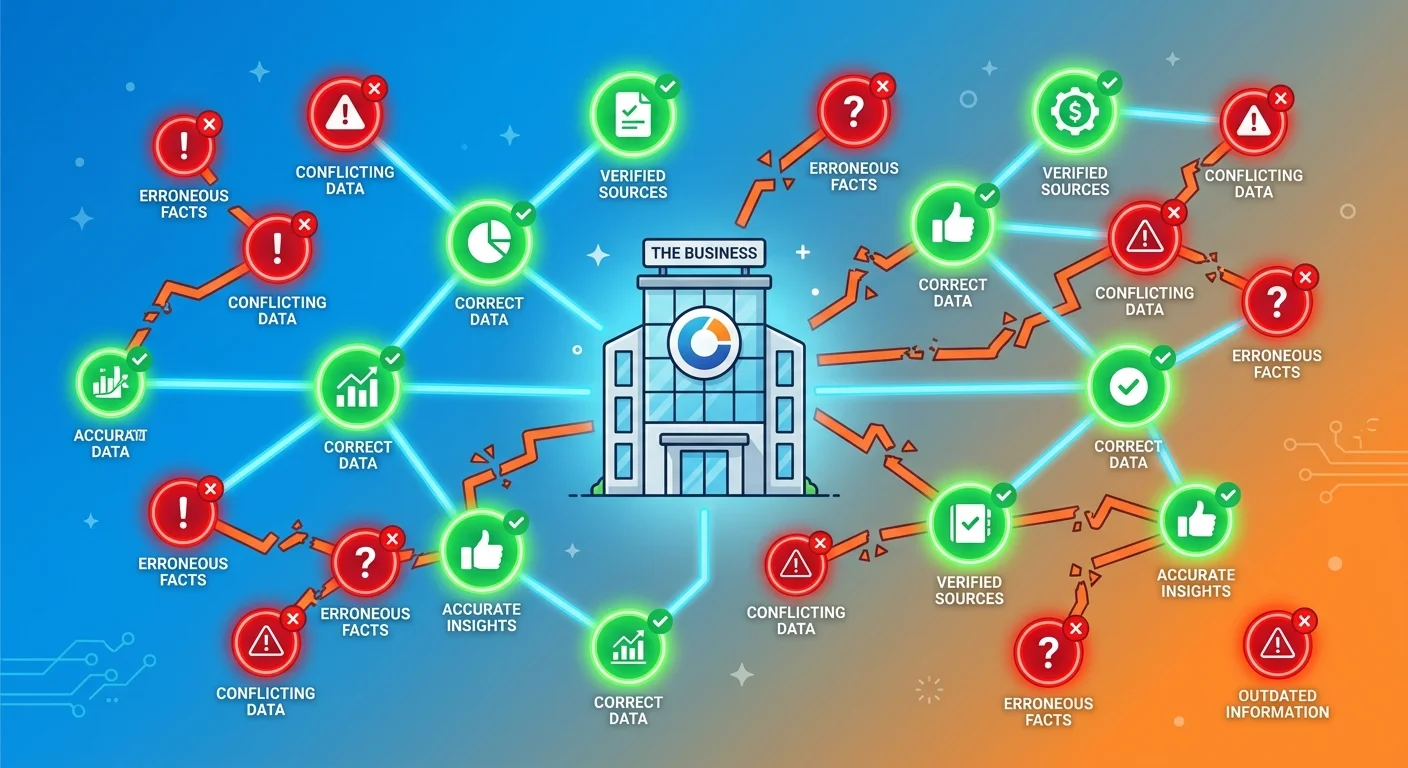
AI doesn’t see your business the way you do.
You see one unified entity – your brand, your team, your work.
AI sees a collection of data points scattered across the web, attempting to resolve into a single, verifiable identity.
Google defines a knowledge graph as “a knowledge base that understands facts about people, places, and things and the relationships between them.”
That’s what AI is building every time it evaluates your business.
But if the facts conflict, the relationships break.
How AI Builds a Mental Model of Your Business
AI aggregates data from structured sources (schema markup, directory listings, Google Business Profile) and unstructured sources (blog posts, news mentions, social profiles).
It cross-references all of that to build a confidence score for your entity.
According to Carnegie Mellon’s research on entity linking and knowledge bases, named entity disambiguation systems rely on consistency signals to determine which mentions refer to the same real-world entity.
When those signals conflict, the system can’t link the mentions with confidence.
Translation: if your schema says you’re in Huntington Beach but three directories say you’re in Los Angeles, AI can’t determine which location is correct.
So it flags your entire entity as ambiguous.
And ambiguous entities don’t get recommended.
Why One Bad Data Source Can Break Everything
Not all data sources are weighted equally.
A highly trusted source – like a .gov domain, a major news publication, or a verified Google Business Profile – carries more weight than a random directory listing.
But here’s the problem: if that trusted source has incorrect data, it can override ten correct sources.
I’ve seen this happen. A practice’s entity was clean across their website, social profiles, and most directories. But one high-authority citation – a press release from two years ago that listed an old address – was enough to fragment the entire knowledge graph.
AI didn’t ignore the bad data because it came from a trusted source.
It treated the conflict as a sign the entity was unverifiable.
One bad source doesn’t just add noise.
It breaks the chain.
The Founder Identity Gap
Most local businesses have no publicly verified connection between the business entity and the founder.
The website says “Founded by Dr. John Smith.”
But there’s no schema linking Dr. John Smith (the person) to the business entity. No verified LinkedIn profile. No author bio with structured data. No knowledge panel connecting the two.
So when AI tries to verify who actually runs the practice, it finds nothing.
And that absence of verification weakens the entire entity.
Anchor your entity by linking the founder’s Person schema to the business Organization schema.
Gerek Allen’s background is publicly verifiable because the schema explicitly links his Person entity to the iTech Valet Organization entity.
That’s not an accident.
It’s foundational infrastructure.
If AI can’t verify who’s behind your business, your entity is floating in space with no anchor.
| Entity Signal | Strong Signal Example | Weak Signal Example |
|---|---|---|
| Founder verification | Schema markup linking Person entity to Organization entity, verified LinkedIn profile | “Founded by [name]” text on website with no structured data |
| Address consistency | Same address across website, Google Business Profile, and all directory listings | Three different addresses across major directories |
| Service definition | Consistent service descriptions across all platforms, supported by schema | Service descriptions vary between website, directories, and social profiles |
Strong signals compound.
Weak signals fragment.
Why Traditional SEO Cannot Fix Entity Drift
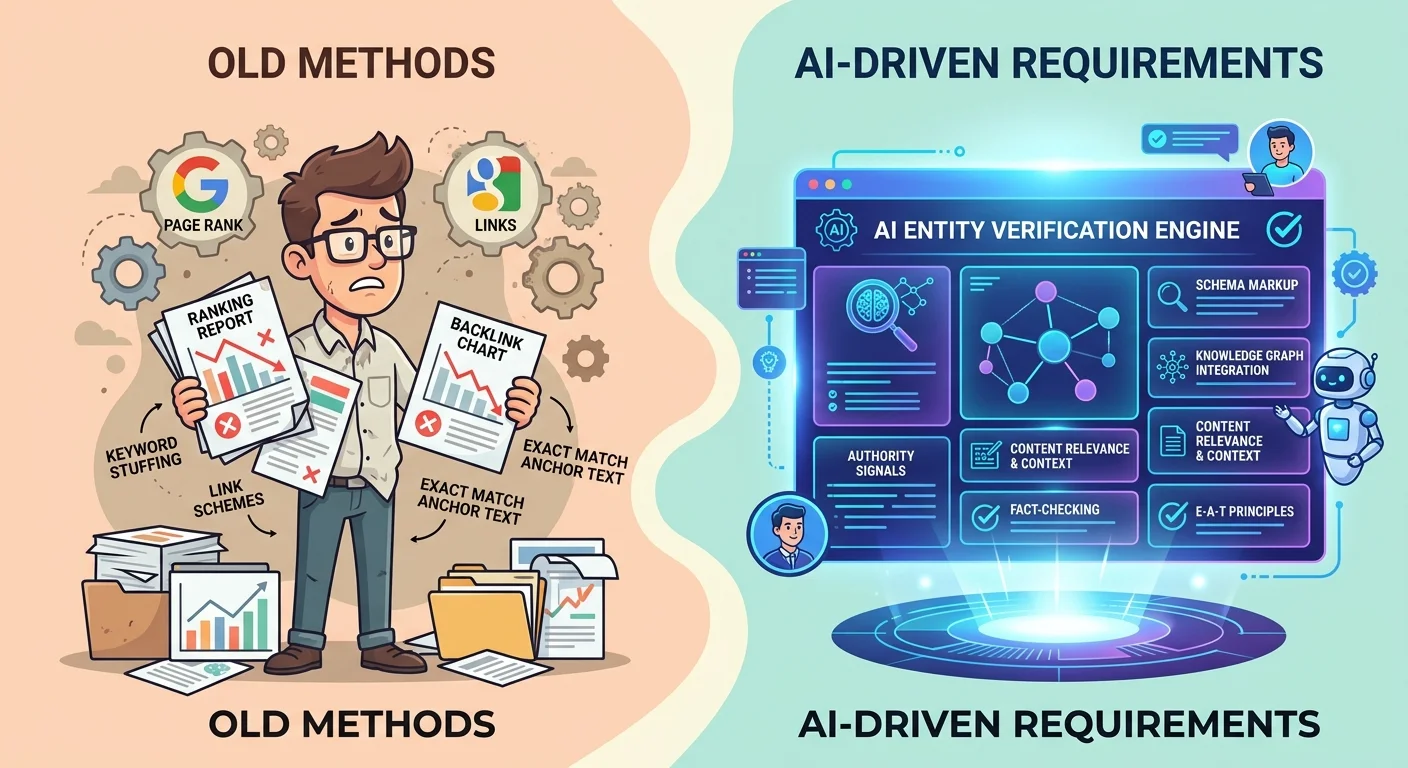
Traditional SEO was built for a different game.
You optimized keywords. Built backlinks. Chased rankings. Got on page one. Patients or clients clicked through.
That chain worked – when search engines returned a list of ten results and humans picked the best one.
It doesn’t work anymore.
Because AI doesn’t return a list.
It returns a verdict.
And keyword density has nothing to do with whether AI trusts your entity enough to say your name.
SEO Optimizes for a List. Entity Authority Builds a Verified Identity.
SEO gets you into the conversation.
Entity authority determines whether AI says your name when someone asks for a recommendation.
Those aren’t the same thing.
Answer Engine Optimization is the systematic process of building the foundational infrastructure and content execution that makes AI engines trust your entity enough to cite you.
That’s not about ranking factors.
It’s about verification mechanisms.
Traditional SEO assumes the user will evaluate a list and make a choice. AEO assumes AI will evaluate your entity and make the choice for them.
If your entity is fragmented, AI won’t even put you on the list to evaluate.
Why More Backlinks Won’t Fix a Fragmented Entity
Backlinks signal popularity.
Not identity.
AI doesn’t care how many websites link to you if it can’t verify who you are. A practice with 500 backlinks and inconsistent NAP data will lose to a practice with 50 backlinks and a clean, verified entity.
Every time.
Backlinks are social proof. Entity verification is foundational trust. You can’t build authority on a foundation AI doesn’t recognize.
I’ve watched local businesses spend thousands on link-building campaigns while their Google Business Profile still listed an address from three years ago.
The backlinks didn’t move the needle – because the foundational identity was broken.
Fix the foundation first.
Then build.
The Schema Gap Most Agencies Ignore
Schema Markup is the explicit, machine-readable signal AI needs to disambiguate your entity.
According to Moz’s explanation of schema and structured data, schema helps search engines understand the content and context of a page by providing explicit clues about the meaning of the information.
But most local businesses either don’t implement schema at all, or they implement it incorrectly – missing LocalBusiness markup, incomplete Organization schema, no Person entity linking the founder to the business.
Without schema, AI is guessing based on unstructured text.
With schema, you’re giving it a verified identity document.
That’s the difference between being invisible and being the answer.
| Approach | What It Solves | What It Ignores |
|---|---|---|
| Traditional SEO (keyword optimization, backlink building) | Increases visibility in ranked search results, drives traffic to website | Entity verification, foundational data consistency, AI trust signals |
| Entity Authority (NAP consistency, schema implementation, knowledge graph anchoring) | Builds verified, machine-readable identity that AI can trust and cite | Short-term traffic spikes, vanity ranking metrics |
SEO gets you traffic.
Entity authority gets you named.
The Real Cost of a Fragmented Entity
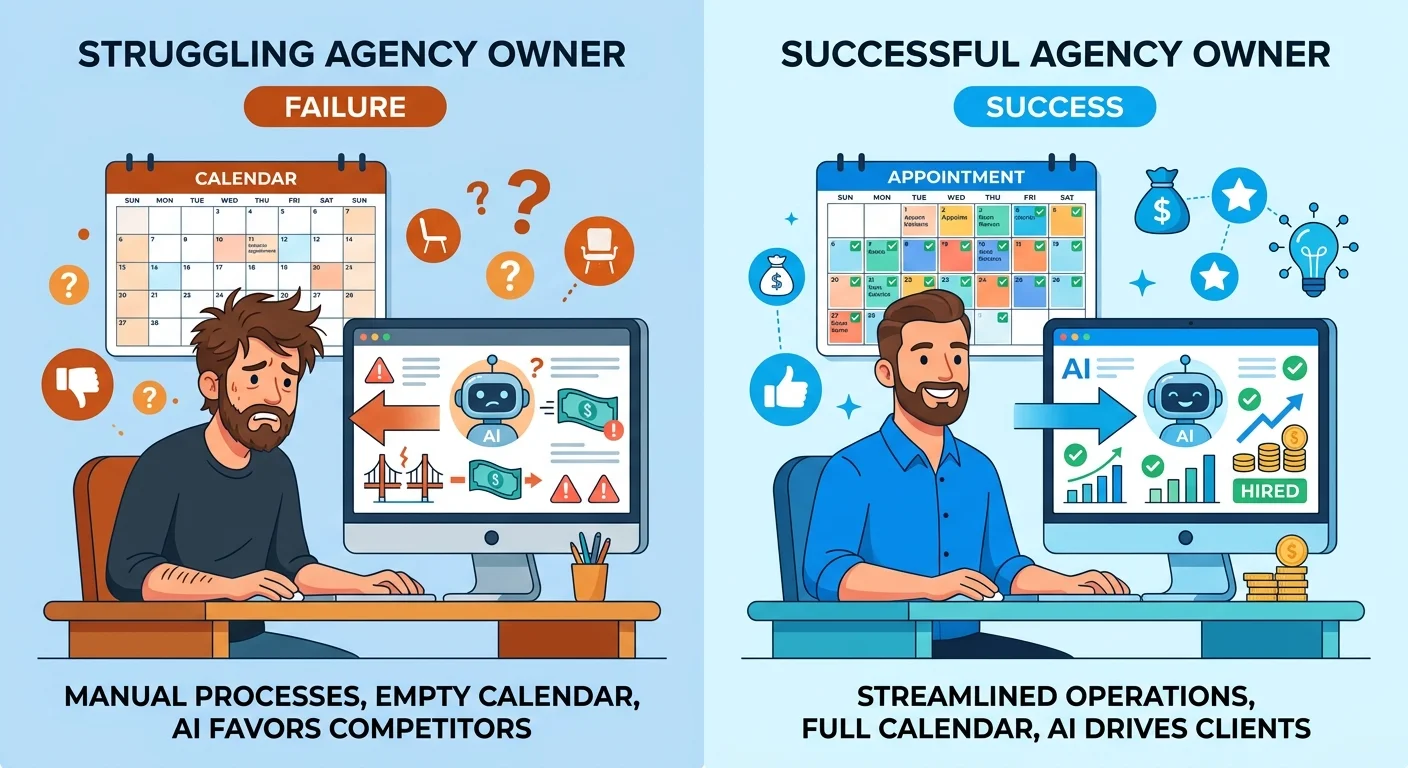
This isn’t about rankings.
It’s not about traffic.
It’s about being recommended – or not existing.
When someone asks ChatGPT who the best chiropractor in your area is, your practice either comes up or it doesn’t.
There is no page two.
There is no “close enough.”
Entity drift is the silent killer. You don’t see the leads you’re not getting. You don’t see the patients who never heard your name because AI recommended your competitor instead.
When AI Recommends Your Competitor Because Their Data Is Cleaner
Real scenario.
Two chiropractors. Same city. Same services. One has fifteen years of experience. The other has three.
Patient asks Gemini for a recommendation.
Gemini names the three-year-old practice.
Why?
Because the three-year-old practice has consistent NAP across all directories. Their schema is implemented correctly. Their founder’s LinkedIn is verified and linked to the business entity. Their Google Business Profile is updated monthly.
The fifteen-year practice?
Old address on six directories. No schema. Founder’s LinkedIn lists them as “Chiropractor” with no connection to the business entity. Google Business Profile last updated in 2019.
AI didn’t evaluate experience.
It evaluated trust signals.
And the younger practice won because their entity was clean.
This is happening every day. The best practitioners aren’t winning. The practitioners with the cleanest data are winning.
The E-E-A-T Framework and Entity Trust
Google’s E-E-A-T framework – Experience, Expertise, Authoritativeness, and Trustworthiness – is how Search Engine Journal explains the signals Google uses to evaluate content quality.
But here’s what most people miss: all four pillars rely on a verified entity.
Experience requires proof you’ve done the work. Expertise requires credentials and demonstrated knowledge. Authoritativeness requires external citations and trust signals. Trustworthiness requires consistency and transparency.
If your entity is fragmented, AI can’t verify any of that.
Your experience is unverifiable. Your expertise has no anchor. Your authoritativeness has no supporting evidence. Your trustworthiness is undermined by conflicting data.
E-E-A-T doesn’t work on a broken foundation.
You Cannot Build Authority on a Foundation You Don’t Control
Quick pause before we go further.
If you think you can audit fifty directories once, fix the conflicts, and walk away – this isn’t for you.
Entity authority requires ongoing control.
Data aggregators refresh their databases. Directories update their information. Your practice evolves.
The set-it-and-forget-it approach doesn’t work here. Neither does the DIY approach where you hand this off to your front desk staff without understanding the verification mechanisms yourself.
Authority is built in layers. Foundation first – clean, verified entity with consistent NAP and schema. Then content execution on top. Then citation velocity. Then AI visibility deepening every month.
If that timeline doesn’t fit your decision framework – no hard feelings.
But if you’re tired of watching competitors with less experience get recommended because their data is cleaner – you’re in the right place.
How to Diagnose Entity Drift Before It Kills Your Visibility

You can’t fix what you can’t see.
Most practice owners assume their entity is fine because their website looks professional and their Google Business Profile is updated.
That assumption is almost always wrong.
The diagnostic process isn’t complicated. It’s systematic. And it starts with seeing what AI actually says about your business right now.
Run the AI Visibility Check
The first step is asking the question most agency owners have never asked: what do ChatGPT, Gemini, and Perplexity say when someone asks who the best agency in my market is?
The AI Visibility Check takes fifteen minutes. It shows you exactly what AI engines see when they evaluate your entity.
If your business comes up – great.
If your competitor comes up – you know exactly where you stand.
I’ve run this check with practices convinced they’re in good shape.
Most weren’t.
The gap between what you think AI sees and what it actually sees is the gap that’s costing you leads right now.
Audit Your NAP Across All Major Directories
Once you know AI isn’t recommending you, the next step is finding out why.
Start with the big four data aggregators: InfoUSA, Neustar, Localeze, and Factual. These platforms feed data to hundreds of downstream directories. If your NAP is wrong at the aggregator level, fixing individual directories won’t matter – the bad data will propagate back out.
Then audit the top-tier directories: Google Business Profile, Yelp, Bing Places, Apple Maps, Facebook. These are the sources AI engines weight most heavily.
Look for three things:
- Name variations (LLC vs. Inc vs. no suffix)
- Address conflicts (old locations still listed)
- Phone number discrepancies (landline vs. mobile, area code changes)
Every conflict you find is a fracture in your entity.
Fix the aggregators first. Then the directories. Then the long-tail citations.
Verify Your Schema Implementation
Most local businesses either don’t have schema or have broken schema that’s doing more harm than good.
Open your website’s source code. Look for <script type="application/ld+json"> tags.
If you don’t see any – you have no schema.
If you see them but they’re incomplete or incorrectly formatted – you have broken schema.
At minimum, you need:
- LocalBusiness schema (if you serve a local market)
- Organization schema (for the business entity)
- Person schema (for the founder, linked to the Organization entity)
If your AI-readable infrastructure is missing or broken, AI has no explicit signals to verify your identity.
It’s guessing based on unstructured text.
And guesses don’t get recommendations.
Check Your Founder’s Digital Footprint
AI looks for a verified connection between the business and the person running it.
If your founder’s LinkedIn profile says “Consultant” with no mention of the business name, that connection is weak. If there’s no author bio on the website linking back to a verified LinkedIn profile, that connection is weak. If the founder has no knowledge panel, no published content, no external citations – that connection is nonexistent.
The founder of iTech Valet has a verified Person entity linked to the Organization entity via schema.
That’s not optional infrastructure.
That’s foundational trust.
If AI can’t verify who’s behind your business, your entity is floating in space.
| Entity Drift Diagnostic Step | What to Check | Red Flag Indicator |
|---|---|---|
| Run AI Visibility Check | Ask ChatGPT, Gemini, Perplexity who the best agency in your market is | Your business is not mentioned, or competitor is named instead |
| Audit NAP across aggregators and directories | InfoUSA, Neustar, Google Business Profile, Yelp | Name spelled differently, old address still listed, phone number conflicts |
| Verify schema implementation | Check website source code for LocalBusiness, Organization, and Person schema | No schema present, or schema is incomplete/incorrectly formatted |
| Check founder’s digital footprint | LinkedIn profile, author bio, knowledge panel, external citations | No verified link between founder and business entity |
Diagnosis before correction.
Always.
Frequently Asked Questions
Is ‘entity drift’ just a new name for bad SEO?
No. While both relate to visibility, traditional SEO focuses on ranking in a list of search results. Entity drift directly impacts whether a conversational AI can distinguish your business from others to give a single, trusted recommendation.
SEO optimizes for algorithmic ranking – keywords, backlinks, page speed. Entity authority fixes foundational identity verification – consistent NAP, schema markup, knowledge graph anchoring.
You can have perfect SEO and still be invisible to AI if your entity is fragmented. They’re different mechanisms solving different problems.
What is the most common cause of entity drift for a small business?
The most common cause is inconsistent NAP (Name, Address, Phone Number) data across online directories, social profiles, and the business’s own website, often stemming from old locations or branding changes that were never fully cleaned up.
A single outdated address on three directories can create enough ambiguity to fragment the entity. AI doesn’t pick the most recent data. It flags the conflict and treats your entire entity as unverifiable.
Small businesses move offices, change phone numbers, rebrand services – and rarely go back to update every directory listing from five years ago. That’s where entity drift starts.
Can entity drift cause AI to give factually wrong information about my business?
Yes. If an AI’s knowledge graph has merged your entity with a competitor’s or pulled data from conflicting sources, it can confidently state incorrect hours, services, or even list your competitor’s phone number under your business name.
The AI is not lying – it genuinely can’t distinguish which data belongs to which entity. When multiple sources conflict, AI systems attempt to resolve the ambiguity by merging partial identities. The result is a hybrid entity that doesn’t accurately represent any single business.
I’ve seen AI recommend “ABC Consulting” but list the phone number and services from “XYZ Consulting” because both entities had similar names and overlapping service descriptions in the same city.
How does Schema Markup help fix entity drift?
Schema Markup is code that explicitly tells AI engines what your entity is – a specific business, its address, its founder, its services. It removes ambiguity by providing structured, machine-readable data that AI can verify.
Without schema, AI is guessing based on unstructured text. It reads your website, your blog posts, your directory listings, and tries to infer what you are. That inference process is fragile and error-prone.
With schema, you’re giving AI a verified identity document. You’re saying “This is my business name. This is my address. This is my founder. This is what we do.” And AI can cross-reference that structured data with other sources to build confidence.
Schema doesn’t guarantee a recommendation. But it removes one of the biggest barriers to being recommended.
What’s the first step to fix entity drift for my practice?
The first step is a comprehensive audit of all your public business citations (Name, Address, Phone, Website) across major directories and data aggregators to identify and correct inconsistencies.
You can’t fix what you can’t see. Most practice owners assume their NAP is clean because their website and Google Business Profile are updated. Then they run an audit and find fifteen directories with old addresses, three different phone numbers, and name variations across platforms.
Start with the diagnostic. Map every conflict. Prioritize aggregators and high-authority directories first. Then execute the corrections systematically.
Do not attempt to fix citations without understanding which sources feed into which downstream directories. You’ll waste months correcting individual listings while the aggregator keeps pushing bad data back out.
Does fixing entity drift guarantee AI will recommend my business?
No. Fixing entity drift removes a structural barrier to being recommended, but it does not guarantee a recommendation.
AI also evaluates authority signals, content depth, citation velocity, and trust markers beyond just entity verification. Entity drift is the foundation. If the foundation is broken, nothing else matters. If the foundation is solid, you can build authority on top of it.
Think of it like fixing a cracked foundation before adding a second story to your house. The repair doesn’t guarantee the house will be beautiful or valuable – but without it, the house is uninhabitable.
Fixing entity drift is a prerequisite. Not a silver bullet.
Can I just hire a VA to fix my citations once and be done?
No. Citation consistency is not a one-time project.
Data aggregators refresh their databases. Directories update their information. Your business evolves – new services, new locations, new team members. All of that creates opportunities for new conflicts to emerge.
A VA can execute a citation cleanup. But the strategy and verification process require someone who understands the AI trust model. You need to know which aggregators to prioritize. Which directories matter most. How to structure schema. How to link the founder’s Person entity to the business Organization entity.
Entity authority requires ongoing monitoring and correction. Delegate the execution. Own the strategy.
Conclusion
AI doesn’t care about your website’s aesthetic.
It doesn’t care about your years of experience or your superior service.
It cares about one thing: can it verify your identity with confidence?
If your entity is fragmented, ambiguous, or conflicted – AI won’t recommend you. It’ll recommend the competitor whose data is clean. Even if that competitor is objectively inferior.
This is not a problem you can ignore and hope resolves itself.
Entity drift compounds. Every month you operate with inconsistent data, the gap between you and the businesses with clean entities widens. The longer you wait, the more citations accumulate, the more directories propagate outdated information, and the harder it becomes to reverse.
The businesses that own AI recommendations in six months are fixing their entity drift today.
The ones waiting for “more data” or hoping traditional SEO will carry them are the ones that’ll be invisible when the shift is undeniable.
There’s no middle ground here. Either your entity is verified and trusted, or it’s not.
AI doesn’t rank ambiguity.
It eliminates it.
Want to know if AI can even distinguish your practice from your competitors right now?
Most practice owners assume their entity is fine because their website looks professional. That assumption is almost always wrong. The AI Visibility Check takes 15 minutes and shows you exactly what ChatGPT, Gemini, and Perplexity see when someone asks who the best chiropractor in your market is. If your entity is drifting, you’ll know immediately.