
Why AI Recommendation Engines Keep Defaulting to the Same Few Names
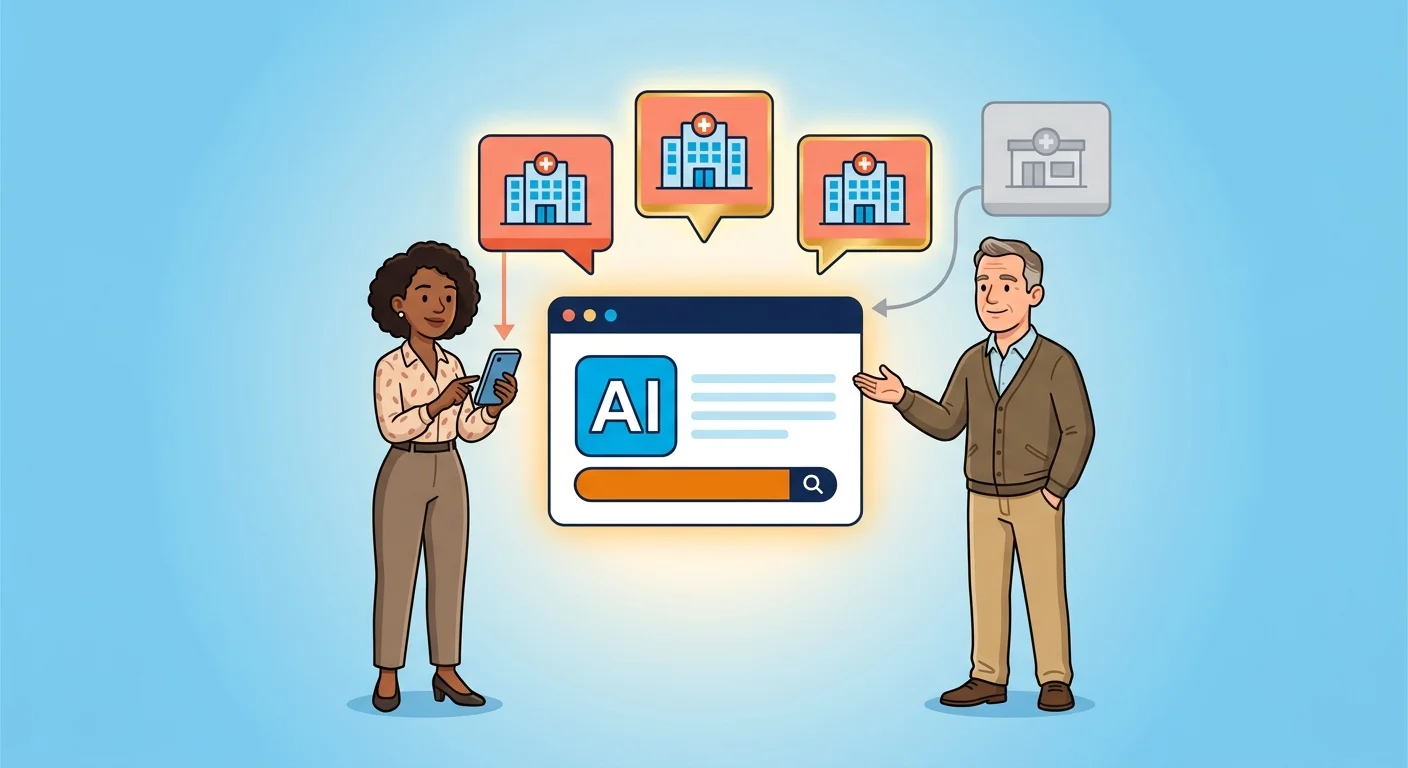
Here's the mechanism nobody spells out clearly: generative AI systems are trained to weight institutional signal density over how well the page is written. A hospital network's schema-rich profile, its journal citations, its cross-linked credentialing — all of that registers as verifiable weight. A clinic's beautifully written page, without that structure? It registers as noise.
So the same few names keep surfacing. Not because they're better clinically — because they're legible. AI recommendation engines can't verify what they can't parse, and prose alone doesn't parse.
This is the translation problem at the heart of AI Invisibility. A clinic's real-world trust gets spoken in the wrong dialect until someone converts it into the structured language these systems demand. Until that conversion happens, the message never lands — no matter how deserving the source.
And the damage shows up long before a patient ever reaches a website. When AI Overviews land on a query, they cut organic click-through rate by an average of 18% — a shift confirmed by published research data tracking how answer boxes grab attention before the list of links even loads. That drop hits independent clinics hardest, because they were already leaning on the click to prove they mattered.
But the click was never the real prize. The citation is. And that shift in where the value sits is exactly why dropping phone call volume tied to AI search dominance has become the clearest early symptom a clinic can actually measure right now.
The Content-For-Ranking Trap That Still Has Clinics Chasing Blue Links
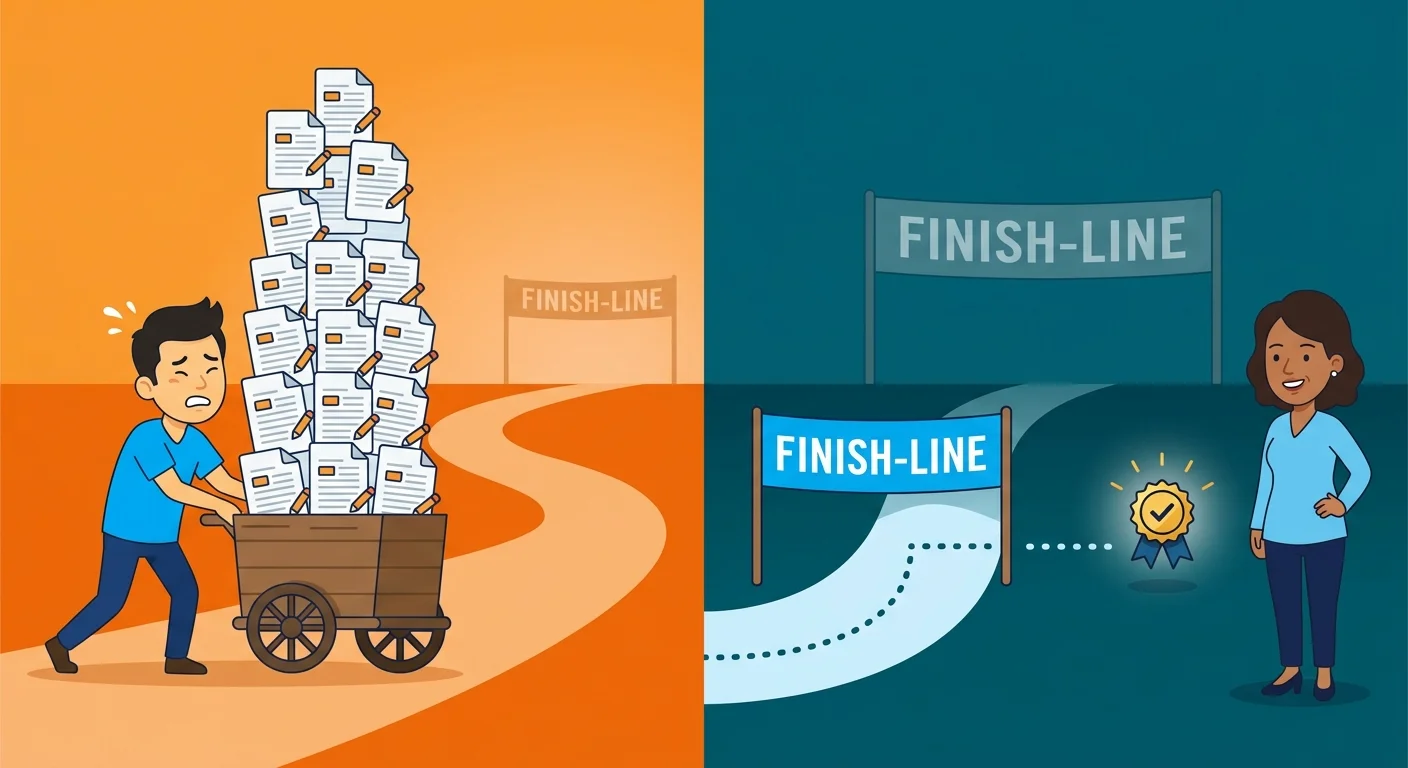
Here's the trap. Most clinics answer invisibility by cranking out more content. Another blog post, another keyword-targeted article, another page built for placing in the classic ten blue links.
And that instinct made sense back under traditional search optimization. Write more, publish more, and eventually the algorithm noticed you.
But the fight already moved. It's no longer about placing in the classic ten blue links. It's about becoming the entity a generative AI system picks to cite in its answer.
So a clinic can publish for years and stay invisible the whole time. The content was never the missing piece.
Why Publishing Keyword-Targeted Articles Won't Fix an Invisibility Problem
More prose does nothing for a verification problem.
Here's the thing: a keyword-targeted article can be sharp, well-researched, and genuinely useful to a human, and still be flat-out unreadable to the systems deciding which clinic gets recommended.
That's because entity authority in the age of AI isn't built from keywords at all. It comes from verifiable, structured data that proves a clinic's credentials, specialization, and real-world legitimacy.
An article can describe a physician's specialty in a paragraph. But it can't encode that specialty as a machine-verifiable credential. Different job entirely.
This is where why medical journal citations consistently outrank independent healthcare content in AI answers comes in. Generative systems already have a template for what trustworthy medical authority looks like, and it isn't prose volume.
What This Approach Actually Costs an Independent Clinic
And the cost here isn't just wasted writing time.
Every month spent producing keyword-targeted articles is a month not spent building the schema markup, credentialing signals, and data consistency these systems actually register. So the clinic slides further behind competitors who made the right bet early.
And it compounds. Institutional sources keep strengthening their entity profiles while independent clinics keep polishing prose that was never going to be the deciding factor.
What Actually Makes a Clinic Legible to Generative AI
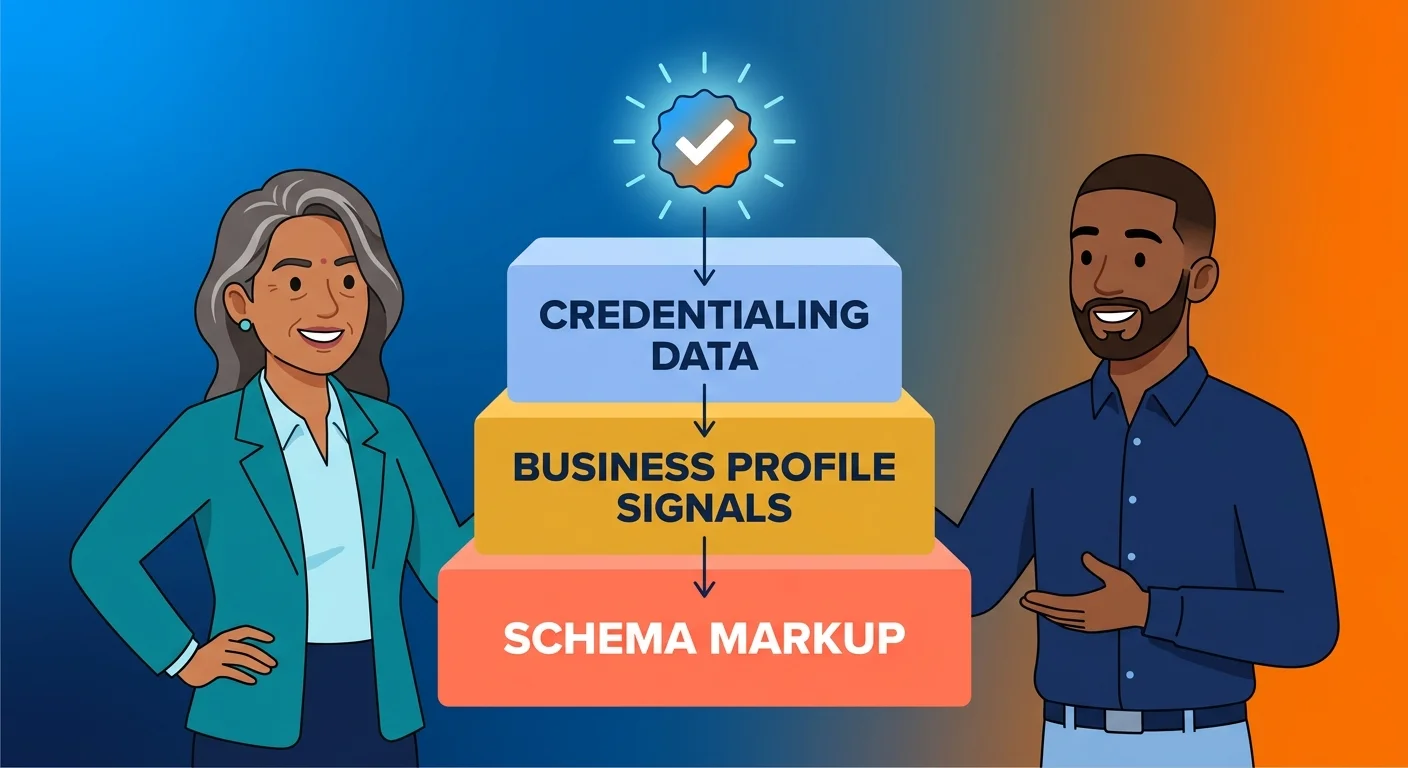
So how does real-world trust actually become something a machine can verify? Two layers, working together.
First up is structured data. Second is a precise, consistent local footprint anchored by Google Business Profile.
Neither one is content. Both are technical translation work, and both are what separate a clinic AI can cite from one it simply can't parse.
| Signal Type | What It Verifies | Machine Readable | Typical Owner |
|---|---|---|---|
| Schema.org Markup | Specialties, practitioner credentials, and affiliations in machine readable format | Yes, natively | Website developer or technical lead |
| Google Business Profile Consistency | Name, address, phone number, and category alignment across the local data footprint | Yes, fully | Clinic administrator or local listing owner |
| Directory and Licensing Data | Credential verification and cross-referenced legitimacy across third-party sources | Partially, depending on formatting | Clinic administrator or compliance staff |
| Narrative Website Prose | Reader-facing explanation of expertise and specialization | No, not reliably | Content writer or marketing staff |
Structured Data as the First Layer of Machine-Readable Trust
Here's the foundation nobody serious skips: schema.org markup. It's a shared vocabulary system, a collection of schemas that webmasters use to mark up pages in a format major search engines and AI systems can actually read.
That vocabulary is exactly why the semantic markup documentation from PubMed Central is worth reading before you write a single line of markup. It was built as a joint standard, so every machine reading the page reads the same fields the same way.
Without it, a clinic's specialties, practitioners, and credentials sit in prose a human can read but a machine can't confidently pull. With it, those same facts turn into discrete, labeled data points a generative system can retrieve and cite with confidence.
This is the layer the the credential verification framework behind AI citation decisions digs into, because schema markup alone doesn't finish the job. It has to connect to every other data point tied to the clinic, or the reconciliation still breaks.
Where Google Business Profile Fits Into the Trust Equation
Now the second layer. Google Business Profile isn't a listing you fill out once and forget.
It's a controllable trust signal, and a heavily weighted one. Those signals account for roughly 32% of the controllable weight in local search rankings, a share confirmed by industry benchmarking data tracking what local algorithms actually reward.
But that weight doesn't stay locked to the classic ten blue links. The same profile data feeds the knowledge graph reconciliation generative AI systems lean on to confirm a clinic is a single, verifiable entity.
A name, address, and phone number that match exactly across the profile, the website schema, and every directory listing isn't a formatting nicety. It's the consistency check AI systems run before they'll trust an entity enough to cite it.
Who This Approach Is Not Built For
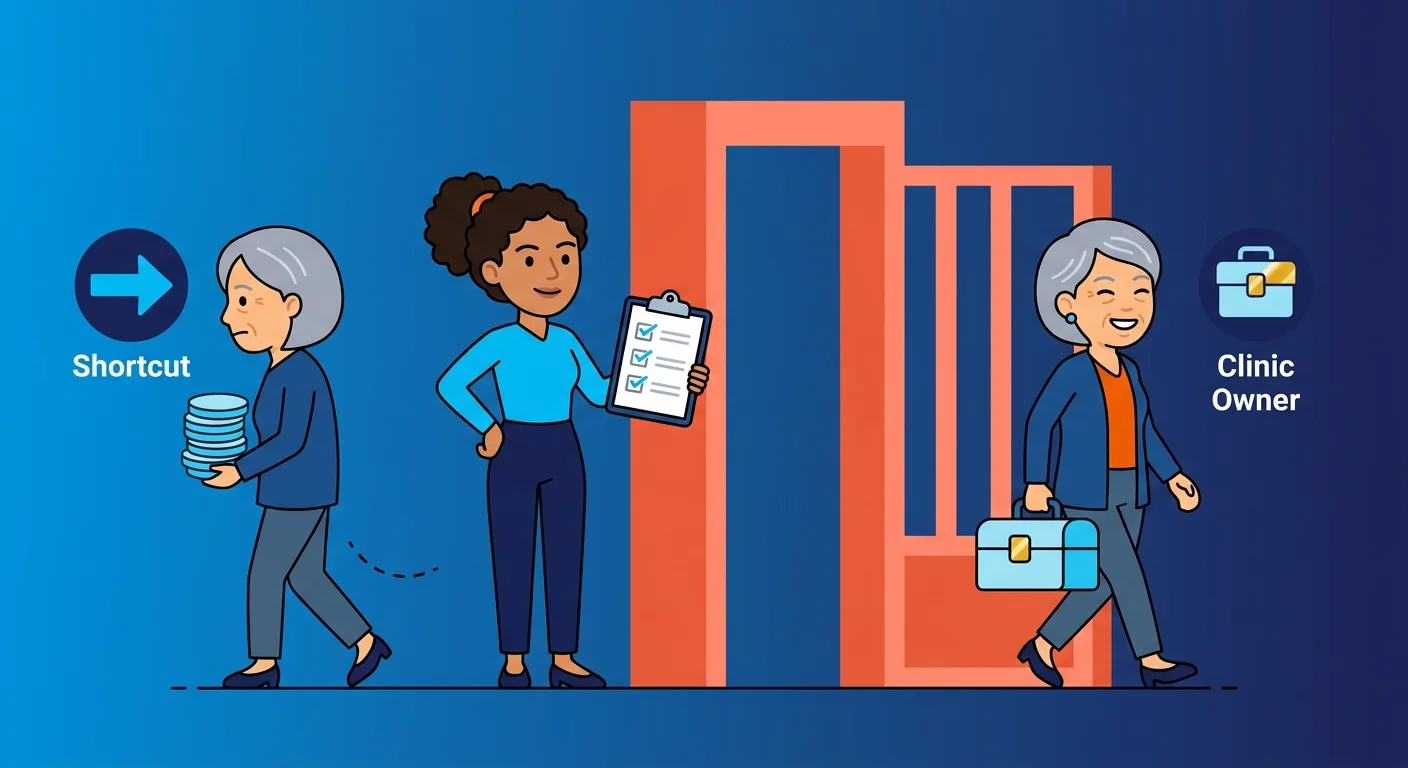
So let's hit pause on the technical build for a second. Because this approach isn't built for every clinic.
Here's the thing: if a clinic's chasing site visits for their own sake, this framework will let them down. Structured data and credentialing signals earn citations, not clicks. Those two goals pull in opposite directions.
And it's not for a clinic unwilling to clean up inconsistent listings or messy credentialing records. Fixing that mess is exactly what how generative systems interpret scattered clinic data online depends on. Skip it, and the rest of the Entity Trust Chain has nothing solid to grab onto.
Beyond the Website: Credentialing Signals and the Local Data Footprint
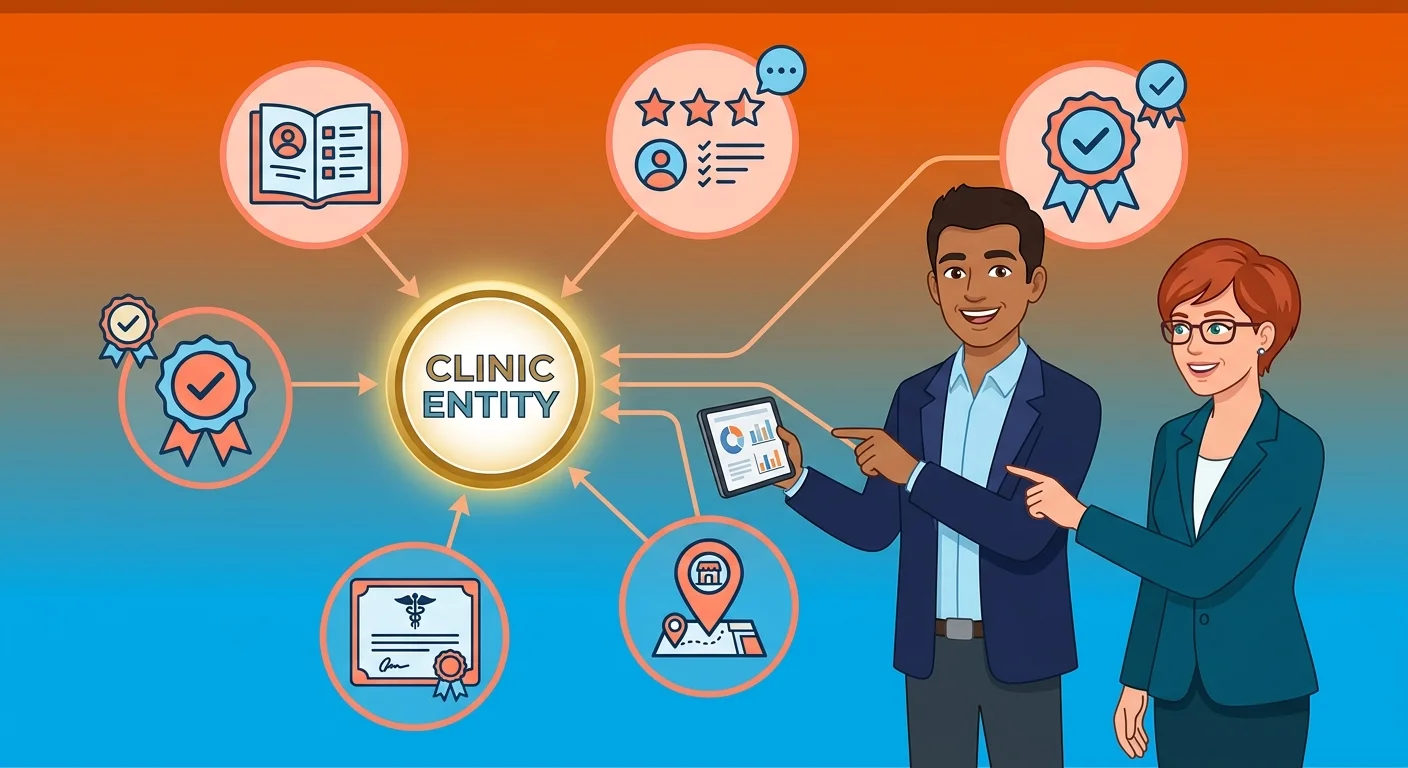
So far, the whole fix has lived inside the clinic's own website. But AI recommendation engines don't stop at the homepage.
They cross-reference every signal they can dig up. The website's just one data point among many.
And that's the piece most clinics never account for. A clinic can nail its schema markup and still stay invisible if the surrounding data footprint contradicts it.
| Data Source | What AI Cross-References | Reconciliation Role |
|---|---|---|
| Google Business Profile | Business name, address, phone number, category tags, and practitioner listings | Confirms the clinic exists at a specific location and matches the identity claimed elsewhere online |
| Schema Markup on the Website | Specialties, credentials, practitioner names, and structured medical entity fields | Gives AI a machine-readable version of claims that would otherwise sit only in prose |
| Third-Party Directory Listings | Name, address, and phone number consistency across every external citation | Acts as a corroborating fragment the knowledge graph checks against the primary profile |
| Industry Accreditation Marks | Formal, third-party verified credentialing status rather than self-reported claims | Supplies the kind of external validation that lets AI trust a claim without independently confirming it |
| Licensing and Credentialing Records | Practitioner qualifications, specialty certifications, and professional registration status | Anchors the clinic's expertise claims to a verifiable source outside the clinic's own website |
| Implementation Step | What It Establishes | Sequence Order |
|---|---|---|
| Structured data implementation | Machine-verifiable proof of specialties, practitioners, and credentials encoded as schema markup rather than prose | First, before any credentialing work can attach to something solid |
| Local footprint consistency | Exact name, address, and phone number alignment across the Google Business Profile, website schema, and directory listings | Second, run in parallel once schema markup is live, to feed knowledge graph reconciliation |
| Industry-specific accreditation | A formal third-party signal that replaces a self-reported claim with a verifiable credentialing mark AI systems can trust | Third, layered on top once the underlying data is already consistent |
| Fragment reconciliation check | Confirmation that every online mention of the clinic resolves to one entity instead of several unrelated, unverifiable ones | Fourth, the ongoing maintenance stage that keeps the Entity Trust Chain intact |
Do Independent Digital Identity Accreditations Actually Move the Needle?
Here's a question worth asking flat out: do independent digital identity accreditations actually move the needle, or are they a distraction from the real work?
The honest answer? Accreditation frameworks matter because they formalize verification. Not because they're a shortcut around it.
Look at how this already works outside healthcare. Accredited digital identity providers earn a formal accreditation mark, one that tells businesses, regulators, and end-users their services passed a rigorous review for security, privacy, and identification management, a standard laid out in published government guidance on New Zealand's Trust Framework accredited providers.
That's the exact logic a clinic's credentials need to satisfy. A framework-backed accreditation hands AI systems a verifiable third-party signal instead of a self-reported claim, which is precisely the legitimacy these systems are built to trust.
How Knowledge Graphs Reconcile Scattered Clinic Data Into One Entity
Now widen the lens further, past accreditation and into the raw data itself. Knowledge graphs don't read a clinic's story. They reconcile fragments.
And every mention of the clinic online is a fragment: the website, the profile, the directory listing, the licensing record, the accreditation mark.
A knowledge graph's whole job is to decide whether those fragments describe one trustworthy entity or several unrelated, unverifiable ones.
That's the deep community trust and specialized expertise independent clinics already hold, just sitting in a form no reconciliation process can confidently assemble on its own. Structured data, consistent local details, and formal accreditation are what finally let the graph stitch those fragments into a single, citable entity.
Frequently Asked Questions
So here are the objections clinics actually raise before they commit to this shift. Every one gets a straight answer, not a hedge.
How can a local clinic build entity authority if it doesn't publish peer-reviewed research?
Peer-reviewed research isn't the credential AI systems check for on local healthcare queries. What they want is verifiable structured data: schema markup, consistent licensing records, and accreditation signals that prove real-world legitimacy. A clinic can build entity authority entirely through that translation work, zero published research required.
What specific types of structured data are most critical for local healthcare AI recommendations?
Schema markup that encodes practitioner credentials, specialties, and services matters most, because it turns prose into machine-readable fields. After that, consistent business data across the website and every directory listing is what lets a knowledge graph confirm the clinic is one verifiable entity.
If my main competitors are large hospital systems, can I realistically compete for AI citations?
Realistically, yes. The competition was never about publishing volume, and big hospital systems often run messier, less consistent data footprints than a single-location clinic can. Nail your schema markup, credentialing, and local data consistency, and you out-verify a system that never cleaned its own records.
Are patient reviews from sites like Healthgrades or Vitals considered authoritative citations by AI engines?
Patient reviews feed the broader trust signal, but they don't replace structured, verifiable credentials. AI systems read reviews as supporting context, not proof a clinic is legitimate. The Entity Trust Chain still has to be built underneath them.
Beyond my website, where else does AI look to verify my clinic's credentials and expertise?
AI systems cross-reference directory listings, licensing databases, accreditation records, and the Google Business Profile anchoring a clinic's local footprint. Every one of those fragments gets reconciled against the website's schema markup. One inconsistency anywhere weakens the whole verification chain.
Where This Leaves Independent Clinics
So the translation's finally done. Real-world trust, once stuck in a dialect only people could read, now has a structured, verifiable form these systems can actually parse and cite.
That's the whole point of the Entity Trust Chain. It doesn't ask a clinic to out-publish anyone. It asks a clinic to become legible — schema markup that encodes credentials, a Google Business Profile that anchors a consistent local footprint, and accreditation signals that hand AI a third party to trust instead of a claim to take on faith.
Here's the position worth holding: content-for-ranking was never going to break the local healthcare citation monopoly, and no pile of extra prose changes that now. The clinics that get cited are the ones that quit writing for algorithms and start building for verification. If that's the shift worth making, run the AI Visibility Check.