
Once a month, ask ChatGPT, Gemini and Google’s AI Mode (Google’s artificial intelligence (AI) answer tool) the questions your customers ask, like “best [your trade] in [your town]” and “who does [service] near [town]?” Write down who gets named and which sources are cited. AI builds its answers about brands mostly from outside sources. About 6 out of 7 citations (85.7%) point to sites the brand does not own, and about 1 out of 7 (14.3%) point to sites the brand owns. Google says that, where appropriate, generative AI responses can include product listings, product information, and information about local businesses. It says tools like Merchant Center and Google Business Profiles can help your products and services be visible in both AI responses and other Google Search results.
Confirm the Pattern With a Repeated Check
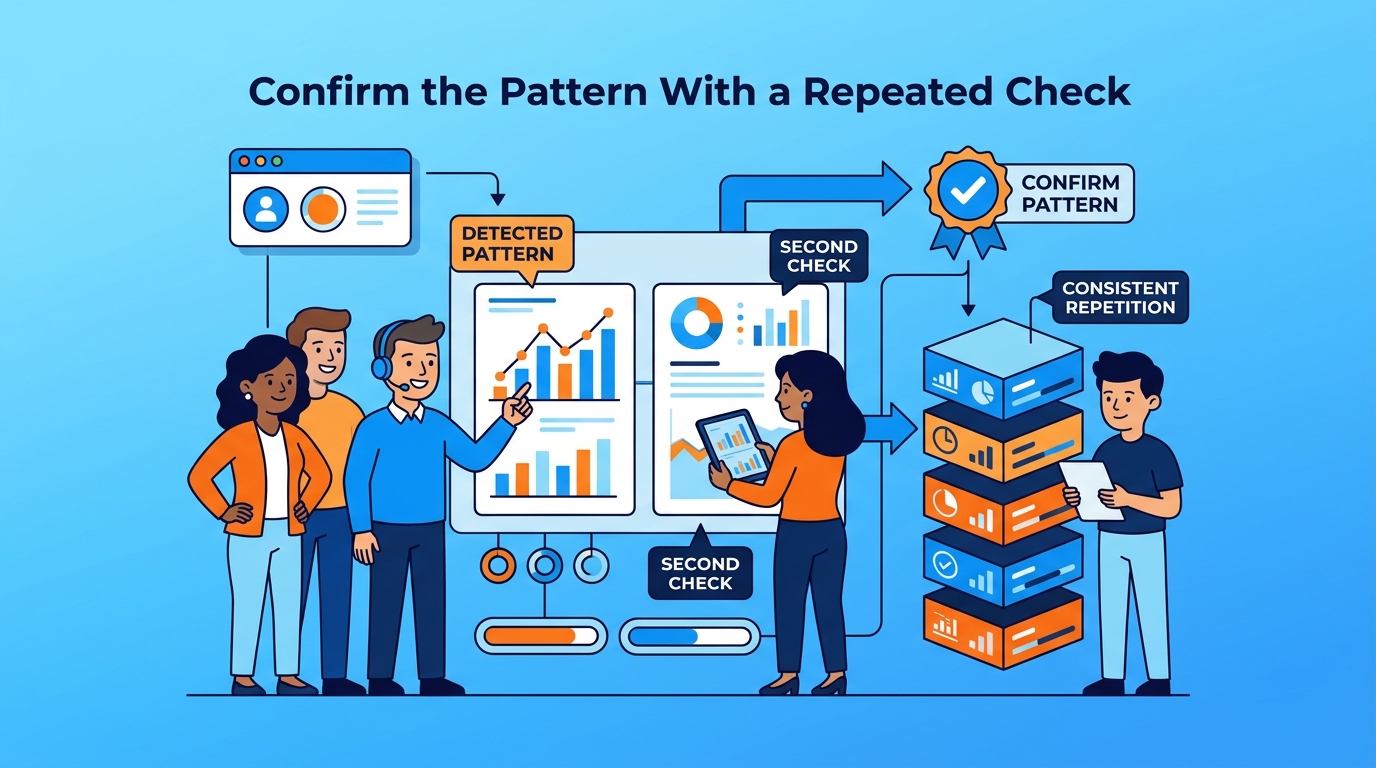
Here’s the check.
Once a month, ask ChatGPT, Gemini and Google’s AI Mode the questions your customers ask. Things like “best [your trade] in [your town]” and “who does [service] near [town]?” Write down who gets named. Then write down which sources are cited.
I’d take that monthly log over a rank report every time.
Assistants now give direct answers instead of lists of links. So I stopped treating results-page position numbers as a measure of whether a business gets found. I keep the assistant log. I drop position-tracking as a success measure.
Wondering what happens when your practice drops out of the answers altogether? It’s set out in A Practice Drops Out of AI Recommendations: What Happens Next?
iTech Valet’s version of this check is the AI Visibility Check.
What the Engines Weigh When They Name a Rival
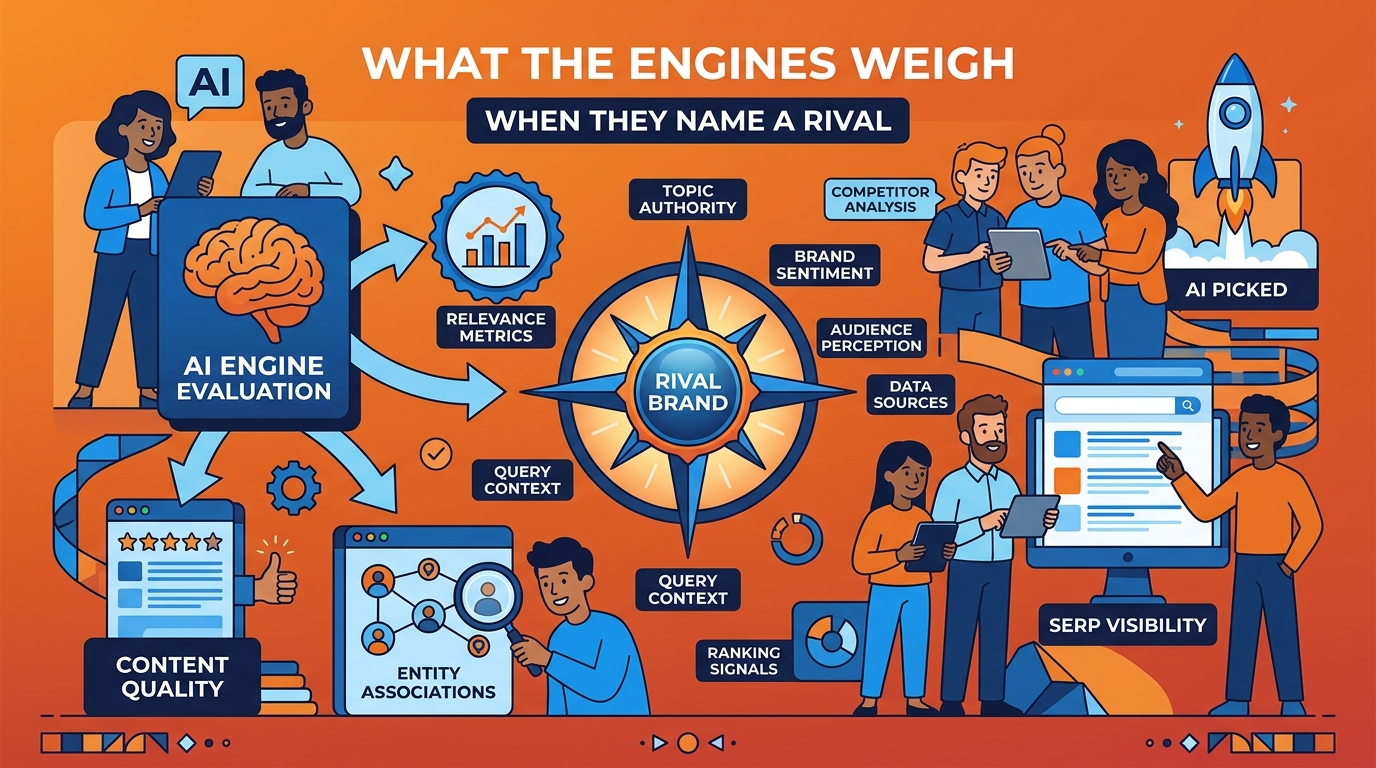
Getting picked by AI answer tools is its own discipline. It’s not old search work with a new name.
I don’t chase keywords, inbound links and ranking position. These engines are judging who your practice is and whether you’re credible. So I put the effort into making that easy for them to see.
I’d rather your practice be the source an AI names and draws on. Not one more name in a list.
I aim for being relied on, not just being present. The case for a named answer over a listed option is made in When a Named Recommendation Converts Better Than a Listed Option.
Third-Party Sources Outweigh the Practice’s Own Site
Here’s what one study found.
AI Search shows a systematic and overwhelming bias toward earned media. That means third-party, authoritative sources. They win over brand-owned and social content. The authors call this a stark contrast to Google’s more balanced mix.
AI builds its answers about brands mostly from outside sources.
About 6 out of 7 citations (85.7%) point to sites the brand does not own. Only about 1 out of 7 (14.3%) point to sites the brand owns.
Pages That Match the Question Get Cited
One study compared pages of the same website. Content matters in one way.
Pages whose title and paragraphs match the questions people ask get cited more.
Everything else? FAQ blocks, structured data, summary boxes and page speed appear effective only across websites.
What One Generative Engine Study Recommends
One paper gives advice to practitioners. It stresses four needs:
- Engineer content for machine scannability (so machines can scan it easily) and justification.
- Dominate earned media to build authority that AI sees.
- Use strategies that fit each AI engine and each language.
- Overcome the built-in “big brand bias” that hurts niche players.
In that study’s own tests, Generative Engine Optimization (GEO) boosted visibility by up to 40% in generative engine responses.
How a Polluted Page Can Fool an Assistant
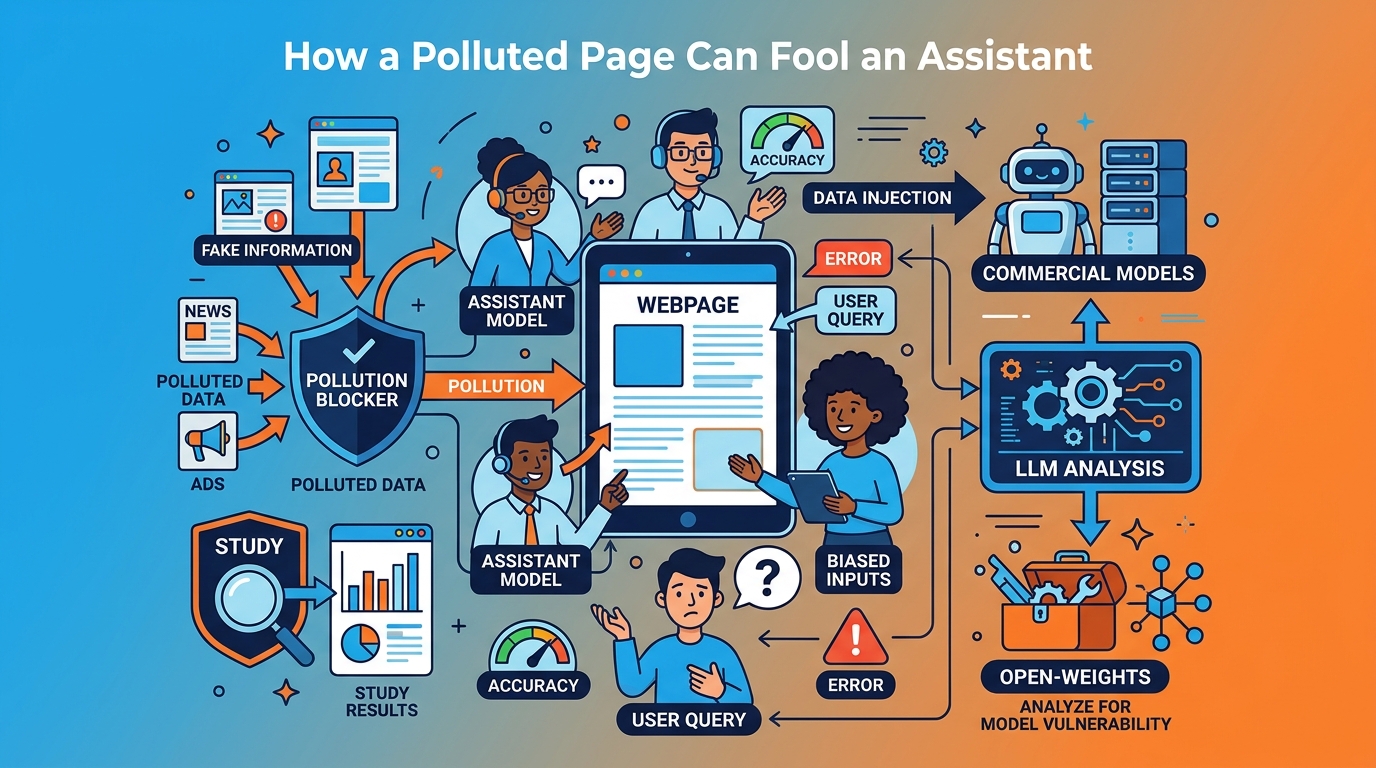
A study tested 12 commercial and open-weights large language models (LLMs) against polluted pages. All of them were vulnerable.
A single polluted page fooled models up to 27% of the time. That’s a little over 1 out of 4.
Replace the full top 3 results and the rate jumps to 73.8%. Almost 3 out of 4.
So a planted page is one cause you need to rule out.
Claim and Complete the Google Business Profile
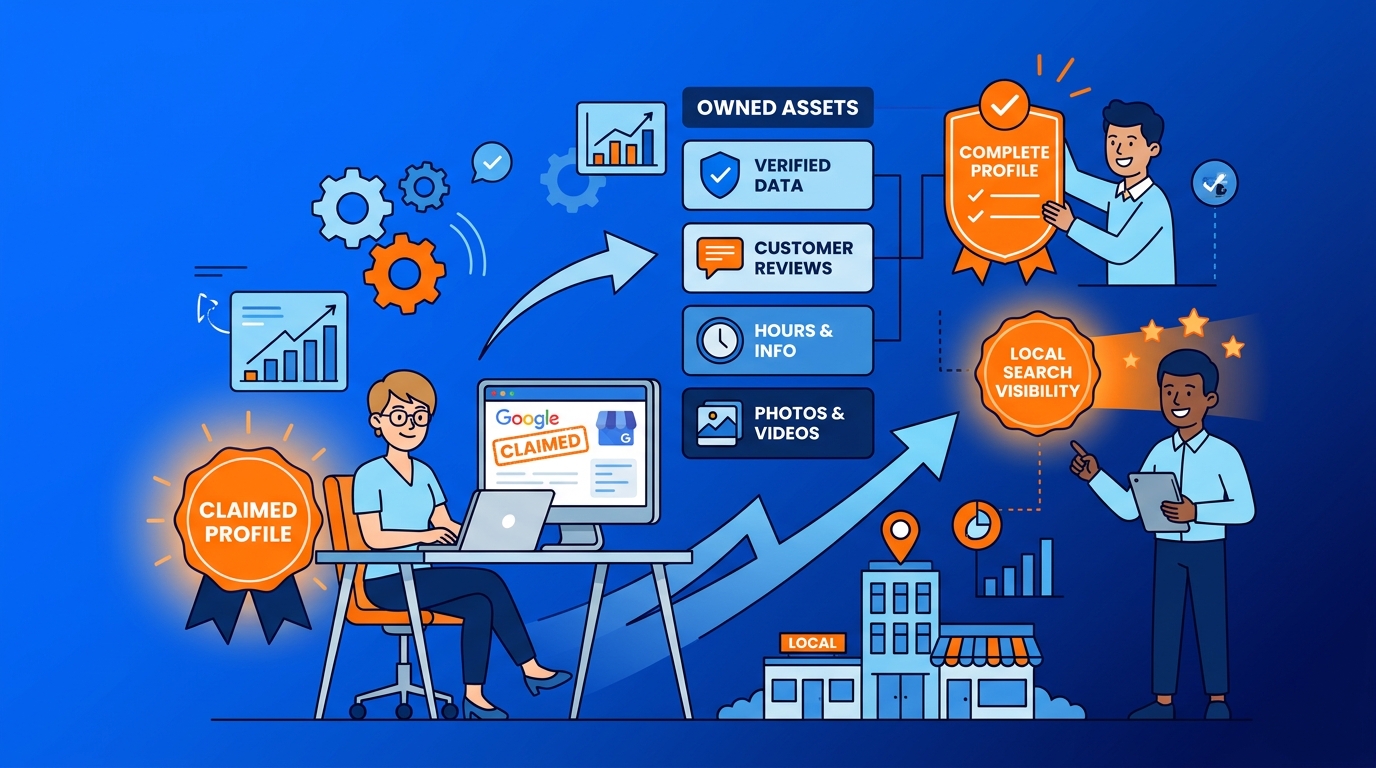
I put your practice’s effort and money into assets you control before anything you rent.
I’d rather build clear, credible information that keeps paying off. Ads buy visibility that stops the moment the spending stops. The profile is owned data, so I build on it first.
Claim and Verify the Listing
Start by claiming it.
Google says claiming your local business profile lets your local business information show up in Google Maps and the Google knowledge panel.
Once you verify yourself as the owner of a listing, you can add or edit your address, contact info, business type, and photos.
Keep It Complete and Well Reviewed
Then finish it.
Google says businesses with complete and accurate info are more likely to show up in local search results.
There’s more. Google’s prominence factor for local results is also based on info like how many websites link to your business and how many reviews you have.
The Profile Feeds Google’s AI Answers
This matters for AI too.
Google says that, where appropriate, generative AI responses can include product listings, product information, and information about local businesses. It names Merchant Center and Google Business Profiles as tools that can help your products and services be visible in both AI responses and other Google Search results.
Google lists practices for its AI features. Two of them touch your profile.
First, make sure your structured data matches the visible text on the page. Second, check that your Merchant Center and Business Profile information is up to date.
The On-Site Signals Google Says Its AI Features Use
I don’t judge a clinic’s content by how much it publishes. I build for engines that favor information they can grasp easily, so I’d take clear, factual content in a sensible order over a pile of posts, and I push back whenever frequency or volume is sold as the thing that wins.
Here’s the source. Google’s guide, Optimizing your website for generative AI features on Google Search, covers eligibility, supporting links and the long-run driver. You’ll find them in the table below. The ranking-basis row comes from Google’s statement on its automated ranking systems.
| Signal | What Google says |
|---|---|
| Eligibility | Indexed, eligible to show with a snippet, and the site included in Search generative AI features in Search Console |
| Supporting links | Indexed and eligible to show with a snippet; no additional technical requirements |
| Long-run driver | Content people find unique, compelling and useful will likely influence presence more than any other suggestion in the guide |
| Ranking basis | Systems designed to prioritize helpful, reliable information created to benefit people, not content created to manipulate rankings |
What Makes a Page Eligible
Here’s the rule.
To be eligible for Google’s generative AI features on Google Search, your page must be indexed and eligible to show in Google Search with a snippet. That meets the Search technical requirements.
Your site must also be included in Search generative AI features in Search Console.
Supporting links work the same way. To show as a supporting link in AI Overviews or AI Mode, your page must be indexed and eligible to show in Google Search with a snippet. That meets the Search technical requirements.
Google says there are no additional technical requirements.
Put up a few pages that include your structured data. Then use the URL Inspection tool. It tests how Google sees the page.
How Google’s AI Finds Pages
The old basics still matter.
Google says the best practices for traditional search optimization still count. Why? Its generative AI features on Google Search are rooted in its core Search ranking and quality systems.
Google defines retrieval-augmented generation (RAG), also called grounding, as a technique that improves the quality, accuracy, and freshness of AI responses. It relies on Google’s core Search ranking systems. Those pull relevant, up-to-date web pages from its Search index.
Here’s query fan-out, in Google’s words.
It’s a set of related searches, run at the same time. The model generates them to request more information and fetch additional relevant search results for the user’s query.
Google also says its generative AI features work like the rest of Google Search. They can show what’s being said about products and services across the web. That includes blogs, videos, and forum discussions.
What Google Says Matters Most
Here’s what matters most.
Google says creating content people find unique, compelling, and useful will likely influence your site’s presence in generative AI search over the long run more than any other suggestion in its guide.
Google also says its automated ranking systems are designed to prioritize helpful, reliable information. Information created to benefit people. Not content created to manipulate search engine rankings.
Mark Up the Business
LocalBusiness is a schema.org type. It stands for one particular physical business. Or one branch of an organization.
How Long a Fix Takes to Show
Google says crawling can take anywhere from several days to several months, depending on how often its systems decide a page needs to be refreshed. If you’ve made changes, you can ask Google to recrawl your pages.
What Google Says Will Not Work
I won’t sell the old search playbook that many agencies still offer. I count it as a problem with the industry’s offer: you pay for tactics built for conditions that have changed.
Two of those tactics are ones Google itself warns against.
Google says it might be tempting to make separate content for every way people might search. Other questions people have asked. Fan-out queries (the related searches the AI creates).
But doing that mainly to manipulate rankings or generative AI responses in Google Search violates Google’s scaled content abuse spam policy.
Google also says seeking inauthentic (fake) “mentions” across the web isn’t as helpful as it might seem. Its core ranking systems focus on high-quality content while other systems block spam. Its generative AI features depend on both.
Google’s page on this is AI features and your website.
Ask for Reviews Within the FTC Rule
Here’s the first rule.
The Federal Trade Commission (FTC) Final Rule forbids you from creating, buying, selling or disseminating fake or false reviews or testimonials. That includes fabricating positive reviews for your own products. It also includes negative reviews meant to harm competitors.
The rule covers AI-generated reviews. It covers reviews from anyone with no actual experience with the product.
The rule prohibits all conditional incentivized reviews. You may not give pay or other incentives contingent on a customer writing a positive review. Or a review that expresses a particular sentiment.
If you’re an officer or manager, you can’t ask for or demand a review from your immediate relatives. Same for any employee or agent of the business. Not without a clear and conspicuous disclosure of the material relationship to the business.
That’s a violation.
The rule also prohibits you from selectively suppressing negative reviews. You can’t manipulate the overall perception of a product by showing only positive feedback.
And you can’t create or control review websites or platforms that appear independent but are in fact operated by your company.
The rule is laid out in FTC Finalizes Long-Awaited Rule on Use of Consumer Reviews and Testimonials.
This isn’t theory.
On December 22, 2025, FTC staff sent warning letters to 10 companies. The letters noted civil penalties (money fines) of up to just over $53,000 ($53,088) per violation. That’s the maximum in effect since January 17, 2025.
The table below sets out each part of the rule and the penalty.
| Rule | Requirement |
|---|---|
| Fake reviews | Creating, buying, selling or disseminating fake reviews is forbidden, including AI-generated reviews and negatives meant to harm competitors |
| Conditional incentives | No compensation or other incentive contingent on a positive review or a particular sentiment |
| Insider reviews | An officer or manager asking relatives, employees or agents for a review must clearly and conspicuously disclose the material relationship |
| Suppressing negatives | Selectively suppressing negative reviews is prohibited |
| Company-run review sites | Creating or controlling review sites that appear independent but are operated by the company is prohibited |
| Penalty | Civil penalties of up to $53,088 per violation, the maximum in effect since January 17, 2025, as noted in FTC staff warning letters |
Frequently Asked Questions
How long do we have to respond when someone suggests an edit to our Business Profile?
You have 4 days. Google says once you’re notified of a suggested edit, you have 4 days to accept or reject it.
Will AI Mode and AI Overviews name the same clinic?
Not always. Google says AI Mode and AI Overviews may use different models and techniques. So the responses and links they show will vary.
AI Overviews only show when Google’s systems decide they add something to classic Search. So they often don’t show up. Check each one on its own.
Can a practice offer any incentive for reviews?
Yes, as long as the incentive is not tied to a positive review. Asking only happy customers for reviews, called “review gating,” is not specifically banned by the FTC rule, but it can still violate the FTC Act, the federal law the FTC enforces.
When did the FTC review rule take effect?
October 21, 2024. That’s when the FTC rule on consumer reviews took effect.
Can an AI agent book on a patient’s behalf?
Google describes it that way, yes. It calls AI agents autonomous systems that can perform tasks for people, such as booking a reservation or comparing product specifications.
These agents take many forms. Browser agents, for example, may visit your website to gather the data they need to finish these tasks. So keep the facts on your site clear.
Respond in Order: Confirm, Understand, Fix, Stay Inside the Rules
The order is simple.
Confirm the pattern with a monthly check. Understand why a rival gets named: outside sources, pages that match questions, and the risk of polluted pages. Fix your Google Business Profile and your pages. Then stay inside Google’s and the FTC’s rules.
AI recommends your competitors. Not you. We fix that.
Our main service is the Local AI Authority Engine. It’s a full-stack authority infrastructure rebuild plus ongoing monthly AEO content execution for local service businesses, primarily chiropractors.
The infrastructure is front-loaded. Then the monthly execution builds on that foundation every month. We use a proprietary two-AI content system.
We build authority through systematic compound growth from infrastructure and content depth. No hacks. No tricks. No shortcuts. I frame our authority-building claims as process inputs, the steps we take. Not guaranteed outputs.
I’d steer you away from picking a provider on a low monthly price. I count thin work, little real progress and money tied up in a contract that builds nothing as the real cost. So I look hard at who does the work before I look at the price.
How we do the work is laid out on iTech Valet Service Plans & Pricing.
When you’re ready to see who the assistants name today, Run My AI Visibility Check.