What ‘Authority Infrastructure’ Actually Means on a Balance Sheet
Most businesses can’t define authority infrastructure. They’ve heard the phrase. They’ve nodded along. But they’ve never been handed a definition they could take to a CFO – let alone put on a balance sheet.
Here’s the definition: authority infrastructure is the structured, AI-readable digital architecture that determines whether AI engines trust your business enough to name you as the answer. It’s your entity schema. Your semantic content hierarchy. Your citation signals. The interlocking AEO content that teaches AI engines who you are, what you do, and why you’re credible.
It is not a campaign. It is not a retainer. It is a built thing – and built things can be owned.
So here’s the only question that matters: do you own yours – or have you just been renting it? what that looks like in practice
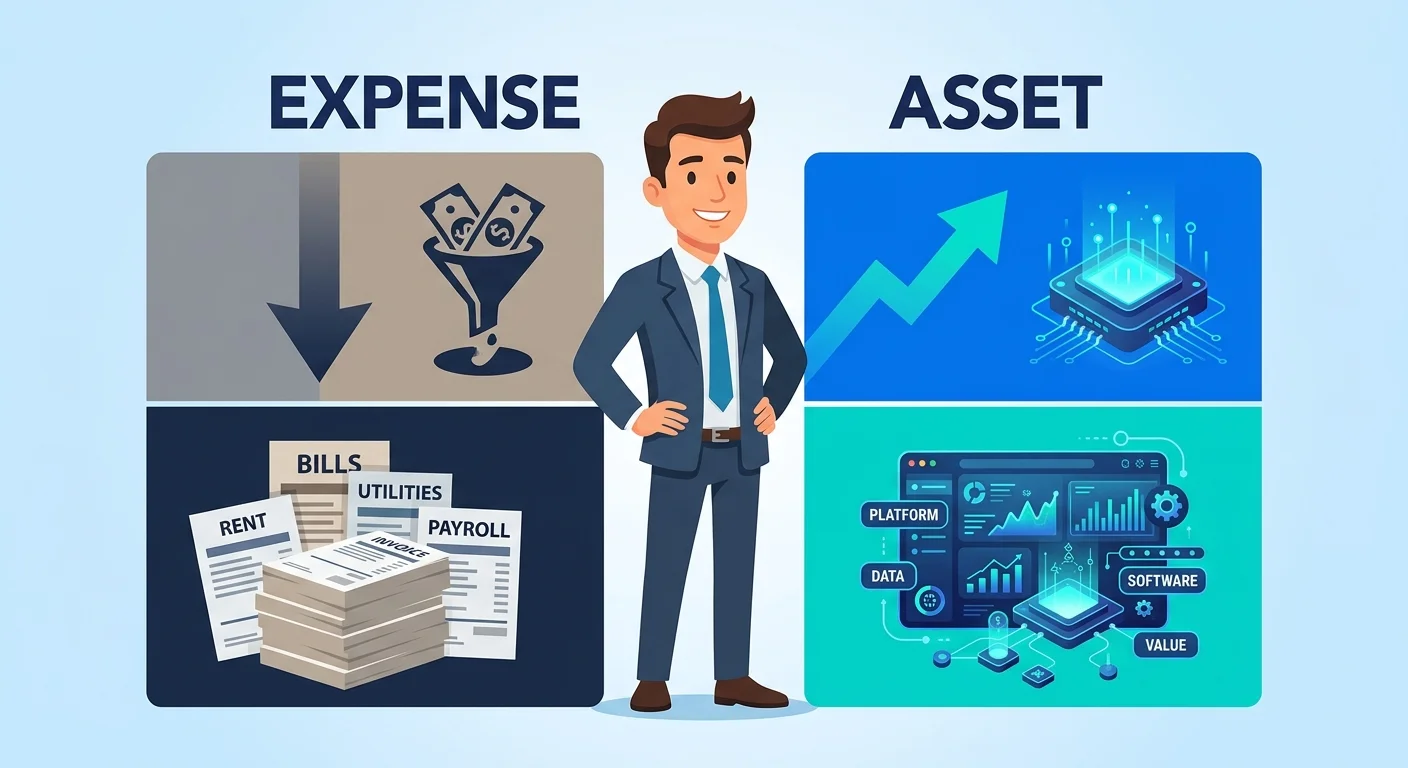
The Difference Between an Expense and an Asset
Here’s the line: an expense is consumed. An asset compounds.
A monthly retainer paid to an agency buys you visibility for that month. When the payment stops, the visibility stops. There’s nothing left – no schema embedded in your digital entity, no content architecture reinforcing your authority signals, no compounding record of structured trust.
The money is gone. The outcome is gone with it. That is the definition of an operational expense.
Authority infrastructure built as a capital asset works the opposite way. The schema persists. The AEO content hierarchy stays indexed and readable. The entity trust signals keep compounding – whether or not you’re actively paying someone that month.
Here’s the kicker: standard accounting frameworks haven’t caught up. Most still treat digital capital as a throwaway cost. Forward-looking businesses have already figured out the competitive consequences of that accounting shortcut are brutal. That’s the entire premise behind the AI Authority Engine – you’re not buying a month of visibility. You’re building something you own.
Why the IRS Already Knows Which One You Have
You don’t have to take anyone’s word for this. The IRS already drew the line.
Tax regulations are explicit: digital assets that generate benefits extending substantially beyond the current year must be capitalized, not expensed. That’s not a philosophical position. It’s a codified accounting rule backed by the IRS.
Items creating value beyond 12 months go on the balance sheet as capital assets. Items consumed within the current year get deducted and disappear. The IRS drew that line because the underlying economic reality demanded it – and that same reality applies to your AI visibility investment whether your accountant has caught up or not.
So ask it directly: does your current investment in AI visibility create benefits that extend well beyond this calendar year – or does it reset to zero every 30 days?
If it resets, you’re not building an asset. You’re paying rent. And rent builds equity for the landlord – not for you.
| Characteristic | Operating Expense | Capital Asset |
|---|---|---|
| Ownership | Belongs to the vendor – stops the moment payments stop | Belongs to your business permanently – persists and compounds independently |
| Useful Life | Consumed within the billing cycle – zero residual value | Extends well beyond the current year – generates ongoing returns |
| Balance Sheet Treatment | Deducted as a current-year expense – nothing carried forward | Capitalized as a long-term asset – recorded and retained |
| Authority Signals | Disappear when the retainer ends – no schema, no entity structure left behind | Remain indexed and AI-readable – entity trust keeps building on itself |
| Compounding Effect | Flat – each month purchased is independent of the last | Cumulative – every content layer, schema signal, and citation reinforces the previous |
| Equity Built | None – three years of payments produce zero owned infrastructure | Substantial – structured digital architecture your business controls entirely |
| Risk at Cancellation | Total loss – visibility resets to zero immediately | Minimal – asset retains value and continues functioning without ongoing payments |
Why Most Businesses Are Renting Their Visibility Without Knowing It
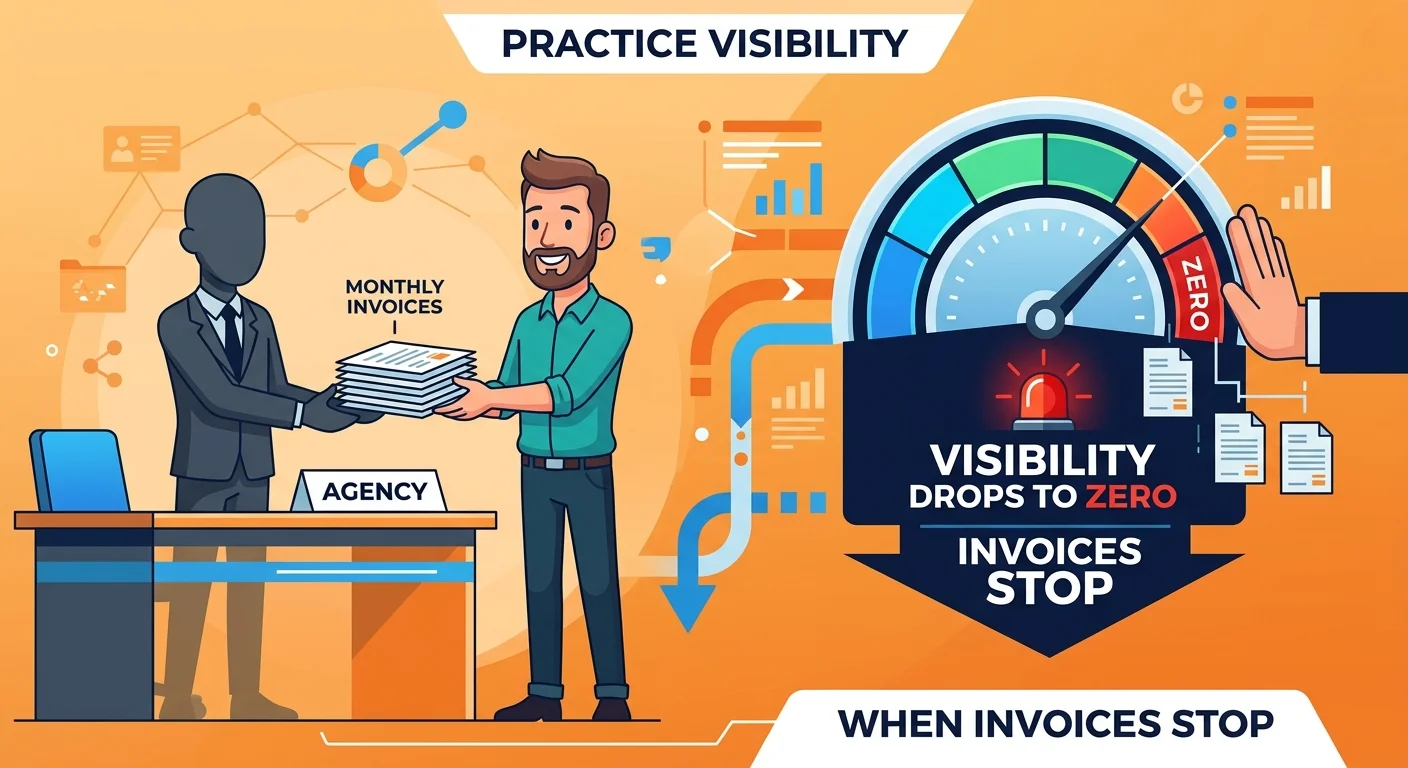
Most businesses are renting their AI visibility. They just don’t know it yet.
It looks like every other agency retainer they’ve signed. Pay monthly. Get visibility. Renew or lose it all.
But here’s what never shows up in the contract: you don’t own any of it. The moment payments stop, the visibility stops. No schema left behind. No content hierarchy running in the background. No entity trust signals compounding while you sleep.
You paid for access to a result. Not the result itself. And when access ends, so does everything else.
That’s the tenant’s reality. And once you see it, you can’t unsee it.
What Renting AI Visibility Actually Costs Over Time
And here’s the part that stings: the money doesn’t just disappear – it never built anything to begin with.
Marketing budgets averaged 7.7% of total revenue in 2024. A meaningful chunk of that flows straight into retainer models that produce zero equity. CMOs are starting to notice. The businesses that haven’t are still writing checks for visibility that evaporates the second the invoice goes unpaid.
Run the math on three years of $500/month payments. That’s $18,000 out the door. And at the end of it: zero equity. No infrastructure. No compounding signals. Nothing that persists after the relationship ends. If you want to see exactly how that plays out month by month, the 3-year total cost of low-cost SEO retainers breaks it down in full.
One model costs money and disappears. The other costs money and stays – keeps working, keeps compounding, keeps earning AI trust long after the initial build is complete.
That’s not a performance claim. That’s an ownership structure.
The cost difference between the two models is almost irrelevant. What matters is whether you end up with something – or with nothing.
Why the Agency Model Is Built to Keep You Renting
The agency retainer model isn’t broken by accident. It’s built this way on purpose.
Recurring revenue is the most valuable revenue a service business can generate. Predictable. Monthly. Contractually locked in.
So the incentive for a traditional agency is dependency – not results that outlast the invoice. If your AI visibility compounds on its own, they lose the account.
That’s why the model stays extractive: deliver just enough month-to-month activity to justify the next payment, without ever building infrastructure that would make their services unnecessary.
Smart CMOs are already cutting transactional agency costs and redirecting budget toward owned infrastructure. That’s not ideology. That’s math.
Businesses that own their authority infrastructure don’t keep paying for the same visibility twice. Businesses that rent it do – every single month, indefinitely.
The agency model is built to keep you in that second category. That’s where the recurring invoice lives.
The Moment Renters Realize They Own Nothing
The realization usually hits at the worst possible moment.
The retainer gets cancelled. The contract lapses. The agency goes quiet. One missed payment cycle – and the AI recommendations that were showing up reliably just aren’t there anymore. The practice that was getting named stops getting named.
The authority signals that seemed stable were leased. Not owned. And the lease just expired.
That’s not a hypothetical. It’s the predictable outcome of a model built to extract, not to build.
The moment the payment stops, the outcome stops. Renters find this out the hard way – usually right when they can least afford to.
Owners don’t. Because what they built keeps working whether they’re actively paying for it or not. That’s the difference between a lease and a deed.
| Year | Monthly Retainer Cost | Equity Accumulated | Authority After Cancellation |
|---|---|---|---|
| Year 1 | Full retainer cost paid | Zero – visibility rented, not built | None – all signals evaporate at cancellation |
| Year 2 | Full retainer cost paid again | Zero – no cumulative ownership | None – resets to pre-engagement baseline |
| Year 3 | Full retainer cost paid again | Zero – three years of spend, nothing on the balance sheet | None – cancellation leaves the same blank slate as Day 1 |
| Authority Asset Build (same window) | One-time capital investment in infrastructure | Compounding – entity schema, semantic hierarchy, and AEO content hierarchy all persist | Full – infrastructure keeps working and signaling AI trust after build is complete |
What a Compounding Authority Asset Actually Looks Like
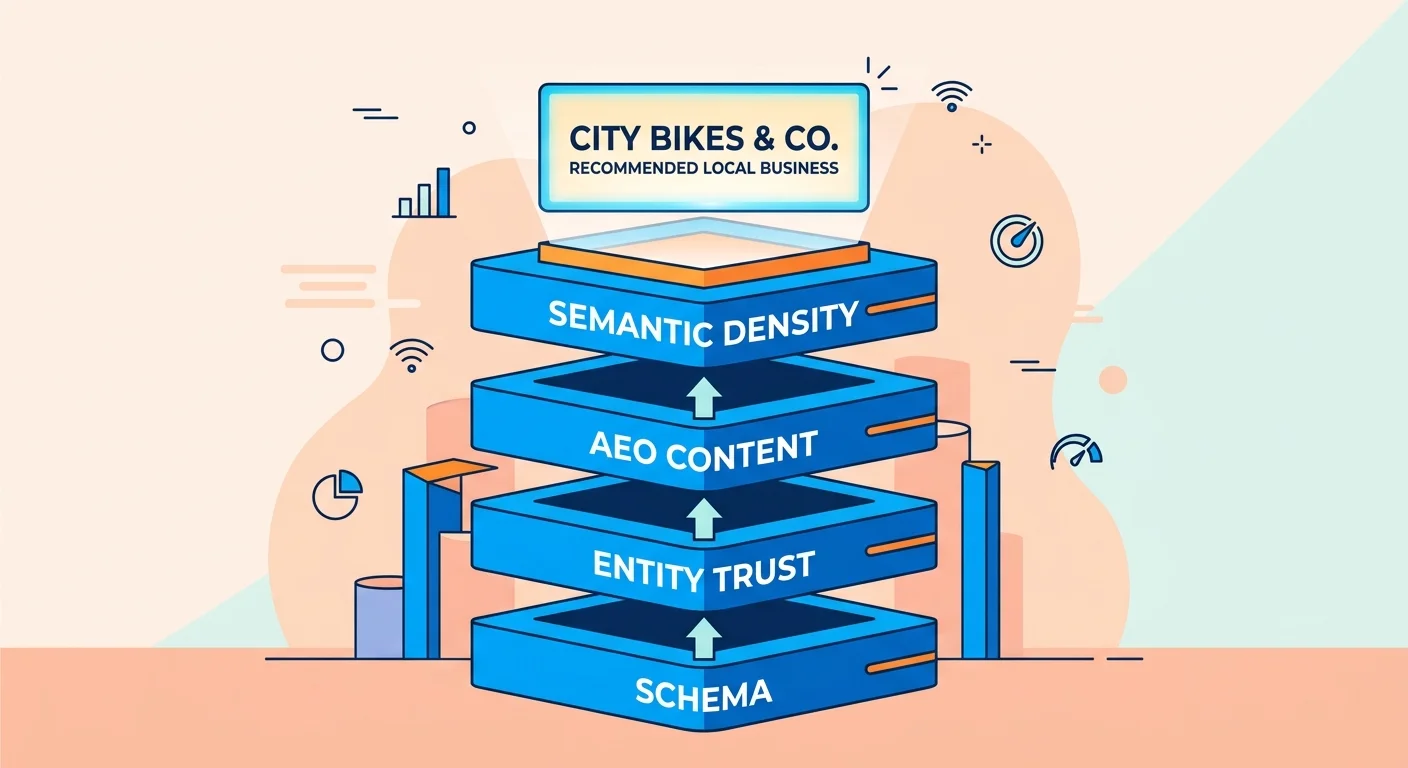
So what does ownership actually look like? Not the sales version. The one you can see inside a real business’s digital infrastructure.
A compounding authority asset isn’t one thing you build once and walk away from. It’s a layered architecture – entity schema, semantic content hierarchy, citation signals, and structured AEO content – where each layer reinforces the others and the whole structure gets more valuable over time.
Intangible digital assets, including structured brand equity and algorithmic visibility, are primary drivers of market value. That’s not a metaphor. That’s exactly how AI engines calculate trust.
The difference between an authority asset and a monthly retainer isn’t the price. It’s who owns what at the end of the engagement. See the four infrastructure layers clearly, and you won’t look at a recurring agency invoice the same way again.
The Four Infrastructure Layers That Hold and Grow Value
Four layers determine whether your AI visibility compounds – or disappears the moment you stop paying for it. Here’s what they are and why each one matters.
The first is entity schema – the machine-readable code that tells AI engines who your business is, what category you belong to, where you operate, and why you’re credible. Schema doesn’t expire. Build it correctly, embed it in your digital infrastructure, and it keeps signaling trust around the clock – campaign running or not.
The second is your semantic content hierarchy – the interlocking architecture of AEO content that teaches AI engines the full scope of your authority. Each article reinforces the ones around it. Each cluster deepens the signal. Businesses that invest heavily in digital infrastructure outperform rivals in customer acquisition efficiency. This is exactly why.
The third is citation signals – external references, structured mentions, and directional links that tell AI engines other trusted sources have already vouched for your authority.
The fourth is entity trust continuity – the ongoing AEO execution that keeps your authority signals fresh, current, and expanding. These four layers don’t work in isolation. They compound together. Each one makes the others stronger. The whole structure becomes harder to displace over time.
That’s ownership.
How AI Engines Evaluate Entity Trust as a Durable Signal
AI engines don’t rank websites. They evaluate entities.
When someone asks ChatGPT, Gemini, or Grok who the best chiropractor in their market is, those engines aren’t running a keyword match. They’re pulling from a structured model of entity trust – built from schema consistency, semantic depth, citation patterns, and content authority.
A rapidly growing portion of consumers now rely on conversational AI engines to make localized purchasing decisions. Those engines trust entities, not campaigns. The businesses that get named are the ones that built durable entity trust – not the ones that ran the most ad spend last quarter.
Durable entity trust doesn’t reset monthly. It accumulates. Every correctly structured AEO article deepens it. Every citation adds to it. Every schema signal reinforces it.
The decay concern is real – but it only applies to businesses that never built the underlying infrastructure in the first place. When you own the asset, there’s nothing to decay. The businesses that should be worried are the ones renting visibility they never controlled – and you can see exactly what that exposure looks like when you track the risks of authority decay.
Why Ongoing AEO Execution Is Maintenance, Not Rent
Here’s the objection that comes up every time: if you have to keep producing AEO content, doesn’t that make it a monthly expense – just like the retainer you replaced?
No. And the distinction matters more than it sounds.
Ongoing AEO execution is maintenance – the same way a property owner maintains a building they own outright. The building doesn’t disappear when you skip a paint job. The foundation doesn’t crumble because you deferred one quarter of upkeep. The asset persists. Maintenance keeps it performing at peak and expanding its value – but the underlying infrastructure is already yours.
With a retainer, there is no underlying infrastructure. There’s nothing left when the payments stop – because nothing was ever built.
A tenant who stops paying rent loses the apartment – because they never owned it. A property owner who defers maintenance for a month still owns the building. The structure is still there. The equity is still accumulating.
Ongoing AEO execution is how you maintain and expand an asset you already own – not how you rent access to one you don’t. That’s the difference between a practice that compounds its AI visibility and one that perpetually rents it.
| Infrastructure Layer | What It Builds | How It Compounds | What Happens Without It |
|---|---|---|---|
| Entity Schema | Machine-readable business identity – category, location, credentials, service scope – that AI engines use to classify and trust your business | Each correctly structured schema signal reinforces every piece of content built on top of it; the foundation gets more authoritative as the content hierarchy above it deepens | AI engines have no structured identity to evaluate – your business exists as noise, not a named entity, and competitors with schema in place take the recommendation slot |
| Semantic Content Hierarchy | An interlocking architecture of AEO articles and topic clusters that teaches AI engines the full scope of your authority across every relevant question in your market | Each article reinforces the ones around it; each cluster deepens the topical signal; the entire structure becomes harder to displace as it grows | AI engines can’t confirm your depth of expertise – a thin content footprint signals a shallow entity, and shallow entities don’t get named as the definitive answer |
| Citation Signals | External structured mentions, directional links, and third-party references that tell AI engines other trusted sources recognize your authority | Each new citation adds a layer of external validation; the signal compounds outward as your entity gets referenced across more authoritative sources over time | Your authority exists only in your own infrastructure – without external validation, AI engines have no corroborating evidence to confirm your credibility |
| Entity Trust Continuity | Ongoing AEO content execution that keeps authority signals current, expands topical coverage, and prevents the natural drift that occurs as AI engines update their entity models | Fresh, structured content signals that your entity is active and authoritative – not dormant – which preserves and grows your position in AI recommendation outputs | Entity signals age and lose relevance; competitors who continue executing expand into the space you vacate, and authority decay accelerates the longer execution is paused |
Who This Investment Model Is Not For
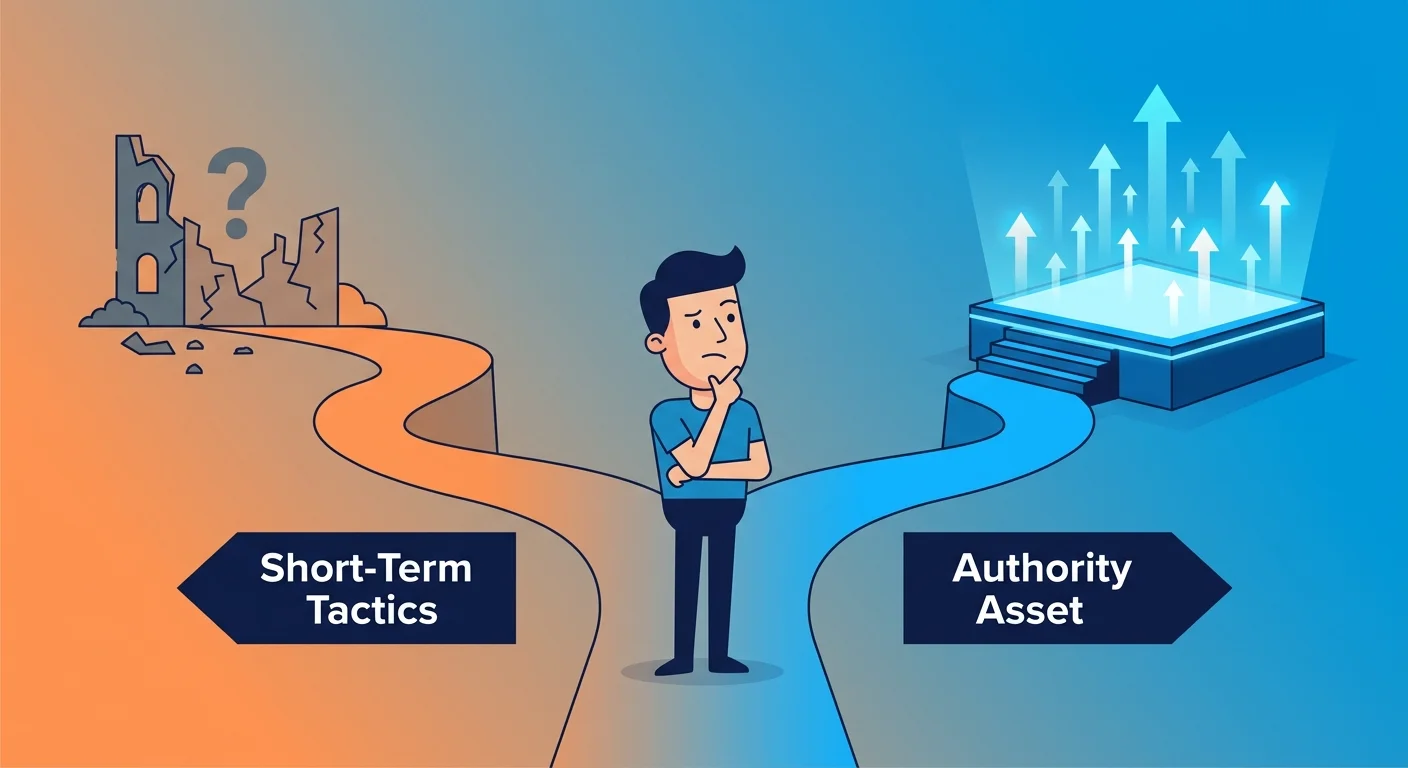
Not everyone is ready to own the building. And that’s fine.
The authority asset model works because it compounds. Compounding requires patience. And patience isn’t everyone’s operating mode.
This isn’t for every business. It’s for businesses that are done renting. Here’s exactly who it isn’t built for – because the wrong fit wastes both parties’ time.
The profiles below aren’t character flaws. They’re behaviors – specific ways of thinking about investment, risk, and timelines that make this the wrong tool for the job.
If you recognize yourself in any of them, the retainer market will serve you better. If none of them fit, you’re looking for compounding authority.
The 90-Day ROI Seeker
If you need measurable ROI in 90 days or the engagement is a failure, stop here.
Authority doesn’t run on a microwave schedule. The infrastructure build takes time. The semantic content hierarchy deepens over months. Entity trust signals accumulate in layers.
We won’t promise a 90-day result – not because this doesn’t work, but because integrity matters more than closing the deal. A 3-year total cost analysis of $500/month retainers shows zero equity ownership at the end of the cycle. The authority asset model builds the opposite. But it builds on a timeline measured in quarters, not weeks.
If that doesn’t fit your decision framework, this isn’t a match.
The Guarantee Demander
If you need a contractual guarantee of AI rankings, leads, or revenue before you’ll commit, this conversation is over.
We don’t guarantee rankings. Nobody who’s being honest with you does.
Here’s what we do stand behind: our processes are verified, our infrastructure is built correctly, and our execution follows the methodology that earns AI trust. Authority infrastructure built through dedicated schema and entity structures retains persistent visibility – but that visibility is an outcome of the build, not a line item in a contract.
The agencies willing to guarantee rankings are selling a promise they can’t keep. We’re selling a structure you’ll own. Those aren’t the same thing.
The Budget-First Buyer
If your first question is how this compares to a $500/month retainer, we’re not the right fit.
Marketing budgets averaged 7.7% of total revenue in 2024. The CMOs cutting transactional agency costs aren’t hunting for a cheaper version of the same disposable model – they’re moving that spend toward infrastructure they own.
The authority asset investment and the $500/month retainer aren’t competing price points for the same outcome. They’re structurally different products with structurally different results. One produces zero equity and disappears when the payments stop. The other builds infrastructure you own outright.
If you’re shopping on price, the retainer market has plenty of options. This isn’t one of them.
| Buyer Type | Their Expectation | Why It Conflicts With Asset Ownership | What They Should Do Instead |
|---|---|---|---|
| The 90-Day ROI Seeker | Measurable returns within the first quarter or the engagement is a failure | Authority infrastructure compounds over time – the build phase is not the payoff phase, and evaluating ownership by short-term metrics misreads the entire model | A transactional retainer with monthly deliverables and short-cycle performance reporting |
| The Guarantee Demander | Contractual assurance of AI rankings, leads, or revenue before committing any budget | Authority is an outcome of structural integrity, not a promise an agency can underwrite – any guarantee of rankings is a claim no honest provider can back | Performance-based ad spend where outcomes are directly tied to platform-controlled delivery |
| The Budget-First Buyer | A lower-cost alternative that produces the same result as a full authority infrastructure build | The authority asset model and a low-cost retainer are structurally different products – comparing them on price conflates two outcomes that have nothing in common | The retainer market, which offers recurring deliverables at accessible monthly price points |
| The Set-It-and-Forget-It Buyer | A one-time build that requires no ongoing execution or maintenance | Authority signals require continuity to hold and expand – a foundation without ongoing AEO execution is infrastructure that stops compounding and begins to stagnate | A static website refresh or a one-time audit service with no recurring execution component |
| The DIY Underestimator | A brief explanation of the system they can then replicate themselves without professional execution | The compounding effect of authority infrastructure depends on layered, consistent, technically precise execution – understanding the concept is not the same as building the asset | Self-managed content publishing paired with platform-based visibility tools they control directly |
Frequently Asked Questions
Good. Now let’s handle the pushback.
These are the real questions – the ones that come up when a business owner stops treating authority infrastructure like a monthly utility bill and starts asking what they actually own. Straight answers only.
Is building AI authority classified as a capital expense or an operating cost?
Ask yourself one question: what are you left with when the payments stop?
A monthly retainer you cancel? Gone. No asset. No residual visibility. Nothing to show for three years of invoices.
Structured authority infrastructure is a different situation entirely. Schema, entity frameworks, a semantic content hierarchy that keeps deepening – that’s not a consumable. IRS rules are explicit: items that create benefits beyond 12 months must be capitalized, not written off as operating expenses. Authority infrastructure built through dedicated schema and entity structures retains persistent visibility. That visibility doesn’t expire with the billing cycle.
That’s a capital investment. Not everyone’s accountant has caught up to that framing yet – but the forward-thinking ones have.
How quickly does authority infrastructure decay if you stop ongoing AEO execution?
Depends entirely on what you built.
Ran a low-cost retainer and stopped? The decay is immediate. There was never an asset to protect – so there’s nothing to slow the fall. The visibility existed only as long as the invoice did. The moment the payments stopped, so did everything else.
But if you built real authority infrastructure – structured schema, semantic content depth, citation signals woven into your entity profile – the foundation doesn’t vanish. It softens at the edges without ongoing execution. The core asset holds.
That’s the distinction most business owners never see until it’s too late. When you own the infrastructure, pausing is maintenance. When you were renting, stopping meant losing everything – because there was nothing to lose. It was never yours to begin with.
Why does a $500/month SEO retainer actually cost more over three years than a structured authority asset?
One produces an asset. The other produces a paper trail.
A 3-year total cost of low-cost SEO retainers reveals zero equity ownership at the end of the cycle. Every dollar spent is a sunk cost with no residual value. The visibility existed while you paid. Then it didn’t.
Authority infrastructure built through dedicated schema and entity structures retains persistent visibility – and that visibility compounds. The structured content hierarchy from year one is still working in year three. The schema signals from the initial build are still reinforcing entity trust.
So when you run the three-year comparison, the authority asset investment didn’t just cost less in total – it produced something you still own. The retainer produced a stack of invoices and a digital presence that disappeared the day the payments stopped.
One of those outcomes compounds. The other one just ends.
Can my business balance sheet reflect digital authority infrastructure as an intangible asset?
The asset is real. The value is real. And the capitalization argument is defensible.
Intangibles – structured databases, digital brand equity, algorithmic visibility – are primary drivers of modern market value. Standard accounting frameworks haven’t fully caught up to that reality. That’s why forward-looking businesses are already tracking digital capital internally instead of waiting for the reporting standards to catch up.
IRS rules mandate that items creating benefits beyond 12 months must be capitalized. Authority infrastructure that generates persistent AI visibility clears that bar.
Talk to your accountant about the specific treatment. But don’t write off a permanent authority infrastructure build as a current-year operating expense just because the frameworks are still catching up to what you built. That’s not conservative accounting – that’s leaving equity off your books.
What are the first signs that my practice’s AI visibility is actively decaying?
The first sign is almost always the same: AI engines stop naming you.
Not because competitors got dramatically better overnight. Because your entity trust signals stopped growing while theirs kept compounding. You run an AI Visibility Check and discover that ChatGPT, Gemini, or Grok is recommending a competitor – even though you’ve been in the market longer and have more real-world credibility. That’s not a rankings problem. That’s an ownership problem.
The second sign: your AEO content stops generating citation signals. The structured mentions and external references that tell AI engines other trusted sources recognize your authority – those need fresh, ongoing execution to keep accumulating. Without it, they plateau. And a plateau in authority is a slow-motion loss.
The third sign is schema drift – outdated or inconsistent structured data that creates entity confusion instead of entity trust.
Here’s what makes it brutal: by the time the decay is obvious, a competitor has already taken the ground you ceded. Risks of authority decay are not theoretical – they compound in silence. Renters find out the hard way. Owners don’t – because they built something that keeps working even when no one’s watching.
Stop Renting. Start Owning.
You’ve been renting. Every month, a payment goes out. Every month, you get visibility you don’t own. And the day the payments stop – the apartment’s gone. No equity. No foundation. No asset on the balance sheet. Just a stack of invoices and a digital presence that belonged to someone else the entire time.
The authority asset model works the opposite way. The schema gets built – and it stays. The semantic content hierarchy deepens every month. Entity trust signals stack layer on layer, quarter on quarter, until your name is the one AI engines reach for when someone in your market asks who to trust.
That’s what owning the building looks like.
You’re either building equity or paying rent. One of those compounds. The other disappears the moment the invoice goes unpaid.
That gap between renting and owning is widening right now. Every month a competitor commits to the authority asset model while you’re still on a retainer is a month of compounding they’re ahead of you. That lead doesn’t shrink on its own. It accelerates.
The AI Visibility Check takes fifteen minutes. It shows you exactly where you stand – what AI engines are saying about your practice, who they’re recommending instead, and what the infrastructure gap actually looks like. If the results don’t make the problem self-evident, walk away. But if they do, you’ll know exactly what to build.
iTech Valet builds it with you – and when it’s done, you own it. The question isn’t whether the gap exists. It’s whether you close it before your competitor does.
You’re either building equity or paying rent. Those aren’t two versions of the same strategy – they’re opposite financial outcomes. Find out which side you’re on: the AI Visibility Check shows you exactly what AI engines say about your practice in fifteen minutes.