What ‘Rented Land’ Actually Means for Your Practice
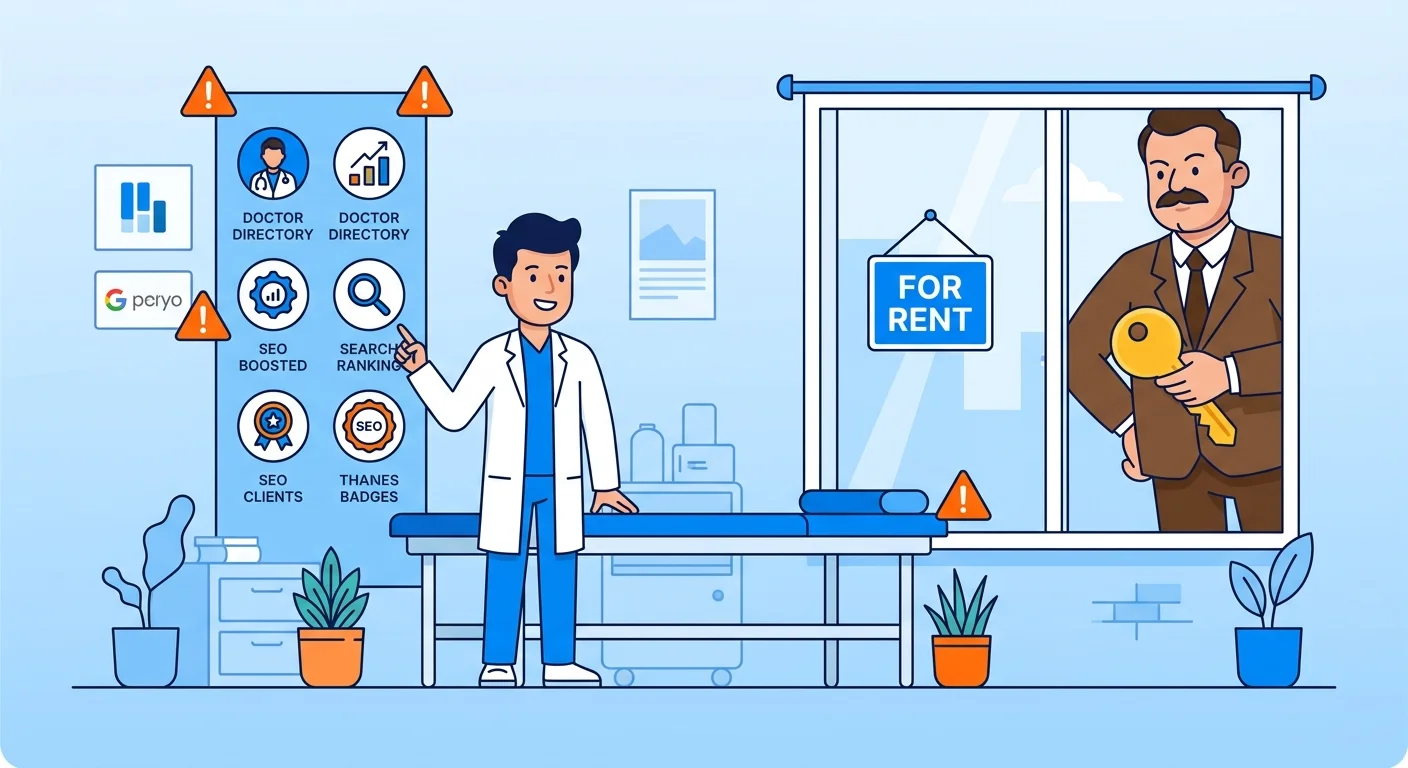
Rented land is any visibility you don’t own.
Yelp. Google Business Profile. Healthgrades. Those aren’t assets – they’re leases. You can optimize them, fill them out, stack reviews on them. But the landlord sets the terms. And the landlord can change the locks overnight.
That’s not a theoretical risk. It’s the business model.
Algorithms update. Ranking criteria shift. Platforms sunset features, merge categories, or bury a profile that was perfectly optimized last quarter. You didn’t get a vote. You didn’t get a warning. You just lost the apartment.
Over seventy percent of prospective patients use online indices and search verification metrics before selecting a clinician. That behavior isn’t disappearing – but where it happens is changing fast.
The patients who used to browse Yelp are now asking ChatGPT. And ChatGPT doesn’t pull from your directory listing. It pulls from entity signals it can verify independently of any platform.
If those signals live on someone else’s server, you’re still renting.
The Platforms You’re Relying On Don’t Belong to You
Here’s the thing most practices don’t realize: the platforms they’re counting on don’t owe them anything.
Google Business Profile can suppress a listing for a policy violation you didn’t know existed. Healthgrades can restructure its ranking algorithm and drop your profile three pages back. Yelp can decide your category no longer surfaces in recommended results.
None of that requires your permission.
According to this source, eighty-five percent of U.S. adults get local news and information from digital devices. That’s the size of the audience your practice is trying to reach.
But reaching them through a platform you don’t control means your access is conditional – conditional on the platform’s goodwill, its current algorithm logic, and its business model staying intact.
That’s a fragile foundation for a practice that’s supposed to compound in value over time.
So what’s the alternative? Build on ground you own.
Owned infrastructure means authority signals that live on your domain – schema markup, structured entity data, AI-readable content – that ChatGPT and Gemini can verify without ever touching a third-party platform.
A monthly retainer optimizes for a landlord’s algorithm. An Authority Infrastructure builds something no landlord can touch. the shift from retainer to asset
Why Rented Visibility Looked Like It Was Working
Rented visibility looked like it was working – because for a long time, it was.
Google rewarded well-maintained Business Profiles. Directories drove real referral traffic. A practice with strong review volume on the right platforms could reliably attract new patients.
The lease was cheap and the neighborhood was good. Nobody thought too hard about who held the deed.
But the neighborhood changed.
iTech Valet exists precisely because the mechanism that made rented visibility viable – a ranked list of blue links patients clicked through – is being replaced by a single AI-generated answer.
When an AI engine picks one practice to recommend, it isn’t pulling from the platform with the most reviews. It’s pulling from the entity it trusts most. That trust is built on owned infrastructure.
And right now, most practices are still paying rent on property that’s being demolished.
| Visibility Type | Who Controls It | Can Be Revoked Overnight? | AI Engine Trust Signal |
|---|---|---|---|
| Yelp / Healthgrades / Zocdoc listing | Third-party platform | Yes – algorithm updates, policy changes, or category restructuring can bury or remove your profile without notice | Weak – AI engines treat directory listings as low-trust, unverifiable signals that don’t anchor entity identity |
| Google Business Profile | Yes – Google can suppress, suspend, or deprioritize any profile under its own terms, which change unilaterally | Partial – GBP signals are readable by some AI engines but carry no permanence and are entirely controlled by a third party | |
| Monthly SEO retainer (agency-managed) | The agency and the algorithm they’re optimizing for | Yes – retainer results disappear the moment payments stop or the target algorithm updates its ranking logic | None – retainer optimization targets a ranked list that AI engines do not use to generate direct answers |
| Owned domain with schema markup and entity signals | The practice | No – structured infrastructure on your own domain cannot be revoked by any platform or algorithm change | Strong – AI engines parse owned, structured entity signals directly, independent of any third-party platform |
| AEO content on owned domain | The practice | No – published authority content compounds on infrastructure you control, with no landlord who can change the terms | Strong – semantically structured, AI-readable content is what AI engines pull from when generating a single recommended answer |
Why the Landlord Always Wins: How Platform Dependency Destroys AI Visibility
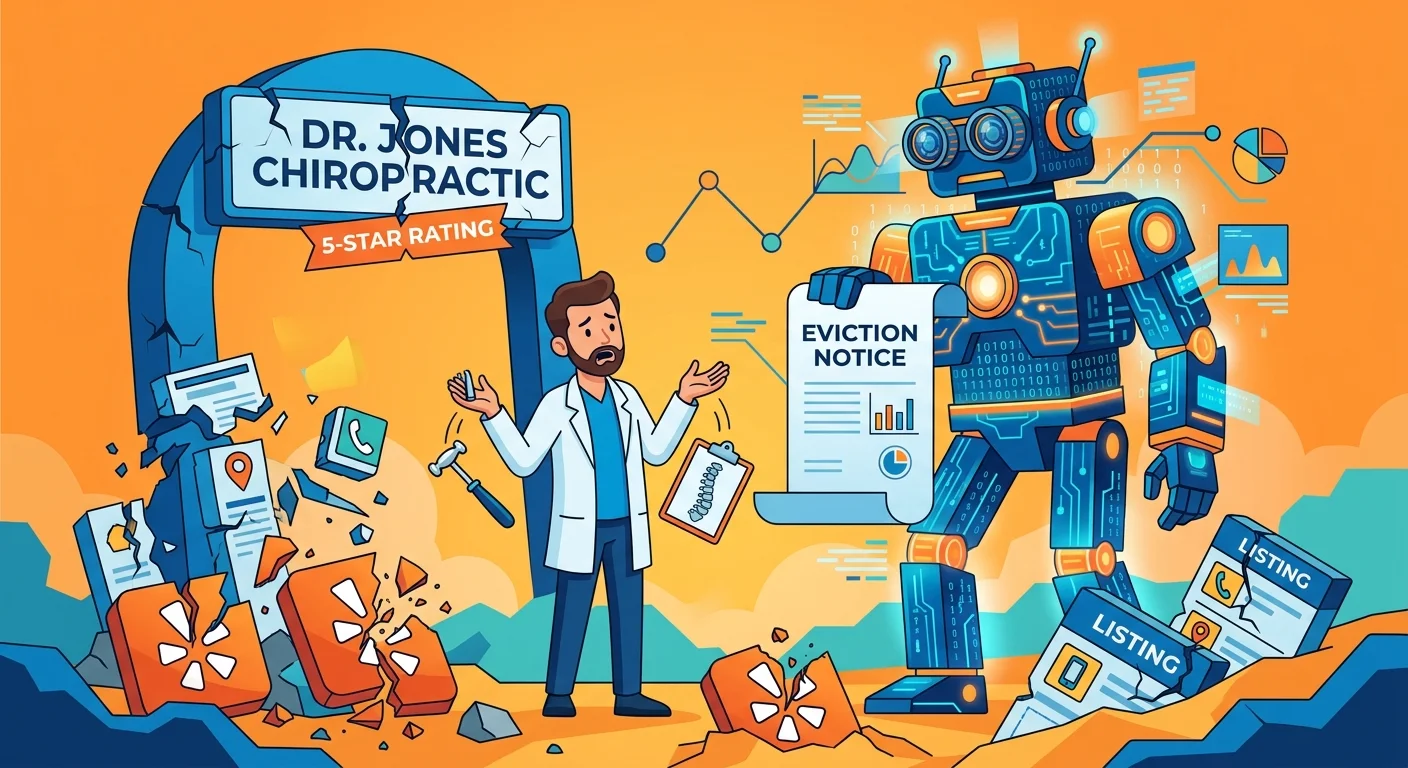
The landlord doesn’t need a reason.
That’s the whole point of being the landlord.
Every practice building its visibility on Yelp, Healthgrades, Google Business Profile – any directory that ranks and surfaces results on its own logic – is a tenant. And tenants don’t get a vote on what happens to the building.
According to this source, here’s where it gets expensive.
Search engine volume will drop twenty-five percent by 2026 as conversational AI agents absorb the discovery moments that used to happen on ranked result pages. That isn’t a slow drift. That’s the mechanism that made directory optimization worth doing – collapsing entirely.
The landlord’s neighborhood is being condemned. Practices that only own a lease are losing everything when it goes.
The practices that survive this aren’t the ones with the prettiest Yelp profiles.
They’re the ones who stopped renting before the demolition started. They built content and entity signals on their own domain – structured, machine-readable infrastructure that AI engines can parse without ever touching a platform the practice doesn’t control.
That’s the difference between a tenant with nice furniture and an owner with a deed. One stays visible when the algorithm changes. The other doesn’t. That’s what it means to build owned authority.
Why Traditional Local SEO Fails Chiropractors Now
According to this source, traditional local SEO was built for a world where Google produced a list and patients clicked through it.
Optimize your Business Profile. Collect reviews. Build citations. Show up.
That chain worked because patients were browsing. They aren’t browsing anymore. They’re asking.
When a patient asks ChatGPT who the best chiropractor near them is, the engine doesn’t return a list. It returns one name.
That name comes from an entity it trusts – not from a platform it happens to index. Research on prospective patient validation behaviors shows this shift is already underway, and it’s accelerating into AI-powered interfaces where directory authority is invisible and owned entity trust is everything.
The platform you optimized for years? The AI engine doesn’t even ask it.
Traditional local SEO fails chiropractors now because it was optimized for the landlord’s ranking logic – not for the trust model AI engines actually use.
The keywords you ranked for. The citations you built. The Google Business Profile you spent hours perfecting. None of that translates into entity trust that ChatGPT, Gemini, or Grok can verify.
You built a great apartment. In a building that no longer gets foot traffic.
And the monthly retainer model made it worse.
It kept practices paying to optimize a platform they didn’t own – reinforcing the lease instead of building toward ownership. Every dollar spent chasing a ranked list is a dollar that didn’t go toward the authority infrastructure that determines who AI recommends.
The failure chain is exactly that linear: platform dependency → algorithm vulnerability → AI invisibility.
The Qualification Gate: Who This Infrastructure Shift Is Not For
Quick pause.
This isn’t for everyone.
If you’re looking for a tactic that fills your schedule in the next sixty days, this isn’t it.
If you want a guarantee that AI will recommend you by a specific date, you won’t find that here. And if you’re still convinced that optimizing your Google Business Profile harder is the answer – this conversation isn’t for you.
That’s not a judgment. It’s a qualification.
The practices that benefit from owning their authority infrastructure get one thing the others don’t: they see visibility as a long-term asset, not a monthly bill that disappears when they stop paying.
They’re done renting. They’re ready to own.
If that’s where you are – keep reading. If it’s not, no hard feelings. But the landlord will keep collecting rent either way.
| Platform / Channel | What It Optimizes For | Failure Mode in AI Search | Authority Signal Retained After Platform Change |
|---|---|---|---|
| Google Business Profile | Local pack rankings within Google’s own algorithm | AI engines verify entity trust from owned domain signals – a GBP listing alone carries no weight in LLM citation logic | None – profile data lives on Google’s servers and disappears from AI context if entity signals on your own domain are absent |
| Yelp / Healthgrades | Directory-level review volume and category placement within a proprietary ranking system | Conversational AI does not surface directory rankings – it evaluates structured entity data that platforms like Yelp do not expose to LLMs | None – review counts and star ratings on third-party platforms are invisible to AI recommendation engines evaluating owned entity trust |
| Traditional monthly SEO retainer | Keyword positions within a ranked blue-link result page that AI search is rapidly replacing | Optimizing for a ranked list is irrelevant when AI engines produce a single named answer from structured entity signals – not a list | None – retainer work builds the landlord’s algorithm equity, not owned authority infrastructure that compounds on your domain |
| Social media profiles (Facebook, Instagram) | Platform-native engagement signals and follower-based reach within a closed ecosystem | LLMs treat social profiles as low-trust, unstructured data sources – engagement metrics are not entity verification signals | None – follower counts and post history do not translate into machine-readable authority that AI engines can cite |
| Owned domain with AI Authority Infrastructure | Entity trust signals – schema markup, structured content, semantic density – that AI engines can parse and verify independently | No failure mode from platform changes – the authority lives on infrastructure you control regardless of any algorithm update | Full – every structured signal, AEO article, and schema layer compounds on your own domain and remains intact when any third-party platform changes its rules |
Why Traditional Local SEO Was Built for a Search Engine That’s Losing Ground
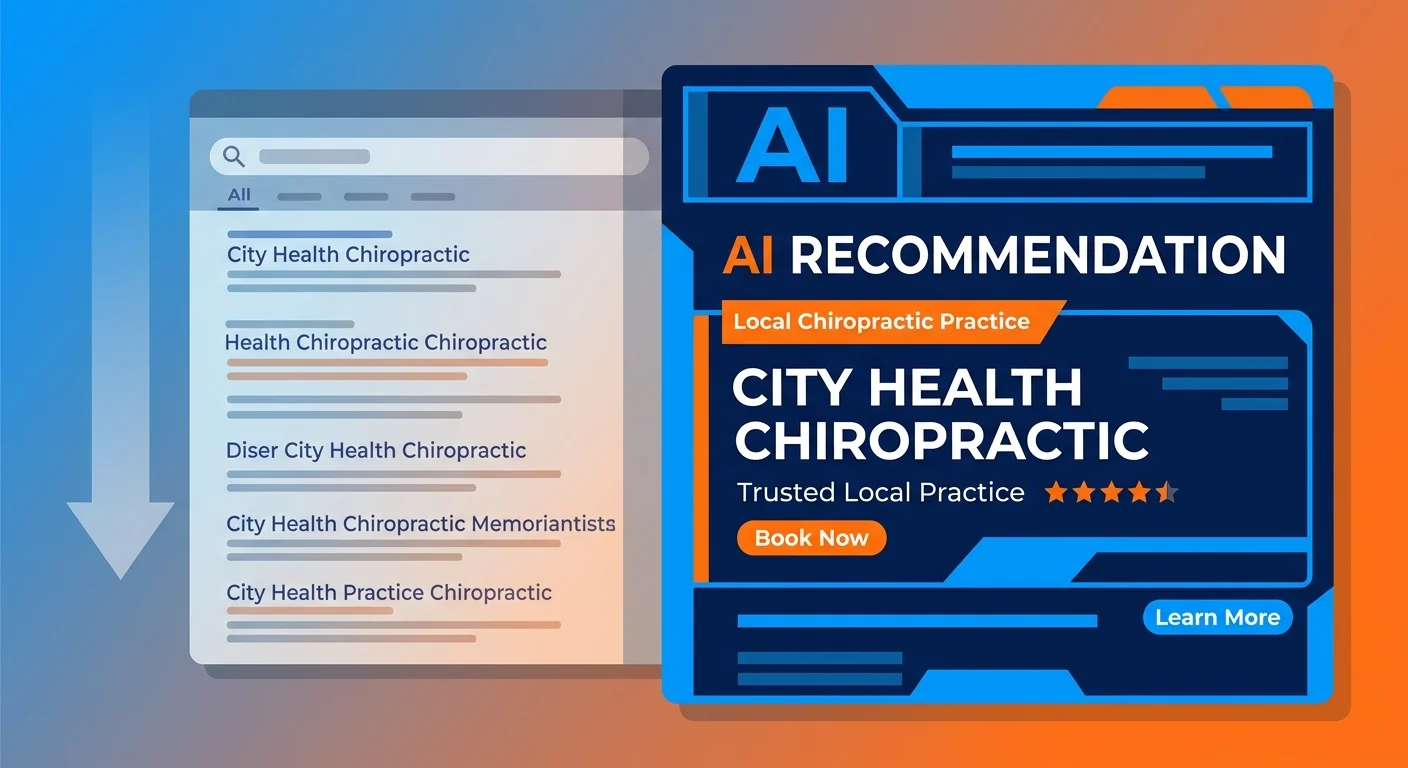
Traditional local SEO was never built to make AI trust you. It was built to make Google’s list surface you. Those aren’t variations of the same problem. They’re completely different problems – and the agencies selling retainers never had to care about the difference until now.
The entire model rested on one behavioral assumption: patients browse. They type a query, get a list, scroll through their options, and click whatever looks most credible. So the optimization game was about appearing on that list – Business Profile signals, citation volume, review counts. Everything pointed at one destination: a ranked result page on a search engine patients were reliably using. That destination is disappearing.
Gartner projects search engine volume will drop twenty-five percent by 2026 as conversational AI agents absorb those discovery moments. That’s not a dip. That’s a condemned building. Every practice that spent the last five years optimizing for that list just found out their lease was on a structure that won’t survive the demolition.
The Search Behavior Shift That Changed Everything
Patients stopped browsing. That’s the shift. They didn’t gradually use search engines less – they started asking a different kind of question to a completely different interface. "Who’s the best chiropractor near me" used to return ten blue links. Now it returns one answer.
Eighty-five percent of U.S. adults get local news and information from digital devices. That audience hasn’t shrunk – not even close. But where they’re directing their questions has changed completely. Same device. Completely different destination. And the destination now is a conversational AI engine that doesn’t render a ranked list at all. It renders one answer.
That’s what broke the retainer model. Local SEO was sold as the solution to a discovery problem. But the discovery mechanism it was optimizing for is the one being replaced. The agencies that sold you a better lease weren’t solving the wrong problem badly. They were solving a problem that’s already been made obsolete. Platform dependency is a symptom. The broken methodology underneath it is the disease.
What AI Engines Actually Need to Trust Your Practice
AI engines don’t need your Yelp rating. They don’t need your Google Business Profile star count. They need something completely different – and it’s something most practices have never been asked to build.
What they need is entity trust. Coherent, verifiable signals that confirm who you are, what you do, and why you’re the credible answer – signals that live on your own domain, structured so AI can parse them without asking any third-party platform to vouch for you. The retainer optimizes the lease. The Authority Infrastructure builds the deed. Those aren’t variations of the same investment. Understanding the difference is exactly what this framework is built around.
Enterprise organizations are already moving on this – building structured, proprietary data architectures that establish verified entity signals. That’s not a Fortune 500 abstraction. It’s exactly what a local chiropractic practice needs to stop being invisible. The landlord can’t repossess what you own. And AI engines can’t ignore what they can independently verify.
| Signal Type | Traditional Local SEO Weight | AI Engine Trust Weight | Owned vs. Rented |
|---|---|---|---|
| Google Business Profile signals | High – core ranking factor | Low – AI cannot independently verify claims made on third-party platforms | Rented – Google controls what the profile shows and when it surfaces |
| Citation volume (directory listings) | High – reinforces local authority in ranked results | Minimal – AI engines treat citation count as a weak trust proxy, not a verification signal | Rented – every directory can change its algorithm, pricing, or existence overnight |
| Online review count and star rating | High – influences click-through on ranked result pages | Low – review aggregates do not constitute entity verification for conversational AI | Rented – platform controls display, suppression, and ranking of reviews |
| Owned website with structured schema | Low – treated as one signal among many | High – AI engines parse structured data on owned domains as a primary verification source | Owned – no platform can alter, remove, or re-rank what lives on your domain |
| Semantic content depth (AEO articles) | Low – traditional SEO undervalues topical authority in favor of keyword density | High – conversational AI rewards entities with deep, coherent, verifiable topical coverage | Owned – content compounds on your infrastructure regardless of any platform change |
| Entity consistency (NAP, credentials, specialty) | Medium – citation consistency helps local pack rankings | High – AI requires coherent, cross-verified entity signals to confidently name a practice | Owned when anchored to your domain; rented when it lives only on third-party profiles |
What Owned Authority Infrastructure Actually Looks Like
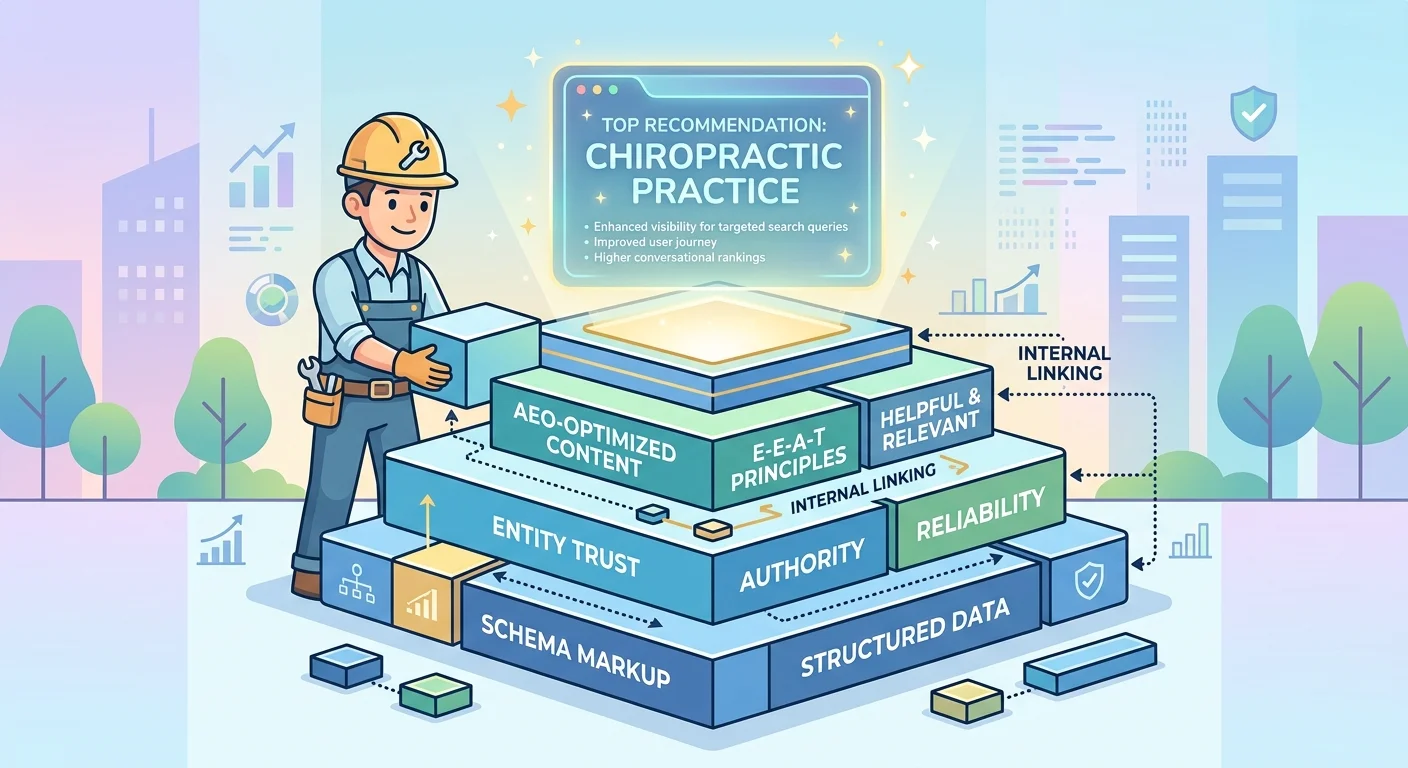
Here’s what owned authority infrastructure isn’t.
It isn’t a better Yelp profile. It isn’t a fancier Google Business listing. It isn’t anything living on a platform you don’t control.
Owned infrastructure means the signals that confirm your identity, your expertise, and your credibility live on your domain – structured so AI engines can read them, verify them, and cite them without asking any third-party landlord for permission.
The practices that capture any share of the AI-driven patient discovery shift are the ones AI engines can independently verify.
That verification doesn’t happen through star ratings. It happens through structured schema, semantic content architecture, and entity signals that are machine-readable by design.
Not optimized for a landlord’s algorithm. Built to be read directly.
The tenant analogy holds here.
A tenant can paint the walls, upgrade the lighting, make the whole apartment look incredible. But the address isn’t theirs.
Owned authority infrastructure is the deed. The AI’s source of truth about your practice is a domain you control, content you’ve published, and structured data you’ve built. No landlord involved.
The Components of a Machine-Readable Owned Asset
The first component is schema markup – structured data embedded directly in your website’s code that tells AI engines exactly who you are, what you treat, where you’re located, and what credentials back your expertise.
Without it, AI has to guess. With it, AI can verify.
That’s the difference between being cited and being ignored. Not a small difference. The whole game.
According to this source, the second component is AEO content – not blog posts written to hit keyword density targets, but AI Authority articles built to answer the specific questions conversational engines get asked about your specialty.
Each article adds a verifiable layer of expertise that compounds on the ones before it. Organizations that have already internalized this shift are investing in structured, proprietary data architectures precisely because that’s what prevents AI engines from hallucinating someone else’s name instead of yours.
Every article is a permanent signal on land you own. Not a post that evaporates when the retainer stops.
The third component is entity consistency – coherent NAP data, verified author signals, and cross-platform identity alignment that makes every mention of your practice point back to the same trusted source.
Here’s where it gets serious. The FTC holds businesses accountable for AI-adjacent claims that can’t be verified. That standard doesn’t care whether you’re a Fortune 500 brand or a solo chiropractic practice. If your structured data is inconsistent, your citations are wrong. If your citations are wrong, you’re either invisible – or worse, AI names you incorrectly to a patient who then can’t find you.
Most chiropractors don’t feel that cost until it’s already compounding against them. Understanding the cost of this gap is usually the moment the urgency becomes real.
How Authority Compounds When the Infrastructure Is Owned
Here’s what makes owned infrastructure genuinely different from any retainer you’ve ever paid.
It compounds.
Every AI Authority article published on your domain adds to the entity trust layer beneath it. Every schema signal reinforces the one already there. Every verified credential makes the next citation more likely. You’re not renting visibility month to month – you’re building equity.
A retainer optimizes a platform that can change its rules tomorrow.
Owned infrastructure doesn’t work that way. When the algorithm shifts – and it will – the authority you’ve built on your domain doesn’t move. The landlord can change the lease terms all they want. They can’t repossess what you own.
That’s exactly the side-by-side distinction between an AEO retainer and an Authority Engine built from owned infrastructure.
The compounding effect is the thing agencies never had to sell you before.
Because the retainer model was designed to keep you paying indefinitely for something that disappears the moment you stop.
Owned authority infrastructure doesn’t disappear. It deepens. Each month of execution builds on the last. The gap between your practice and the competitor who’s still renting gets wider. That’s not a marketing claim. That’s how equity works.
| Infrastructure Component | What It Does for AI Trust | Rented Land Equivalent | Owned Asset Advantage |
|---|---|---|---|
| Schema Markup | Gives AI engines a structured, machine-readable identity file for your practice – who you are, what you treat, and what credentials back your expertise. No guessing required. | Google Business Profile – a third-party listing that platforms can suppress, suspend, or reprioritize without notice | Schema lives in your domain’s code. No platform can revoke it. AI reads it directly from the source you control. |
| AEO Content (AI Authority Articles) | Answers the exact conversational questions AI engines receive about your specialty – adding a compounding layer of verifiable expertise with every published article | Directory profile pages and keyword-optimized listings on platforms that rank based on review volume and ad spend | Each article deepens the entity trust layer beneath it. Authority compounds on your domain – it doesn’t reset when you stop paying a retainer. |
| Entity Consistency (NAP + Author Signals) | Creates coherent, cross-platform identity alignment so every mention of your practice points back to the same verified source – reducing the risk of AI hallucination | Scattered citation profiles across directories you didn’t build and can’t fully control, with inconsistent data that confuses AI parsing | Verified NAP data and author signals on your own domain create a single source of truth AI engines can trust independently – no landlord vouching required. |
| Internal Linking Architecture | Builds semantic density by connecting related content into a coherent knowledge graph – signaling to AI that your domain is an authoritative, organized source on your specialty | Inbound links from directories and third-party platforms – authority borrowed from sources you don’t own and can’t sustain | Internal link equity compounds within your own domain. No external platform can restructure it, remove it, or decide you no longer qualify. |
| Structured Author Credentials | Attaches verifiable expertise signals to your content – telling AI engines that a qualified practitioner stands behind the answers, not an anonymous profile | Star ratings and unverified review aggregates on platforms that treat every practitioner as interchangeable | Published author schema tied to your domain creates a durable credibility signal that AI can cite – not a platform score a competitor can outspend. |
The Diagnostic Step: Running Your AI Visibility Check
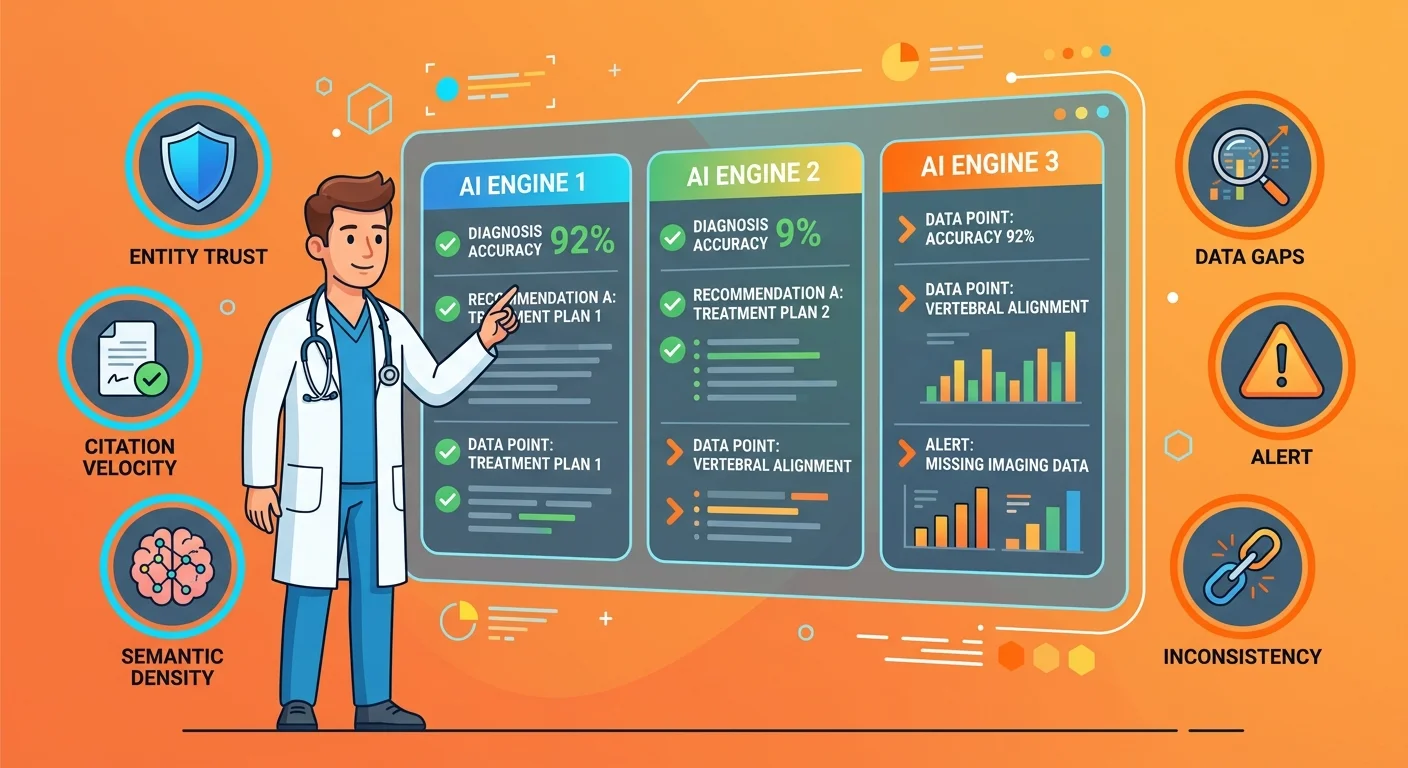
You can’t build what you can’t see.
Before anything gets built, you need an honest read on where your practice actually stands. Not where you assume it stands. Not where your last agency told you it stood.
That’s what the AI Visibility Check does.
It shows you – in real terms – what ChatGPT, Gemini, and Grok say when someone asks who the best chiropractor in your market is. Not what Google Business Profile says. Not what Yelp ranks you. What the AI actually answers.
Most practices that run it are surprised.
They were paying rent on a building the landlord was about to rezone. Nobody told them.
What the AI Visibility Check Actually Measures
This isn’t a vanity audit of your star ratings.
Over seventy percent of prospective patients use online indices and search verification before selecting a clinician – but that verification layer is shifting. Fast. The AI Visibility Check measures whether your practice shows up in the new layer: the conversational engine response. Not the directory. Not the ranked list. The single answer AI delivers when a patient asks who to trust.
Here’s what it actually looks for: Does AI recognize your practice as a verified entity? Does your owned domain send the structured signals those engines trust? Is your authority infrastructure machine-readable – or invisible?
Those aren’t abstract metrics. They’re the difference between being named and being skipped.
The FTC is clear: authority claims must be backed by verifiable, structured evidence – not marketing copy.
The AI Visibility Check shows whether your current infrastructure can actually support that. For most practices, it can’t. That gap is exactly what the build corrects.
What Happens After the Check: From Diagnosis to Infrastructure Build
The check is a 15-minute call.
What comes out of it is clarity – a clear picture of where the gaps are between your current digital footprint and the infrastructure an AI engine needs to confidently cite your name.
If the results make the problem self-evident – and they do – the next conversation is about what to build.
That’s the move from diagnosis to infrastructure. From tenant to owner. From renting visibility to holding the deed.
| AI Visibility Gap | What It Signals to AI Engines | Impact on Recommendation Likelihood |
|---|---|---|
| No structured schema on your owned domain | AI engines cannot verify your identity, specialty, or location without guessing – making citation unlikely | Practice is skipped in favor of any entity that provides machine-readable verification signals |
| Entity signals scattered across third-party directories only | AI treats your practice as a tenant – authority depends entirely on platforms you don’t control | Recommendation likelihood drops every time a directory changes its ranking rules or data structure |
| No AEO content on your domain answering specialty-specific questions | AI engines find no owned evidence of expertise – they can’t cite what isn’t there | Competitors with structured AI Authority articles capture recommendations your practice should be earning |
| Inconsistent NAP data across platforms | Contradictory signals create entity ambiguity – AI engines can’t confidently assign a single trusted source | Hallucination risk increases – AI may cite wrong contact details or skip your practice entirely |
| No verified author or credential signals | AI cannot confirm clinical expertise behind the content – reducing trust score for medical recommendations | Practice gets treated as a generic listing, not a credentialed authority worth citing |
| Owned domain lacks semantic content architecture | AI engines see a digital brochure – not a structured knowledge base they can parse and trust | Practice remains invisible in conversational search responses regardless of star ratings or directory presence |
Frequently Asked Questions
The case is made. Now comes the part where you actually have questions.
Real objections. Real answers. No spin.
What does it mean for a chiropractic practice to build AI authority on rented land?
It means every patient who finds you does so because a platform you don’t control decided to show your name.
Yelp. Google Business Profile. Healthgrades. Those aren’t assets. They’re leases – and the landlord can change the locks overnight.
Every dollar you’ve put into those profiles is equity you built in someone else’s building. When the algorithm shifts or the platform reprices, the visibility disappears. No refund. No warning. You just lose the apartment.
Owned authority is the alternative. Schema markup, structured content, entity signals – all of it living on your domain. No landlord. No lease terms. No risk of being evicted without notice.
How do AI engines like ChatGPT and Gemini decide which local chiropractor to recommend?
They don’t rank a list. They pick one name – and that name belongs to whatever entity they can independently verify.
Verification has nothing to do with star ratings or review counts. It’s about whether your own domain gives the AI enough structured, machine-readable evidence to cite you with confidence. Schema markup. Semantic content. Entity consistency. Those are the signals that tip the verdict.
Gartner projects search engine volume will drop twenty-five percent by 2026 as conversational agents absorb the discovery moments that used to happen on ranked result pages. That shift is already underway. In a conversational model, the practice with the strongest owned infrastructure gets named. The one with the most Yelp reviews gets skipped.
Why does a traditional local SEO retainer fail to secure long-term AI visibility?
Because it’s optimizing for the wrong output. A retainer moves you up a ranked list. A ranked list is being replaced by a single AI-generated answer. You can’t keyword-chase your way into an AI recommendation.
Eighty-five percent of U.S. adults get local news and information from digital devices – and an increasing share of that discovery is happening through conversational engines that don’t show the list at all. The retainer keeps you competitive in a format that’s losing relevance fast.
But here’s the deeper problem: the retainer is rented. Stop paying and the visibility stops. It never compounds. It never builds equity. It’s month-to-month occupancy in a building you’ll never own – and the landlord can change the locks the moment the business model shifts.
What does the AI Visibility Check reveal that a standard SEO audit misses?
A standard SEO audit tells you where you rank on a list. The AI Visibility Check tells you whether AI engines know you exist at all.
That’s not a subtle difference. Over seventy percent of prospective patients use online indices and verification metrics before selecting a clinician – but that verification process is migrating fast. A standard audit doesn’t measure what ChatGPT, Gemini, or Grok say when someone asks who to trust in your market. The AI Visibility Check does.
It measures whether your practice is recognized as a verified entity, whether your domain provides the structured signals AI engines trust, and whether your authority infrastructure is machine-readable or invisible to the engines now making recommendations.
Most practices find gaps they had no idea existed. That’s the point. You can’t fix what you can’t see – and the landlord doesn’t tell you the building’s been condemned.
What is the difference between paying a monthly SEO retainer and investing in a Local AI Authority Engine?
A retainer rents you visibility on someone else’s platform. An Authority Engine builds visibility on a domain you own.
That’s not a subtle distinction. Stop paying the retainer and the visibility stops with it. The Authority Engine compounds whether you’re paying attention or not – because every AI Authority article published, every schema signal added, every verified entity credential deepens the layer beneath it. You’re not buying access. You’re building equity.
The FTC is direct on this: authority must be backed by verifiable, structured evidence. A retainer can’t produce that. An Authority Engine is built specifically to produce it – so when an AI engine needs to verify your practice, your own domain is the source of truth. Not a directory. Not a platform. Not a landlord who can change the locks overnight.
How long does it take to see results from building owned authority infrastructure?
Faster than most practices expect. And slower than anyone promising sixty-day results will tell you.
Here’s what’s actually true: authority compounding starts on day one. Every schema signal deployed, every AI Authority article published, every entity verification completed adds to the foundation. AI engines don’t wait for a magic threshold – they incorporate signals as they appear.
I won’t hand you a specific timeline and call it a guarantee. Integrity matters more than closing the deal. What I will say: every month of execution builds on the last. Every month you don’t start is a month the competitor who did gets further ahead.
The lease isn’t getting cheaper. The build doesn’t get easier by waiting. The landlord can change the locks overnight – but they can’t repossess what you already own.
Stop Paying Rent on Visibility You Don’t Own
Here’s the verdict: the lease costs more than the build.
Every month you pay rent on visibility you don’t own – retainers, directory listings, platform rankings – you’re funding someone else’s infrastructure. Competitors are building their own.
The landlord doesn’t care about your practice. The algorithm shifts. The platform reprices. And when it does, the tenant walks away with nothing.
The window isn’t closing gradually.
It closes the way all compounding gaps close – slowly, then all at once. Right now, the practices that started building owned authority infrastructure are getting cited by ChatGPT, Gemini, and Grok. The ones still renting are getting skipped entirely.
That gap widens every month the build doesn’t start. You can’t close it by optimizing a lease. You close it by stopping the rent and holding the deed.
iTech Valet builds the infrastructure that makes your practice the answer AI engines trust – not because you paid a platform to say so, but because your own domain says so in a language those engines can read and verify.
That’s the difference between renting visibility and owning authority.
The landlord can change the locks overnight. The only question is whether your practice is holding the deed when they do.
The algorithm doesn’t send a warning before it rewrites the rules. So here’s the only question worth asking: when it does, is your practice holding the deed – or paying rent to someone who is? Run the AI Visibility Check and find out exactly where you stand.