
Your Testimonial Page Is a Liability
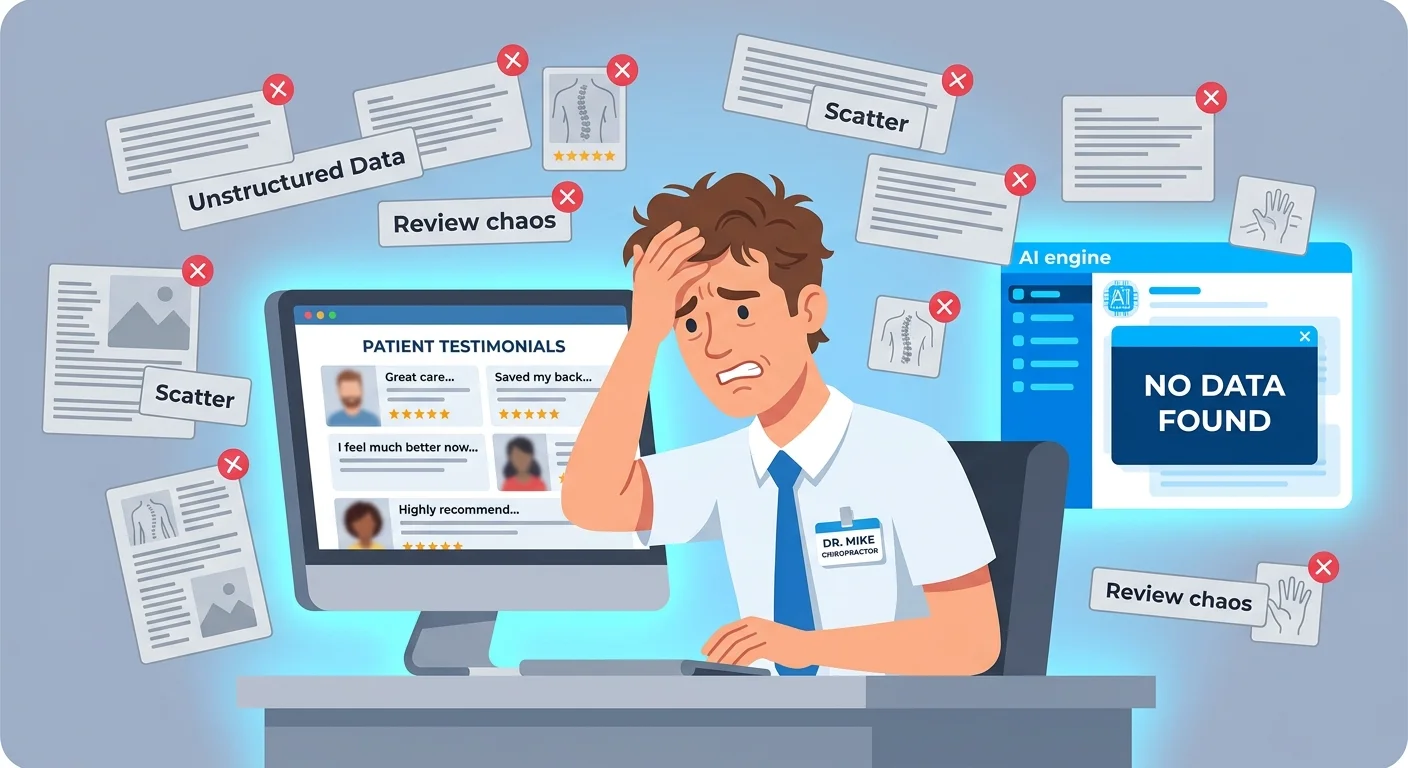
Your website is probably a liability, not an asset. If AI cannot read it, it doesn’t matter how good it looks.
That testimonial page you paid for? The one with the clean design and the five-star quotes and the professional headshots?
AI can’t read a word of it.
You’ve got patient reviews. You’ve got success stories. You might even have video testimonials embedded on the page. And to a human scrolling through your site, it looks credible. Professional. Trustworthy.
To ChatGPT, it’s just noise.
Why AI Can’t Read Your Current Social Proof
AI doesn’t process content the way humans do. It doesn’t browse. It doesn’t evaluate your layout. It doesn’t care that you paid $3,000 for a custom testimonials section.
It reads code.
Specifically, it scans for structured data-schema markup-that tells it what the content is, who created it, when it was published, and whether it can be verified.
Your testimonial page doesn’t have that. It’s just text wrapped in divs and styled with CSS. To an AI engine, that’s functionally identical to lorem ipsum placeholder text. It exists. But it doesn’t mean anything.
Screenshots and Images Make It Worse
Here’s where most practices make it even worse.
They screenshot Google reviews. Or Facebook testimonials. Or Yelp ratings. Then they paste those images onto their site thinking it adds credibility.
AI engines cannot parse text within images. That screenshot of a five-star review? Invisible. That image of a glowing testimonial? Doesn’t exist.
A beautiful website that AI does not recognize is an expensive digital business card. And when patients ask ChatGPT or Gemini who the best chiropractor in their area is, your digital business card doesn’t get mentioned.
What Machine-Readable Social Proof Actually Is
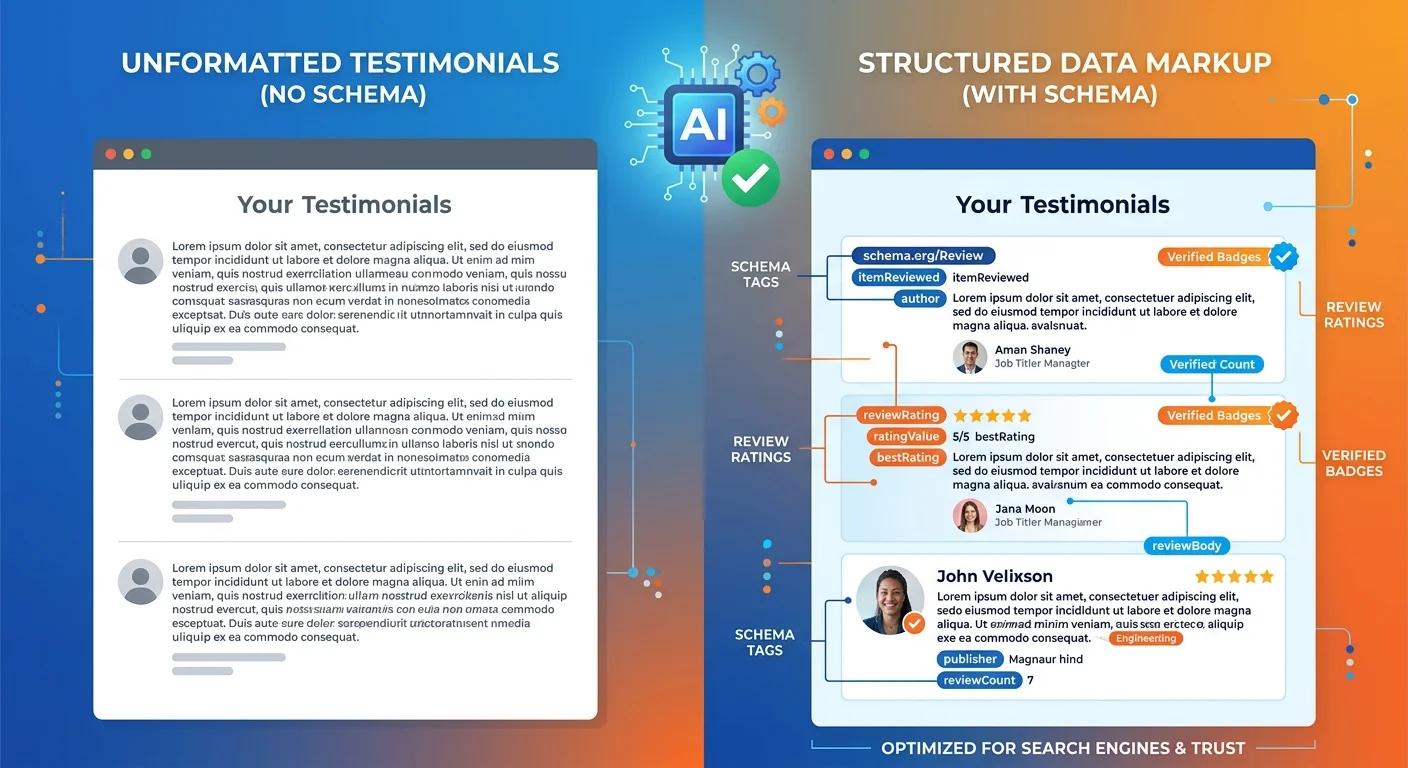
Machine-readable social proof isn’t a new kind of content. It’s a translation layer.
You take the proof you already have-patient reviews, case studies, credentials-and you structure it with schema markup so AI engines can read it, verify it, and cite it.
Instead of displaying a testimonial as plain text, you embed metadata that tells AI:
- Who wrote this
- What rating they gave
- When it was published
- What they’re reviewing
- Whether the author is a verified entity
That’s the difference between a testimonial AI ignores and a testimonial AI trusts.
The Four Core Types of Machine-Readable Social Proof
Not all social proof gets structured the same way. AI engines recognize different types of evidence, and each one requires specific schema implementation.
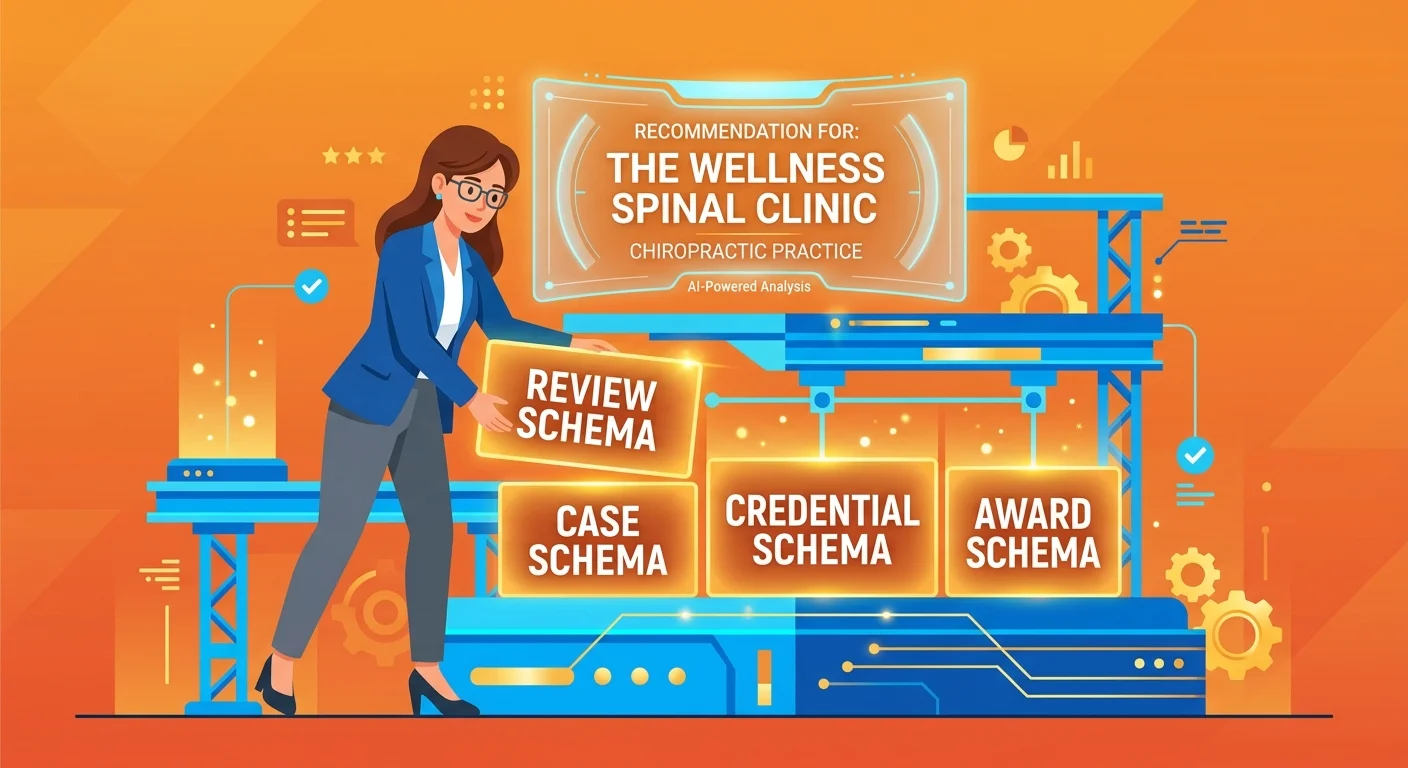
Patient Reviews – These need Review schema. Author name, star rating, review body, date published. AI reads that structure and treats it as verifiable patient feedback.
Case Studies – These require MedicalStudy or Case schema depending on how detailed the documentation is. Baseline condition, treatment protocol, measurable outcomes. AI uses this to verify clinical effectiveness.
Video Testimonials – AI can’t watch video. But it can read transcripts. VideoObject schema with a properly structured transcript turns a video testimonial into machine-readable proof.
Credentials and Awards – Professional certifications, institutional affiliations, recognitions. Credential or Award schema tells AI these aren’t just claims-they’re verifiable trust signals tied to external entities.
Each type builds a different layer of verifiable trust. Reviews prove patient satisfaction. Case studies prove outcomes. Credentials prove expertise. AI synthesizes all of it to decide whether you’re the answer.
| Social Proof Type | What It Proves | Schema Type Required | AI Trust Impact |
|---|---|---|---|
| Patient Reviews | Patient satisfaction and experience quality | Review schema with author, rating, and review body | Verifies real patient feedback and satisfaction levels |
| Case Studies | Documented outcomes with measurable results | MedicalStudy or Case schema with baseline and treatment data | Demonstrates clinical effectiveness and treatment protocols |
| Video Testimonials | Patient experience in multimedia format | VideoObject schema with transcripts | Adds multimedia verification layer when transcript is structured |
| Credentials and Awards | Professional expertise and institutional recognition | Credential or Award schema | Establishes practitioner authority and institutional trust signals |
Why This Is Non-Negotiable Now
Here’s what most chiropractors don’t realize: the game already changed.
Patients aren’t Googling “best chiropractor near me” and clicking through ten blue links anymore. They’re asking ChatGPT. They’re asking Gemini. They’re asking Grok.
And those engines return one answer. Not a list. One.
Zero-click search is now the dominant discovery mechanism, per SparkToro and Similarweb. If your social proof isn’t machine-readable, you’re not in that conversation.
AI Doesn’t Browse-It Extracts
Traditional SEO was built on the assumption that a human would visit your site, read your content, evaluate your credibility, and make a decision.
That workflow is dead.
AI engines don’t browse. They extract. They scan your site’s structured data, cross-reference it with entity signals from other sources, and produce a verdict in seconds.
If your testimonials aren’t coded with schema, they’re not extracted. If they’re not extracted, they don’t factor into the AI’s decision.
Your competitor’s schematized case studies do.
E-E-A-T Is Now Machine-Enforced
Google’s E-E-A-T framework-Experience, Expertise, Authoritativeness, Trustworthiness-used to be evaluated by human quality raters.
Now it’s evaluated by AI. And AI doesn’t assess E-E-A-T by reading your About page.
It reads structured entity signals. Reviews. Case studies. Credentials. Citations from institutional sources like the NIH’s AI-driven health system initiatives. All of it coded in a format machines can verify.
If your authority isn’t structured, AI can’t verify it. If AI can’t verify it, you don’t have authority in the eyes of the system making the recommendation.
| Factor | Traditional SEO Approach | AEO Machine-Readable Approach |
|---|---|---|
| Social Proof Display | Unstructured testimonials on a page humans can read | Schema-marked reviews with author, rating, and date metadata |
| Verification Method | Human visitors evaluate credibility visually | AI engines extract and verify structured data signals |
| Authority Building | Designed to look credible to browsing patients | Coded to be verifiable by AI entity trust algorithms |
| Trust Signal Type | Subjective presentation of patient quotes | Objective structured data AI can cross-reference and cite |
| Longevity | Static content that doesn’t compound | Ongoing schema implementation that builds cumulative entity trust |
The Competitive Gap Is Already Widening
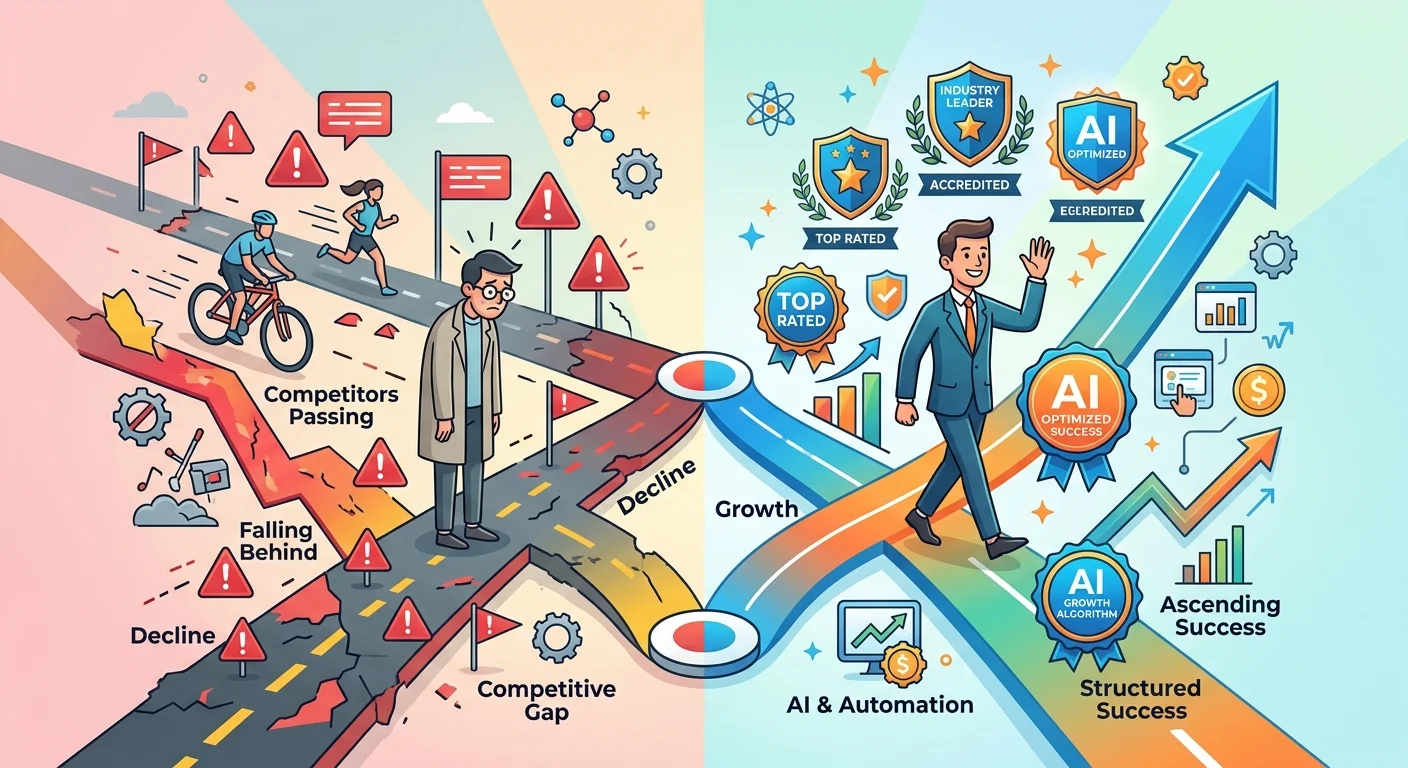
Most chiropractors have no idea this shift happened.
They’re still optimizing for Google’s algorithm. Still buying backlinks. Still running Facebook ads. Still wondering why their new patient numbers are flat.
Meanwhile, the practices that moved early-the ones that rebuilt their testimonial pages with schema, the ones publishing machine-readable case studies documenting outcomes, the ones structuring every piece of social proof for AI visibility-are locking in the authority signals AI uses to determine who gets recommended.
And the gap widens every month.
Authority Compounds-Invisibility Accelerates
Here’s the mechanism most docs miss: AI doesn’t evaluate your entity once and move on.
It continuously reassesses. Every time you publish a new machine-readable case study, your authority deepens. Every time your competitor doesn’t, their gap widens.
This isn’t a problem you fix with a one-time website update. It’s an ongoing execution challenge.
The practices building AI Authority Engines aren’t just getting ahead. They’re compounding. And the practices waiting for “proof” that this matters are falling further behind every single month they delay.
The Old Playbook Doesn’t Work Anymore
Let’s be blunt about what doesn’t move the needle anymore:
Paid ads that send traffic to a site AI can’t read. Backlink campaigns aimed at an algorithm being replaced. Template websites with generic testimonial pages. SEO agencies optimizing for keywords instead of entity trust. Social media engagement that never translates into structured authority signals.
None of that builds machine-readable social proof. None of it tells AI your practice is the answer. None of it compounds.
| Old Tactic | Why It Fails Now | What Builds Authority Instead |
|---|---|---|
| Unstructured testimonials page | AI engines cannot parse or verify unformatted text | Schema-marked reviews with Review markup for author, rating, and content |
| Screenshots of Google reviews | AI cannot read text within image files | Native testimonials on your site with proper schema implementation |
| One-time website build | Authority decays without ongoing execution | Continuous publication of machine-readable case studies and reviews |
| Keyword-focused SEO | AI extracts entity signals, not keyword density | Entity trust built through structured credentials, reviews, and outcomes |
| Backlink campaigns for Google’s algorithm | Zero-click search means patients never visit your site from a list | Machine-readable social proof AI can cite directly in recommendations |
This Is Not Another SEO Trick
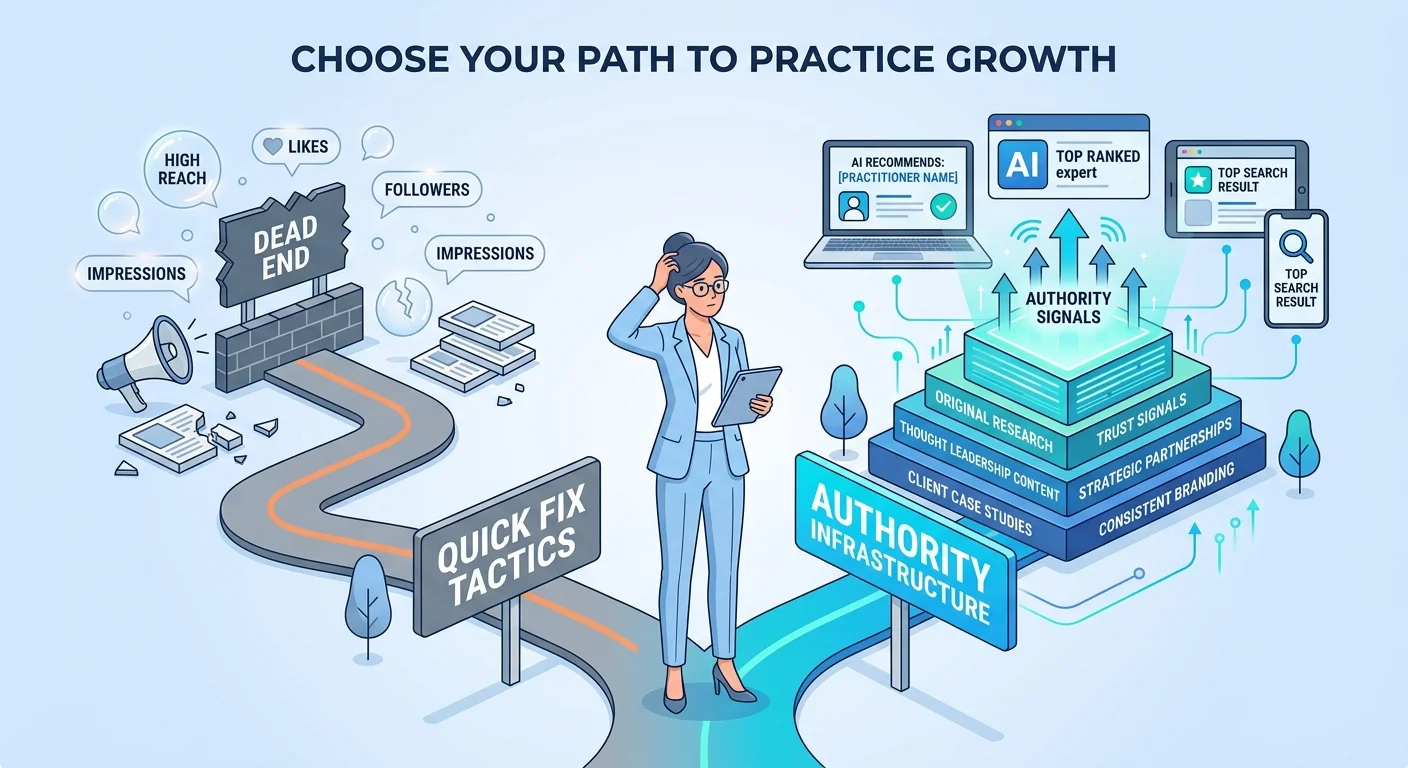
Quick pause before we go further.
If you’re looking for a way to game AI engines with a technical shortcut, this isn’t it. If you think slapping a few schema tags on your site will magically flood your schedule in 30 days, you’re in the wrong place.
Machine-readable social proof isn’t a hack. It’s foundational infrastructure.
It’s not decoration. It’s plumbing. It’s what makes your authority asset functional in an AI-driven discovery environment.
This Is for the Practice That Wants to Be THE Answer
Not one of five options. THE answer.
That requires rebuilding your testimonial pages with proper schema implementation. Publishing ongoing case studies in a machine-readable format. Structuring credentials, awards, and institutional affiliations so AI can verify them. Maintaining and updating your authority signals every month-not once and walking away.
If that execution model doesn’t fit your decision framework, no hard feelings. But if you’re tired of being invisible while competitors who understand the new rules compound their authority every month-you’re in the right place.
How Schema Turns Proof Into Authority
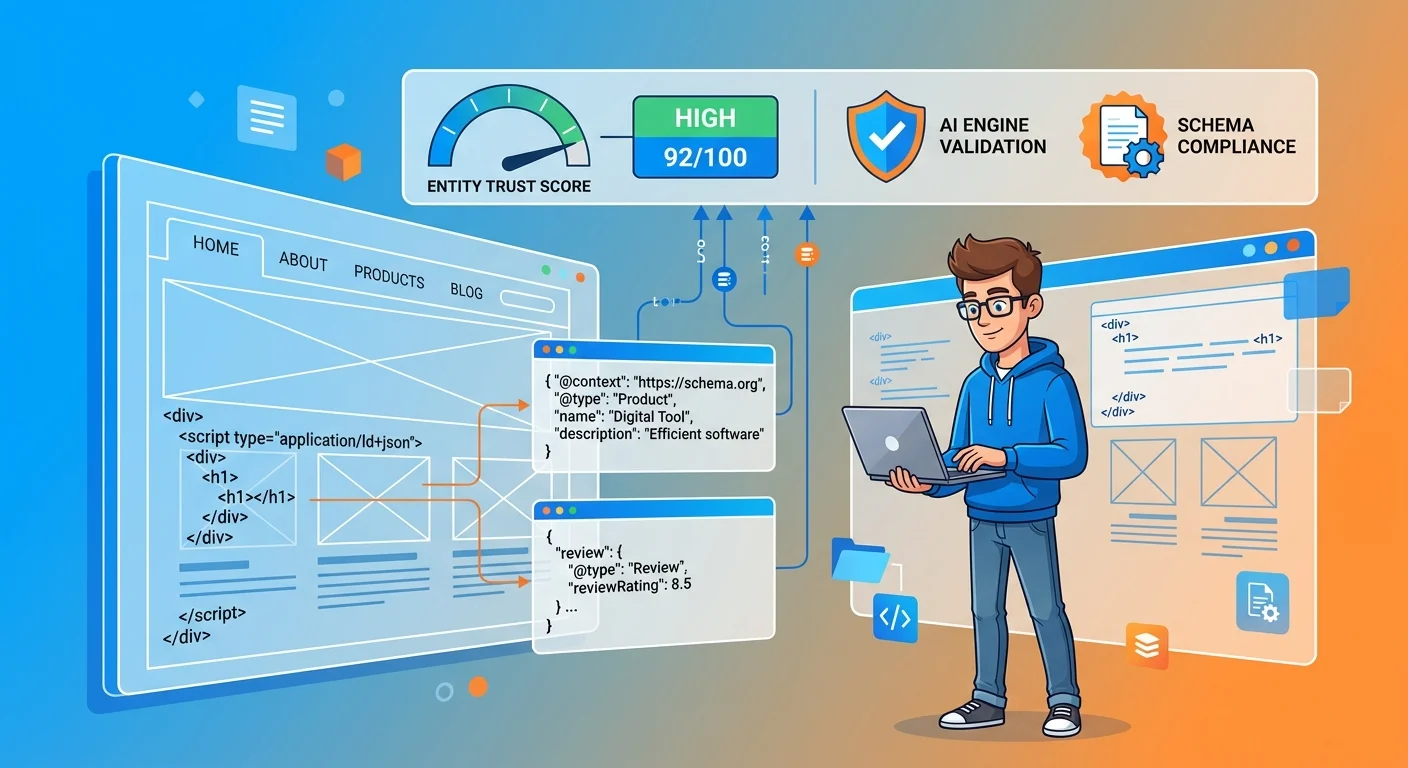
Schema markup is the technical mechanism that makes social proof machine-readable.
It’s a standardized vocabulary-created by Schema.org and supported by Google, Microsoft, and every major search engine-that tells AI what your content is and how to interpret it.
When you add Review schema to a testimonial, you’re not just displaying a quote. You’re telling AI:
- This is a review
- Written by [Author Name]
- Rating: 5 stars
- Published on [Date]
- Review body: [Text]
AI engines read that structure, verify the data, and factor it into their entity trust calculation. Without the schema, they ignore it.
Implementation Is Technical-But It’s Not Optional
Here’s where most practices stall.
They hear “schema markup” and assume it’s too complicated. They assume they need to become developers. They assume their current web designer can handle it.
Wrong on all three counts.
Schema implementation is technical, but it’s not complex. The vocabulary is standardized. The tools exist. The problem is that most web design firms and template-based agencies have no idea how to structure content for AI visibility.
They build digital brochures. Not authority infrastructure.
Template agencies produce websites that are structurally invisible to AI. The code may exist, but the hierarchy, schema, and entity signals are so poorly organized that machine agents ignore them entirely.
If your site was built by a template agency, your schema is either missing entirely or so poorly implemented that AI engines ignore it.
We Don’t Publish Vibes-We Publish Receipts
This is the conviction that separates commodity content from verifiable authority: every claim must be a receipt.
A testimonial without schema is a vibe. “Jane had a great experience.” Cool. AI can’t verify that. It’s just text on a page.
A testimonial with schema is a receipt. AI can verify who wrote it, when it was published, what rating was given, and whether the author is a real entity. That’s a trust signal. That’s authority.
Answer Engine Optimization is built on receipts. Not vibes.
Frequently Asked Questions
What’s the difference between a standard testimonial and machine-readable social proof?
A standard testimonial is text or an image on a page that humans can read. Machine-readable social proof is coded with structured data-usually schema markup-so AI engines can understand who wrote it, what rating was given, and the context of the review. AI treats unstructured testimonials as meaningless text. Structured testimonials are treated as verifiable data that builds entity trust.
Can AI engines read screenshots of 5-star reviews?
No. AI engines cannot parse text within images. A screenshot of a review-whether it’s from Google, Facebook, or Yelp-is just an image file to an AI. It doesn’t extract the rating, the author, or the content. If your social proof exists only as screenshots, it’s invisible to every AI answer engine.
Does this mean my existing Google Business Profile reviews don’t matter?
They matter as a trust signal, but that proof is locked on Google’s platform. Creating machine-readable versions of your reviews on your own website ensures you control the asset and can present it to all AI engines-not just Google’s. Authority that lives only on third-party platforms is authority you don’t own.
Is adding schema markup a one-time fix for my website?
Implementing initial schema is foundational, but authority isn’t built once and left alone. True authority compounds. That means continuously publishing new social proof-case studies, testimonials, credentials-in a machine-readable format. Authority decays without ongoing execution. The practices that treat this as a one-time fix will watch their competitors compound month after month.
What types of social proof can be made machine-readable?
Nearly any proof asset can be structured for AI visibility. Patient reviews with Review schema. Video testimonials with VideoObject schema and transcripts. Case studies with MedicalStudy or Case schema. Professional credentials with Credential schema. Awards and recognitions with Award schema. If it’s evidence of authority, it can be translated into structured data.
How does machine readability affect Entity Trust?
Entity Trust is an AI’s confidence in who you are and what you claim. Every piece of machine-readable social proof acts as a verification layer. AI engines cross-reference reviews, case studies, credentials, and citations to determine whether your entity is trustworthy. Unstructured proof doesn’t contribute to that calculation. Structured proof does. The more verifiable signals you provide, the stronger your entity trust becomes-and the more likely AI is to recommend your practice as the answer.
Can’t I just wait until this becomes standard practice?
You can. But every month you wait, the practices that moved early are compounding their authority.
AI engines don’t start from scratch every time they evaluate your entity. They build on prior assessments. If your competitors are publishing machine-readable case studies and you’re not, their authority is deepening while yours is stagnant.
By the time “everyone” is doing this, the authority gap will be so wide that catching up will require significantly more time and investment than moving now.
Do I need to hire a developer to implement schema markup?
Not necessarily-but you do need someone who understands how to structure content for AI visibility.
Most template-based web designers have no idea how to implement schema correctly. They’ll add a plugin, claim the job is done, and leave you with broken or incomplete markup that AI engines ignore.
Proper schema implementation requires understanding entity architecture, cross-referencing signals, and ensuring the markup validates correctly. If your current web firm can’t explain the difference between Review schema and AggregateRating schema, they’re not equipped to handle this.
The Authority Gap Isn’t Closing
There’s no version of this where doing nothing is a safe play.
AI is already making recommendations in your market. Either your name is in the answer or a competitor’s is. That gap widens every month it goes unaddressed.
The practices that understand this are rebuilding their testimonial pages with schema. They’re publishing machine-readable case studies. They’re structuring every piece of social proof so AI engines can verify it. And they’re doing it every month-not once.
Authority compounds. Invisibility accelerates. The longer you wait to translate your proof into the language AI speaks, the further behind you fall.
If you’re ready to stop being invisible and start being the answer AI recommends, let’s start with the diagnostic. The AI Visibility Check takes 15 minutes and shows you exactly what ChatGPT, Gemini, and Grok say when someone asks who to trust in your market. If the results don’t make the problem self-evident-walk away. No pressure. But if they do? You’ll know exactly what to do next.
Want to see if AI is recommending your practice-or your competitor’s? The AI Visibility Check runs in 15 minutes and shows you exactly what ChatGPT, Gemini, and Grok say when patients ask who the best chiropractor in your area is. Most practices are shocked by the results. Some aren’t in the conversation at all. Others are buried under competitors who moved early and built the authority infrastructure AI trusts.
The gap between visible and invisible is already wide. Every month you’re not building machine-readable social proof, your competitors are compounding their authority. By the time you see the proof in lost bookings, the practices that acted early will have locked in the entity trust signals AI uses to determine who gets recommended.
This isn’t a problem you can fix with a one-time website update. It’s an execution challenge that requires ongoing authority content, proper schema implementation, and a strategy built for AI visibility-not Google’s algorithm.
Run the check. See what AI says. If the results show you’re invisible-now you know why.