
In Whitespark’s case study of one chiropractic practice, 60% (about 6 in 10) of the listings that Yext had reported as synced disappeared or started featuring incorrect information after the subscription was canceled. Whitespark also found that Yext’s report of the listings synced with Yext PowerListings was incorrect and incomplete while the subscription was live. BrightLocal adds that if your NAP is inconsistent (your business name, address, and phone number are not the same everywhere), sites may find several different listings, each with slightly different data. All of them are then imported separately, which makes the duplicate business listing problem bigger.
What Happened When One Chiropractic Practice Cancelled Yext
Here’s what happened.
Whitespark ran a case study on one chiropractic practice. Of the listings Yext had reported as synced, 60% “disappeared or started featuring incorrect information after the subscription was canceled.” That’s about 6 in 10.
Only 3 of 60 listings (5%) stayed accurate and kept their enhanced details after the subscription ended. Of those 3, 2 had been claimed by hand before the Yext subscription started.
Now look at the practitioner. Whitespark found 31 listings for Dr Nathan Leavitt, the individual practitioner at the practice, on sites in Yext’s network. None of them were affected in any way. Not by the subscription while it ran. Not by the cancellation.
Whitespark also found that Yext’s report of the listings synced with Yext PowerListings was incorrect and incomplete while the subscription was live. And even 2 weeks after the cancellation, some listings still had not been unsynced from Yext.
Here’s how the numbers line up in the case study.
| Measure | Result in the case study |
|---|---|
| Listings reported as synced that disappeared or showed wrong details | 60% |
| Listings that stayed accurate with enhanced details | 3 of 60 (5%); 2 of them manually claimed before the Yext subscription started |
| The practitioner’s own listings on Yext-network sites | 31 listings; none affected by the subscription or the cancellation |
| Yext’s report of listings synced with Yext PowerListings, while the subscription was live | Incorrect and incomplete |
| Listings still not unsynced after cancellation | Some, even 2 weeks later |
I put your practice’s effort and money into what you control: clear, credible information about your practice. I count on that kind of visibility to keep paying off and grow over time. I don’t rent visibility that stops the moment the spending stops. Listings that vanish when a subscription ends are what renting looks like. I wrote about what you keep in What a Clinic Owns After an Authority Engine Install, and What Decides It. You can read the full study at What Happens When You Cancel Yext? from Whitespark.
How Duplicate Listings Multiply and Get Fixed
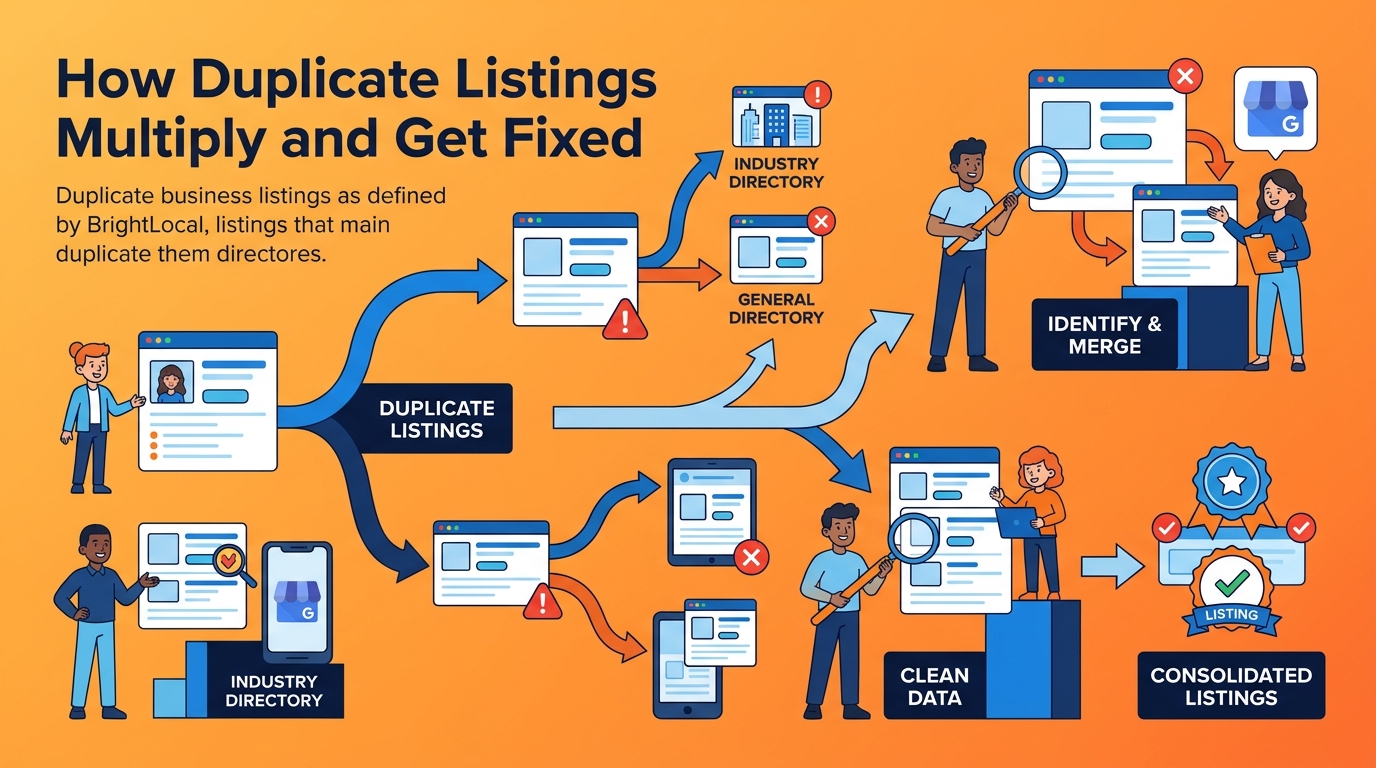
BrightLocal says a duplicate business listing happens when you have more than one listing on an industry directory site, a general directory site, or a similar platform, such as Google Business Profile.
Why does it matter? BrightLocal quotes Google: “If a profile is considered a duplicate, it won’t show on Google Search or Maps.”
BrightLocal points to two ways duplicates show up:
- Inconsistent NAP. If your name, address, and phone number don’t match everywhere, these sites may find several listings with slightly different data. Each one is imported separately, which makes the duplicate problem bigger.
- Accidental submissions. You, a co-worker, or an agency working for you may accidentally create a citation on a site where you already have a listing.
Manual methods have a limit. BrightLocal says many listing sites get their information from third parties, other companies. So there could well be plenty of duplicates on sites you don’t even know about.
Wherever you find a duplicate listing, you’ll need to log in, claim it, and then edit it. BrightLocal lays this out in Seeing Double: The Danger of Duplicate Business Listings.
What Wrong Listing Details Cost a Practice
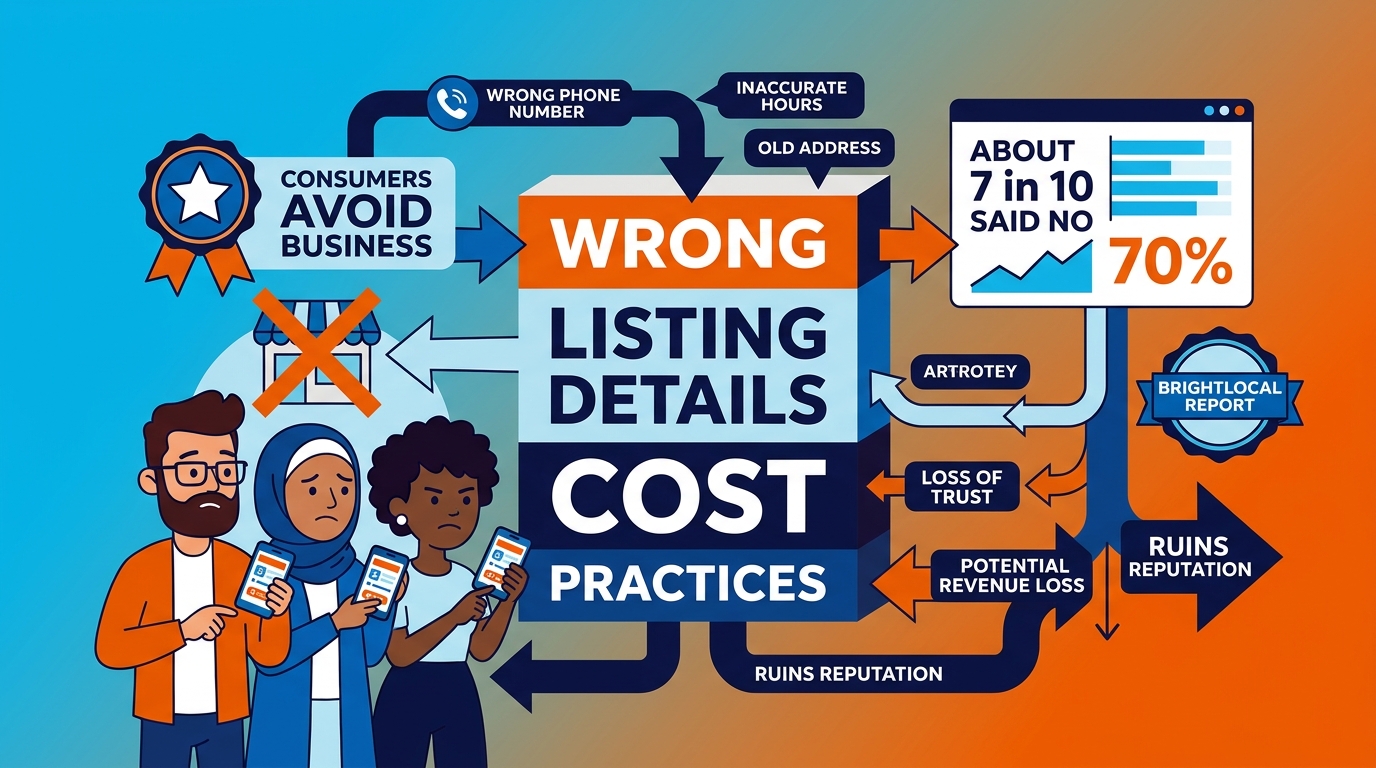
In BrightLocal’s report, 62% of consumers, about 6 in 10, said they would avoid using a business if they found wrong information about it online. That’s a real cost if your listings are off. The figure comes from Seeing Double: The Danger of Duplicate Business Listings.
A study of business datasets found that inaccuracies in location information stemmed from outdated or incorrect addresses and from non-fixed locations.
Google says that to help keep your Business Profile accurate, it gathers information from different sources, like user reports and licensed content.
Citation Advice From Local Search Experts (2018)

In 2018, BrightLocal asked local search experts about citations. Three answers stand out for your practice.
- Niche directories came first. About 6 in 10 experts (64%) chose niche and industry directories as their most valued source of structured citations. Since 2016, the importance of these directories has grown hugely.
- Phone numbers must match. Nearly every expert said phone numbers need to be an exact match across your citations.
- Clean up first. When you set your citation plan, the experts recommend cleaning up inaccurate citations before you start building new ones.
Want the full results? They’re in BrightLocal’s Citation Survey: How Important Are Citations on Local SEO?
Why Stacking Separate Tools Leaves Capacity Unused
Here’s what Gartner found. In May and June 2023, it surveyed 405 marketing leaders. On average, they used just 33% (about one-third) of what their marketing technology (martech) tools can do. That’s down from 42% (about 4 in 10) in 2022 and 58% (almost 6 in 10) in 2020.
A Gartner analyst said marketers tend to buy new technology without a clear, step-by-step plan for getting their teams to use it. Add contracts that last several years, and tools that go unused or get abandoned can easily pile up into a stack that’s hard to manage over time. Marketing Report covers this in 63 per cent of marketing leaders plan to invest in generative AI.
A 2025 survey of marketers looked at people who replaced a tool. Among those replacers, about 63 in 100 (62.9%) added applications. About 23 in 100 (22.6%) shrank their stack. About 15 in 100 (14.5%) stayed flat. And about 36 in 100 replacements (35.5%) took more than six months to decide. See Marketing Technology Spend: 19.4% of Budget, 15,505 Tools from Christoph Olivier Consulting.
I steer clients away from low-priced monthly deals that look like a bargain. Thin work, little real progress, and money tied up in a contract that builds nothing. That costs more than the price shows. I judge a tool contract by the same rule. If it looks efficient but sits unused, it fails.
What Unified Data Changes, and Why Point Tools Keep Churning
Why do single-purpose tools (point tools) keep coming and going? The State of Martech 2026 report has an explanation. ChatGPT, Claude, Gemini and the incumbent suites (the big, long-established software packages) absorbed the features those point tools sold.
Look at the Marketing Technology Landscape. Its net growth in 2026 was only 121 products. Sounds calm. It isn’t. That net figure hides heavy churn: 1,488 products were added (about fifteen hundred) and 1,367 were removed (about thirteen hundred seventy).
Now the data side. Salesforce’s 2025 report found that marketers whose data is unified (brought together in one place) are 60% more likely to use artificial intelligence (AI) agents. But many marketers lack full access to their data. Only 58% have complete access to service data. Only 56% have it for sales data. And only 51% have it for commerce data. Christoph Olivier Consulting collects these figures in Marketing Technology Spend: 19.4% of Budget, 15,505 Tools.
Want to see how the pieces fit? I lay it out in How Entity Data, Schema and Content Work Together in One Build. And if you want to know how the work gets done, iTech Valet Service Plans & Pricing is the page.
Frequently Asked Questions
Why do chiropractic practices have extra trouble with automated listing tools?
Whitespark lists complicated cases with practice-practitioner types of businesses as a problem area for automated listing tools. That group covers lawyers, doctors, dentists, chiropractors, real estate agents, and insurance agents. Chiropractors are on the list.
Can a listing tool create duplicates of a practice’s own listings?
Yes. In Whitespark’s case study, Yext created a duplicate listing on Local.com for an already existing listing it knew about, because that listing was included in its own report. Read that twice.
Do directory citations matter as much as they used to?
In BrightLocal’s 2018 survey, 90% of experts said accurate citations are important to local search ranking. In the same survey, 59% believed citations had become less important, significantly more than the 19% who thought so in 2016. I won’t sell citation building as if it were still the whole game, the way much of the industry still sells the old search playbook, and I won’t charge a practice for tactics aimed at a landscape that’s gone.
Where does bad listing data on search platforms sometimes come from?
Sometimes it comes from bad actors. They take advantage of upstream local data brokers, which are companies that pass along business listings and keep loose control over data quality. Then they use those brokers to post listings that promote illegal drug businesses.
Does using more of a tool stack protect its budget?
It looks that way. Gartner found that organizations using more than 50% (more than half) of their stack were “significantly less likely” to be asked to cut their martech budget. Keep the two numbers straight, though. The 50% is how much of the stack gets used. The 10% is a yearly increase in that use. Only 11% of respondents (about 1 in 9) raised utilization by more than 10% in a year. Fixing it is slow.
One Installed System Instead of Rented Sync and Stacked Tools
Rented sync left gaps in the case study, and stacked tools leave capacity unused. So iTech Valet installs one system for listings data and content instead.
If your practice already has its infrastructure in place, AEO (answer engine optimization) Content Writing Services is a stand-alone, content-only offering. It’s a content writing service, and it comes as a Local Pack of 12 articles or a National Pack of 30 articles.
Want to see what AI says about your practice today? Run My AI Visibility Check.