


How Do I Reduce No-Shows in My Chiropractic Practice? (2026 Guide)
 by Gerek Allen ~ Last Updated: Jan 15, 2026 ~ 10 Min Read
by Gerek Allen
~ Last Updated: Jan 15, 2026 ~
~ 10 Min Read ~
You reduce no-shows by combining automated multi-channel reminders, online self-scheduling, and smart patient engagement. Practices using these systems see 29-45% fewer missed appointments within the first few months.
Here's the thing...
No-shows aren't just annoying. They're quietly bleeding your practice dry. We're talking $30,000 to $100,000+ per year walking out the door. At $65-100 per visit, just two missed appointments a day adds up to over $30,000 annually. And according to healthcare industry data, the U.S. healthcare system loses nearly $150 billion annually from patient no-shows.
That's not a rounding error. That's a staff salary.
The good news? Most no-shows are totally preventable. Patients don't skip appointments because they hate chiropractic care. They skip because life gets crazy, they forget, or rescheduling feels like a hassle.
The 2026 fix for stopping no-show revenue leaks is all about removing friction. Automated reminders that actually get read. Scheduling systems patients can use at midnight from their couch. Digital intake that creates commitment before they ever walk through your door.
Let's break down exactly how to plug those leaks.
The Real Cost of Empty Appointment Slots
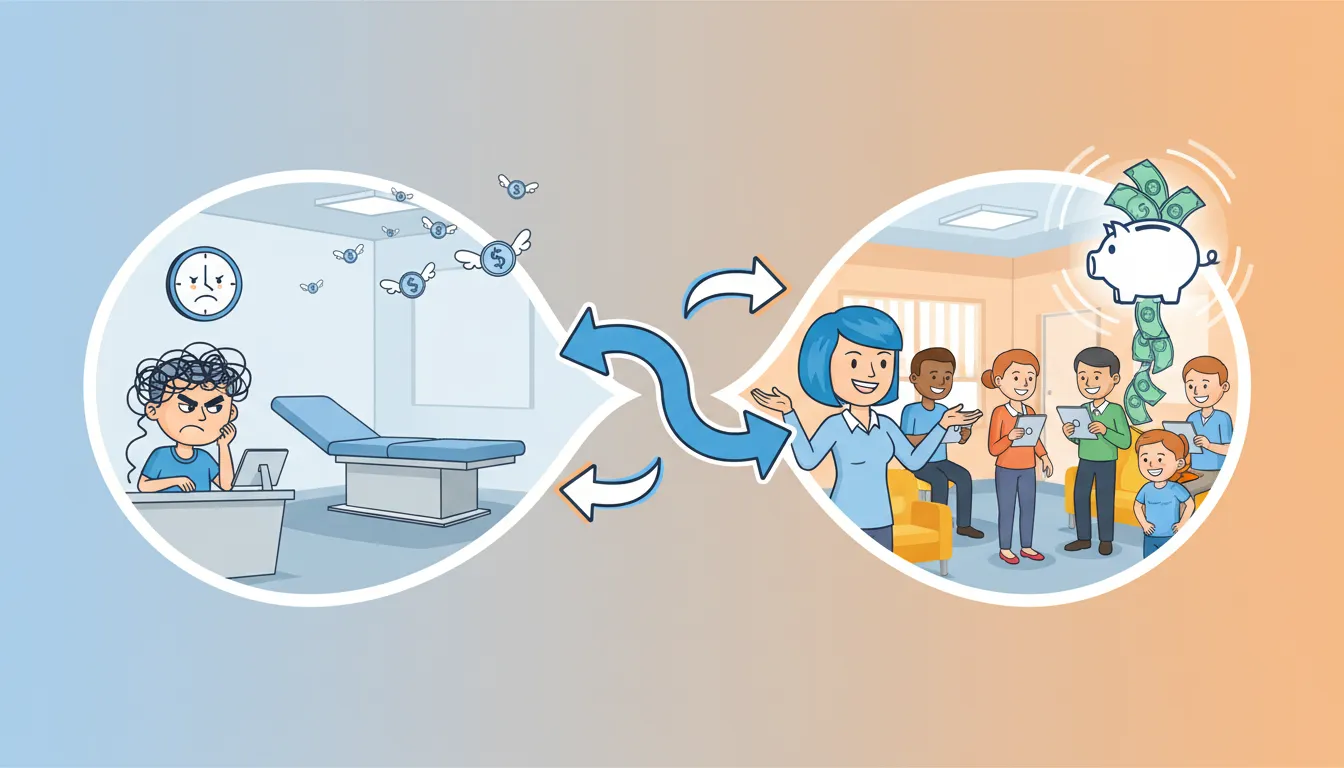
Let's talk numbers. Because until you see what no-shows actually cost, it's easy to shrug them off as "just part of the business."
Spoiler: they're not.
The Math That Should Make You Uncomfortable
If your average visit is $65 and you lose one patient per day to a no-show, that's $325 per week.
Over 50 working weeks? $16,250 gone.
Two no-shows daily? You've crossed $30,000.
Three? You're bleeding close to $50,000 per year.
And here's the kicker... your overhead doesn't stop when a patient ghosts. Rent's still due. Staff are still on the clock. That treatment room sits empty while your fixed costs keep piling up.
| 1 no-show/day @ $65 | $65 | $16,250 |
| 2 no-shows/day @ $65 | $130 | $32,500 |
| 3 no-shows/day @ $65 | $195 | $48,750 |
| 2 no-shows/day @ $100 | $200 | $50,000 |
Pretty sobering, right?
The Stuff You Don't See on the P&L
The missed appointment fee is just the obvious part.
Your front desk stops what they're doing to call, leave voicemails, and try to reschedule. That scramble pulls them away from everything else. Suddenly your whole team's rhythm is off.
Then there's the patient care angle.
Chiropractic treatment depends on consistency. When patients miss appointments, their care plans fall apart. And here's what nobody talks about... patients who fall behind often feel embarrassed about coming back.
One no-show turns into two. Two turns into "I'll just find another chiropractor."
Why Patients Actually Ghost Their Appointments
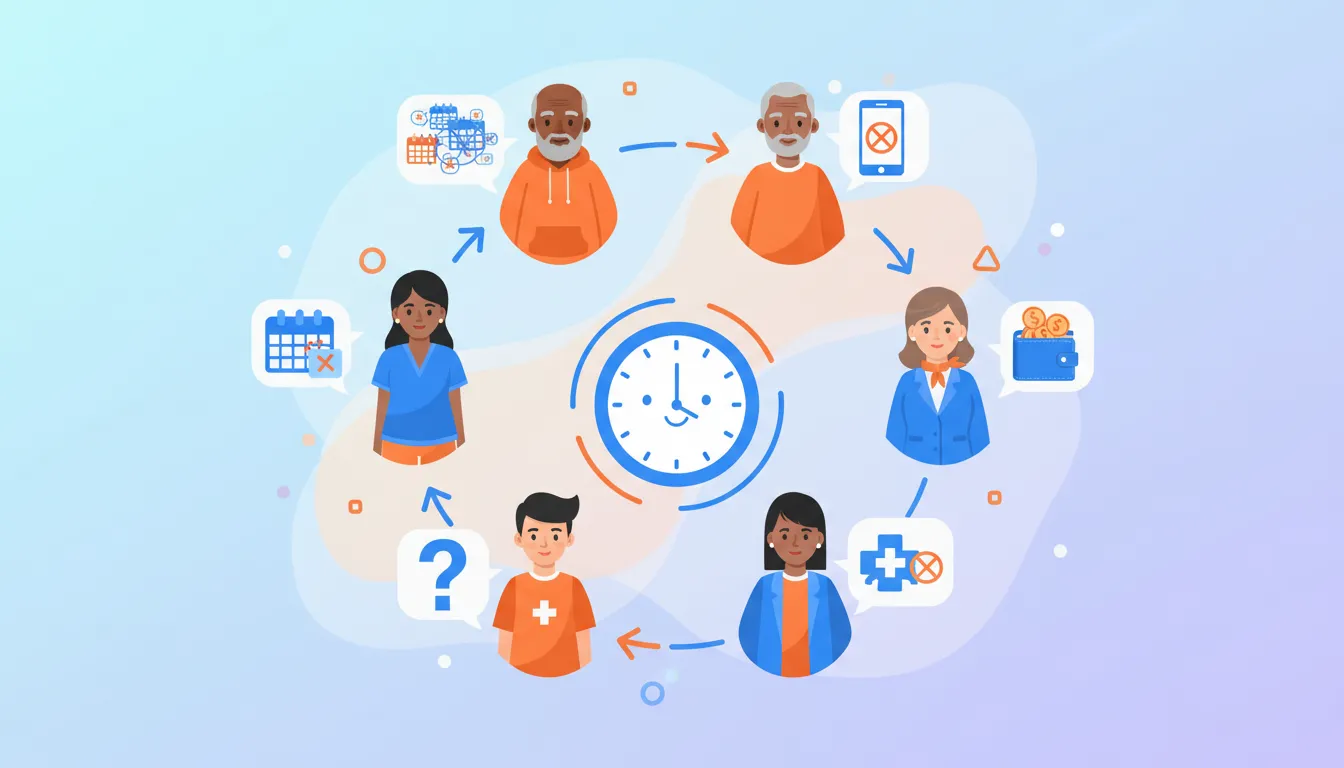
Before you can fix the problem, you gotta understand it.
And here's what most docs get wrong: patients don't miss appointments because they don't care about their health.
They Just... Forgot
This is the big one. Simple forgetfulness.
They booked two weeks ago. Work got crazy. Kids had soccer practice. That Tuesday 3 PM adjustment? Completely slipped their mind.
Practices without automated reminders see no-show rates around 16-18%. That's nearly one in five appointments vanishing because nobody jogged their memory.
Good news? This is the easiest fix. Automated reminders basically eliminate forgetfulness-based no-shows.
Rescheduling Feels Like a Hassle
Sometimes patients want to come in. They really do.
But their schedule changed, and now that appointment doesn't work. Here's the problem... if rescheduling means calling during business hours, waiting on hold, and explaining the situation to whoever answers? Many patients just ghost instead.
About 77% of patients say self-scheduling is important to them. When changing an appointment isn't dead simple, those empty slots stay empty.
Money Stuff
This one's more common than most practices realize.
Patient committed to care when finances felt stable. Then an unexpected expense hit. Car repair. Medical bill. Whatever.
The awkward conversation about payment feels uncomfortable. So instead of calling to discuss it, they just... don't show up.
They Lost the "Why"
Some patients start strong and fade.
They came in with acute pain. After a few visits, they feel better. The urgency that got them in the door? Gone.
If they don't understand why continued care matters, that adjustment appointment starts competing with everything else on their calendar. And it loses.

NEED MORE CLIENTS?
Free conversion-focused analysis uncovers the 3 biggest problems killing your bookings — we'll walk you through your results personally
Automated Reminders That Actually Work
Alright, quick reality check...
If you're not using automated reminders in 2026, you're leaving money on the table. Period.
This isn't optional anymore. It's table stakes.
Why Multi-Channel Beats Single-Channel Every Time
One reminder channel leaves gaps. Multiple channels close them.
Here's the breakdown:
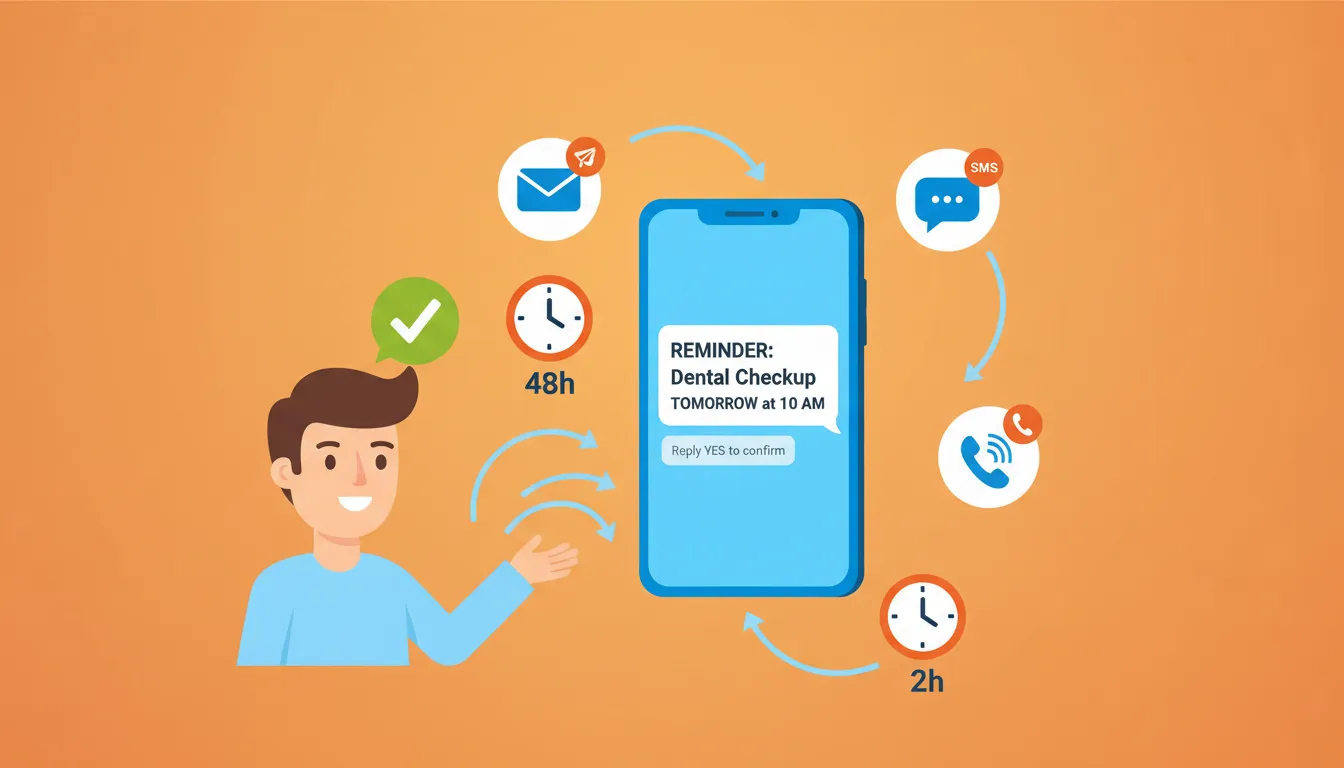
- Text Messages - 98% open rate. Most people read them within 3 minutes. This is your heavy hitter.
- Email - Lower open rates, but gives you room for details like directions and prep instructions.
- Voice Messages - Catches patients who don't check texts or email. Works great for older demographics.
Text reminders alone reduce no-shows by 29-38%. Research from Imperial College London and other academic sources confirms these numbers across multiple healthcare settings. Combine all three? Even better.
The Reminder Sequence That Gets Results
Timing matters just as much as the channel.
| 5-7 days before | Initial reminder with all the details | |
| 48 hours before | SMS + Email | Confirmation request with reschedule option |
| 24 hours before | SMS | Simple reminder, one-tap confirm |
| 2-4 hours before | SMS | Final nudge with directions |
That 48-hour mark? Super important. Gives patients time to reschedule if needed, so you can potentially fill the slot.
What to Actually Say
Keep it short. Keep it clear. Make action easy.
Bad: "Dear valued patient, this message is to remind you of your upcoming appointment at ABC Chiropractic. Please be advised that..."
Good: "Hi Sarah! Reminder: Dr. Johnson, Tue 3pm at Main St Clinic. Reply C to confirm, R to reschedule."
See the difference? One sounds like a robot. The other sounds like a human.
Tools That Handle This For You
Your practice management software probably has reminder features built in. Question is whether you're actually using them.
ChiroTouch offers CT Engage for automated text and email campaigns. Noterro has clinic-branded apps with built-in reminders. Jane App and ChiroSpring both have solid options too.
If your current system's lacking, third-party tools like DemandHub can integrate with most platforms.
The ROI on this stuff is basically instant. One saved no-show pays for a month of software.
Online Self-Scheduling: The Game Changer
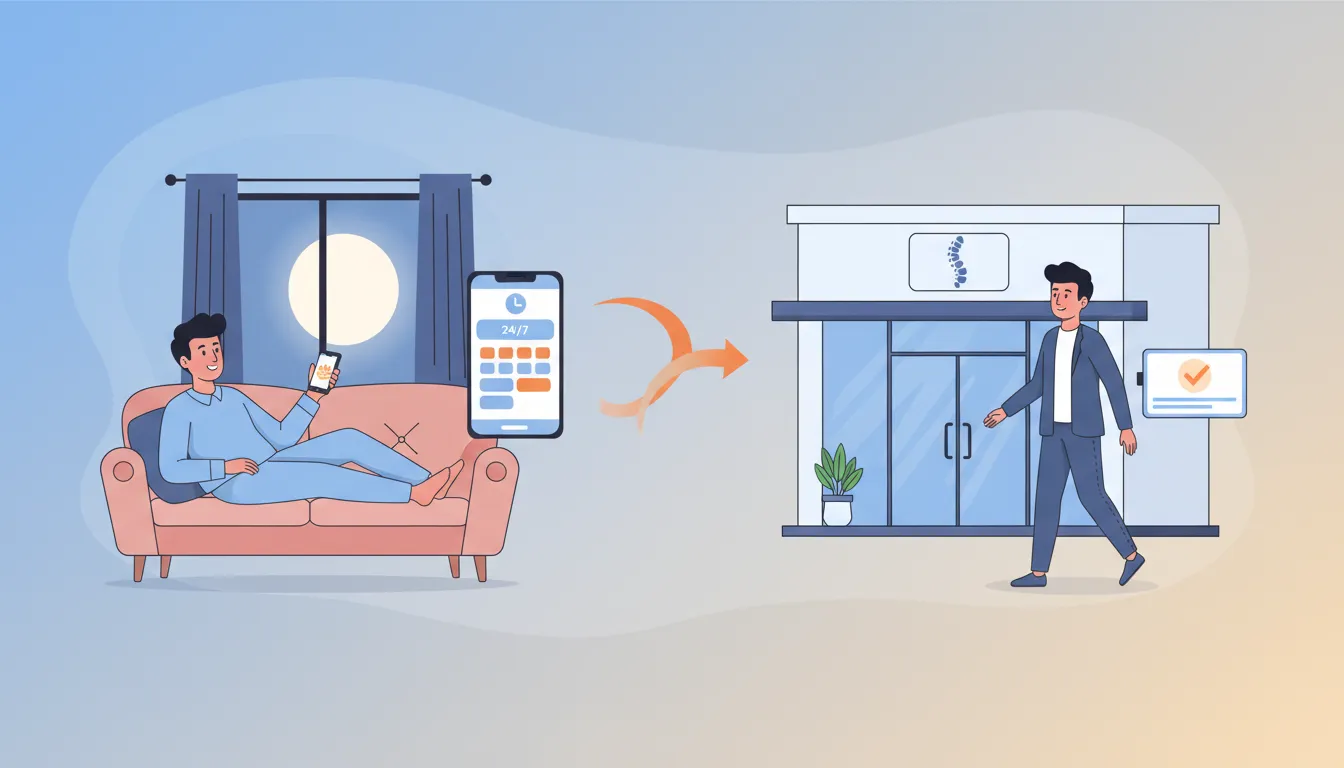
If automated reminders are the foundation, online scheduling is what takes things to the next level.
Here's something wild... patients who book their own appointments are way more likely to actually show up.
Why It Works
When patients call your office, they usually just accept whatever slot you offer. They're trying to get off the phone.
When they self-schedule? They're looking at their own calendar, actively choosing a time that actually works. No pressure. No settling.
One study found online-booked appointments had a no-show rate of just 1.8%. Phone-booked? 5.9%.
That's not a small difference.
The Numbers Don't Lie
- 67% of patients prefer online booking over phone calls
- 80% prefer docs who offer online scheduling
- 40% of appointments get booked after business hours (when nobody's answering your phone)
- 92% of Baby Boomers would use self-scheduling if available (yeah, it's not just a millennial thing)
Practices offering both online and phone scheduling see 24% more bookings than phone-only practices. Healthgrades research shows patients will even choose providers who are farther away if they offer online scheduling.
That's revenue you're currently missing.
What to Look For
Not all online scheduling is created equal.
You want:
- Real-time availability that syncs with your actual calendar (not those "request an appointment" forms that staff have to process)
- Mobile-friendly because most people book from their phones
- Easy rescheduling that doesn't make patients start over
Integration with your EHR is critical. If online bookings don't automatically populate your schedule, you've just created more work.
Most modern chiropractic platforms include this. If yours doesn't, might be time to look at options that help you scale your chiropractic practice in 2025.
Shorter Booking Windows = Fewer No-Shows
Here's a counterintuitive one...
Same-day appointments have no-show rates around 2%. Appointments booked 15+ days out? Around 33%.
The further out someone books, the more life can interfere.
So offer more same-day and next-day availability when you can. Use waitlists to fill last-minute openings.
Digital Intake Forms as Commitment Builders
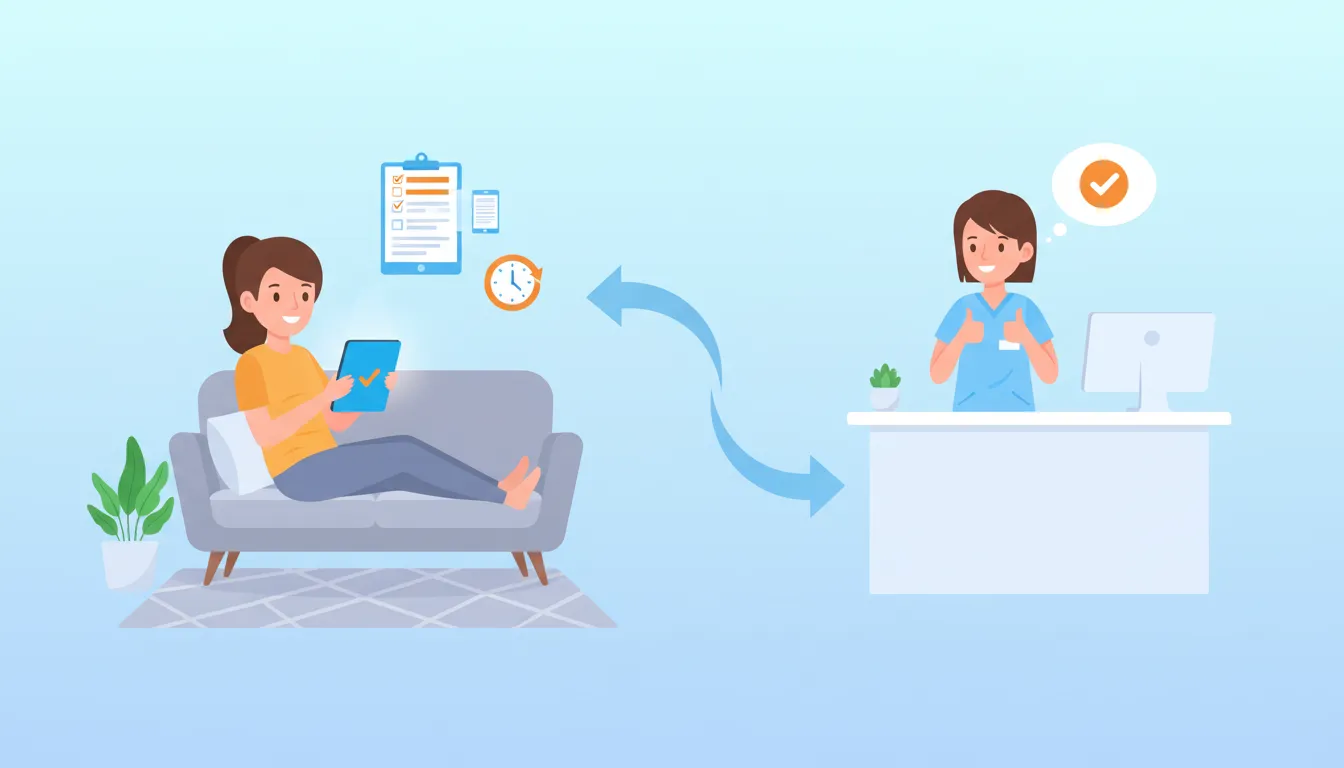
This one flies under the radar, but it's legit.
Digital intake forms don't just cut paperwork. They make patients more likely to show up.
The Psychology Behind It
When patients invest time in something, they're more likely to follow through.
Filling out intake forms before an appointment creates commitment. They've already taken action toward that visit. Skipping now would mean that time was wasted.
It's subtle. But it works.
Plus, digital intake serves as another touchpoint reminding patients about their appointment. And it kills the "I don't have time for paperwork" excuse.
How to Do It Right
Send intake forms 2-3 days before the appointment. Give people time to complete them without rushing.
Make sure they're:
- Mobile-friendly (most patients will fill them out on their phones)
- Appointment-type specific (only show relevant questions)
- Integrated with your EHR (so data flows automatically, no manual entry)
Here's the thing... 92% of patients actually prefer completing forms online rather than in-person. You're not asking them to do something they don't want. You're giving them what they already want.
ChiroTouch users can leverage CT InForms. Noterro has clinic-branded apps. Most major EHR systems have some version of this now.
Ready to See How We Fix Chiropractic Websites?
We've transformed 150+ service-based websites using our proven 4-step system. See exactly how we combine premium design with conversion science.
Creating a No-Show Policy That Doesn't Scare People Off
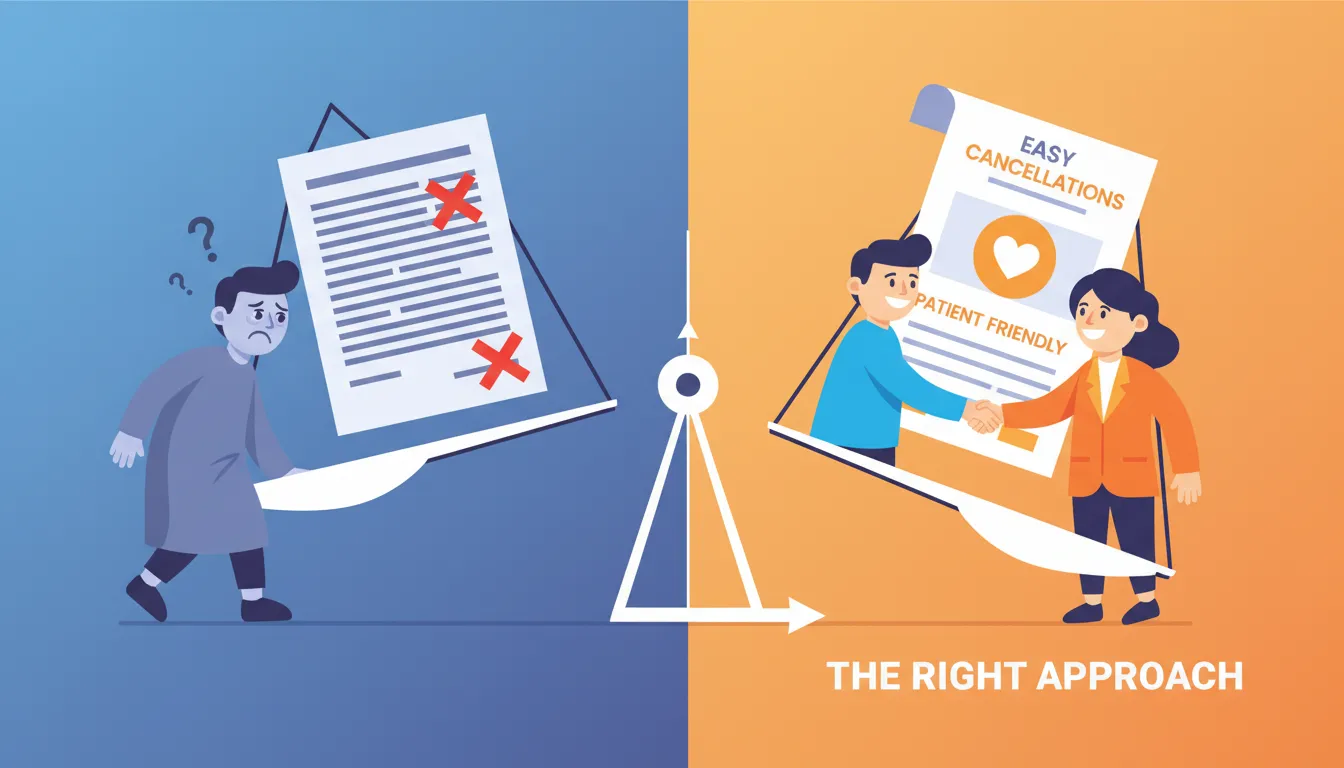
You need a no-show policy. Full stop.
But how you frame it determines whether it protects your practice or drives people away.
The "One-Time Grace" Approach
Here's what works: firm structure with compassionate flexibility.
First no-show? Reach out with concern, not frustration. "We missed you today. Is everything okay?"
Reschedule them. Communicate the policy for next time. Move on.
After that grace period? Apply your policy consistently. Patients understand and respect fair boundaries.
Words Matter
Skip the punitive language. No "failure to appear" or "patients who miss appointments will be charged."
Instead, try something like:
"To ensure we can serve all patients effectively, we ask for 24 hours notice if you need to reschedule. Life happens, so your first missed appointment is on us. After that, a $50 fee helps us maintain scheduling that works for everyone."
See the difference? It explains the why, offers grace, and sets expectations without sounding like a legal threat.
Fee Guidelines
| Solo practice | $25-50 |
| Multi-provider | $35-75 |
| Specialty services | $50-100 |
The goal isn't making money from fees. It's preventing no-shows through accountability.
Communicate fees everywhere: during intake, in confirmations, on your website. No surprises.
And build in flexibility for legitimate emergencies. The patients who abuse the policy are usually obvious. The ones who occasionally need grace? Those are your regulars.
AI and Practice Management Tech in 2026

The tech landscape has shifted big time. AI-powered tools now handle stuff that used to require dedicated staff.
Documentation Burden Affects No-Shows (Seriously)
Here's something most practices don't think about...
When you're drowning in SOAP notes, patient communication suffers. Follow-up calls don't happen. Engagement drops. And disengaged patients are no-show-prone patients.
AI documentation tools like ChiroTouch's Rheo are changing this. Early users report up to 92% time savings on charting. That's not just efficiency. That's time you can spend actually connecting with patients.
Predictive Analytics (Yes, It's Real Now)
Some systems can now predict which patients are likely to no-show.
They look at things like:
- How far out the appointment was booked
- Past attendance history
- Whether they responded to reminders
- Day and time patterns
When the system flags a high-risk appointment, you can proactively reach out. Extra reminder. Personal call. Whatever it takes.
The Integrated Stack
The most effective no-show prevention combines multiple pieces working together:
- Patient books online
- Digital intake form goes out 3 days before
- Automated reminders fire at 48h, 24h, and 2h
- No confirmation? System flags for personal outreach
- Cancellation? Waitlist automation contacts backups
When these pieces talk to each other, gaps fill automatically. Nothing falls through the cracks.
If you're evaluating your tech, the best chiro CRM software for 2025 offers this kind of unified approach.
Waitlist Automation: Fill Holes Fast
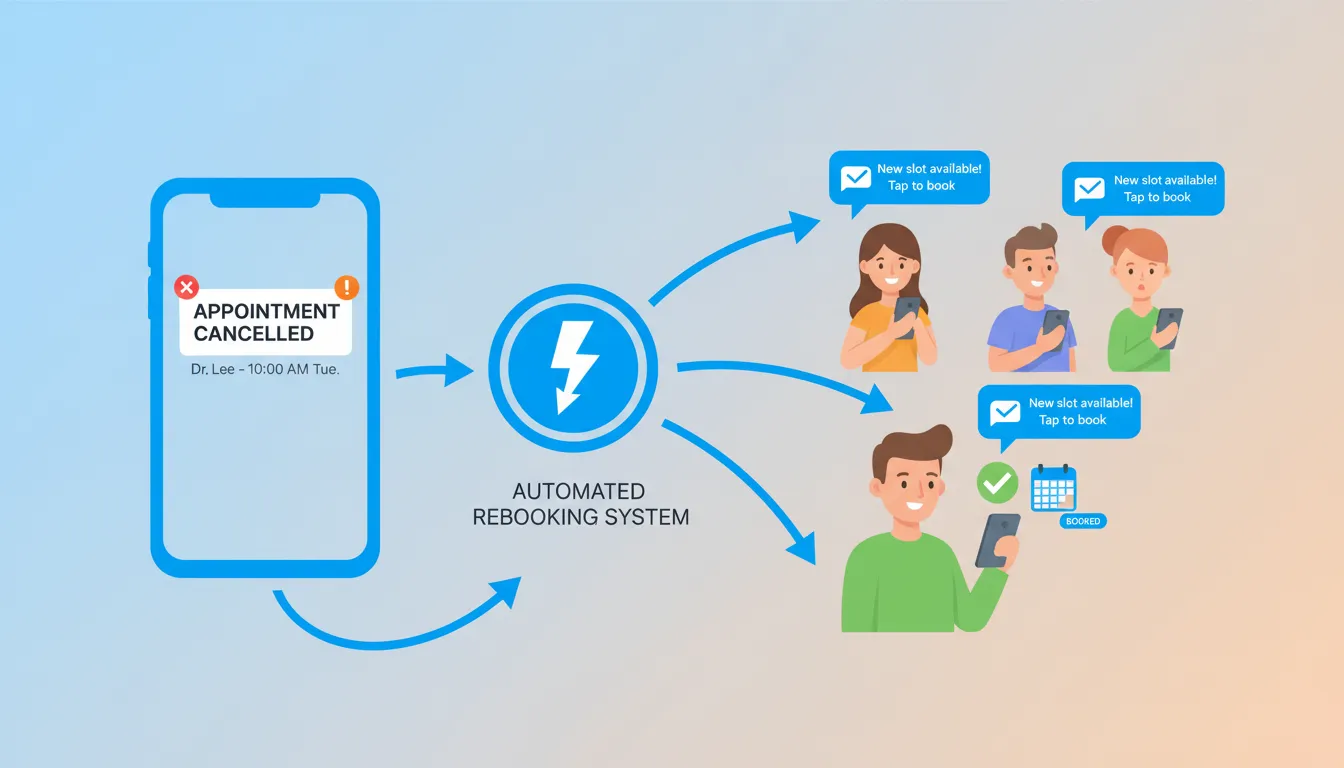
Cancellations happen. What matters is how fast you can fill the gap.
How It Works
Patient cancels → System automatically texts everyone on your waitlist → First person to confirm gets the slot → Calendar updates automatically.
Speed is everything here. The first hour after a cancellation is your best shot at filling it. Manual processes can't compete with automation that contacts ten people simultaneously in seconds.
Building Your Waitlist
Train your front desk to offer it naturally:
"Your preferred time isn't available right now, but I can add you to our waitlist for Thursday mornings. If something opens up, you'll get a text immediately."
Add patients whenever they request a time that's booked or mention they're flexible.
ChiroSpring includes waitlist management in their core scheduling. Most modern systems have some version of this now.
Reactivation: Don't Let Patients Disappear
No-show prevention isn't just about upcoming appointments. It's about keeping patients from vanishing entirely.
The 30-Day Warning Sign
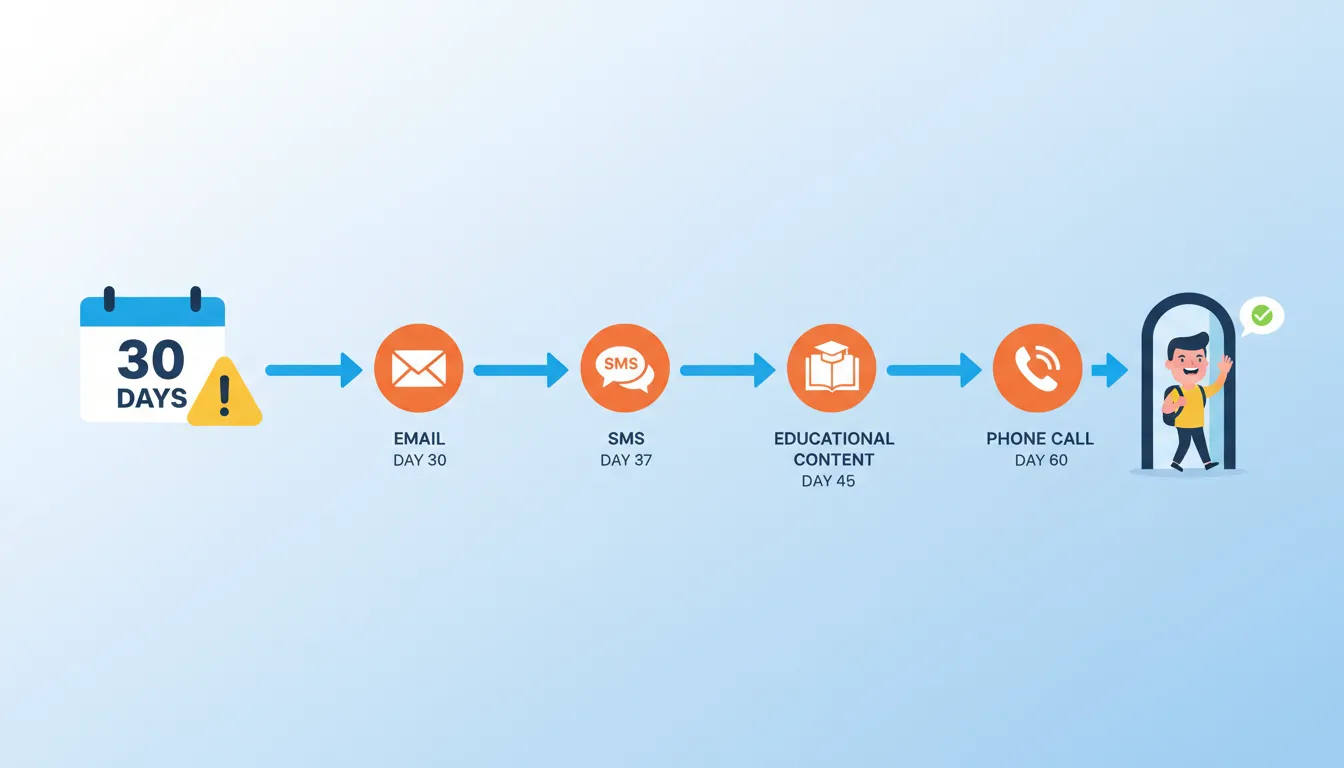
When someone hasn't been in for 30+ days with nothing scheduled, they're at high risk of dropping off completely.
This is your window for proactive outreach.
Your reactivation sequence should kick in automatically:
"Hi [Name], it's been a while since your last visit. Just checking in to see how you're feeling. Ready to get back on track?"
The Sequence That Works
| 30 | Warm check-in with booking link | |
| 37 | SMS | Brief "we miss you" message |
| 45 | Educational content about their condition | |
| 60 | Personal Call | Direct outreach for high-value patients |
Sometimes patients drift because they forgot why continued care matters. Reminding them of the benefits can reignite their commitment.
This connects to broader strategies for improving chiropractic patient engagement.
Tracking Your Numbers
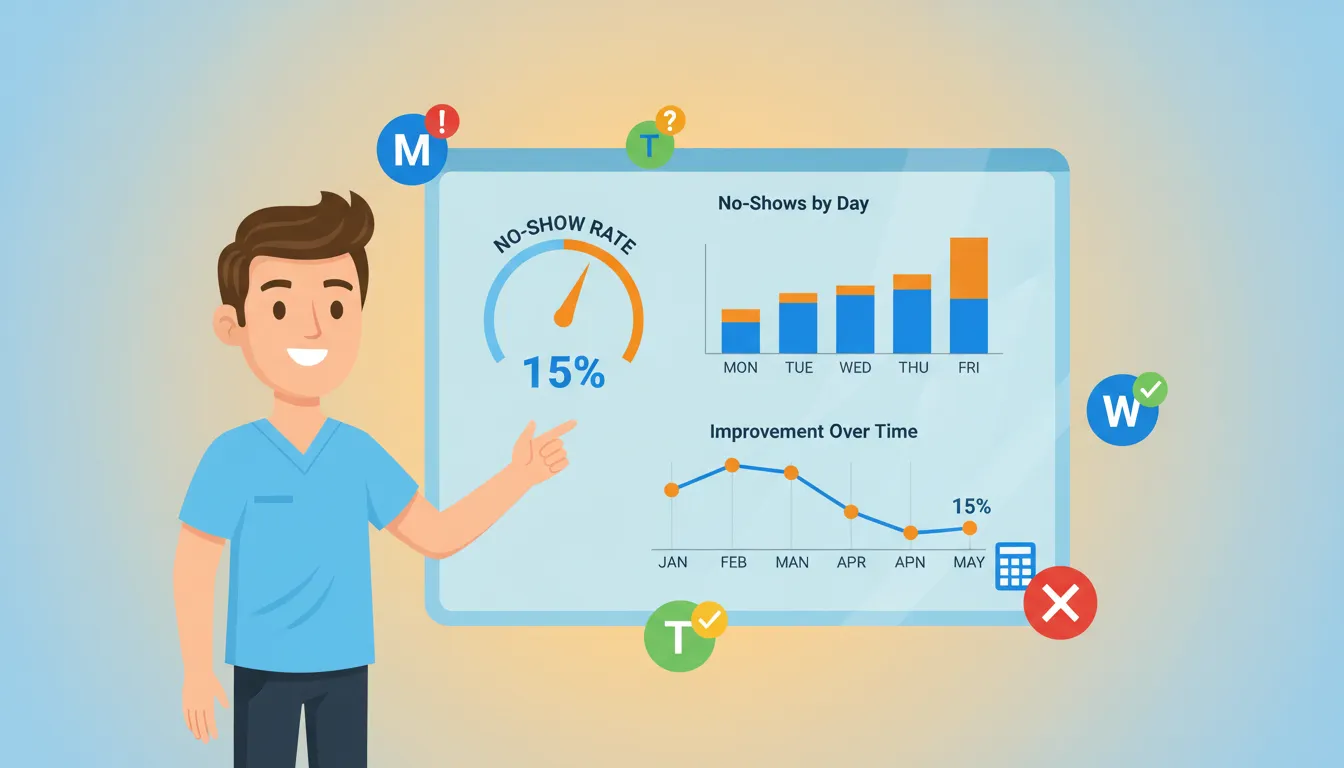
You can't improve what you don't measure. Sound fair?
Calculate Your Baseline
No-Show Rate = (No-Shows ÷ Total Scheduled Appointments) × 100
| Under 5% | Excellent. Maintain what's working. |
| 5-10% | Good. Room for optimization. |
| 10-15% | Average. Time to implement more strategies. |
| Over 15% | Needs immediate attention. |
National healthcare average is around 18-23%. Practices with solid systems typically hit under 5-10%.
Dig Into the Patterns
Don't just track the overall rate. Look for patterns by:
- Day of week (Mondays and Fridays are often worse)
- Time of day
- Provider (in multi-doc practices)
- Appointment type
- Booking lead time
These patterns tell you where to focus. If Tuesday afternoons are brutal, add extra reminder touches for those slots.
Tracking chiro growth with dashboards makes the invisible visible.
Frequently Asked Questions
How do I write a chiropractic no-show policy that doesn't upset patients?
Frame it around mutual respect, not punishment. "To ensure we can serve all patients effectively..." sounds way better than "patients who fail to appear will be charged."
Offer a one-time grace for first offenses. Communicate the policy during intake and in confirmations. Most patients respond well when they understand the policy protects appointment availability for everyone.
What is the average no-show rate for chiropractic clinics?
Typically 5-20%, depending on systems. Practices without automated reminders run 16-18%. Well-optimized practices with multi-channel reminders often hit under 5%.
Track your own numbers. Your baseline matters more than industry averages.
Should I charge a fee for the first missed appointment?
Most successful practices offer a one-time grace. Maintains goodwill while setting expectations.
After that? Apply fees consistently. $25-75 is typical. The goal isn't revenue from fees—it's behavior change.
Is a text or phone call better for reminders?
Text. By a lot.
SMS has a 98% open rate and reduces no-shows by 29-38%. Phone calls require staff time and usually hit voicemail anyway.
Best approach? Combine email for initial details, SMS for confirmation and final reminders, phone only for unresponsive patients.
How can I fill last-minute cancellations automatically?
Automated waitlist systems. When a cancellation happens, the system texts everyone on your waitlist instantly. First to confirm gets the slot.
Build your waitlist proactively by offering it whenever someone's preferred time isn't available.
Can AI predict which patients will no-show?
Yep. Emerging systems analyze booking lead time, attendance history, and reminder responsiveness to flag high-risk appointments.
When flagged, you can intervene with extra reminders or personal outreach. Ask your EHR vendor about their roadmap here.
Do digital intake forms really help?
They do. Completing forms creates psychological commitment. Plus they serve as another reminder and reduce arrival anxiety.
Patients who complete intake in advance are significantly more likely to show up.
How do I ask for a deposit without it being weird?
Frame it as convenience, not distrust.
"We're now offering the option to secure your preferred time slot with a deposit that applies directly to your visit."
Keep it reasonable ($25-50) and communicate your refund policy clearly. Most patients actually appreciate the commitment it creates.
Your No-Show Prevention Roadmap
Reducing no-shows isn't about finding one magic bullet. It's about building a system where multiple strategies work together.
Start with the highest-impact changes first.
Not using automated reminders? That's priority one. The 29-38% reduction from SMS reminders alone usually beats everything else combined.
Once that's handled, turn on online self-scheduling. Then deploy digital intake forms. Then dial in your no-show policy.
Each layer reduces no-shows incrementally. A practice implementing all of this typically sees 50-70% total reduction from their baseline.
The math makes sense. If you're losing $30,000 annually to no-shows and cut that by half, you've recovered $15,000. That more than covers any system upgrades.
Your patients want to show up. Your job is to remove the barriers stopping them.
Look, I get it. This all makes sense, but finding time to actually implement it? That's the hard part when you're already stretched thin running a practice.
That's why we created our Free Website Conversion Analysis. It's not a sales pitch—it's a genuine walkthrough of the 3 biggest problems killing your bookings, delivered personally via Loom video within 24 hours.
We'll show you exactly:
- Why visitors leave without booking
- What's broken on mobile (where most searches happen)
- Missing trust signals costing you patients
- Where you rank vs. local competitors
- Simple fixes that drive more calls this month
You'll also get an instant case study showing real examples of how other chiropractors fixed these exact problems.
Get your free analysis here — no credit card, no obligation, just actionable insights you can use whether you work with us or not.
Because every day your practice leaks revenue to no-shows is another day competitors are running smoother operations while you're scrambling to fill empty slots.

Gerek Allen
Co-Owner iTech Valet
Entrepreneur, patriot, CrossFit junkie, IPA enthusiast, loves to travel to tropical destinations, and knows way too many movie quotes.


About iTech Valet
iTech Valet specializes in web design and content marketing for online entrepreneurs who want to share their expertise.
Services Include:
- Web Design
- Graphic Design
- Sales Copy
- Funnel Building
- Authority Sites
- Membership Sites
- Course Creation
- Email Systems
- Content Marketing
- Competitive Analysis
- Tech Integrations
- Strategic Planning
NEED MORE CLIENTS?
Free conversion-focused analysis uncovers the 3 biggest problems killing your bookings — we'll walk you through your results personally

621 Enterprises, Inc. | Copyright 2022 | All rights reserved