
ABCS helps ACA-recognized specialty councils and specialty certification boards in their work to make the way chiropractors are checked and certified good and efficient. Its recognition gives a fair, outside check that a certification program has met accepted national and international standards for building, running and keeping up the credential. In a JAMA Network Open survey, the median willingness to travel time was 67.5 minutes for primary care, 127.5 minutes for specialty care, and 112.5 minutes for a one-time diagnostic appointment. Most respondents would travel at least 1 hour for primary care (60.3%), specialty care (84.4%), or one-time diagnostic care (82.5%). Before a company runs an ad, the FTC says it has to have a “reasonable basis” for its claims.
Patients Already Accept Longer Drives for Specialty Care
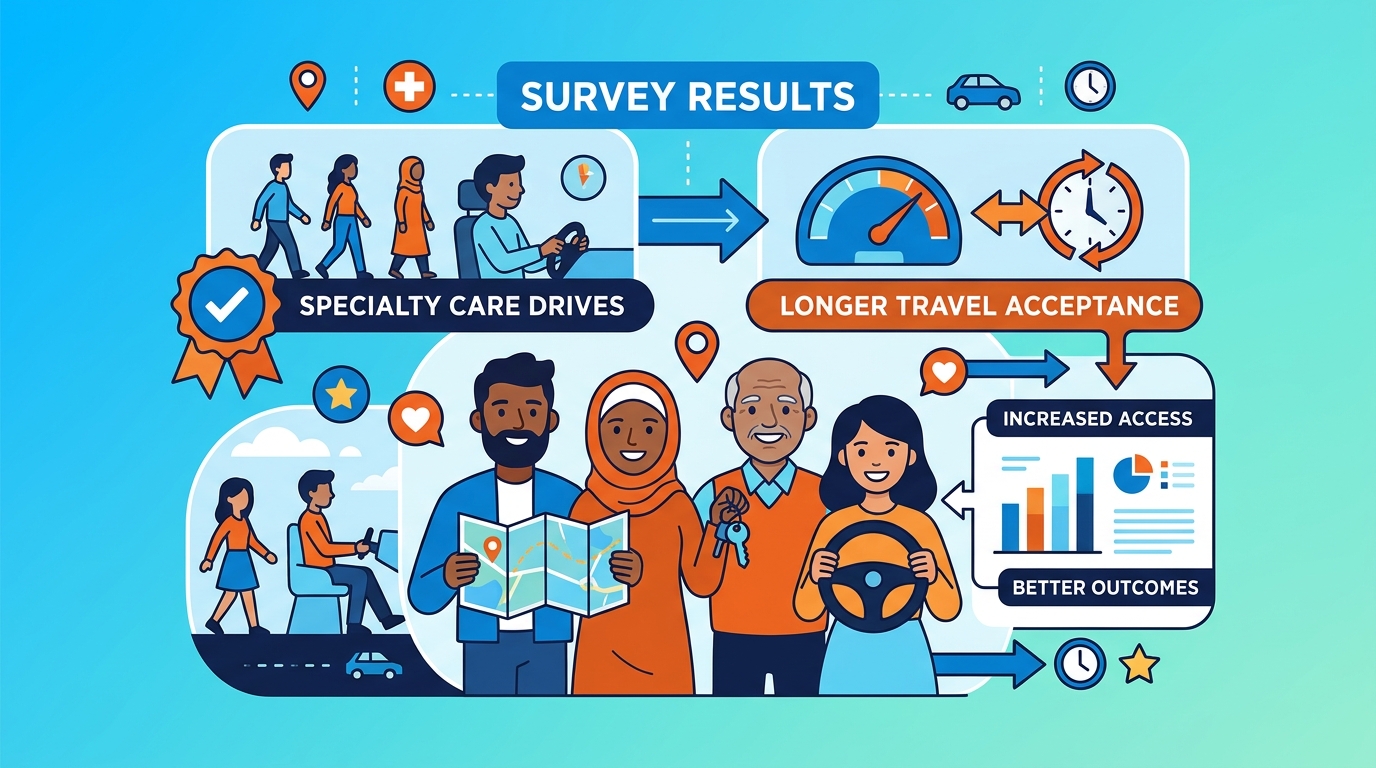
Here’s what a JAMA Network Open survey found.
It asked people how long they’d travel for care. For primary care, the median answer was a little over an hour (67.5 minutes). The IQR ran from 37.5 to 112.5 minutes.
For specialty care, the median was 127.5 minutes, about two hours, with an IQR of 67.5 to 232.5 minutes. For one-time diagnostic appointments, it was 112.5 minutes, nearly two hours, with an IQR of 67.5 to 202.5 minutes.
Now look at who’d make the drive.
Most respondents would travel at least 1 hour.
About six in ten said so for primary care (1,597 people, or 60.3%). More than eight in ten said so for specialty care (2,237 people, or 84.4%). About eight in ten said so for one-time diagnostic care (2,185 people, or 82.5%).
These shares count everyone at or past a 1-hour cutoff. The minutes above are medians. The middle answer.
Here’s what I want for you.
I want your practice to be the specialist an AI tool names and draws on. Not one more listing in a directory.
I build for being relied on over being present. The named specialist is the one I’d want a patient driving to.
How Far Will AI Tools Say a Patient Should Travel for Care? looks at how AI tools handle distance.
Which Chiropractic Board Certifications Back a Specialty Claim
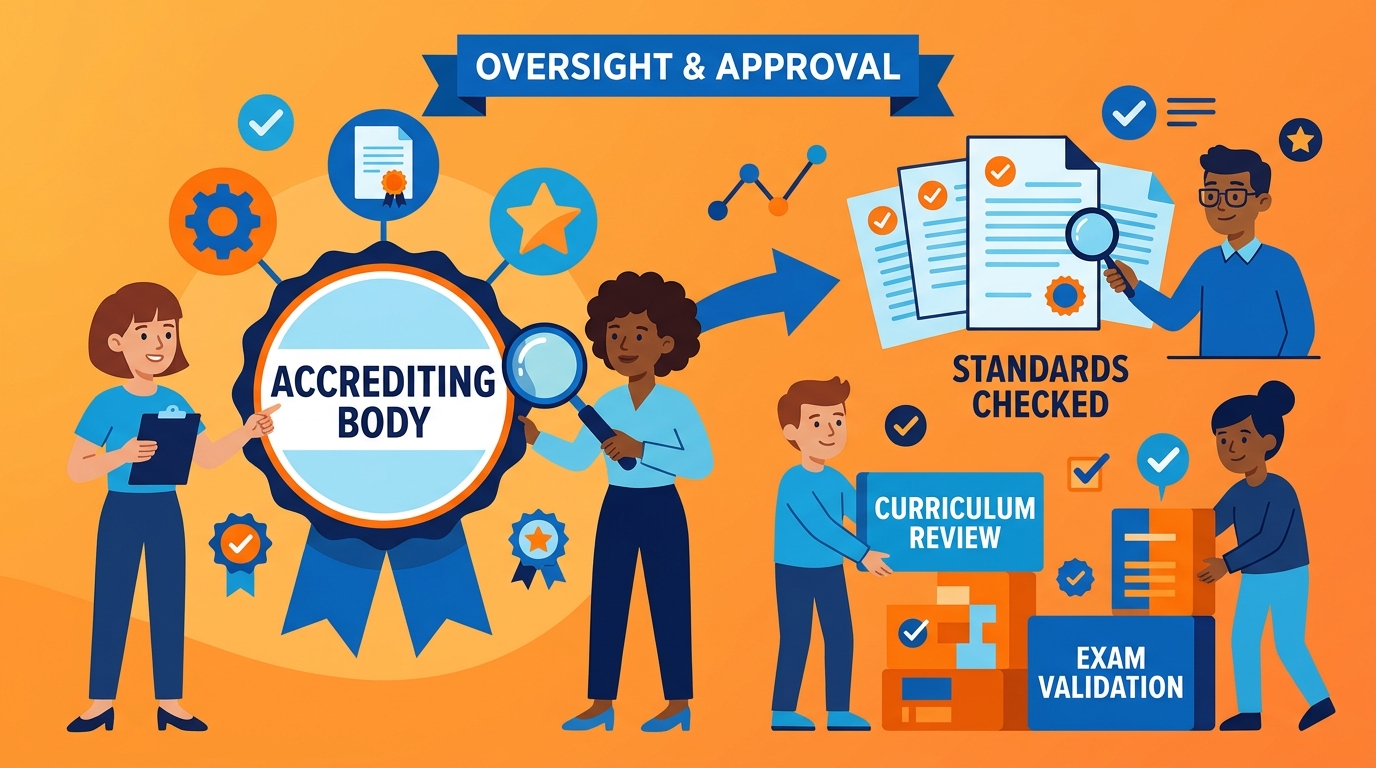
Start with who checks these programs.
The American Chiropractic Association (ACA) explains it on its page for the American Board of Chiropractic Specialties – ACA Today.
ABCS helps ACA-recognized specialty councils and specialty certification boards. Their goal is quality and efficiency in how doctors of chiropractic are evaluated and certified.
ABCS recognition for Chiropractic Specialty Certification Agencies is an impartial, third-party check.
It shows the certification program met recognized national and international credentialing industry standards.
Those standards cover building, running and keeping up the credential.
Here’s what’s on the ACA list:
- American Board of Chiropractic Acupuncture Diplomate (DABCA)
- American Board of Chiropractic Internists Diplomate (DABCI)
- American Chiropractic Board of Occupational Health Diplomate (DACBOH)
- American Chiropractic Rehabilitation Board Diplomate (DACRB)
- American Chiropractic Board of Sports Physicians Diplomate (DACBSP)
What Each Specialty Certification Requires
Sports Physician Certifications
Start with who’s behind it.
The American Chiropractic Board of Sports Physicians started in 1980.
Wikipedia’s page on the board says it certifies chiropractors working in sports medicine. They’ve finished one of two paths. A certification program (Certified Chiropractic Sports Physician). Or a post-doctoral degree program (Diplomate of the American Chiropractic Board of Sports Physicians).
Here’s how the first path works.
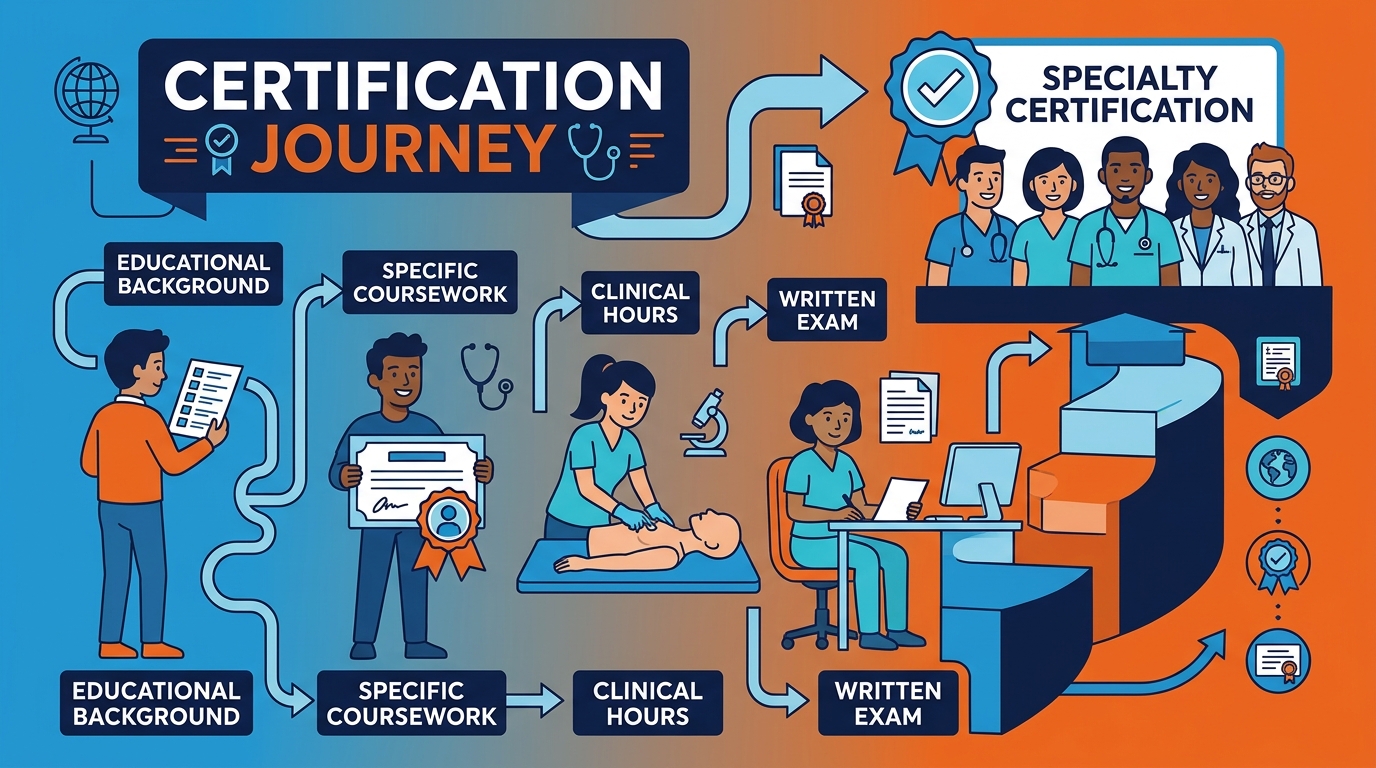
The Certified Chiropractic Sports Physician (CCSP) certification is a one-year postgraduate course. You take it at centers around the country. In weekend programs.
It’s 12 weekend classes and a Board exam.
The Diplomate level takes 3 years of those classes. And a more complete exam.
Now the sequence.
A note in the Journal of Chiropractic Education’s Board Certification Programs in the US (Table 3) lays it out.
You first have to finish the Certified Chiropractic Sports Physician certification. Then you need one of three things. 200 more hours of postgraduate education. A master’s (MS) degree in sports medicine or a related field. Or a sports medicine residency program.
One number in that table is a guess.
Another note marks it as an estimate. It’s based on the rule that a 3-year residency must be finished.
Other Listed Certifications
The U.S. Department of Labor keeps a list too. Certifications for Chiropractors.
Two of them stand out.
The Certified Chiropractic Sports Physician, from the American Chiropractic Board of Sports Physicians. And the Diplomate of the American Chiropractic Neurology Board, from the American Chiropractic Neurology Board.
Requirements Side by Side
The table lines up each requirement. Exactly as its source states it.
| Certification | Requirement |
|---|---|
| DACBR (radiology) | An estimated figure, based on the mandatory 3-year residency |
| Certified Chiropractic Sports Physician (CCSP) | One postgraduate year: 12 weekend classes plus a Board exam |
| Diplomate of the American Chiropractic Board of Sports Physicians | 3 years of such classes plus a more comprehensive exam |
| DACBSP (Journal of Chiropractic Education note) | CCSP first, then 200 more postgraduate hours, an MS in sports medicine or a related field, or a sports medicine residency |
The Accuracy and Substantiation Standards a Specialty Claim Must Meet
What the FTC Expects
Here’s what most people miss.
The FTC says the customer decides which claims your marketing makes.
Not you. It comes down to what reasonable consumers understand your ads or marketing to say about the product.
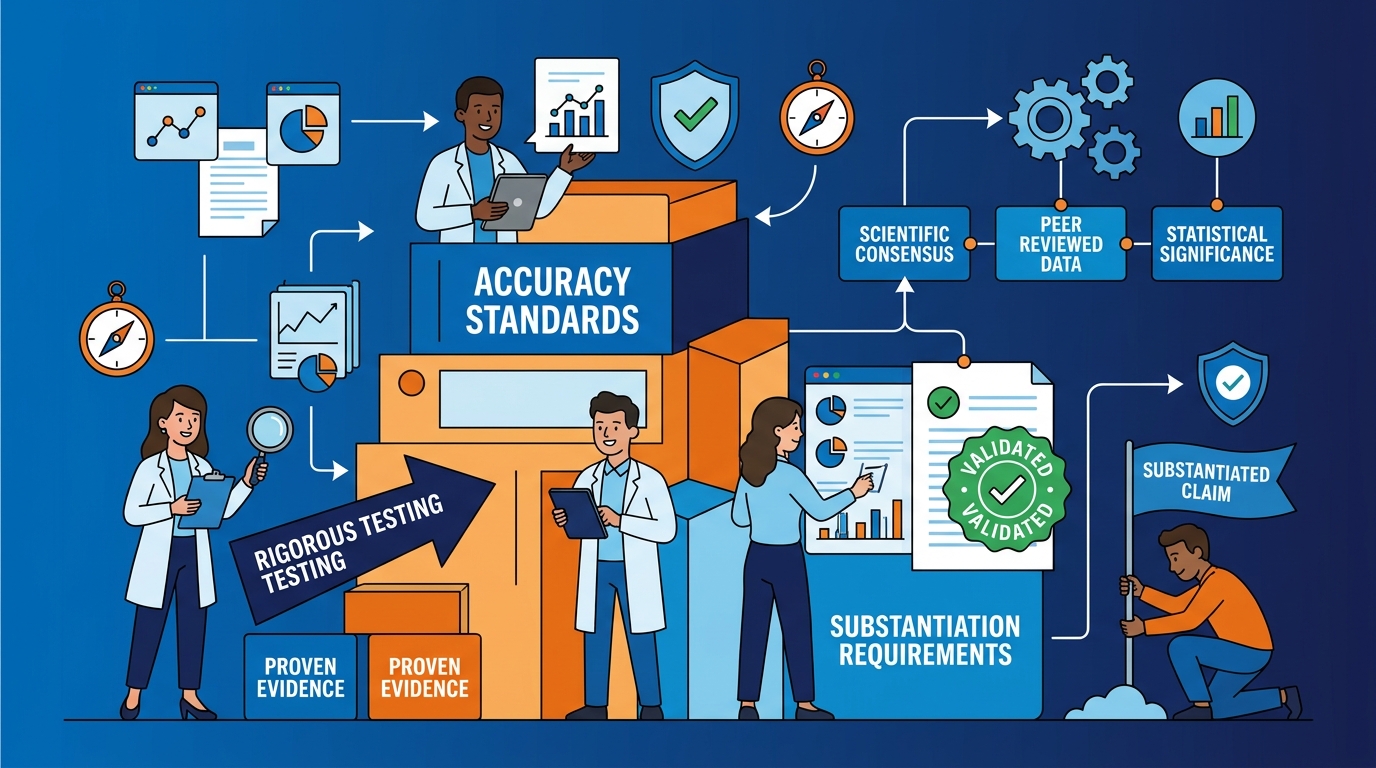
Before a company runs an ad, it has to have a “reasonable basis” for the claims. As a general rule, claims about the health benefits or safety of foods, dietary supplements, drugs, and other health-related products need substantiation in the form of competent and reliable scientific evidence.
What Google Expects
For topics that could greatly affect people’s lives or well-being, called YMYL topics, Google says the content must be highly accurate. It must also match established expert consensus. Google’s automated ranking systems are built to put helpful, reliable information made to benefit people first, not content made to manipulate search engine rankings.
Where I Put the Effort
Here’s where I put my effort.
I don’t chase keywords, inbound links or ranking position for a specialty claim.
I treat getting picked by an AI answer tool as its own discipline. Not old-school search work with a new name.
I work on the view that these systems are trying to figure out who a business is. And whether it’s credible. So I make that easy for them.
I back each specialty claim with a real credential. I never swap in a keyword-stuffed claim.
Want the proof side? What Proof Convinces AI to Recommend an Out-of-Town Clinic? covers it.
Frequently Asked Questions
How many chiropractic board certification programs exist in the US?
- That’s how many board certification programs exist in the US. It comes from the Journal of Chiropractic Education table of board certification programs.
What standard do ABCS specialty certifications follow?
They follow ABCS standards. ABCS says those standards name the key parts of high-quality specialist programs in the chiropractic profession. They’re also consistent with The Standards for Educational and Psychological Testing (AERA, APA, & NCME, 1999).
Is the American Chiropractic Board of Sports Physicians independently accredited?
Yes. On October 31, 2006, the National Commission for Certifying Agencies (NCCA) granted it accreditation. The board showed it met the NCCA Standards for the Accreditation of Certification Programs.
Can the agency that writes a practice’s ads be held responsible for its claims?
It can. The FTC says that, in addition to the advertiser, the advertising agency also may be held legally responsible for misleading claims in ads. Advertising agencies have a duty to make an independent check on the information used to substantiate ad claims. They may not rely on an advertiser’s assurance that the claims are substantiated.
Get Your Specialty Claims Seen by AI
Here’s when a longer drive makes sense.
A specialty claim rests on a credential a board stands behind. And it has a reasonable basis behind it.
When we talk about building your authority, we describe it as the work we put in. Not as results we promise.
The iTech Valet Service Plans & Pricing page explains how that work is done.
Here’s where I put a practice’s effort and money.
Into claims built on credentials it owns.
Clear, credible facts about your practice are an asset. They keep paying off. They grow over time.
Visibility bought with ads or paid placements is rent. The spending stops. So does the visibility.
Run My AI Visibility Check to see what AI tools say about your practice today.