
Why Rented Visibility Feels Safe But Never Stops Costing You

Here's the default: most businesses treat online visibility like rent, a monthly bill they just keep paying. And that framing feels safe because it's familiar. It's also the exact mindset that keeps you paying forever and owning nothing.
Rented authority is anything where your visibility dies the second you stop paying. Pay-per-click ads count. So does thin, retainer-based traditional search optimization that never leaves you a durable, citable asset behind.
That arrangement felt fine under classic search, where a paid spot or a keyword-targeted article could hold its place for a good while. It doesn't hold up under AI-driven answer engines. The move from traditional search results to AI-generated answers has changed the whole financial equation of being visible online — because these systems cite entities with sustained authority signals, not rented space with an expiration date baked in.
Businesses feeling this firsthand are asking a harder question about the cost structure behind authority infrastructure, because the rental math just doesn't pay like it used to. And that question deserves a real answer before another retainer renews.
Why the Retainer Model Was Built to Never Finish

Here's the thing about the retainer model: it was never built to reach a finish line. It was built to renew.
And that's not some accident of pricing. It's the structural design of a business that only survives if the client never fully owns the outcome.
A monthly invoice for thin traditional search optimization work doesn't build anything that lasts once the relationship ends. You're buying another thirty days of attention, and then the meter resets to zero.
The Mechanics of a Retainer That Resets to Zero
So every retainer cycle starts from the same baseline it started from last month. Nothing carries forward. No equity, no accumulation, no ground gained.
Let's name the mechanism directly. A retainer built around ongoing tasks, instead of a durable published asset, has no reason to ever produce a stopping point — because stopping means the payments stop too.
That's why businesses are starting to track what their spending actually produces over time. A monthly line item that never turns into owned infrastructure is tough to defend the second someone asks about the return. And the honest answer, more often than not, is nothing durable at all.
Who Gets Hurt When Visibility Never Accumulates
The businesses hurt worst are the ones that trusted this model longest. Years of retainers should've built a growing library of citable authority. Instead they've got a folder of invoices and a visibility position that dies the day the contract does.
And this is where the ledger metaphor gets impossible to ignore. Every one of those payments dropped into the rental column, appreciating nothing, while a compounding authority asset sat there the whole time and never got built.
What Actually Turns Content Into a Compounding Asset
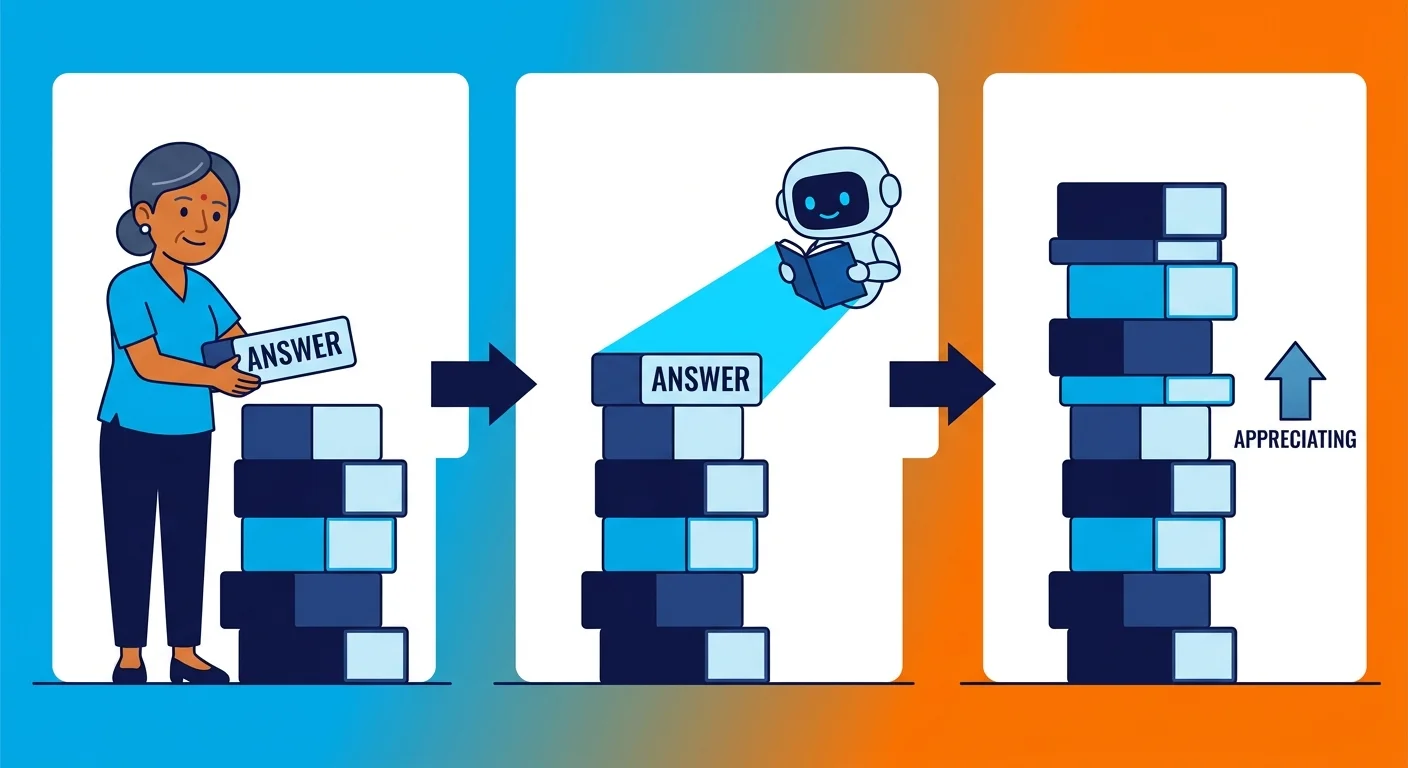
So what makes an asset appreciate instead of depreciate? A compounding authority asset is permanent digital infrastructure that keeps answering questions for users and AI, gaining value the whole time. It doesn't renew, and it doesn't reset.
That permanence is the mechanism, not some happy side effect. Every published answer stays put, still citable, still building the same entity recognition it earned on day one. Businesses sizing this up against a retainer are right to ask why cheap monthly work never produces that kind of durable asset value from a content investment — because these two models aren't versions of the same idea.
Thinking like an investor, not a renter, is the key to winning in the new era of AI search. An investor asks what a dollar builds. A renter asks only what a dollar buys this month.
The Infrastructure Layers That Make an Asset Compound
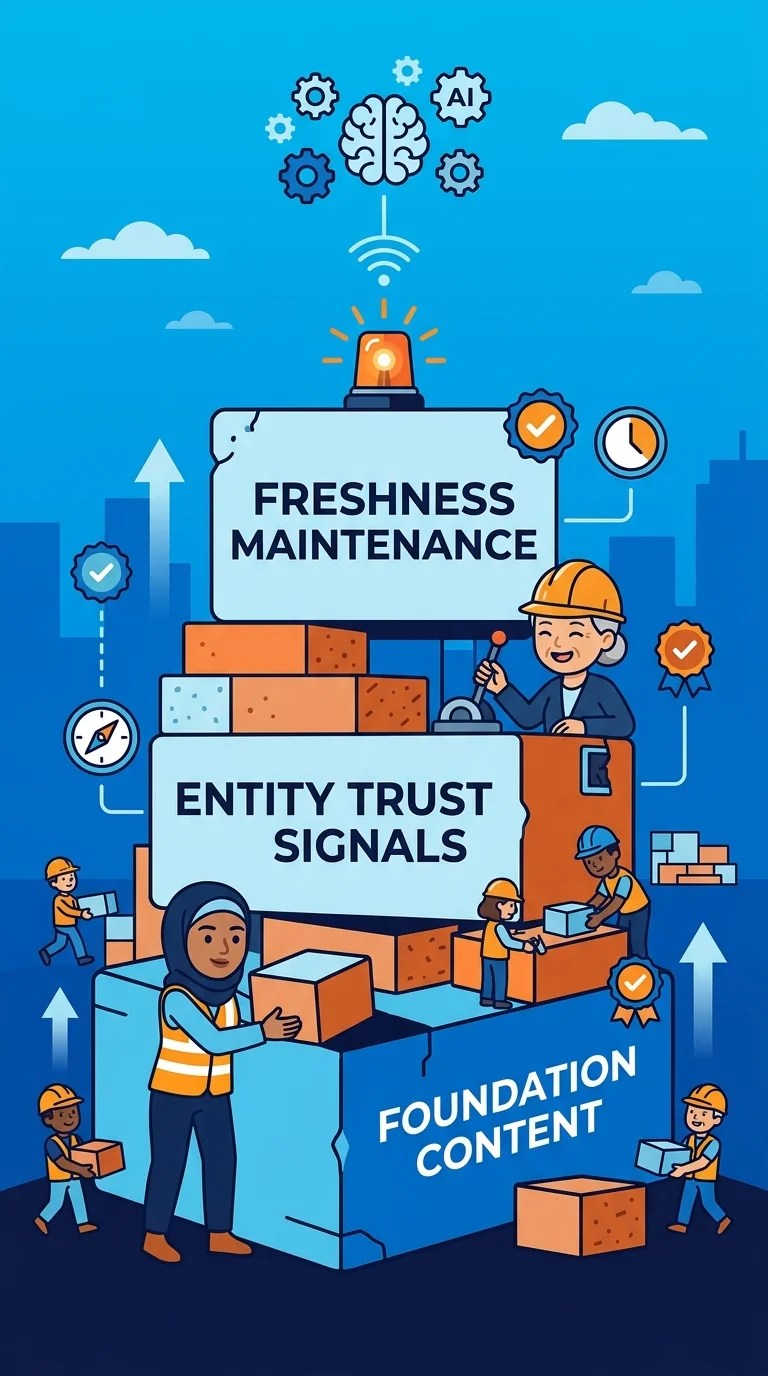
An appreciating asset isn't one thing. It's a stack of infrastructure layers doing the work together.
Drop the metaphor and three concrete layers are left: the foundation, the trust signal, and the freshness mechanism. Each one decides whether the asset actually compounds or just sits there quietly losing value.
| Infrastructure Layer | What It Establishes | Depreciates or Appreciates |
|---|---|---|
| Foundation Layer (published depth) | A substantial, fully answered body of content an answer engine can actually cite | Appreciates — stays citable indefinitely once published, with no recurring cost to keep it live |
| Trust Signal Layer (structured data and verifiable authorship) | Proof that the content comes from a real, accountable, consistently identified source | Appreciates — built once, then keeps reinforcing the same entity recognition across every future citation |
| Freshness Maintenance Layer (periodic reinforcement) | Continued relevance against newer entrants competing for the same citation | Appreciates with upkeep — adds to existing equity rather than resetting it, unlike a renewed retainer |
| Rented Placement (pay-per-click or thin retainer work) | Temporary occupancy of a slot for as long as payment continues | Depreciates — value drops to zero the moment the budget stops |
The Foundation Layer Every Asset Needs First
Start with the foundation layer. That's the published body of in-depth content itself, and it has to be deep enough to fully answer a question, not a thin page built to fill a slot.
Depth is the load-bearing wall here. A shallow page can't hold up citation, because it never hands an answer engine enough verified substance to cite in the first place.
The Layer That Signals Trust to Answer Engines
The second layer is trust signaling: structured data, verifiable entity information, consistent authorship that tells an answer engine this came from a real, accountable source. And it's the layer most retainer work skips entirely.
That gap is exactly what separates a business escaping the cycle of endless renewal from one still stuck inside it. Businesses ready to make that break are learning why committing to serious infrastructure spend ends the pattern of paying for the same visibility twice, because trust signals get built once and then keep working.
The Layer That Keeps the Asset From Going Stale
The third layer is maintenance against staleness. An asset that appreciates still needs a little reinforcement now and then, or its authority signal fades against newer entrants.
But that reinforcement is nothing like a retainer cycle. The difference is direction. A retainer resets to zero every month. A maintained authority asset only adds to what it already earned.
Who Should Not Be Reading This as a Buying Signal
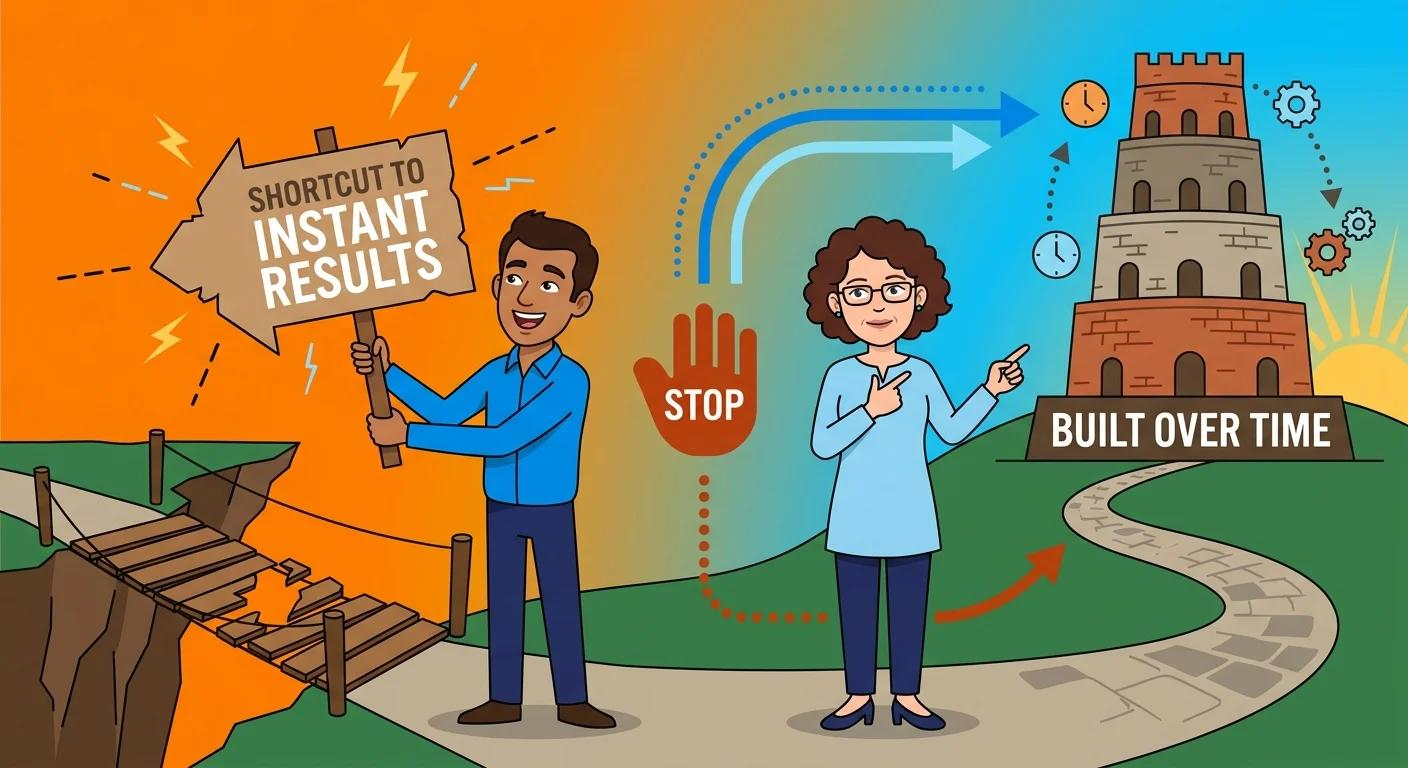
Let's be blunt: this isn't for a business that wants rented tactics repackaged with fresh language. If you want a quick placement, a burst of paid clicks, or a keyword-targeted article that vanishes the second the retainer lapses, calling it an asset doesn't change a thing about what it is.
That buyer wants a shortcut dressed up as infrastructure. A renter mindset asking for investor results is a mismatch no amount of framing fixes.
So the comparison ahead isn't for someone still picking between two flavors of the same rental. It's for someone ready to see, in plain financial terms, exactly what separates a depreciating expense from an appreciating asset.
Running the Financial Comparison Between the Two Models
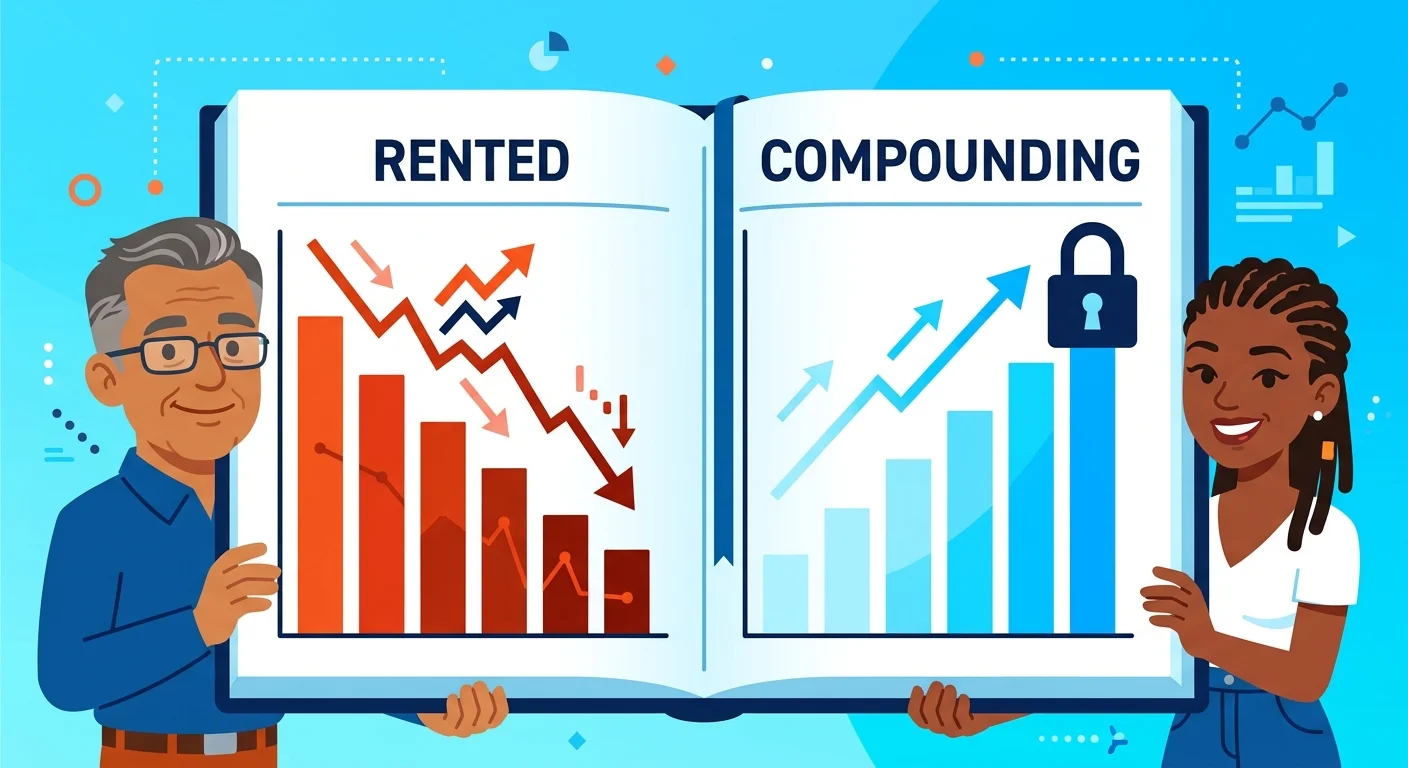
Put the two models side by side and the math stops being theoretical. Rented visibility's got a hard ceiling on what it can even deliver anymore, because the ground it stands on shifted underneath it.
An AI Overview showing up correlates with a 58% lower average clickthrough rate for the top-ranking page, a shift Ahrefs' research documented on position one organic results. That number describes the exact spot a retainer is built to defend.
So a business paying monthly to hold that position is now paying full price for a shrinking slice of attention. The rental model doesn't drop its invoice when the return drops. It just keeps billing.
| Metric | Rented Visibility Model | Compounding Asset Model |
|---|---|---|
| Clickthrough Return on Top Position | 58% lower average clickthrough rate for the top-ranking page once an AI Overview is present | Not dependent on holding a single search position that AI Overviews are actively suppressing |
| Stability of the Target Being Optimized For | AI Overviews have a 70% chance of changing from one observation to the next, moving the target a retainer is paid to defend | Built to answer the underlying question directly, independent of which placement format is used |
| Competitive Field for Citation | Competing against a landscape where approximately 16% of unique cited sources across all four major providers tested are AI-generated | Positioned within the substantive majority of cited sources that generative search engines favor |
| Search Behavior Shift | Data Point | What It Means for the Model |
|---|---|---|
| Clickthrough compression on the top organic result | AI Overviews now correlate with a sharply lower average clickthrough rate for the page that used to hold the top spot | A retainer priced around defending that spot is billing full price for a shrinking share of attention it can no longer deliver |
| Placement instability inside AI Overviews | The AI Overview a business is optimizing for has a high chance of changing from one observation to the next | A model built to hold one fixed position has no way to price for a target that will not sit still |
| Sourcing behavior of generative answer engines | A small minority of unique cited sources trace back to AI-generated material, leaving the wide majority tied to substantive authored content | A durable authority asset competes on completeness and verified authorship, not on occupying a placement format that keeps shifting |
Where the Math Breaks Down for Rented Tactics
Rented tactics were priced and sold under a version of search that doesn't exist in the same shape anymore. The math breaks down at the exact point where the payoff was supposed to show up.
A retainer built around chasing a spot in the classic ten blue links assumes that spot still converts like it used to. It doesn't, at least not at the rate the pricing was built around.
And it gets worse, because the target won't sit still. AI Overviews have a 70% chance of changing from one look to the next, so the placement a retainer is optimizing for this month might not exist in the same form next month. A model priced on holding a fixed position can't account for a target that moves on its own.
How the Compounding Model Holds Up Under the Same Pressure
A compounding authority asset doesn't have this problem, because it was never betting on one fixed position holding still. It's built to answer the underlying question directly, no matter which placement format an answer engine happens to be running this week.
That resilience matters even more once you see what's sourcing generative answers. Research on the arXiv preprint server found that generative search engines cite AI-generated sources in roughly 16% of their unique cited sources across all four major providers tested.
Which leaves a wide majority of citations still going to substantive, verifiably authored material. A durable authority asset is built for exactly that fight. It doesn't need a stable placement to keep earning citations. It needs to keep being the most complete answer available.
Building the First Layer of Your Authority Infrastructure
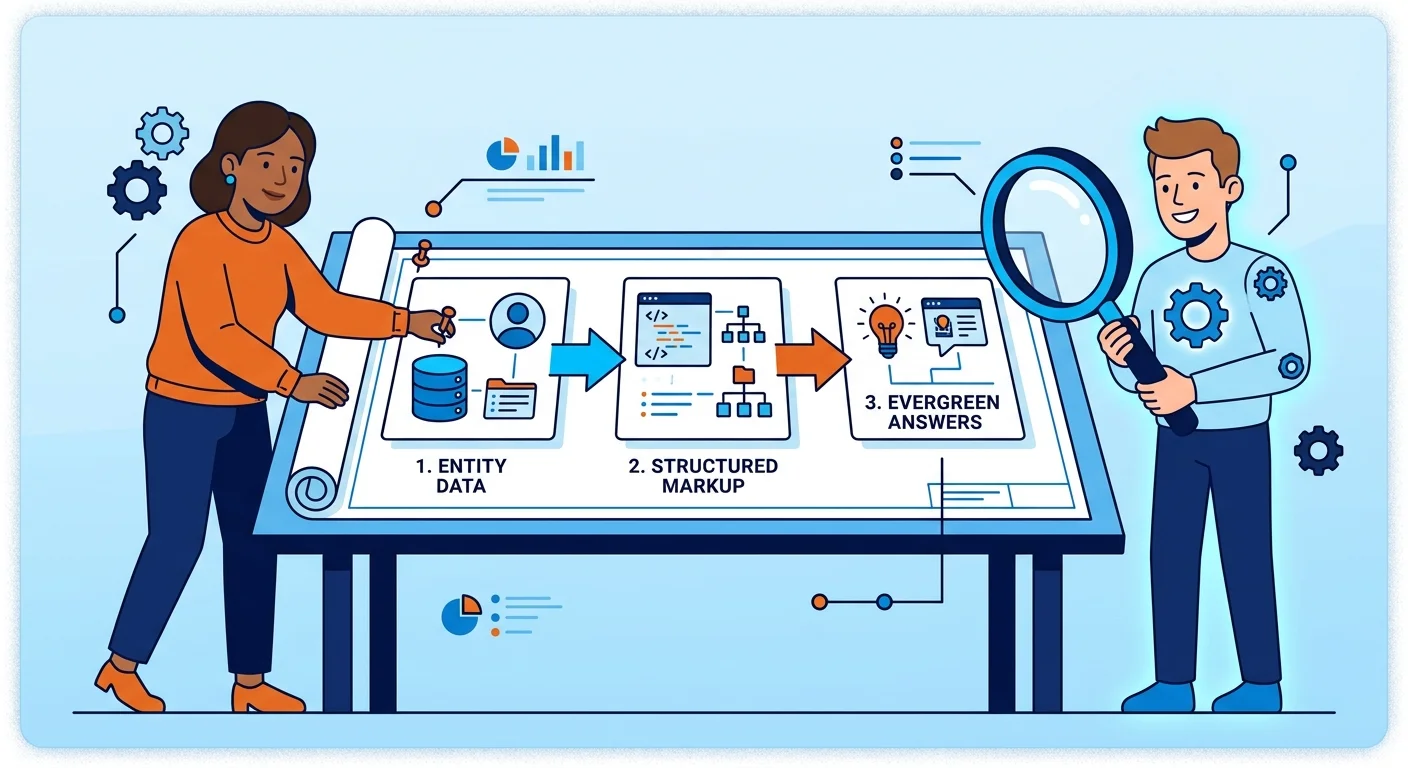
So where does the first dollar actually go? Not into some headline campaign. It goes into the foundation layer, because nothing else compounds until that piece exists.
That foundation is a body of in-depth, genuinely complete content built around the questions the business is actually equipped to answer. It has to stand on its own as a citable reference, not sit there as a placeholder page waiting for a retainer to justify its next invoice.
Every layer after this one leans on the foundation being real. Skip this step and the rest of the infrastructure has nothing to attach to.
| Build Step | Primary Output | Depends On |
|---|---|---|
| Foundation Layer | A body of in-depth, citable content that fully answers the questions the business is equipped to answer | Nothing — this is the first layer and every later layer attaches to it |
| Trust Signal Layer | Verifiable entity structure — consistent authorship, structured data, and confirmable business information | A completed foundation layer, since there is nothing to attribute without substance underneath it |
| Reinforcement Layer | Ongoing maintenance that keeps the asset from going stale relative to newer entrants | A foundation and trust layer already in place, so reinforcement adds to existing value instead of starting over |
Structuring Entity Signals So AI Engines Can Cite Them
An answer engine can't cite what it can't verify. That's the whole logic behind entity signals, and it's why structure matters as much as substance.
Consistent authorship, verifiable business information, and structured data are what let a generative system tie a published answer back to a real, accountable source. Without that connective tissue, even strong content goes uncited, simply because the system has no confident way to attribute it.
And this is where the earlier point about sourcing gets practical instead of theoretical. That wide share of citations still going to substantively authored material only reaches the businesses that made themselves identifiable enough to be counted among it.
Sequencing the Build So Nothing Sits Half Finished
None of these layers can be built out of order. A trust signal wrapped around a thin foundation still cites nothing, because there's still nothing worth citing underneath it.
The sequence is foundation first, entity structure second, ongoing reinforcement third. Skipping ahead doesn't speed up the compounding. It just produces a half-finished asset that behaves like a rental with extra steps.
Frequently Asked Questions
Same objections come up every single time this comparison gets made. So here are the straight answers, no hedging.
How is an authority asset different from a standard blog post or TRADITIONAL SEARCH OPTIMIZATION article?
A standard article fills a slot on the calendar, and it gets buried the second the next one drops. An authority asset does the opposite. It's built to fully answer one question, structured so an answer engine can verify it and cite it indefinitely, not just index it and forget it.
Can you really measure the compounding financial return of authority content, or is it just a theory?
It's measurable, not some theory. You track citation frequency in generative answers, entity recognition over time, and whether the same asset keeps pulling references without a dime of new spend. That's a whole different ledger than a monthly clickthrough report.
Why do paid ads and short-term TRADITIONAL SEARCH OPTIMIZATION tactics fail to build authority for AI search engines?
They were priced for a version of search that rewarded holding one fixed spot. But that target shifts constantly now. A model built to defend one position can't build the entity recognition an answer engine actually cites.
How long does it take for an authority asset to start showing a compounding return in generative search answers?
There's no fixed date, and anyone promising one is guessing. Compounding depends on the foundation, entity structure, and reinforcement layers getting built in the right order. What matters is the asset keeps earning citations after it publishes instead of resetting to zero.
What is the first step in shifting budget from renting visibility to building authority assets?
Stop funding the depreciating column first. Then the first dollar goes into the foundation layer, a body of genuinely complete content substantial enough to get cited. Nothing else compounds until that piece exists.
If I stop paying for ads, won't my visibility disappear completely before my authority assets start working?
That fear assumes visibility only exists while you're paying for it, which is exactly the rental logic this whole thing rejects. An authority asset doesn't need active ad spend to keep earning citations. So the two timelines aren't actually competing.
Where This Leaves You
So the ledger closes the same way it opened. Every dollar you spend on visibility lands in one of two columns. Only one of them still holds anything by the end of the month.
Rented tactics keep the depreciation column full, month after month. Thinking like an investor, not a renter is the actual skill this moment rewards — because a retainer or a paid placement just funds a column that resets to zero on schedule. The businesses building a foundation, an entity structure, and a reinforcement layer are the only ones watching the appreciation column grow while the invoices around them stay flat.
That's the decision in front of you right now. Nothing changes until the first dollar moves into the asset column instead of the rental one. To see exactly where your own spending sits on that ledger, start with an AI visibility check.