
What Makes a Digital Foundation Structurally Invisible in the First Place
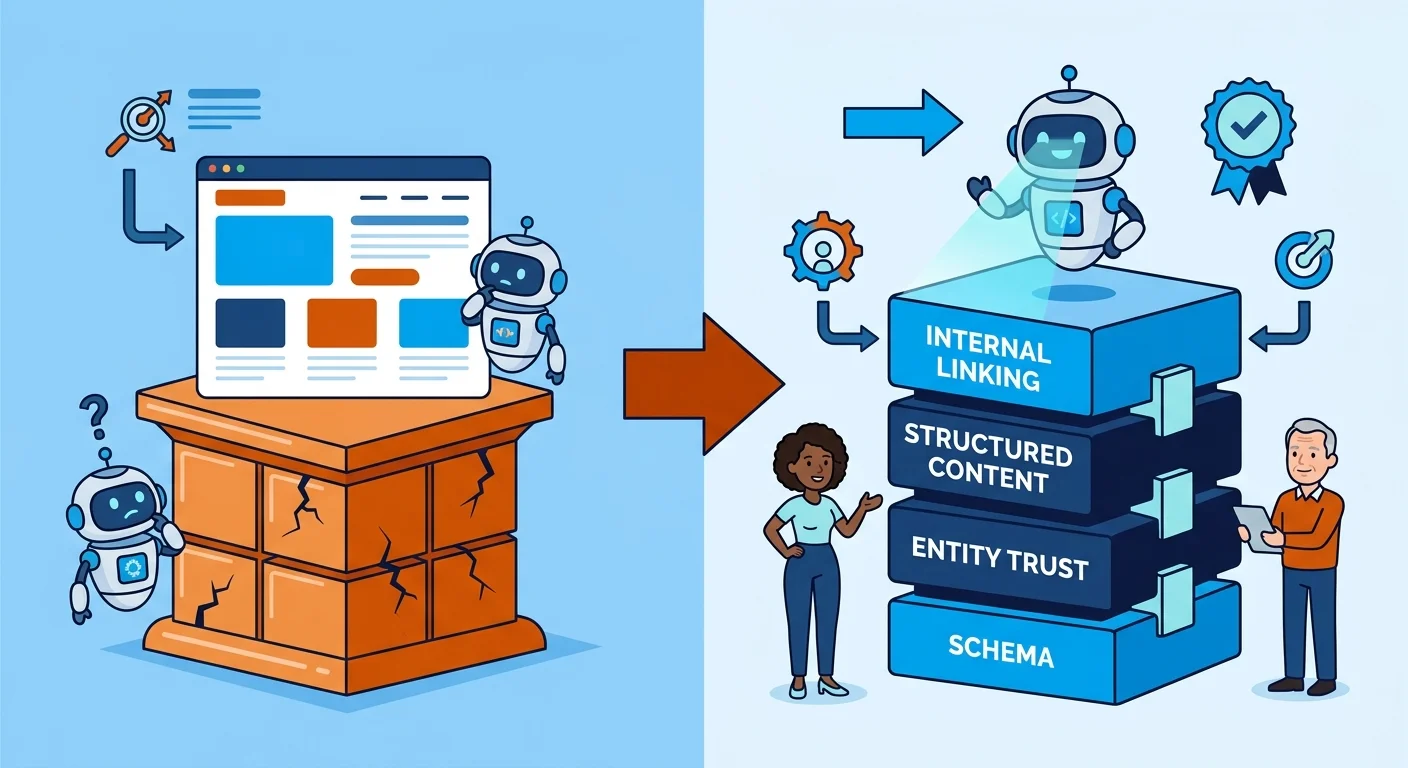
Structural invisibility starts with a simple mismatch. Most digital assets get built for human eyes, with layouts and flourishes designed to look finished on a screen. But that priority ignores the audience that now decides everything: the AI systems that govern visibility and discovery.
Here's the thing. A human visitor forgives a messy structure underneath, because they never see the code. An AI system reads nothing else.
So when the code beneath a polished template is flat, repetitive, or inconsistent, the AI reading it has no way to tell what the business actually is. It can't confirm the entity's identity, its offerings, or its authority with any confidence.
That confusion is the seed of every downstream cost in this article. It doesn't look like a problem on launch day, which is exactly why so few owners catch it before they've paid for the template twice.
The Difference Between Looking Finished and Being Readable
Looking finished and being readable aren't the same win, and templates chase the first one almost entirely. A homepage can carry striking visuals, smooth animations, and a clean palette while the markup underneath stays a shallow block of text with no real hierarchy.
An AI system never sees the visuals. It parses the structure beneath them, and structure with no hierarchy reads as a business with no identity. That's why iTech Valet builds around Authority Infrastructure, a shift away from a disposable website and toward a permanent, machine-readable entity designed for AI to interpret.
Where Templates Hide Their Structural Gaps
Templates hide their structural gaps in the places owners never look. Generic heading patterns, duplicated boilerplate on every page, thin or missing schema markup, and none of it shows up in a visual walkthrough.
Look closer and the pattern holds across the whole industry. Compare the true cost breakdown behind a fully built authority engine against a templated starting price, and the gap in what's actually being built gets obvious fast. A rented structure can be dressed up forever, but it still isn't owned, and it still isn't read the way an owned foundation is.
The Machines Reading Your Site Were Never the Point of the Template
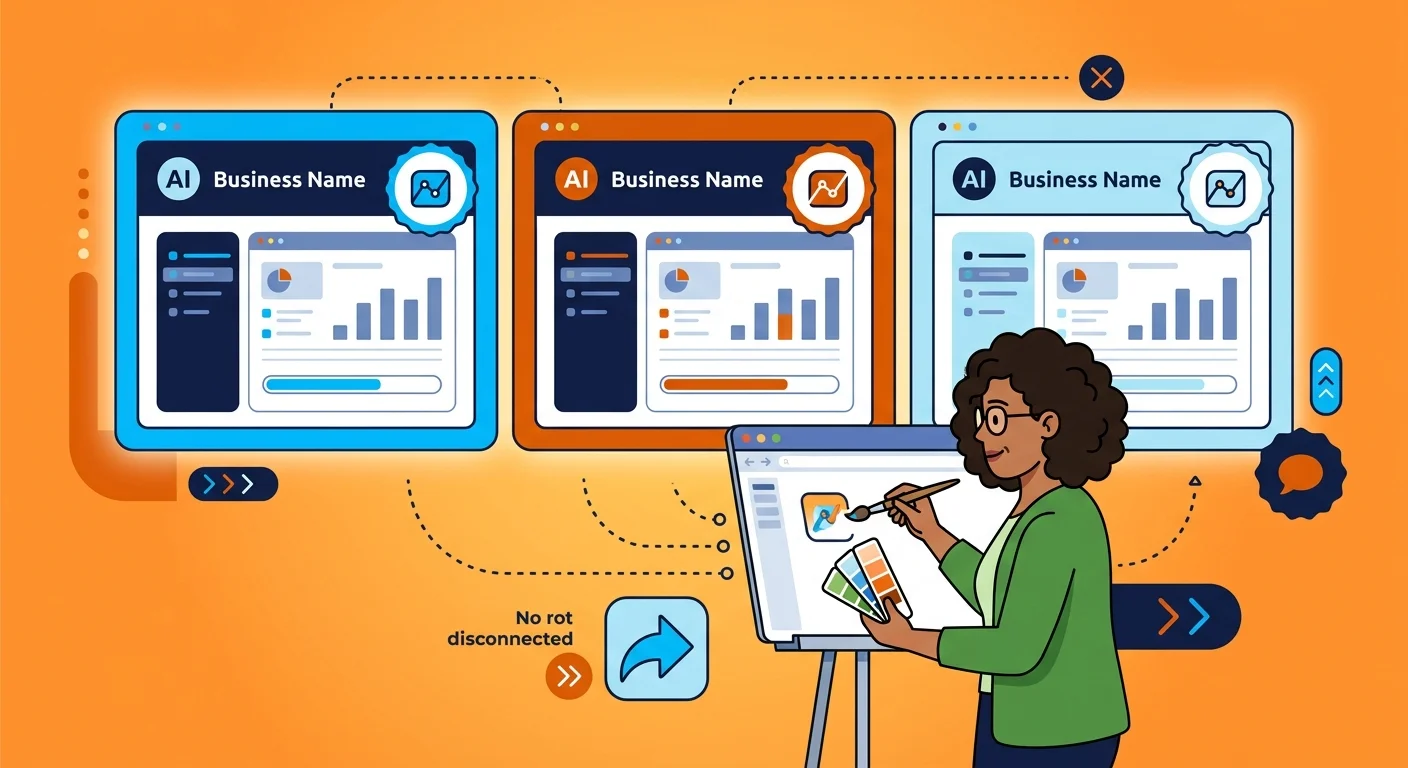
So who was this template actually built for? Not the systems that now decide whether a business gets found at all.
Every visual choice in a templated build assumes a human is scrolling, clicking, forming a snap impression. That assumption used to be safe.
But it doesn't hold anymore. Generative answers get assembled by machines parsing code, not people admiring a layout. Optimize only for the scroll and you've built for half your real audience.
Why Human-First Design Leaves the Real Audience Unread
Human-first design treats the browser window as the finish line. Once the page renders cleanly on a screen, the job feels done.
But that finish line was never where the real judging happens. Most digital assets get designed for human eyes and never account for their real audience, and this is the exact mechanism that makes it so.
An AI system doesn't scroll. It parses markup, and a page tuned purely for visual polish hands it almost nothing to hold onto.
The Rejected Method: Building for Screenshots Instead of Systems
There's a rejected method behind most templated builds, and it deserves a name: building for screenshots instead of systems. The goal becomes a homepage that dazzles in a pitch deck, not one that reads clearly to a machine.
And this shows up as a real, measurable pattern in how AI-favored domains differ from the rest. Domains favored by large language model based search engines generally carry more structured, hierarchical HTML, easier-to-read text, and more outlinks to reputable sources, according to the arXiv preprint server.
Notice what's missing from that list. Nothing about animation, nothing about color palettes, nothing about how a homepage photographs in a screenshot.
Structure is the signal, not surface polish. If you're weighing whether your current build can be saved or needs a different foundation entirely, why another rebuild won't fix what's actually broken walks through that exact fork. A rented apartment can be repainted every year and still never become the foundation it was never built to be.
How the Rebuild Cycle Quietly Becomes the Business Model

The AI system can't read the site. So the business reaches for the only fix that feels available: it rebuilds.
But a rebuild is just a new lease on the same rented apartment. The furniture changes. The walls underneath stay exactly as unreadable as before.
Here's the pattern worth naming plainly. The endless cycle of expensive website rebuilds every few years is a symptom of a much deeper infrastructural problem, not a solution to it.
| Rebuild Trigger | What Actually Gets Replaced | What Stays Structurally Invisible |
|---|---|---|
| Site looks dated next to competitors | The visual theme, color palette, and homepage layout | The flat, undifferentiated markup hierarchy underneath the new design |
| Site visits decline and paid channels get blamed | The copy, imagery, and calls to action across key pages | The absence of clear entity signals that AI systems need to confirm who the business is |
| A new template promises faster load times or a modern look | The theme files and front-end presentation layer | The thin or duplicated schema markup and boilerplate structure carried over from the last build |
| Leadership decides it is simply time for a refresh | The surface-level branding and stylistic choices | The entity drift that accumulated across the previous build and now persists into the next one |
Why Rebuilding on the Same Template Never Solves the Root Problem
Look at what actually changes in a typical rebuild. A new visual theme goes on top, the palette shifts, and the homepage gets a fresher layout.
But the markup underneath usually gets copied from the same category of template that caused the original mess. Nothing about that flat, undifferentiated hierarchy has been touched.
So the entity confusion the AI system had before the rebuild survives it, now wearing a new coat of paint. Rebuild the display without rebuilding the structure and you guarantee the same outcome on a delay.
Who Keeps Choosing the Rebuild Over the Rebuild's Cause
Here's the thing about who keeps paying for this cycle. It's rarely the business that stopped to ask why the rebuild was needed at all.
It's the business that treats each rebuild as an isolated event, cut off from the one before it. Every few years the same discomfort returns, and the same templated fix gets bought again.
That pattern rewards paid visibility over owned structure, because a business stuck in the rebuild cycle can't lean on its own asset to hold trust. The line between renting reach and owning permanent trust in the knowledge graph is exactly what separates a business that escapes this cycle from one still funding it. The true costs of structurally invisible infrastructure aren't just financial; they surface as decaying entity trust, audience drift, and a permanent reliance on paid channels to stay visible.
Counting What a Sourced Content Pipeline Actually Throws Away
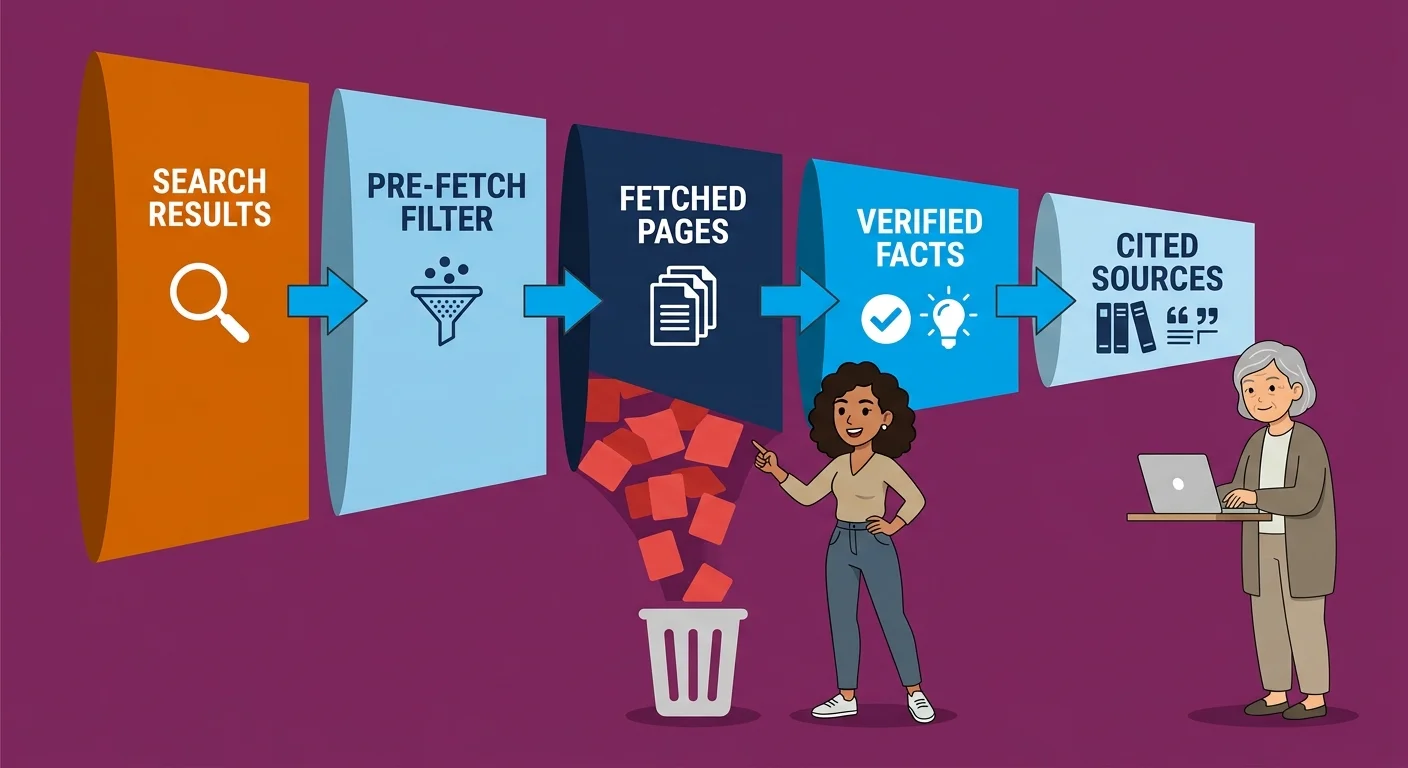
The rebuild cycle is easy to spot. It ships a visible artifact: a new site, launched, invoiced, and admired. Waste inside a content pipeline hides better, because it happens quietly, one discarded search result at a time.
So iTech Valet measured it instead of assuming it. The question was simple. For every unit of research effort a content pipeline spends, how much survives to become a real, citable claim?
The answer isn't flattering to how most keyword-targeted articles get built. Most of what a pipeline gathers never becomes a sentence a reader can trust. That gap is the same structural blindness this article has been measuring in code.
| Pipeline Stage | Results at This Stage | Share Lost Before Citation |
|---|---|---|
| Searches Returned | 785 results | Starting volume before any filtering begins |
| Passed Pre-Fetch Filter | 681 results | 104 results discarded before a single page was even fetched |
| Pages Fetched | 503 pages | Fetched in full, yet a third of these will return nothing usable |
| Verified by Extractor | 201 results | Roughly two out of every three fetched pages fail verification |
| Ultimately Cited | 76 citations | One citation survives for roughly every ten search results returned |
| Fetched Pages Yielding Nothing Usable | 167 of 503 pages | A third of full fetches were read in full and still produced no usable fact |
Tracking a Single Content Run From Search to Citation
Here's what tracking a single run actually looks like, end to end. A pipeline searches, filters, fetches, verifies, and finally cites. Each stage loses material on the way.
Across 22 production runs of a 12-article AEO/SEO content cluster, the pipeline's searches returned 785 results; 681 passed its pre-fetch filter, 503 were fetched, 201 were verified by an extractor, and 76 were ultimately cited — roughly one citation for every ten search results returned. That funnel is the honest shape of sourced content work, and it's nowhere near a straight line from search to citation.
And the loss isn't spread evenly. A large share of it lands at the fetch-and-read stage, where pages get pulled in full and still yield nothing usable — a pattern documented in iTech Valet's measured pipeline data.
The Anti-Persona: Who Refuses to Look at This Kind of Waste
This isn't for the business that wants a bigger pile of published articles regardless of what backs them. If the goal is volume alone, this measurement looks like an obstacle instead of a safeguard.
But the anti-persona here is specific. It's the buyer who refuses to ask what fraction of a keyword-targeted article was actually verified before it went live.
So the real question isn't whether an article got written. It's what happened before the writing started, and that same discipline decides whether an agency relationship survives past the invoice — a question addressed directly in what happens to lead flow once an agency contract ends. In a measured run of an AEO/SEO content pipeline, a third of the web pages it fetched — 167 of 503 — were read in full and yielded no usable fact at all. A third of fetched pages returning nothing usable isn't a footnote; it's why iTech Valet treats verification as load-bearing, not optional.
What Separates a Domain AI Engines Cite From One They Skip
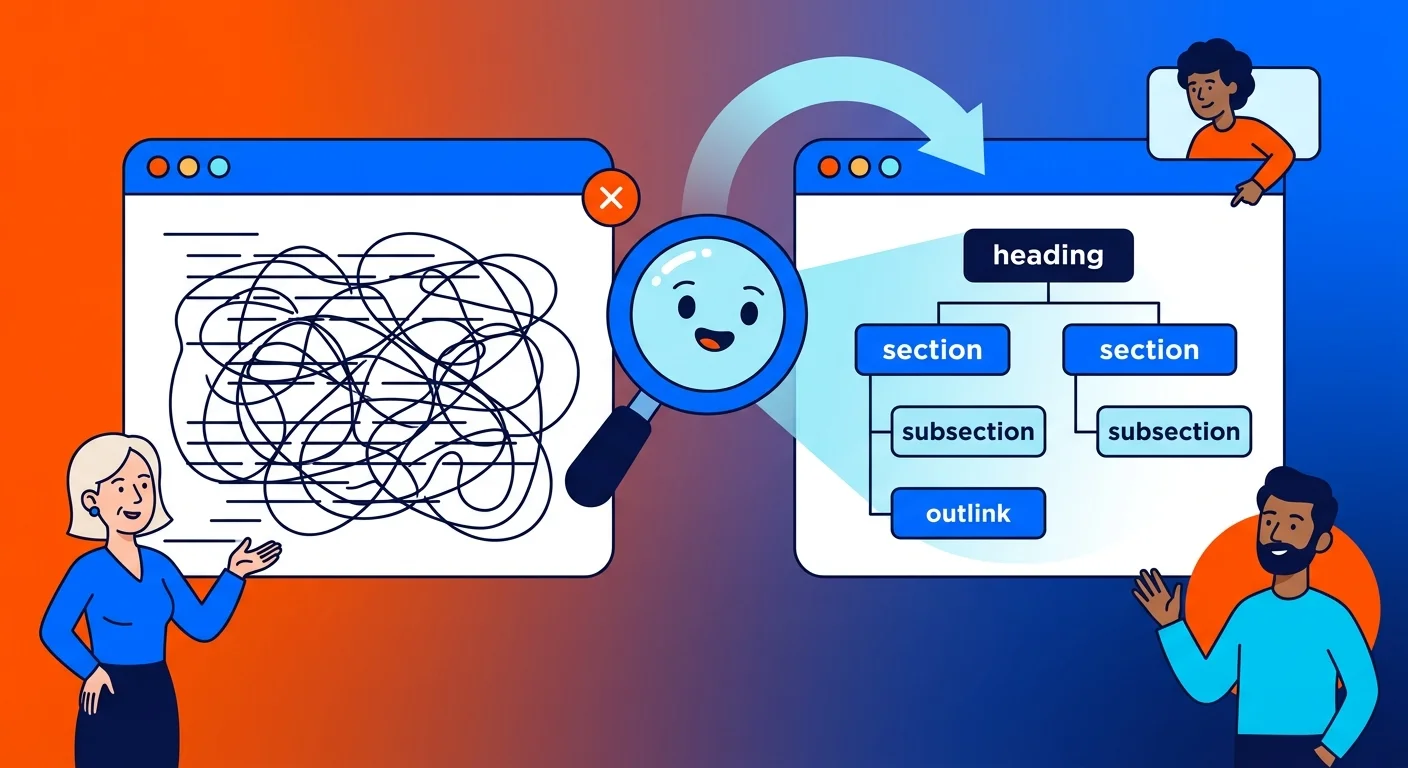
So what actually separates a cited domain from an ignored one? The pipeline waste above answers half of it. The other half lives in the domain's own structure, before any research pipeline even touches it.
An AI engine deciding whether to cite a source isn't weighing brand recognition. It's weighing whether the code underneath gives it something firm to hold onto.
And that's exactly where templated builds lose before the contest even starts. Structure decides the outcome long before content quality gets a vote.
The Structural Signals That Move a Domain From Ignored to Cited
That earlier finding about how AI-favored domains differ from the rest is worth a second look here. It was never really about popularity.
It was about hierarchy, readability, and how generously a domain points outward to trustworthy sources. Those are structural habits, not marketing outcomes.
A rented apartment can be furnished beautifully and still have no real plumbing underneath. Authority Infrastructure is the plumbing, not the furniture.
Why Domain Popularity Alone Never Wins the Citation
Here's the counter-intuitive part. A widely known domain with a flat, undifferentiated structure still reads as unclear to a parsing system.
Popularity earns attention from humans skimming a results page. It earns nothing from a machine that only trusts what it can parse cleanly.
Reading the Compounding Cost Instead of the Sticker Price
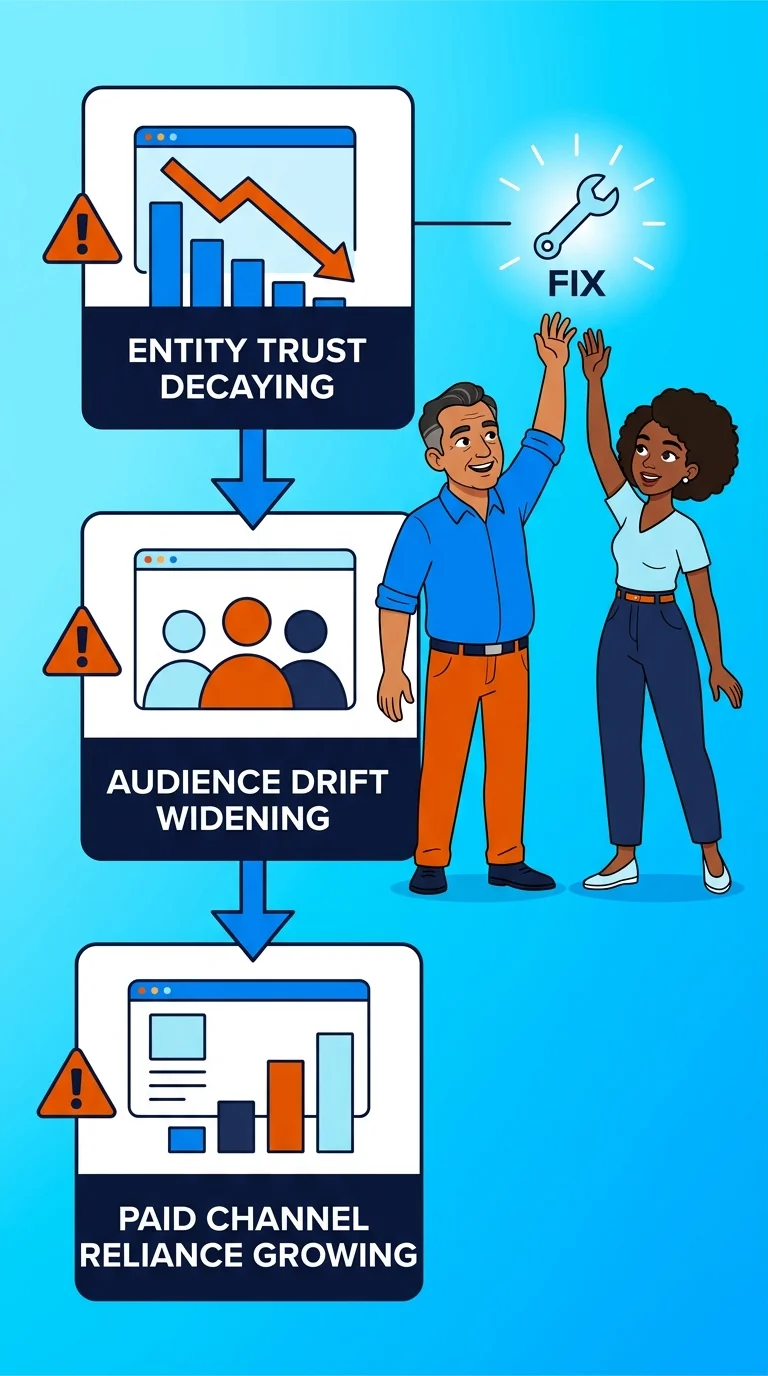
So take those structural traits and stop pricing them by the invoice. Price them by the year instead.
A templated starting price answers one thing: what does the build cost today? It never touches the question that actually decides the outcome — what that same structural gap costs every year nobody fixes it.
Here's the thing about a sticker price. It was never built to catch a cost that compounds quietly across years instead of landing as one clean bill.
| Decay Point | Early Warning Signal | Corresponding Fix |
|---|---|---|
| Entity Trust Erosion | AI-generated summaries describe the business inaccurately or omit it entirely from relevant answers | Rebuild the underlying markup hierarchy so the entity is described consistently everywhere it appears |
| Audience Drift | Direct visits and branded searches decline even though the business has not changed its offering | Restore outward links to reputable sources so the domain reads as connected rather than isolated |
| Paid Channel Dependence | Every dip in paid spend produces an immediate and proportional drop in visibility | Replace templated structure with Authority Infrastructure so owned trust carries visibility between campaigns |
The Three Places Entity Trust Decays When Infrastructure Stays Invisible
So here's where all that compounding actually lands. Entity trust doesn't fail all at once.
It fails in three places, and each one feeds the next. Those structural traits we just walked through? That's exactly what erodes, one quarter at a time.
We named this decay earlier as more than a money problem. It shows up as fading entity trust, drifting audience attention, and a business that never stops paying for reach it should already own.
Mapping the First Fixes Against the Signals That Caused Them
So where does a business actually start once it sees the gap clearly? Not with a new visual theme.
The fixes map straight to the structural signals we already covered. Flat hierarchy gets addressed before color does. Missing outward links to reputable sources get addressed before layout does.
That sequencing is the whole difference between a rebuild and Authority Infrastructure. One redecorates a rented apartment. The other lays a foundation meant to be owned, not re-leased every few years.
Frequently Asked Questions
So here are the straight answers to the questions this raises most. No fence-sitting, just the fastest path to clarity.
What is infrastructure invisibility and how do I know if my site has it?
Infrastructure invisibility means the code underneath hands an AI system nothing firm to parse. Flat structure, undifferentiated hierarchy, thin outward links to reputable sources? An AI engine reads uncertainty where it should read authority.
Why do cheap website templates end up costing more in the long run?
A cheap template buries its real cost inside the invoice, not on it. The sticker price answers what today's build costs. It never prices the entity trust decay that compounds every year the structural gap stays open.
How is Authority Infrastructure different from a standard site build work project?
A standard site build work project just redecorates the rented apartment. Authority Infrastructure replaces the plumbing underneath it — one resets on a timer, the other accrues trust permanently.
What are the most common hidden costs associated with using a generic website template?
The visible cost is the invoice. The hidden ones are decaying entity trust, drifting audience attention, and a permanent lean on paid channels because the owned asset never earns visibility on its own.
Can an invisible site be fixed, or does it require starting over with a new build?
It hinges on whether the flat hierarchy underneath can be restructured, or was never built to hold structure at all. Some sites can be repaired. Others were templated so shallow that a rebuild on real Authority Infrastructure is the faster path.
What signals does an AI engine look for to determine if a site's structure is trustworthy?
It looks for structured, hierarchical markup, easy-to-read text, and generous outward links to reputable sources. Popularity doesn't count. What matters is whether the code itself gives the system something clean to hold onto.
Where This Leaves Your Infrastructure Decision
Every argument here comes down to one fork. A business either owns a structure an AI system can parse, or it keeps renting one and hoping it passes inspection. There's no third path where a fresh coat of paint counts as a foundation.
So the endless rebuild cycle was never the fix it got sold as. It was the symptom, paid for again every few years. Structurally invisible templates guarantee the discomfort comes back, because the walls underneath never changed.
Authority Infrastructure is the alternative to that lease. It is built once, read cleanly by the systems that now decide visibility, and it keeps accruing trust instead of resetting it. If you want to know which category your current build actually falls into, start with an AI visibility check.