What Actually Counts as Maintenance Once an AI Authority Engine Is Live
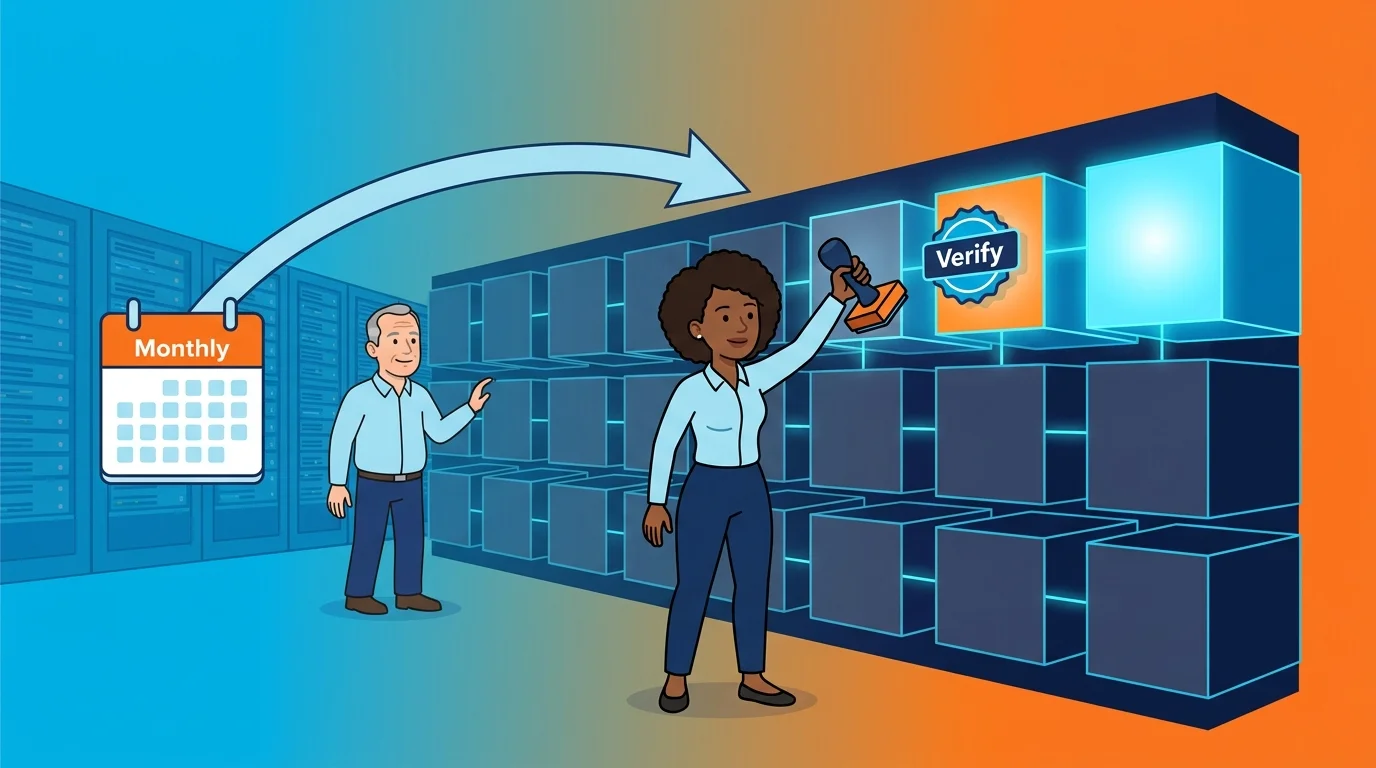
Maintenance starts the moment the build ends. An AI Authority Engine takes a brand's expertise and structures it so machines can read it, turning scattered claims into a primary source generative systems can actually pull from. Building that structure is a one-time technical job.
Keeping it accurate is not. In the era of generative AI, an authority engine is not a set it and forget it asset. It functions as a living system that requires continuous stewardship, not a monument finished on launch day.
The Line Between Initial Build and Ongoing Upkeep
The build answers an easy question: does the structured data exist, and does it validate? Upkeep answers the harder one. Does that data still match reality this week, this month, this quarter?
That distinction matters most in regulated or fast-moving fields, where the specifics covered in how a healthcare authority engine fits together show how quickly entity details and clinical facts can drift from what was published. A build gives a business a foundation. Upkeep decides whether that foundation still holds weight a year later.
Why Chasing Algorithm Updates Is the Wrong Maintenance Model
Treat AI visibility like old-school search work and the maintenance plan inherits every wrong assumption that came with it. Legacy search optimization chased signals a provider controlled. Generative citation doesn't reward gaming those signals at all.
Google frames the eligibility bar plainly rather than as a ranking contest. According to Google, AI features such as AI Overviews and AI Mode may have no additional technical requirements beyond being indexed and eligible to be shown in Search with a snippet. The maintenance task behind that bar is not algorithm research. It is confirming the structured facts still describe the business correctly.
Why Treating AI Visibility Like Legacy Search Work Breaks Down
A page that already satisfies Search's technical requirements clears the bar. Nothing beyond that bar exists to chase, which is mapped in full in where AEO stops and a full authority engine begins.
Let's keep it real: slapping a vague AI visibility label on this work, instead of naming it accurately, drags in a results-page mindset that doesn't fit. Classic search listings measured position against competitors. Citation eligibility asks a simpler question: is the data still true?
The Set-It-and-Forget-It Mindset Fails for a Reason Worth Naming
Rankings became a vanity metric the day generative answers replaced links as the deliverable. A spot in a list only measured visibility against competitors at one frozen moment. Citation eligibility measures something else entirely: does the underlying data still match reality?
That shift exposes the set-it-and-forget-it mindset for what it is. Schema validated once does not stay valid; it stays published while the facts beneath it move. The failure is structural, not cosmetic — a knowledge base that was accurate at launch carries no guarantee about next quarter.
How a Published Schema File Quietly Goes Stale
The trouble is quiet: a stale schema file doesn't break where anyone can see it, because it still validates, still renders and still passes a technical audit. Meanwhile, the facts it describes drift away from what the business actually does, offers or claims, and the markup reports zero errors. Sorting out which entity record is authoritative across platforms is its own job, laid out in the breakdown on resolving one practice identity across platforms.
That gap matters because generative systems reason over time-stamped knowledge, not frozen facts. According to Dalian University of Technology, outdated facts in temporal knowledge graphs can negatively impact reasoning performance, and the temporal validity of certain historical facts may fall sharply after a certain time interval, a pattern similar to a substance's half-life. The study covers temporal knowledge graphs, not business websites, but it is a fair caution for any structured record that goes unchecked.
How Knowledge Graphs and Citations Actually Decay Over Time
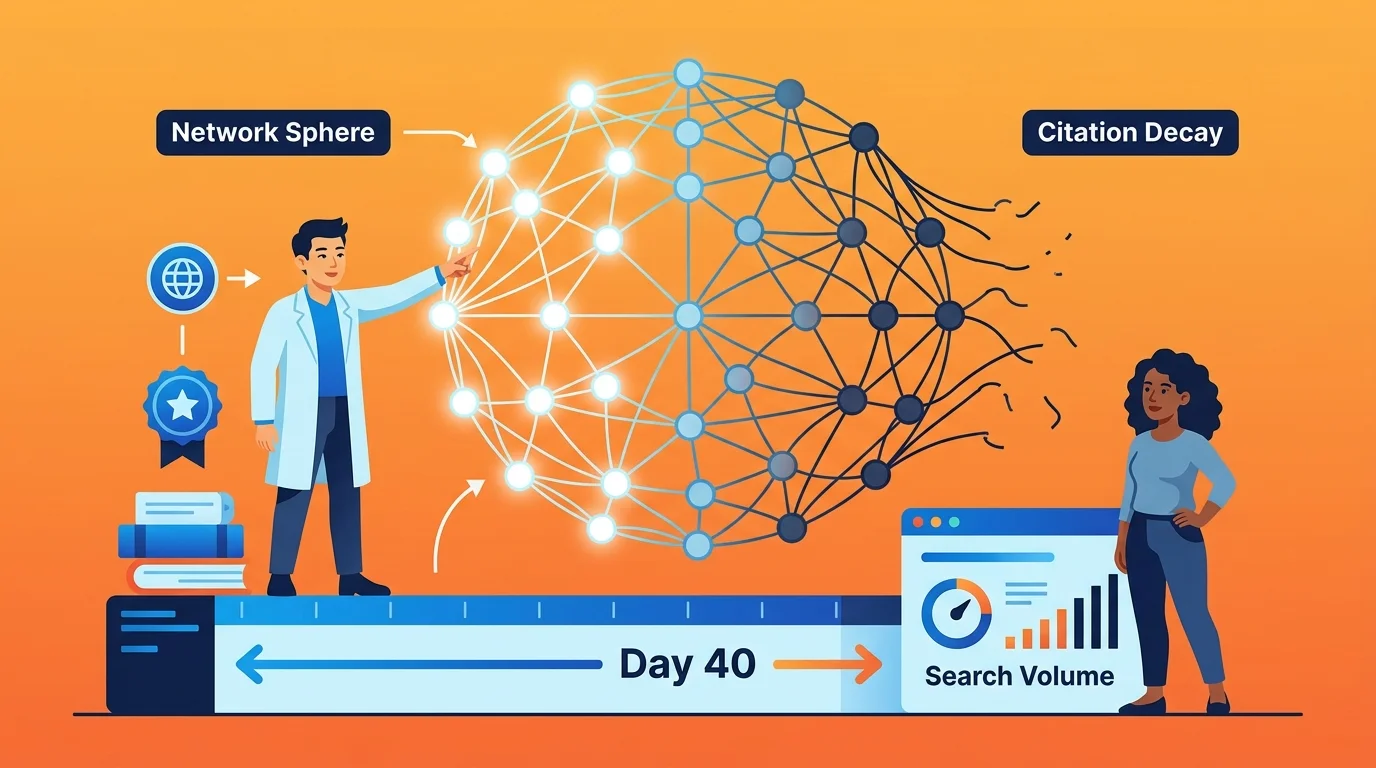
Decay in a knowledge graph rarely looks dramatic. A single entity field falls out of sync, a citation source quietly loses relevance, and nothing throws an error.
And it compounds instead of announcing itself. Every unverified fact raises the odds that a generative system builds an answer on something that's no longer true. That echoes the half-life pattern from earlier, where the validity of certain historical facts fell sharply after a time interval.
What the Research on Trending-Topic Citations Shows
Researchers have now measured citation behavior at scale inside Google's own AI Overviews. Research published through Washington University in St. Louis found Google's AI Overview citation behaviour was measured across 55,393 searches on trending topics over a 40-day window in spring 2026. The study tracked citation behavior on trending topics. It did not measure how stale the cited sources were.
That window matters as much as the count. Spring 2026 citation patterns reflect how generative systems were sourcing answers in that specific stretch, not a fixed rule that holds indefinitely. Businesses that want their structured data treated as reliably citable inside that kind of shifting window typically work with dedicated AI search optimization services rather than auditing it alone.
Where Generative Engines Get Citations Wrong Even When the Data Exists
Stale data isn't the only way this breaks. A generative system can cite a source that's accurate, current and completely real, and still get wrong what that source actually says.
| Citation Failure Type | What It Means | Why It Happens |
|---|---|---|
| Source Distortion | A generative system cites a real, reachable source but misstates or exaggerates what that source actually claims. | Retrieval surfaces the correct page, but the reasoning layer compresses or paraphrases its content past the point of accuracy. |
| Domain-Inappropriate Sourcing | A citation points to a page that is accurate on its own terms but irrelevant to the domain the question falls under. | The matching signal favors topical overlap over genuine domain authority, so a tangential source outranks a narrower, correct one. |
| Stale-Fact Citation | The system cites a source that was once correct but now contradicts the business's current offerings, staffing, or claims. | Schema and published content continue to validate technically even after the real-world facts they describe have changed. |
| Conflicting-Record Citation | Two platforms list different details for the same entity, and the system picks whichever one it retrieves first. | No single record is marked authoritative across platforms, so the generative system has no reliable tiebreaker to apply. |
The Mechanism Behind Distorted and Domain-Inappropriate Citations
Research published through Yonsei University found across one research pool, 30.6% of AI model citations may distort their sources and 27.1% can originate from domain-inappropriate sources, even though the cited sources are real and accessible. That pool spans citations across ten search-augmented LLMs, so this isn't one vendor having a bad day. A model can pull a live, accessible page and still twist it or grab a source from the wrong field entirely, which is a retrieval and reasoning failure, not a freshness problem.
Rankings stopped predicting who gets cited the day answers replaced links as the deliverable, and a spot in classic search listings never measured whether a system read a source correctly. So clean structured data alone can't catch a citation that bends an accurate source out of shape. OpenAI runs separate bots for AI training and for search citations — so a site can block the training bots and still get cited.
The Operational Rhythm of Keeping an Authority Engine Current

So what does upkeep actually look like week to week? Two tracks: proactive monitoring that catches data drift inside the structured record itself. Then reactive updates, triggered whenever generative engines change how they source and show answers.
| Maintenance Task | Trigger | Cadence |
|---|---|---|
| Schema-to-page accuracy check | Any update to services, credentials, hours, or entity details on the live page | Ongoing, tied to every business change rather than a fixed calendar |
| Cross-platform entity resolution review | Divergence between how the business appears across directories, profiles, and its own structured data | Recurring, scheduled as proactive monitoring rather than triggered by a single event |
| Time-sensitive fact refresh | Content built on figures, pricing, or claims that change over time and risk falling out of date | Set by how quickly the underlying fact decays, not by a uniform publishing schedule |
| Citation and sourcing behavior audit | A documented shift in how generative engines select, display, or attribute supporting sources | Reactive, triggered by changes in the AI search landscape rather than run on a timer |
| Structured data validation pass | Routine confirmation that markup still matches the live page, independent of any known problem | Steady cadence functioning as a baseline check beneath the other reactive tasks |
| Monitoring Area | What It Catches | Response Type |
|---|---|---|
| Schema Validation | Markup that passes structural rules but no longer matches what the live page displays | Proactive monitoring, corrected on a set cadence |
| Entity Consistency | Business details that have drifted apart across different platform listings | Proactive monitoring, synced back to a single source of truth |
| Time-Sensitive Claims | Facts tied to a specific period that have quietly aged past their accurate window | Proactive monitoring, flagged for scheduled review |
| Citation Sourcing Shifts | Changes in how generative engines select and display supporting sources | Reactive updates, triggered by the platform change itself |
| Cross-Platform Link Health | Identity references that no longer resolve or point to the correct record | Reactive updates, repaired as soon as the break is found |
Monitoring for Data Drift
Monitoring means checking schema against the live page on a set cadence, confirming entity details still match across every platform, and flagging content tied to facts that change over time. Publishing more of this material does not substitute for checking what already exists. A larger footprint of unverified claims only gives a generative system more stale data to potentially cite.
Reactive Updates When the AI Search Landscape Shifts
Reactive work responds to the landscape itself. When a citation pathway shifts, or a sourcing requirement changes, the fix is correcting the specific record affected, not adding volume elsewhere. The goal has moved from tweaking for position to guaranteeing that the core data stays the most accurate answer available.
Frequently Asked Questions
Maintenance questions tend to repeat across operators once the build phase ends. Here are the ones that come up most.
How often does the structured data in an authority engine need to be updated?
No single schedule covers every fact. Hours, pricing, staff and credentials need checking on a short cadence. Stable entity details can go much longer between reviews.
What's the difference between model maintenance and data maintenance in an AI authority engine?
Model maintenance tracks how generative engines source and show answers, which shifts as the engines change. Data maintenance asks whether the structured facts still match reality. That second job has nothing to do with any algorithm.
Can maintenance for an AI authority engine be fully automated in 2026?
Partly. Checking schema against the live page can run on automation. But judging whether a fact still honestly represents the business takes a human.
What are the biggest risks of neglecting AI authority engine maintenance?
A generative system cites stale or misrepresented data as fact, with the business unaware it happened. That risk compounds quietly, since a schema file still validates even after the facts behind it go wrong.
How does the maintenance of an AI engine change as search engine AI evolves?
Proactive monitoring for drift stays constant regardless of what generative engines do next. Reactive updates shift with the sourcing landscape, which means the reactive half of the work changes faster than the proactive half.
What skills are required on a team to properly maintain an AI authority engine?
You need someone fluent in structured data markup. You also need someone who knows the business facts well enough to verify them. Neither skill covers the whole job alone.
The Bottom Line
Facts in a knowledge base go out of date. Build it like a monument, walk away, and it starts aging the day you hit publish.
The goal was never to tweak for position. It was always to guarantee that the core data stays the most accurate, most citable answer available, long after the build is finished.
Algorithm-chasing treats visibility as a game to be won once. Accuracy treats it as a standard to be held continuously, and that standard is what keeps a structured data asset worth citing. Businesses ready to see where their own data stands can start with an AI Visibility Check.