
Search Engine Journal, reporting on Ahrefs, says that when a search triggers an AI Overview, Google can split it into several related smaller searches, and the pages that show up most often across those results get cited. Search Engine Journal adds that ranking well for one keyword may not be enough, because Google’s AI can check content against smaller searches you may not be tracking, and covering a topic from related angles and in different formats appears to count for more than one top 10 position. Google Search Central says every page you care about should have a link from at least one other page on your site, and that you should link in context to the pages that help readers understand a given page.
How AI Answers Split One Question Into Many Searches
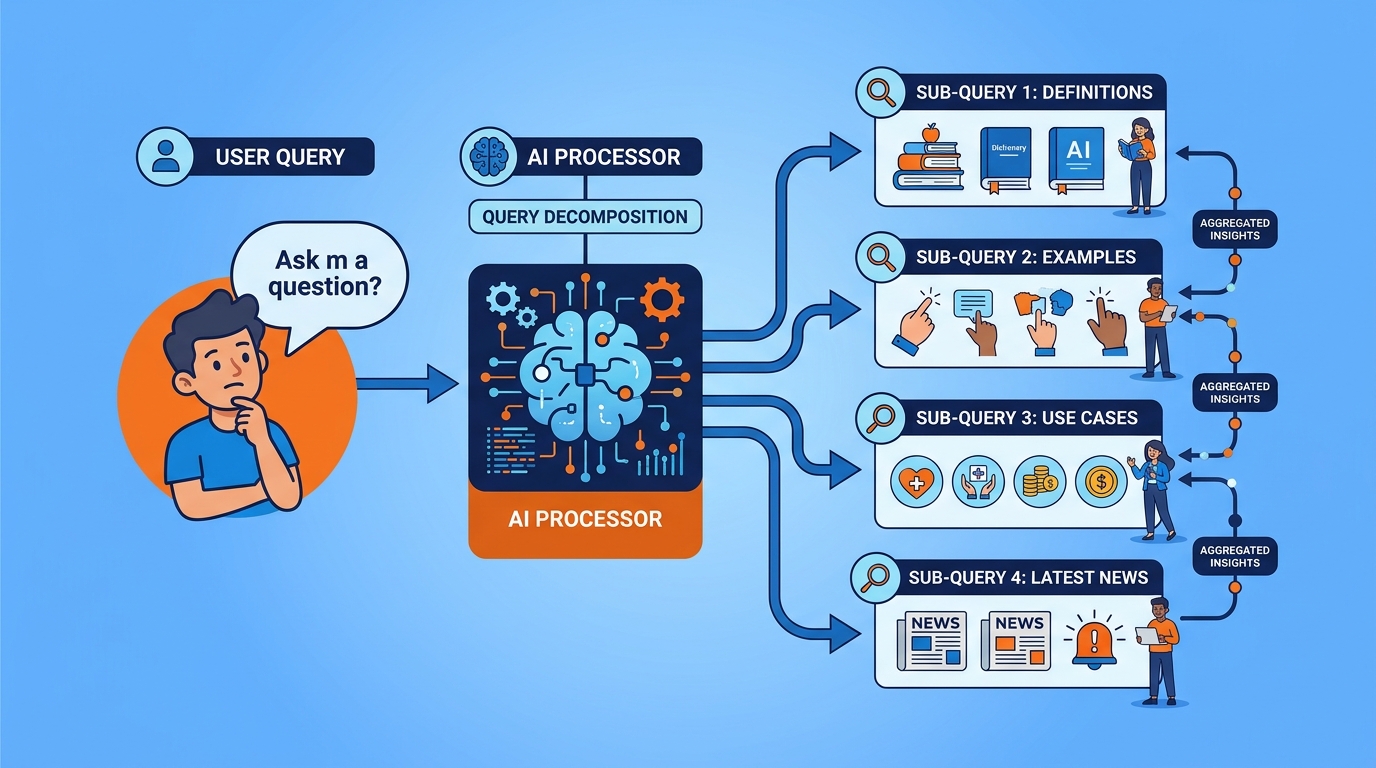
Here’s what happens when someone asks a question. Google Search Central says its artificial intelligence (AI) Overviews and AI Mode may use a “query fan-out” technique. It sends out several related searches across subtopics and data sources to build an answer.
AI Mode splits the question into subtopics. It searches for each one at the same time, across several data sources. Then it brings the results together into an answer that’s easy to understand. Google explains this in Get AI-powered responses with AI Mode in Google Search.
Deep Search in AI Mode uses the same query fan-out technique, just taken further. Google says it can send out hundreds of searches and reason across many separate pieces of information. Then it creates a fully cited, expert-level report in just minutes. Google describes this in AI Mode in Google Search: Updates from Google I/O 2025.
Which Pages the Sub-Query Searches End Up Citing
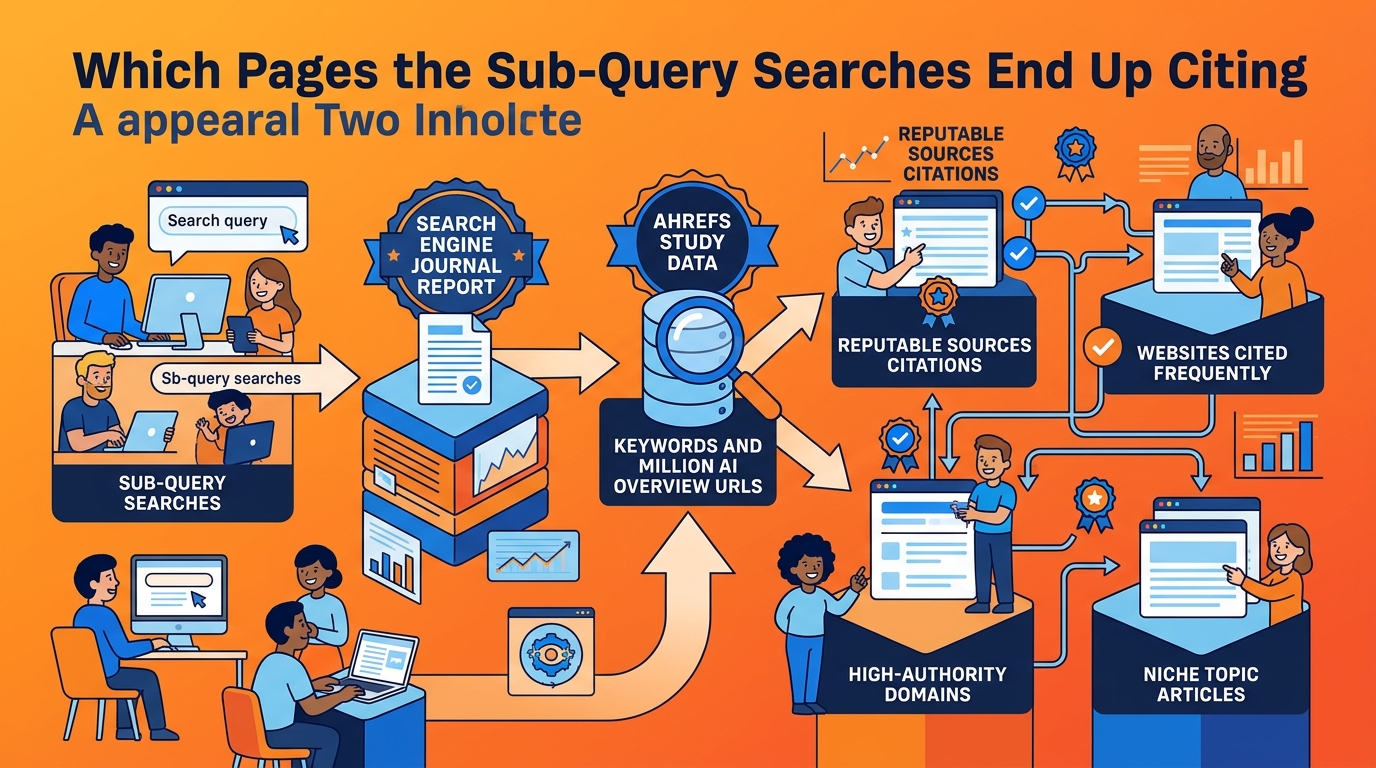
Search Engine Journal reports on an Ahrefs study that looked at 863,000 keywords and 4 million AI Overview URLs. Those are the web addresses cited in Google’s AI Overviews. A bit more than a third of the cited pages (38%) also appeared in the top 10 results for the same query. In Ahrefs’ earlier version of the study, from July, that number was about three out of four (76%).
The rest of the citations split almost evenly. About 31 out of 100 (31.2%) came from positions 11 to 100. And about 31 out of 100 (31.0%) came from beyond position 100. Search Engine Journal covered the study in Google AI Overview Citations From Top-Ranking Pages Drop Sharply.
The table shows where the cited pages ranked for the same query.
| Where the cited page ranks for the query | Share of citations |
|---|---|
| Top 10 | 38% (76% in Ahrefs’ previous version, from July) |
| Positions 11-100 | 31.2% |
| Beyond position 100 | 31.0% |
The same report gives Ahrefs’ explanation for this. When a search triggers an AI Overview, Google can split the original query into several related smaller searches. The pages that show up most often across the results of those smaller searches are the ones that get cited in the AI Overview.
Search Engine Journal says that optimizing for one keyword and ranking well for it may not be enough. Google’s AI can check your content against smaller searches you may not be tracking. Covering a topic from related angles, and in different formats, appears to count for more than holding one top 10 position.
I don’t treat getting picked by AI answer tools as old search work with a new name. I treat it as its own discipline. I won’t aim your effort at one keyword, a pile of inbound links or a ranking position, because I think that’s the wrong target. These systems are trying to figure out who you are and whether you can be trusted. So I put the effort into making that easy for them to see.
Want the writing side of this? The AEO Content Writing page covers it. And iTech Valet Service Plans & Pricing explains how the work gets done.
How Internal Links Show Google Which Pages Matter
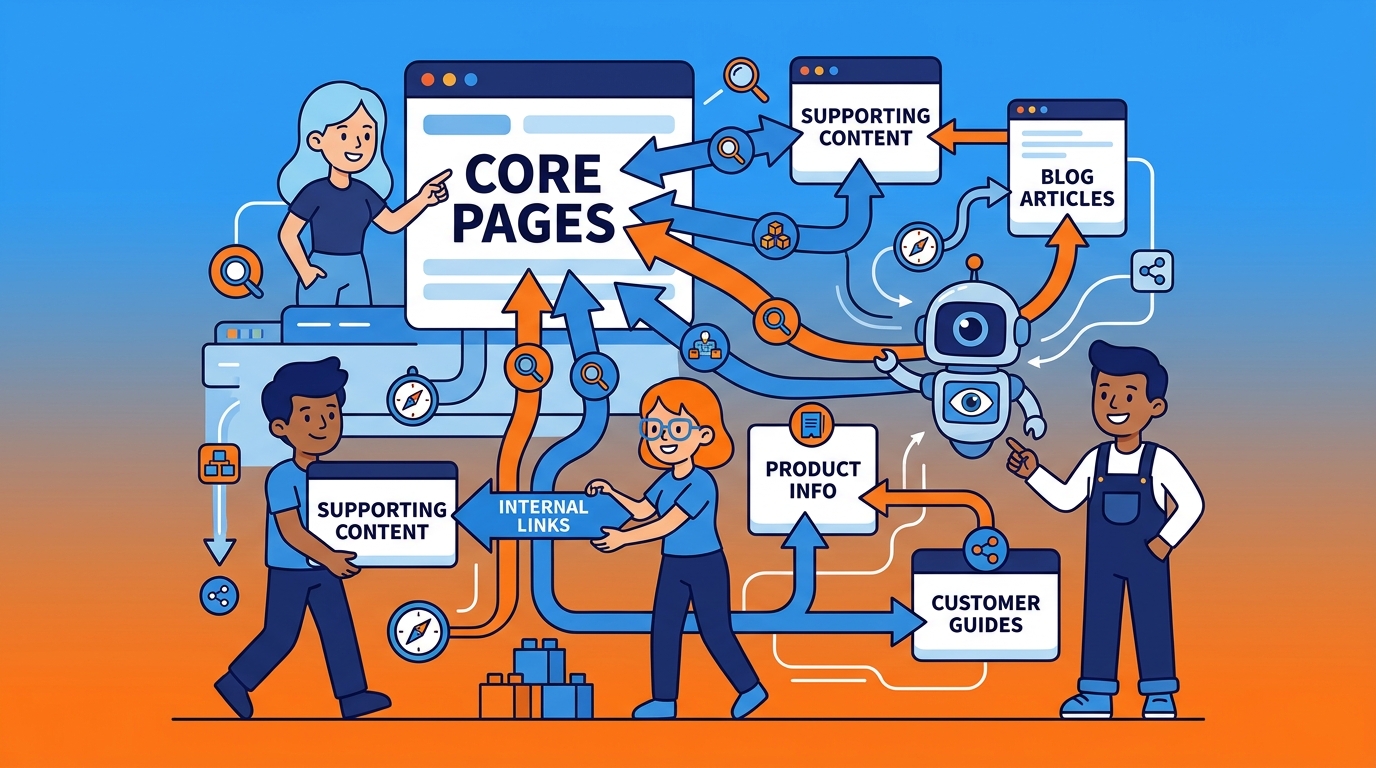
Here’s the good news. Google says you don’t need special optimization for AI Overviews and AI Mode. All the existing search optimization basics are still worthwhile. One example is making your content easy to find through internal links on your website.
Google also says every page you care about should have a link from at least one other page on your site. Think about which other pages on your site could help readers understand a page, then link to those pages in context. Mapping a Neck Pain Topic Hub for a Chiropractic Site shows one way to lay that out.
Here’s what Google reads from your links, based on its Link best practices for Google:
- Google uses links as a signal to judge how relevant pages are and to find new pages to crawl.
- Good anchor text (the clickable words of a link) is descriptive and reasonably short. It’s relevant to the page it sits on and to the page it links to.
Google can also use the number of links it needs to follow to reach a page, and the number of links to a page. From those, it can infer how important a page is relative to the rest of your site.
Google generally doesn’t look at the structure of your web addresses to work out the structure of your site. Instead, it analyzes the links between pages to gain insights about the relative importance of different pages. Google says this in Help Google understand your ecommerce website structure.
What a Page Needs to Be a Supporting Link in AI Answers
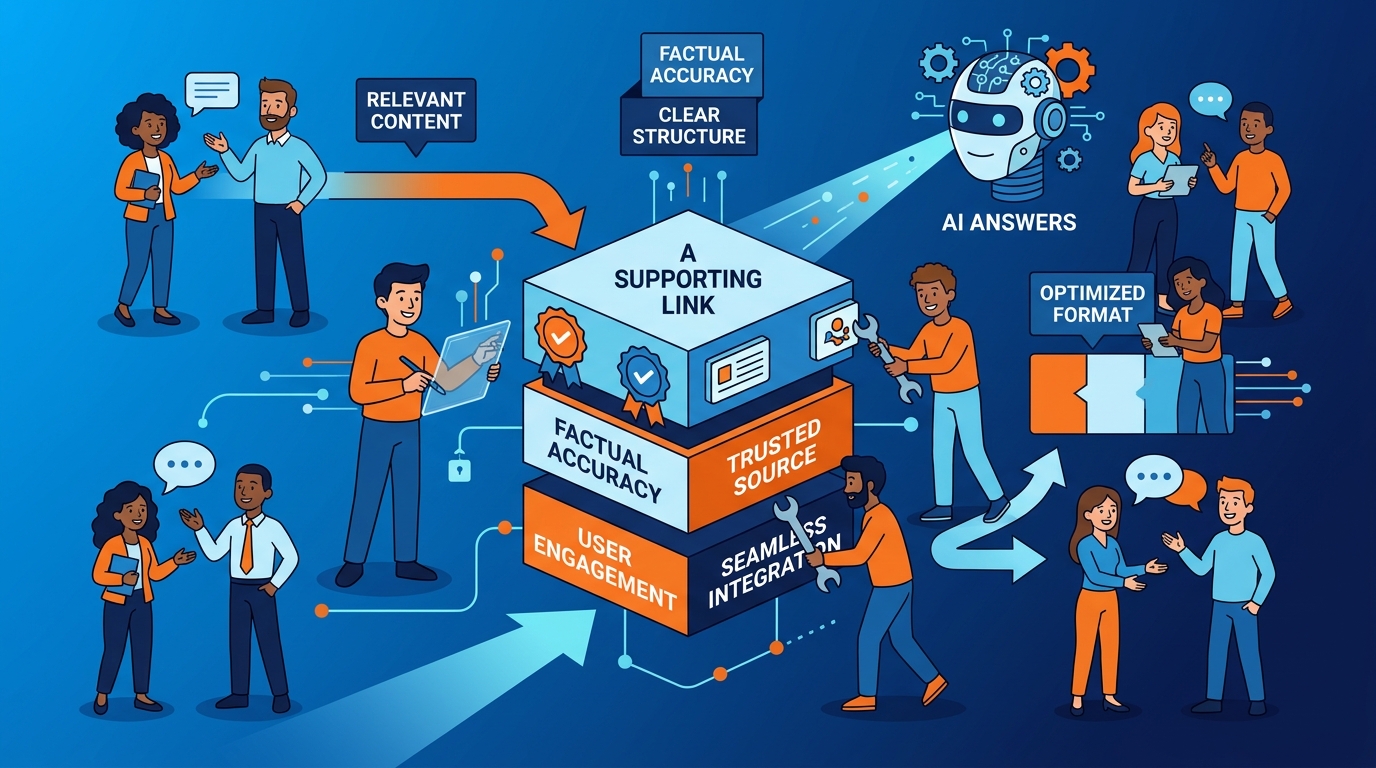
Here’s the rule. To show as a supporting link in AI Overviews or AI Mode, a page must be indexed and eligible to show in Google Search with a snippet. It has to meet the Search technical requirements. Google says there are no additional technical requirements. You can read this in AI features and your website.
Google also says accuracy is the top concern in Search. So AI Overviews are built to show only information that is backed up by top web results.
I’d rather your practice be the source an answer draws on than one more name in a list of businesses. Being relied on matters more to me than being present, so I build pages to be drawn from. For how a condition hub is put together so machines can read it, see Building Machine Readable Condition Hubs: A Complete Guide.
Why Sources Differ Across Google Search, AI Overviews and Gemini
An arXiv study found that the sources pulled up are substantially different for each search engine. The average Jaccard similarity was below 0.2. That score measures how alike two sets of sources are.
Research on arXiv also reports that AI Overviews are less consistent when they process two runs of the same query. They’re also less robust to minor query edits.
Why Linked Pages Pass Authority a Lone Article Cannot
An arXiv study measured how much authority a source has for large language models, the AI behind tools like ChatGPT. It used PageRank, as described by Rogers in 2002. PageRank looks at the links between web pages. It gives a page more importance when it gets links from other important pages.
Results reported on arXiv compare two ways of picking links. Automatic selection generally produced stronger authority redistribution, with higher Authority Yield, a measure the study uses. It also came with larger semantic coherence costs than expert-assisted selection.
Want a side-by-side look? See One Condition Hub vs a Handful of Short Posture Tips.
Frequently Asked Questions
How do AI Overviews change clicks to a single article?
One industry analysis says they cut the click-through rate for the top result. That analysis, cited in an arXiv paper, says organic click-through rates for position-one results fell from 28% to 19%, and it puts that down to AI Overviews. It also says searches that end without a click now make up over 58% of all queries. Google says sites that show up in AI features, such as AI Overviews and AI Mode, are counted in the overall search traffic in Search Console, just like the rest of the search results page.
Should a clinic trust a single check of whether AI cites it?
No. An arXiv paper argues that citation visibility metrics should be treated as sample estimates. They estimate the wider spread of answers that could come back. So take more than one look before you read anything into a result.
I don’t use rank position as my measure of success anymore. Once AI tools began giving direct answers instead of lists of links, a site’s spot in a list stopped telling me much about whether a business gets found. I treat rank-tracking reports as outdated. They look good, but I don’t think they drive outcomes.
Does Google show an AI Overview for every search?
No. Google says AI Overviews are only shown when its systems decide they add something to classic Search. Because of that, they often don’t show up.
Does a link need particular code for Google to follow it?
Yes. Google says it can generally only crawl a link if it’s an <a> HTML element, also called an anchor element, with an href attribute. Most links in other formats won’t be read and pulled out by Google’s crawlers.
Build a Linked Set, Not a Lone Article
A linked set of neck pain pages can cover the smaller searches a lone article misses. I’d put your effort and money into visibility built on assets you control, like clear and credible information about your practice, because I expect that to keep paying off and grow over time. Visibility bought through ads or paid placements stops the moment the spending stops. So I build linked sets of pages your practice owns.
iTech Valet’s AEO Content Writing Services is a standalone, content-only offering for businesses with existing infrastructure. AEO, or Answer Engine Optimization, means writing so AI tools can use the content. You can get a Local Pack of 12 articles or a National Pack of 30 articles.
Do you want to see where your practice stands with AI first? Run My AI Visibility Check