
How AI Engines Read the Difference Between a Founder and a Faceless Firm
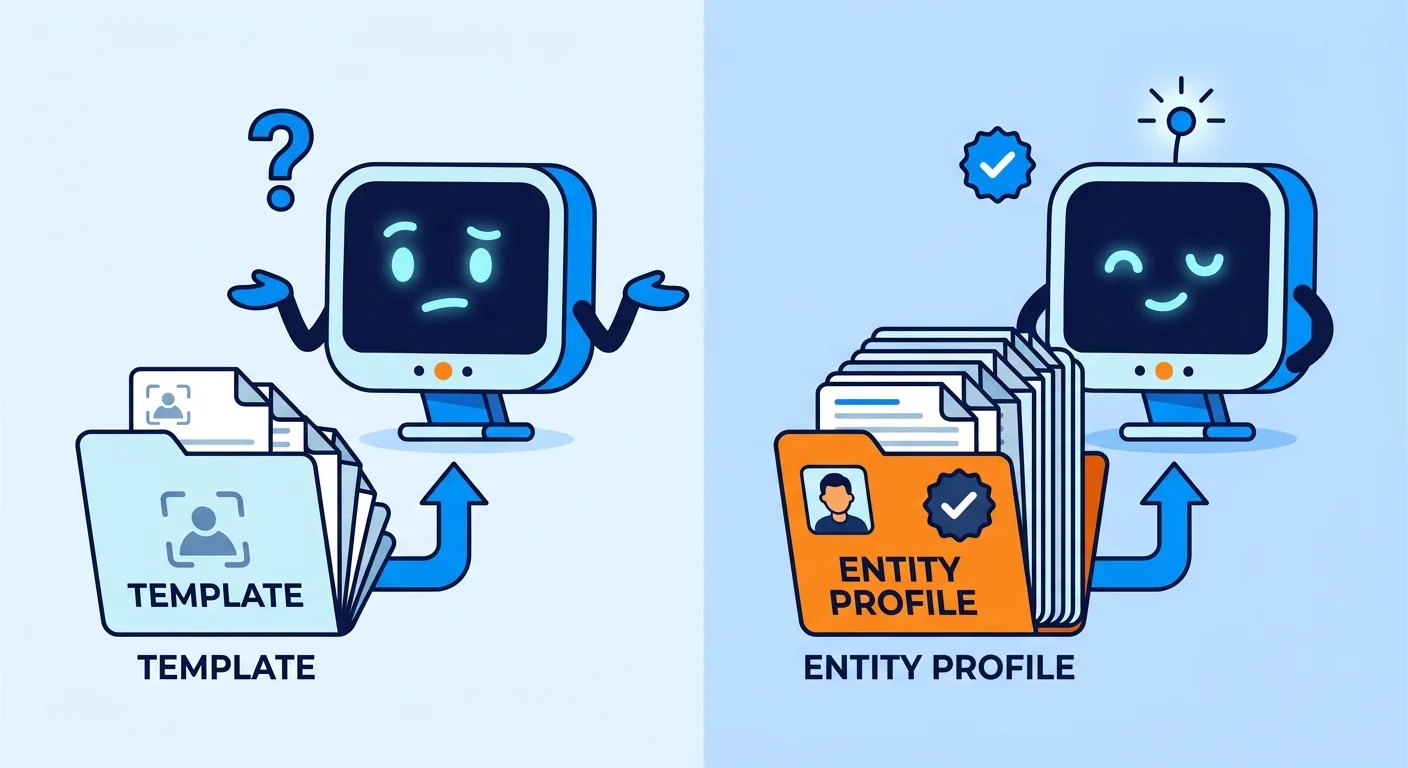
Here's the thing about picking a marketing partner: it's one of the most consequential calls a clinic owner ever makes. Get it wrong and you don't just burn a budget. You actively teach an AI engine to distrust the clinic's own website.
So the mechanics matter. Underneath every query, a generative engine is really asking one question: is there a real, findable expert behind this claim, or just a page?
And that question isn't new. The tug-of-war between a small, specialized boutique agency and a big, faceless corporate firm has been around for years. But AI search changed the stakes, because now getting the answer right decides whether the engine sees a source or skips one.
Want to see why one identifiable expert beats an anonymous team? Watch how a founder's two decades of hands-on experience builds the exact entity trust chain generative engines are wired to follow. That case file either holds up under scrutiny, or it doesn't.
Why the Templated Agency Model Was Built to Break Under AI Search

The templated agency model breaks under AI search because it was built for a different search entirely, one that paid you for volume instead of proof. And they still sell that model today, dressed up as a scalable advantage. It's the exact mechanism that gets a clinic quietly filtered out of the answers generative engines hand back.
Look at what the model actually optimizes for. It's output speed across a lot of accounts, not depth on any single one. The whole debate comes down to scalable efficiency versus bespoke authority, and templated agencies already picked their side.
That choice made sense once. It stops making sense the second the reader asking the question is a machine trained to sniff out who, exactly, stands behind a claim.
| Structural Trait | Faceless Corporate Agency | Boutique Founder Model |
|---|---|---|
| Who authors the content | Junior account managers executing pre-built playbooks across many unrelated clients at once | The principal owner, shaping strategy and standing behind every claim personally |
| How strategy gets built | Templated frameworks stamped out across the client roster with minor substitutions per account | Bespoke positioning built around one clinic's specific expertise and reasoning |
| What the AI engine detects | A repeatable pattern with no single identifiable expert attached to the claims | A consistent, traceable entity whose authority holds up across every page |
| What the model optimizes for | Output speed and account volume, prioritizing scalable efficiency over depth | Depth and specificity on a single entity, prioritizing bespoke authority over scale |
| Outcome under generative search | Treated as a trust liability because the content reads as mass-produced | Treated as a citable, primary source because the case file is thick and specific |
The Mechanics of Mass Production Agencies Rely On
A faceless corporate agency, by definition, runs on junior account managers executing strategies that were templated long before your clinic ever signed. That structure isn't an accident. It's the whole business model, because it lets one firm serve way more clients than any single expert could ever personally watch over.
So the content those account managers ship reads the same across every client in the portfolio, with your clinic's name dropped into a shell somebody else got first. Now the real question is what happens when that process gets automated even further, and how faceless agencies use automated bots to mimic real human authority becomes the industrial machine worth naming.
Google's own ranking systems generally punish exactly this pattern. Content churned out at scale across big networks of sites, with no individual care, gets treated as a trust liability instead of a trust asset, according to Google's documentation.
That penalty wasn't written with generative engines in mind, but the logic carries over clean. A system built to reward proven expertise has no way to reward a template, no matter how many times you republish it.
Where This Model Costs the Clinic Owner Specifically
Here's where this stops being abstract for a clinic owner. Every templated page the agency ships is a page that looks, to an AI engine, like it could belong to any clinic on the same account.
That sameness is the cost. It's not a stylistic flaw, it's a structural one, because it strips out the exact signal a generative engine uses to decide whose answer to trust.
So a clinic paying for that structure is paying to look interchangeable at the one moment interchangeable is the last thing any business can afford to be. Every templated page added makes the case file thinner, not thicker.
What a Founder's Direct Involvement Actually Builds Instead
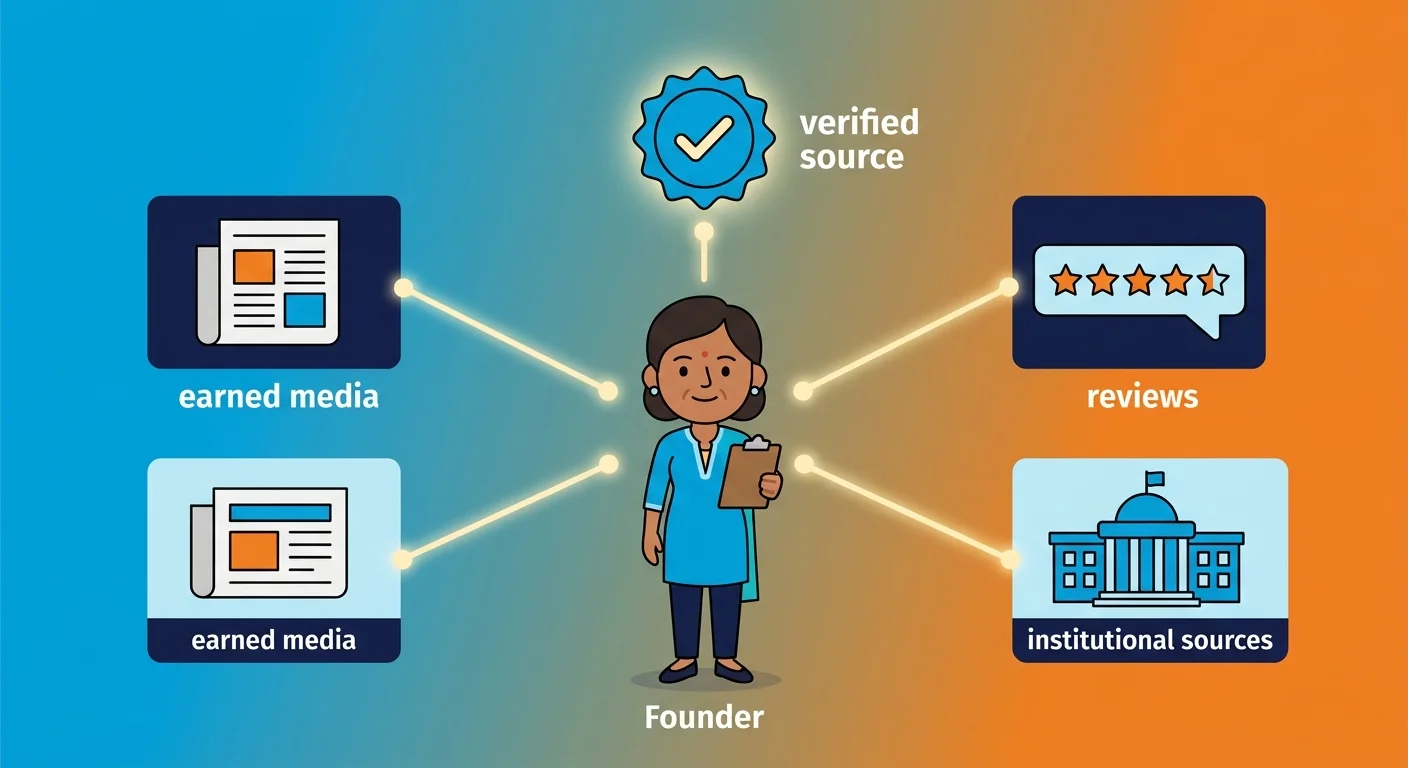
A boutique founder isn't a shrunk-down corporate agency. It's a different model entirely, one where a single principal owner shapes the strategy and stays personally on the hook for what happens to the client.
And that direct involvement isn't a nice-to-have. It's the raw material an AI engine needs to build a case file worth citing.
So what does that involvement actually produce? Three things a template structurally can't: a consistent voice, a traceable expert, and claims that hold up because one person stands behind every one of them.
| Trust Signal Source | Share of AI Citations | What It Means for a Clinic |
|---|---|---|
| Earned Media (Reviews, Press, Third-Party Mentions) | 82% of citations on customer sentiment queries | A clinic's own website copy is not what AI engines trust first when asked what customers think |
| Institutional Corroboration (Government or Newspaper Sources) | Preferred over people and social media sources | A founder's documented credentials and press mentions outweigh generic self-published claims |
| A Single Identifiable Principal Owner | Not a measured percentage, a structural presence | Direct founder involvement in strategy and client success gives every claim one traceable author |
Turning a Founder's Expertise Into Machine-Readable Trust
Here's the mechanism most clinic owners never get told about. A generative engine doesn't read a clinic's website as a stack of pages, it reads it as a set of claims made by someone, and that someone either resolves to a real, findable expert or resolves to nobody at all.
A founder's direct involvement gives every claim the same author. The homepage positioning, the reasoning in an article, the answer to a specific question all trace back to one identifiable person whose credentials don't shift from page to page.
That consistency is what turns raw expertise into machine-readable trust. An AI engine can verify one stable identity far faster than it can verify a rotating cast of junior account managers writing under a shared brand name.
This is also where the case file thickens instead of thinning. Every piece a founder writes personally adds another verifiable data point to the same entity, and that compounding is exactly what separates a specialized authority architect from a commodity retainer arrangement.
Why Earned Media and Reviews Carry More Weight Than a Brand's Own Website
Now look at where trust actually gets sourced once a clinic makes it past the front door. When users ask an AI engine what customers think about a brand, the model cites earned media 82% of the time, not the brand's own website.
That figure is specific to customer review queries across a range of AI engines, and it says something uncomfortable about self-published brand copy. A clinic's own marketing language, however polished, isn't the evidence an AI engine reaches for first.
Independent, third-party corroboration outweighs it, a pattern confirmed by published research data on how these models actually weigh their sources. That same work, tested across 13 open-weight LLMs, found these systems prefer institutionally-corroborated information from government or newspaper outlets over content from people and social media, a preference documented in the arXiv preprint server. A founder's public track record, reviews, interviews, and cited credentials function as exactly that kind of corroboration. A templated agency page, written by no one in particular, has no earned media to stand on.
Who This Model Isn't For and What Clinic Owners Push Back On

This model isn't for every clinic owner. It's built for the person who wants to be the verifiable expert behind their own brand, not the one who wants to vanish behind a logo.
So before the pushback shows up, let's name who should walk away from this arrangement, and which objections actually hold up.
| Objection Raised | What It Assumes | Why It Doesn't Hold Under AI Search |
|---|---|---|
| "A bigger agency simply has more resources." | That resource volume translates into stronger visibility, regardless of how the content gets produced. | AI engines are not indexing resource volume. They are looking for one identifiable expert behind a claim, which scale alone does not produce. |
| "A bigger team means faster turnaround." | Speed at scale is a competitive advantage that clinics should prioritize over depth. | Speed at scale is the exact mechanism that produces templated sameness, and generative engines are built to discount that sameness. |
| "Advanced tooling makes up for a lack of a named expert." | Sophisticated software and reporting dashboards can substitute for a traceable, credentialed author. | Tooling does not resolve to an identifiable entity. Without a stable author behind the claims, there is nothing for the engine to verify. |
| "A larger internal team reduces risk versus one founder." | More people touching an account means more oversight and more reliability. | A rotating cast of account managers fragments the entity trust profile instead of strengthening it, since claims stop tracing back to one source. |
Who This Model Isn't For
Want zero personal visibility? Then a founder-led model is going to feel uncomfortable by design, because the whole mechanism runs on one identifiable person being named, credentialed, and quoted across the clinic's public presence.
This also isn't the fit for a clinic chasing the fastest, cheapest option on the table. Building a case file an AI engine trusts takes sustained, specific work, not a one-time content dump.
And it's not for the owner who wants a big internal team babysitting every account detail. A boutique founder model trades a large roster for depth on one relationship, and that trade only makes sense to someone who values the depth.
Common Pushback on the Boutique-Versus-Corporate Decision
The most common pushback sounds reasonable on the surface: doesn't a bigger agency just have more resources? But resources aren't the variable that decides whether an AI engine cites a clinic.
A clinic owner who wants to vet that resource claim before signing anything can walk through how to confirm an agency founder's actual results, which lays out what a verifiable track record actually looks like versus what gets asserted in a sales call.
Another objection follows right behind: won't a bigger team mean faster turnaround? Speed at scale is exactly the mechanism that produces the templated sameness generative engines are built to discount.
Scale and Tooling Claims Corporate Agencies Lean On
Corporate agencies lean hard on their tooling and their scale as proof that bigger is safer. That argument misreads what generative engines are actually indexing.
Scale produces volume. Volume doesn't build an entity trust profile, because a wide network of near-identical pages never resolves to one identifiable expert.
Here's a useful comparison point. Niche directories and aggregators combined account for 8% of AI Overview citations, a modest share confirmed by published research data tracking citation sources across industries.
That figure matters because it shows generic, aggregated listings already struggle to earn citation share against sources with a clear, specific origin. A templated agency page sits closer to that aggregator pattern than to a primary source, no matter how much tooling sits behind it.
Frequently Asked Questions
So here are the questions clinic owners actually ask once the case-file argument lands. Each one gets a straight answer, not a hedge.
How can a boutique founder's direct involvement translate to better results in AI-driven search?
Every claim on your site traces back to one identifiable expert, not a rotating account team. An AI engine can verify that single identity, and that's exactly what turns raw expertise into a citable trust signal.
What are the red flags to watch for when a large corporate agency presents a templated strategy?
Watch for language that could describe any clinic in the country without a single edit. If the strategy never names a specific expert on the hook for the outcome, it was built for a portfolio, not for you.
Do large agencies have access to better tools and technology than smaller boutique firms?
Tooling and scale produce volume, not verifiable authority. A wide network of near-identical pages never resolves to one identifiable expert, so more tools don't close the trust gap generative engines are built to catch.
How is client communication and reporting different between a boutique agency and a large one?
The person setting your strategy is the person answering your questions. A larger agency routes that same conversation through junior account managers who didn't write the strategy.
Why is a founder's specific expertise more valuable than a large team of generalists in the age of generative AI?
Generative engines reward one consistent, verifiable expert over a team of generalists stamping out interchangeable pages. A single founder's traceable track record builds a thicker case file, because the claims never change authorship.
What happens when I need to pivot strategy quickly with a large agency versus a founder-led one?
A founder-led model shifts direction immediately, because the person deciding the strategy is the person executing it. A larger agency has to route that same pivot through layers of account management built for consistency, not speed.
The Bottom Line
So the choice was never about agency size. It was always about which model builds something an AI engine can actually verify.
A thick case file, authored by one identifiable expert, reads as a primary source and gets cited. A thin template, stamped out across a thousand other clients, reads as noise and gets skipped. That's the whole verdict, and no amount of tooling or scale moves a templated agency off the losing side of it.
A boutique founder builds the first kind of file, one verifiable claim at a time, because there's nobody else the claim could belong to. Want to see what that case file looks like for your own clinic before you commit to building one? check your clinic's current AI visibility standing.