
Why Most Clinics Are Invisible to AI (And It Has Nothing to Do With Their Website Builder)
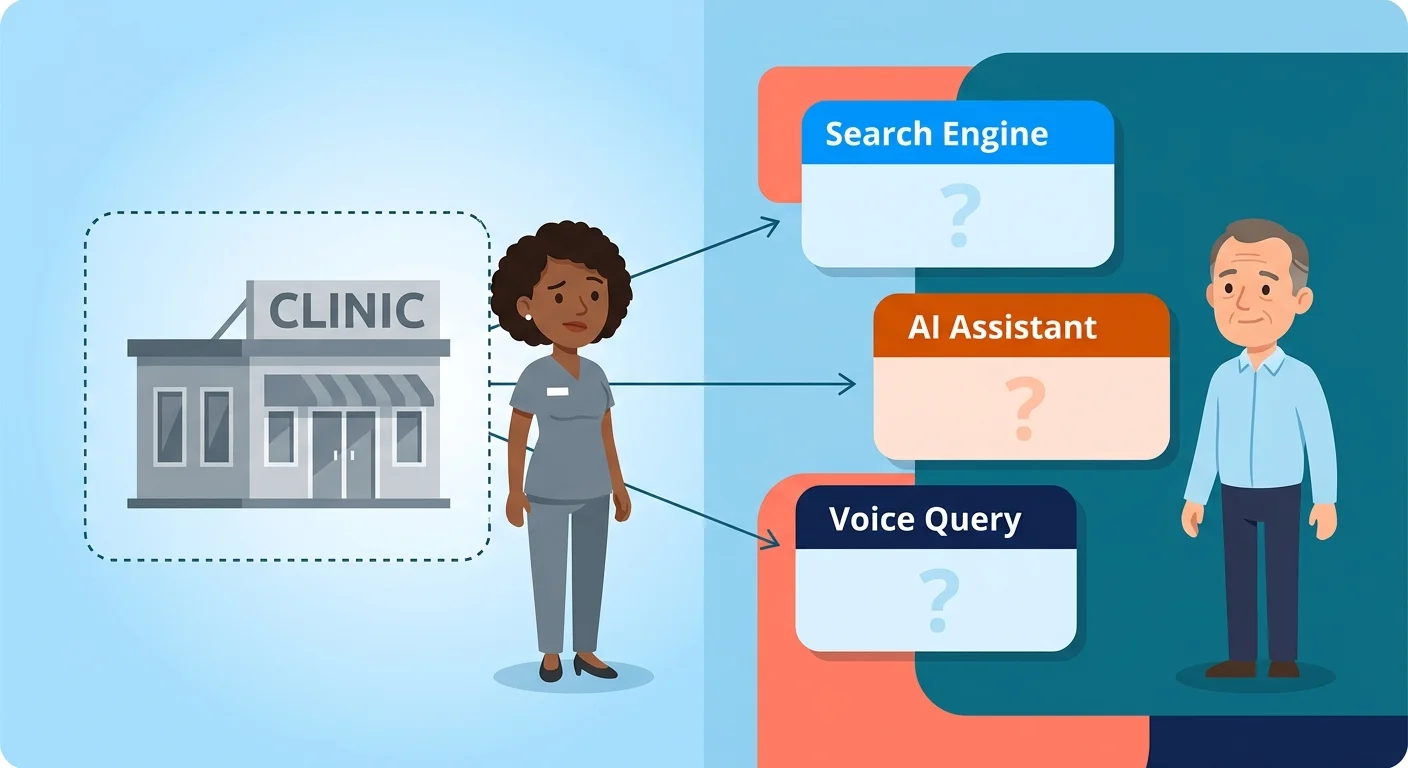
Most clinic owners think being invisible to AI is a platform problem. So they blame the theme, the hosting, the CMS itself — and start pricing out a rebuild. They're wrong.
Here's the thing: when an AI engine names your clinic, it works like a trusted referral. It tells a searcher you're the answer, ahead of every competitor it could've picked instead. That's what a citation really is.
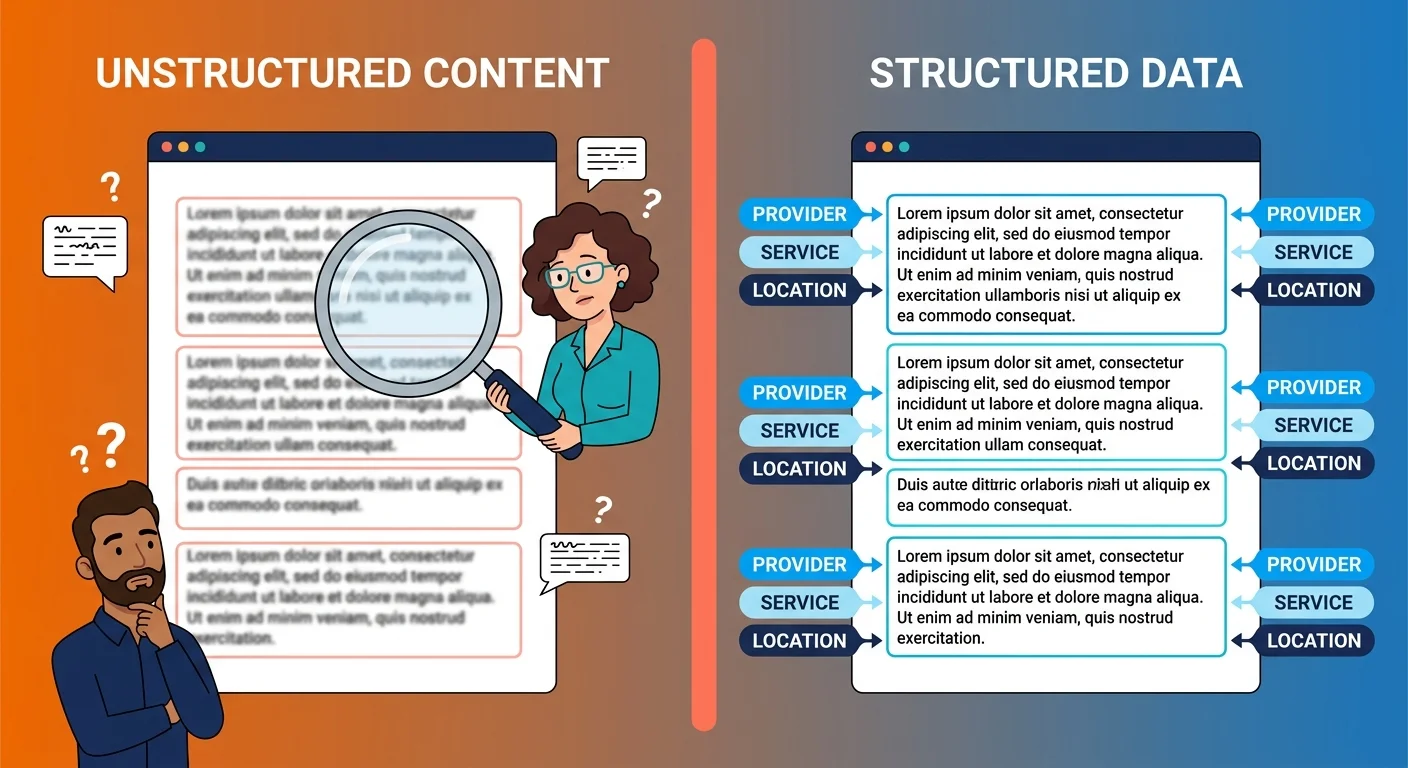
Look, the thing keeping that citation out of reach is almost never the CMS underneath. It's the messy, ambiguous way your clinic's information sits on the page. AI can't verify what it can't parse cleanly — doesn't matter how modern the framework is.
That means polishing the design layer changes nothing about whether an engine trusts what it reads. The gap lives entirely in the data layer, the machine-readable record of who you are and what you treat. Clinics chasing that gap solo tend to miss the same problem inside their published articles, which is exactly what defining the content boundaries an AEO article must respect handles for local businesses.
The Method Clinics Keep Reaching For That AI Engines Have Already Stopped Rewarding

So once a rebuild is off the table, what do most clinics grab instead? They fall back on what they already know: acquiring inbound links and publishing more keyword-targeted articles.
That instinct made total sense under traditional search optimization. It makes a lot less sense now.
Here's why. Answer engines don't line up a stack of pages and rank them the way a classic search index did. They retrieve, weigh, and pick a small handful of sources to cite right inside a generated response, and that's a completely different contest than placing in the classic ten blue links.
| Retrieval Factor | Highly Cited Source Behavior | Less Cited Source Behavior |
|---|---|---|
| Accuracy of Answer | Comparable accuracy, scored at 4.6 | Comparable accuracy, scored at 4.2, essentially matching the highly cited dataset |
| Readability and Response Time | Readability and response time consistent with a highly cited dataset | Readability and response time comparable, not measurably worse, than the highly cited dataset |
| Selection Logic Under AI Retrieval | Assumed default pick under old ranking-style thinking | Recommended when structure and verifiability meet the bar, regardless of citation volume |
Why Chasing Inbound Links and Keyword-Targeted Articles Falls Short Now
Here's the thing about an inbound link: it tells a traditional search index that another page vouches for yours. It tells an AI engine nothing about whether your clinic's data is structured, verifiable, or safe to cite.
And a keyword-targeted article can rank for a phrase and still flunk the retrieval test cold. If the page never spells out who the provider is, what the clinic treats, or where the service happens in machine-readable terms, an answer engine has nothing solid to pull from.
That gap gets uglier when a clinic never draws its boundaries. Listing services without ever saying what a clinic doesn't treat leaves an entity's edges blurry, which is the exact problem naming the conditions and procedures a practice deliberately excludes is written to solve.
Volume was the old lever. More links, more articles, more site visits, more assumed authority. But volume doesn't encode identity, and identity is what an answer engine is actually checking for.
What Highly Cited Sources Actually Buy You in an AI Answer
Look, the belief that only highly cited, big-name sources get pulled into an AI answer doesn't survive testing. A retrieval-augmented generation study on burn management clinical questions found less-cited research matched the accuracy, readability, and response time of highly cited sources almost exactly, a result documented in findings indexed through PubMed Central.
That means citation prestige isn't the gatekeeper clinics assume. Once a machine is doing the reading, structure and clarity outweigh reputation alone.
So a small clinic with clean, well-structured data can out-cite a bigger, better-known one that never bothered to structure a thing. In the new landscape of AI-powered search, visibility is shifting from a game of rankings to a game of recommendations, and recommendations get built from what an engine can verify, not from what it's heard of.
How AI Answer Engines Actually Pick Who Gets Cited
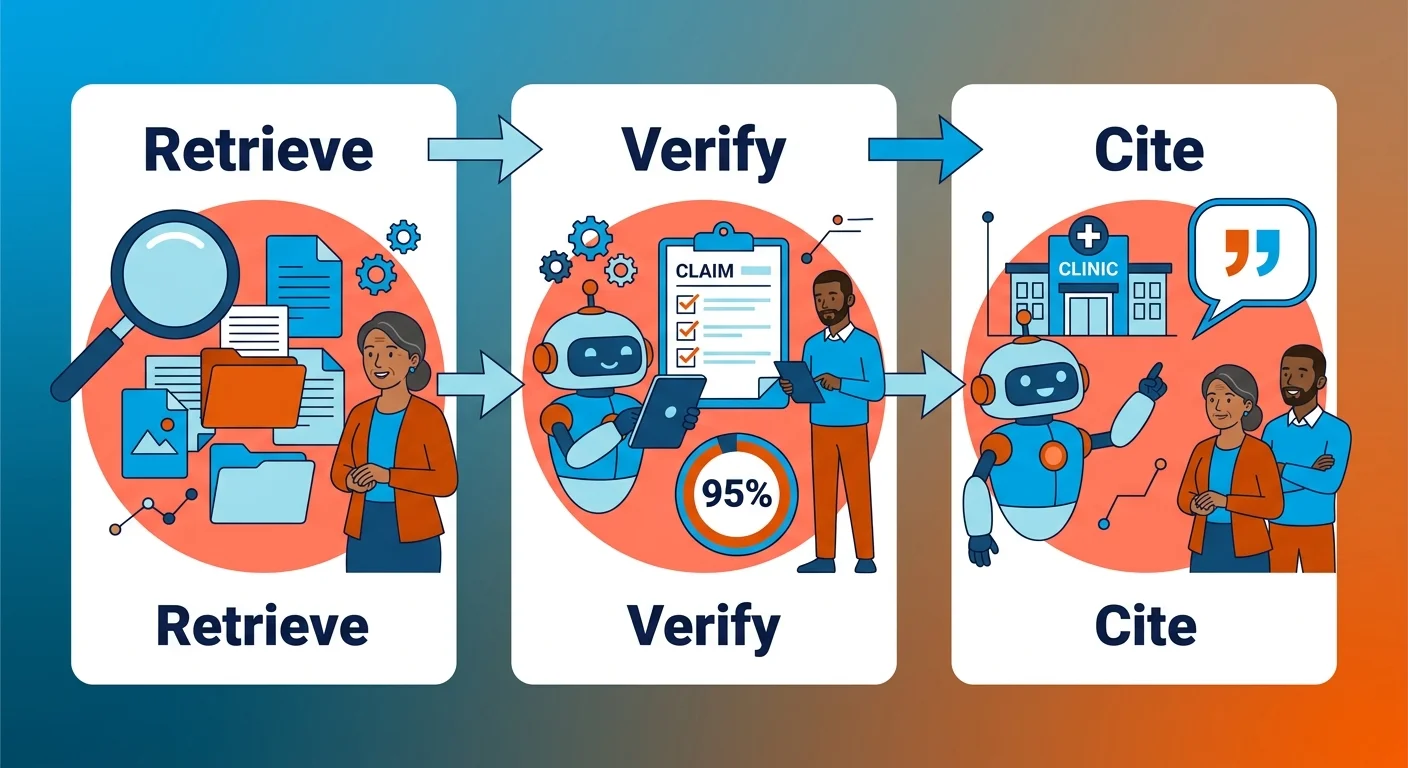
So what actually happens the second an answer engine decides who to name? It runs a retrieval step first, sweeping the web for candidate sources that seem to fit the question.
And that retrieval step isn't a popularity contest. It's a matching exercise between the question and whatever structured, verifiable data a source can hand over.
Clinics that already cleaned up the inconsistencies in their published service data give that matching step way less to trip over. That's the exact fix resolving inconsistent structured data across a clinic's service pages walks through for practices running mismatched schema.
The Retrieval and Verification Steps Behind Every AI Answer
After retrieval comes verification, and this is the step most clinic owners never think about. The engine checks whether the source it just pulled actually supports the claim it's about to make.
Here's the thing: verification rewards clarity over reputation. A source with clean, unambiguous data verifies faster than a big name buried in vague prose.
That's why your data layer matters more than your design layer at this exact moment. The engine isn't admiring the site. It's confirming facts against structured claims it can parse without guessing.
Why Surface-Level Citation Quality Is Not the Same as Factual Accuracy
Look, retrieval and verification aren't the same measurement, and treating them like one is where most assumptions about AI citation fall apart. A source can breeze through retrieval and still flunk verification cold.
Research on frontier large language models in deep research settings found link validity above 94% and content relevance above 80%, so the sources looked correct on the surface. But factual accuracy, the check of whether a cited source truly backed the claim, landed at only 39–77% across those same models, a gap documented in a preprint hosted on the arXiv preprint server.
That means a citation can look legit and still twist what the source actually says. For a clinic, the lesson isn't to chase surface polish. It's to make the underlying data so explicit that verification comes back clean, not just retrieval.
What a Machine Needs to See Before It Trusts a Clinic Enough to Name It
So verification is the real test. What actually gets checked when a machine runs it on a clinic?
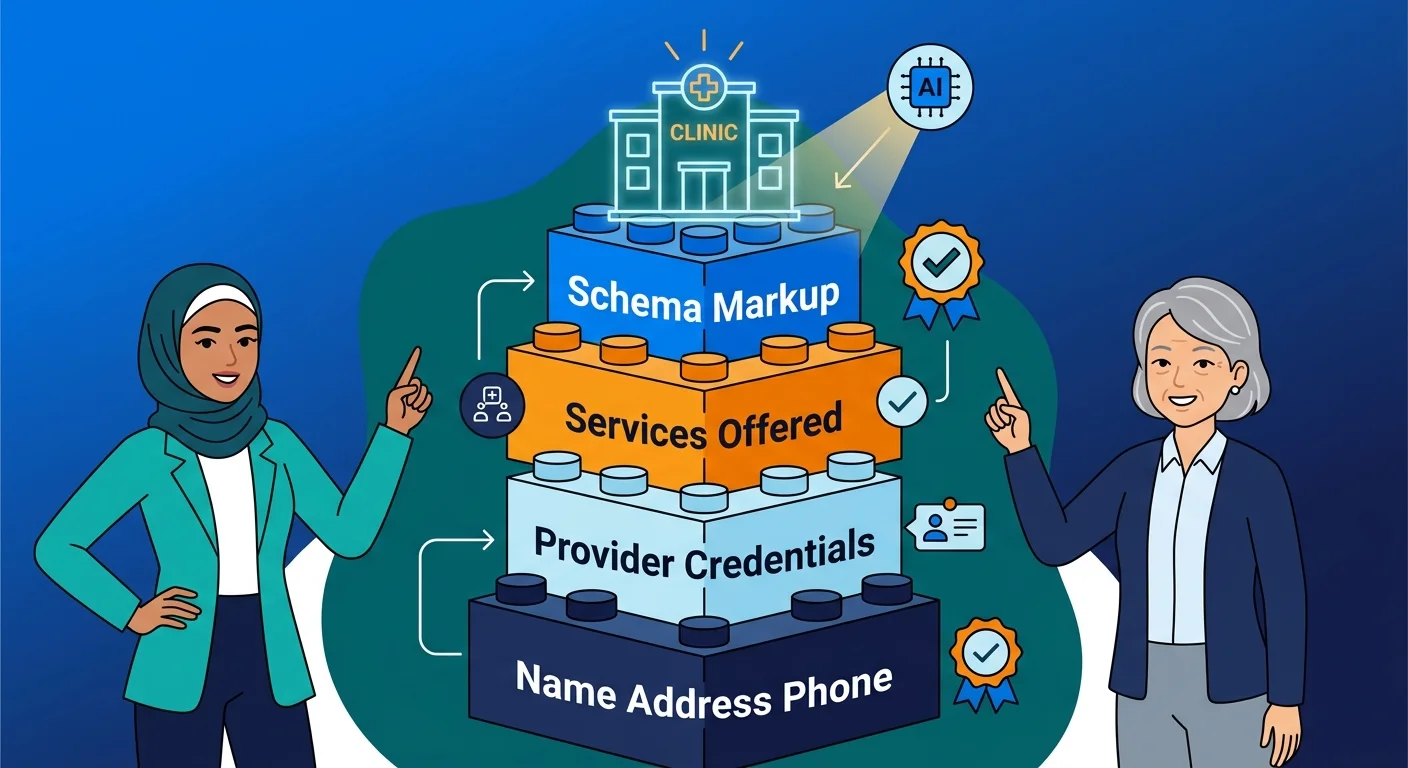
It comes down to a short list of concrete markers. Your entity type, your named providers, your service list, your location, your stated boundaries — all of it has to exist in a format a machine can read without guessing.
That means the whole trusted-referral idea only turns real once those markers get encoded flat-out. An engine can't name you as the answer if it can't first confirm, in structured terms, who you even are.
| Schema.org Type | What It Defines | Why AI Engines Rely On It |
|---|---|---|
| MedicalClinic | The entity type itself, declaring that the business is a healthcare provider rather than a generic local listing. | Removes category guesswork, letting an engine confirm what kind of entity it is evaluating before it trusts anything else on the page. |
| Physician | Each named provider inside the clinic, including credentials and role. | Gives an engine a person to attach expertise to, which matters when a query asks who performs a service, not just where. |
| MedicalProcedure / MedicalTherapy | The specific services and treatments the clinic performs, defined individually rather than bundled into a single services page. | Lets an engine match a narrow clinical question to a specific offering instead of inferring relevance from vague page copy. |
| MedicalCondition (as an exclusion) | What the clinic does not treat, stated as a deliberate boundary rather than left unaddressed. | Sharpens the entity's edges, which reduces ambiguity about scope and makes the remaining claims easier to verify. |
| PostalAddress and telephone fields | The clinic's location and contact details, expressed in the same structured format used across every listing. | Supports the cross-check an engine runs to confirm the clinic is one consistent entity rather than several conflicting records. |
The Schema.org Vocabulary That Tells AI What Kind of Business You Are
Here's the thing: Schema.org hands clinics a vocabulary built for exactly this. And it goes way past a generic business listing with types made specifically for healthcare.
Use the MedicalClinic type, pair it with Physician entries for each provider and MedicalProcedure or MedicalTherapy entries for each service, and a machine knows precisely what it's looking at. That specificity is what splits a verifiable clinic from a vague local business page.
Generic markup leaves an engine guessing at category. Healthcare-specific markup kills the guess, because the vocabulary itself names the business type, the credentialed people inside it, and the exact services on offer.
Why Consistent Name, Address, and Phone Data Reinforces the Entity
Look, schema alone doesn't finish the job. An engine cross-checks those structured claims against how consistently your identifying details show up everywhere else.
That means your name, address, and phone number have to match character for character across the website, the structured data, and every business listing you keep. A mismatch doesn't just look sloppy — it reads to a machine as two different entities that might not even be the same clinic.
So consistency is what turns a scattered pile of pages into one confirmed entity. Once the name, address, and phone data line up everywhere an engine looks, your claims about providers and services stop being one source's word and become a verified fact the engine can safely repeat.
Where the Real Gap Lives: Inside Your Existing Pages, Not Your Platform
So here's the redirect worth making before we go any further. Consistency and schema fix the verification problem, sure — but neither one lives inside your CMS settings.
They live inside the pages you already published. That's where the fix actually is, and it's got nothing to do with which platform hosts them.
Look, for most clinic owners a full rebuild was never on the table anyway. A complete overhaul or CMS migration means cost, time, and operational disruption most practices can't absorb, which is exactly why the fix has to work inside pages that already exist.
This Is Not for Owners Chasing a Redesign or a Ranking Report

This isn't for owners still praying the answer is a redesign. If you came here hunting for a reason to tear the site down and start over, we're not your fit.
And I get the instinct. A fresh site build work project feels like progress, something you can actually point at. But the redirect above already showed you where the fix lives, and it's not there.
This also isn't for owners chasing a placement report. If the goal is still clawing toward placing in the classic ten blue links, every idea in this article will feel beside the point. A Trustable Digital Entity is not a ranking tactic. It's a verification standard, and it answers a completely different question than a ranking report was ever built to answer.
Getting Structured Data Onto a Page Your CMS Was Never Built to Handle
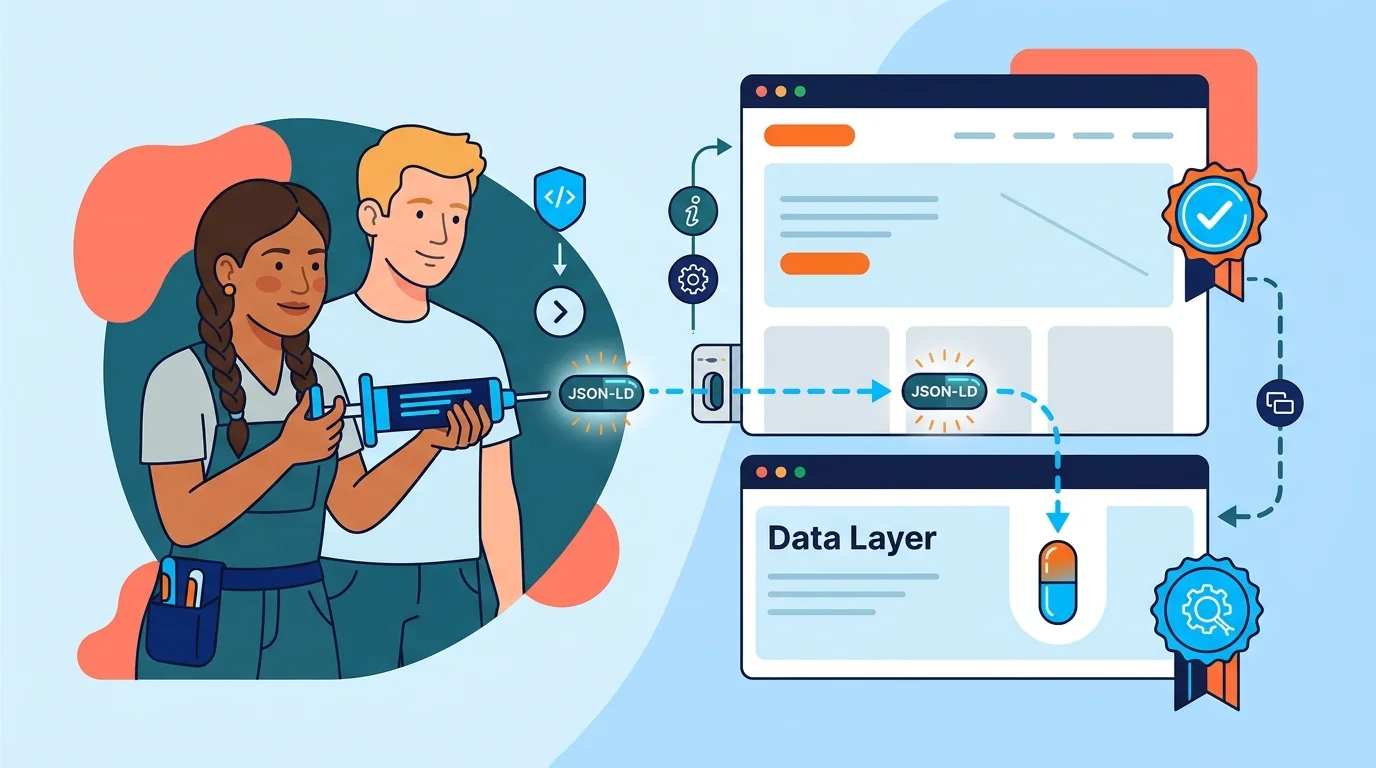
So here's the practical question underneath all of that. Where does structured data actually go when a full rebuild is off the table?
It goes onto the pages you already published, using methods that sit on top of the current build instead of replacing it. Nearly half of local business sites carry zero structured data markup at all, a gap measured across 16,673 audited sites, which means most clinics aren't losing to clever competitors so much as to their own empty data layer.
And that's genuinely good news. An empty data layer is way easier to fix than a broken design layer, because nothing about the existing site has to change for the fix to land.
Injecting JSON-LD Through JavaScript or a Content Management Widget
Here's the thing: injection never touches the templates your CMS was built around. JSON-LD, the structured data format search and AI engines both parse, drops in through a short script tag or a widget without editing a single design element.
Google reads JSON-LD when it's dynamically injected into a page's contents, whether that injection runs from JavaScript client-side or from an embedded widget built into a content management system. So the injection method doesn't have to be native to the platform to count.**
That detail is confirmed straight in Google Search Central, which documents how dynamically injected structured data gets crawled the same as data written right into the page's source. So the CMS isn't the gatekeeper here. The injection method is.
Confirming the Structured Data Is Actually Readable by Search and AI Crawlers
Adding the markup is only half the job. The other half is confirming it actually renders in a form a crawler can parse, instead of sitting invisible behind a script error or a widget that never loaded.
That confirmation step is probably where the near-half of local businesses with zero markup got tripped up, too. Somebody assumed structured data would show up once it was pasted somewhere, and nobody ever checked.
Verifying it right means testing the live, rendered page, not the raw code a developer wrote. That's exactly what the independent testing behind the 45.3% figure in published research data was built to catch, since a site can look fully marked up in its source files and still hand a crawler nothing once it only reads the rendered result.
Making Your Data Trustworthy Enough to Survive an AI Engine's Fact-Check

So injecting the markup isn't the finish line. An engine that pulls up a clinic's page still has to verify the claims inside it, and that verification step is exactly where thin data quietly falls apart.
That gap between looking correct and being correct isn't theoretical. Research on frontier models scored high on link validity and content relevance while factual accuracy lagged far behind. The same risk hits a clinic's own structured data.
A schema block that contradicts the prose sitting right next to it fails that exact check. Trustworthy data isn't just present, it's consistent everywhere an engine looks for it.
The Overlooked Signal: Telling AI What Your Clinic Does Not Do
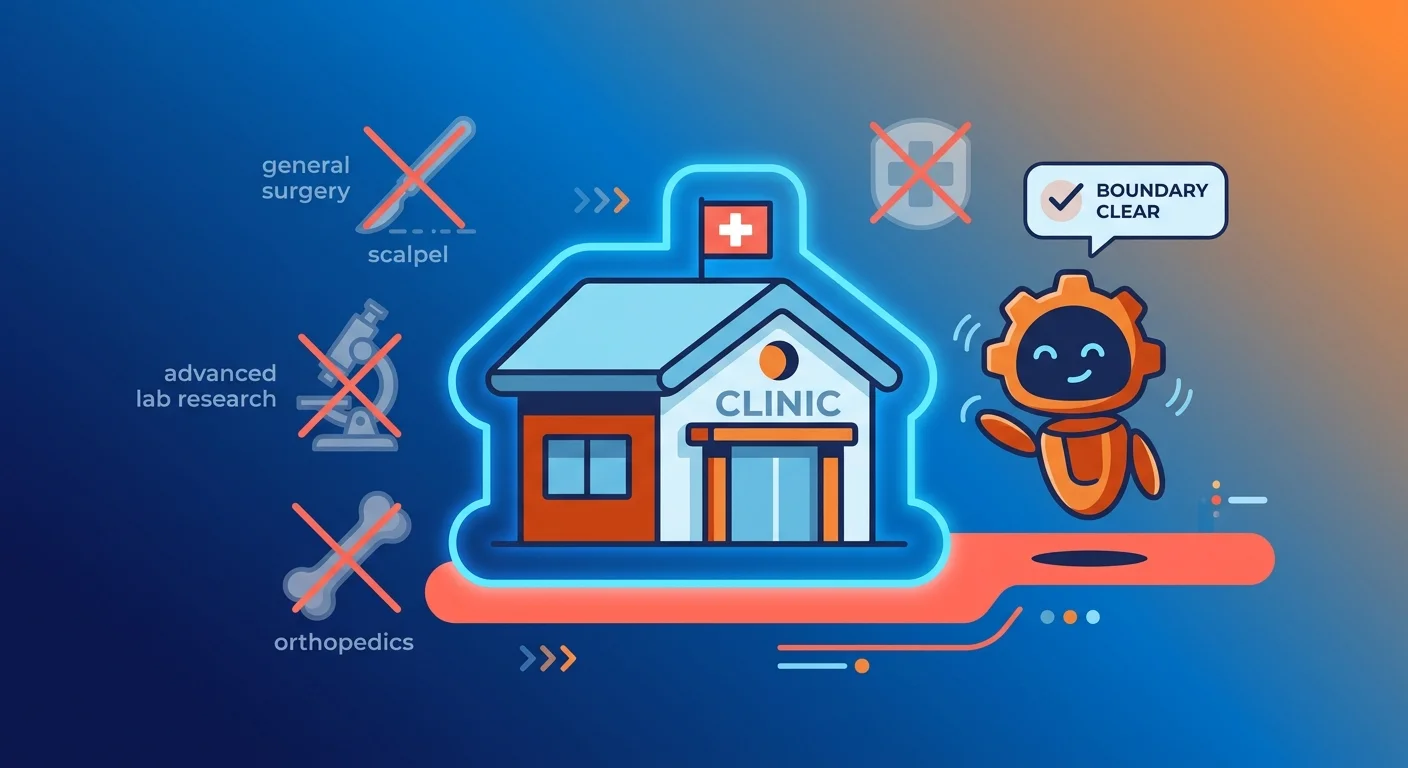
Here's the counter-intuitive move almost no clinic makes: telling an AI engine what you don't treat can build more trust than another page listing what you do.
Sounds backward, right? Owners spend years building out service pages, and the instinct is always to add more. Never to subtract.
But a machine reading an unbounded service list has no way to confirm where your real expertise ends. Negative boundaries close that gap, and they do it right inside the structured data layer this whole article's been building toward.
| Boundary Type | What It Excludes | Trust Signal It Sends AI |
|---|---|---|
| Service Scope Exclusion | Procedures or specialties the clinic does not perform, listed inside the same service entries as what it does treat | Confirms the clinic's stated services are a bounded claim rather than an open-ended guess, which makes each listed service easier to verify |
| Provider Specialty Boundary | Conditions or procedures a specific provider does not handle, noted alongside that provider's areas of practice | Tells the engine which provider owns which claim, preventing it from crediting one clinician with expertise that belongs to a colleague |
| Age or Population Exclusion | Patient groups the clinic does not treat, such as a population outside its stated specialty | Sharpens who the clinic's expertise applies to, so an engine matching a query to an entity is less likely to cite a mismatched fit |
| Referral-Out Boundary | Conditions the clinic evaluates but routes elsewhere for treatment, stated as a limit rather than left unmentioned | Signals the clinic understands its own edges, which reads as a more trustworthy source than a page implying it handles everything |
How Negative Boundaries Sharpen an Entity's Definition
An entity gets easier to verify the second its edges show, not just its center. A clinic that only says what it treats leaves a machine guessing at everything next door.
So a stated exclusion works like a fence line. It tells the engine exactly where your claimed expertise stops, which makes everything inside that fence easier to confirm, not harder.
That's the same legibility problem this whole article's been solving from another angle. Making your expertise, providers, and services readable to a machine was never just about the positive list. You've got to state the negative list too, or the machine's left inferring scope from silence.
Where to Place Scope Exclusions in Provider and Service Schema
Scope exclusions belong inside the same schema blocks already carrying your provider and service data. Not in some disclaimer buried down in the page copy. A description field on a MedicalProcedure entry, or a note on a Physician entry's areas of practice, is where a stated exclusion turns machine-readable instead of just human-readable.
And that placement matters more than the wording does. A negative boundary written only in prose gets read by a person and skipped by a parser. Written into the structured entry, that same boundary becomes one more verified fact the engine can check before it ever considers citing you.
Frequently Asked Questions
A few questions keep coming up once owners see this framework laid out. Here are the ones that matter most, answered straight.
What is an AI citation and how is it different from acquiring inbound links?
An AI citation is the moment an engine names your clinic by name, right inside its answer. It's the digital version of a trusted referral. Acquiring inbound links only ever tried to nudge a page up a list, never to get you named directly.
Can a clinic really implement these changes without migrating its existing CMS platform?
Yes. The fix lives inside structured data injected onto pages you already published, not inside a platform swap. Nothing about your current site build work has to change for this to land.
What is the single most important type of structured data for a medical clinic to have?
Schema that identifies the clinic itself, its providers, and its services matters most. That's what lets an engine confirm what kind of entity it's even looking at. Everything else, scope exclusions included, hangs off that same foundation.
How long does it typically take for a clinic to start appearing in AI-generated answers?
There's no fixed timeline, and I won't invent one. It depends on how fast consistent, verifiable data replaces an empty or contradictory data layer. Get the structured claims accurate and consistent everywhere an engine checks, and the rest follows.
Is it more important to create new content or add structured data to existing pages?
Structured data on existing pages comes first. Nearly half of local clinics still carry no structured data markup at all. So closing that gap beats piling more unstructured pages onto a site an engine can't yet verify.
Will focusing on AI citations hurt a clinic's current placement in the classic ten blue links?
No. Structured data and traditional search optimization aren't competing systems, and clean entity data tends to strengthen both. Two independent layers means fixing one never costs you the other.
The Bottom Line
So here's the bottom line. Visibility in AI-powered search already shifted from a game of rankings to a game of recommendations, and a clinic either clears the verification bar or it doesn't get named.
And that bar has nothing to do with which platform hosts the site. It's all about whether a clinic's expertise, providers, and services read clean to a machine, stated positively, bounded negatively, consistent everywhere an engine looks.
Look, the design layer was never the problem, and it was never going to be the fix either. The data layer is the layer that gets read, verified, and cited, and a Trustable Digital Entity is simply that layer finished. If you want to know exactly where your clinic's data layer stands today, start with an AI visibility check.