
The Old Map Is Gone: Why 'Ranking' Stopped Being the Point
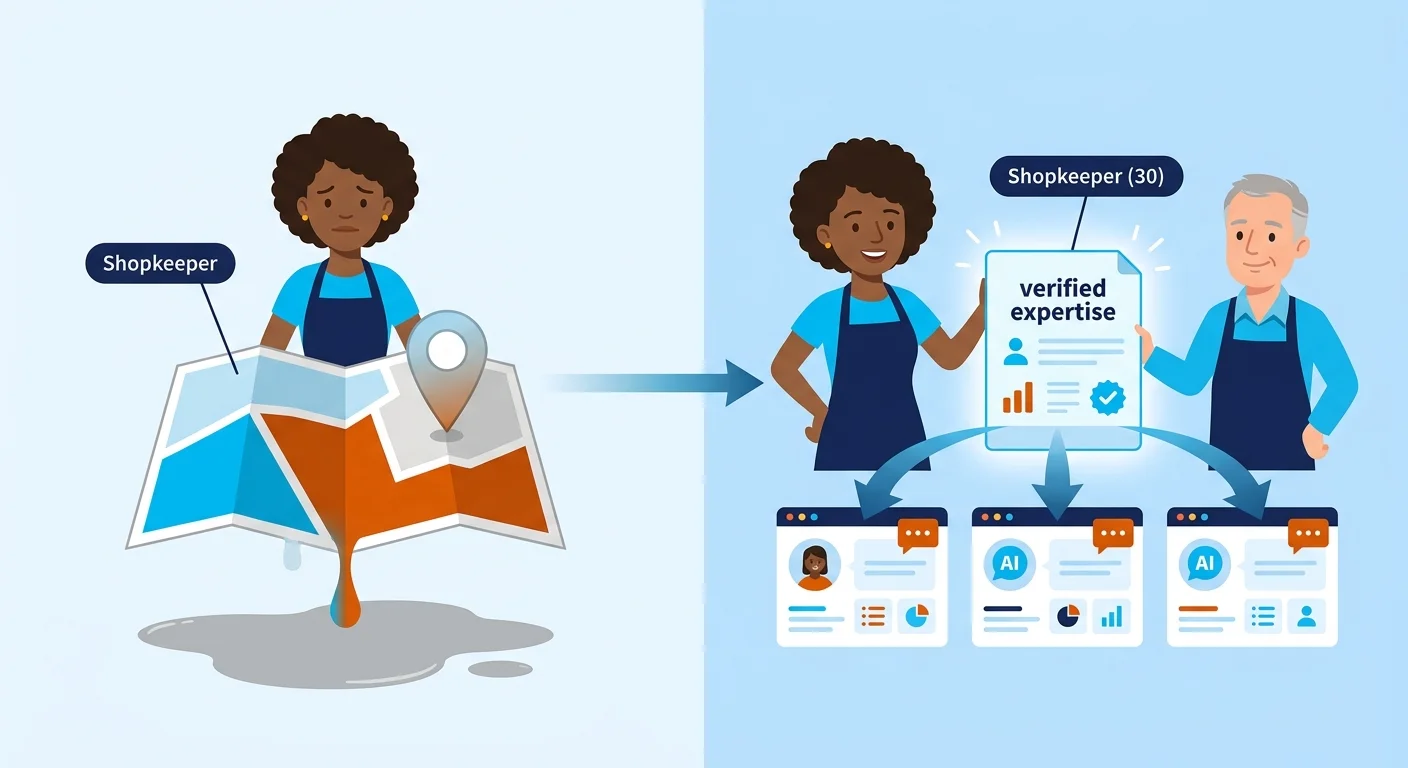
For years, local business marketing was a game of ranking on a map and chasing clicks to a website. Show up in the classic ten blue links, get the visit, close the job. That was the whole playbook.
But that game is ending. AI-powered answer engines are handing people direct answers now, skipping the old search results entirely. So the fence a business built around its domain no longer marks where the marketing stops and the map begins.
Here's the thing: the fence is moving. The new edge isn't the domain name at all. It's the boundary of verifiable, machine-readable expertise a business can prove it owns.
And most local businesses still write for the old fence line. They chase site visits instead of citations. Understanding why standard copywriting fails to register in AI answer engines shows exactly where that old approach falls apart.
Why Chasing Proximity and Page 1 Placement Is a Dead End
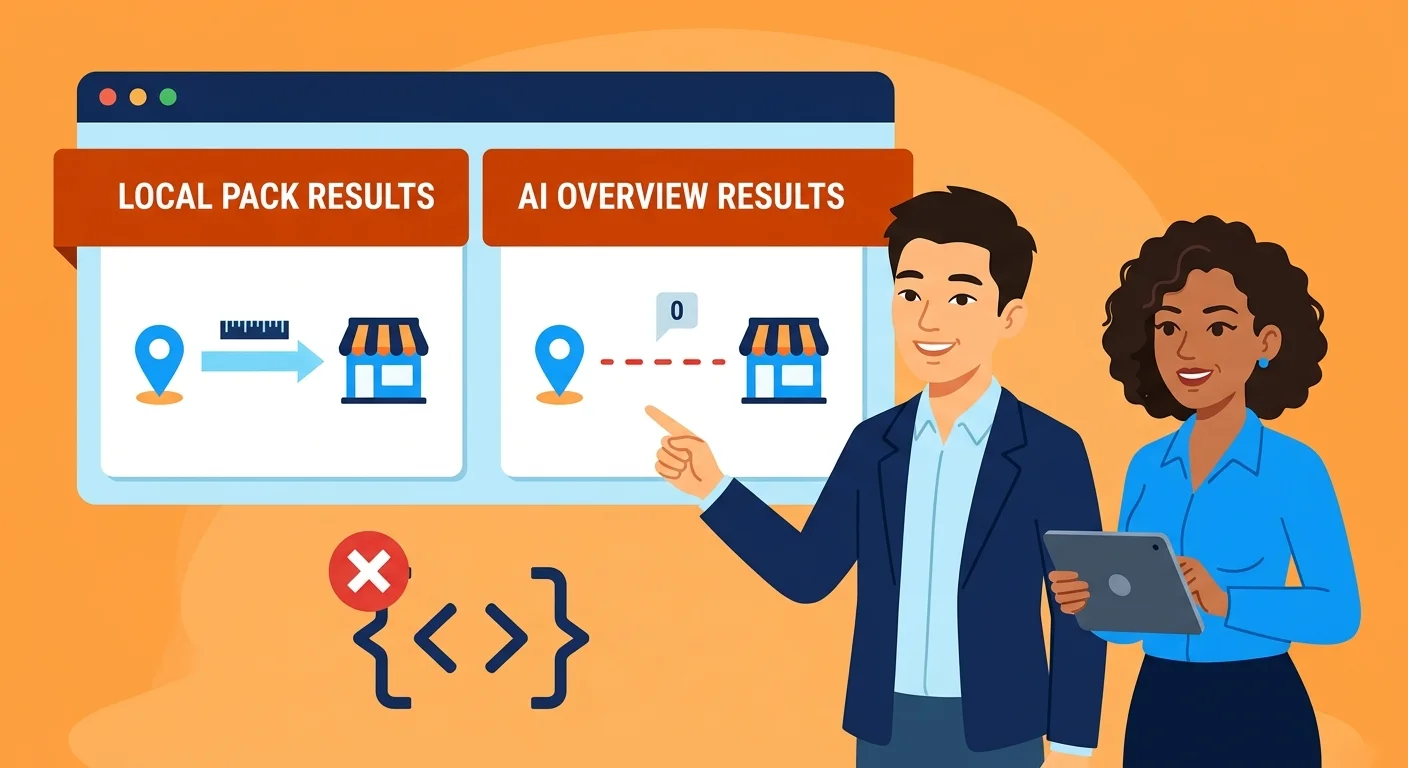
So here's the broken habit hiding under the old playbook. Local businesses got trained to believe proximity and placing in the classic ten blue links were the whole game.
That training doesn't carry over to an answer engine. An AI Overview isn't a map. It's not ranking who's closest.
It's building an answer from whichever source proves it can be trusted, no matter where that source sits on a map. Chase proximity now and you're optimizing for a signal the answer engine barely touches.
| Ranking Factor | Traditional Local Pack Behavior | Google AI Overviews Behavior |
|---|---|---|
| Distance From Searcher | Primary ranking signal for placement in the local pack | Effectively no correlation with ranking position, correlation coefficient of 0.001 |
| Structured Data Markup | Treated as a technical trust signal search crawlers index directly | Ignored during real-time fetch, no major uplift in citations on any platform |
| Geographic Proximity Radius | Businesses closest to the searcher win visibility when they appear at all | Barely used as a signal; appears in results with no meaningful distance correlation |
Distance Doesn't Move the Needle in AI Overviews
Distance used to be a load-bearing wall in local marketing. Show up closest, win the click, close the job.
That wall isn't holding anymore. Researchers found effectively no link between how close a business sits to a searcher and where it lands in Google AI Overviews, with a correlation coefficient of 0.001 whenever the business shows up at all.
A 0.001 correlation is functionally zero. So the old game of owning a geographic radius stops paying the second the answer engine, not the map, is doing the citing. That figure comes from published research data on Google AI Overviews ranking position, and it's worth sitting with, because it guts an assumption most local businesses still build their whole strategy on.
The Problem With Treating Schema Markup as a Shortcut
Now here's the second broken habit, and it's a quieter one. Plenty of businesses treat schema markup as a shortcut to AI visibility. Bolt on some structured data, assume the answer engine reads it, move on.
But that assumption skips a step. When AI systems grab a page in real time, they pull the visible HTML a person would actually see.
They ignore the JSON-LD, the Microdata, the hidden RDFa sitting underneath. Schema-as-shortcut treats invisible code like it's the content itself, and the answer engine just doesn't work that way.
This is exactly why mapping entity boundaries in standalone local service content beats any markup tag. Structured data alone doesn't move the needle — a review of heavily-cited AI Overview pages in Ahrefs' research found schema produced no major uplift on any platform. Visible, verifiable prose is the boundary that gets cited. The invisible layer underneath it isn't.
What Actually Counts as a 'Standalone' Content Asset
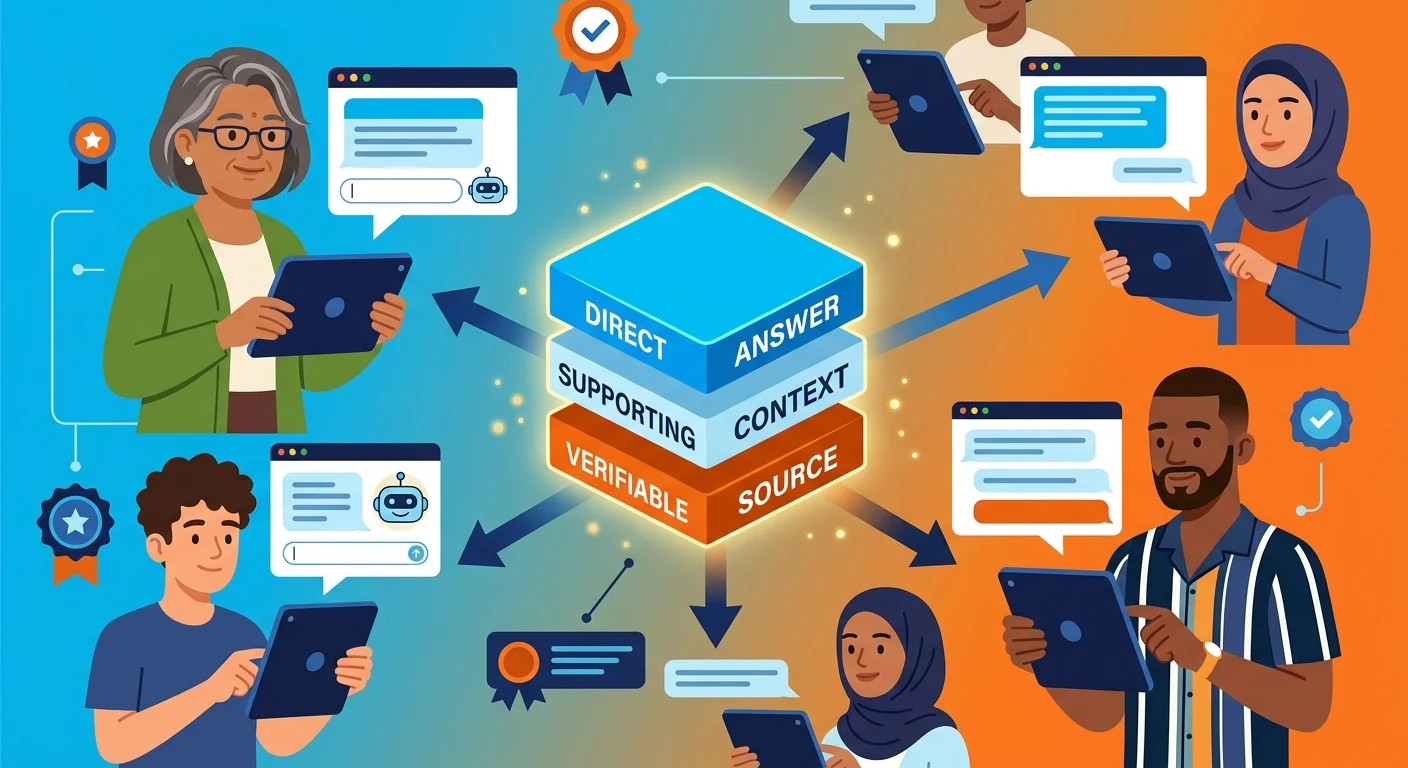
So what actually counts as a standalone asset? Not a blog post. Not a page built to walk someone down a longer path of site visits and internal navigation.
It's any piece of information — a service description, a Q&A, a process explanation — structured so an AI can grab it and answer a user's question directly. That's the whole definition. Nothing about it leans on the page around it.
Here's what that means in practice. The content has to survive getting lifted out, dropped into someone else's answer with zero surrounding context, and still read as complete and true.
| Content Type | Website-Centric Blog Post Approach | Standalone AEO Asset Approach |
|---|---|---|
| Service Description | Buried in a longer page, framed around keyword-targeted articles conventions and meant to guide a visitor toward a contact form | Written as a self-contained answer to what the service is, who it fits, and what it involves, with no dependence on surrounding paragraphs |
| Pricing or Eligibility Detail | Scattered across several sections, often requiring a reader to piece together context from earlier parts of the page | Stated directly inside the block itself, so the qualifier travels with the answer wherever it gets extracted |
| Process Explanation | Told as a narrative walkthrough, assuming the reader arrived at the top of the page and read in order | Structured as a direct sequence an answer engine can lift and present without the rest of the page for context |
| Q&A Content | Folded into an FAQ section at the bottom of a page, treated as an afterthought to the main pitch | Treated as the primary unit, written to fully resolve the question in the first sentence before any elaboration |
| Brand Narrative | Woven throughout the page to build emotional connection over multiple paragraphs | Deliberately excluded from standalone blocks, since a narrative arc cannot be extracted in one clean piece |
The Anatomy of a Self-Contained Answer Block
A self-contained answer block leads with the answer, not a windup. It states the fact, names the process, or answers the question in the very first sentence — before any scene-setting.
And it carries its own qualifiers. A price range, a service limitation, an eligibility detail — all of it lives inside the block, because the block can't lean on a sentence three paragraphs up to finish its thought.
But structure alone doesn't make it trustworthy. Before you commit resources, it's worth weighing standalone content against a full authority rebuild, because each one earns its keep in a different spot. The block still has to prove real expertise, or the answer engine has no reason to cite it.
Where This Model Isn't a Fit
Now, where does this model not fit? Long-form storytelling, brand narrative, anything built to grow an emotional connection over several paragraphs.
Those formats still matter. They just don't belong in a standalone block — an answer engine has no use for a narrative arc it can't extract in one clean piece.
Drawing the Boundary: Where Your Business's Verifiable Expertise Actually Ends
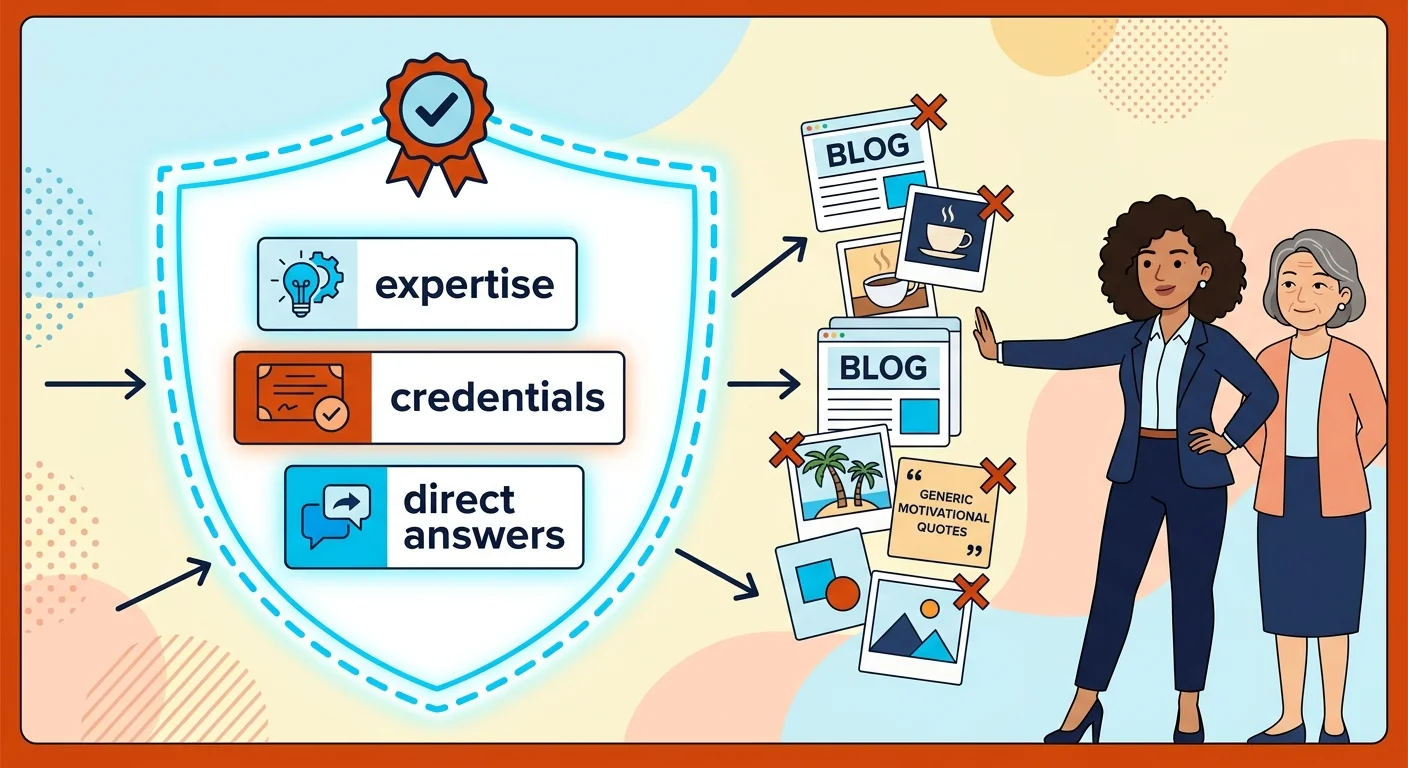
So where does the boundary actually sit? Not at the domain name. And not at the edge of a service area, either.
It sits at the edge of what a business can prove it knows, in language an answer engine can verify on its own. That line shifts section by section, service by service.
Drawing it means knowing what an answer engine actually rewards before it'll cite you. Here's how standalone AEO content lines up against the schema already sitting on a website — a question most businesses never ask until the citations dry up.
The Trust Layer: How Answer Engines Weigh What You Publish
Every standalone block gets weighed the same way, plumber or hospital system. Answer engines run on ranking logic built to surface content that's genuinely helpful, not just sitting there.
That logic reads a mix of signals — experience, expertise, authoritativeness, and trustworthiness. Google's automated systems weigh all four, but trust outranks the rest.
That hierarchy comes straight out of Google's documentation on how it judges helpful content. A block can show off expertise all day, but if it reads as unverifiable or evasive, the answer engine has no reason to lean on it.
Who This Boundary-Setting Approach Isn't Built For
Now, who shouldn't bother with any of this? A business still measuring success purely by site visits to a homepage isn't ready for the shift.
Neither is a business hunting a shortcut — one schema tag, one keyword-targeted article, done. That's not how a boundary gets built.
This is for a business willing to write content precise enough to stand on its own. If that's not the goal, the old playbook feels more comfortable — right up until it stops working.
Where Machine-Readable Authority Actually Lives Online
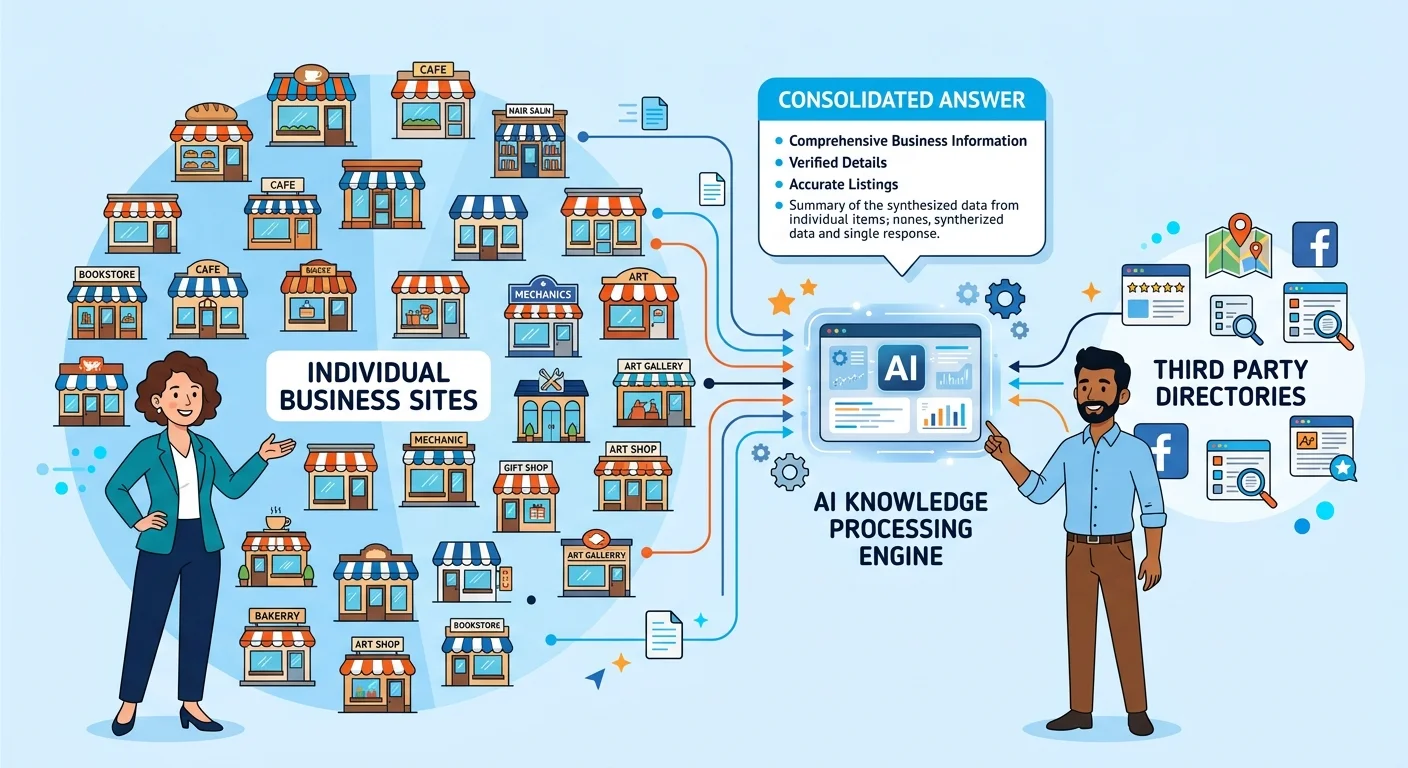
So where does machine-readable authority actually live, now that the fence around the domain stopped meaning anything? Not on one property. Not even mostly on one property.
Here's the number that flips the whole assumption: around 93% of the domains AI engines cite are individual business websites, not the big aggregators everyone pictures owning the answer. published research data tracked where AI systems actually pull local business information from. The platforms hold the top slots people notice, sure — but the answer engine is drawing straight from businesses at a scale most owners never imagine.
So that shifts what a business's own content has to pull off. It can't just prop up a directory listing anymore — it has to be the source. The on-site pieces still matter too, and correcting mismatched structured data across a clinic's service pages shows what breaks when the visible boundary and the markup underneath it stop telling the same story.
Building the Boundary: The Content Formats and Structural Pieces That Hold Up
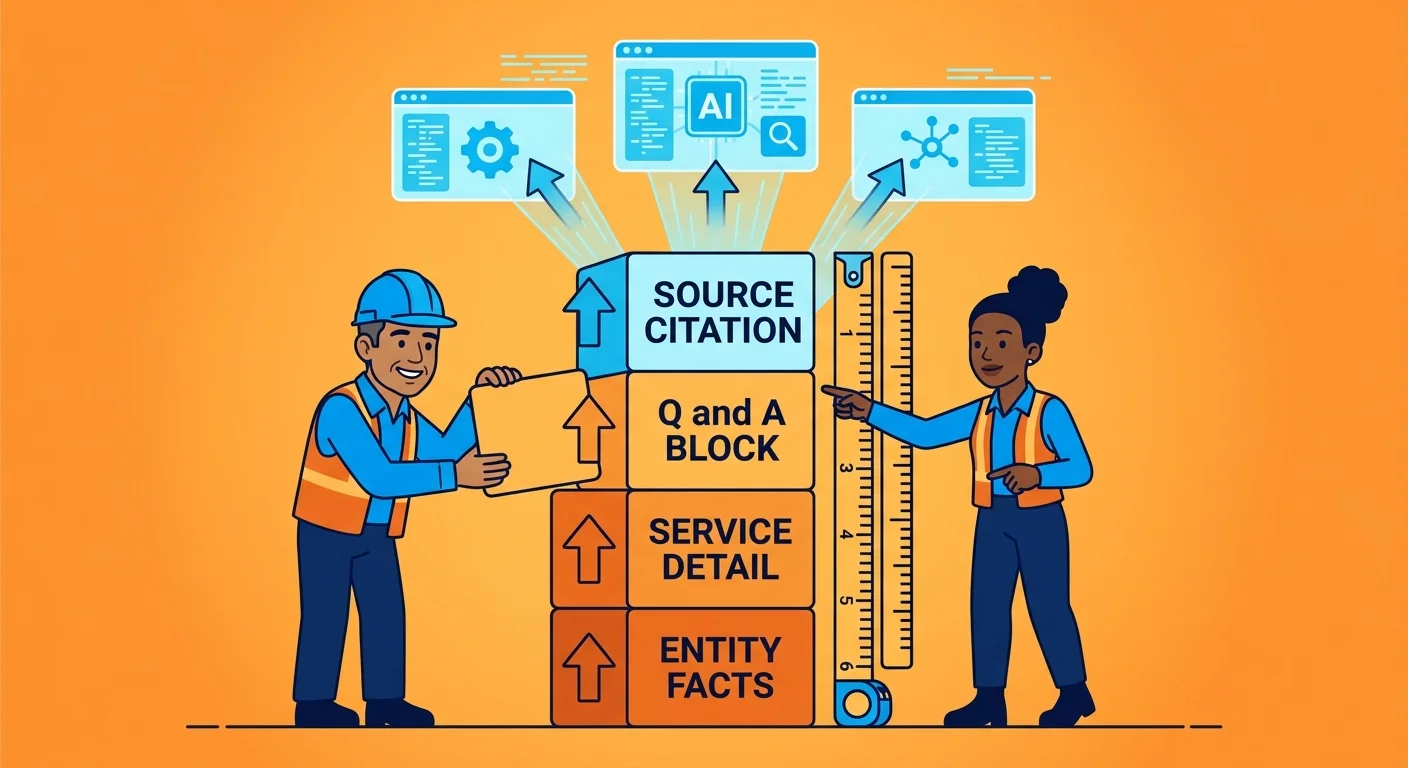
So what does building this boundary actually look like, once the theory settles? Not a redesign. Not a bigger site.
It's a set of specific content pieces. Each one stands on its own. Each one carries its own proof — and here's what those pieces are made of.
| Structural Piece | What It Establishes | Where It Lives |
|---|---|---|
| Direct-Answer Unit | The literal answer to one specific question a searcher actually asks, stated in the first sentence with no windup | Service pages, standalone Q&A blocks, and any page section built around a single question |
| Process Explanation | A plain, sequential walk-through of how a service actually works, stripped of narrative framing an answer engine can't extract | Process pages and any block explaining how a specific service is delivered step by step |
| Service-Scope Block | The qualifiers that make an answer trustworthy — eligibility, limitations, and specifics — sitting inside the same block as the claim itself | Attached directly to the service description it qualifies, never in a separate policy page |
| Verifiable Expertise Signal | The visible, on-page proof that the business genuinely knows the subject, not a credential buried in code | Body prose and visible page content, never hidden markup or invisible structured data |
The Structural Pieces a Trusted Content Boundary Is Made Of
Every trusted boundary starts with a direct-answer unit. One question, answered in the first sentence, with the qualifiers that make it true sitting right there beside it.
Next comes the process explanation. Not a story about how the business does things — a plain sequence an answer engine can lift whole and hand to someone asking how a service actually works.
Then the service-scope block. This is where eligibility, limits, and specifics live, because a standalone piece of information is exactly that — structured to answer a question directly, with nothing left dangling for the reader to chase down somewhere else.
Sequencing the Build Without Overreaching
Now, sequencing. A business doesn't have to rebuild every page overnight.
Look, the instinct is to overreach — rewrite the whole site, bolt on ten formats, chase every content type at once. That instinct is exactly backwards.
Start with the highest-intent question a business actually gets asked. Build that one boundary right, prove it holds, then move to the next. The edge of a business's machine-readable expertise gets drawn one verified block at a time — not in a single sweeping rewrite.
Frequently Asked Questions
A handful of questions come up every single time this shift gets explained. Here are the straight answers.
How is AEO different from the local traditional search optimization I'm already doing?
Local optimization still runs your map placement and proximity signals. AEO decides whether an answer engine can lift a piece of your content whole and hand it to someone as the answer itself. Different jobs entirely.
Does standalone AEO content need to live on my main business website?
No. What matters is that the block is verifiable and machine-readable — not which domain hosts it. It just has to live somewhere the answer engine can crawl and trust.
What specific content formats work best for local business AEO in 2026?
Direct-answer units, process explanations, and service-scope blocks. Each one answers a question or states a fact in its very first sentence. No leaning on the page around it.
How will Google's AI Overviews affect site visits to my local business website?
Fewer of them will come from a classic results click. That's the trade — the destination shifts from a page view to a cited answer. Standalone content is what earns that citation.
Can a small local business with a limited budget realistically compete in AEO?
Yes. Trust outranks scale in the ranking systems behind these answers. A precise, verifiable answer block costs effort, not budget.
How do I measure the ROI of AEO content if it doesn't result in site visits?
Track citations, not clicks. Watch whether an answer engine names the business directly when a prospect asks the exact question the block was built to answer.
Where This Leaves Your Business
For years the fence sat at the domain line. Now it's moved — to the edge of what a business can prove it knows, in language an answer engine can verify on its own.
So the real choice isn't whether to keep a website. It's whether to draw the boundary around territory, or around truth. One gets cited. The other gets skipped, quietly, every time the answer engine needs a source it can trust.
Here's the verdict. The business that redraws its fence around verifiable, standalone expertise is the one the answer engine keeps citing — not the one still guarding a radius on a map. Look honestly at where your boundary sits today, because that's the first step worth taking.