
The Blind Spot Every Traditional Visibility Report Was Built to Miss
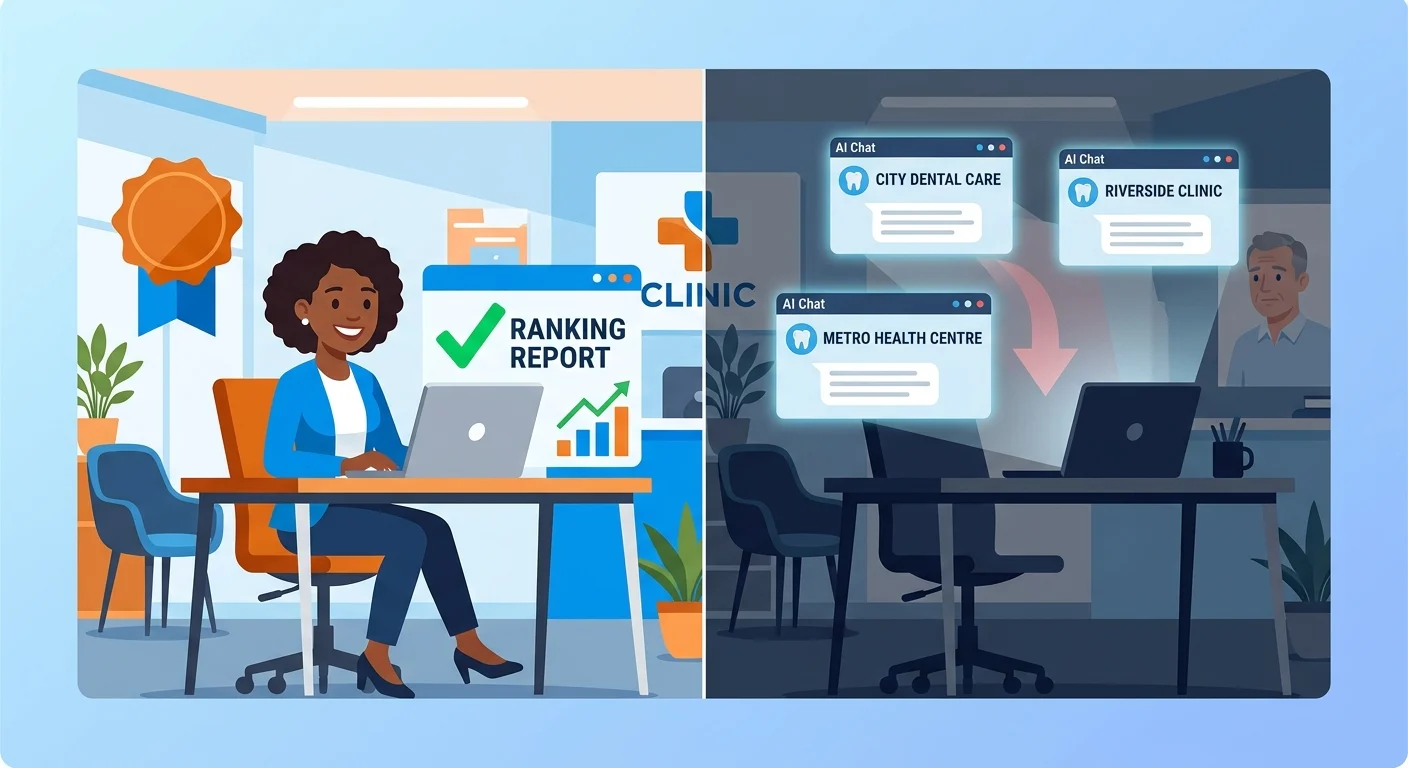
So here's the mechanism. For decades, a clinic's visibility came down to a short, simple list: keyword position tracking, site visits, and placement inside the classic ten blue links. Those numbers still land in your inbox every month, clean and reassuring.
But AI-powered answer engines have made those traditional reports dangerously obsolete. They opened a visibility gap most clinics don't even know exists. Your report can show perfect health on metrics that no longer decide a single thing.
Look beneath that clean report. Patients are dialing competitors instead, and why your clinic's phone calls are dropping holds the reasons while your classic metrics sit pretty. Same failure, two different rooms.
Here's the thing about a rearview mirror. It shows you exactly where you've already driven. It was never built to show you what's coming through the windshield, and neither was the traditional visibility report.
Why Keyword Position Tracking Stopped Being the Whole Story
Keyword position tracking answers a question patients stopped asking the old way.
It tells a clinic where its site sits inside the classic ten blue links, and it nails that job. But it was never built to tell you whether a generative AI model even mentioned you when a patient asked for a recommendation instead of a list.
So the metric hasn't gotten worse. It's just stopped mattering as much as the report keeps pretending it does.
| Discovery Tool | Consumer Usage Rank | What It Signals |
|---|---|---|
| Generative AI Recommendation | Third among discovery tools, behind Google and Facebook | A synthesized answer patients now trust ahead of Yelp and TripAdvisor, invisible to keyword position tracking |
| Review Platforms (Yelp, TripAdvisor) | Now behind AI in consumer usage | A once-dominant discovery channel a traditional report still tracks even as it slips in real consumer behavior |
| Classic Ten Blue Links (Organic Click) | Click-through falling on queries with AI Overviews present | Organic CTR plummeted from 1.41% to 0.64% year-over-year, a collapse no keyword position tracking metric flags |
What Consumers Actually Reach For Now
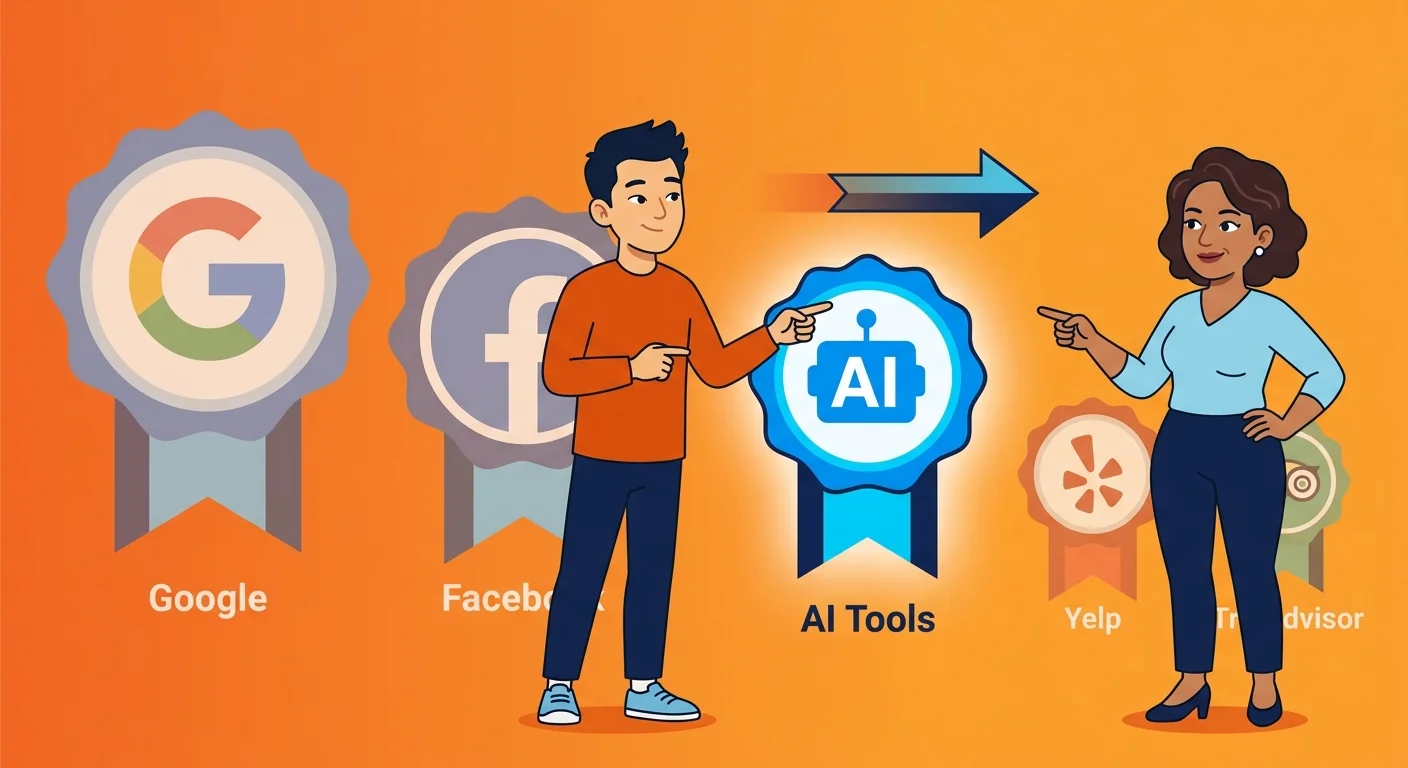
Here's the shift hiding under that report. AI has climbed into third place among the tools people reach for when they want a local business recommendation, sitting behind only Google and Facebook and now ahead of review platforms like Yelp and TripAdvisor.
That climb shows up plain as day in published research data tracking how consumers moved over the past twelve months. Your traditional visibility report? No line item for it.
Now think about a clinic reading last month's report and feeling calm. The tool patients reach for third most often isn't measured anywhere on that page, and the psychology behind why a patient trusts a synthesized answer over a scrollable list is unpacked in is your clinic invisible to ChatGPT.
The Click That Never Happens Anymore
Now look at the click itself, because that's where the second collapse hit.
For queries where AI Overviews show up, organic click-through rates fell from 1.41% to 0.64% year-over-year. That drop is documented in the same published research data tracking the shift in local recommendation behavior.
So a clinic can hold its position and watch the click vanish anyway. The traditional report has no way to flag that the answer already happened before anyone ever reached the page it was measuring.
Why the Classic Visibility Report Fails the Moment AI Enters the Room

So let's name what actually breaks. A traditional visibility report measures placement, not citation. And citation is the only currency that counts once a generative AI model is the one answering the patient.
Here's the mechanism underneath the gap. AI recommendation loss is the patient you miss when a generative model never cites or suggests your clinic, even while you rank fine in traditional search. The report keeps grading the old test while the patient sits a whole different exam.
The Problem With Measuring Placement Instead of Citation
Look at what a traditional authority report was actually built to do. It audits your position inside a results page. Does your site show up, where does it show up, and how steadily does it hold that spot?
But an AI engine doesn't produce a results page. It produces one synthesized answer, and it doesn't rank websites the way a search engine does. It evaluates data sources it trusts, then compresses whatever it finds into a single recommendation.
That gap right there is the whole failure. A traditional authority report has no instrument for measuring trust the way a generative model measures it. So it just doesn't look there.
So the report comes back clean, and the clinic reads clean as safe. Meanwhile the real machinery deciding whether a patient ever hears your name runs completely outside what that report can see, pulling from review language, directory listings, and scattered mentions the way how AI engines synthesize unstructured web data actually work to build a recommendation.
A method built to count position can't also catch an omission it was never designed to notice. That's not a bug in the reporting. It's the ceiling of what the method could ever measure in the first place.
How AI Engines Actually Decide Who Gets Recommended
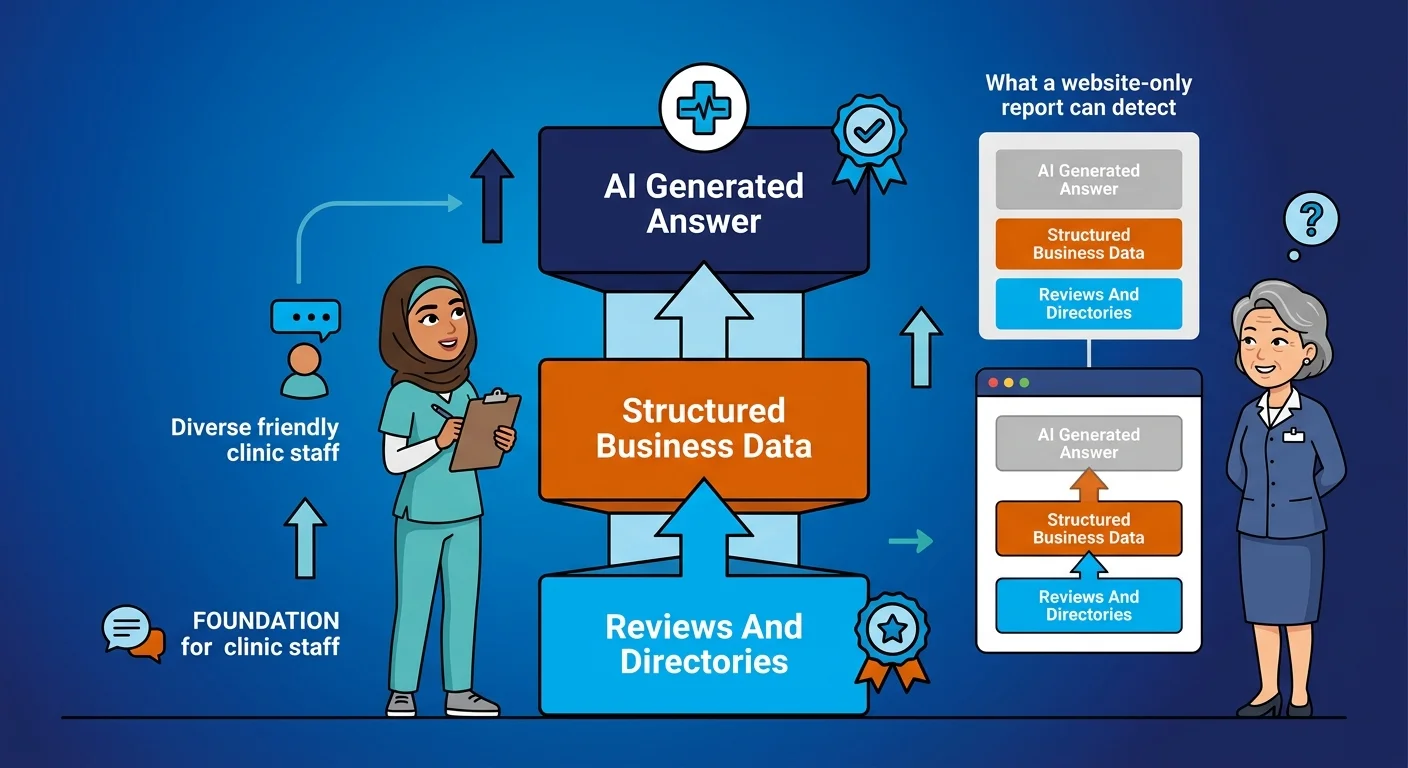
So here's how the machinery actually runs underneath the failure. A generative AI model doesn't crawl your site hunting for keyword position tracking signals the way a traditional search engine does.
It pulls from a much wider field instead: structured data, review language, directory listings, and mentions scattered all over the web. Then it weighs every piece against how trustworthy the source looks and squeezes that judgment into one spoken recommendation.
And that process has a name. Generative Engine Optimization is the emerging discipline built to improve a clinic's content visibility in generative engine responses, working off the exact inputs a traditional authority report never touches.
| Data Source Type | Where It Lives | Why AI Engines Trust It | What a Website Report Sees |
|---|---|---|---|
| Structured Data (Schema Markup) | Embedded in a clinic's own website code, invisible to a human visitor | Gives a generative AI model machine-readable facts it can lift directly into an answer without guessing | A traditional visibility report treats this as a technical checkbox, not a citation input |
| Review Language | Scattered across review platforms and directory listings the clinic doesn't control | Reads as patient sentiment expressed in the patient's own words, which a model treats as trust evidence | Never appears on a report built to audit the clinic's own pages |
| Directory and Aggregator Profiles | Living outside the clinic's website entirely, on third-party listing platforms | Offers corroboration from independent sources, which a model weighs as a trust signal | Sits outside the crawl boundary a keyword position tracking report was built to check |
| Scattered Web Mentions | Distributed across forums, articles, and pages that never link back to the clinic | Functions as ambient reputation the model can compress into a recommendation without a click | Invisible to a report that only measures placement inside a results page |
The Off-Site Signals Your Website Report Never Touches
Look at where a traditional visibility report quits looking. It audits the clinic's own site, page by page, and calls that the whole picture.
But an AI engine reads far past those pages. It reads listings, aggregator profiles, and the words patients use to describe a visit in a review nobody at the clinic ever wrote.
None of that lives inside a report built to check keyword position tracking. So the very inputs deciding whether a patient hears your name sit entirely outside the report's field of view, and the only way to close that gap is understanding the entity trust chain behind clinical credibility that AI models actually check before recommending anyone.
How Unstructured Patient Feedback Becomes an AI's Trust Signal
Here's the part that catches most clinics off guard. Unstructured patient feedback isn't noise an AI model tosses out. It's a trust signal the model reads and weighs on purpose.
That's not a theory either. Research running machine learning across free-text patient comments about hospitals hit 81% agreement with patients' own quantitative ratings on cleanliness, 84% on dignity, and 89% on overall hospital recommendation, a finding documented in PubMed Central from a study on NHS hospital comments.
That's the mechanism a generative AI model runs at scale, on every clinic mentioned anywhere online. It doesn't need a star rating to know whether patients felt respected. It reads the sentence and decides for itself.
A traditional authority report has no field for sentiment like that. It was built to grade position, never language, and that's exactly the blind spot the arXiv preprint server names when it frames content visibility as something a black-box optimization framework must now be measured against directly.
Who This Diagnostic Thinking Isn't For
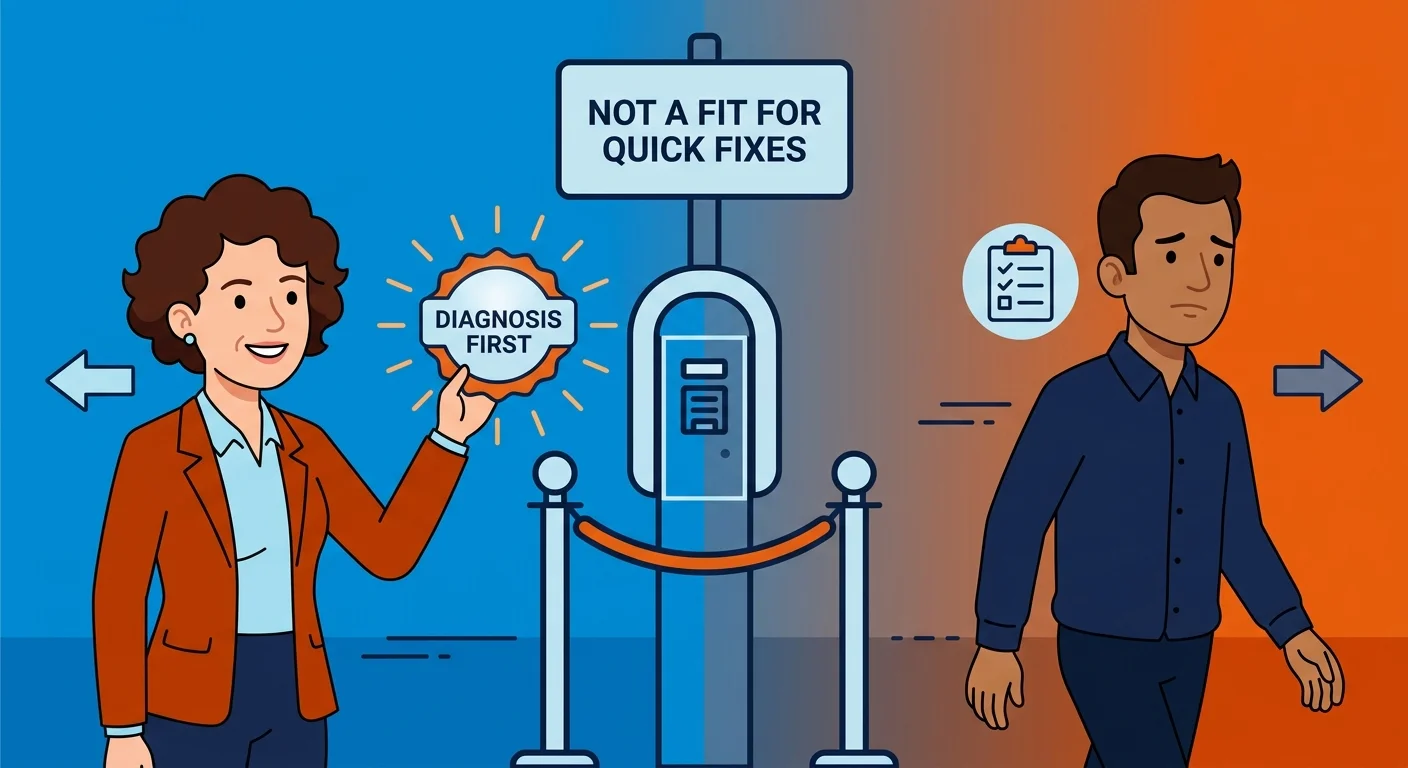
So let's be blunt about who this isn't for. It's not for the clinic that's happy treating a clean traditional visibility report as proof nothing's wrong.
If a rearview mirror showing a clear road behind you is all the reassurance you need, this thinking will feel like a waste of time. It's built for the clinic willing to ask what the windshield shows, not the one content that the mirror still looks fine.
Here's the line that matters. This is for a clinic ready to treat AI recommendation loss as a real, measurable gap, not some vague worry. It isn't for the one that wants keyword position tracking to keep standing in for an answer it was never built to give.
What a Clinic Actually Needs to See Instead of a Rankings Snapshot
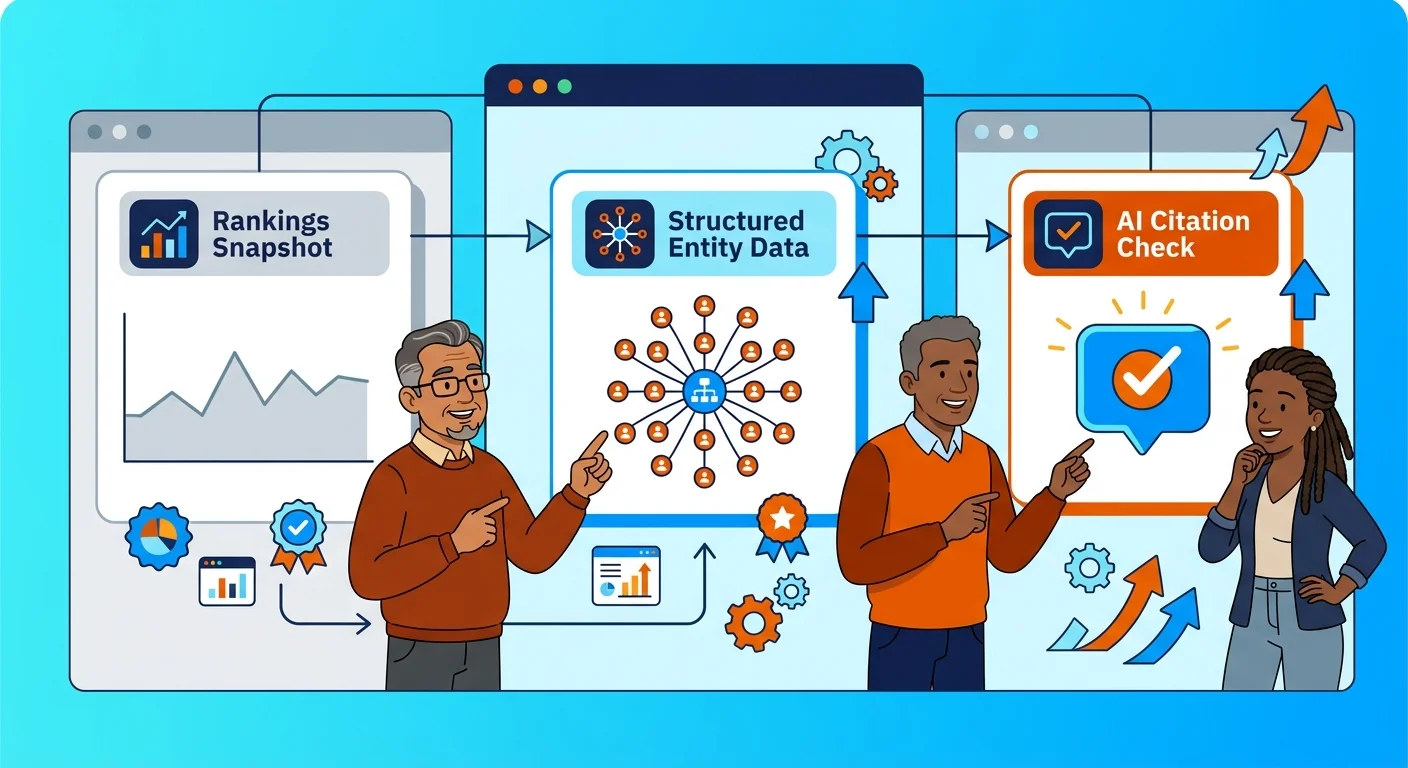
So if the traditional visibility report can't see the road ahead, what actually replaces it? Not another rankings snapshot wearing a new coat of paint.
A clinic needs a completely different instrument. One built to measure whether a generative AI model trusts what it finds, not whether a website is still holding a spot inside the classic ten blue links.
That instrument has two working parts. It checks whether a clinic's information is structured well enough for a machine to read, and it checks where the gap actually sits between search placement and AI citation.
| Report Type | What It Measures | What It Misses | Diagnostic Value |
|---|---|---|---|
| Traditional Visibility Report | Placement inside the classic ten blue links, tracked page by page across a clinic's own website | Whether a generative AI model cites or recommends the clinic at all when a patient asks a direct question | Confirms historical position; tells a clinic nothing about whether it appears inside a synthesized answer |
| Keyword Position Tracking Snapshot | Where a specific term sits inside search results over time | Review language, directory listings, and structured markup that a generative engine actually weighs before recommending anyone | Useful for monitoring the old metric; irrelevant to whether trust signals exist for AI to find |
| Structured Data Readiness Check | Whether Schema.org markup labels the clinic's specialty, credential, and location in machine-readable terms | Anything about placement inside the classic ten blue links, because that was never its job | Reveals whether a generative AI model can even parse the clinic as a citable entity in the first place |
| Placement-to-Citation Gap Map | Search placement measured side by side against actual AI-generated mentions of the clinic | A single clean score that hides the two metrics moving in opposite directions | Shows the real diagnostic: whether the windshield reflects anything, not just whether the mirror looks clear |
The Structured Data Layer That Makes a Clinic Machine-Readable
Here's where most of this falls apart before it even starts. A generative AI model doesn't read a webpage the way you do.
It hunts for structured markup that spells out, in machine-readable terms, what a clinic is, what it treats, and who runs it. Without that layer, the model is guessing from loose text instead of reading a labeled fact.
Schema.org markup is that labeled fact. It tells a generative engine flat out that this entity is a clinic, this is its specialty, this is its credential, this is its location.
A traditional authority report never checks for that layer. It was never built to, because keyword position tracking never cared whether a machine could parse the page underneath the ranking.
Mapping the Gap Between Search Placement and AI Citation
So the second working part is mapping the real gap, side by side, placement against citation. That means measuring where you sit in traditional search results right next to whether a generative AI model names your clinic at all when a patient asks for a recommendation.
Those two numbers can move in opposite directions, and usually do. A clinic can hold strong placement inside the classic ten blue links while sitting dead absent from every AI-generated answer patients actually see first.
That gap is the real diagnostic. Not whether the mirror looks clean, but whether the windshield shows anything at all.
Frequently Asked Questions
So here are the questions this reframing kicks up. Each one gets a straight answer, not a hedge.
How is AI visibility different from my clinic's Google ranking?
A Google ranking measures where you sit inside a results page. AI visibility measures whether a generative model trusts your clinic enough to name it in a synthesized answer. Those two things move independently.
Why doesn't my current visibility report show data on AI recommendations?
Because it was never built to look there. It grades keyword position tracking and on-page signals, not whether a generative AI model names your clinic when a patient asks it straight out.
What kind of information does an AI use to recommend a local clinic over another?
Structured data, review language, directory listings, scattered mentions all over the web — the model weighs them together. Then it squeezes that evidence into one recommendation instead of ranking a list of websites.
If my clinic isn't mentioned by ChatGPT, does that mean I'm actually losing potential patients?
Yes. If a generative model never surfaces your name in that moment, the patient hears about a different clinic instead. And no traditional report will ever show you it happened.
Is optimizing for AI something my internal team can do, or does it require a specialized approach?
It takes a specialized approach. Structuring data so a machine can read it, then mapping the gap between placement and citation — that's not a job most internal teams are set up to diagnose.
Can a high ranking on Google Maps actually hide a visibility problem with AI engines?
It can, and it usually does. A clinic can hold a strong map ranking while sitting dead absent from every AI-generated answer patients actually see first.
Where This Leaves Your Clinic
So here's the choice sitting in front of every clinic reading this. Keep glancing at the rearview mirror, watching keyword position tracking hold steady, and call that safety. Or finally look through the windshield at what AI Invisibility actually costs you.
A clean traditional visibility report was never proof of anything up ahead. All it ever showed was the road you already drove. The road a patient travels now runs straight through a generative AI model quietly deciding whether your clinic gets named at all.
And that decision doesn't wait for your permission. It won't show up in any report built to grade the classic ten blue links, so diagnosing it is the only way to know which mirror you've really been trusting. Start with the AI visibility check.