
The Zero-Click Reality Nobody Told Your Clinic About
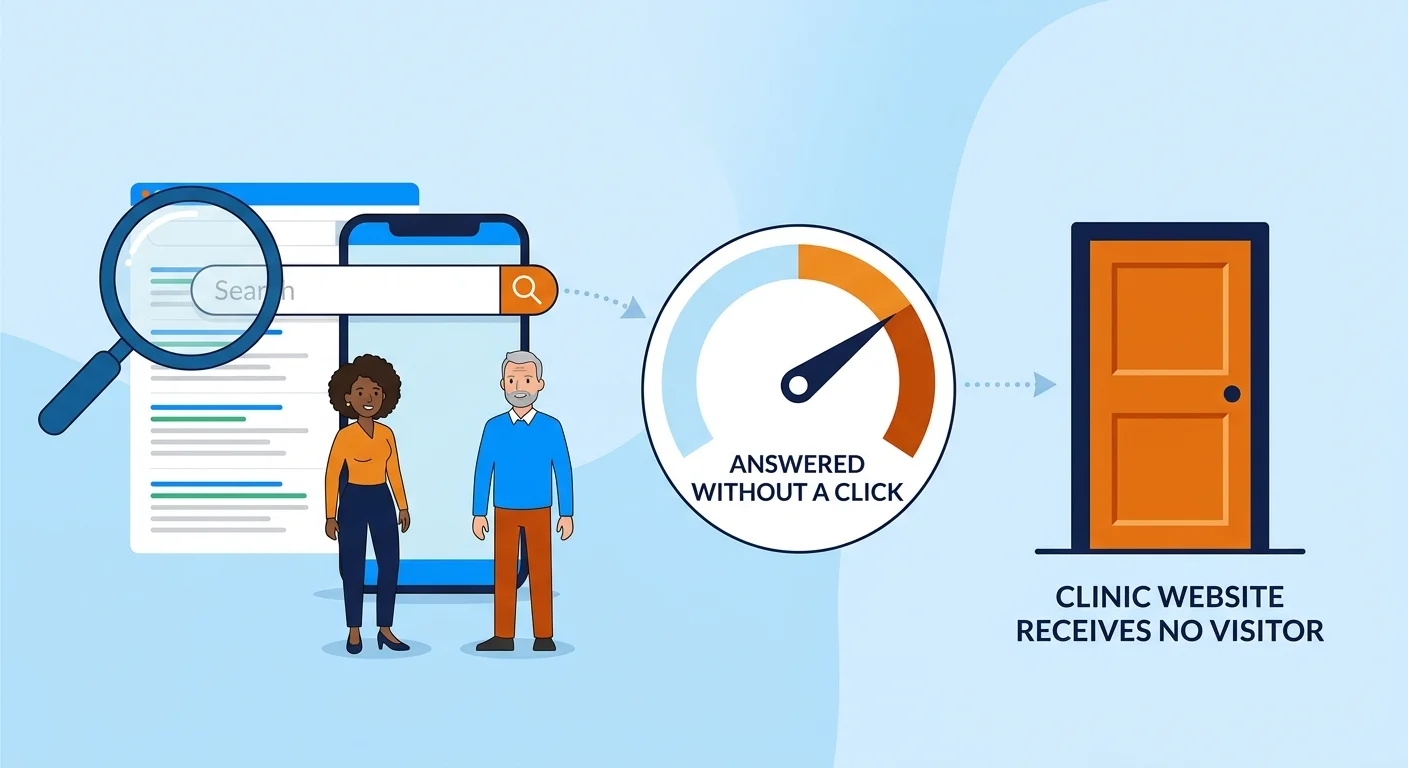
Here's the number that should scare every clinic owner still chasing the classic ten blue links. Across billions of Google searches tracked between October 2024 and December 2025, nearly half, 46.96%, ended without a single click.
And that's not a fluke month or a temporary dip. It's the baseline now. It means an answer engine already handled the person who typed that query before your clinic ever had a shot at showing up.
Zero-click search isn't some niche trend anymore. Patients are getting answers, forming opinions, and making decisions without ever landing on your clinic's website, which is the entity-versus-website split playing out in real time. Your site can be flawless and still lose every one of those silent decisions.
So what does that silent loss actually sound like on your end? Usually it shows up first as phone calls that quietly stop coming in, long before anyone notices the site visits looked fine on paper. The published research data behind that 46.96% figure spells it out: the click was never the goal for the person searching, and treating it like the only metric that counts is exactly how clinics miss the collapse until it's already cost them patients.
Why Chasing Blue Links Can't Fix an AI Recommendation Problem
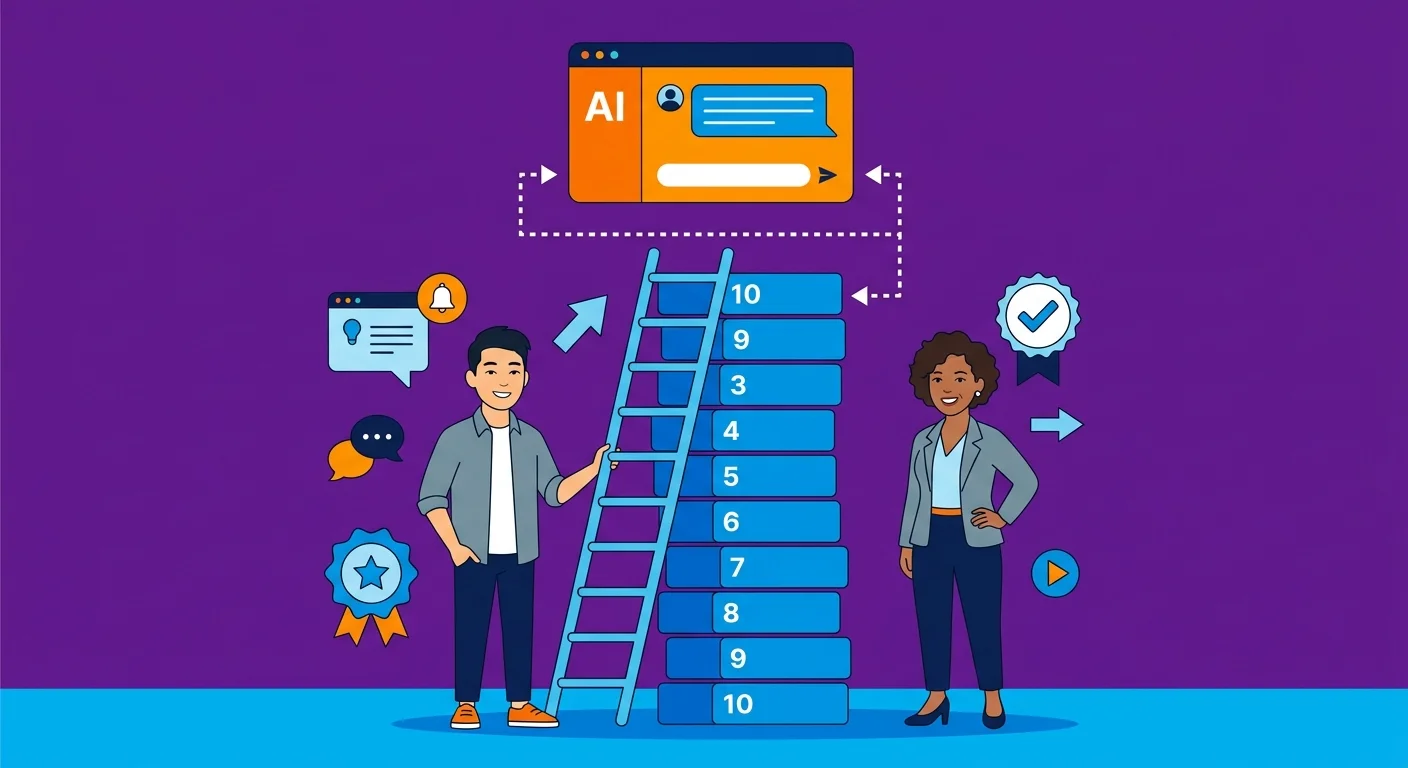
Chasing a spot in the classic ten blue links treats the symptom, not the disease. It assumes the patient is still browsing a results page, reading snippets, clicking through to compare.
But that assumption's dead. Search has fundamentally changed: it's not about climbing a list of blue links anymore. It's about becoming the trusted source AI engines choose to cite.
A clinic can pour months into traditional search optimization and still watch an AI assistant name three competitors instead. Placing well and getting cited are not the same win — and confusing them is where the invisibility starts.
Why Placing in the Classic Ten Blue Links Fails to Reach AI Answers
Placing in the classic ten blue links was built for one behavior: a human scans a list, weighs the options, clicks one. And that's exactly the behavior generative answer tools erase.
An AI assistant doesn't hand the patient a list to sort through. It already sorted the options for them, then hands back one synthesized answer.
So a clinic sitting at the top of a results page can be missing from that answer entirely. The placement was never the thing the machine was reading.
That's the exact failure mode why clinics don't realize their AI recommendations are already being lost digs into — how a clinic can look strong by every traditional measure while quietly losing every recommendation an AI makes. The gap won't show up in a placement report. It shows up in silence.
The Entity Gap: Your Website Versus Your Machine-Readable Identity
Here's the split worth holding onto. Your clinic has a human-facing website, and it has a machine-facing entity. They're not the same thing, and treating them as one is the core mistake.
To an AI, your clinic isn't just a website. It's an entity — a pile of signals, reviews, and data points scattered across the web. If those signals are weak or contradictory, you go invisible.
A polished website can sit right alongside a fractured entity. Mismatched practice details across directories, thin review coverage, contradictory credentials on every platform — all of it widens the gap. And no amount of site build work closes it, because the fix lives in the signals, not the page.
How AI Engines Actually Decide Which Clinic to Mention
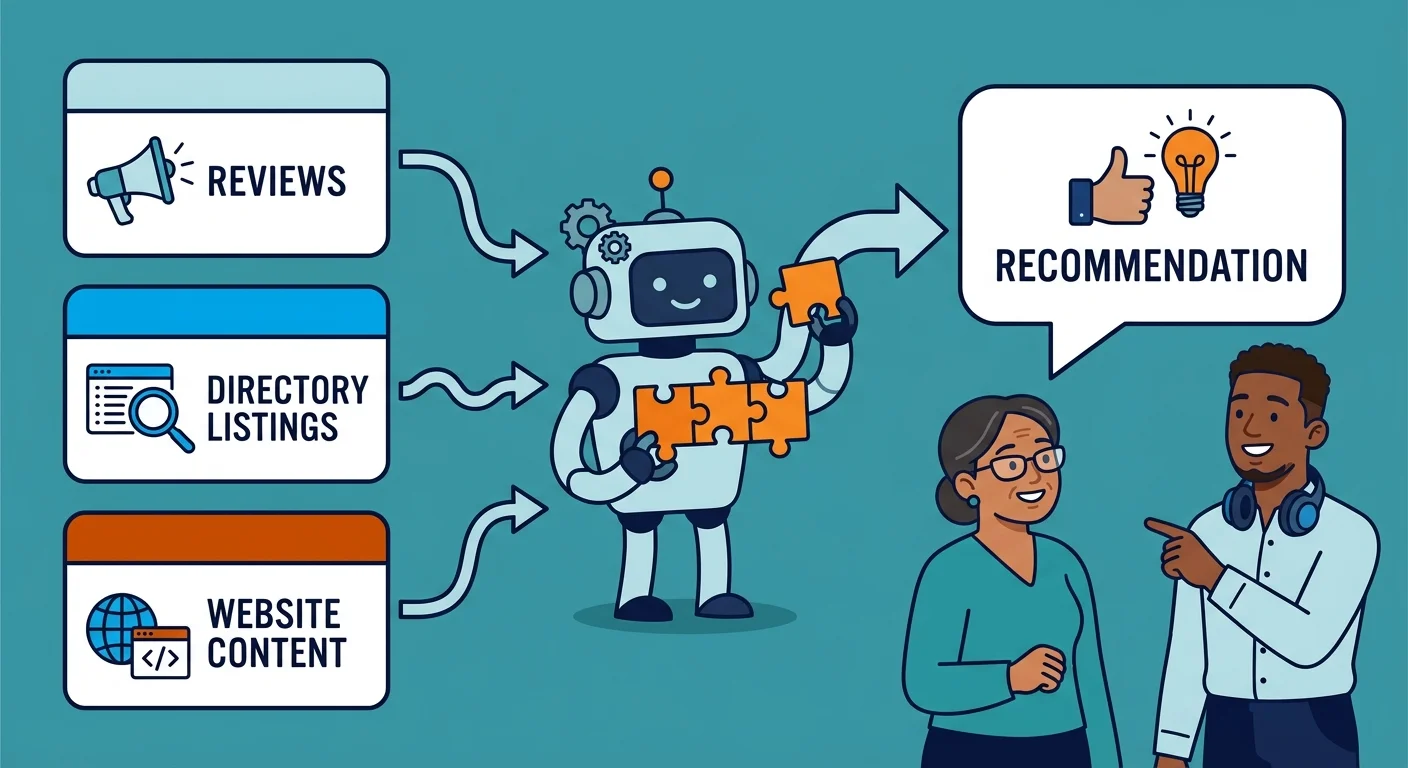
So how does an answer engine actually pick who gets named? Not by crawling a results page and ranking it. It reads the entity, cross-checks the signals, and builds an answer before the patient ever sees a list.
And here's the thing: that process is mechanical, not mysterious. The machine grabs fragments from directories, review platforms, and third-party citations, then reconciles them into one trusted answer.
Now, this is the psychological gap in the flesh. Your clinic thinks its website is the pitch, while the AI is quietly grading a completely different file it built from scattered mentions. Understanding how AI engines synthesize unstructured web data to recommend local clinics is the difference between guessing at this and actually diagnosing it.
| Signal Type | What Traditional Search Checks | What an AI Recommendation Engine Checks |
|---|---|---|
| Practice Name and Address | Checks for keyword matches on a single page and confirms the listing exists. | Cross-checks the name and address against every directory, review platform, and citation to confirm they agree. |
| Reviews and Reputation Signals | Notes review counts as a ranking factor tied to the business listing. | Reads review content itself, looking for consistent condition mentions, specialties, and patient sentiment across platforms. |
| Credentials and Specialties | Confirms the page includes relevant keywords describing services offered. | Compares credential claims across multiple sources to see whether they reinforce each other or contradict. |
| Cross-Platform Consistency | Largely ignores whether the same details appear elsewhere on the web. | Treats mismatched details across images, listings, and text as a trust failure, not a minor discrepancy. |
| Depth of Third-Party Mentions | Values a page's own content and its inbound link profile. | Synthesizes fragments from directories, citations, and third-party mentions into one reconciled judgment about the clinic. |
Synthesis Over Directory Listings
Synthesis isn't a directory lookup. A directory returns a match. An answer engine returns a judgment.
That judgment gets built by pitting fragmented signals against each other, weighing which ones agree and which ones fight. A clinic listed right in one place and wrong in another doesn't average out to roughly right. It reads as unreliable.
So the entity isn't judged on any single listing. It's judged on whether the whole scattered picture holds together, and that's a structural test most clinics have never once been asked to pass.
The Consistency Test Every Signal Must Pass
Every signal an AI touches runs through a quiet consistency check before it's trusted enough to cite. And this isn't unique to clinics or to healthcare.
Researchers digging into disinformation in news describe the exact same mechanism. Spotting inconsistent cross-modal information, where a person, a place, or an event shows up differently across images and text, is treated as one of the clearest signs something can't be trusted, according to the arXiv preprint server.
An AI trained to catch contradictions in the news applies that same instinct to your clinic's scattered signals. A mismatched address, a name spelled two ways, a credential listed here and missing there: none of it reads as a small clerical slip. It reads as a reason to hold the recommendation back entirely.
What an AI Reads Before It Ever Reads Your Website
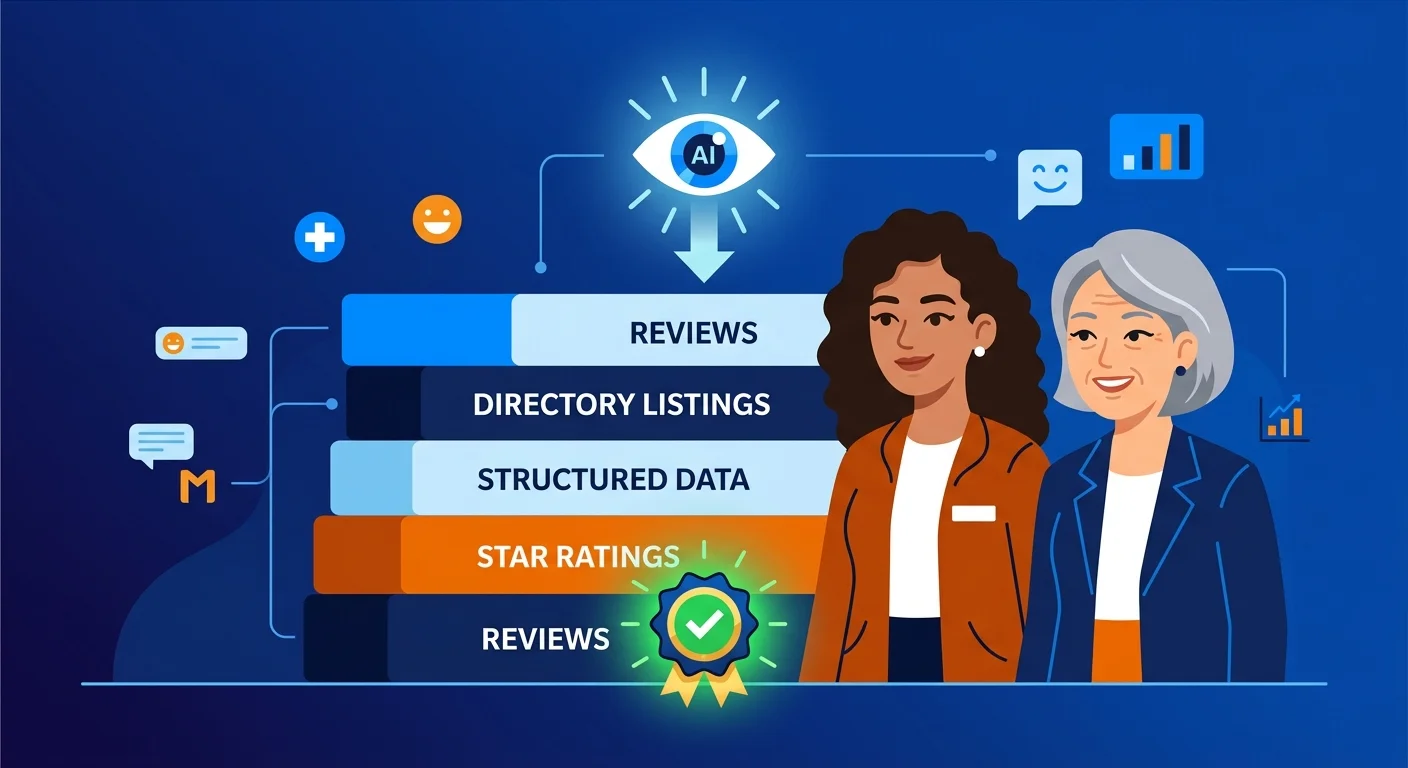
Before an AI assistant writes a single word about your clinic, it's already read a stack of machine-facing signals no patient will ever lay eyes on. That stack is the real front door now.
Some of those signals are technical. Others are pure human — reviews and ratings left by people who never once thought they were feeding a machine's judgment.
| Data Point | Figure | What It Means for Clinic Visibility |
|---|---|---|
| Structured data requirement | No mandatory schema.org markup | Skipping markup does not cause invisibility, but ignoring the entity behind it does |
| Structured data's actual role | Useful for rich result eligibility, not citation itself | Treating markup as the fix wastes effort that should go toward fixing scattered signals |
| Local Pack review influence | 56% of consumers who clicked a listing | Thin or inconsistent review coverage removes a signal AI already leans on heavily |
| AI Overview citation slots | Average of 5 sources per query, 90% list 8 or fewer | Only a narrow set of citation slots exist per query, making a coherent entity essential to win one |
| Consumer acceptance condition | AI must assist clinicians, not replace them, to earn trust | A clinic's entity signals need to reflect that partnership framing to be judged trustworthy enough to cite |
Structured Data: Useful Signal, Not a Magic Requirement
Structured data — the code-level markup that labels a page's content for machines — gets treated like the missing piece every clinic needs to bolt on. That framing oversells it.
Here's the reality check: structured data isn't required for generative answer features, and there's no special markup a clinic has to add to get included. Google's own guidance says it flat out — no mandatory schema exists for this, as laid out in Google's documentation.
It still helps, though — just not the way most clinics think. It's useful as part of a broader traditional search optimization strategy, mostly because it improves eligibility for rich results elsewhere on Google Search.
Reviews, Ratings, and the Trust Signals AI Weighs Most
So if structured data isn't the deciding signal, what is? Reviews and ratings. They carry way more weight in how an AI judges a clinic than most owners assume.
And that weight isn't new. It echoes the same pull already seen in consumer trust around Local Pack listings, where the visible stars shaped the click long before an answer engine ever entered the picture.
An answer engine reads that same reputation layer differently, though. It's not counting stars for a human to skim. It's using review volume, consistency, and sentiment as one more input in deciding whether your clinic is trustworthy enough to name out loud.
Who This Diagnostic Isn't For
This diagnostic isn't for a clinic hunting a quick fix to bolt onto an existing website. If you want a checklist item to tick off once and forget, this isn't it.
It's also not for a clinic that won't look past its own site build work. The entity lives outside the website — scattered across directories, review platforms, and citations — so diagnosing it means examining all of that, not just the homepage.
But Doesn't Adding Schema Markup Just Solve This?
But doesn't adding schema markup just solve this outright? Fair question. The honest answer is no — not by itself.
Markup labels a page. It doesn't fix a mismatched address on one directory, a name spelled two ways on another, or thin review coverage that leaves an AI with nothing to weigh. Structured data is a signal, not a substitute for a coherent entity.
There's a deeper reason schema alone can't carry this. Google's AI Overviews cite an average of 5 sources per query, and 90% of the time list 8 or fewer — a pattern confirmed in published data on citation behavior — which means a clinic is fighting for a genuinely narrow set of citation slots. Winning one comes down to how a clinic's citation gaps get diagnosed in the first place, which is exactly what closing the gap between local clinics and the AI recommendations naming their competitors instead walks through in detail.
Mapping Your Clinic's Entity Signals Across the Web
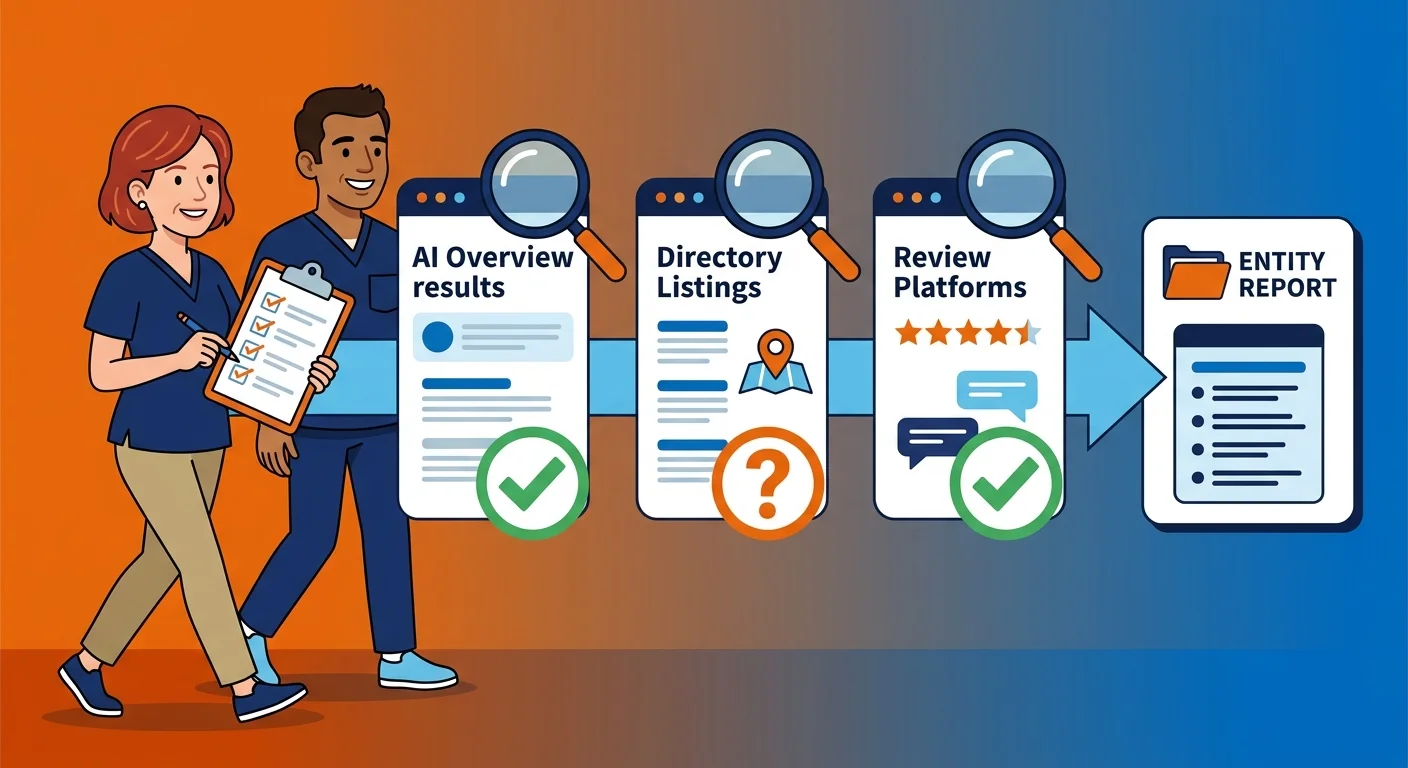
Diagnosing the gap between your website and your entity starts with one blunt question: what does the machine already believe about you? That answer exists right now — whether or not anyone at your clinic has ever bothered to look.
Mapping the entity means dragging every scattered signal into one place and checking it against itself. Some of that picture lives inside the answer engines. Some of it lives in the reputation layer feeding those engines their judgment.
| Diagnostic Step | What You're Checking | Signal It Reveals |
|---|---|---|
| Query Your Own Specialty | Ask a generative answer tool the exact question a patient would type, naming your specialty and area, with no assumptions about the result. | Whether your entity currently exists as a nameable answer or has already gone silent. |
| Rephrase the Same Question | Run several phrasings of the same patient question through the same tool and compare which versions surface your clinic and which don't. | Whether your entity reads as coherent everywhere or only in patches an answer engine can't fully trust. |
| Audit Directory Listings Line by Line | Compare your name, address, phone number, and credentials across every directory a patient might touch. | Whether mismatched or contradictory details are quietly disqualifying your entity from citation. |
| Examine Review Coverage and Consistency | Look past the star count and check volume, sentiment, and consistency of what reviewers actually say about your clinic. | Whether your reputation layer gives an answer engine enough to weigh, or leaves it with nothing to trust. |
| Cross-Check the Whole Picture Against Itself | Line up the answer engine's response, the directory listings, and the reviews to see if they tell one consistent story. | Whether the gap between your website and your entity is closing or still wide open. |
Auditing What Google's AI Overviews Already Say About You
Start simple. Ask a generative answer tool the exact question a patient would ask — name your specialty, name your area — and read the reply with zero assumptions. Whatever it says, or refuses to say, about your clinic is the current state of your entity.
So a competitor gets named and you don't? That's not a placement gap. It's a synthesis gap, and it points straight back to the fragmented signals we walked through earlier.
Now run the same question through a few different phrasings. A clinic that shows up for one wording and vanishes for another has an entity that's readable in patches, not as a whole — and that patchiness is exactly what an answer engine reads as unreliable.
Cross-Checking Directory and Review Consistency
Next, pull up your listings across every directory a patient might ever touch. Compare the name, the address, the phone number, and the credentials — line by line, against each other.
Then look past the facts and into the reviews themselves. Here's where that earlier finding stops being a statistic and starts being a diagnostic tool: 56% of shoppers who clicked into a Local Pack listing said positive star ratings or reviews shaped that click, according to survey findings on local business selection. Thin or inconsistent review coverage isn't a cosmetic problem.
It's a trust signal an answer engine is actively weighing before it decides whether to name you at all. And the audit isn't done when the listings match. It's done when the reviews, the listings, and the answer engine's own reply all tell the same story about who your clinic is.
Frequently Asked Questions
Once a clinic sees the entity-versus-website split, the same handful of questions come up every time. Here are the straight answers.
Why doesn't my clinic show up in ChatGPT even if my website ranks well on Google?
Placing in the classic ten blue links only proves your website is readable. It says nothing about whether your entity is coherent, and that's the file an answer engine actually reads.
What is a zero-click search and how does it affect patient acquisition?
A zero-click search ends the second an answer engine hands a patient a name. No website ever gets opened. That means patient acquisition now happens before your site loads, which is why nearly half of Google searches close without a single click.
Can I optimize my clinic's website specifically for AI Overviews and similar tools?
Not the way you'd tune a page around a keyword, no. There's no required markup to bolt on. What matters is making your scattered entity consistent enough that a machine trusts it.
How does AI decide which clinic to recommend for a specific condition?
It cross-checks fragmented signals across directories, review platforms, and citations. Then it names whichever entity's story holds together with no contradictions. Consistency beats any single strong listing.
If a patient gets an answer from an AI, how do I know my clinic was ever mentioned?
Ask the exact question a patient would ask. Name your specialty, name your area, and read the reply with zero assumptions. Whatever comes back is the only honest record of whether you were mentioned.
What's the first step to diagnosing my clinic's visibility to AI search engines?
Start by mapping every signal scattered across directories, review platforms, and citations. Then check it against itself for contradictions. That map is the diagnostic, and it's exactly what an AI visibility check is built to produce.
Where This Leaves Your Clinic
Here's the thing: your website was never the problem. The entity was always the real front door — standing wide open or bolted shut, and nobody at your clinic ever checked which.
That's the psychological gap this whole diagnostic has been circling. You keep polishing the page a human sees while an answer engine quietly grades a different file built from scattered signals. Close that gap by fixing the entity, not the site.
So the real question was never whether your website looks good. It's whether the machine-facing version of your clinic tells a coherent story — and the only way to know is to look at it head-on, which is exactly what happens when you get your clinic's AI visibility checked.