
Why the Old Scorecard Stopped Telling You the Truth
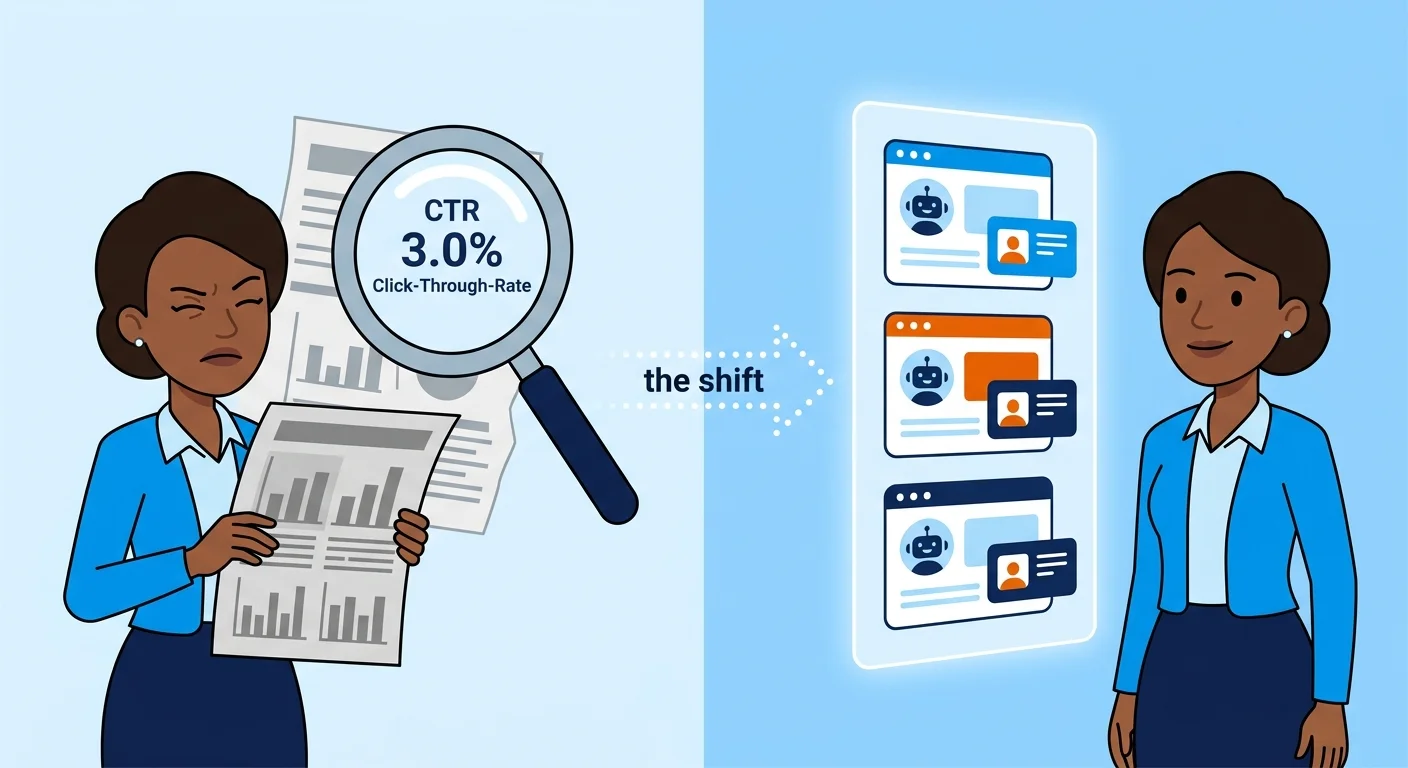
Clinic owners still watch keyword position tracking and site visits like those numbers prove the agency is working. But that scorecard was built for a search engine showing ten blue links, not a generative engine that writes the answer itself.
So the fog machine keeps running. Thicker reports, brighter dashboards, and still nobody answers the one thing that matters: is the clinic actually cited when an AI system builds its response. That's got nothing to do with placing in the classic ten blue links, and most agencies never build the entity signals it takes.
Here's the thing about that gap: it's exactly where verifiable authority splits from opacity, a distinction how a founder's two decades of hands-on experience anchors verifiable entity trust digs into. And for a lot of clinic owners, the agency relationship is just constant frustration wrapped in confusing reports and shaky results. That's not a personality clash. It's the predictable output of measuring the wrong thing on purpose.
What Agency Opacity Actually Looks Like Inside a Report

Open a typical monthly report and the opacity isn't hidden. It's formatted.
Colorful graphs track site visits. Dashboards light up with keyword position tracking. And down near the bottom, a paragraph of online promotion language tells you why last month's numbers wiggled.
None of it answers the one question that matters now: was the clinic cited when a generative answer engine actually built its answer? That gap is exactly why verifying how to verify an AI authority agency founder's track record before hiring beats reading another dashboard.
| Reporting Habit | What It Looks Like | What It Hides |
|---|---|---|
| Keyword position tracking summaries | A dashboard of rankings across chosen search terms, updated on a set schedule | Whether the clinic ever appears inside a generative answer, since a ranked page can sit unseen while an AI system answers the query directly |
| Site visits reports | Line graphs showing overall site visits trending upward month over month | Whether that traffic converts to appointments, or whether the clinic is cited at all when an answer engine resolves a query without a click |
| Online promotion activity logs | A running list of posts, campaigns, and outreach completed during the billing period | Whether any of that activity built the structured data or entity signals a large language model needs to cite the clinic by name |
| Narrative explanations for flat numbers | A paragraph of online promotion language attributing stagnant metrics to algorithm shifts or seasonality | That the underlying entity authority was never built, so no shift in strategy or season would have changed the outcome |
Why Vague Reporting Persists as a Business Model
Vague reporting isn't an accident of laziness.
It's a structural business model, and it thrives specifically when clients don't know which questions to ask about modern AI search. Agency opacity is the practice of using complex, irrelevant, or misleading metrics to hide a lack of real performance and keep that monthly retainer clearing.
So the report has to look busy. A clinic owner who can't decode the metrics has no way to demand different ones, and the retainer keeps clearing every month whether AI citation exists or not.
Here's the mechanism underneath it. Reporting formats were built around a search engine that sent clicks, and Search Engine Journal's reporting notes that 60% of searches now get resolved without users clicking a single link. An agency still leaning on click-driven metrics is measuring a behavior that barely happens anymore, and the report stays vague because the alternative is admitting the old scorecard is dead.
The Entity Signals AI Engines Actually Look For
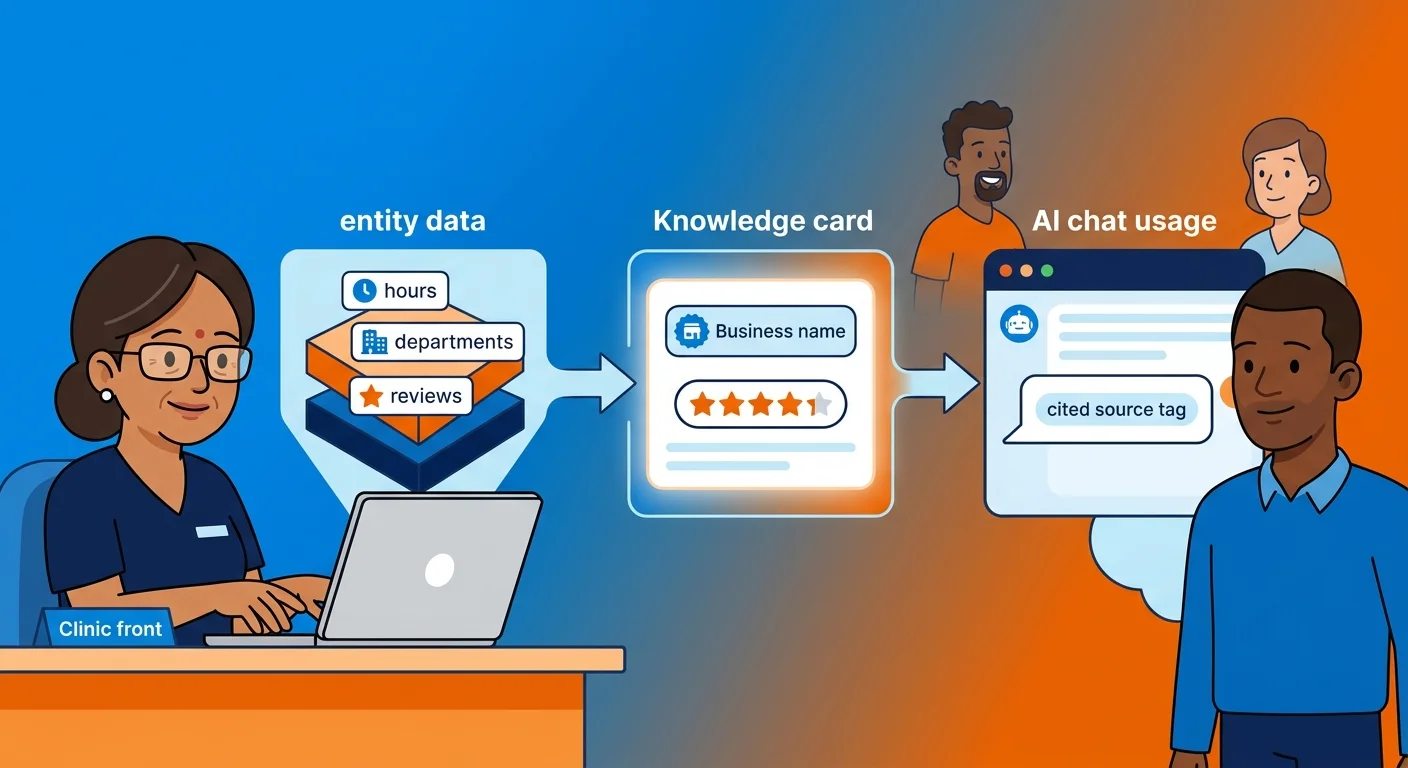
Here's where the fog clears: look at what AI engines actually read, not what the agency reports. Entity signals aren't a metric. They're structured, verifiable facts about a clinic that a machine can read without guessing.
So the real question isn't how a page ranks. It's how a business gets described across the web, and that's exactly where faceless template agencies quietly fall apart, because templated output has no verifiable entity behind it for an AI system to confirm.
| Signal Type | Where It Appears | What It Communicates |
|---|---|---|
| LocalBusiness structured data | Embedded in site build work, invisible to visitors but readable by machines | Business hours, department information, and reviews that machines can cite without guessing |
| Consistent entity credentials | Repeated across the web wherever the clinic is described, not just on its own site | Verifiable authority a generative answer engine can confirm rather than take on faith |
| Third-party citation presence | Publisher and aggregator sites competing for the same query space as the clinic itself | Whether the clinic has any realistic share of citations available for its category of query |
| Founder or practitioner track record | Documented history tied to a real, checkable identity behind the clinic | A signal of trust that distinguishes a verifiable authority from a templated, faceless operation |
| Citation Source | Share of AI Overview Citations | Example Types |
|---|---|---|
| Third-Party Publishers | 60% of AI Overview source citations | Aggregator and directory sites such as Indeed, Reddit, Quora, ZipRecruiter, HomeGuide, Thumbtack, and Yelp |
| Individual Local Businesses | 40% of AI Overview source citations | Single-location clinics and service providers cited directly by name |
| LocalBusiness Structured Data | Not measured as a citation percentage; a prerequisite signal | Business hours, department information, and reviews surfaced in knowledge panels and search carousels |
How LocalBusiness Structured Data Feeds Knowledge Panels
LocalBusiness structured data is one of the cleanest entity signals a clinic actually controls.
This markup lets a clinic hand Google its hours, its departments, and its reviews directly, and Google's documentation confirms those details are what surface inside knowledge panels and search carousels. Without it in place, an AI system has nothing structured to cite, no matter how polished the site build work looks.
Most opaque agencies never bring this layer up, because it doesn't photograph well in a dashboard. A clinic can nail its online promotion and still be invisible right here, and the monthly report will never say a word about it.
Who Actually Gets Cited When AI Overviews Answer a Service Question
Now, here's the thing about citation patterns. They're not spread out evenly, so a clinic owner assuming general visibility earns a citation is working from a false premise.
Look at plumbing hybrid-intent queries out of Houston: AI Overviews cited third-party publishers for 60% of their sources and individual local businesses for the remaining 40%, according to published research data. That means an individual clinic is already fighting aggregator sites for the minority share of citations left to it.
Winning that minority share isn't luck. It takes the exact entity signals opaque agencies skip: verified structured data, consistent credentials, and a track record an AI system can confirm instead of taking on faith.
Reading the Fine Print: How Reliable Are AI-Generated Answers Anyway
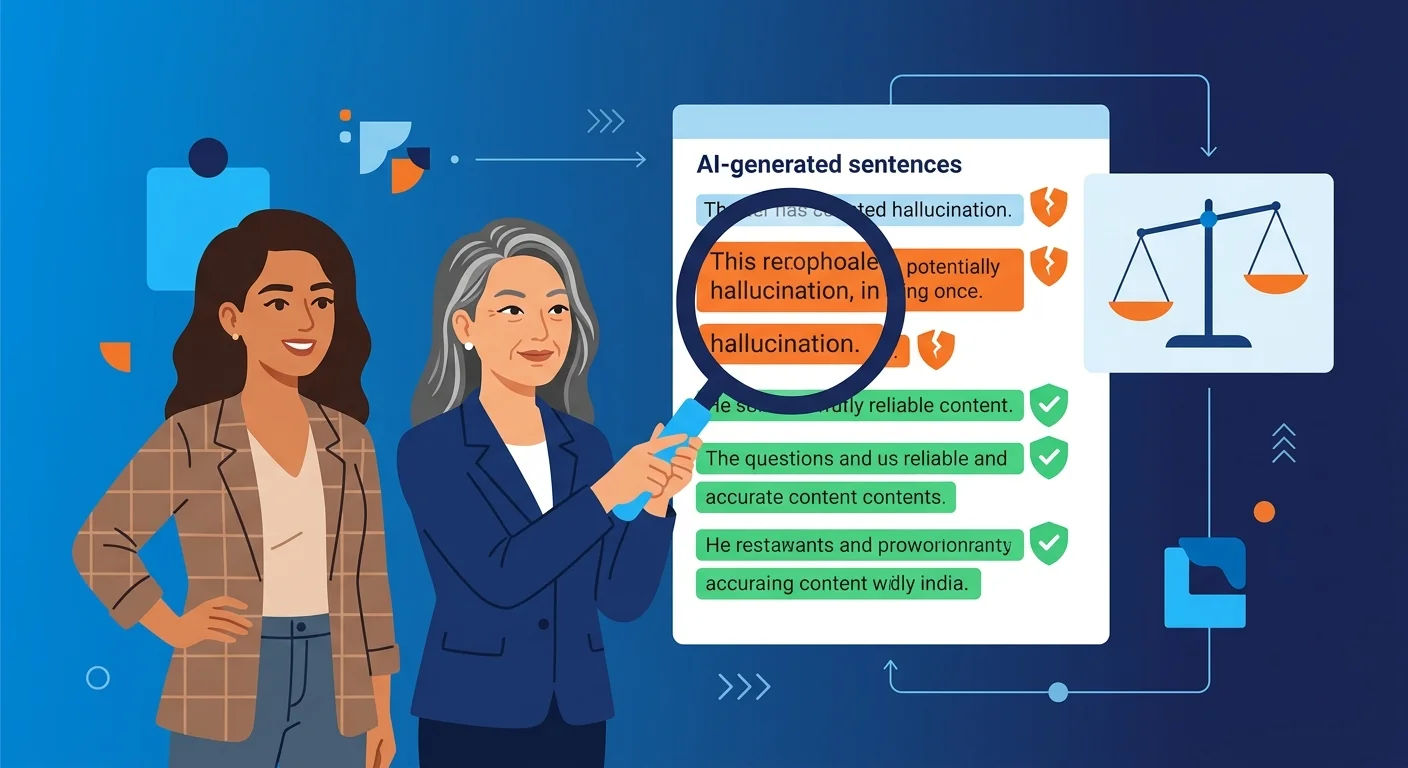
Here's something clinic owners rarely hear from their agency. The answer engine itself isn't fully reliable, even when it does spit out a response.
Google AI Overviews running on Gemini 3 back only 67% of their individual claims with cited sources, according to published data on AI Overview accuracy. Put another way? Roughly a third of what the answer engine says shows up with no verifiable source attached at all.
That accuracy ceiling changes what entity clarity is actually for. A clinic isn't just trying to get cited. It's trying to be the verifiable fact the system reaches for instead of a hallucinated gap.
| Google Business Profile Metric | Common Owner Assumption | What It Actually Measures |
|---|---|---|
| Profile Views | The clinic is visible wherever it matters, including inside generative answers | How many people viewed the listing itself, with no connection to AI citation behavior |
| Direction Requests | Online promotion is generating meaningful demand across every channel | Local intent from users who already found the listing, not a signal of entity trust |
| Calls From Listing | The agency's reporting reflects real generative answer engine performance | Phone contact volume from an existing listing view, unrelated to structured entity data |
| Search Queries Triggering Listing | The business is being cited accurately when AI systems generate answers | Which terms surfaced the listing in a traditional search context, not a generative one |
Where Legacy Agency Habits Break Down First
Legacy agency habits assume the answer engine works like a search index, retrieving and ranking whatever already exists. It doesn't.
So when a third of claims show up with no citation, an agency still chasing online promotion visibility is solving a problem the system no longer has. The real problem? Whether a clinic's own facts are structured clearly enough to get pulled instead of invented.
This is exactly where choosing a specialized authority architect over a commodity retainer starts to matter, because a generalist retainer has no mechanism for closing that gap. Verifiable entity data is the only thing that competes with a hallucinated answer.
The Google Business Profile Numbers Clinic Owners Misread
Clinic owners lean on Google Business Profile numbers as proof everything's working. Views, calls, and direction requests get reported every month like a scoreboard.
But those numbers only describe how people poke at a listing that already surfaced. They say nothing about whether the clinic's facts were the ones an AI system chose to cite in the first place.
Here's the mechanism underneath it. When a third of the claims inside a generated answer carry no source, a clinic's structured entity data is what decides which third that clinic lands in. A rising profile view count can't answer that, and no opaque report will ever ask it.
Frequently Asked Questions
Here are the questions you should already be asking your own agency. Not the ones a fogged-up report invites — the ones that actually expose whether entity authority exists.
How can I tell if my agency is just showing me vanity metrics instead of real generative search performance?
Ask whether the report ever says a word about structured entity data or citation inside a generated answer. If every metric traces back to clicks and site visits, you're staring at a vanity scorecard built for a search engine that barely sends clicks anymore.
What specific data should I ask an agency for to prove they understand AI Overviews and answer engine optimization?
Ask for proof of structured markup, confirmed credentials, and evidence the clinic actually got cited inside an AI-generated answer. Keyword position tracking and online promotion summaries answer none of that.
Why do most agencies hide behind complex reports instead of showing a clear ROI for AI search visibility?
Because complex, irrelevant metrics are easier to sell than an honest answer about citation. A vague report protects the retainer precisely because you can't decode it well enough to demand better.
What is the difference between placing in the classic ten blue links and being cited as an authority in a generative search answer?
Placing in the classic ten blue links means a link shows up in a list the searcher still has to click. Being cited in a generative answer means the system already trusted your facts enough to state them outright — no click required.
If an agency promises placing in the classic ten blue links, is that a red flag in the age of AI search?
Yes. That promise describes a search experience most searches no longer even use. An agency still selling it is optimizing for a behavior that's disappearing, not the citation behavior that matters now.
Why does a high star rating on Google Business Profile not guarantee an AI Overview citation?
A star rating measures how people react to a listing that already surfaced somewhere. It says nothing about whether the clinic's underlying facts were structured clearly enough for an AI system to pull them into a generated answer.
Where This Leaves You
So here's where this leaves you. The blind spots aren't a character flaw in clinic owners. They're the predictable result of grading a new game with an old scorecard, while the agency holding the report has every reason to keep that scorecard old.
Verifiable entity authority isn't a metric an agency can dress up in a dashboard. It's structured data, confirmed credentials, and a track record an AI system can check instead of assume, and it either exists or it doesn't. The fog machine only keeps running on clinics that never ask which one is true.
Gerek Allen built iTech Valet on the conviction that this question deserves a straight answer, not another colorful report. So if you want to see whether your own entity signals hold up under that same scrutiny, start with a direct AI visibility check on your clinic.