Why a Resume Doesn't Prove Anything to an AI Search Engine
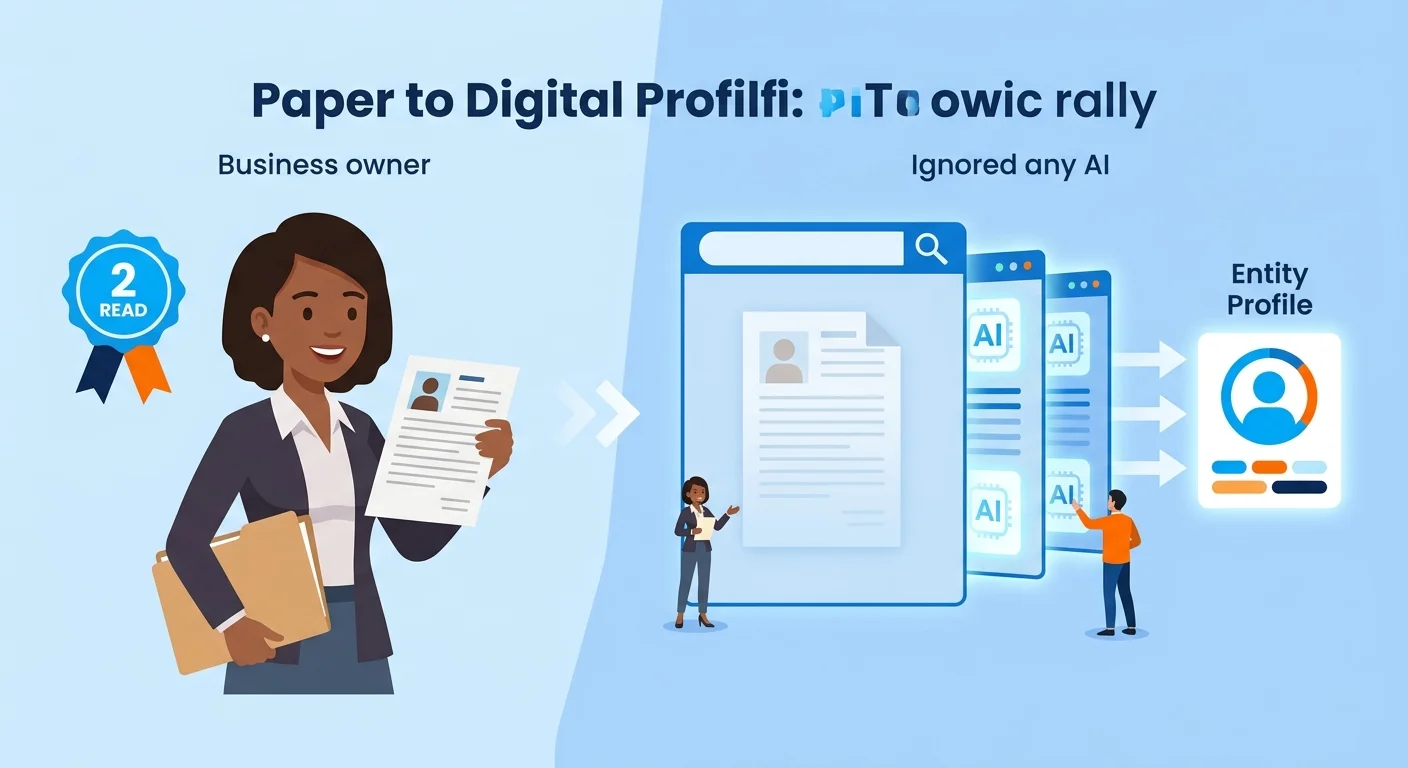
Here's the gap. Most buyers vet a founder like a contractor: check the resume, skim the portfolio, call a reference. That instinct feels thorough, but it doesn't test what actually matters to an AI search engine.
A resume is a claim pointed in one direction. It says whatever the founder decided to type into it, and nothing out there forces that claim to survive first contact with reality.
And in the booming field of AI, telling genuine expertise apart from well-marketed hype has gotten incredibly hard. So the resume is exactly the wrong tool for that job. It rewards confident phrasing over recognition you can actually verify.
Here's the thing: checking a resume or portfolio tells an AI search engine nothing. That's a mechanical limit, not an opinion — and if you want to see what real entity verification looks like, Gerek Allen's two-decade track record is built on machine-readable recognition, not self-reported claims.
The Problem With Portfolio-First Vetting

Portfolio-first vetting is the rejected method here, and it breaks down for one clear reason. A case study is a story the agency chose to tell, edited for the outcome it wants you to remember.
That's not lying. It's just selection bias baked right into the format.
So when a founder hands you a stack of screenshots and client logos, they're showing you the wins that survived their own editing. None of it tells you whether an AI engine independently recognizes that founder as an authority, which is the only recognition that decides whether their methods actually work.
| Vetting Method | What It Actually Confirms | What It Misses |
|---|---|---|
| Resume or Bio Review | The founder's self-reported history, credentials, and claimed specialties. | Whether independent, citable sources corroborate any of it. |
| Portfolio or Case Study Walkthrough | That specific projects happened and produced a result worth showcasing. | Whether the outcomes reflect a pattern AI search recognizes, or a curated best-case sample. |
| Client References | A small, founder-selected set of positive testimonials. | Whether the founder's expertise is echoed across structured, machine-readable sources beyond that handpicked group. |
| Entity Recognition Check | Whether AI search systems independently identify and trust the founder as a source of authority. | Nothing hidden here — this is the layer the other three methods never reach. |
Why Case Studies Alone Can Mislead
Here's why case studies alone mislead you. A polished portfolio can be completely true and still tell you nothing about entity recognition.
It proves a project happened. It doesn't prove that independent, citable sources back up the founder's expertise the way AI search systems demand before they'll trust it.
This gap shows up constantly in how AI Overviews handle sourced claims. According to Washington University research, when you break AI Overviews into individual claims and check them against their cited sources, 11.0% of those claims aren't supported by the cited pages at all, a pattern documented in a study hosted on the arXiv preprint server.
That's the same failure a portfolio hides. A confident, clean-looking claim gets taken at face value, right up until someone checks whether the source actually supports it.
The Omission Problem Hiding Inside Polished Portfolios
Now here's the part most buyers never think to check. Clinic owners especially tend to treat agency opacity as normal, never realizing what that opacity is costing them, a blind spot explored in the core vulnerabilities behind agency secrecy.
The dominant failure inside generative search is omission, not fabrication. A response can look complete while quietly leaving out the one bit of context that would change what it means.
And fluency makes this worse, not better. Generative search responses that read as more fluent and helpful often carry more unsupported statements or inaccurate citations, a pattern confirmed across four commercial generative search engines in published research data. A portfolio reads fluently by design. That's exactly why it's the wrong test.
What AI Engines Actually Check Instead
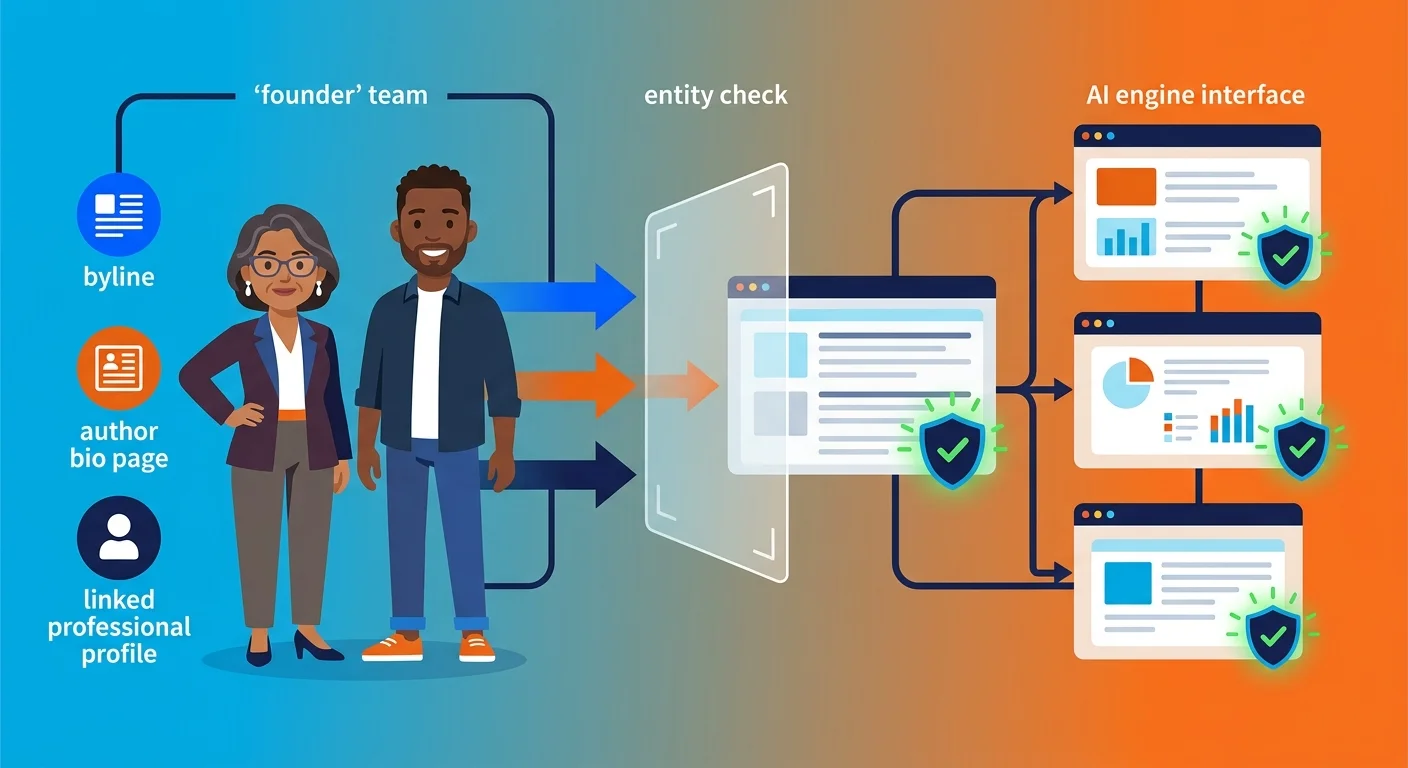
So what replaces a resume here? Entity recognition doesn't work the way most buyers expect.
An AI engine doesn't care whether a founder wrote a compelling bio. It asks whether independent, structured sources describe that founder the same way, over and over, across the open web.
That's the shift from claimed authority to recognized authority. One is written by the founder. The other gets confirmed by everyone else.
Reading a Founder's Entity Signals Like an AI Engine Does
Here's the mechanism. AI search systems build a trust profile for a named person, stitched together from bylines, structured data, and citations that all point back to the same consistent identity.
So a founder whose name sits on a byline, and whose byline links back to a stable author profile, hands these systems exactly what they're built to look for.
Google says making it clear who created content, through visible authorship signals like a byline linked to author information, helps demonstrate expertise, authoritativeness, and trust for individuals. It's a principle spelled out directly in Google's documentation on how authorship gets evaluated.
And that one mechanism is exactly why anonymous, template-driven agency output falls flat here. There's no consistent named entity behind it for an AI engine to build a profile around, a gap examined directly in what separates templated output from a named, accountable author.
The Technical Questions That Separate Real Expertise From Hype
Now, once you get the mechanism, the questions change completely. You stop asking what a founder has done and start asking what an AI engine can independently confirm they've done.
Ask whether the founder's name is consistently linked across bylines, structured data, and third-party citations, not just repeated on their own site. Ask whether that identity holds steady on every platform where it shows up.
Here's the thing: a founder's own claims never answer that question, no matter how detailed the pitch. Verifiable authority isn't a list of accomplishments. It's a recognized digital footprint AI engines can parse and trust as a source, and that footprint either exists or it doesn't.
This Isn't for Buyers Chasing a Quick Ranking Fix
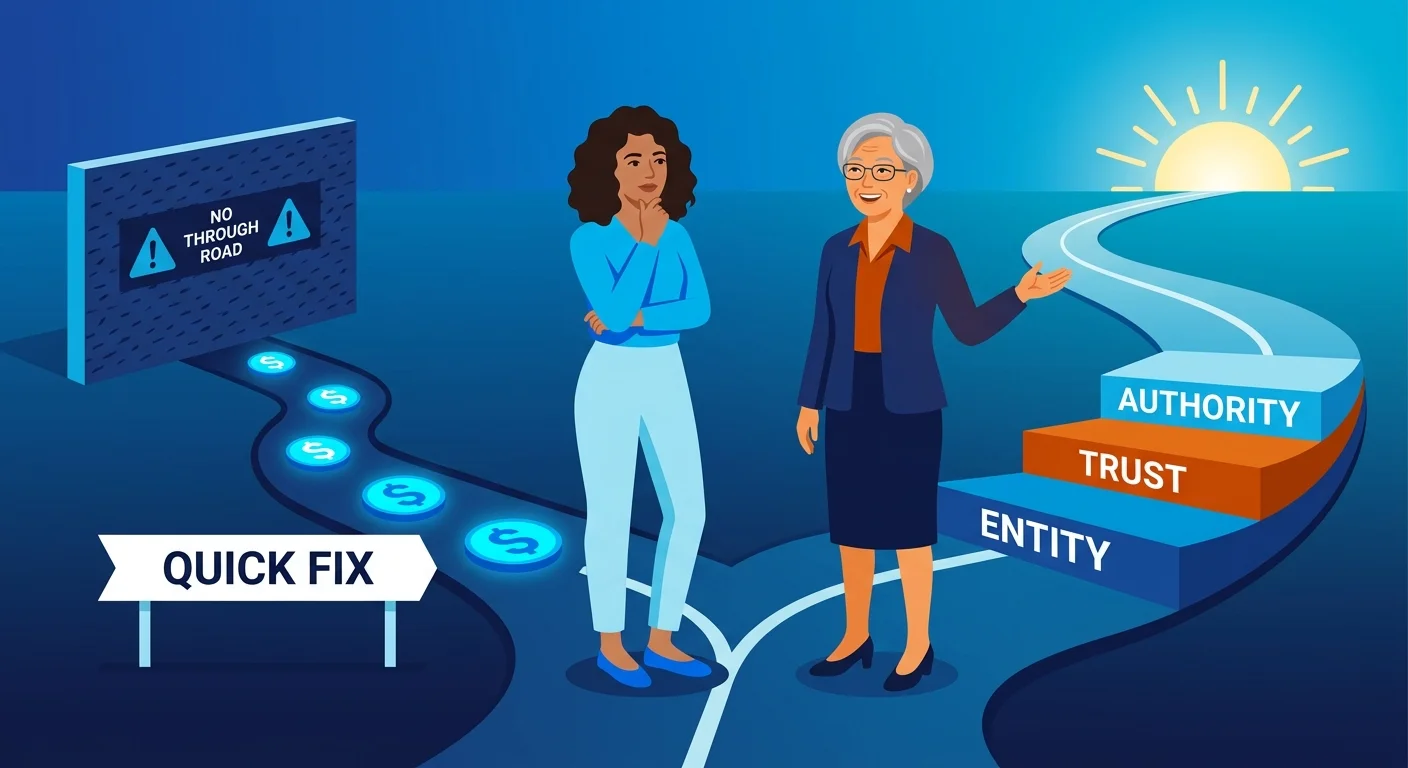
This one's not for buyers hunting a fast bump in placing in the classic ten blue links. If that's the goal, entity verification is the wrong tool, full stop.
Here's the reaction first: this process repels shortcut buyers on purpose. Confirming a founder's recognized authority takes longer than skimming a pitch deck, and it's supposed to.
Hiring an agency is a big investment. And the founder's track record is the single most important predictor of whether it succeeds or fails, which is exactly why skipping verification to move faster is the wrong trade.
Who This Verification Process Actually Serves
So who does this actually serve? Buyers who get that AI-driven visibility compounds over time, not overnight, and who want the entity underneath to hold up under scrutiny.
That's a different buyer than the one chasing a quick placement win. Anyone weighing whether a founder's real background stands up to the same scrutiny an AI engine applies will find the answer in how a founder's real-world background closes citation gaps, which walks through the mechanism directly.
Look, if you want a founder who sounds confident on a call, plenty of agencies deliver that. But if you want an entity an AI engine independently trusts, the verification happens before the contract, not after.
How AI Systems Score Authority Once You've Done the Homework
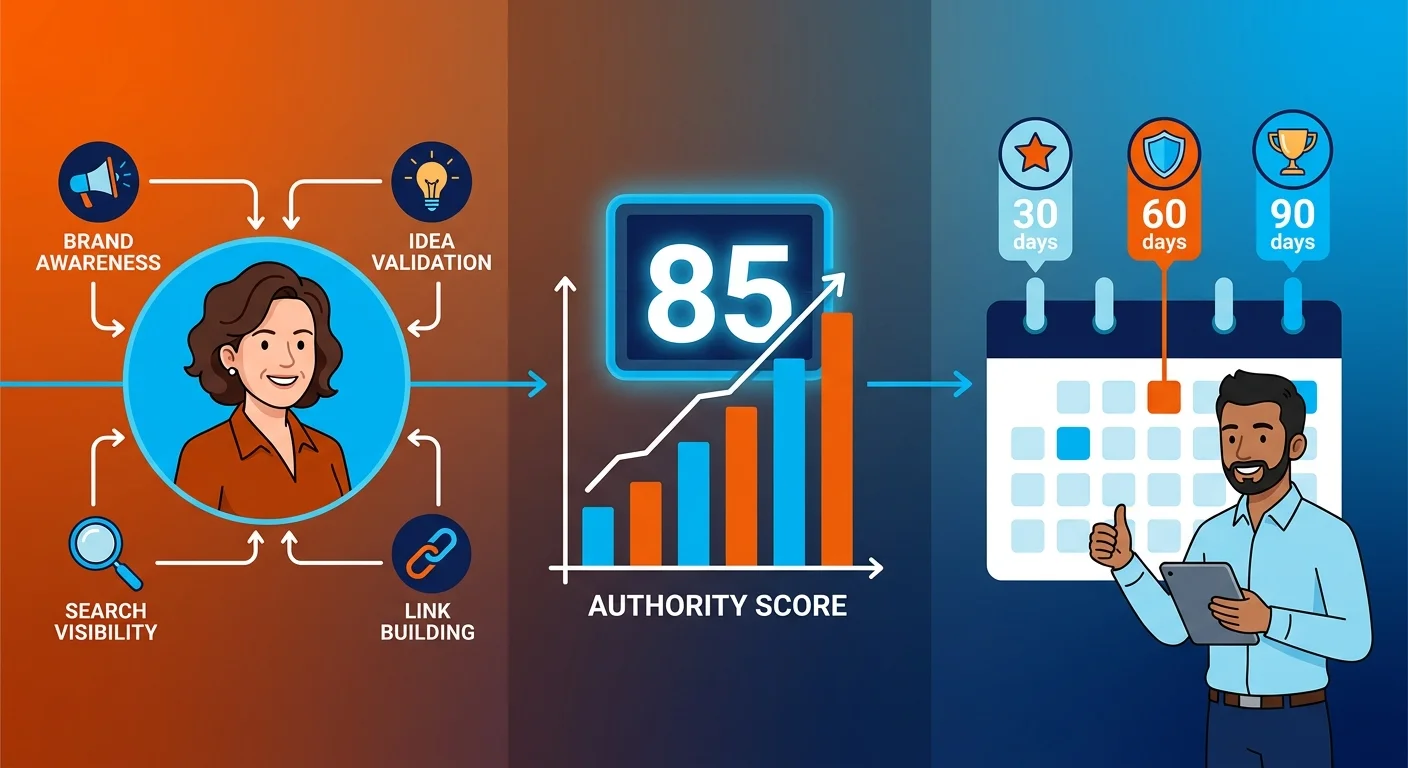
Here's the verdict first. Once a founder's entity signals actually exist, AI systems don't just notice them, they score them. And that scoring method changes which sources get trusted.
Large language models do better when you ask them to slap a specific number on a source instead of just ranking it against the rest. Sounds technical. It changes the outcome directly.
When models score on their own instead of ranking one thing against another, they land on steadier, more consistent authority judgments. Add those scores up across a lot of queries and you get better overall rankings than a straight comparison ever could, a finding detailed in published research data on how these systems evaluate sources.
| Signal Type | Verification Action | Timeframe |
|---|---|---|
| Byline Consistency | Confirm the founder's name links to the same author profile across every published piece, not just their own site. | Ongoing — verified on first review, then rechecked periodically as new content publishes |
| Structured Data Presence | Check whether the founder's identity is marked up with structured data an AI engine can parse directly, rather than left as plain text. | Established early, before other signals are evaluated |
| Third-Party Citation | Verify that independent, structured sources describe the founder consistently, without relying on self-published claims. | Builds gradually — accumulates over the founder's public history rather than appearing all at once |
| Cross-Platform Stability | Test whether the same name, title, and credentials appear identically across every platform where the founder is referenced. | Confirmed at verification, then monitored as the footprint expands |
| Signal Consistency vs. Volume | Weigh whether fewer, verifiable, linked signals outweigh a larger but scattered footprint. | Assessed once enough signals exist to compare, not from a single data point |
| Study | Tool or System Tested | Finding |
|---|---|---|
| Legal research tool accuracy study | LexisNexis, Thomson Reuters, and Ask Practical Law | Each tool hallucinated between 17% and 33% of the time on legal research queries |
| Source authority scoring experiments | Large language models (PointScore output mode) | Scalar scoring produces more stable, independent judgments than ranking-based outputs |
| Generative search citation accuracy study | Four commercial generative search engines | More fluent, helpful-seeming responses often contain more unsupported statements or inaccurate citations |
Turning Verified Signals Into a Scorecard
So what does that mean for a founder getting evaluated? It means those entity signals you gathered earlier don't face a single yes-or-no gate.
They get weighed. A byline tied to a stable author profile scores differently than an anonymous post. A citation from an independent, structured source scores differently than a testimonial the founder wrote about themselves.
Here's the part buyers miss most. The scoring model rewards consistency over volume.
A founder with fewer verifiable, consistently-linked signals will often outscore one with a big but scattered footprint. That's the opposite of how most agencies pitch themselves, and it's exactly why the resume format keeps failing this test.
Setting Expectations for the First 90 Days
Now, what should a buyer actually expect once verification starts? Not instant certainty. A recognized entity profile builds through consistent signals over time, not one audit.
The first real milestone is confirmation, not transformation. You're checking whether the founder's identity already gets recognized consistently, or whether it has to be built from a thinner starting point.
That distinction matters more than most buyers realize going in. Legal research tools built by LexisNexis, Thomson Reuters, and Ask Practical Law hallucinated between 17% and 33% of the time when tested on legal research queries, a rate documented in published research data on AI research tool accuracy. If well-funded systems built for legal research still miss that often, an unverified founder entity has no reasonable claim to reliable recognition either.
Frequently Asked Questions
So let's get into the objections. Here's what buyers actually ask once the verification framework clicks.
How can I tell if a founder's claimed AI results are real or just marketing fluff?
Check whether the results tie back to a stable, consistent digital footprint, not just a case study screenshot. Fluff lives in a portfolio. A verifiable claim lives in structured data and third-party citations an AI engine can confirm on its own.
What specific technical questions should I ask an agency founder to test their AI knowledge?
Ask how AI search systems build trust profiles for named people, and what signals feed that profile. A founder who can't explain entity recognition, bylines, or structured data probably isn't operating at that level.
Are third-party review sites reliable for judging an AI agency's actual expertise?
They help, but only as one signal among several, never a verdict on their own. A review confirms reputation with clients. It doesn't confirm whether an AI engine sees the founder as a consistent, structured entity.
If a founder has no formal AI-related education, can they still be a legitimate expert?
Formal education was never the test here, and it shouldn't be. What matters is whether independent sources recognize their expertise consistently across the web, not which credential hangs on the wall.
What are the biggest red flags to watch for on an AI agency founder's LinkedIn profile?
Watch for a profile cut off from any consistent byline history or structured citations elsewhere. A polished page with no verifiable footprint outside it is the exact resume problem this whole process exists to catch.
How does Google's E-E-A-T framework apply to a person, not just a website?
The same way it applies to a page. Visible authorship, linked consistently to a stable identity, is exactly what Google points to as evidence of expertise and trust for a person, not just a domain.
Can a founder be an expert in AI if they don't have a public track record of articles or speaking engagements?
That's a real red flag, not a neutral fact. A recognized entity gets built from consistent public signals over time. No public track record usually means no footprint for an AI engine to confirm.
The Bottom Line
So here's the bottom line. A resume tells you what a founder says happened. A digital footprint tells you what an AI engine can independently confirm — and only one of those gets checked before your business gets recommended or ignored.
That's the whole shift. Founder-Led Authority Origin isn't a slogan for a bio page. It's the gap between an entity AI search can parse and trust, and one it just can't verify — no matter how polished the pitch sounded.
Look, verification takes longer than skimming a portfolio, and it's supposed to. Want to see what a recognized founder entity actually looks like before you sign anything? start with an AI visibility check.