
What Actually Happens When You Rent Visibility Instead of Building It
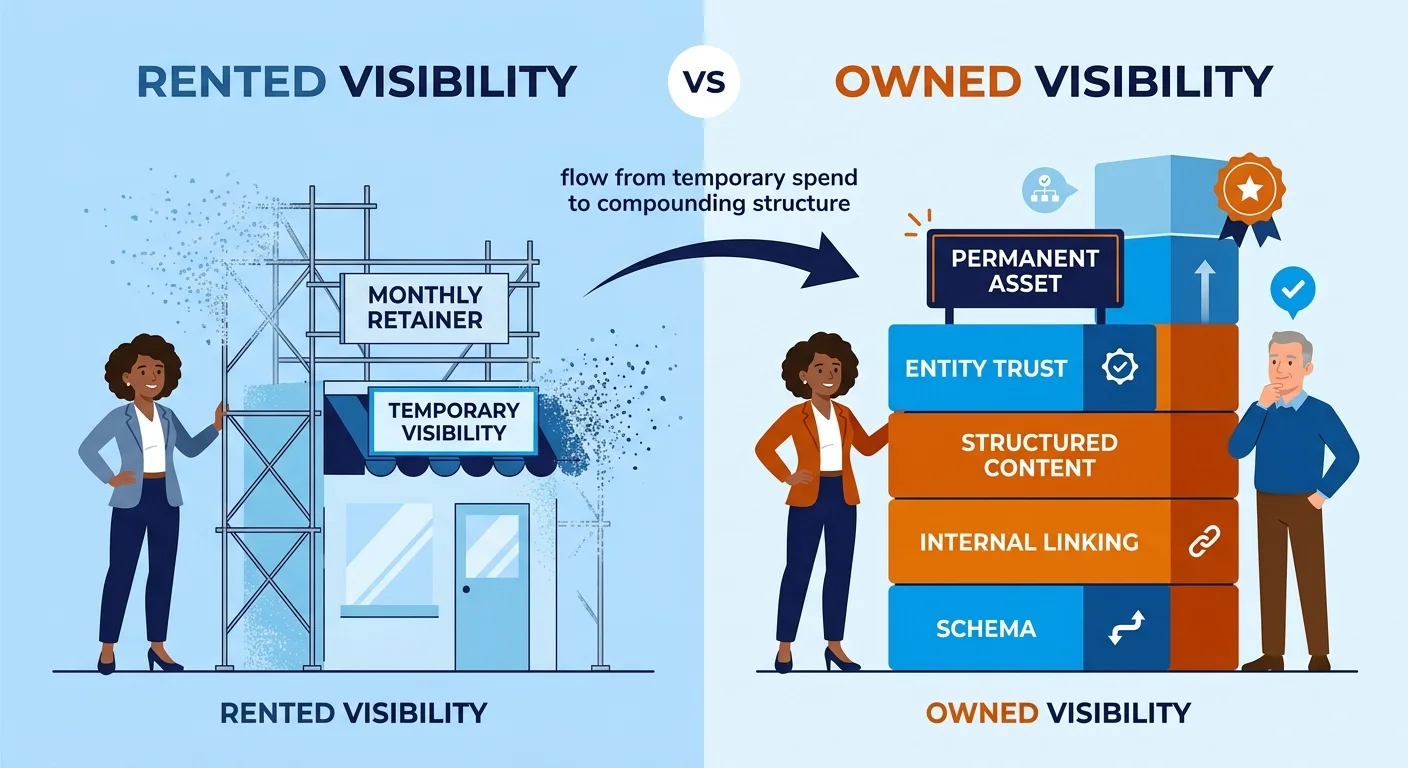
Rent buys you nothing the second the check clears. So when a retainer ends, the fastest thing happens first: whatever visibility it bought disappears inside the same billing cycle.
Here's the thing — a mortgage payment plays a completely different game. Each one stays put as equity, and the structure it built keeps standing whether or not another payment ever shows up.
That means the real question isn't how much you spend. It's what the spend turns into. A business trying to figure out where that money should actually go can start with why authority infrastructure carries a real starting cost, because the price gap maps straight onto the rent-versus-mortgage split.
Now layer in what generative engines actually reward. Getting cited as a source inside an AI answer beats simply showing up somewhere in the classic ten blue links. Activity-based spending was never built to earn that citation — and it still isn't.
Why Posting and Boosting Cannot Earn a Citation
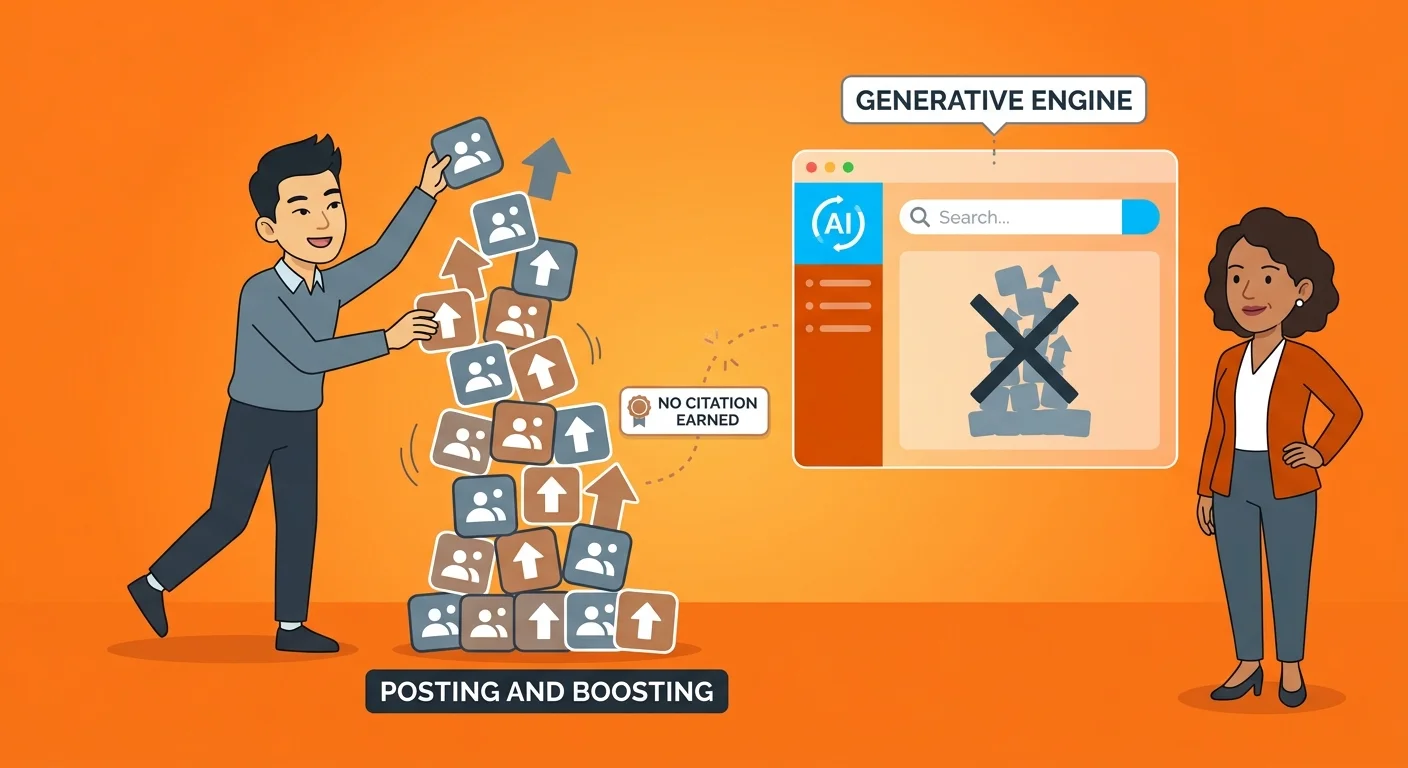
Posting on a schedule was never a strategy for earning a citation. It was a strategy for looking busy while the invoice justified itself.
So this isn't about effort or how often you post. It's structural — the activity itself was never the kind of thing a generative engine is built to trust.
Boosting a post rents you temporary placement in front of an audience the platform owns. It doesn't buy you credibility inside an answer engine's index of trusted sources. Those are two completely different assets, and activity-based contracts sell the first while quietly implying the second.
Here's the kicker: generative engines already cite each other's output at scale. Research tracking four generative search engines found roughly 16% of unique cited sources across all four to be AI-generated content itself — which tells you how crowded and mechanical the citation pool has gotten.
That means you're not competing against a few small businesses posting now and then. You're competing against a flood of machine-made material fighting on structure and trust signals, not posting frequency.
The Activity Trap Most Retainers Sell
Activity-quota retainers sell motion, not infrastructure. A set number of posts, a set number of shallow articles, a set number of boosted impressions — all of it graded on whether it happened, never on whether an engine trusted it enough to cite it.
But motion and infrastructure aren't the same investment. One hands you a monthly report full of numbers that reset to zero. The other builds a structured asset a generative engine can actually parse, verify, and reuse as a source.
And the flaw sits right there in the incentive. A retainer priced to cover a quota of activity has nothing left to fund the technical work, the entity clarity, or the credibility signals a source needs before an engine will cite it.
What Generative Engines Structurally Ignore
Generative engines flat-out ignore content they can't verify as authoritative — no matter how often it was published or how many platforms carried it. Recency and volume don't stand in for demonstrated expertise and structural clarity.
So a boosted post that spikes short-term visibility does nothing for whether the business ever gets recognized as a citable source. The two outcomes are unrelated — even though retainers happily bill for both under the same line item.
Want to see exactly where that gap costs you money? Look at the full financial comparison between owning infrastructure and renting attention, because the numbers behind each path split further apart the longer a cheap retainer runs. Independent research replicating these citation patterns has been published on the arXiv preprint server, and it lands on the same structural conclusion: engines reward verifiable infrastructure, not activity volume.
The Technical Infrastructure Generative Engines Actually Trust
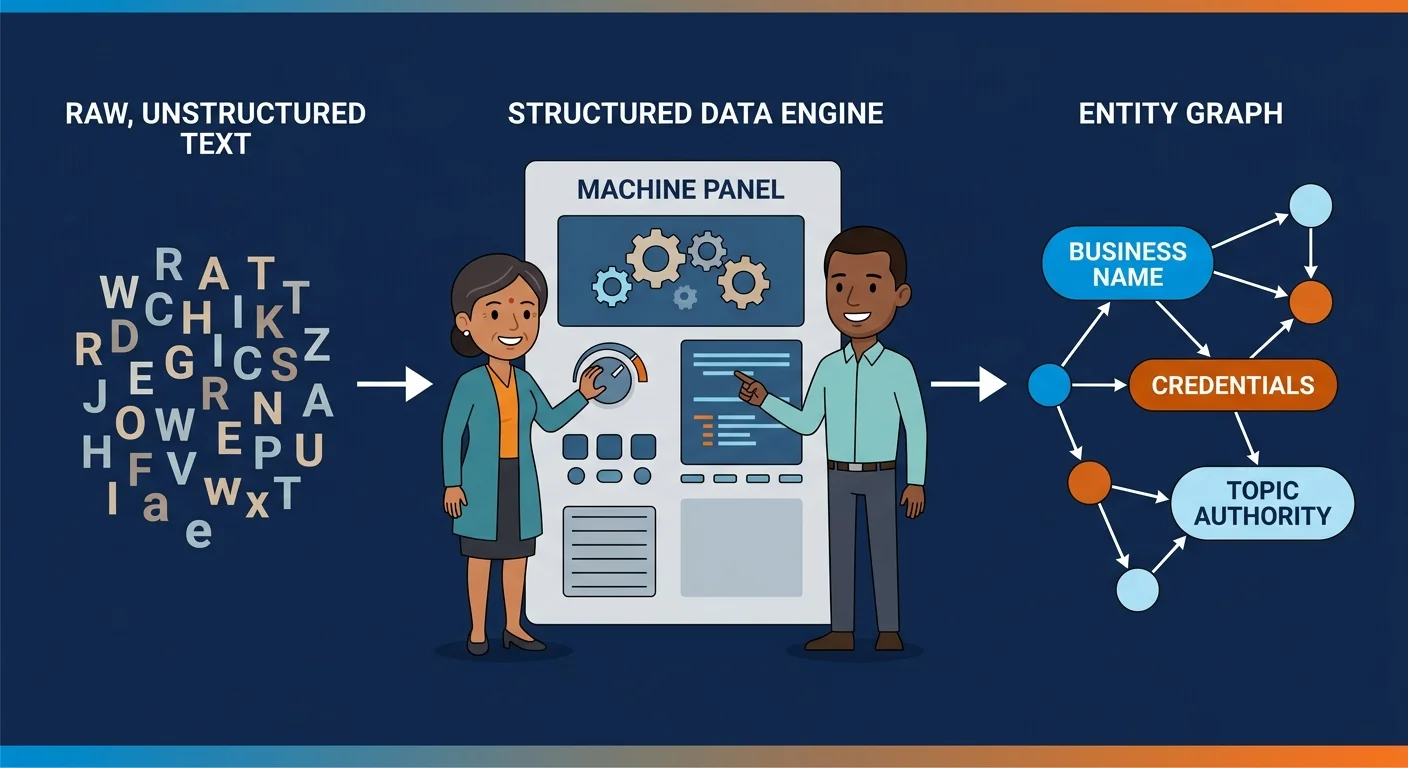
Generative engines don't care that you're consistent. They care whether they can tell what your business actually is.
So the technical layer under a citation matters more than the content sitting on top of it. Structured data tells an engine what an entity is, what it does, and how it ties to other verified facts.
Without that layer, even sharp writing lands in a gray zone the engine won't confidently cite. With it, a page stops being a guess and becomes a verified reference point.
| Component | What It Does | Present in a Compounding Asset | Present in a Rented Retainer |
|---|---|---|---|
| Structured Data Markup | Labels entities, facts, and relationships so a generative engine can parse a page automatically instead of guessing at meaning | Built into the page architecture from the start, giving every claim a machine-readable structure an engine can verify | Rarely present, since a retainer priced around a content quota has no budget left for technical labeling work |
| Verified Entity Presence | Confirms who a business is through independently maintained records an engine can cross-check against on-site claims | Actively developed alongside the content itself, closing the gap between what a site says and what an engine can confirm externally | Left unaddressed, since building an independently verifiable entity record was never part of the activity quota being billed |
| Entity Recognition Signals | Lets an engine link unstructured text to a known person, business, or concept without manual review of every page | Reinforced continuously as new material is published, strengthening the same entity record over time | Nonexistent by default, because the underlying labeling infrastructure needed to trigger recognition was never built |
| Demonstrated Expertise Depth | Shows an engine that a source has the credibility and structural clarity required before a claim is safe to cite | Accumulates with every piece of properly structured material, compounding the trust signals an engine already recognizes | Diluted by shallow, quota-driven material that satisfies a deliverable count without building any credibility signal |
Entity Recognition and the Data Structures Behind It
Entity recognition is how a machine spots a specific person, business, or concept inside plain text and links it to a known record. That whole process leans on structured data doing the labeling work first.
Here's the thing — this isn't theoretical. Researchers building entity recognition systems for specialized fields like cybersecurity have shown that structured, domain-specific data can auto-label unstructured text for entity extraction, dropping manual annotation entirely, and the corpora they built were released as published research through that cybersecurity entity extraction work.
That same mechanism applies to a business online. A generative engine can't hand-read and judge every page it hits, so it leans on structured signals to label things automatically — the same way that cybersecurity research automated labeling at scale.
Credibility Signals Generative Models Weigh Before Citing Anyone
Structure alone doesn't earn a citation. Credibility is the second filter, and it decides whether a well-labeled entity is actually worth quoting.
Wikidata presence turns out to be one of the clearest credibility markers going. Research auditing ChatGPT's commercial citations found that 78% of brands cited for commercial queries have a Wikidata entity — which shows how hard generative engines lean on independently verified records instead of self-published claims.
That number reframes the whole conversation. A business without that kind of independent entity presence is fighting for a citation slot against brands the engine can already verify externally, and no amount of posting closes that gap.
Who This Compounding Model Is Not Built For
This compounding model isn't built for a business chasing a quick spike in site visits before a seasonal push. That business needs a short-term campaign, not a permanent asset — and it should be honest with itself about which one it's buying.
It's also not built for a business that won't invest in the credibility work — verified entity data, structured markup, demonstrated expertise — that citation actually demands. Want the appearance of infrastructure without the underlying structure? You won't get cited, no matter how the retainer is billed.
But a business willing to treat this as infrastructure, not activity, has a clear next step. Learning how to audit and track whether that investment is actually compounding turns the abstract argument into a measurable one, and measurement is exactly what a rented-visibility retainer was never built to survive. The underlying figures come from published research data, and from published research data.
Measuring the Difference Between Owned and Rented Visibility
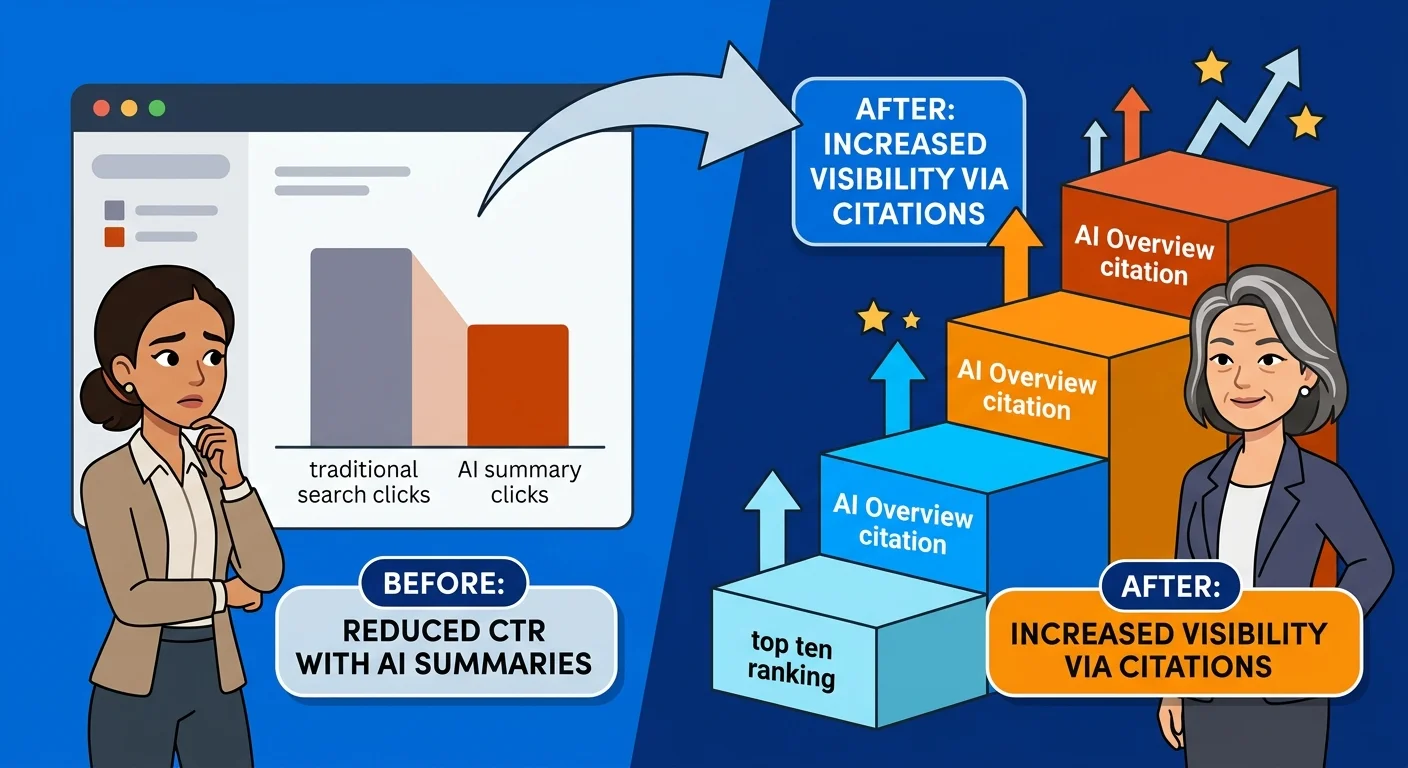
Start measuring with one hard question: does the spend still work after the invoice stops? Rented visibility flunks that test every single time. A compounding authority asset passes it by design.
So the yardstick itself has to change. Counting posts, impressions, or a boosted reach number tells you about activity — not about whether a generative engine trusts what got made.
That gap gets obvious once you line up how traditional rankings behave against how AI citations actually get earned. They overlap. They are not the same currency.
| Metric | Rented Visibility Behavior | Compounding Asset Behavior |
|---|---|---|
| Click-through behavior on traditional links | Clicked through in 15% of visits when no AI summary appeared, preserving the older path to a page | Clicked through in only 8% of all visits once an AI summary appeared, showing the click itself is no longer the goal |
| Dependence on the AI summary moment | Treats the 15%-versus-8% gap as a traffic loss to recover with more posting volume | Treats the same gap as proof that citation inside the summary is the new destination worth building for |
| Overlap with placing in the classic ten blue links | Chases the ranking directly, assuming the position itself is what gets rewarded | Builds the structural signals that happen to produce both outcomes, since 76.10% of AI Overview-cited pages already rank in the top 10 |
| What the top-10 overlap actually measures | Reads the correlation as a finish line and stops once a page reaches the top 10 | Reads the correlation as a byproduct of infrastructure, since the same top 10 is where citation activity concentrates |
| Prerequisite Step | What Gets Skipped in a Cheap Retainer | Consequence for AI Citation |
|---|---|---|
| Entity clarity and structured data setup | Technical markup work that verifies what the business is and how it connects to known facts | A page sits in the gray zone an engine cannot confidently cite, no matter how well it reads |
| Independent credibility verification beyond the business's own website | Any effort toward third-party verified entity presence, since retainers focus spend on self-published output instead | The business competes for a citation slot against already-verified brands and cannot close that gap through volume |
| Measuring citation trust instead of activity counts | A defined process for checking whether output is ever cited as a source rather than just published | Rented visibility keeps getting billed as progress while the underlying compounding gap stays invisible |
| Ongoing structural maintenance of published material | Revisiting and reinforcing older material so it keeps meeting an engine's structural and credibility bar | Material quietly drops out of the citation pool while the invoice for producing it keeps arriving |
How Traditional Rankings and AI Citations Actually Relate
Research tracking AI Overview citations found that 76.10% of pages cited in AI Overviews rank in the top 10 of traditional search results. That overlap looks reassuring at first glance.
But it doesn't mean placing in the classic ten blue links causes a citation. It means the same underlying signals — structure, clarity, verifiable expertise — tend to earn both outcomes at once.
Here's the thing — chase the ranking without building those signals, and you're optimizing for the wrong side of a correlation. Ahrefs' research on this overlap says it plainly: the ranking is downstream of the same infrastructure a citation needs, not a separate prize worth chasing on its own.
Where the Compounding Asset Model Breaks Down If You Skip Steps
The compounding model falls apart fastest the moment a business treats structure as optional. Skip the entity clarity work, and even sharp writing lands in the gray zone an engine won't confidently cite.
It also falls apart when a business measures the wrong outcome. A drop in site visits during an AI summary doesn't mean the content failed — it means the behavior around search itself has shifted.
Google users who saw an AI summary clicked a traditional search result link in 8% of all visits, while users who didn't see one clicked through in 15% of visits, according to Pew Research Center. That gap is exactly why a business chasing site visits under the old yardstick keeps missing what actually changed.
So skipping the audit step is the third failure point, and it's usually the quietest one. Learn how to calculate what slow decisions and thin infrastructure actually cost, because a business that never checks whether its spend is compounding can't see the gap opening beneath it. Left unmeasured, that gap behaves like unpaid interest — it accrues quietly, it doesn't announce itself, and it's still owed whether anyone was watching or not. The underlying figures come from Ahrefs.
Frequently Asked Questions
A handful of objections keep coming up once the rent-versus-mortgage math gets real. So here are the straight answers.
How is a compounding authority asset different from a standard blog post or article?
A standard article gets read once and forgotten. A compounding authority asset gets built with the entity clarity and structural markup a generative engine needs before it'll verify the source and cite it.
What is the real opportunity cost of a cheap monthly retainer that focuses on rented visibility?
The real cost isn't the invoice. It's the years spent building zero citable infrastructure while a competitor's structured asset quietly compounds in the background.
How long does it typically take for an authority infrastructure investment to show compounding returns?
There's no tidy timeline worth inventing here. What's consistent is the mechanism: structure and verified entity data have to exist first, and citation only follows once an engine can confirm both.
Why can't increasing the budget for existing social media or ad campaigns achieve the same result?
Budget doesn't fix a structural problem. Boost an activity an engine already ignores, and all you've bought is more of that ignored activity, faster.
What technical components does a cheap retainer typically miss when building an authority asset?
Structured markup, verified entity data, and demonstrated expertise signals are usually first to go. A retainer priced to hit a quota of posts has no line item left for the technical work a citation actually demands.
How do generative AI engines evaluate a high-authority source versus a low-effort article?
A generative engine isn't grading effort. It's checking whether the entity behind the content can be verified, structurally labeled, and trusted as a source before it ever gets quoted.
Is there ever a point where a cheap retainer makes sense instead of a depreciating expense?
Sure — a short-term campaign chasing a seasonal spike in site visits is a legitimate, separate spend. But call that a growth strategy for citable authority, and that's where a business talks itself into a depreciating expense.
The Bottom Line
Here's the bottom line. Every dollar on a cheap monthly retainer is rent — paid on visibility you never own and lose the second the invoice stops.
A structured authority asset works like a mortgage payment instead. Each one builds equity in a permanent structure a generative engine can verify, trust, and cite long after that payment cleared.
So the real question isn't which retainer costs less this month. It's whether your money buys something that still works after you stop spending it. If that answer makes you uneasy, act on the unease — an AI visibility check for compounding authority infrastructure is where that conversation starts.