
What Actually Makes an AI Engine Trust Your Practice
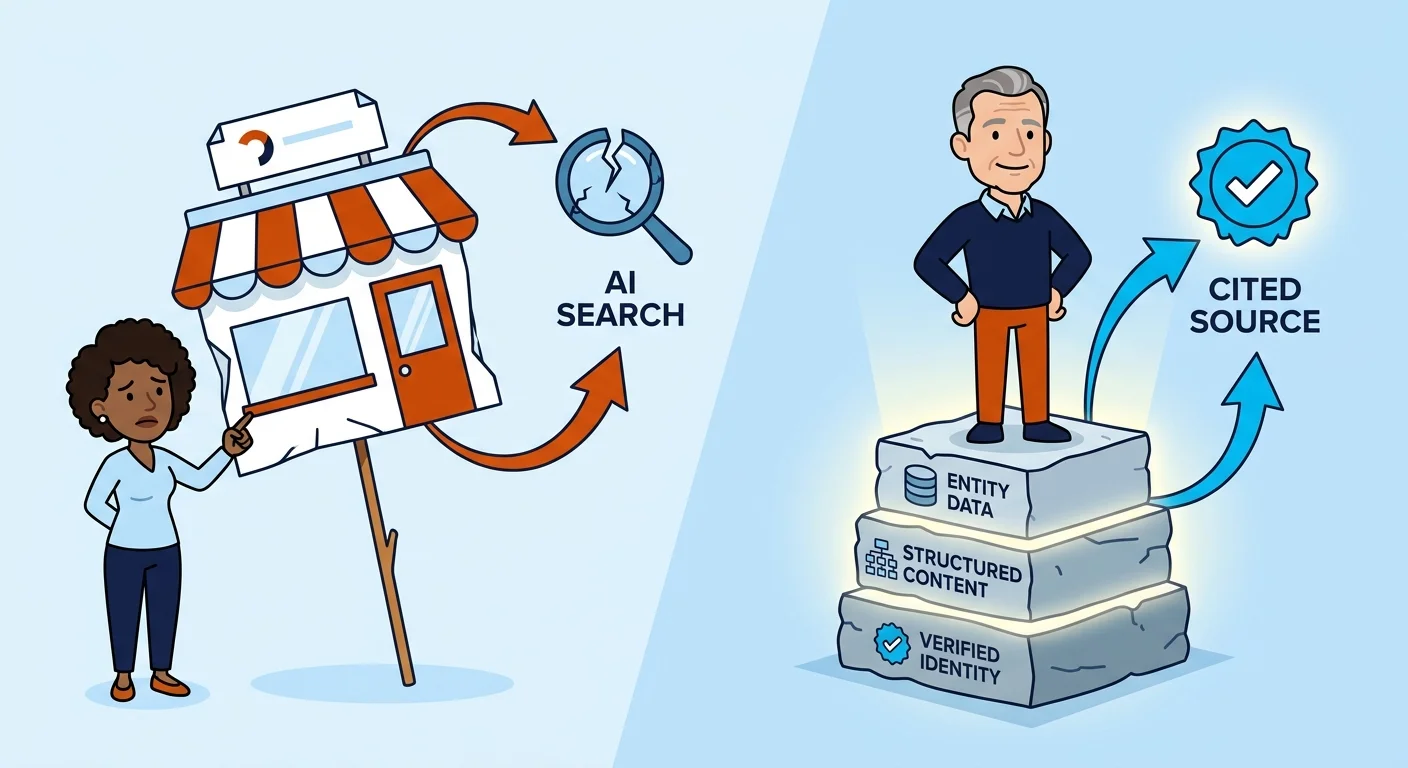
So what actually earns an AI engine's trust? It's not some gut call about whether your design looks nice. It's a technical, structural question — and it has a verifiable answer.
Here's what trust means in this world: an answer engine can confirm who you are, what you do, and why you're a credible source. And that confirmation runs through structured data, not a homepage layout. You can look slick as hell and still flunk this test completely.
Now, this part matters because practices keep getting the cost wrong. They treat infrastructure work like a luxury add-on when it's actually the foundation. Understanding why authority infrastructure carries a different price structure than a full site rebuild makes it clear this is its own investment category, not an upsell stapled onto appearance work.
The practices that get cited over and over? They're not the ones with the freshest templates. They're the ones whose entity data holds up under machine scrutiny across every source that mentions them.
Why Generative Search Reads Structure, Not Style
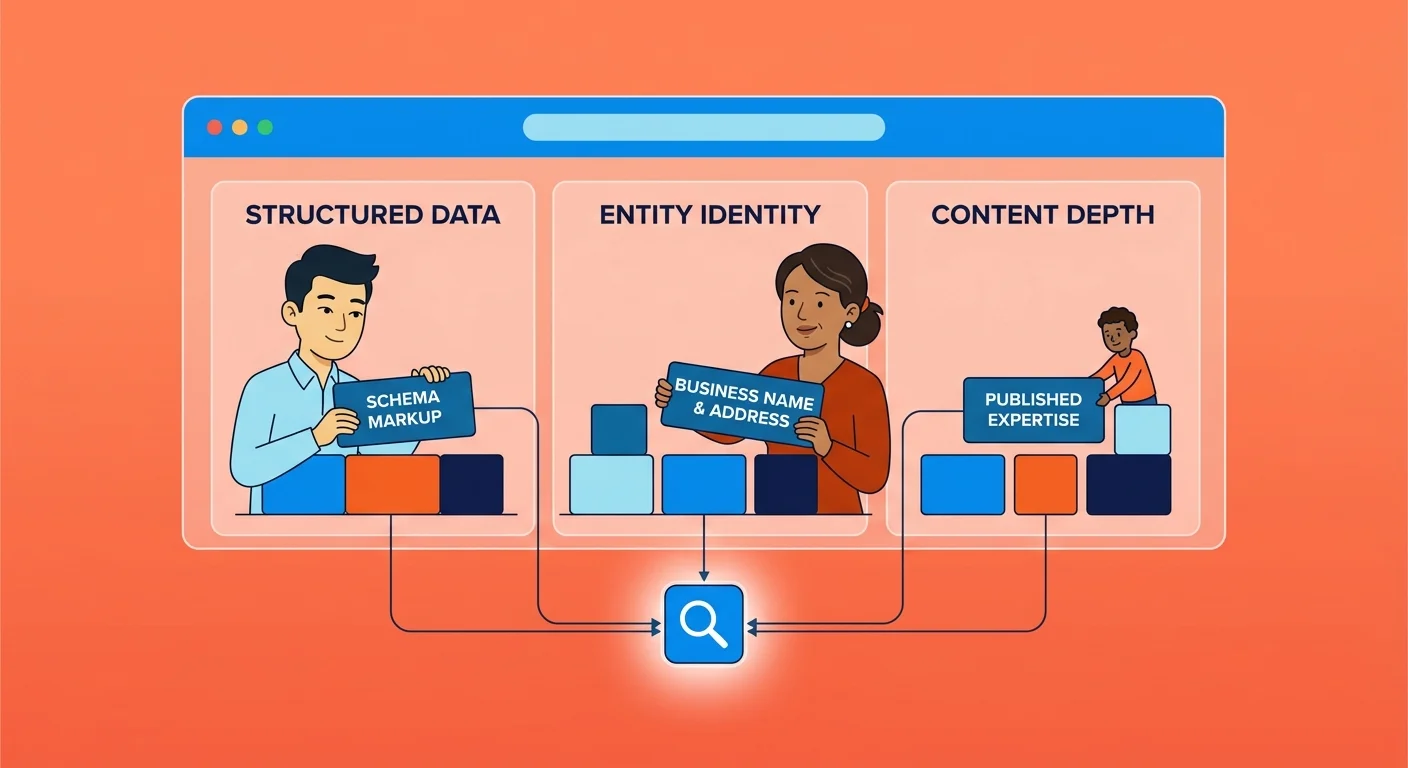
But trust isn't a feeling an AI model gets. It's a verification process, run against structured data the second a query lands.
Generative search reads structure because structure is checkable. A credential you claim on your homepage means nothing to a language model unless it's also encoded somewhere machine-readable.
So the whole idea of judging a practice by how polished it looks? It falls apart under this scrutiny. Style is subjective and unverifiable. Structure is either there or it isn't.
| Signal Type | What It Communicates to AI Engines | Where It Lives on a Practice's Digital Presence |
|---|---|---|
| Structured Data Markup | Confirms a practice's name, credentials, and services in a machine-readable format an AI model can parse without guessing | Embedded in a website's backend code, invisible to a human visitor but read directly by answer engines |
| Consistent Business Information | Signals that a practice is a verified, stable entity rather than a fragmented or unreliable listing | Repeated across directories, professional profiles, and any authoritative source that references the practice |
| Knowledge Layer Connections | Ties a practice's expertise to entities AI systems already recognize as credible reference points | Built through cross-referenced credential and affiliation data, not through any single page |
| Visual Design Elements | Communicates almost nothing to a language model attempting to verify credibility or expertise | Confined entirely to the homepage and template layer a rebuild typically replaces |
How Structured Data Becomes an AI Engine's Reading List
Structured data markup works like a reading list an AI model can actually trust. It points the model straight to a practice's name, credentials, service area, and specialties, no guessing from prose required.
Here's the thing about how these models handle numbers. Research on citation behavior, documented on the arXiv preprint server, found that language models systematically underselect numeric sentences that need citations, choosing them at a rate 22.6% below how often humans would.
And that gap hits hard for a practice built on credentials, outcomes, and specific figures. If a model already underweights numeric claims, an unstructured page burying those numbers in prose is even less likely to surface intact.
Why a Complete Knowledge Panel Signals Entity Trust
A complete knowledge panel is what a structured, verified entity looks like from the outside. It pulls a practice's name, credentials, and affiliations into one confirmed record search engines already trust.
Look at what happens when that record is incomplete or inconsistent across sources. The model has no confirmed anchor to cite, so it defaults to safer, better-documented competitors, and that gap only widens the longer you wait, which is exactly the erosion covered in what happens when a template's structural gaps go unaddressed for years.
Why Another Cosmetic Rebuild Fails to Fix This
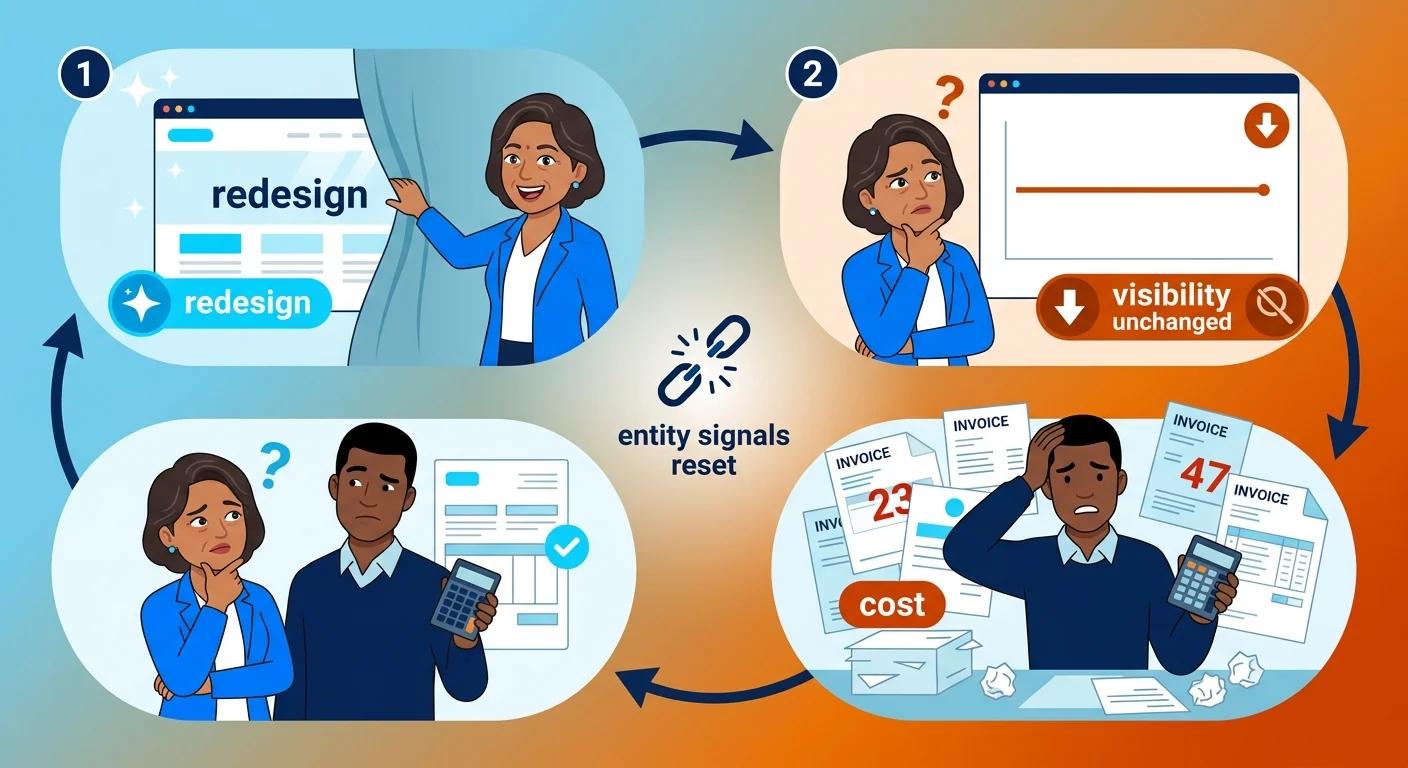
So what do practices actually reach for when their online presence stops performing? A rebuild. A fresh template, new photography, a layout that finally looks current.
And that instinct makes sense on the surface. If the site looks dated, dated must be the problem you're solving.
But the rebuild only ever touches the layer generative engines were never reading in the first place. Practices get stuck in a repeating cycle of expensive, cosmetic rebuilds that never fix the structural issues answer engines actually prioritize. The invisibility survives every redesign intact.
The Rebuild Cycle That Keeps Resetting Practices to Zero
Here's the thing about the rebuild cycle: it repeats because the diagnosis is wrong every time. A practice sees flat results, blames the visuals, and commissions a new site build project.
The new build launches. It looks sharper, loads faster, and photographs better in a portfolio.
And then, months later, the same absence from generative answers comes back. Nothing about the structured entity layer changed underneath the new paint. The credentials still aren't encoded anywhere machine-readable.
So the practice decides the new build wasn't good enough either, and starts planning the next one. Each cycle burns budget on the one variable that was never the problem, while the real gap in verifiable entity data carries forward untouched.
What a New Domain or Redesign Does to Entity Recognition
Look at what a new domain or a full redesign does to the signals an AI model already learned to tie to a practice. Every citation, every cross-reference, every consistent mention built up over time is anchored to a specific set of technical markers.
Change the domain, rebuild the technical foundation, or swap platforms entirely, and those markers break. The practice isn't upgrading its recognition. It's asking every system that had started to trust it to relearn the whole thing from scratch.
That's the rented-storefront problem in its clearest form. A practice that keeps rebuilding is choosing to reset to zero on a schedule instead of letting recognition compound, and the alternative to that pattern is exactly what gets examined in renting attention through paid placement versus owning permanent trust in the knowledge graph.
The Citation Math Behind AI Answers

So how badly does that blind spot actually cost a practice? The honest answer starts with math, not opinion. Citation behavior in generative search follows measurable patterns, and those patterns don't forgive much.
Here's the thing: most owners never see the diagnostic step that would tell them where their entity data really stands before they commit another dollar. Working through a structured review of what an existing agency relationship has actually delivered surfaces exactly which signals are missing, so you stop guessing and start fixing.
Even the frontier systems built specifically to generate cited, evidence-backed reports get this wrong more often than you'd ever accept from a human researcher. That gap isn't a rounding error. It's the difference between a citation you can trust and one that only looks trustworthy.
| Metric | Reported Figure | What It Means for a Cited Practice |
|---|---|---|
| Link Validity in Cited Sources | Above 94% | A cited link almost always points to a real, live page, so broken links are not the risk practices should worry about. |
| Content Relevance of Citations | Above 80% | The page a model cites is usually topically related to the query, which can make an inaccurate citation look credible at a glance. |
| Factual Accuracy Against Source | Only 39–77% | Even a relevant, working citation can misstate what the source actually says, so a practice's own data has to be unambiguous to survive the check. |
| Sources Cited by Only One Engine | 83.7% | Being cited by a single AI engine is the norm, not a failure, but it means one engine's trust cannot be assumed to carry over to another. |
| Sources Cited Across Multiple Engines | 16.3% | Cross-engine citation is rare, out of 583 domains studied, which raises the bar for what a practice's structured data needs to prove independently to each system. |
How Often Frontier Models Get the Facts Right
Research on frontier language models generating cited research reports found something rough. Even the strongest of them hold link validity above 94% and content relevance above 80%, yet land at only 39–77% factual accuracy when their citations get checked against the actual source, a finding published as arXiv.
Read that gap carefully. A citation can point to a real, relevant page and still get wrong what that page actually says.
Why So Few Sources Ever Get Cited More Than Once
So getting cited even once is already a high bar. Getting cited by more than one engine? Rarer still.
An analysis of Ontario businesses across four AI engines looked at 583 distinct domains cited in local search results and found 83.7% of them showed up in just one engine, with only 16.3% cited by two or more, a spread detailed in published research data on cross-engine overlap. That means one engine's trust doesn't hand off to the next. Each engine runs its own verification, on its own, against the same record.
Who This Kind of Infrastructure Is Not Built For
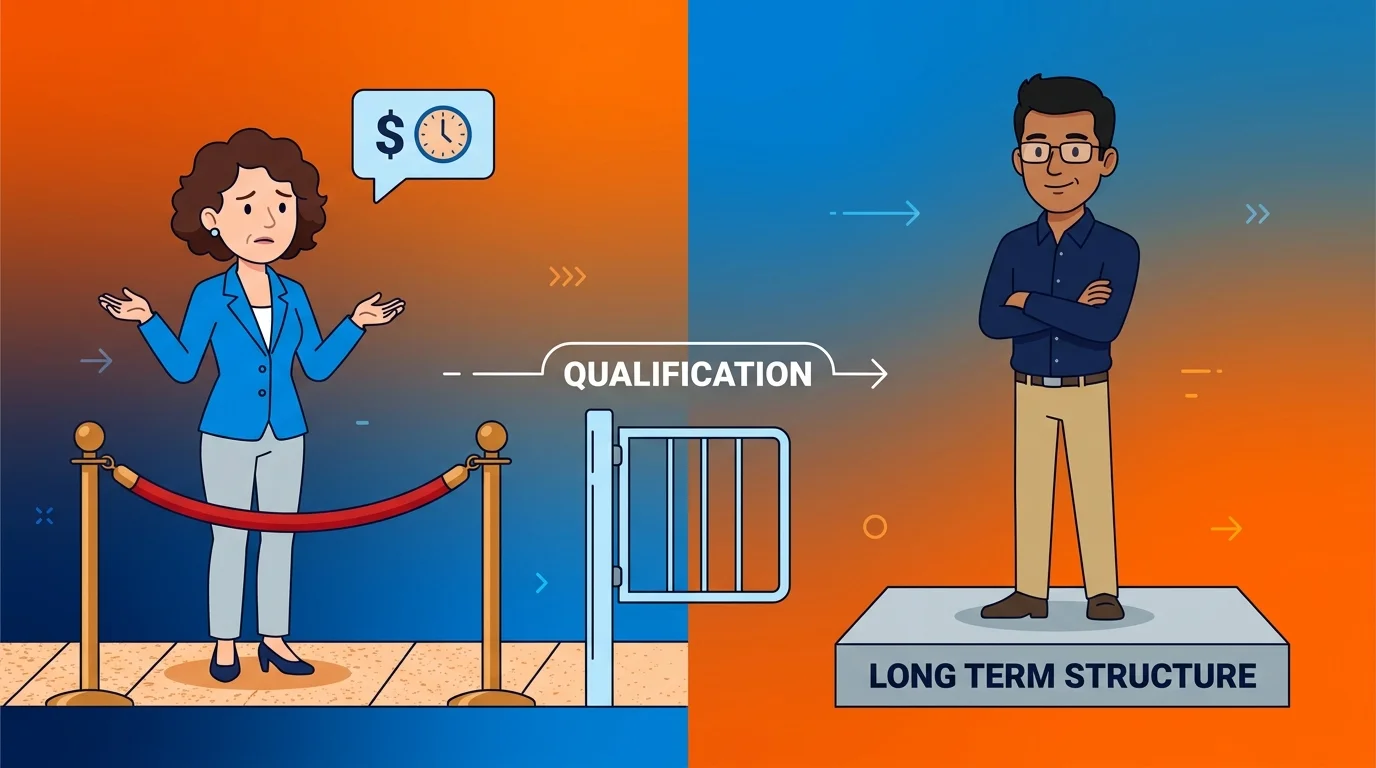
So who should skip this entirely? A practice still debating whether generative answer engines even matter to its patients or clients has no business buying structural work yet.
Here's the thing about timing: this isn't for a practice chasing a quick bump in site visits before a slow season. Authority Infrastructure compounds. It was never built for a fast, temporary spike, and a practice counting success in weeks instead of sustained citation presence will call it a failure before it's done working.
But a practice that's watched competitors get cited while it stays invisible, or one that's burned through rebuild after rebuild without closing the gap, is exactly who this is for. The evidence above only lands for a practice ready to stop resetting to zero.
What Permanent Authority Infrastructure Actually Looks Like
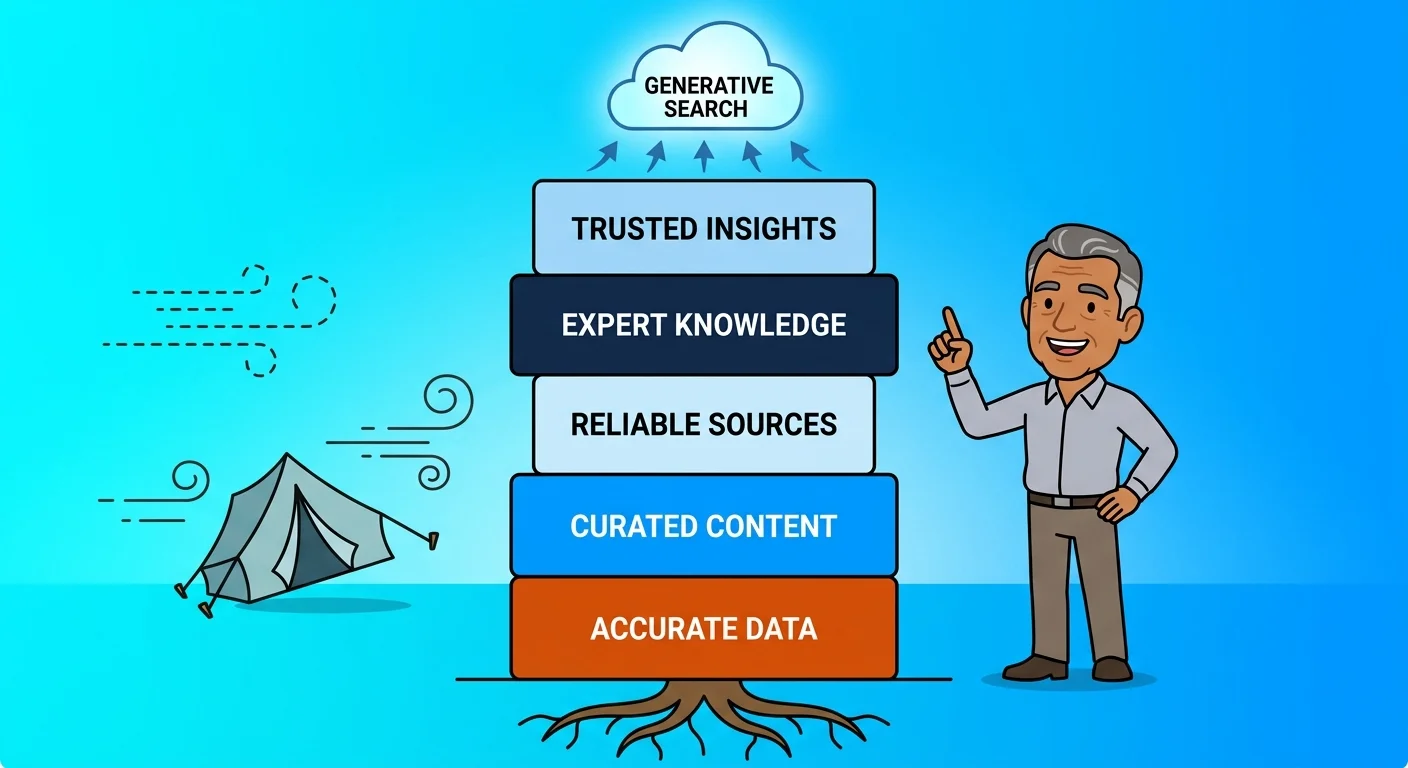
So what does this actually look like once it's built instead of just pitched? Permanent Authority Infrastructure is the structured layer that tells an AI model exactly who a practice is, no matter what template happens to sit on top of it.
That layer holds a practice's identity, credentials, and specialties as data a machine can confirm, not prose it has to interpret. It's built once, verified across every source that mentions the practice, and maintained instead of thrown out.
Here's the thing about permanence: a rebuild resets recognition, and structured entity data does the exact opposite. Every component below exists to make that confirmation faster, cleaner, and harder for a competing model to skip over.
How Entity Data Consistency Determines Whether AI Engines Recognize You
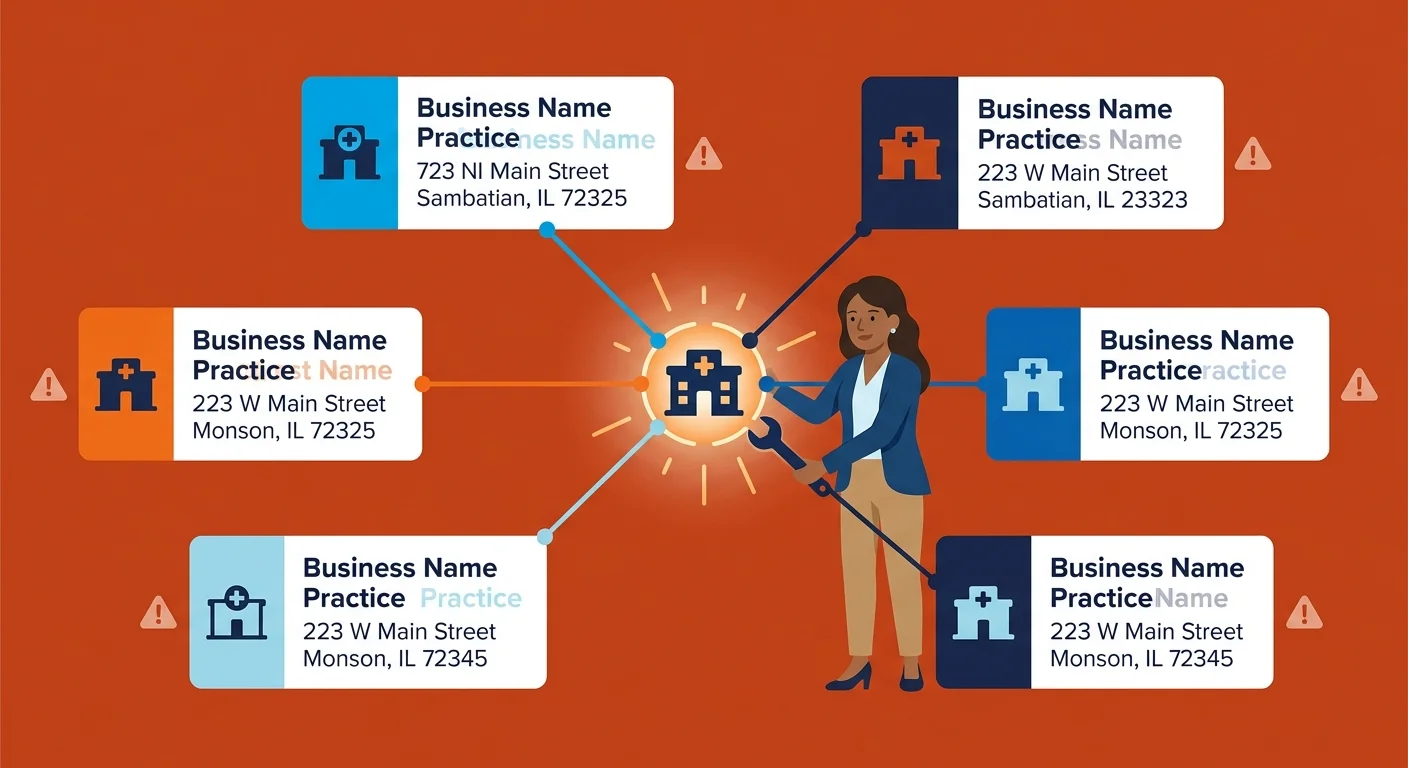
So structured markup only carries a practice as far as its own data agrees with itself. An AI model doesn't check one source and stop. It cross-references a practice's name, address, credentials, and specialties against every place that mentions them.
Here's the thing about consistency: it's not a nice-to-have bolted onto Authority Infrastructure. It's the mechanism that lets a model resolve conflicting mentions into one confirmed entity instead of tossing the practice out as unverifiable.
| Data Point | Consistent Presentation | Inconsistent Presentation | Effect on Entity Recognition |
|---|---|---|---|
| Practice name and specialty wording | Identical phrasing across every directory, profile, and legacy listing | Slightly different naming or specialty terms depending on the source | Model treats the practice as one confirmed entity worth citing |
| Address and suite number | Matches exactly on every current listing, with old addresses retired | One directory shows a former suite or an outdated location | Model cannot resolve which record is current, so it discounts both |
| Credential and license wording | Stated the same way on the site, profiles, and directory entries | Abbreviated in one place, spelled out or reworded in another | Credential fails to confirm as a single verifiable fact, weakening trust |
| Phone number and contact details | One number maintained everywhere the practice is mentioned | Legacy numbers or forwarding lines still listed on older profiles | Model flags the record as unstable and defaults to a better-documented competitor |
Why Mismatched Business Details Across Directories Break Recognition
Look at what happens when a practice's phone number, suite number, or credential wording differs across even two directories. The model has no reliable way to tell which version is current, so it treats the whole record as unstable.
And that instability isn't a cosmetic flaw. It's a direct block on the verification process covered earlier, where structure is either present and trustworthy or it isn't.
But mismatched details rarely come from carelessness. They pile up because a practice's information gets entered separately into directories, profiles, and old listings, each one updated on its own schedule, with nobody reconciling them against a single source of truth.
How Consistent Records Compound Into a Trusted Entity Profile
So the fix isn't glamorous. It's reconciling every public record until a practice's core details read identically everywhere a model might go looking.
And once that consistency holds, it compounds the same way permanence does. Every confirmed match across sources strengthens the model's confidence in the next one, which is exactly the difference between a practice that stays findable only when it looks polished and one whose online presence has moved past appearance work entirely.
Frequently Asked Questions
So a few objections always surface once the rebuild-versus-infrastructure argument lands. Here are the straight answers, no hedging.
What is authority infrastructure in the context of AI search?
Authority Infrastructure is the permanent, structured layer that encodes a practice's identity, credentials, and specialties as data an AI model can verify. It lives independent of whatever template sits on top of it.
How is authority infrastructure different from a standard site build?
A site build changes what a person sees. It does nothing to the structured entity data a model actually reads, which is why the invisibility survives redesign after redesign.
Can I just run ads instead of building this kind of infrastructure?
Ads rent attention for as long as the budget runs. They never build the verifiable record that lets a model confirm who a practice is, so the visibility vanishes the second spending stops.
How long before authority infrastructure affects visibility in generative search?
Authority Infrastructure compounds, it doesn't spike. A practice counting results in weeks instead of sustained citation presence is using the wrong clock on the wrong investment.
Does rebuilding my website reset my practice's entity authority with AI engines?
Yes. Changing a domain or reworking a site's technical foundation breaks the markers a model already learned, and every system has to relearn the practice from scratch.
Is structured data the only thing that matters for generative engine visibility?
No. Structured markup only holds up when a practice's name, credentials, and details read identically across every source that mentions them. Inconsistent records get flagged as unstable no matter how clean the markup looks.
Where This Leaves Your Practice
So here's where all of this lands. Every rebuild drops a practice back to zero. Every piece of confirmed, consistent entity data compounds instead — and those are the only two directions on the table.
A practice can keep renting attention, buying a fresh template every few years while the invisibility underneath survives untouched. Or it can build the permanent, structured record that lets generative engines confirm who it is once, then keep confirming it, without starting over every time the design gets tired. Authority Infrastructure is the second path, and it's the only one that compounds.
That's not a neutral choice, and it shouldn't get treated like one. If your practice's credentials, specialties, and identity aren't sitting in a verifiable, machine-readable record right now, another cosmetic rebuild won't fix that. See exactly where your entity data stands today with an AI visibility check from iTech Valet.