
Why Checking Your Placement in the Ten Blue Links Tells You Nothing About AI Visibility
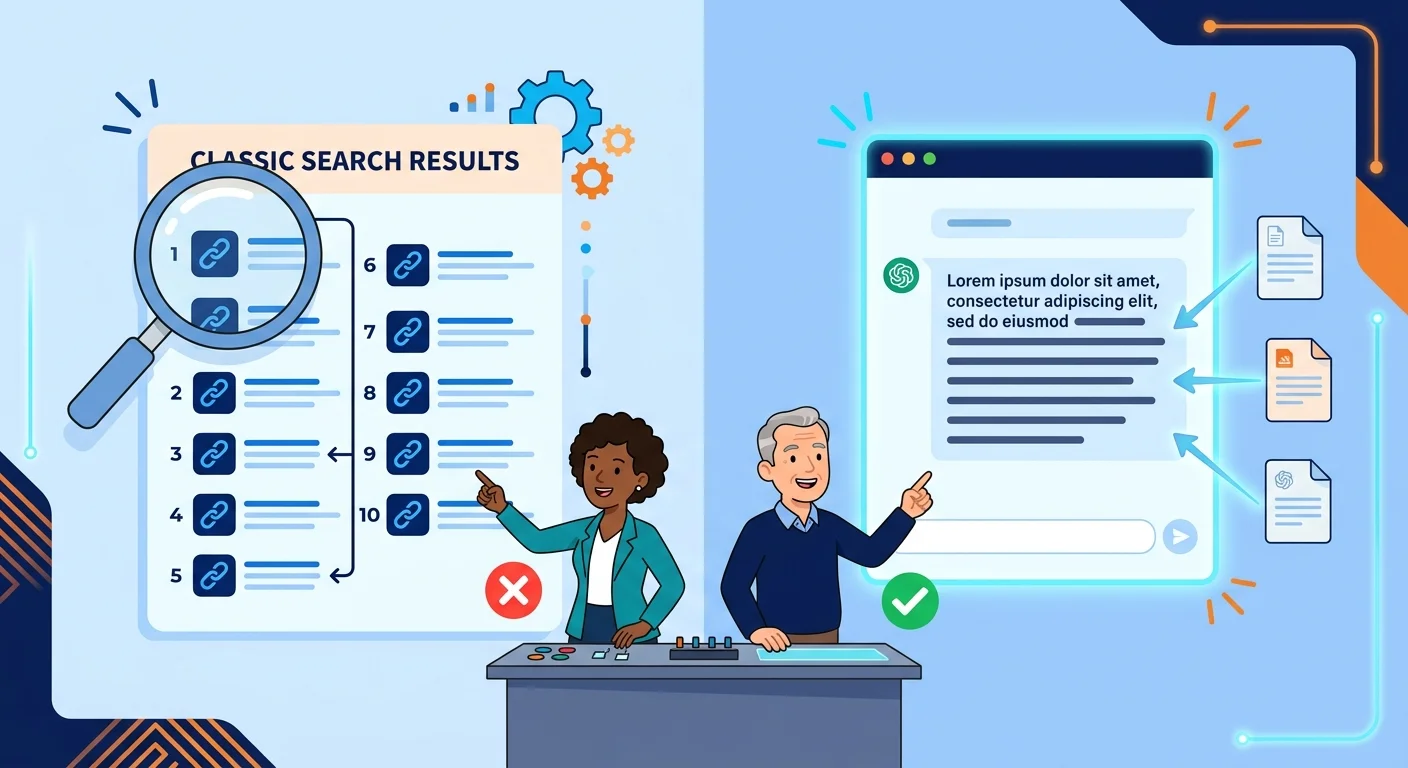
Here's the habit that won't die: most practices still check where they land in search listings and call that a visibility audit. Trouble is, that habit measures a system answer engines already stepped around. A ranking position just tells you where a page sits on a list nobody scrolls anymore.
And it tells you nothing about whether an AI model trusts your practice enough to name it inside a generated answer. The era of checking your rank on a list of ten blue links is over. Now visibility means being the citable source an AI reaches for to build its answer.
So rank tracking stopped predicting who gets cited the day answers replaced links. A page can hold a killer position and still never surface inside a synthesized response, because the model isn't scanning a list. It's assembling evidence, and a listed address is not evidence.
Here's the thing: being the cited source beats being a listed address, and that gap is exactly what the failure mode behind zero AI visibility walks through in more depth. So the real question isn't where a page sits on a results page. It's whether the synthesis reaches for it at all.
Why Rank Tracking Fails to Detect an AI Citation Gap
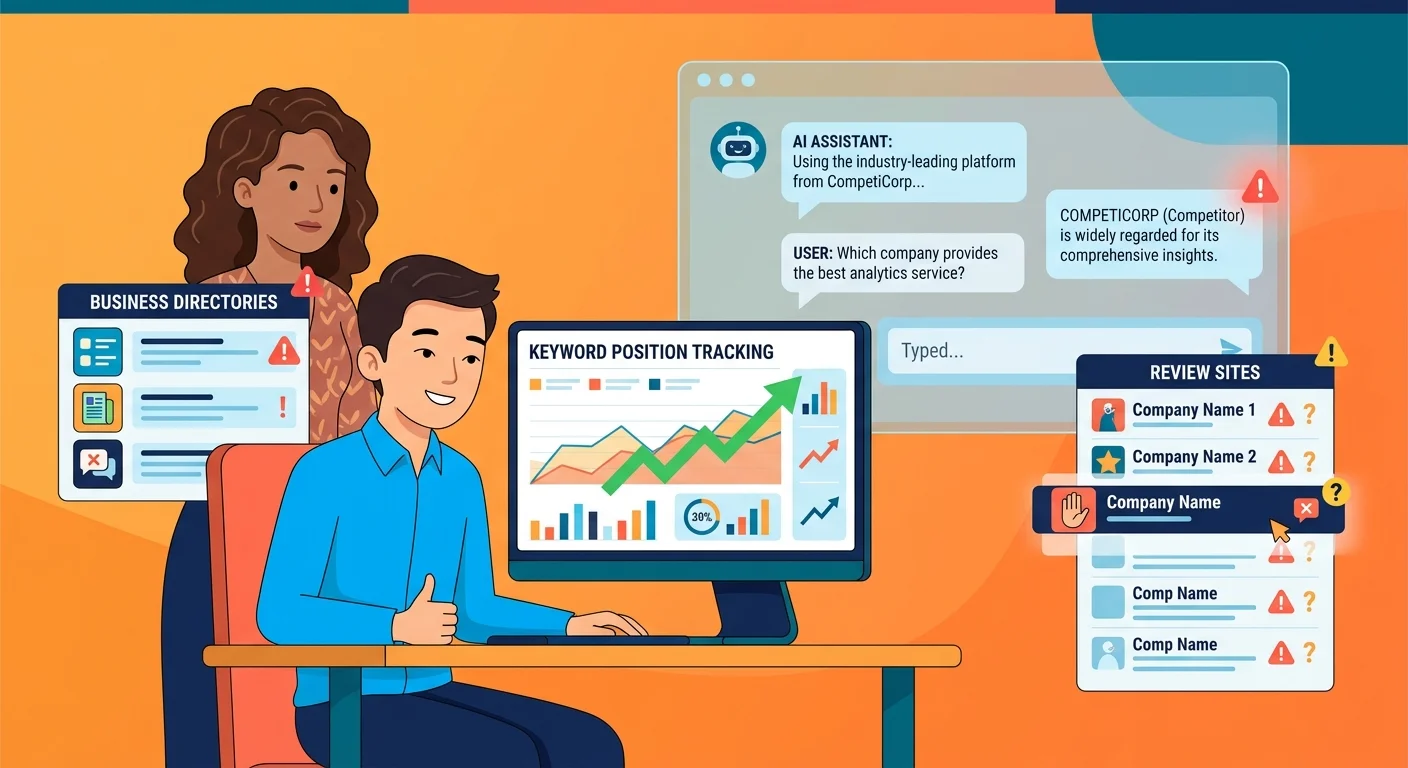
Plenty of practices point to healthy site visits and call it proof. That comparison stopped holding a while ago.
Watch what's actually happening: site visits and AI visibility are drifting apart. A practice can pull a steady stream of site visits and still stay invisible inside a generated answer, because the model writing that answer never touches a visits counter.
Traditional search optimization built its whole measurement stack around a page's position and the site visits that position produced. Rank tracking inherited that stack wholesale. So it keeps reporting on a variable a synthesis engine never even consults.
So the report can show a page climbing while the practice gets left out of every AI-generated answer on the same topic. Both are true at the same time. The report only shows you one.
Here's the mechanism worth naming straight: the report grades a race the answer engine doesn't run. A metric built for one system can't describe a different one.
The Mechanism: Why a Ranking Report Cannot See a Zero-Click Answer
A ranking report exists to measure position on a results page. It's got no field for whether a language model cited the practice inside a zero-click answer, because that event happens somewhere the report was never built to look.
Large language models don't crawl a site the way a search index does. They retrieve and synthesize fragments pulled from a wide array of structured and unstructured sources scattered across the web, then assemble those fragments into one response.
A rank tracking tool watches one page against a set of competing pages. Wrong unit entirely. The synthesis is drawing from directories, review platforms, and forum threads a rank tracker was never set up to see, so it stays blind to the actual evidence pool a model weighs before it writes an answer, including the pattern examined in why visibility scores built on classic search authority can mislead a chiropractic office.
Where Data Consistency Breaks Down Across Directories and Review Sites
Data consistency is where the evidence pool either holds together or falls apart. A directory listing, a review platform profile, and a practice's own site each carry their own version of the same facts.
When those versions agree, a model can treat the shared claim as corroborated. When they don't, the model has no way to sort out which version is right, so it discounts all of them rather than guessing.
A ranking report never checks this at all. It's got no mechanism for comparing a name spelled two ways across three directories, or a service list one platform states and another leaves out. So the exact failure that keeps a practice out of a generated answer stays invisible to the tool most practices still lean on.
How Retrieval-Augmented Generation Decides What Gets Cited
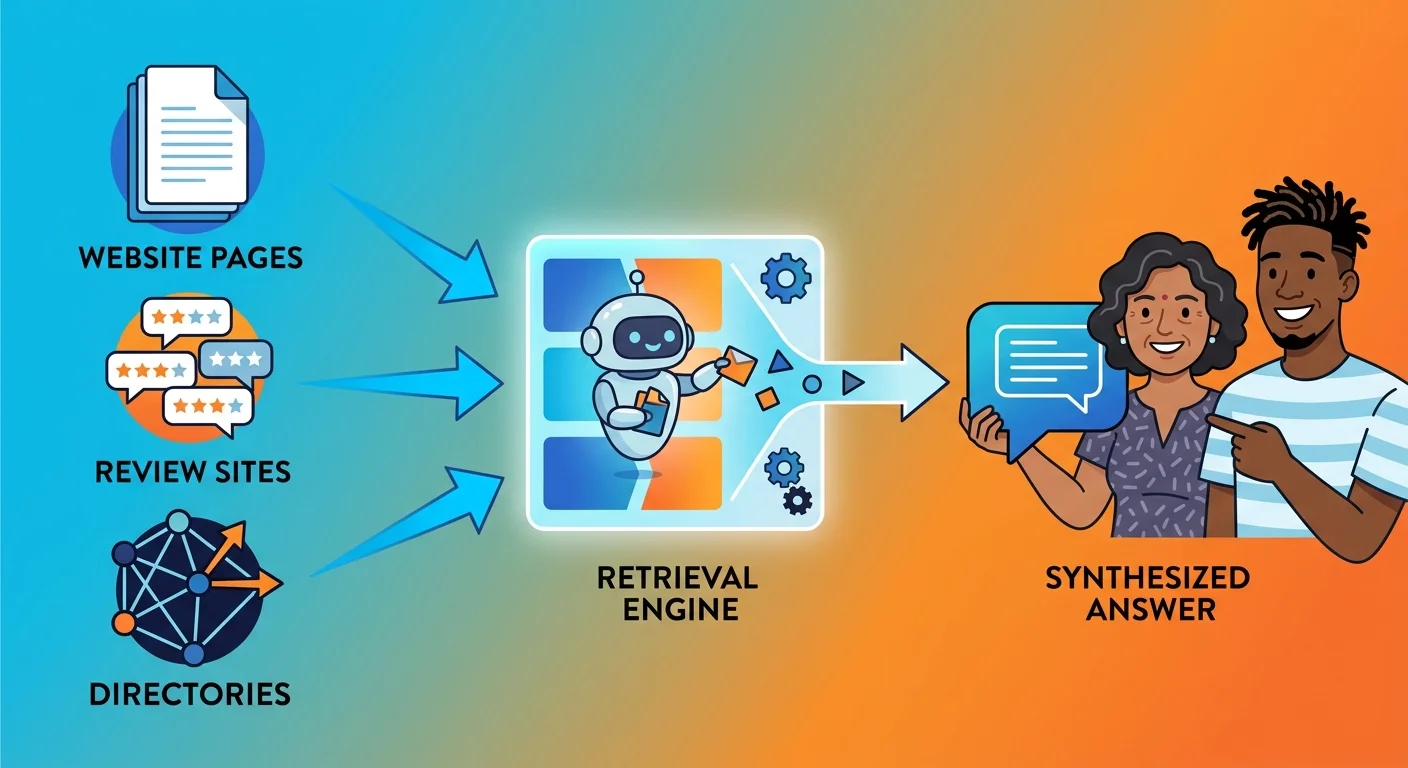
Retrieval-augmented generation is the architecture behind most modern AI answers, and it works nothing like an index lookup. The model isn't hunting a stored database for the single best-ranked page.
Instead, it grabs a set of relevant fragments from across the web the moment you ask, then builds a response grounded in whatever those fragments say. The generation is only as good as the retrieval underneath it.
Here's why that matters: the research on this architecture is specific. Retrieval-augmented generation consistently beats unsupervised fine-tuning on knowledge-heavy tasks across topics, according to the arXiv preprint server, and that holds for facts a model already knew and facts it's never seen before.
That distinction is the whole point. A model fine-tuned once on old data rots as the world moves, but a model that retrieves fresh evidence at query time can reflect a practice's standing right now instead of a stale snapshot.
| Retrieval Approach | How It Sources Information | Citation Behavior | Practice Implication |
|---|---|---|---|
| Training-data reliance | Draws primarily on patterns learned during a fixed training period, without checking the live web at query time | Cites whatever version of a practice's information was captured before the training cutoff, even if that version is now outdated | A practice that changed its services or location after that cutoff can be described inaccurately with no live correction |
| Live retrieval | Pulls fragments from the current web at the moment of the query, weighing structured data, directories, and independent sources together | Favors whichever page most precisely matches the query's intent, rather than a practice's general brand presence | A narrow, specific page describing one service or condition is more likely to be surfaced than a broad homepage |
| Hybrid retrieval with limited grounding | Blends some retrieved fragments with pretrained assumptions, filling gaps where live sources are thin or contradictory | Produces answers that mix accurate current details with residual assumptions from training data | Inconsistent information across a practice's directories and site increases the chance the model fills gaps with the wrong assumption |
| Query Type | AI Overview Trigger Rate | Source Signal |
|---|---|---|
| Hybrid intent query (service plus location plus a cost or qualifier term) | 97% | Whitespark-reported trigger rate for hybrid intent local searches |
| Knowledge-intensive query answered through retrieval rather than static training | Not stated as a percentage | RAG consistently outperforming unsupervised fine-tuning on existing and new knowledge |
| Local intent near me query tested across LLM platforms | Not stated as a percentage | Gemini and OpenAI retrieving a substantially higher share of non-homepage URLs |
Training-Data Models Versus Live-Retrieval Models
Not every model retrieves the same way, and that gap explains a lot of the platform-to-platform inconsistency practices keep noticing. Some systems lean hard on what they learned during training.
Others go live against the current web before they answer, pulling fresh pages instead of leaning only on a frozen training snapshot. That one design choice decides which practices surface and which stay invisible.
Now, here's why this hits local queries especially hard. Hybrid intent searches, the kind that blend a service with a location and a qualifier like cost, trigger AI Overviews 97% of the time, according to Search Engine Journal's reporting, which means a live-retrieval answer is already the default a practice is competing inside, whether it prepared for that or not.
Why Non-Homepage Pages Are Increasingly the Cited Source
So which page actually gets pulled into that answer isn't random, and it's rarely the homepage. Retrieval systems favor whichever page answers the query's intent most precisely.
A homepage describes the whole practice in general terms. A service page or a condition page states one fact plainly, and that specificity is exactly what a retrieval system is built to reward.
Platform data confirms this straight. Across local near me queries tested on six LLM platforms, Gemini and OpenAI pull a substantially higher share of non-homepage URLs than the other models, leaning harder toward deeper, page-specific content that matches what the searcher actually asked. That tendency is what turns one well-built page into how a local healthcare provider's citations concentrate into one dominant source across AI answers, and it rewards depth over general brand presence every single time.
How Knowledge Graphs Ground an Answer in Verified Entities
Retrieval finds the fragments. But something else has to decide whether those fragments describe a real, verified entity, or just a string of words that happened to match the query.
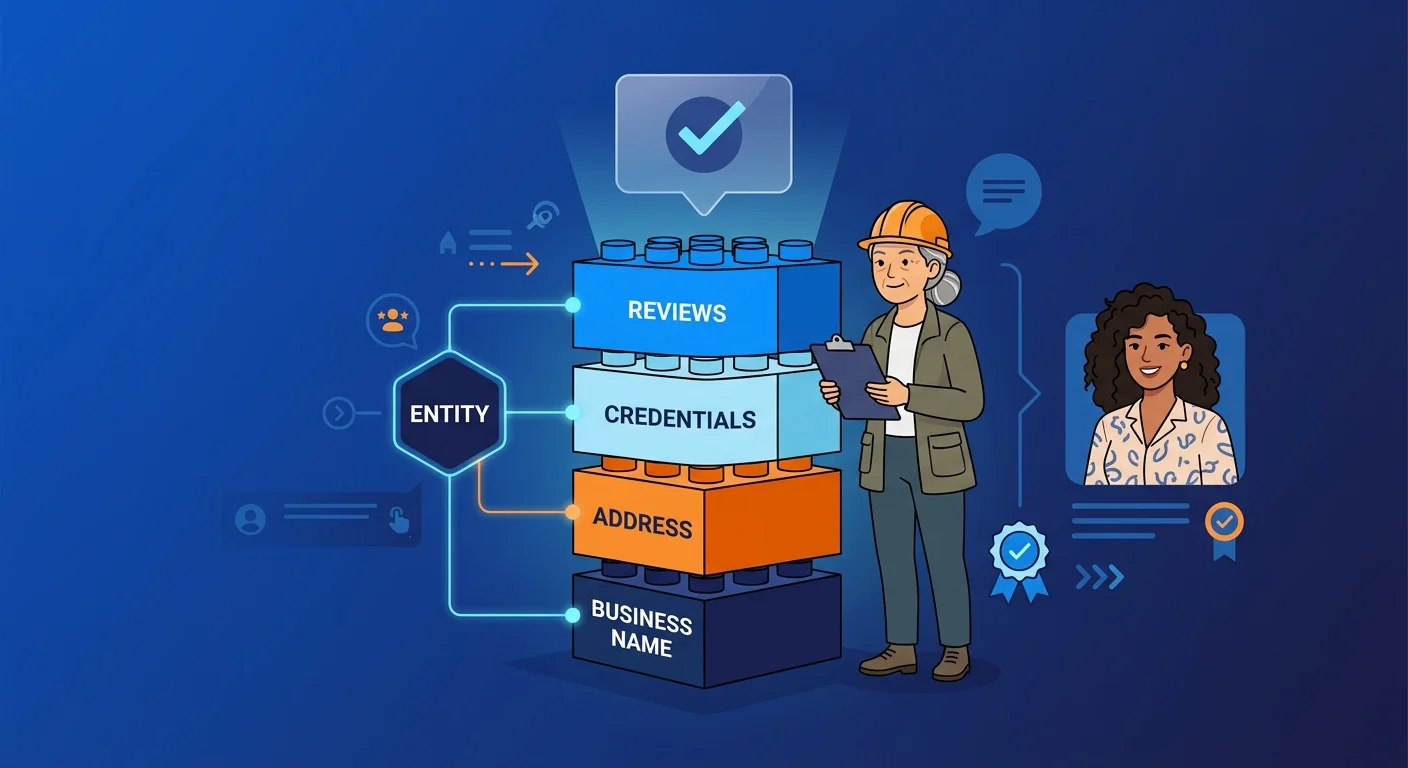
That something is the knowledge graph. It maps a practice as a node wired to other nodes, its location, its credentials, its services, and every relationship running between them.
Here's why that matters: a knowledge graph gives a structured representation of entities and their relationships, and that structure hands a model something to reason against when a query gets messy. It's the difference between a model guessing at scattered fragments and a model checking those fragments against a map it already trusts, a distinction laid out on the arXiv preprint server. This is exactly where our AI search optimization services earn their keep, building the entity relationships a graph needs before a model ever runs a query.
The Difference Between an Entity Mentioned and an Entity Confirmed
A name mentioned somewhere on the web is not the same as a name confirmed. A directory can list a practice, a forum can reference it, a review can name it, and none of that guarantees a knowledge graph has stitched those mentions into one verified entity.
So confirmation happens when the relationships around the name agree with each other. Same location, same credentials, same services, stated the same way across enough independent sources that the graph resolves them into one trusted node instead of a pile of loose, unconnected mentions.
Where a Practice's Data Silently Breaks Before an AI Ever Sees It
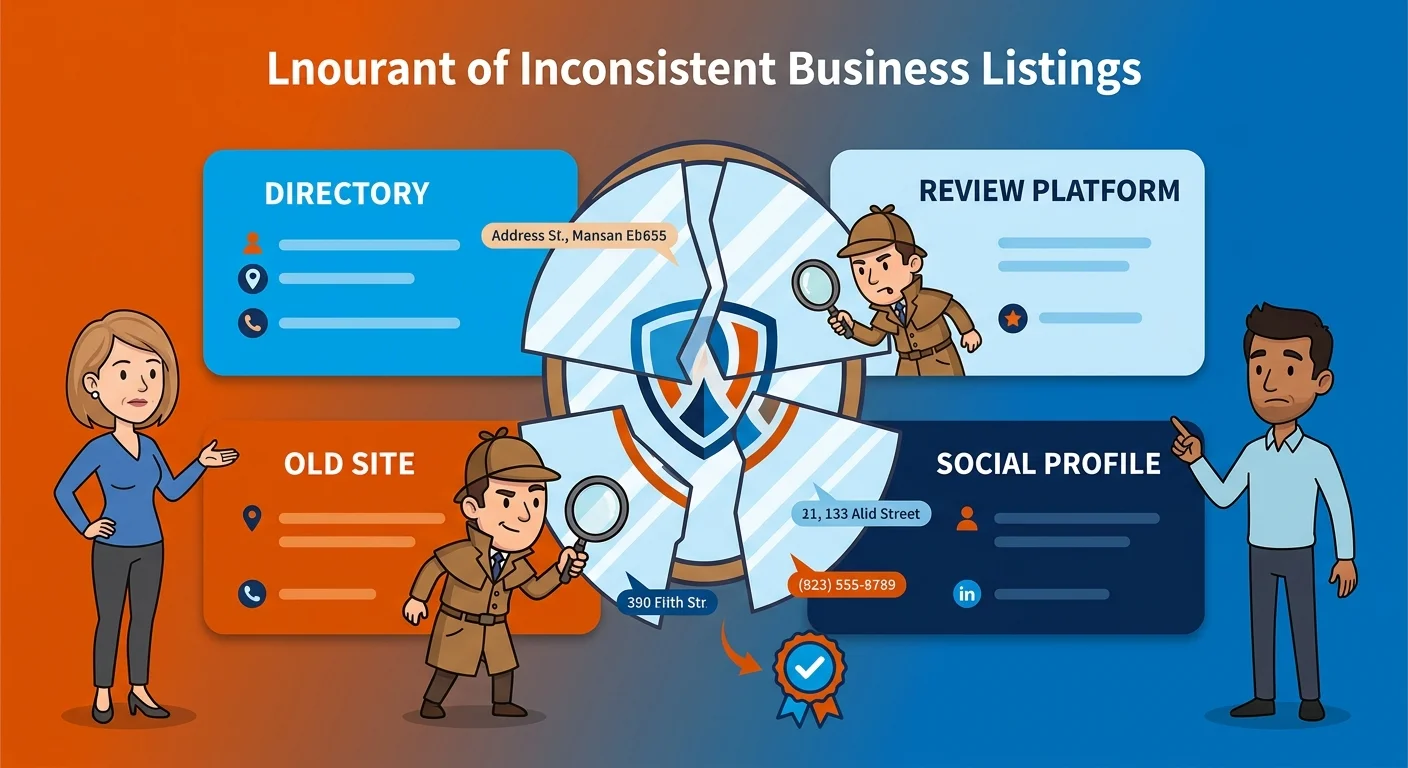
Practice data breaks long before a model synthesizes an answer. It breaks at entry, where a name gets typed one way on a directory and another way on a claims form. A listed address was never the goal — being the evidence a synthesis reaches for is.
So the failure never shows on the practice's own site, because the site looks fine in isolation. The break lives in the gap between what the site says and what a directory, a payer record, or a review platform says about the same practice.
A phone number transposed by one digit on a legacy citation doesn't announce itself. It just sits there, quietly disagreeing with the correct number everywhere else.
This whole disagreement starts with manual data entry across dozens of directories. Every entry gets typed once, by a different person, on a different form, with no shared source of truth behind any of it. That was already costly when a single typo cost a click, but now that same typo costs the corroboration a model needs before it'll trust the fact enough to repeat it.
Here's what rank tracking never measured: a model weighing conflicting versions of a fact doesn't average them. It discounts the entity and looks elsewhere for an answer it can state with confidence. So one inconsistency buried in a decade-old directory listing can quietly disqualify a practice from a citation it should have won.
Running a Manual Visibility Audit Across ChatGPT, Gemini, and Perplexity
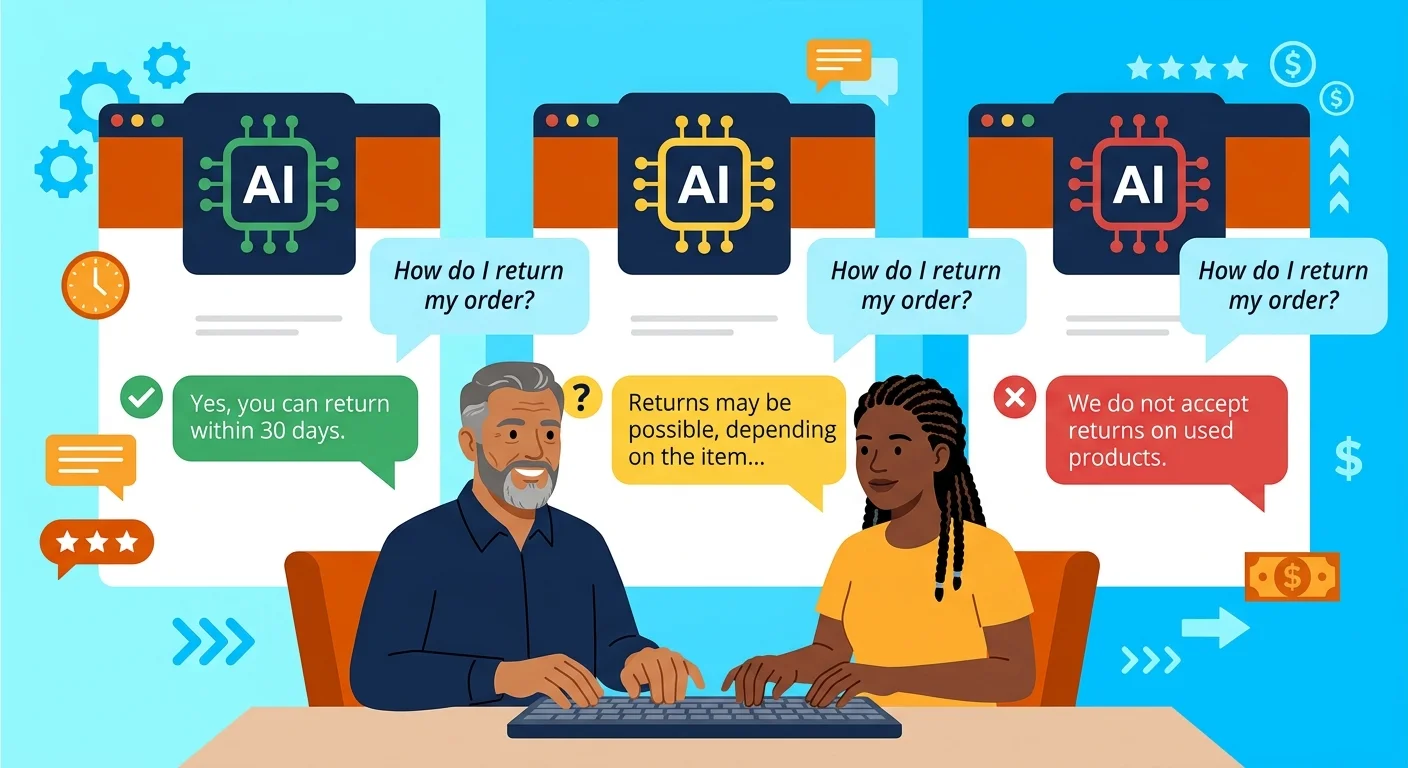
So the diagnosis is done. Rank tracking measures the wrong unit, and the evidence pool a model pulls from stays invisible to it. That leaves exactly one way to see what a model actually returns: ask it directly.
That's what a manual visibility audit does. You run a set of real customer-style questions through ChatGPT, Gemini, and Perplexity, then write down what each one says, what it gets wrong, and what it drops entirely.
It's the same discipline traditional search optimization pointed at a results page, aimed at a new surface. The mechanism changed. The question underneath it, whether a practice's information is accurate and corroborated enough to be trusted, didn't budge.
| Audit Step | What It Reveals | Signal to Record |
|---|---|---|
| Recommendation Prompt | Whether the model volunteers the practice unprompted when asked for a provider suited to a specific condition and location | Presence: does the practice appear at all, without its name typed into the question first |
| Decision Prompt | How the model frames the practice when asked to compare it directly against a named alternative | Accuracy: whether the comparison states correct credentials, services, and location |
| Brand Prompt | Whether typing the practice's own name confirms recognition, distinct from whether the model would surface it unprompted | Recognition only, not a substitute for the presence signal above |
| Repeat Pass, Same Prompts Later | Whether presence, accuracy, and omission shift as corroborating sources change across the web | Drift: a signal that visibility is a condition to monitor, not a status confirmed once |
| Cross-Platform Comparison | Where ChatGPT, Gemini, and Perplexity diverge on the same question, exposing which retrieval style is missing the practice | Platform gap: a model relying on live retrieval surfacing the practice while a training-weighted model omits it, or the reverse |
Building the Customer-Centric Prompt Set
Here's where most audits die before they start. Typing a practice's own name into a chatbot only tests whether the model recognizes the name, and that's not the question that matters.
A customer never opens with that. They ask for a recommendation, a comparison, or a decision, phrased the way someone actually living with the problem would phrase it.
So the prompt set has to mirror that. Recommendation prompts ask the model to name a provider for a specific condition and location. Decision prompts ask it to compare two named options head to head.
Reading the Results: Presence, Accuracy, and Omission
Once the prompts run, three outcomes are worth tracking on their own, because each one points to a different failure. Presence asks the simplest question: does the practice show up in the answer at all?
Accuracy asks whether what shows up is right. A model can name a practice and still botch the address, the credential, or a service the clinic dropped years ago.
Omission is the quiet one, and it's the failure a ranking report was never built to catch. A model can build a confident, well-sourced answer that never mentions the practice at all, leaning instead on whatever corroborated evidence it found first.
Frequently Asked Questions
Run the audit enough times and the same handful of questions keep surfacing. Here are the ones worth answering straight, no hedging.
If I don't appear in ChatGPT, does that mean my traditional search ranking is low?
No. They measure two different things, since traditional search optimization tracks placement on a results page while a chatbot builds an answer from corroborated evidence across the web. A practice can hold a strong spot in the classic ten blue links and still never get named by a model that found its data inconsistent.
How often should I check my practice's visibility in AI models?
Treat it as an ongoing audit, never a one-and-done check. New listings, new reviews, and new citations keep pouring into the evidence pool. Any one of them can shift what a model ends up synthesizing about a practice.
Can a competitor's negative review mentioned by an AI be removed?
Rarely, and chasing that removal usually burns effort a corroboration strategy would spend far better. One negative mention weighs less than the broader pattern of consistent, verified facts around a practice. So the smarter move is strengthening that surrounding evidence instead of fighting a single data point.
Is there a way to submit my practice's information directly to Gemini or ChatGPT?
There's no submission portal. These models don't take practice-submitted profiles the way a directory does. Visibility comes from the same structured, corroborated presence across the web that retrieval already pulls from, not from filling out a form.
What's the difference between being visible on Google Maps versus being cited in a Google AI Overview?
A Maps listing is a filed record in a local directory, nothing more. A citation inside an AI Overview means a model actively pulled that practice's information into a generated answer. That's a far higher bar than showing up on a map.
Why do ChatGPT and Gemini sometimes give different answers about the same practice?
Because they don't retrieve the same way. Some models lean harder on training data while others run live retrieval against the current web. So each one can land on a different pile of corroborating evidence for the same practice.
What does it mean when an AI model cites a directory page instead of the practice's own website?
It means the directory page stated the fact more clearly and with more corroboration than the practice's own site did. Retrieval rewards whichever page answers the query most precisely. And that page isn't automatically the homepage.
Where This Leaves Your Practice
So here's where the diagnosis lands. A practice doesn't go invisible because its own site is broken. It goes invisible because the evidence scattered across the rest of the web never resolved into one corroborated entity a model could trust.
And that flips the whole question. Being filed correctly on one directory was never the target. Being the evidence a synthesis reaches for — consistently, across every fragment a model pulls together — is the only version of visibility that still counts.
A rank tracking report can't tell you which version of that evidence is winning. Only asking the models directly can, and iTech Valet built the AI Visibility Check to run that exact audit against your practice's name.