
What Counts as a Citable Entity in AI Search
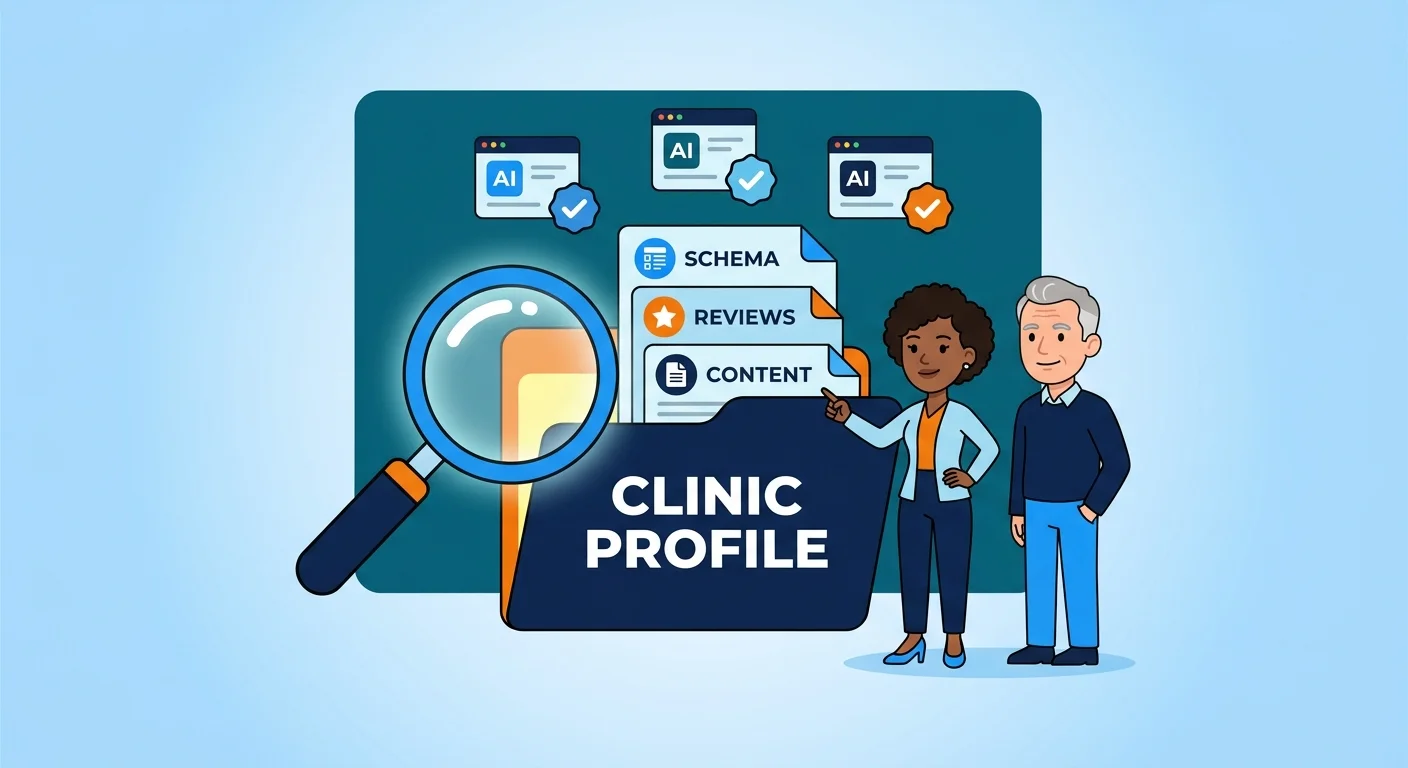
A citable entity is a provider record an AI trusts enough to say out loud. That trust gets built from the same pieces already on the table: matching identity data, structured markup, and review signals that agree with each other everywhere they show up.
In 2026, visibility isn't about 'ranking' on a list. It's about being the source an AI picks and cites. A listing sits in a directory waiting to be found. A cited entity gets handed straight to the patient asking the question — no click, no competitor beside it.
Answer Engine Optimization (AEO) is the discipline of structuring a provider's digital identity so machines can actually understand and trust it. That's a different game from the tactics still sold as growth work, and why practices that chase results-page placement stay invisible to AI answers walks through exactly where those tactics fall apart. Once a provider's record reads as consistent across every source a system checks, it stops fighting for position and starts qualifying for citation.
Why Keyword Optimized Pages Still Get Passed Over
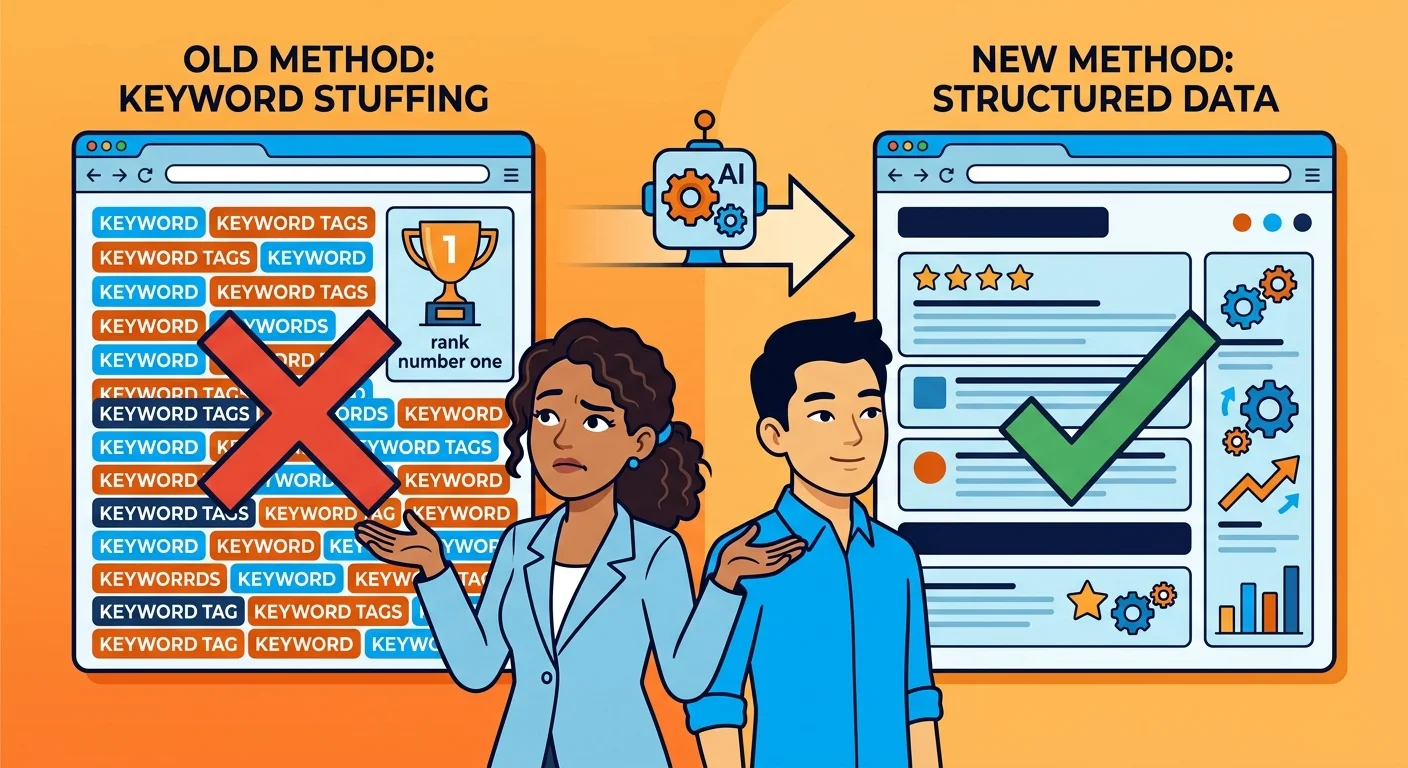
Here's the thing about a page built to climb the old ranked list: it's optimizing for a judge who left the building. That old judge was a ranking algorithm, sizing up your keyword position tracking against the competition. The judge that matters now is a verification system asking one question — do this page's facts agree with everything else it can find?
Once generated answers took over from links, a page's rank stopped forecasting which source gets quoted. A page can carry a killer keyword position tracking history and still hand an AI system nothing to confirm or pull from. Position measures competition. Citation measures whether your claims survive cross-referencing.
The Mechanics of a Ranking Focused Page That Never Gets Cited
A keyword optimized page usually gets built around one target phrase, repeated across the headers and body copy to feed the pattern a traditional search optimization tool loves. That structure works for human eyes and older ranking signals. It gives a machine nothing to identify who the page actually belongs to.
So the page ranks for its keyword and still gets passed over. Nothing on it declares the provider's specialty, credentials, or location in a format a machine reads directly. The words describe a service. Nothing labels who's providing it, where, and under what verified conditions.
Now compare that to a page built for extraction instead of keyword density. How a condition specific page earns a place in an AI generated recommendation walks through the structural difference between a page that ranks and a page that gets named. The gap isn't effort. It's what the page was built to prove.
Why Keyword Position Tracking Cannot Measure Citation Odds
Keyword position tracking answers exactly one thing: where does this page sit next to competing pages for a given phrase. It can't tell you whether an AI system trusts the page enough to name it out loud. Two separate measurements, built for two separate systems.
And that gap only widens as fewer people click through at all. According to Ahrefs' research, pages ranking at the top for informational queries take a 34.5% lower average clickthrough rate once an AI Overview shows up above them. A strong keyword position tracking result now sits beneath the answer, not inside it. Most healthcare marketing still grades itself on that position, which leaves a practice invisible the moment the generated answer is the only thing a patient reads.
The Structured Data Architecture AI Engines Actually Read
Structured data is how a provider talks straight to a machine. Schema.org markup translates a practice's name, specialty, location, and credentials into a format an AI system parses without guessing. Skip that translation and the system falls back on inference — a much weaker foundation for citation than a plain, direct statement.
An AI system doesn't read a webpage the way you do. It hunts for labeled fields it can pull out and verify against other sources. No structured markup means the system has to interpret your prose, and interpretation introduces doubt a verified entity can't afford.
That doubt matters more than most practices realize. Published guidance on securing zero-click patient visibility covers how a fully verified entity gets treated differently than a partially documented one across generated answers. The gap between those two outcomes is architecture, not luck.
| Data Layer | Where It Lives | What It Establishes | Machine Read Priority |
|---|---|---|---|
| Schema.org Markup | Provider website source code | Specialty, credentials, service lines, and location in a format a machine parses directly | Highest — the first layer a system checks for a direct, labeled statement of fact |
| Business Profile Listing | Google Business Profile and equivalent platform records | Operating hours, category classification, and a live confirmation that the practice is active | High — treated as a frequently updated cross-check against website markup |
| Directory and Third-Party Listings | Healthcare directories, insurance networks, and citation aggregators | Independent confirmation of name, address, phone, and specialty from a source the provider does not control | Moderate — weighted as corroboration rather than a primary claim |
| Review Platform Data | Patient review sites and embedded review widgets | Sentiment, volume, and recency that signal an active, trusted, ongoing practice | Moderate — supports the entity file but rarely resolves a citation decision alone |
| On-Page Clinical Content | Condition pages, service pages, and question-and-answer formatted copy | Extractable, plain-language material a system can quote or paraphrase inside a generated answer | High — the layer most directly reused inside the answer itself |
Layering Entity Data From Website Through Directory Listings
A provider's entity file doesn't live on one page. It stretches across the website's markup, the business profile listing, and every directory carrying the practice's name. Each layer either confirms the last one or contradicts it.
Confirmation compounds. When MedicalOrganization markup on a website states a specialty that matches the business profile listing, which matches the directory record, an AI system reads agreement across three independent sources — exactly the kind of signal brand-controlled properties supply at scale, since published research data found brand-controlled properties made up 47% of the sources cited in AI Overviews across analyzed queries. A practice's own website, profile, and directory listings are brand-controlled properties in that same sense, and consistency across them is what earns citation instead of a passing mention.
Schema Types That Establish Healthcare Entity Recognition
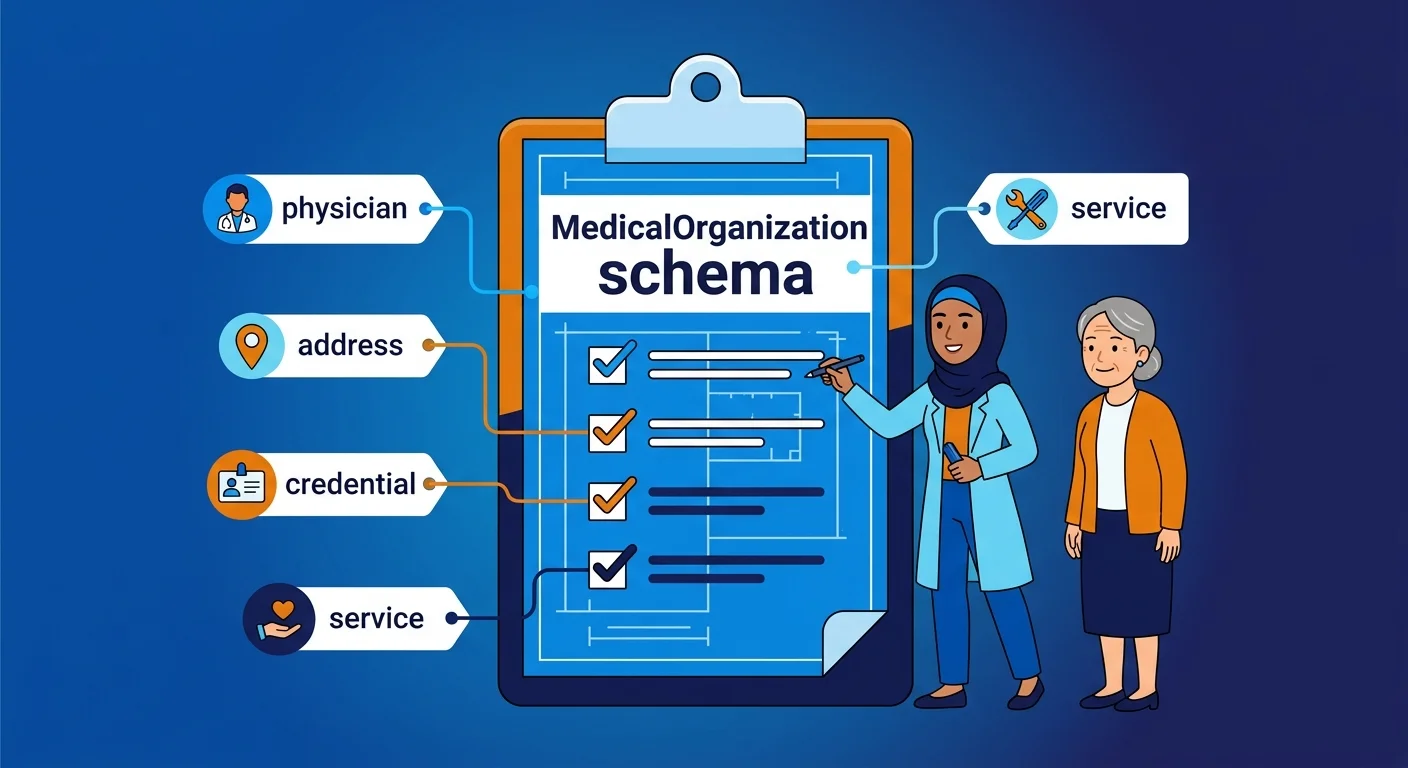
Structured data isn't one tag. It's a vocabulary — and healthcare entities need a specific dialect inside it.
Schema.org publishes dozens of markup types. Only a handful carry the fields an AI system actually checks when it decides whether a provider record is real.
| Schema Type | Primary Fields | Entity Signal Produced |
|---|---|---|
| MedicalOrganization | Practice name, address, phone number, medical specialty, accepted forms of care | Confirms the practice itself as a verified, findable entity distinct from any single provider |
| Physician | Provider name, credentials, board certification, conditions treated | Names the specific individual delivering care and ties that person to the practice record |
| MedicalProcedure / MedicalCondition | Procedure or condition name, description, associated provider identifiers | Links a service page back to the provider entity, turning a generic page into an extractable answer |
| LocalBusiness | Location, hours, service area, business identifiers shared across listings | Reinforces geographic and operational consistency an AI system cross-checks against directories |
Physician and MedicalOrganization Schema Fields That Matter Most
MedicalOrganization markup declares the practice itself: name, address, phone number, medical specialty, and accepted forms of care. Physician markup does the same job for an individual provider, naming credentials, board certification, and the conditions that provider treats.
Neither type is optional if citation is the goal. Drop Physician markup and you're asking the system to infer who actually sees patients there. Inference is exactly the weaker foundation the entity file can't afford.
Connecting Service Schema to Condition Specific Pages
Service-level schema is where the entity file gets specific. A page describing a condition or procedure should carry MedicalProcedure or MedicalCondition markup tied back to the same provider identifiers used everywhere else.
That link between service and provider is what turns a generic page into an extractable answer. Done right, it's the structural core of our AI visibility services. Skip it, and a condition page reads as an orphaned document instead of proof the provider treats that condition.
Where Provider Data Consistency Breaks Down Across Platforms
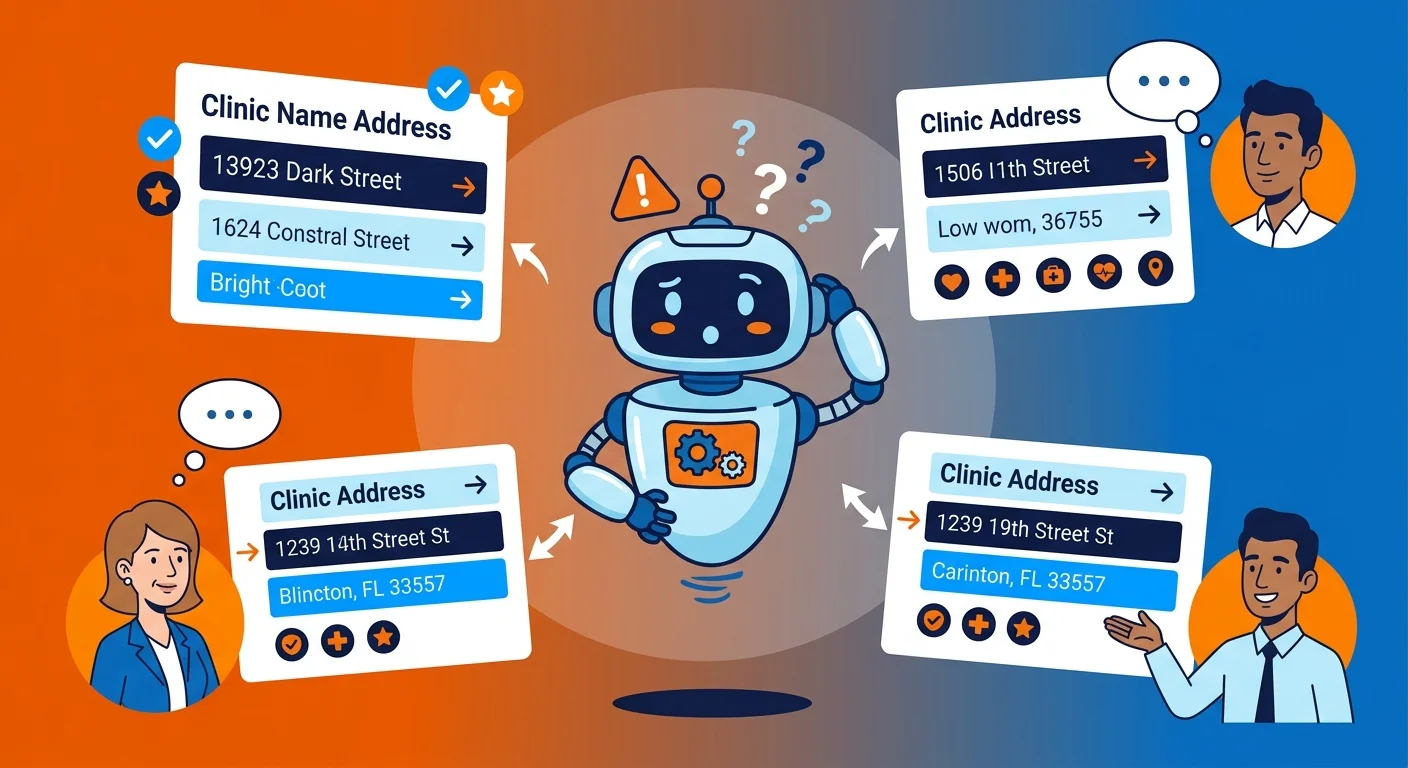
Here's the catch: schema can be flawless on one page and still lose the entity file. The failure shows up a layer down, in the data sitting outside the provider's own website.
A practice's address, phone, and hours live in dozens of places at once. The website says one thing, the business profile says another, and every directory, insurance network, and review platform holds its own copy on its own schedule.
How Conflicting Address and Hours Data Undermines Trust
An AI system checking a provider's identity doesn't read one source and call it a day. It cross-references all of them, and any disagreement reads as risk, not nuance.
A closed location still listed as open, or a suite number that changed everywhere but one directory, does the same damage as missing schema. It tells the system this record can't be confirmed. Being a listed address was never the same as being a verified one, and fragmented data is exactly where that gap gets exposed.
How Review Signals Get Weighed by Generative Engines
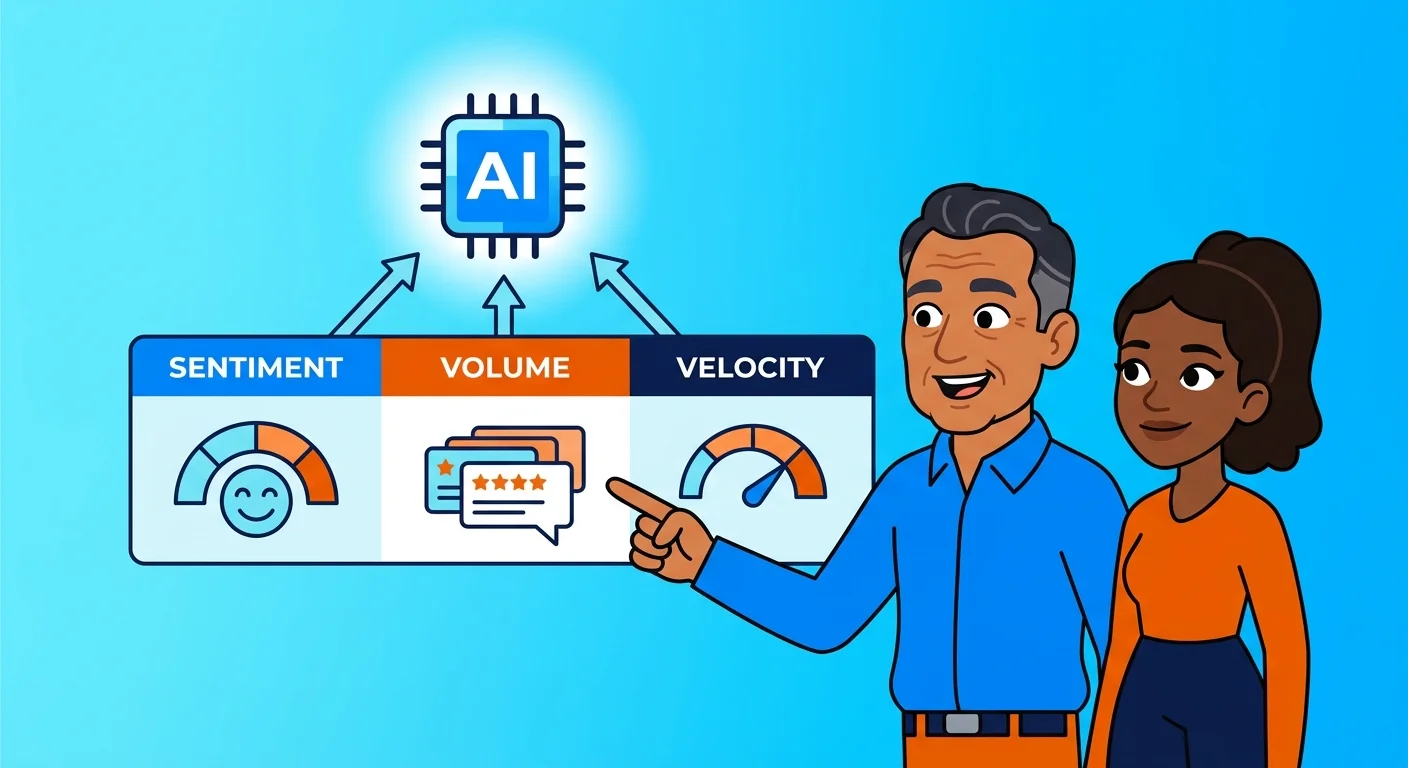
Structured data proves who a provider is. Reviews prove whether patients actually back that up.
An AI system reads reviews as third-party testimony, weighed against the entity file's own claims — not marketing copy to skim. And more reviews don't automatically mean more visibility. A thin stack of recent, specific reviews can outweigh a pile of vague or stale ones, because volume alone confirms nothing.
Sentiment, Volume, and Velocity as Three Separate Signals
Sentiment, volume, and velocity aren't one signal wearing three names. Sentiment is what reviews actually say — the care, the wait times, the outcomes. Volume is how many independent voices said it.
Velocity asks whether the testimony still shows up or dried up years ago. Strong sentiment plus steady velocity reads as active and trusted right now. High volume with no recent reviews reads as a record nobody's checked lately.
Why Review Volume Alone Fails as a Trust Signal
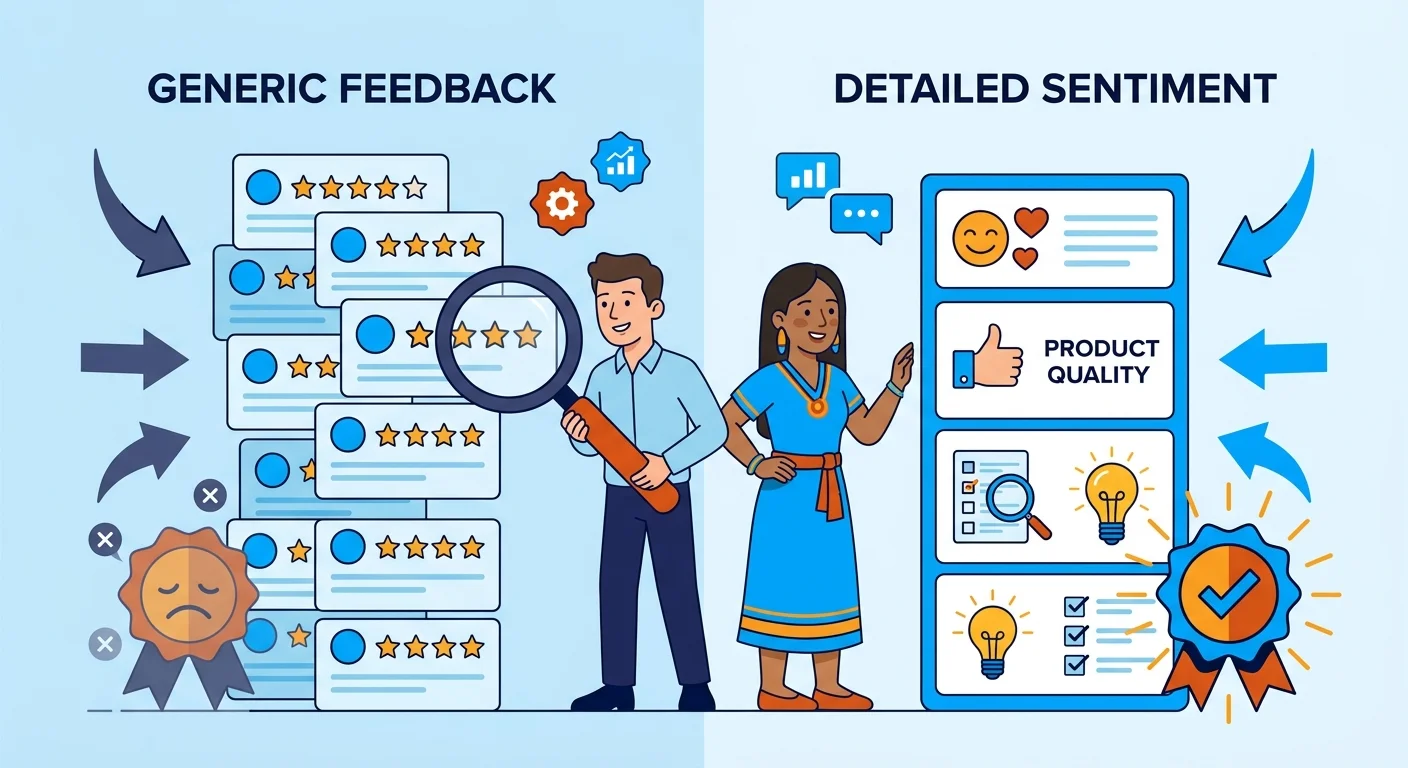
Volume alone was never the signal. Buying review count instead of earning verified testimony is rented attention, and an AI system clocks the difference immediately.
A campaign built to collect reviews at scale treats every one as interchangeable. But a verification system doesn't average sentiment across hundreds of entries and call it done. It checks whether the volume got earned recently, by real patients, describing specific care — and a stack of generic five-star ratings with nothing behind them confirms exactly nothing about whether that provider still deserves citation today.
The Mechanism Behind High Volume, Low Trust Review Profiles
Here's the mechanism. A high-volume, low-trust profile piles up reviews faster than it piles up specificity, so the gap between count and confirmable detail keeps widening.
That widening gap is what breaks citation. An AI system scanning hundreds of near-identical short reviews finds almost nothing it can pull as evidence — no named procedure, no outcome, no detail that matches the entity file's own claims. Sentiment stays flat, velocity looks steady on paper, and the profile still reads as unverified, because that volume was manufactured instead of earned through actual patient activity.
What Happens After the Citation: Attribution and Zero-Click Reality
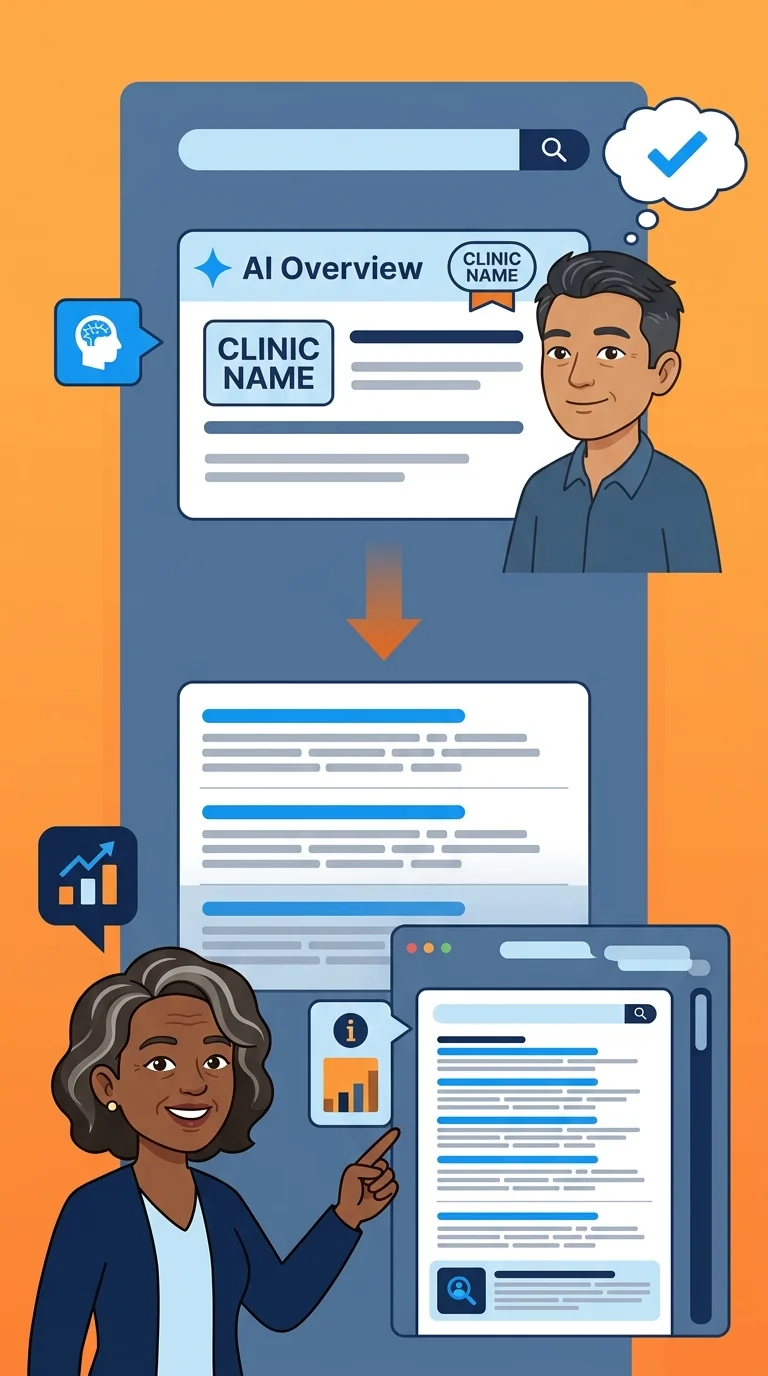
Citation isn't the finish line. It's the start of a different question: once the machine names a practice, does anyone actually reach it?
So the entity file exists to win the citation. But what happens after it wins is a separate mechanism, and it doesn't always end in a click.
| Search Result Type | Average Clickthrough Behavior | What This Means for Citation Strategy |
|---|---|---|
| Informational Query With AI Overview Present | 34.5% lower average clickthrough rate for the top-ranking page compared to similar queries without an AI Overview | A page's position beneath the answer no longer guarantees a click, so citation itself has to carry the trust the click used to confirm |
| Standard Organic Result Without AI Overview | Higher average clickthrough rate for the top-ranking page on comparable informational keywords | Traditional keyword position tracking still converts to visits here, which is exactly why practices assume it still works everywhere |
| Pages Over 1,000 Words Competing for the Same Citation | Under half of all AI Overview citations reach pages at that length or beyond | Depth stops being the differentiator once the system is extracting a labeled answer instead of rewarding total coverage |
How Often a Citation Produces an Actual Referral Link
And length has almost nothing to do with it. Per Ahrefs' study, more than half the pages cited in AI Overviews run under 1,000 words, with 53.4% of citations landing on pages that short.
That cuts hard against a stubborn instinct in healthcare content: build the exhaustive page, cover every angle, let depth earn the citation. Depth isn't what gets extracted. A tight, well-labeled answer beats a long one the system has to dig through, so a page optimizing for word count is optimizing for the wrong target entirely.
Building the Machine Readable Content Layer

A citable page gets built. It doesn't get written and prayed over. Every paragraph either hands the machine a fact it can pull, or asks it to keep reading for one.
Sounds like a small distinction until you realize it decides which page gets named. So the content layer earns its own discipline — separate from schema, separate from reviews.
Formatting Answers So Extraction Is Easy, Not Optional
Extraction rewards one shape. A question stated plainly, then the direct answer right in the first sentence, hands the system a clean unit to lift. Bury that same answer three paragraphs into a narrative lead, and the system has a choice: keep digging, or jump to a page that made it easy.
That's not a style call. The earlier length pattern already proved it: pages built for extraction beat pages built for depth. Authority baked into a page's structure keeps earning citation for years, while attention rented through length dies the moment a cleaner answer shows up.
Which On Page Content Gets Pulled Into Generative Answers
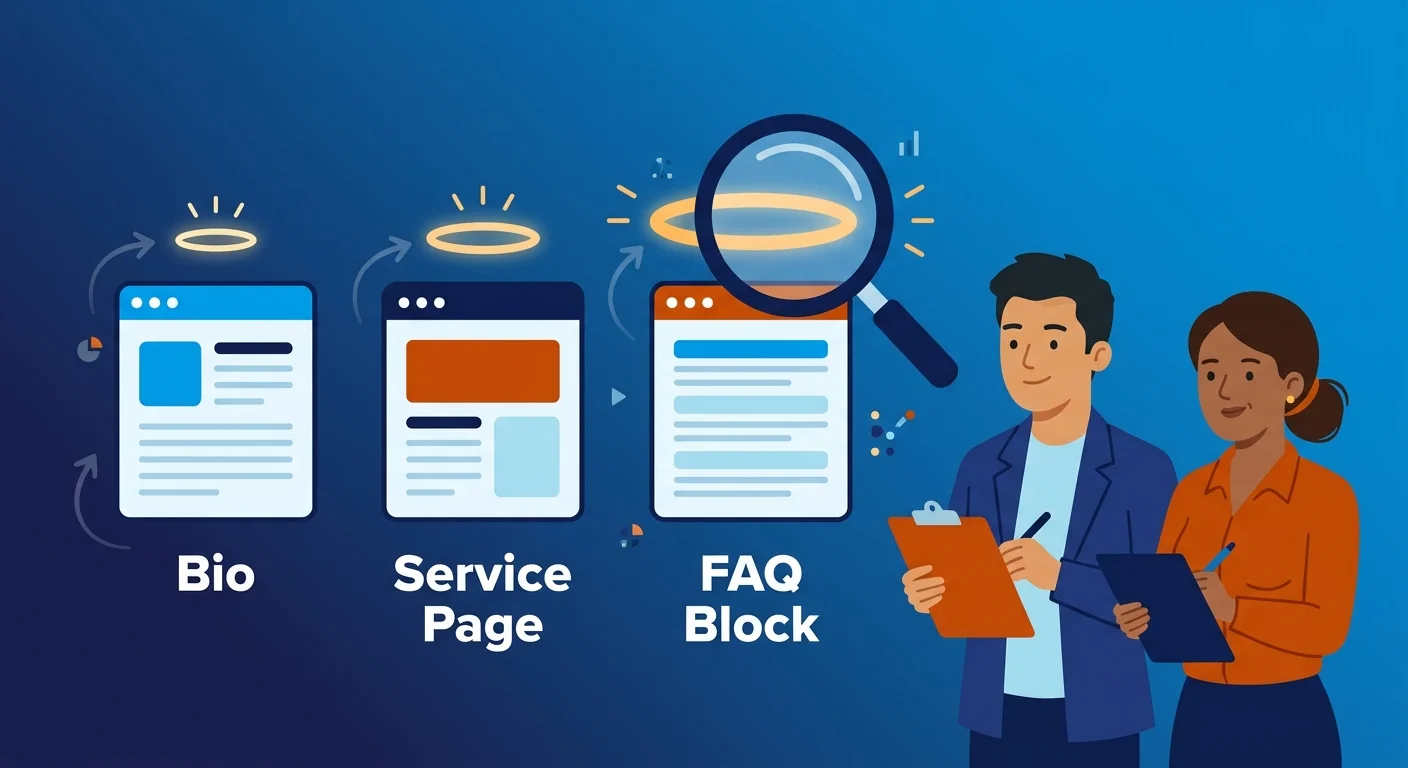
So the entity file earns the citation. But something still has to hand the machine the actual words it quotes back — and not every page pulls its weight.
And a generative engine doesn't read a website evenly. It leans hard on a few page types, and knowing which ones beats publishing more of them.
| Page Type | Typical Length | Citation Behavior |
|---|---|---|
| Provider Bio | Short, credential-focused | Pulled when a query names a specific physician, credential, or specialty match |
| Service or Condition Page | Concise, tied to schema markup | Pulled when a query names a condition or procedure the page is structurally linked to |
| FAQ Block | Brief, single-answer per question | Pulled first when phrasing matches a plainly stated question with an immediate answer |
| General Services Overview | Long, multi-topic narrative | Rarely pulled since answers are buried rather than labeled as extractable units |
Provider Bios, Service Pages, and FAQ Blocks Ranked by Extraction Frequency
Provider bios get pulled when a query names a credential, a specialty, or a physician. Service pages get pulled when it names a condition or procedure — the same pages already carrying that markup tied to the provider's identifiers.
But FAQ blocks sit ahead of both. A question in plain language, answered in the first sentence, is already shaped exactly like the unit a generative engine hunts for.
That order isn't random. Bios and service pages carry the credentials; FAQ blocks carry the answers, pre-formatted and ready to lift.
Bury that same information inside a general services page, and you're asking the system to extract something nobody ever labeled as an answer.
Why Page Length Correlates With Citation Odds
Length keeps coming up because it keeps mattering. A page built to be exhaustive isn't the page a generative engine wants to extract from.
And no, the system isn't rewarding short for the sake of short. It's rewarding pages where the answer sits close to the surface.
A short page with one clear answer per section costs the system less effort per fact recovered. A long page makes it work harder for the same yield — and it'll take the cheaper page every time both cover the same ground.
That's the whole mechanism behind the length pattern. It's not about thoroughness. It's about retrieval cost.
Sequencing the Work: From Fragmented Presence to Verified Entity
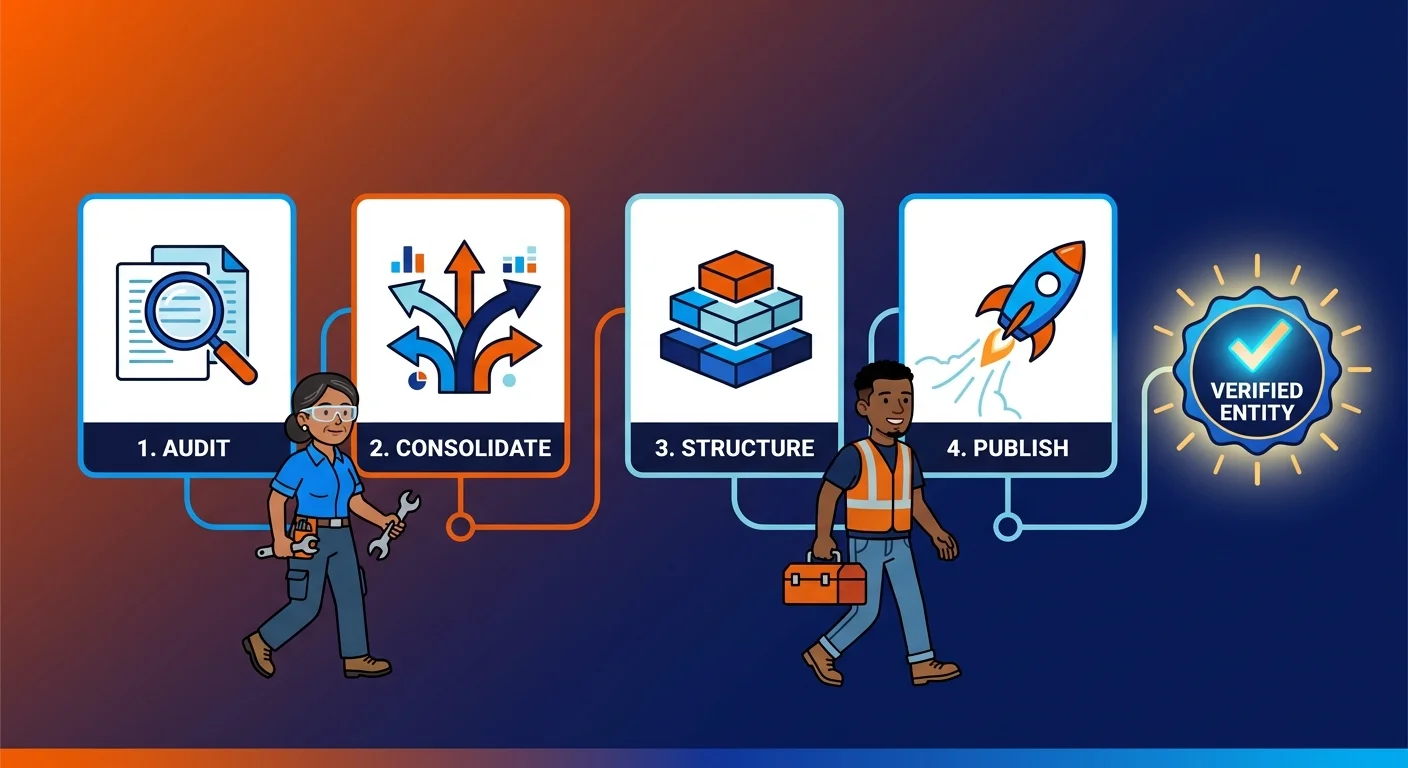
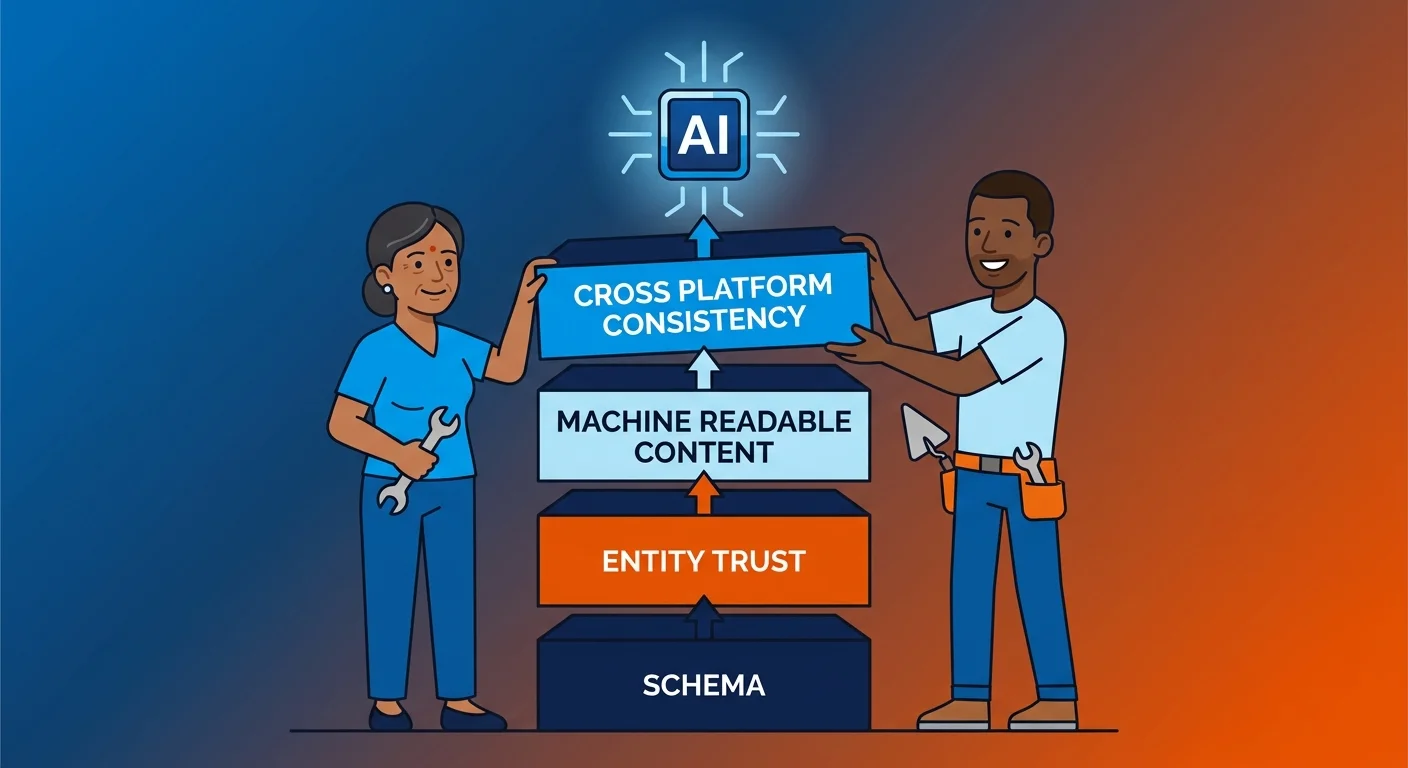
Schema, reviews, content — every piece we've walked through solves one slice of the same problem. But none of them work alone, and none of them matter if you build them in the wrong order.
The move to generative AI is the biggest shift in patient acquisition since the search engine got invented. Change that size doesn't reward scattered fixes. It rewards a sequence.
| Build Phase | Primary Task | Signal Produced |
|---|---|---|
| Audit | Pull every address, phone number, credential, and listing the practice currently has across every platform and directory. | A complete map of every conflict and gap the entity file currently contains. |
| Consolidation | Resolve every conflict the audit surfaced, matching each identifier to a single confirmed version everywhere it appears. | One consistent identity record a verification system can check without contradiction. |
| Structure | Write schema tags and markup against the now-consolidated identifiers, tying credentials and services to the entity confirmed in the prior phase. | Machine-readable claims that reference a foundation already verified rather than one still in dispute. |
| Content | Build bios, service pages, and FAQ blocks last, so every extractable answer sits on top of confirmed structure. | Citable pages a generative engine can lift with confidence, because the claims underneath already check out. |
| Verification | Query the practice by name, specialty, and condition, then compare the response against the entity file's own claims. | Proof the build sequence worked, or a named gap showing exactly where citation still fails. |
The Order That Prevents Rework: Audit, Consolidate, Structure, Publish
Here's the rule: structure gets built before content, never after. Write a page before the provider's identifiers line up across every platform, and you've built that page on a foundation nothing can confirm.
Audit first — pull every address, phone number, and credential the practice has listed anywhere. Then consolidate, resolving every conflict the audit surfaces before a single new schema tag gets written. Structure follows, and content comes dead last, because a citable page leans on identifiers a system can already confirm.
Verifying the Build Against Live AI Engine Responses
A build sequence that's finished on paper isn't a build sequence that's verified in practice. The entity file has to get tested against what a real AI system says back — not against a checklist.
So you query the practice by name, by specialty, by condition, then check whether the response matches what the entity file actually claims. Gaps show up as a competitor getting cited, or nobody getting cited at all. A directory can file a practice; only a live query shows whether a system will name it, and this is the step that proves which one got built.
Frequently Asked Questions
The mechanics above leave a few loose ends. Here are the questions that come up most, answered straight.
What's more important for AI visibility: my website's schema or my Google Business Profile?
Neither wins alone. Schema tells the system what a practice is. The Google Business Profile confirms it's real and current, and both feed the same file.
Can a single bad review on a third-party site prevent my practice from being cited by AI?
One bad review rarely breaks a citation. What erodes the file is a pattern of unresolved complaints sitting against otherwise thin sentiment.
How does AI handle conflicting information, like two different addresses for my clinic?
Two addresses don't read as two facts to weigh. They read as an unresolved identity, so the system plays it safe and often withholds citation until the mismatch gets fixed.
Do traditional backlinks from other websites still help AI engines see my practice as authoritative?
Acquiring inbound links still signals relevance. But that's a different question than verification, and a citation-ready entity needs confirmed identifiers first. Links don't stand in for that.
How quickly can I expect to see changes in AI search results after updating my clinic's schema and reviews?
There's no fixed clock. Consolidation changes show up as platforms recrawl and revalidate the identifiers, not on any schedule a provider gets to set.
Is there a specific review score my practice needs to achieve to be recommended by AI search?
No single threshold exists. What the system checks is whether sentiment, volume, and velocity read as active and confirmable together. A number alone doesn't prove that.
Where This Leaves You
That entity file metaphor was never just a way to talk about this. It's the actual thing an AI system runs every single time a practice's name lands in a query.
A citable practice closes the file clean — every identifier matching, every review confirmable, every page built to be lifted instead of read. Leave it half-open and the system doesn't stop to sort out the gap; it just moves on to a competitor's record. Visibility in 2026 was never about placing high in search results — it's about being the entity a machine can confirm without hesitating, and that's the whole ballgame now for who gets chosen and who gets skipped.
So this isn't one more line item chasing a number that stopped mattering. It's the deliberate build of a record a machine can verify on sight. And if a practice's schema, reviews, and content still read like three separate projects instead of one file, that gap is exactly what an AI visibility check exists to find.