What Actually Happens When a Search Ends Without a Click
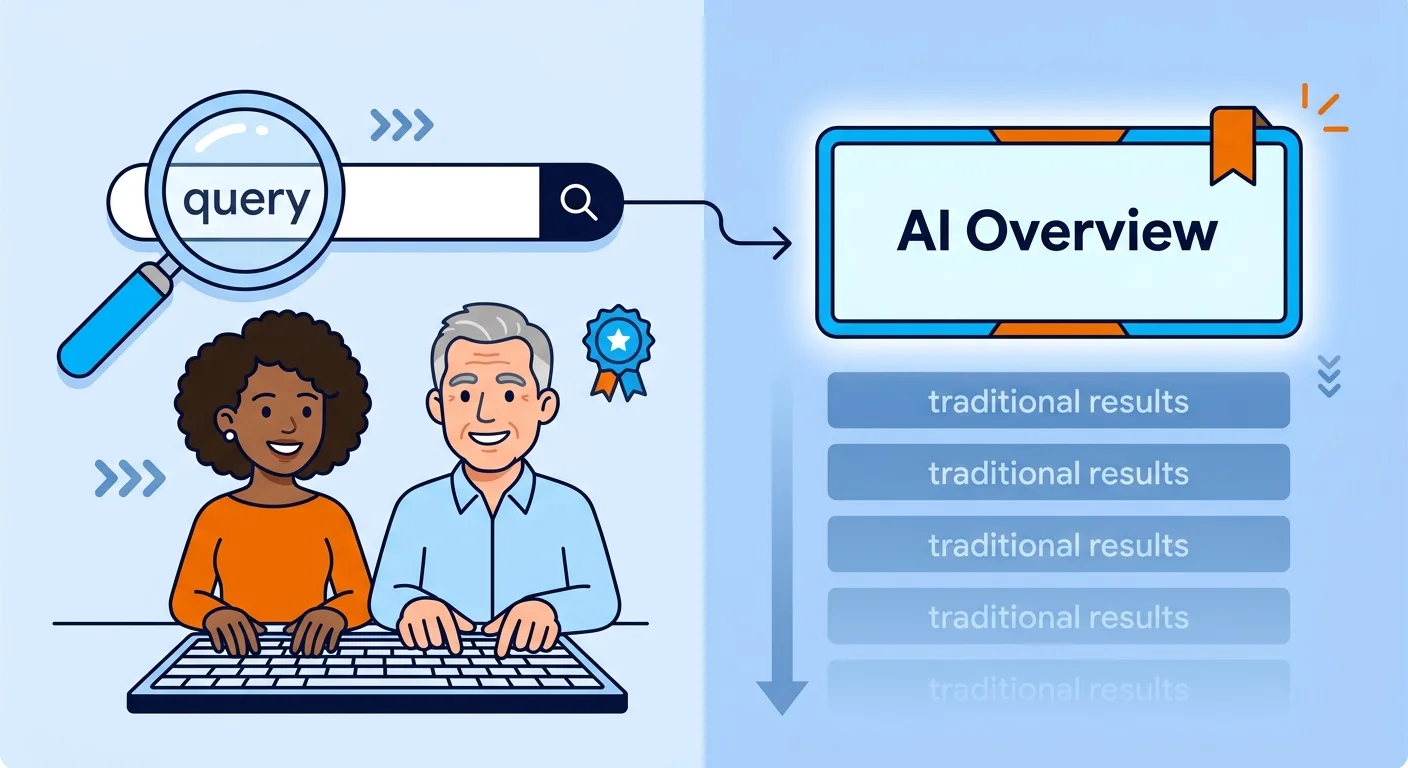
Here's the thing: a zero-click search isn't some rare edge case anymore. In the first four months of 2026, 68.01% of Google searches ended without a single click, according to SparkToro's clickstream study. That's the majority outcome now. Not the exception.
Picture the results page as a courtroom. The AI Overview is the judge, and it hands down a verdict before the jury of blue links ever gets seated. A practice either filed admissible evidence beforehand, or it never gets called to speak.
Agencies still selling a game that ended keep pointing clients at the jury box. They chase a higher search position while the verdict's already being written somewhere else entirely. That approach can't explain why a page holds a strong position and still never gets named in the answer a patient actually reads, a gap dug into in why conventional healthcare optimization tactics fail to produce AI citations.
The searcher still gets an answer. They just get it from the judge, not the jury. Whether a practice's name shows up inside that verdict comes down to one thing: what evidence it filed beforehand.
Why the Search Result No Longer Waits for a Winner
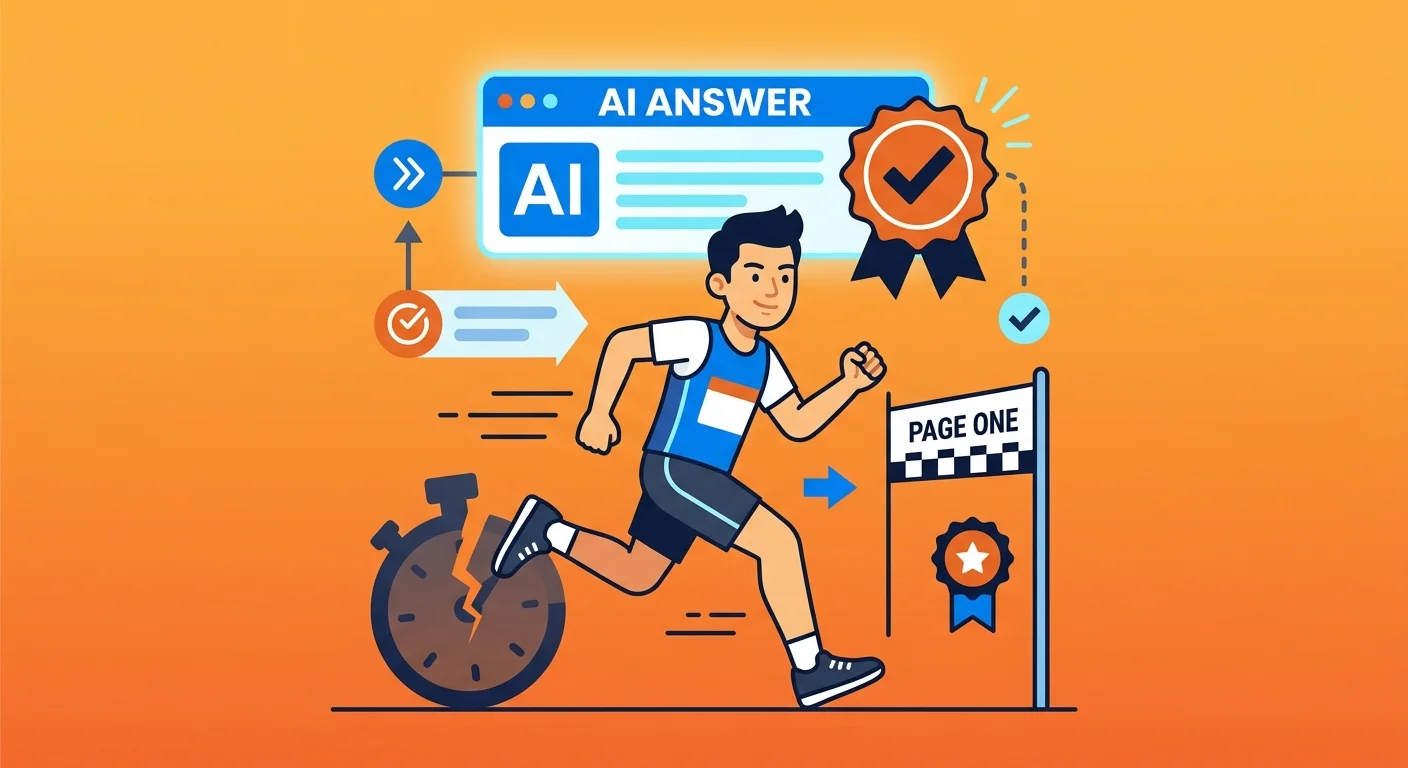
A rank tells you nothing about who gets quoted once an answer sits where the links used to. That's not an opinion. That's just how the system behaves now.
An AI Overview doesn't sit around waiting for the ten blue links to settle before it speaks. It forms its answer first, pulling from whatever it can verify and attribute, and only then does the old list of results bother to render underneath.
Keyword position tracking measures a contest that ends after the verdict's already been read aloud. A page can climb, hold its spot, and still never make it into the evidence the judge cites.
The old playbook of chasing keyword position tracking is going obsolete for exactly this reason. AI-generated answers grab the searcher before they ever scroll down to the list of blue links.
That's the mechanism behind every zero-click outcome so far. The overview isn't fighting the results below it for attention. It's replacing the need for them entirely.
The Practice of Chasing Rankings While the Result Page Moves On
Plenty of agencies keep selling traditional search optimization like the jury box still decides the case. They report on position movement, backlink counts, and keyword position tracking as if that's the finish line.
None of that reporting says a word about whether the practice's information was ever admissible to the judge writing the verdict. A rising position and a missing citation live on the same page all the time.
That failure pattern is exactly why a chiropractic clinic's own case for building zero-click citation infrastructure is worth reading alongside this. It walks through what happens when a practice never files that evidence at all.
That agency isn't lying to anybody. It's reading the only scoreboard it knows how to read, while the one that matters quietly moved to a different room.
How a Ranking-First Approach Breaks Under an Answer-First Result Page
A ranking-first approach assumes the searcher eventually reaches the list of links and picks from it. That assumption falls apart the second the answer engine resolves the question before the list ever loads.
Once the overview has named a source, position on the list below is a secondary event. The verdict doesn't get revised because a competitor climbed one spot after it was issued.
A ranking-first strategy has no way to contest a verdict it never knew was being written. It optimizes for the jury. The judge already ruled.
What Machine-Readable Infrastructure Is Actually Made Of
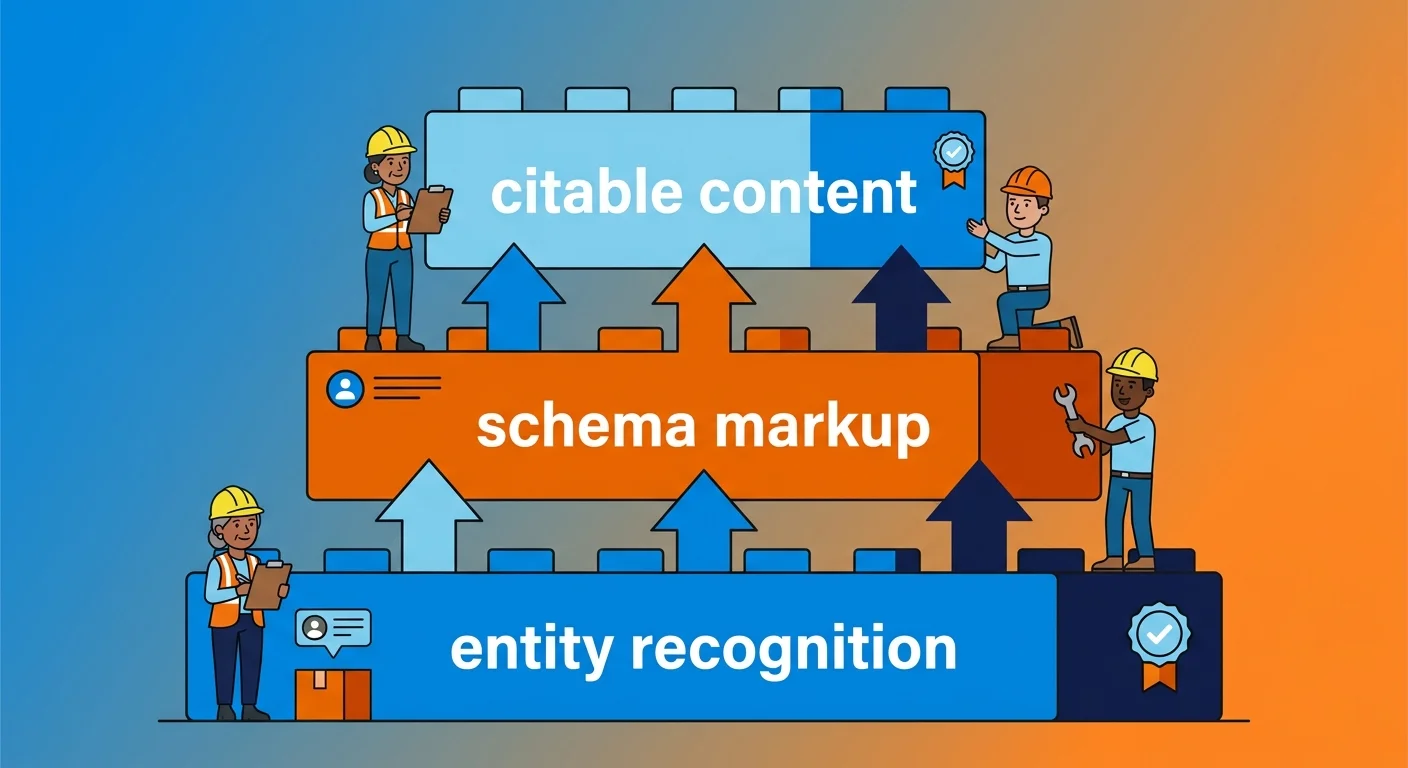
An AI Authority Engine isn't a piece of software you buy. It's a full infrastructure that takes a practice's expertise and structures it into a verifiable, machine-readable format.
That infrastructure has layers. Each one solves a different problem the judge has to work through before it can name a source at all.
The judge needs to know who the practice is, what the practice knows, and whether those claims check out against something beyond its own website. Miss one of the three, and the practice never enters evidence, no matter where it sits in the organic listings.
| Infrastructure Layer | What It Establishes | Machine-Readable Output |
|---|---|---|
| Entity Recognition | A confirmed, distinct identity for the practice, separate from every similarly named competitor in the same region | A knowledge graph record linking practice name, location, credentials, and services into one attributable source |
| Structured Data | A machine-readable label for information that would otherwise sit ambiguous inside ordinary prose | Schema markup that types and extracts credentials, services, and claims without guesswork |
| Credentialed Content | Proof that the expertise behind a claim traces to a verifiable, named authority rather than an anonymous page | Authored content tied to a confirmed practitioner identity, structured so an answer engine can attribute it directly |
| Consistent Entity Signals | Agreement across every outside reference to the practice, so no conflicting record undermines the confirmed one | Uniform name, location, and credential data across the web that reinforces a single attributable source |
Entity Recognition and the Knowledge Graph Layer
Entity recognition asks a narrower question first. Does this practice exist as a distinct, confirmed thing, separate from every other practice with a similar name across town?
A knowledge graph is how an answer engine keeps that distinction straight. It ties a practice's name, location, credentials, and services into one confirmed record instead of a scatter of disconnected mentions.
Without that confirmed record, an answer engine has no reliable way to attribute a claim to the practice that actually made it. So it guesses, or it moves to a source it can confirm, and the practice with the resolved entity profile a condition page needs before it can be recommended is usually the one that gets named.
Structured Data and the Schema Layer
Structured data is what makes entity recognition machine-readable in the first place. Schema markup is code embedded in a page that tells an answer engine exactly what kind of information it's looking at.
A paragraph describing a physician's credentials is ambiguous to a machine. Wrap that same information in the correct schema markup and it isn't anymore. It's labeled, typed, and extractable on sight.
Researchers have wrestled with this exact extraction problem for automated agents reading the open web. One system built for that job, described in research from Bardeen and UC Berkeley published on the arXiv preprint server, constructs a generalizable CSS selector to capture all relevant items on a page and then fits operations to extract the data from them. An AI Authority Engine attacks the same problem from the other side, structuring the page so extraction takes no guesswork at all.
Being quoted outranks being listed. A schema layer is what turns a practice from an address a crawler might index into a source an answer engine can confidently quote.
What the Evidence Shows About Who Gets Cited
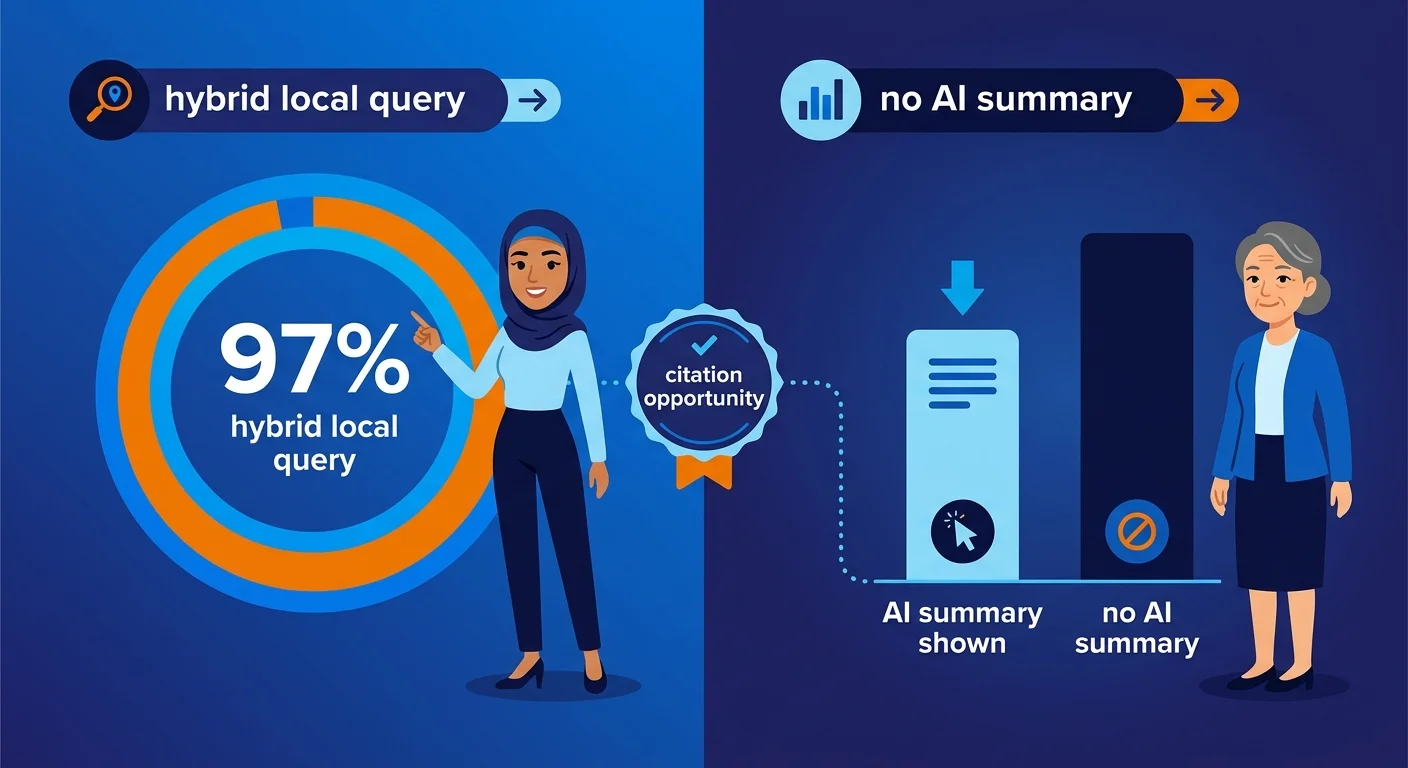
Evidence beats assumption. The record of which practices actually get cited is measurable, and it points at one pattern above every other.
Local, specific, high-intent questions are where the verdict gets written most often. A vague query still sends the searcher to the jury box. A precise one rarely does.
That distinction matters, because it exposes a claim the industry keeps repeating. Most agencies still operate as if AI visibility is just traditional search optimization with new vocabulary. The citation data says otherwise.
| Query Behavior | Measured Rate | What It Means for Citation |
|---|---|---|
| Hybrid intent local search | 97% | A cost-plus-location question filed with the right evidence gets named almost every time it is asked. |
| Traditional link click, AI summary present | 8% | Even a strong position rarely converts into a click once the judge has already spoken. |
| Traditional link click, no AI summary present | 15% | Without a verdict already issued, the jury box still gets nearly double the visits. |
Why Hybrid Local Queries Are Where This Gets Decided
Hybrid intent describes a query that fuses a transactional detail with a local one. A cost question tied to a place. A procedure tied to a city.
That fusion is where the judge rules almost every single time. Hybrid intent searches like 'average cost of dental implants in Phoenix' trigger AI Overviews 97% of the time, according to Search Engine Journal's reporting on Whitespark's findings.
A 97% appearance rate isn't a trend to watch. It's a near-certainty a practice can plan around, provided the evidence was filed before the question got asked. Keyword position tracking never measured this, because the pattern lives inside the answer engine's own citation behavior, not the list beneath it.
Trust Behavior After the Answer Appears
Getting cited is only half the mechanism. What the searcher does after reading that verdict is the other half, and it changes the whole calculation for what a ranked position is still worth.
When a Google search surfaces an AI summary, the searcher clicks a traditional search result link in just 8% of visits. Take that summary away and the click rate climbs to 15% of visits, according to Pew Research Center.
Nearly double the click behavior vanishes the moment an AI summary answers the question outright. That gap is the entire zero-click economy, measured in one comparison. A practice cited inside that 8% has already won the interaction that an agency selling page-one placement is still trying to earn through a link the searcher was never going to click, which is exactly why treating AI visibility as traditional search optimization with new vocabulary misreads the data, and why practices increasingly turn to dedicated AI search optimization services to build the citation record this section describes.
Building the Infrastructure in Practice
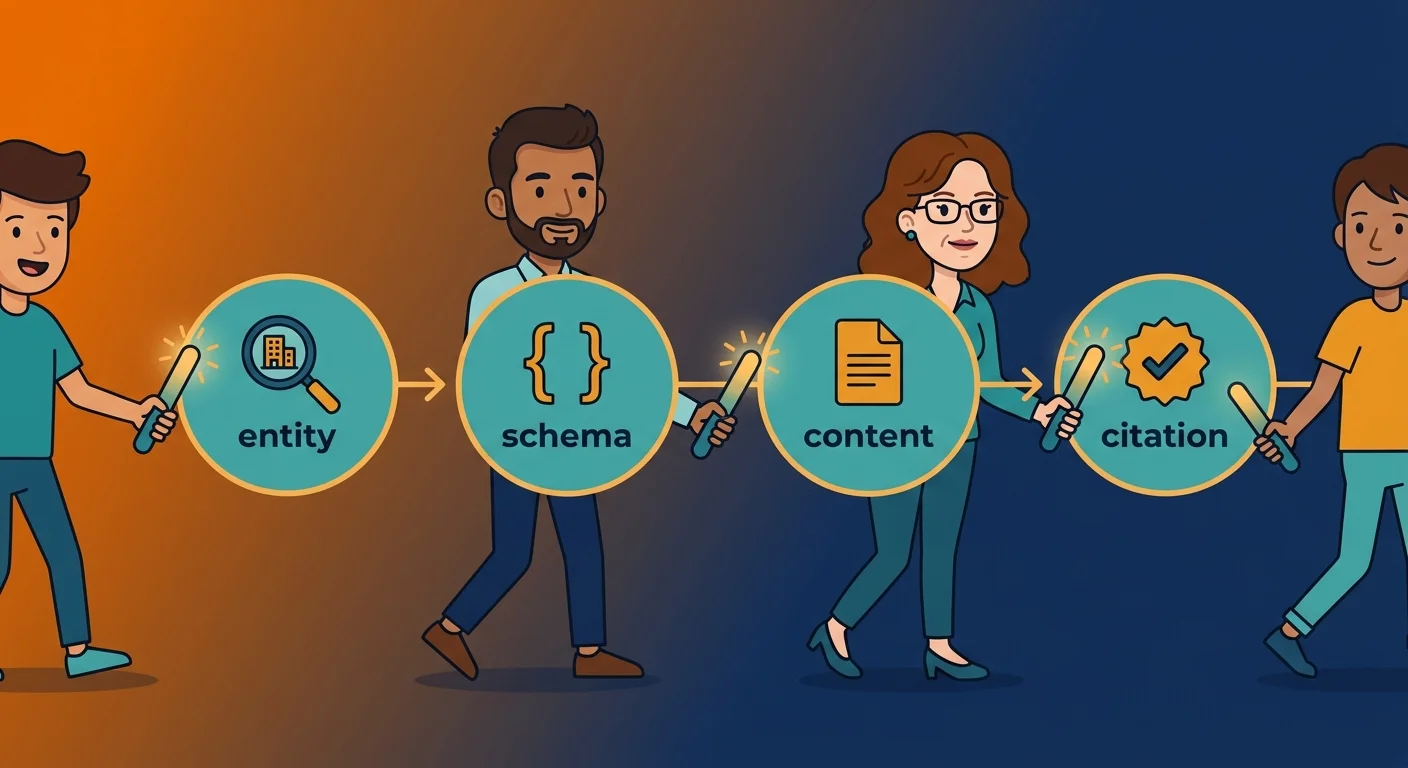
Building an AI Authority Engine isn't one project with a finish line. It's a sequence. And the order matters more than the hours you pour into it.
Skip a layer and every layer stacked on top of it inherits the hole. The judge can't verify what was never confirmed underneath.
That's where the comparison to a full, machine-readable infrastructure earns its keep. A practice's expertise has to be structured in a specific order before an answer engine trusts a word of it.
| Build Stage | Primary Task | Dependency |
|---|---|---|
| Entity Resolution | Confirm the practice as one distinct, verifiable record separate from every similarly named practice nearby | None — this is the foundation every later stage attaches to |
| Schema Structuring | Convert confirmed entity details into machine-readable, labeled data an answer engine can extract without guesswork | Requires a resolved entity record to attach to |
| Content Publication | Produce expertise-driven pages that answer specific, high-intent questions the judge is likely to cite | Requires both entity resolution and schema structuring already in place |
| Verification Signals | Surface credentials, affiliations, and outside confirmation an answer engine can check against the practice's own claims | Depends on structured schema being present to label those signals correctly |
| Ongoing Maintenance | Keep entity details, schema, and published content aligned as the practice's information changes over time | Depends on the first three stages already functioning as one connected system |
Sequencing Entity, Schema and Content Without Skipping Layers
Entity work goes first. Nothing downstream can attach to a source the judge can't confirm exists as one distinct thing.
Schema comes second. It takes that confirmed entity and makes every claim hanging off it machine-readable, labeled, and extractable without a single guess.
Content comes last, not first. Content published before the entity and schema layers are resolved has nothing stable to grab onto, and an answer engine has no reliable way to credit it back to the practice that wrote it.
Built in that order, the record does the compounding on its own. A search position stops paying the second it slips, but a resolved entity record and a structured schema layer keep working long after any single page stops climbing.
Frequently Asked Questions
The build sequence answers the how. What follows are the specific mechanics operators start asking once the layers are on the table.
What is the difference between an AI Authority Engine and traditional search optimization?
Traditional search optimization chases position inside the classic ten blue links. An AI Authority Engine structures a practice's entity, schema, and content so the judge can cite it before that list ever loads.
How does a local healthcare practice build the kind of authority that AI engines cite?
In order. Confirm the practice as one distinct entity, wrap its claims in structured data, then publish content that attaches to both. Skip the order and the later layers have nothing stable underneath them.
What specific types of content are AI Overviews most likely to cite for patient-related questions?
Content that answers a precise, high-intent question gets named far more often than content written for a general audience. The pattern above holds here too. Specificity is what gets cited, not volume.
How does structured data actually get read by an AI Overview?
Schema markup labels the information on a page so a machine can identify it without interpreting prose. An answer engine reads that label directly, the same way an automated extraction system reads a page's underlying structure instead of guessing at its meaning.
What does ongoing management of an AI Authority Engine look like after it is built?
The entity and schema layers need periodic verification as a practice's services or credentials change. Content keeps extending the record, but the foundation underneath it doesn't get rebuilt on a schedule.
Can an existing website be adapted into this infrastructure, or does it require a rebuild?
Most existing sites can be adapted rather than replaced. The entity and schema layers get added onto the current site build. A rebuild is rarely the bottleneck.
How does entity recognition differ from simply having a website?
A website is a page a crawler can index. Entity recognition is a confirmed, distinct record an answer engine can attribute a claim to with confidence. That's the difference between existing online and being verifiable.
The Verdict Is Already Written
The courtroom doesn't wait for closing arguments anymore. By the time a patient would have scrolled down to the jury box, the judge has already ruled. And that ruling is built from evidence a practice either filed ahead of time or never filed at all.
An AI Authority Engine is how that evidence gets filed. Entity, then schema, then content, so the verdict names a real source instead of guessing at one. Build it in that order, and a practice stops begging for attention and becomes the citation the judge already trusts.
Chasing a better rank is arguing to a jury that got dismissed months ago. The stronger move is handing the judge evidence it can actually read. And the fastest way to see where your own evidence stands today is to request a free AI visibility check.