
What an Entity Actually Is to a Machine That Reads the Web
Entity Resolution Versus a Business Listing
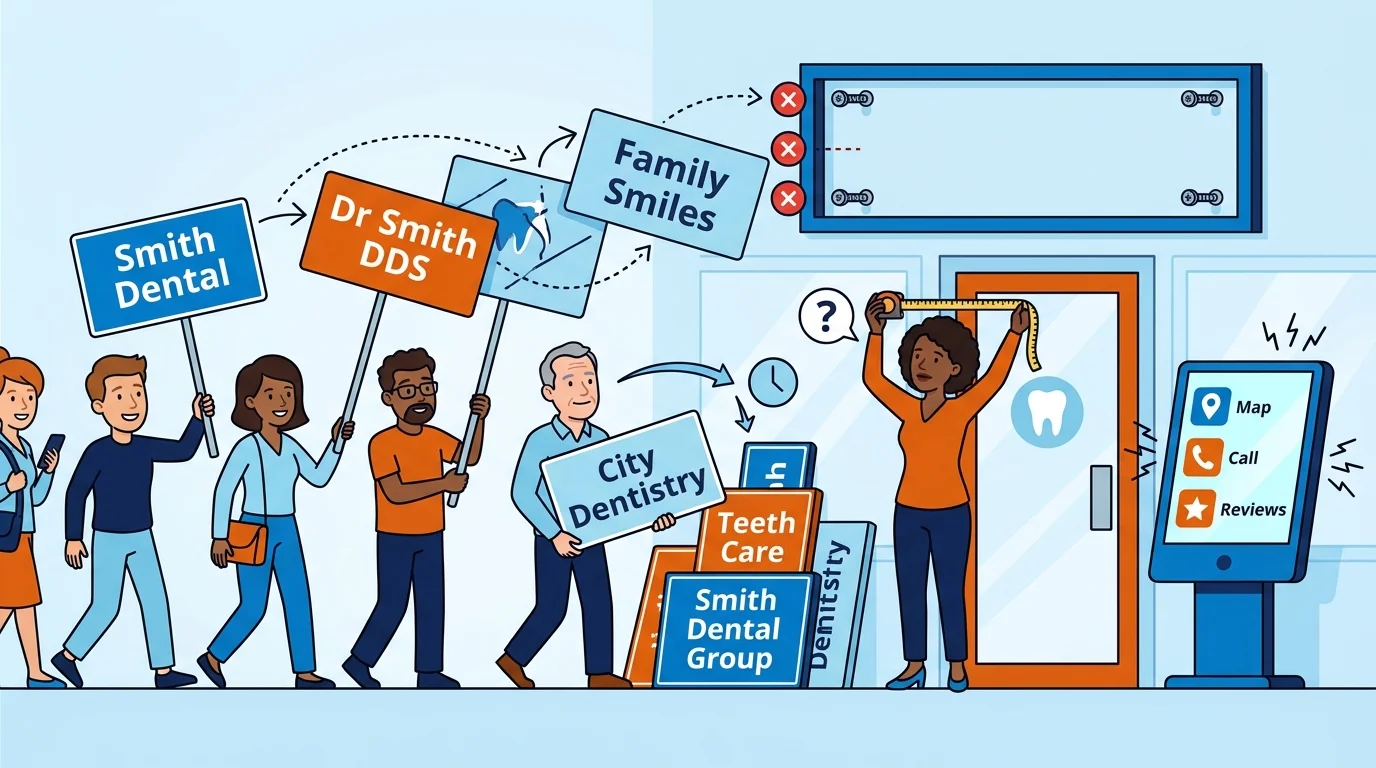
Here's the gap: a business listing is an address a practice claims, while entity resolution is an identity a machine confirms. Most AI visibility work quietly treats directory consistency as the finish line, when it's really just the raw material. Those scattered profiles and listings stay fragments until sameAs links bind them into one record.
Why Generative Search Treats Identity as a Graph Problem
Let's keep it real: calling AI visibility traditional search optimization with new vocabulary falls apart the second you look at how generative engines build an answer. They map real-world entities and how those entities connect, which makes this a graph problem, not a keyword problem. Resolving identity, as laid out in the full-stack engine architecture breakdown, means handing that graph a verified node instead of letting it guess one from the noise.
Why Treating a Business Listing Like an Entity Fails
The Cheap-Retainer Shortcut and What It Skips
Cheap retainers are a trap: they sell directory consistency and slap the label entity resolution on it. Matching a name and phone number across a stack of listings gets the bricks on site, but nobody's built the wall. A practice can check every box those retainers offer and still look like an unresolved node to a generative engine, because none of that work installs a sameAs link back to a verified record.
What Breaks When Directory Data Disagrees With Itself
Here's the kicker: directory data disagrees with itself all the time, and every mismatch becomes a competing signal with nothing verified to settle it. Hand a knowledge graph three versions of one practice with no canonical link tying them together, and it has to guess which one's real (that guess is the exact ambiguity entity resolution exists to kill, as the mechanics behind cross-directory agreement on practice identity show). Owning authority means closing that gap before a machine ever has to.
Where Generative Engines Actually Pull Their Facts
| Data Layer | What It Feeds | Who Maintains It | How a Practice Gets Into It |
|---|---|---|---|
| Knowledge Graph | Knowledge panel summaries and AI-generated entity overviews | The search engine itself, drawing on web material plus open-source and licensed databases | Structured data and verified sameAs links pointing to an authoritative external record |
| Open Knowledge Base (Wikidata) | Training data and cross-reference signals for generative models and knowledge graphs | A distributed community of editors maintaining open, structured records | A properly sourced item with a stable Q-number and verified external links back to the practice |
| Directory Listings | Local business signals, contact consistency checks | Individual directory operators, each with separate data and separate update cycles | Manual or syndicated submission, with no inherent link back to a canonical record |
| On-Site Structured Data | Page-level meaning passed directly to crawlers and AI systems reading the site | The practice itself, through its own website markup | Organization schema and sameAs properties embedded in the site's own code |
The Knowledge Graph Layer Behind the Summary
Here's the thing: that knowledge panel summary isn't written fresh every time someone asks.
Google says information within Google's knowledge panels may come from its Knowledge Graph, which is associated with material drawn from across the web as well as open-source and licensed databases.
So that sourcing layer beats any single listing, because a practice missing from it stays invisible to the summary no matter how clean its directory data looks.
Structured Data as the Clue Google Asked For
Structured data is how a page's meaning gets fed straight into that graph instead of left for a machine to guess: Google's documentation says structured data on a page can provide Google with explicit clues about the page's meaning, which may help it understand the content.
Now, keeping that layer accurate after launch is the job routine authority engine maintenance digs into, because a graph only stays resolved while its source data does.
How the Common Corpus Problem Shows Up in Practice
| Challenge | What It Means for a Practice | Structural Fix |
|---|---|---|
| Missing domain coverage in training data | A practice sits in a specialty or region the underlying model saw little or nothing about, so its own listings cannot correct the gap | Resolved sameAs links to Wikidata and verified profiles give the model a confirmed anchor, independent of how thin the original training coverage was |
| Ambiguous name collision | Multiple practices, practitioners, or past business names share enough overlap that a model cannot tell which one a query means | A unique Wikidata identifier tied to the practice through sameAs removes the guesswork by naming the exact entity, not a name pattern |
| Stale or conflicting directory data | Old addresses, former names, or inconsistent listings persist across the web long after a practice corrects them | A canonical record linked by sameAs gives machines one place to reconcile conflicting mentions instead of averaging across all of them |
| Outdated knowledge frozen at training time | A model's knowledge of a practice reflects whatever was true when its training data was assembled, not what is true now | Structured links outside the model itself let search systems pull current facts at query time rather than relying on frozen training knowledge |
What Training Data Actually Contains
Common Corpus is one documented example of a dataset built for LLM pre-training. Per PleIAs, the Common Corpus dataset, assembled for LLM pre-training, may contain about two trillion tokens of data that is either uncopyrighted or under open licenses. A model trained on a dataset like this may never have seen a given practice's website, which is why facts a system can retrieve and check at answer time matter.
Where Hallucination Enters the Answer
Hallucination creeps in right where training data goes quiet on a specific domain. Per Universitat Politècnica de Catalunya, LLMs may face challenges including hallucination and outdated or missing information from specific domains in their training data. Ask a model about a practice it has weak or outdated signal on and it'll fill the gap with a plausible guess, not a verified fact, which is why resolved entity links built through authority infrastructure services matter: they hand the model something stronger than a guess.
How sameAs Links Build the Resolved Identity Graph
| Step | Action | Why It Matters to Resolution |
|---|---|---|
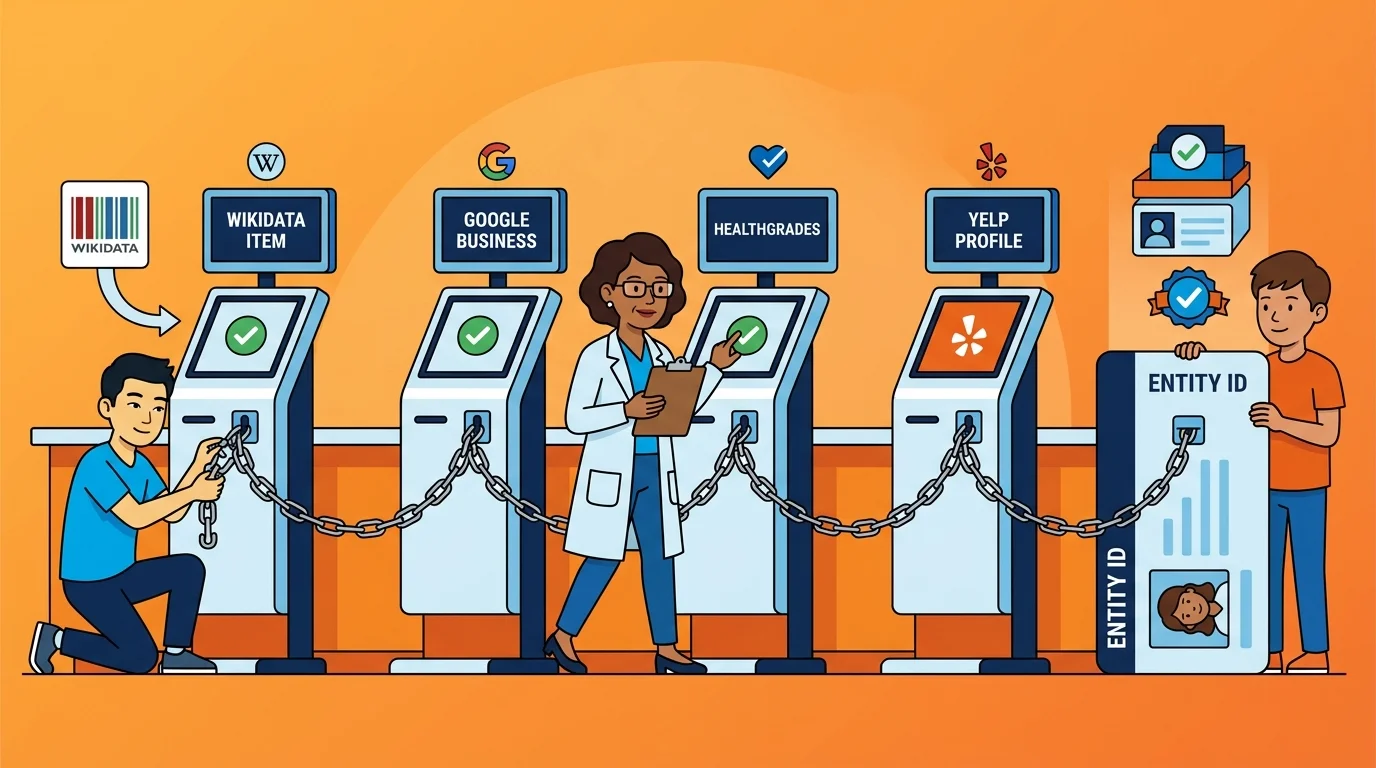
| Identify the canonical record | Create or claim the Wikidata item for the practice, assigning it a fixed Q-number and core statements | Gives the knowledge graph one verified anchor instead of several competing, unverified mentions |
| Inventory the controlled profiles | List every property the practice actually controls, including the Google Business Profile and verified professional or social accounts | Separates owned, verifiable identity from directory noise the practice never authorized |
| Wire the sameAs array | Add each controlled profile URL to the sameAs property inside the practice's own structured data | Tells a generative system these separate listings describe the same entity, not several |
| Align structured data to visible content | Confirm the Organization markup matches what actually appears on the official website | Prevents the graph from rejecting the link as inconsistent or low-trust signal |
| Monitor for drift | Recheck the sameAs links and underlying profiles as the practice changes name, location, or staff | Keeps the resolved node accurate instead of letting it decay back into scattered fragments |
Building the Wikidata Item First
Start with the entity itself, not its listings. The Wikidata item hands the practice a Q-number, a label, and statements about what it is, where it operates, and how it connects to related entities. That item becomes the canonical record everything else points back to (think of it as the cover page of the whole file).
Wiring sameAs Across Every Verified Profile
Every verified profile the practice actually controls goes in the sameAs array: the Wikidata item, the Google Business Profile, verified professional directories, and official social accounts. Matching a name and phone number across listings is where cheap retainers stop, and that work never installs the link back to a canonical record, so the practice stays a pile of unverified mentions instead of one resolved node. Wire sameAs right, and those scattered profiles finally become a single file a machine can trust.
Frequently Asked Questions
Start wiring these links and the questions show up fast. Here are the mechanical ones operators hit most.
What is the difference between a Wikidata entry and a Google Business Profile?
A Google Business Profile is a listing a practice claims and edits on one platform. A Wikidata entry is an open, structured record many platforms read at once. That includes Google's own knowledge graph.
Can incorrect sameAs links hurt my practice's visibility in AI search?
Yes. Point sameAs at a wrong record or an abandoned profile, and entity resolution gets a lie. That breaks the verification a generative engine relies on instead of strengthening it.
How does entity resolution help with practices that have multiple locations or practitioners?
Each location and each practitioner is its own entity with its own resolved identity. Each one links back to a parent organization item. Skip that, and a knowledge graph can't tell a shared name from shared ownership.
Is a Wikipedia page required to have a Wikidata item for my practice?
No. A Wikidata item can exist and get cited whether or not a Wikipedia article exists. The two projects don't use identical notability rules.
How long does it take for changes in Wikidata to be reflected in generative AI answers?
Nobody can honestly promise a timeline. It hinges on when a model's training data or retrieval layer next refreshes. Treat the update as durable infrastructure, not a change that pays off on a schedule.
What are the most common mistakes businesses make when creating Wikidata entries?
Classic mistake: treating a Wikidata item like a directory listing, not a structured record. Thin statements, no sameAs array, no connection to related entities. Any one of those leaves the item functionally unresolved.
If my practice has a common name, how critical is using Wikidata for disambiguation?
Critical. A common name with no Q-number and no wired sameAs array leaves an engine guessing. Ambiguity is exactly what entity resolution exists to kill.
The Bottom Line
Fragments stay fragments until something binds them. A Wikidata item and a properly wired sameAs array are that binding.
Directory consistency was never the finish line. Cheap retainers sell that raw material as a result, then stop right before the canonical link a machine actually needs. Entity resolution is the harder work and the durable kind: one verified node a generative engine can cite instead of guess at.
So here's the line: your practice is either an assembled file a machine trusts or a pile of fragments it has to guess about, and the cited answer comes from the assembled side. Run the AI Visibility Check to see which side your entity sits on right now.